Kaletra
Ukraine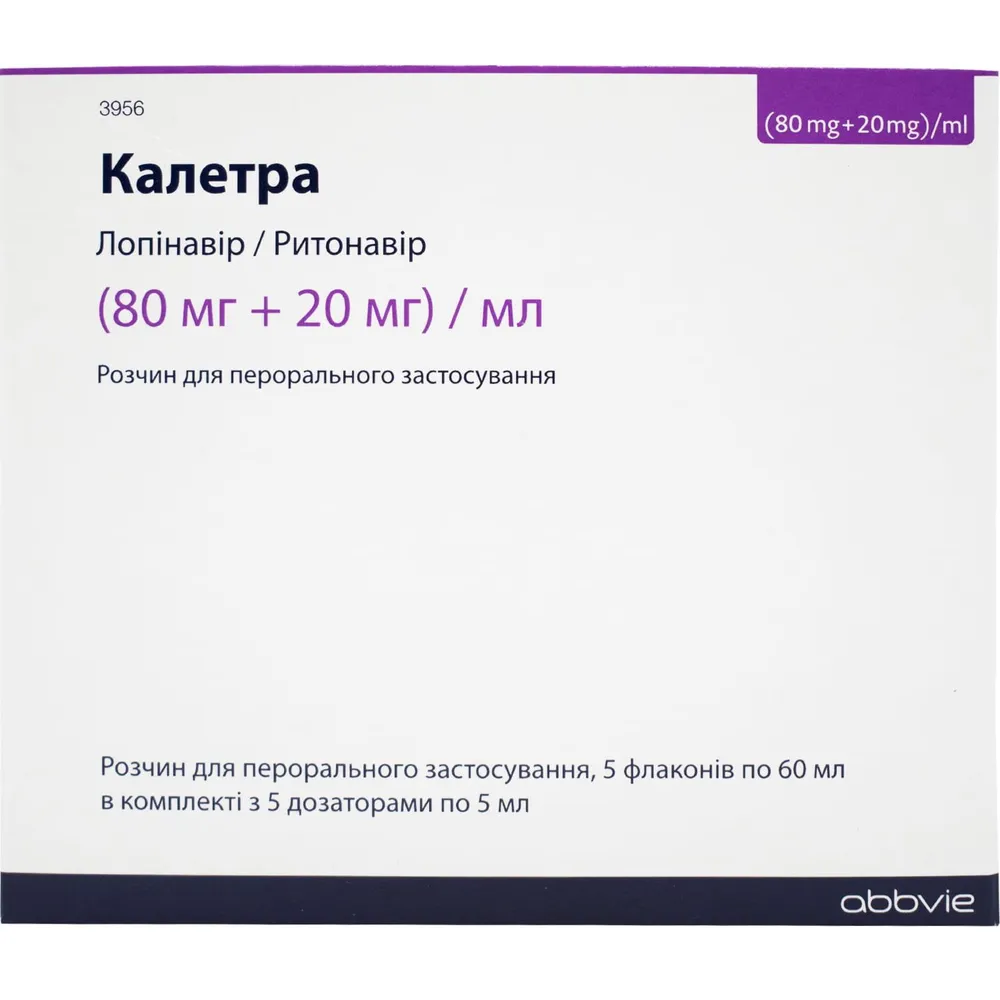
Table of Contents
INSTRUCTIONS FOR MEDICAL USE OF THE MEDICINAL PRODUCT KALETRA®
Composition:
Active substances: lopinavir, ritonavir;
1 ml of solution contains 80 mg of lopinavir and 20 mg of ritonavir;
Excipients: polyoxyl 40 hydrogenated castor oil, purified water, sodium chloride, sodium citrate, sodium saccharin, acesulfame potassium, anhydrous citric acid, absolute ethanol, propylene glycol, levomenthol, povidone, glycerin, high-fructose corn syrup, Magnasweet flavoring, peppermint oil, vanilla flavoring, cotton candy flavoring.
Medicinal form. Oral solution.
Main physicochemical properties: clear solution ranging from light yellow to golden in color, essentially free from foreign particles.
Pharmacotherapeutic group.
Antiviral agents for systemic use. Antiviral agents for the treatment of HIV infections, combinations. ATC code J05AR10.
Pharmacological Properties.
Pharmacodynamics.
Lopinavir, a protease inhibitor of HIV-1 and HIV-2, prevents the cleavage of the gag pol polyprotein, resulting in the production of immature, non-infectious virus.
Ritonavir is an orally administered peptidomimetic inhibitor of HIV-1 and HIV-2 aspartyl protease. Inhibition of HIV protease renders this enzyme unable to process the gag pol polyprotein precursor, leading to the formation of morphologically immature HIV particles incapable of initiating new infection cycles. Ritonavir has selective affinity for HIV protease and low inhibitory activity against human aspartyl proteases.
Antiviral activity in vitro.
The antiviral activity of lopinavir in vitro against laboratory strains of HIV as well as clinical isolates of HIV was evaluated in acutely infected lymphoblastoid cells and peripheral blood lymphocytes. In the absence of human serum, the mean 50% effective concentration (EC50) of lopinavir against five different laboratory strains of HIV-1 was 19 nM. In the presence of 50% human serum, the mean EC50 of lopinavir against HIV-1IIIB in MT4 cells ranged from 17 to 102 nM. In the absence of human serum, the mean EC50 of lopinavir against several clinical isolates of HIV-1 was 6.5 nM.
Resistance.
In vitro experiments have isolated HIV-1 strains with reduced susceptibility to lopinavir. HIV-1 was incubated in vitro with lopinavir alone or with lopinavir and ritonavir at concentrations corresponding to plasma levels during lopinavir/ritonavir administration. Genotypic and phenotypic analysis of viruses isolated in these experiments suggests that the presence of ritonavir at such concentrations has no measurable impact on the selection of lopinavir-resistant viruses. Overall, in vitro characterization of phenotypic cross-resistance between lopinavir and other protease inhibitors indicates that reduced susceptibility to lopinavir strongly correlates with reduced susceptibility to ritonavir and indinavir, but such a strong correlation is not observed with amprenavir, saquinavir, and nelfinavir.
Cross-resistance.
The activity of other protease inhibitors was assessed against isolates that showed increased resistance to lopinavir after lopinavir/ritonavir therapy in patients previously treated with protease inhibitors. Cross-resistance to other protease inhibitors was analyzed in 18 isolates obtained after a sharp increase in viral load in patients previously treated with protease inhibitors who demonstrated increased resistance to lopinavir within three phase II and one phase III lopinavir/ritonavir trials. On average, the EC50 of lopinavir for these 18 isolates, isolated at baseline and after a sharp increase in viral load, was 6.9–63 times higher than the EC50 against wild-type HIV. Overall, isolates obtained after a sharp increase in viral load showed either the same cross-resistance (if such cross-resistance existed at baseline) or developed new significant cross-resistance to indinavir, saquinavir, and atazanavir. A moderate reduction in amprenavir activity was observed, with a mean increase in EC50 of isolates isolated at baseline and after a sharp increase in viral load by 3.7–8 times. Isolates retained sensitivity to tipranavir, with a mean increase in EC50 of isolates isolated at baseline and after a sharp increase in viral load by 1.9–1.8 times compared to EC50 against wild-type HIV.
Genotypic correlates of reduced phenotypic susceptibility to lopinavir in viruses emerging under other protease inhibitors.
The antiviral activity of lopinavir in vitro was evaluated against 112 clinical isolates obtained from patients who had HIV RNA levels exceeding 1000 copies/mL despite prior treatment with one or more protease inhibitors. In this group, reduced in vitro susceptibility to lopinavir was associated with the following mutations in the HIV protease: L10F/I/R/V, K20M/R, L24I, M46I/L, F53L, I54L/T/V, L63P, A71I/L/T/V, V82A/F/T, I84V, and L90M.
Electrocardiogram changes.
The QTcF interval was assessed in a randomized, placebo-controlled, active-controlled crossover study (moxifloxacin 400 mg once daily) in 39 healthy adult volunteers with 10 measurements taken 12 hours after dosing on day 3. The maximum mean (95% upper confidence interval) difference from placebo in QTcF values was 3.6 (6.3) and 13.1 (15.8) for the 400/100 mg twice daily and supratherapeutic 800/200 mg twice daily doses of lopinavir/ritonavir, respectively. Dose-dependent QRS prolongation induced by high doses of lopinavir/ritonavir (800/200 mg twice daily), ranging from 6 msec to 9.5 msec, contributes to QT prolongation. Both regimens resulted in exposures on day 3 approximately 1.5 and 3 times higher than those observed with the standard recommended dose of lopinavir/ritonavir (once or twice daily). No increases in QTcF > 60 msec from baseline or QTcF intervals exceeding the potentially clinically significant threshold of 500 msec were observed.
Mild PR interval prolongation was also observed in patients receiving lopinavir/ritonavir in the same study on day 3. Mean changes from baseline for the PR interval ranged from 11.6 msec to 24.4 msec over the 12-hour interval. The maximum PR interval was 286 msec, and no second- or third-degree heart block was observed.
Pharmacokinetics.
The pharmacokinetic properties of lopinavir when administered with ritonavir were studied in healthy adult volunteers and HIV-infected individuals, with no significant differences observed between parameters in these two groups. Lopinavir is almost completely metabolized by CYP3A. Ritonavir inhibits the metabolic degradation of lopinavir, thereby increasing lopinavir plasma concentrations. Comparison of results from different studies showed that when lopinavir/ritonavir 400/100 mg twice daily was administered to HIV-infected patients, the mean lopinavir concentration at steady state was 15–20 times higher than that of ritonavir. The plasma concentration of ritonavir is less than 7% of the concentration observed after administration of ritonavir 600 mg twice daily. In vitro experiments demonstrated that the antiviral effective concentration (EC50) of lopinavir is approximately 10 times lower than that of ritonavir. Thus, the antiviral activity of the drug Kaletra® is attributable to lopinavir.
Absorption.
With repeated administration of lopinavir/ritonavir 400/100 mg twice daily for 2 weeks without dietary restrictions, the Cmax of lopinavir in plasma was 12.3 ± 5.4 μg/mL (mean ± standard deviation), reached approximately 4 hours after administration. The mean trough concentration at steady state prior to morning dosing was 8.1 ± 5.7 μg/mL. The AUC of lopinavir over 12 hours post-dose averaged 113.2 ± 60.5 μg•hr/mL. The absolute bioavailability of lopinavir when administered with ritonavir in humans has not been established.
Effect of food on absorption after oral administration.
When the lopinavir/ritonavir solution was taken with a meal of moderate fat content, AUC and Cmax of lopinavir increased by 80% and 54%, respectively. Administration of lopinavir/ritonavir with a high-fat meal (872 kcal, 55.8% fat) compared to fasting resulted in increases in AUC and Cmax of lopinavir by 130% and 56%, respectively. To enhance bioavailability and minimize pharmacokinetic variability, lopinavir/ritonavir should be taken with food.
Distribution.
At steady state, approximately 98–99% of lopinavir is bound to plasma proteins. Lopinavir can bind to both alpha-1-acid glycoprotein and albumin, but its affinity for alpha-1-acid glycoprotein is higher. When lopinavir/ritonavir 400/100 mg twice daily is administered, protein binding of lopinavir at steady state remains constant over a wide concentration range and does not differ between healthy volunteers and HIV-infected patients.
Biotransformation.
In vitro experiments using human liver microsomes showed that lopinavir is metabolized primarily via oxidation. Lopinavir undergoes extensive hepatic metabolism via the cytochrome P450 system, particularly the CYP3A isoenzyme. Ritonavir is a potent inhibitor of CYP3A activity and thus inhibits the degradation of lopinavir, increasing its plasma concentration. Studies with radiolabeled 14C-lopinavir showed that after a single 400/100 mg dose of lopinavir/ritonavir administered to humans, 89% of total radioactivity in plasma was attributable to the parent compound. At least 13 oxidative metabolites of lopinavir have been identified in humans. The 4-oxo and 4-hydroxymetabolite isomeric pairs are the main metabolites with antiviral activity, but they represent only minor fractions of total plasma radioactivity. Ritonavir has been shown to induce metabolic enzyme activity, thereby accelerating its own metabolic degradation and possibly accelerating lopinavir metabolism. With repeated dosing, the pre-dose concentration of lopinavir decreases, and concentration stabilization is achieved within approximately 10 days to 2 weeks.
Elimination.
After administration of 14C-lopinavir/ritonavir 400/100 mg, 10.4 ± 2.3% and 82.6 ± 2.5% of the dose was excreted in urine and feces, respectively. Unchanged lopinavir accounted for 2.2% and 19.8% of the dose in urine and feces, respectively. After multiple dosing, less than 3% of the administered dose of lopinavir was excreted unchanged in urine. The elimination half-life (decline from peak to trough concentration at steady state) of lopinavir over the 12-hour dosing interval averages 5–6 hours, and the apparent total clearance (CL/F) of lopinavir is 6–7 L/h.
Pharmacokinetics in children.
The pharmacokinetics of lopinavir/ritonavir administered as an oral solution at doses of 300 mg/75 mg/m² twice daily and 230 mg/57.5 mg/m² twice daily were studied in 53 children aged 6 months to 12 years. Steady-state mean AUC, Cmax, and Cmin values were 72.6 ± 31.1 μg•hr/mL, 8.2 ± 2.9 μg/mL, and 3.4 ± 2.1 μg/mL, respectively, after administration of lopinavir/ritonavir oral solution at 230 mg/57.5 mg/m² without nevirapine (n = 12), and 85.8 ± 36.9 μg•hr/mL, 10.0 ± 3.3 μg/mL, and 3.6 ± 3.5 μg/mL, respectively, after administration at 300 mg/75 mg/m² with nevirapine (n = 12). This dosing regimen achieved lopinavir plasma concentrations similar to those in adult patients receiving 400 mg/100 mg twice daily without nevirapine. Lopinavir/ritonavir should not be administered once daily in children.
Results from studies in children aged 14 days to 3 months (exposure levels were 35% lower for AUC12 and 75% lower for Cmin than in adults) indicate suboptimal drug exposure, which may potentially lead to inadequate virological response and development of resistance.
Sex, race, age.
Pharmacokinetics in elderly patients has not been studied. No differences related to age, sex, or race were observed in the pharmacokinetics of adult patients.
Renal impairment.
The pharmacokinetics of lopinavir/ritonavir has not been studied in patients with renal impairment; however, renal clearance of lopinavir is minimal, and a reduction in total clearance in patients with renal impairment is not expected.
Hepatic impairment.
Steady-state pharmacokinetic parameters of lopinavir in HIV-infected patients with mild to moderate hepatic impairment were compared to those in HIV-infected patients with normal hepatic function in a multiple-dose study of lopinavir/ritonavir 400/100 mg twice daily. A limited increase in total lopinavir concentrations of approximately 30% was observed in HIV-infected patients with mild to moderate hepatic impairment; such an increase is not expected to be clinically significant.
Clinical characteristics.
Indications.
HIV infection in adults and children aged 14 days and older – in combination with other antiretroviral agents.
Contraindications.
- Hypersensitivity to lopinavir or ritonavir, or to any inactive component of the drug.
- Severe hepatic impairment.
- Kaletra® contains lopinavir and ritonavir, which are inhibitors of the CYP3A isoenzyme of cytochrome P450. Lopinavir/ritonavir must not be used concomitantly with drugs whose clearance is highly dependent on CYP3A activity, and whose increased plasma concentrations may lead to serious and/or life-threatening reactions. These drugs include:
Increased levels of concomitant medicinal products:
Alpha1-adrenoreceptor antagonists.
Alfuzosin. Plasma concentrations of alfuzosin increase, potentially leading to severe arterial hypotension.
Anti-anginal agents.
Ranolazine. Plasma concentrations of ranolazine increase, potentially leading to serious and/or life-threatening reactions.
Antiarrhythmic agents.
Amiodarone, dronedarone. Plasma concentrations of amiodarone and dronedarone increase, increasing the risk of arrhythmias or other serious adverse reactions.
Antibiotics.
Fusidic acid. Plasma concentrations of fusidic acid increase. Concomitant use with fusidic acid is contraindicated in dermatological infections.
Anticancer agents.
Apalutamide. Apalutamide is a moderate to strong CYP3A4 inducer and may reduce lopinavir/ritonavir exposure, potentially leading to loss of virological response. Additionally, increased plasma concentrations of apalutamide may lead to serious adverse events, including seizures.
Neratinib. Increased plasma concentrations of neratinib may increase the frequency of serious and/or life-threatening reactions.
Venetoclax. Plasma concentrations of venetoclax increase. The risk of tumor lysis syndrome increases during initial dosing and the ramp-up phase. For patients who have completed the ramp-up phase and are on a maintenance daily dose of venetoclax, the venetoclax dose should be reduced by at least 75% when used with strong CYP3A inhibitors (see venetoclax product information).
Antigout agents.
Colchicine. Plasma concentrations of colchicine increase, potentially leading to serious and/or life-threatening reactions in patients with renal and/or hepatic impairment.
Antihistamines.
Astemizole, terfenadine. Plasma concentrations of astemizole and terfenadine increase. As a result, the risk of serious arrhythmias caused by these substances increases.
Antipsychotic/neuroleptic agents.
Lurasidone. Plasma concentrations of lurasidone increase, potentially leading to serious and/or life-threatening reactions.
Pimozide. Plasma concentrations of pimozide increase. As a result, the risk of serious hematological disorders or other serious adverse reactions caused by this substance increases.
Quetiapine. Increased plasma concentrations of quetiapine may lead to coma.
Blonanserin. Concomitant use with blonanserin is contraindicated.
Ergot alkaloids.
Dihydroergotamine, ergonovine, ergotamine, methylergonovine. Increased plasma concentrations of ergot derivatives may cause acute ergot toxicity, including vascular spasm and ischemia.
Gastrointestinal (GI) motility agents.
Cisapride. Plasma concentrations of cisapride increase. As a result, the risk of serious arrhythmias caused by this substance increases.
Direct-acting antiviral agents against hepatitis C virus.
Elbasvir/grazoprevir. Increased risk of elevated ALT levels.
Ombitasvir/paritaprevir/ritonavir with or without dasabuvir. Increased plasma concentrations of paritaprevir, increasing the risk of elevated ALT levels.
Lipid-lowering agents.
HMG-CoA reductase inhibitors.
Lovastatin, simvastatin. Plasma concentrations of lovastatin and simvastatin increase. As a result, the risk of myopathy, including rhabdomyolysis, increases.
Microsomal triglyceride transfer protein inhibitor.
Lomitapide. Plasma concentrations of lomitapide increase.
Phosphodiesterase inhibitors (PDE5).
Avanafil. Plasma concentrations of avanafil increase.
Sildenafil. Contraindicated only when used for the treatment of pulmonary arterial hypertension (PAH). Plasma concentrations of sildenafil increase, increasing the risk of sildenafil-related adverse reactions, including arterial hypotension and syncope.
Vardenafil. Plasma concentrations of vardenafil increase.
Sedatives/hypnotics.
Oral midazolam, triazolam. Plasma concentrations of oral midazolam and triazolam increase. As a result, the risk of excessive sedative effects and respiratory depression caused by these substances increases. See "Interaction with other medicinal products and other forms of interaction" for warnings regarding parenteral midazolam.
Beta2-adrenergic agonists (long-acting).
Salmeterol. Increased concentrations are expected due to CYP3A inhibition by lopinavir/ritonavir. This combination may increase the risk of cardiovascular adverse events related to salmeterol, including QT prolongation, tachycardia, and sinus tachycardia.
Kaletra®, oral solution, is contraindicated in children under 14 days of age, patients with hepatic or renal impairment, patients treated with disulfiram or metronidazole, and pregnant women due to potential toxicity from propylene glycol in the formulation.
Decreased levels of lopinavir/ritonavir
Herbal products.
St. John's wort (Hypericum perforatum). There is a risk that herbal products containing St. John's wort may reduce the concentrations and clinical effect of lopinavir and ritonavir.
Interaction with other medicinal products and other forms of interaction.
Kaletra® contains lopinavir and ritonavir, which are inhibitors of the CYP3A isoenzyme of cytochrome P450 in vitro. Concomitant administration of lopinavir/ritonavir and medicinal products primarily metabolized by the CYP3A system may result in increased plasma concentrations of the other agents, potentially increasing or prolonging their therapeutic and adverse effects. Kaletra® does not inhibit CYP2D6, CYP2C9, CYP2C19, CYP2E1, CYP2B6, or CYP1A2 at clinically relevant concentrations.
Lopinavir/ritonavir in vivo induces its own metabolism and enhances the biotransformation of certain drugs metabolized by the cytochrome P450 enzyme system (including CYP2C9 and CYP2C19), as well as via glucuronidation. This may lead to decreased plasma concentrations of these drugs and reduced efficacy when coadministered with lopinavir/ritonavir.
Medicinal products contraindicated due to the expected degree of interaction and potential for serious adverse events are listed in the "Contraindications" section.
Known and theoretically possible interactions with specific antiretroviral and other medicinal products are described below. This list is not exhaustive; information provided in the product information leaflets of individual medicinal products should also be considered.
Unless otherwise stated, the studies described below were conducted using the recommended dose of lopinavir/ritonavir (i.e., 400/100 mg twice daily).
Antiretroviral agents.
Nucleoside reverse transcriptase inhibitors (NRTIs).
Stavudine and lamivudine. Plasma concentrations of lopinavir are not altered when lopinavir/ritonavir is coadministered with stavudine or lamivudine. Dose adjustment is not required.
Didanosine. Didanosine must be taken on an empty stomach when coadministered with lopinavir/ritonavir tablets.
Zidovudine and abacavir. Lopinavir/ritonavir induces glucuronidation, thereby reducing plasma concentrations of zidovudine and abacavir. The clinical significance of this potential interaction is unknown.
Tenofovir. Concomitant administration of lopinavir/ritonavir with tenofovir (300 mg once daily) results in a 32% increase in tenofovir levels without changes in lopinavir and ritonavir concentrations. However, high tenofovir concentrations may potentiate tenofovir-related adverse reactions, including renal impairment.
Elevated creatine phosphokinase levels, myalgia, myositis, and rarely rhabdomyolysis have been reported with protease inhibitors, particularly in combination with NRTIs.
Non-nucleoside reverse transcriptase inhibitors.
Efavirenz. Plasma concentrations of lopinavir decrease by 20% when lopinavir/ritonavir (500/125 mg once daily) is coadministered with efavirenz (600 mg once daily). The dose of lopinavir/ritonavir tablets should be increased to 500/125 mg twice daily when coadministered with efavirenz. Lopinavir/ritonavir once daily should not be used in combination with efavirenz.
Nevirapine. Plasma concentrations of lopinavir decrease by 27% when coadministered with nevirapine (200 mg twice daily). The dose of lopinavir/ritonavir tablets should be increased to 500/125 mg twice daily when coadministered with nevirapine. Lopinavir/ritonavir once daily should not be used in combination with nevirapine.
Etravirine. Concomitant administration of lopinavir/ritonavir (400/100 mg twice daily) and etravirine may reduce etravirine plasma concentrations by 35%, while lopinavir plasma concentrations remain unchanged. Dose adjustment is not required.
Rilpivirine. Concomitant administration of lopinavir/ritonavir (400/100 mg twice daily) and rilpivirine may increase rilpivirine plasma concentrations by 52%, while lopinavir plasma concentrations remain unchanged. Dose adjustment is not required.
Darunavir. Darunavir may increase plasma concentrations of lopinavir.
HIV CCR5 chemokine receptor antagonist.
Maraviroc. Concomitant administration of maraviroc and lopinavir/ritonavir increases maraviroc plasma levels by 295%. The maraviroc dose should be reduced to 150 mg twice daily when coadministered with lopinavir/ritonavir 400/100 mg twice daily.
Integrase inhibitors.
Raltegravir. Clinical studies have shown no clinically significant interaction between lopinavir/ritonavir and raltegravir. Dose adjustment is not required.
Concomitant use with other HIV protease inhibitors.
According to current treatment guidelines, dual therapy with protease inhibitors is generally not recommended.
Ampranavir. Lopinavir/ritonavir is expected to increase concentrations of ampranavir (ampranavir 750 mg twice daily). Concomitant use of lopinavir/ritonavir and ampranavir leads to decreased lopinavir concentrations. The dose of lopinavir/ritonavir may need to be increased when coadministered with ampranavir, especially in patients with extensive prior protease inhibitor experience or reduced viral susceptibility to lopinavir. Lopinavir/ritonavir once daily should not be used in combination with ampranavir.
Fosamprenavir. Concomitant administration of lopinavir/ritonavir (400/100 mg twice daily) with fosamprenavir/ritonavir (700/100 mg twice daily) results in significant decreases in ampranavir concentrations. Concomitant use of higher doses of fosamprenavir (1400 mg SPC twice daily) with lopinavir/ritonavir (533/133 mg SPC twice daily) in patients with prior protease inhibitor experience led to a higher incidence of gastrointestinal adverse events and increased triglyceride levels without enhanced virological efficacy compared to standard fosamprenavir/ritonavir doses. Concomitant use of these agents is not recommended.
Indinavir. When indinavir 600 mg twice daily is coadministered with lopinavir/ritonavir, the area under the pharmacokinetic curve (AUC) of indinavir remains unchanged, its minimum concentration increases 3.5-fold, and its maximum concentration decreases compared to indinavir 800 mg three times daily alone. Appropriate doses for this combination in terms of efficacy and safety have not been established.
Saquinavir. When saquinavir 1000 mg twice daily is coadministered with lopinavir/ritonavir, no further increase in saquinavir plasma concentrations is observed. Dose adjustment is not required.
Tipranavir/ritonavir. Concomitant use of these agents is not recommended, as plasma concentrations of lopinavir decrease by 55%.
Nelfinavir. Lopinavir/ritonavir is expected to increase nelfinavir concentrations (nelfinavir 1000 mg twice daily). Concomitant use of lopinavir/ritonavir and nelfinavir leads to decreased lopinavir concentrations. The dose of lopinavir/ritonavir may need to be increased when coadministered with nelfinavir, especially in patients with extensive prior protease inhibitor experience or reduced viral susceptibility to lopinavir. Lopinavir/ritonavir once daily should not be used in combination with nelfinavir.
Ritonavir. When an additional 100 mg ritonavir twice daily is coadministered with lopinavir/ritonavir, AUC and Cmin of lopinavir increase by 33% and 64%, respectively.
Agents reducing gastric acidity.
Omeprazole, ranitidine. Dose adjustment of lopinavir/ritonavir is not required.
Alpha1-adrenoreceptor antagonists.
Alfuzosin. Due to CYP3A inhibition by lopinavir/ritonavir, increased alfuzosin concentrations are expected. Concomitant use of lopinavir/ritonavir and alfuzosin is contraindicated due to the potential for increased alfuzosin-related toxicity, including arterial hypotension.
Analgesics.
Fentanyl. Lopinavir/ritonavir inhibits CYP3A4, potentially increasing fentanyl plasma concentrations. When fentanyl and lopinavir/ritonavir are used concomitantly, careful monitoring for therapeutic and adverse effects, including respiratory depression and sedation, is recommended.
Anti-anginal agents.
Ranolazine. Due to CYP3A inhibition by lopinavir/ritonavir, increased ranolazine concentrations are expected. Concomitant use of lopinavir/ritonavir with ranolazine is contraindicated.
Antiarrhythmic agents.
Amiodarone, dronedarone.
Amiodarone and dronedarone concentrations may increase due to CYP3A4 inhibition by lopinavir/ritonavir. Concomitant use of lopinavir/ritonavir with amiodarone or dronedarone is contraindicated, as it may increase the risk of arrhythmias or other serious adverse reactions.
Digoxin. Plasma concentrations may increase due to P-glycoprotein inhibition by lopinavir/ritonavir. Elevated digoxin levels may gradually decrease over time due to P-glycoprotein induction. When lopinavir/ritonavir and digoxin are used concomitantly, caution is advised, and digoxin plasma concentrations should be monitored if possible. Caution is advised when prescribing lopinavir/ritonavir to patients taking digoxin, as the acute inhibitory effect of ritonavir on P-glycoprotein is expected to significantly increase digoxin levels. Prescribing digoxin to patients already taking lopinavir/ritonavir may result in a smaller-than-expected increase in digoxin concentrations.
Bepiridil, systemic lidocaine, and quinidine. Concentrations of these agents increase when used concomitantly with lopinavir/ritonavir. Caution is advised, and therapeutic drug monitoring should be performed if possible.
Antibiotics.
Clarithromycin. Increased AUC of clarithromycin is expected due to CYP3A inhibition by lopinavir/ritonavir. For patients with renal impairment (creatinine clearance < 30 mL/min), consideration should be given to reducing the clarithromycin dose. Caution is advised when prescribing clarithromycin concomitantly with lopinavir/ritonavir to patients with hepatic or renal impairment.
Antineoplastic agents.
Abemaciclib. Serum concentrations of abemaciclib may increase due to CYP3A inhibition by ritonavir. Concomitant use of abemaciclib and lopinavir/ritonavir should be avoided. If concomitant use cannot be avoided, refer to the abemaciclib product information. Close monitoring for possible abemaciclib-related adverse reactions is required.
Apalutamide. Apalutamide is a moderate to strong CYP3A4 inducer and may reduce lopinavir/ritonavir exposure, potentially leading to loss of virological response. Apalutamide serum concentrations may increase due to CYP3A inhibition by lopinavir/ritonavir, potentially causing serious adverse events, including seizures. Concomitant use of lopinavir/ritonavir and apalutamide is contraindicated.
Afatinib. Moderate increases in AUC and Cmax in plasma are expected. The extent of increase depends on the timing of ritonavir administration. This increase is associated with inhibition of BCRP (breast cancer resistance protein/ABCG2) and P-glycoprotein by lopinavir/ritonavir. Caution is advised when prescribing afatinib in combination with lopinavir/ritonavir. Refer to the afatinib product information before use. Monitoring for possible afatinib-related adverse reactions is required.
Ceritinib. Serum concentrations may increase due to CYP3A and P-glycoprotein inhibition by lopinavir/ritonavir. Caution is advised when prescribing ceritinib in combination with lopinavir/ritonavir. Refer to the ceritinib product information before use. Monitoring for possible ceritinib-related adverse reactions is required.
Most tyrosine kinase inhibitors, such as dasatinib, nilotinib, vinblastine, vincristine. Their serum concentrations increase when coadministered due to CYP3A inhibition by lopinavir/ritonavir. Careful monitoring for tolerability of these anticancer agents is required.
Encorafenib and ivosidenib. Serum concentrations of these agents may increase due to CYP3A inhibition by lopinavir/ritonavir. Concomitant use potentially increases the risk of adverse reactions such as QT prolongation and should therefore be avoided. If benefit outweighs risk and use of Kaletra® is necessary, patient safety should be closely monitored.
Ibrutinib. Lopinavir/ritonavir inhibits CYP3A. Concomitant use of ibrutinib and lopinavir/ritonavir may increase ibrutinib exposure, potentially increasing the risk of toxicity, including tumor lysis syndrome. Concomitant use of ibrutinib and lopinavir/ritonavir should be avoided.
If benefit outweighs risk, the ibrutinib dose should be reduced to 140 mg, and the patient should be closely monitored for signs of toxicity.
Neratinib. Serum concentrations of neratinib may increase due to CYP3A inhibition by ritonavir. Concomitant use of neratinib and lopinavir/ritonavir is contraindicated due to the potential for serious and/or life-threatening reactions, including hepatotoxicity.
Venetoclax. Lopinavir/ritonavir inhibits CYP3A. Concomitant use of venetoclax and lopinavir/ritonavir may increase venetoclax exposure. The risk of tumor lysis syndrome increases during initial dosing and the ramp-up phase. For patients who have completed the ramp-up phase and are on a maintenance daily dose of venetoclax, the venetoclax dose should be reduced by at least 75% when used with strong CYP3A inhibitors. Patients should be closely monitored for signs of venetoclax-related toxicity.
For dosing recommendations for venetoclax, nilotinib, and dasatinib, refer to the product information leaflets of these medicinal products.
Anticoagulants.
Warfarin. Concomitant use with lopinavir/ritonavir may alter concentrations due to CYP2C9 induction. Monitoring of the INR (international normalized ratio) is recommended.
Rivaroxaban. Concomitant use of lopinavir/ritonavir and rivaroxaban may increase rivaroxaban exposure, increasing the risk of bleeding. Use of rivaroxaban is not recommended in patients receiving concomitant lopinavir/ritonavir therapy.
Dabigatran etexilate, edoxaban. Serum concentrations may increase due to P-glycoprotein inhibition by lopinavir/ritonavir. When Kaletra® is used concomitantly with direct oral anticoagulants (DOACs) transported by P-glycoprotein but not metabolized by CYP3A4, including dabigatran etexilate and edoxaban, clinical monitoring and/or dose reduction should be considered.
Vorapaxar. Serum concentrations may increase due to CYP3A inhibition by lopinavir/ritonavir. Concomitant use of vorapaxar with lopinavir/ritonavir is not recommended.
Antiepileptic drugs.
Phenytoin. Steady-state phenytoin concentrations moderately decrease due to CYP2C9 and CYP2C19 induction by lopinavir/ritonavir. Lopinavir concentrations decrease due to CYP3A induction by phenytoin. Caution is advised when prescribing phenytoin in combination with lopinavir/ritonavir. Phenytoin levels should be monitored when used concomitantly with lopinavir/ritonavir. An increase in lopinavir/ritonavir dose may be anticipated when used concomitantly with phenytoin. Dose escalation has not been evaluated in clinical practice.
Carbamazepine and phenobarbital. Serum carbamazepine concentrations may increase due to CYP3A inhibition by lopinavir/ritonavir.
Lopinavir concentrations may decrease due to CYP3A induction by carbamazepine and phenobarbital. Caution is advised when prescribing carbamazepine or phenobarbital in combination with lopinavir/ritonavir. Carbamazepine and phenobarbital levels should be monitored when used concomitantly with lopinavir/ritonavir. An increase in lopinavir/ritonavir dose may be anticipated when used concomitantly with carbamazepine or phenobarbital. Dose escalation has not been evaluated in clinical practice.
Lamotrigine and valproate. Concomitant use of lopinavir/ritonavir and lamotrigine has been associated with a 50% reduction in lamotrigine AUC due to induction of lamotrigine glucuronidation. Close monitoring for reduced efficacy of valproic acid is required when lopinavir/ritonavir and valproic acid are used concomitantly. For patients initiating or discontinuing lopinavir/ritonavir while on maintenance lamotrigine therapy, lamotrigine dose may need to be increased when used concomitantly with lopinavir/ritonavir or decreased when lopinavir/ritonavir is discontinued. Plasma lamotrigine concentrations should be monitored, especially before starting or stopping lopinavir/ritonavir and during the first 2 weeks after initiation or discontinuation, to determine the need for lamotrigine dose adjustment. For patients already taking lopinavir/ritonavir and starting lamotrigine, dose adjustment to the recommended increase in lamotrigine dose is not required.
Antidepressants and anxiolytics.
Trasodone. Concomitant use of low-dose ritonavir (200 mg twice daily) with a single dose of trazodone increases trazodone plasma concentrations (AUC increases 2.4-fold). Adverse events such as nausea, dizziness, arterial hypotension, and syncope have been observed after concomitant use of trazodone and ritonavir. It is unknown whether the combination of lopinavir/ritonavir causes a similar increase in trazodone exposure. This combination should be used with caution, and trazodone dose reduction should be considered.
Antifungal agents.
Ketoconazole and itraconazole. Lopinavir/ritonavir may increase ketoconazole and itraconazole plasma concentrations due to CYP3A inhibition by lopinavir/ritonavir. High doses of ketoconazole and itraconazole (> 200 mg/day) are not recommended.
Voriconazole. Voriconazole concentrations may decrease. Concomitant use of voriconazole and low-dose ritonavir (100 mg twice daily) contained in Kaletra® should be avoided unless benefit-risk assessment favors voriconazole use.
Agents for the treatment of gout.
Colchicine. Colchicine concentrations are expected to increase threefold when used concomitantly with lopinavir/ritonavir due to P-glycoprotein and/or CYP3A4 inhibition by ritonavir. Concomitant use of lopinavir/ritonavir with colchicine in patients with renal and/or hepatic impairment is contraindicated due to the potential for serious and/or life-threatening colchicine-related reactions, such as neuromuscular toxicity (including rhabdomyolysis). For patients with normal renal and hepatic function recommended lopinavir/ritonavir therapy, colchicine dose reduction or discontinuation is recommended. Refer to the colchicine product information.
Antihistamine medicinal products.
Astemizole, terfenadine. Lopinavir/ritonavir inhibits CYP3A, potentially increasing plasma concentrations of astemizole and terfenadine. Concomitant use of these agents is contraindicated due to the risk of serious arrhythmias.
Antibacterial agents.
Fusidic acid. Fusidic acid concentrations may increase due to CYP3A inhibition by lopinavir/ritonavir. Concomitant use of lopinavir/ritonavir with fusidic acid is contraindicated in dermatological use due to increased risk of fusidic acid-related adverse events, especially rhabdomyolysis. For treatment of bone and joint infections, where concomitant use cannot be avoided, close monitoring for possible muscle-related adverse events is strongly recommended.
Antituberculosis agents.
Bedaquiline. When bedaquiline 400 mg single dose and lopinavir/ritonavir 400/100 mg twice daily are coadministered for 24 days, bedaquiline plasma concentrations (AUC) increase by 22% due to CYP3A4 inhibition by lopinavir/ritonavir. Bedaquiline should be used cautiously with ritonavir and only when benefit outweighs risk. More frequent monitoring of ECGs and transaminase levels is recommended.
Delamanid. When delamanid (100 mg twice daily) is coadministered with lopinavir/ritonavir (400/100 mg twice daily), delamanid and its active metabolite DM-6705 concentrations increase by 22% and 30%, respectively. Due to the risk of QTc prolongation associated with DM-6705, if concomitant use of delamanid with lopinavir/ritonavir is necessary, ECG monitoring is recommended throughout delamanid treatment.
Rifabutin. When rifabutin (150 mg once daily) is coadministered with lopinavir/ritonavir for 10 days, Cmax and AUC of rifabutin increase by 3.5 and 5.7 times, respectively. The recommended rifabutin dose when used concomitantly with lopinavir/ritonavir is 150 mg three times weekly (e.g., Monday, Wednesday, Friday). Enhanced monitoring for rifabutin-related adverse events, including neutropenia and uveitis, is required due to the expected increase in rifabutin AUC. For patients unable to tolerate 150 mg three times weekly, further reduction of rifabutin dose to 150 mg twice weekly is recommended. Note that 150 mg twice weekly may not provide optimal rifabutin AUC, potentially leading to rifabutin resistance and ineffective treatment. Lopinavir/ritonavir dose adjustment is not required.
Rifampicin. Concomitant use of lopinavir/ritonavir with rifampicin is not recommended due to significant decreases in lopinavir concentrations due to CYP3A induction by rifampicin. Adjusting the lopinavir/ritonavir dose to 400 mg/400 mg (i.e., lopinavir/ritonavir 400/100 mg + ritonavir 300 mg) twice daily can overcome the inductive effect of rifampicin on CYP3A4. However, this dose adjustment may be associated with increased ALT/AST levels and increased frequency of gastrointestinal disorders. Therefore, this combination should be avoided unless clearly necessary. If concomitant use cannot be avoided, increased lopinavir/ritonavir doses of 400 mg/400 mg twice daily may be prescribed with rifampicin under close safety and plasma concentration monitoring. The lopinavir/ritonavir dose should be increased gradually only after starting rifampicin.
Antipsychotic agents.
Lurasidone. Increased lurasidone concentrations are expected due to CYP3A inhibition by lopinavir/ritonavir. Concomitant use with lurasidone is contraindicated.
Pimozide. Lopinavir/ritonavir inhibits CYP3A, potentially increasing pimozide blood concentrations. Concomitant use of these agents may increase the risk of serious hematological disorders and other serious adverse reactions.
Quetiapine. Increased quetiapine concentrations are expected due to CYP3A inhibition by lopinavir/ritonavir. Concomitant use of lopinavir/ritonavir and quetiapine is contraindicated as it may increase quetiapine-related toxicity.
Benzodiazepines.
Midazolam. Lopinavir/ritonavir should not be prescribed in combination with oral midazolam or should be used with caution with parenteral midazolam due to a 13-fold increase in midazolam AUC with oral administration and a 4-fold increase with parenteral administration. When lopinavir/ritonavir is prescribed with parenteral midazolam, the combination should be administered in an intensive care unit or similar setting allowing close clinical monitoring and treatment in case of respiratory depression and/or prolonged sedative effect. Midazolam dose adjustment should be considered, especially with administration of more than one midazolam dose.
Salmeterol. Concomitant use with lopinavir/ritonavir is contraindicated (see "Contraindications" section).
Calcium channel blockers.
Felodipine, nifedipine, nicardipine. Lopinavir/ritonavir may increase their plasma concentrations due to CYP3A inhibition. Clinical monitoring of therapeutic effect and adverse events is recommended when these agents are used concomitantly with lopinavir/ritonavir.
Corticosteroids.
Dexamethasone. Lopinavir concentrations may decrease due to CYP3A induction by dexamethasone. Clinical monitoring of antiviral effect is recommended when lopinavir/ritonavir is used concomitantly with dexamethasone.
Fluticasone propionate (inhaled, intranasal, or injectable), budesonide, triamcinolone. When fluticasone propionate 50 mcg four times daily intranasally is used concomitantly with lopinavir/ritonavir, fluticasone propionate plasma concentrations increase and cortisol levels decrease by 86%. Greater effects are expected with inhaled fluticasone propionate. Systemic corticosteroid-related events, including Cushing's syndrome and adrenal suppression, have been reported in patients receiving ritonavir and inhaled or intranasal fluticasone propionate. This may also apply to other corticosteroids metabolized via CYP3A4, such as budesonide and triamcinolone. Therefore, concomitant use of lopinavir/ritonavir and glucocorticoids is not recommended unless potential benefit outweighs the risks of systemic corticosteroid effects. Consideration should be given to reducing glucocorticoid dose with careful monitoring of local and systemic effects or switching to glucocorticoids not substrates of CYP3A4 (e.g., beclomethasone). Additionally, a longer-than-usual tapering period may be required when discontinuing glucocorticoids.
Phosphodiesterase inhibitors.
Avanafil. Concomitant use of ritonavir 600 mg twice daily with avanafil increases avanafil plasma concentrations (AUC) 13-fold due to CYP3A inhibition by lopinavir/ritonavir. Concomitant use of avanafil with lopinavir/ritonavir is contraindicated.
Tadalafil. Concomitant use of lopinavir/ritonavir with tadalafil for the treatment of pulmonary arterial hypertension is not recommended, as tadalafil blood concentrations increase twofold due to CYP3A inhibition by lopinavir/ritonavir.
Sildenafil. Concomitant use of lopinavir/ritonavir with sildenafil for the treatment of pulmonary arterial hypertension is contraindicated, as sildenafil blood concentrations increase 11-fold due to CYP3A inhibition by lopinavir/ritonavir.
Sildenafil and tadalafil for the treatment of erectile dysfunction should be used cautiously in patients taking lopinavir/ritonavir, with careful monitoring for adverse events, including arterial hypotension, syncope, visual disturbances, and prolonged erection. When used concomitantly with lopinavir/ritonavir, sildenafil doses should not exceed 25 mg every 48 hours, and tadalafil doses should not exceed 10 mg every 72 hours.
Vardenafil. Concomitant use of lopinavir/ritonavir with vardenafil is contraindicated, as vardenafil blood concentrations increase 49-fold due to CYP3A inhibition by lopinavir/ritonavir.
Gonadotropin-releasing hormone receptor antagonists.
Elagolix. Concomitant use of elagolix with lopinavir/ritonavir may increase elagolix exposure due to inhibition of OATP, CYP3A, and P-gp. Serious adverse reactions with elagolix use include suicidal ideation and increased liver transaminases. Additionally, elagolix is a weak/moderate CYP3A inducer, which may reduce lopinavir/ritonavir exposure. Refer to the elagolix product information for dosing recommendations when used with strong CYP3A4 inhibitors.
Kinase inhibitors (also see "Antineoplastic agents" above).
Fostamatinib. Concomitant use of fostamatinib with lopinavir/ritonavir may increase exposure to the metabolite R406 of fostamatinib, leading to dose-dependent adverse reactions such as hepatotoxicity, neutropenia, hypertension, or diarrhea. If adverse effects occur, refer to the fostamatinib product information for dose reduction recommendations.
Ergot alkaloids.
Dihydroergotamine, ergonovine, ergotamine, methylergonovine. Plasma concentrations may increase due to CYP3A inhibition by lopinavir/ritonavir. Concomitant use of these agents is contraindicated as it may lead to acute ergot toxicity, including vasospasm and ischemia.
Agents affecting gastrointestinal (GI) motility.
Cisapride. Cisapride plasma concentrations may increase due to CYP3A inhibition by lopinavir/ritonavir. Concomitant use of these agents is contraindicated as it may increase the risk of serious arrhythmias.
Direct-acting antiviral agents against hepatitis C virus.
Elbasvir/grazoprevir. Plasma concentrations may increase due to CYP3A inhibition by lopinavir/ritonavir. Concomitant use of these agents is contraindicated.
Glecaprevir/pibrentasvir. Serum concentrations may increase due to inhibition of P-gp, BCRP, and OATP1B by lopinavir/ritonavir. Concomitant use of glecaprevir/pibrentasvir and lopinavir/ritonavir is not recommended due to the risk of increased ALT associated with elevated glecaprevir plasma concentrations.
Ombitasvir/paritaprevir/ritonavir with or without dasabuvir. For paritaprevir, AUC increases 2.17-fold, Cmax 2.04-fold, and Cmin 2.36-fold. Paritaprevir exposure may increase when used concomitantly with lopinavir/ritonavir. Concomitant use is contraindicated.
Sofosbuvir/velpatasvir/voxilaprevir. Serum concentrations of sofosbuvir, velpatasvir, and voxilaprevir may increase due to inhibition of P-gp, BCRP, and OATP1B1/3 by lopinavir/ritonavir. However, only increased voxilaprevir exposure is considered clinically significant. Concomitant use of lopinavir/ritonavir and sofosbuvir/velpatasvir/voxilaprevir is not recommended.
Boceprevir. Concomitant use of boceprevir (800 mg three times daily) and lopinavir/ritonavir resulted in a 45% decrease in boceprevir AUC and a 34% decrease in lopinavir AUC. Concomitant use of lopinavir/ritonavir and boceprevir is not recommended.
Telaprevir. Concomitant use of telaprevir 750 mg three times daily and lopinavir/ritonavir results in a 54% decrease in telaprevir AUC, with maximum and minimum plasma concentrations decreasing by 53% and 52%, respectively, while lopinavir parameters remain unchanged. Concomitant use of lopinavir/ritonavir and telaprevir is not recommended.
Herbal products.
St. John's wort (Hypericum perforatum). Patients receiving lopinavir/ritonavir therapy should not use herbal products containing St. John's wort (Hypericum perforatum) due to the risk of decreased plasma concentrations of protease inhibitors, potentially leading to reduced clinical efficacy and development of resistance to lopinavir or protease inhibitors. If a patient is already taking St. John's wort, it should be discontinued, and viral load levels should be checked if possible. After discontinuation of St. John's wort, lopinavir and ritonavir levels may increase. Dose adjustment of lopinavir/ritonavir may be required. The inductive effect may persist for at least 2 weeks after stopping St. John's wort. Therefore, lopinavir/ritonavir can be safely initiated 2 weeks after discontinuation of St. John's wort.
Immunosuppressants.
Cyclosporine, sirolimus (rapamycin), and tacrolimus. Concomitant use with lopinavir/ritonavir may increase their blood concentrations due to CYP3A induction by lopinavir/ritonavir. Therapeutic drug monitoring of these agents should be performed more frequently until plasma levels stabilize.
Lipid-lowering agents.
Lovastatin and simvastatin. Combination of these agents with lopinavir/ritonavir is contraindicated, as concomitant use significantly increases lovastatin and simvastatin blood concentrations due to CYP3A induction by lopinavir/ritonavir, potentially causing myopathy, including rhabdomyolysis.
Lipid-modifying agents.
Lomitapide. Strong CYP3A4 inhibitors increase lomitapide exposure approximately 27-fold. CYP3A4 inhibition by lopinavir/ritonavir is expected to increase lomitapide concentrations. Concomitant use of lopinavir/ritonavir with lomitapide is contraindicated.
Atorvastatin is less dependent on CYP3A for metabolism. When used concomitantly with atorvastatin, Cmax and AUC of atorvastatin increased on average 4.7 and 5.9 times, respectively. Combination of lopinavir/ritonavir with atorvastatin is not recommended. If atorvastatin use is absolutely necessary, the lowest possible atorvastatin dose should be used with careful safety monitoring.
Rosuvastatin. When used concomitantly with rosuvastatin 20 mg once daily, Cmax and AUC of rosuvastatin increased on average 5 and 2 times, respectively. Although rosuvastatin is weakly metabolized by CYP3A4, increased plasma concentrations were observed. The mechanism of this interaction may be explained by inhibition of transport proteins. Caution is required when lopinavir/ritonavir and rosuvastatin are used concomitantly, and consideration should be given to using lower doses.
Fluvastatin or pravastatin. Clinically significant interaction is not expected. Pravastatin is not metabolized by CYP450 isoenzymes. Fluvastatin is partially metabolized by CYP2C9. When treatment with an HMG-CoA reductase inhibitor is indicated, pravastatin or fluvastatin is recommended.
Opioids.
Buprenorphine. Dose adjustment is not required.
Methadone. Lopinavir/ritonavir decreases methadone plasma concentrations. Monitoring of methadone plasma concentrations is recommended.
Oral contraceptives.
Ethinylestradiol. When lopinavir/ritonavir is used concomitantly with contraceptives containing ethinylestradiol (regardless of contraceptive form, e.g., oral contraceptive or patch), additional contraceptive measures may be required as ethinylestradiol concentrations may decrease.
Smoking cessation agents.
Bupropion. In healthy volunteers, AUC and Cmax of bupropion and its active metabolite hydroxybupropion decreased by approximately 50% when used concomitantly with lopinavir/ritonavir. This effect may be due to induction of bupropion metabolism. Therefore, if concomitant use of lopinavir/ritonavir with bupropion is necessary, it should be done under close clinical monitoring of bupropion efficacy without exceeding the recommended dose, despite the observed induction.
Thyroid hormone replacement therapy.
Levothyroxine. Interactions between ritonavir-containing medicinal products and levothyroxine have been reported. Patients receiving levothyroxine should have thyroid-stimulating hormone (TSH) levels monitored for at least one month after starting and/or stopping lopinavir/ritonavir therapy.
Vasodilators.
Bosentan. When bosentan and lopinavir/ritonavir are used concomitantly, Cmax and AUC of bosentan increase 6 and 5 times, respectively, and Cmin increases 48 times at the start of concomitant use due to CYP3A4 inhibition by lopinavir/ritonavir. Plasma concentrations of lopinavir/ritonavir may decrease due to CYP3A4 induction by bosentan. Caution is advised when prescribing lopinavir/ritonavir with bosentan. When these agents are used concomitantly, monitoring of anti-HIV therapy efficacy is required, and patients should be closely monitored for signs of bosentan toxicity, especially during the first week of concomitant use.
Riociguat. Serum concentrations may increase due to CYP3A and P-glycoprotein inhibition by lopinavir/ritonavir. Concomitant use of these agents is not recommended.
Antiparasitic agents.
Atovaquone. When atovaquone and lopinavir/ritonavir are used concomitantly, therapeutic concentrations may decrease, potentially requiring atovaquone dose increase.
Other medicinal products.
Based on known metabolic profiles, clinically significant interactions between lopinavir/ritonavir and fluvastatin, dapsone, trimethoprim/sulfamethoxazole, azithromycin, or fluconazole (in patients with normal renal and hepatic function) are not expected.
Special precautions for use.
Patients with concomitant diseases.
Hepatic impairment.
The safety and efficacy of lopinavir/ritonavir in patients with significant hepatic impairment have not been established. Lopinavir/ritonavir is contraindicated in patients with severe hepatic impairment. For patients with hepatitis B or C undergoing combined antiretroviral therapy, refer to the respective prescribing information for these medicinal products.
In patients with chronic hepatitis B or C receiving combination antiretroviral therapy, there is an increased risk of developing severe and potentially life-threatening hepatic adverse reactions.
In patients with pre-existing hepatic dysfunction, including chronic hepatitis, increased frequency of hepatic function abnormalities may occur during combination antiretroviral therapy; such patients should be closely monitored according to standard practice. If symptoms of worsening liver disease occur in these patients, consideration should be given to interrupting or discontinuing treatment.
Elevations in transaminases with or without increased bilirubin levels have been reported in HIV-1 monoinfected patients or patients receiving post-exposure prophylaxis within 7 days after administration of lopinavir/ritonavir in combination with other antiretroviral agents. In some cases, liver abnormalities were serious.
Appropriate laboratory tests should be performed prior to initiating lopinavir/ritonavir therapy, and patients should be closely monitored during treatment.
Renal impairment.
Since renal clearance of lopinavir and ritonavir is minimal, increased plasma concentrations are not expected in patients with renal impairment. As lopinavir and ritonavir are highly protein-bound, it is unlikely that they will be removed by hemodialysis or peritoneal dialysis.
Hemophilia.
There have been reports of increased bleeding, including spontaneous skin bruising and hemarthrosis, in patients with hemophilia A and B who were treated with protease inhibitors. Some patients required additional factor VIII administration. In more than half of the reported cases, treatment with protease inhibitors was continued or restarted after interruption. A causal relationship was suspected, although the mechanism of action has not been explained. Therefore, patients with hemophilia should be aware of the possibility of increased bleeding.
Pancreatitis.
Cases of pancreatitis have been reported in patients receiving the medicinal product Kaletra®, including patients who developed hypertriglyceridemia. Most of these patients had a prior history of pancreatitis and/or were taking other medicinal products that could have contributed to the development of pancreatitis. Marked elevation in triglyceride levels is a risk factor for pancreatitis. In patients with progressive HIV infection, the risk of increased triglyceride concentrations and development of pancreatitis may be increased.
Pancreatitis should be considered in the presence of clinical symptoms (nausea, vomiting, abdominal pain) or laboratory abnormalities (elevated serum lipase or amylase). Patients presenting with these signs or symptoms should be evaluated, and if pancreatitis is diagnosed, lopinavir/ritonavir therapy should be discontinued.
Immune reconstitution syndrome.
In HIV-infected patients with severe immune deficiency, inflammatory response to asymptomatic or residual opportunistic pathogens may occur during initiation of combination antiretroviral therapy (cART), leading to serious clinical conditions or worsening of symptoms. Such reactions are generally observed within the first few weeks or months after starting cART. Examples include cytomegalovirus retinitis, generalized and/or focal mycobacterial infections, and Pneumocystis jiroveci pneumonia. All signs of inflammation should be evaluated, and appropriate treatment initiated if necessary.
Autoimmune disorders (e.g., Graves' disease and autoimmune hepatitis) have also been reported during immune reconstitution; however, the timing of adverse reactions may vary and may occur many months after initiation of treatment.
Osteonecrosis.
Although the etiology is multifactorial (including corticosteroid use, alcohol consumption, severe immunodeficiency, high body mass index), cases of osteonecrosis have been observed, particularly in patients at late stages of HIV disease and/or with long-term combination antiretroviral therapy (cART). Patients should be advised to seek medical attention if they experience joint pain, stiffness, or difficulty in movement.
Prolongation of PR interval.
Lopinavir/ritonavir has been associated with mild asymptomatic prolongation of the PR interval in some patients. Isolated reports of second- or third-degree atrioventricular block have occurred in patients receiving lopinavir/ritonavir, particularly in those with underlying structural heart disease, pre-existing conduction abnormalities, or those taking medicinal products known to prolong the PR interval (e.g., verapamil or atazanavir). Lopinavir/ritonavir should be used with caution in such patients.
Body weight and metabolic parameters.
During antiretroviral therapy, increases in body weight and blood lipid and glucose levels may occur. Such changes may be partly related to disease control and lifestyle. Regarding lipids, evidence suggests that in some cases this may be a result of treatment, whereas convincing data linking weight gain to a specific treatment regimen are lacking. Monitoring of lipid and glucose levels should be performed according to established guidelines for HIV infection management. Lipid abnormalities should be managed according to clinical practice.
Diabetes mellitus/hyperglycemia.
New-onset diabetes mellitus, hyperglycemia, or exacerbation of pre-existing diabetes mellitus have been reported in patients receiving protease inhibitors. In some cases, hyperglycemia was severe and occasionally associated with ketoacidosis. Many patients had concomitant conditions, some of which required treatment with agents that could contribute to the development of diabetes or hyperglycemia. Blood glucose levels should be monitored.
Redistribution of body fat and metabolic disturbances.
Combination antiretroviral therapy in HIV-infected patients has been associated with redistribution of body fat (lipodystrophy), including loss of peripheral and facial subcutaneous fat, increased intra-abdominal and visceral fat, breast hypertrophy, and dorsocervical fat accumulation (buffalo hump). The mechanism of this effect is not fully understood. A higher risk of lipodystrophy has been associated with individual factors such as older age, and drug-related factors such as longer duration of antiretroviral therapy and associated metabolic disturbances. Clinical evaluation should include assessment of physical signs of fat redistribution and measurement of plasma lipid and glucose concentrations during treatment.
Resistance/cross-resistance.
Various degrees of cross-resistance among protease inhibitors have been observed. The efficacy of lopinavir/ritonavir in patients previously treated with protease inhibitors as part of antiretroviral therapy is under investigation.
Elevated lipid levels.
Treatment with lopinavir/ritonavir may lead to increases, sometimes substantial, in plasma concentrations of total cholesterol and triglycerides. These levels should be measured before starting and at regular intervals during lopinavir/ritonavir therapy. Particular attention should be paid to patients with high baseline values or a history of lipid disorders.
Use in elderly patients.
Clinical trials of lopinavir/ritonavir did not include sufficient numbers of patients aged 65 years and older to determine whether they respond differently from younger patients. In general, caution should be exercised when administering lopinavir/ritonavir to elderly patients, who more frequently have decreased hepatic, renal, or cardiac function, concomitant diseases, or other drug interactions.
Other.
Extreme caution should be exercised when prescribing lopinavir/ritonavir concomitantly with medicinal products that prolong the QT interval, such as chlorpheniramine, quinidine, erythromycin, and clarithromycin. Administration of lopinavir/ritonavir may increase the concentration of co-administered agents and lead to corresponding cardiac adverse reactions.
Concomitant use of lopinavir/ritonavir with rifampicin is not recommended. Rifampicin in combination with lopinavir/ritonavir causes a significant reduction in lopinavir concentrations, which may lead to a marked decrease in its therapeutic effect. This effect may be avoided by increasing the dose of lopinavir/ritonavir, but this is associated with an increased risk of hepatotoxicity and gastrointestinal toxicity. Therefore, this combination should be avoided unless absolutely necessary.
Concomitant use of lopinavir/ritonavir with fluticasone or other glucocorticoids metabolized by the CYP3A4 isoenzyme, such as budesonide, should be performed with caution due to the risk of systemic corticosteroid effects, including Cushing's syndrome and adrenal suppression, unless the benefits of therapy outweigh the risks.
Patients receiving the oral solution, particularly those with renal impairment or reduced ability to metabolize propylene glycol (e.g., individuals of Asian origin), should be monitored for adverse reactions potentially related to propylene glycol toxicity (e.g., seizures, stupor, tachycardia, hyperosmolality, lactic acidosis, nephrotoxicity, hemolysis).
Kaletra® is not a medicinal product for the definitive cure of HIV infection or AIDS. Individuals taking lopinavir/ritonavir may still develop infections or other conditions associated with HIV and AIDS.
In addition to propylene glycol, Kaletra® oral solution contains ethanol (42% v/v), which may be potentially harmful to patients with liver disease, alcoholism, epilepsy, head injuries, or brain disorders, as well as to pregnant women and children. It may alter or enhance the effects of other medicinal products.
Kaletra® oral solution contains 0.8 g of fructose; therefore, the product should be used with caution in patients with fructose intolerance.
Kaletra® oral solution contains glycerin, polyoxyl 40 hydrogenated castor oil, and potassium; therefore, headache and gastrointestinal disturbances may occur with high-dose administration. Patients on a low-potassium diet should be informed accordingly.
Risk of toxicity due to ethanol and propylene glycol.
Physicians should be aware that Kaletra® oral solution contains 42.4% ethanol and 15.3% propylene glycol. One milliliter of solution contains 356.3 mg of ethanol and 152.7 mg of propylene glycol.
Particular attention should be paid to accurate dosing of Kaletra® according to the instructions for medical use to minimize the risk of dosing errors or overdose. This is especially important for infants and children.
The total amount of ethanol and propylene glycol from all medicinal products prescribed to infants should be considered to avoid toxicity. Close monitoring for toxicity associated with Kaletra® administration in infants is required, including hyperosmolality with or without lactic acidosis, nephrotoxicity, central nervous system (CNS) disorders (e.g., stupor, coma, apnea, seizures), hypotonia, cardiac arrhythmias and ECG changes, and hemolysis.
Post-marketing life-threatening cases of cardiac toxicity (including complete atrioventricular block, bradycardia, and cardiomyopathy), lactic acidosis, acute renal failure, central nervous system depression, and respiratory complications leading to death have been reported, primarily in premature neonates receiving the oral solution.
Sodium.
The medicinal product contains less than 1 mmol sodium (23 mg) per 1 ml, i.e., it is essentially "sodium-free".
Use during pregnancy or breastfeeding.
Pregnancy.
Lopinavir/ritonavir has been evaluated in more than 3000 pregnant women, including over 1000 in the first trimester. In the post-marketing Antiretroviral Pregnancy Registry, established in 1989, no congenital defects were reported among more than 1000 infants born to women who took lopinavir/ritonavir during the first trimester. The prevalence of congenital defects after lopinavir exposure in any trimester is comparable to that in the general population. No specific pattern of congenital defects with a common etiology has been identified. Animal studies have shown reproductive toxicity. Based on these data, the risk of developmental defects in humans is considered unlikely. Lopinavir/ritonavir may be used during pregnancy if clinically indicated (see section «Contraindications»).
Breastfeeding.
Animal studies in rats have shown that lopinavir is excreted in breast milk. It is not known whether this medicinal product is excreted in human breast milk. General recommendations state that women with HIV should not breastfeed their infants to avoid transmission of HIV.
Fertility.
Animal studies did not demonstrate any effect on fertility. Data on the effect of lopinavir/ritonavir on human fertility are lacking.
Ability to affect the speed of reactions when driving or operating machinery.
Studies on the effect of the drug on the ability to drive or operate machinery have not been conducted. Patients should be warned that nausea and dizziness have been reported during treatment with lopinavir/ritonavir. The product contains 42.4% v/v alcohol, which should be taken into account by drivers.
Administration and Dosage
The medicinal product Kaletra® should be prescribed by physicians experienced in the management of HIV infection.
The decision to use Kaletra® for the treatment of patients infected with HIV-1 who have previously received protease inhibitors should be based on individual viral resistance testing results and the patient's treatment history.
Lopinavir/ritonavir should not be administered once daily in pediatric practice.
The physician must prescribe the required dose in milligrams for each individual child and determine the appropriate volume of oral solution. The dose should be administered using the dosing syringe provided in the package. The total amount of ethanol and propylene glycol from all medicinal products administered to children, including Kaletra® oral solution, should be taken into account to avoid potential toxic effects of these excipients (see also section "Special Warnings and Precautions for Use. Other").
Adults and Adolescents
The recommended dosage of Kaletra®, oral solution, is:
- 5 mL (400 mg/100 mg) twice daily with food.
- 800/200 mg (10 mL) once daily for patients with fewer than three lopinavir-associated mutations. There are insufficient data to recommend once-daily dosing in adult patients with three or more lopinavir-associated mutations.
Lopinavir/ritonavir once daily should not be used in combination with phenobarbital, phenytoin, or carbamazepine.
Concomitant Therapy: efavirenz, nevirapine, amprenavir, or nelfinavir
The dose of lopinavir/ritonavir should be increased to 533/133 mg (6.5 mL) twice daily when used in combination with efavirenz, nevirapine, amprenavir, or nelfinavir in treatment-experienced patients in whom reduced susceptibility to lopinavir is expected (based on prior treatment history or laboratory data).
Lopinavir/ritonavir once daily should not be used in combination with efavirenz, nevirapine, amprenavir, or nelfinavir.
Recommended Dosage for Children Aged >14 Days
Kaletra® oral solution is recommended for the most accurate dosing in children based on body surface area (BSA) or body weight. For children with body weight less than 40 kg or BSA between 0.5 and 1.4 m² who are able to swallow tablets, lopinavir/ritonavir 100 mg/25 mg tablets may be used. The adult dose of lopinavir/ritonavir tablets (400 mg/100 mg twice daily) may be used in children with body weight greater than 40 kg and BSA greater than 1.4 m². Tablets should be swallowed whole and not chewed, crushed, or divided (see the prescribing information for Aluvia).
The total amount of alcohol and propylene glycol in all medicinal products to be administered to infants should be taken into account to avoid potential toxic effects of these substances.
Table 1
Recommended dosage for children aged >14 days to <6 months
| According to body weight (mg/kg) |
According to BSA (mg/m2)* |
Frequency |
| 16/4 mg/kg (corresponds to 0.2 ml/kg) |
300/75 mg/m2 (corresponds to 3.75 ml/m2) |
administered twice daily with food |
| * Body surface area (BSA) can be calculated using the following formula:
|
||
The combination of lopinavir/ritonavir with efavirenz, nevirapine, amprenavir, or nelfinavir should not be used in patients under 6 months of age.
Table 2
Recommended dosage for children aged > 6 months to < 18 years
Without concomitant therapy with efavirenz, nevirapine, amprenavir, or nelfinavir.
| Dosage recommendations for children aged > 6 months to < 18 years according to body weight |
||
| Body weight (kg) |
Dose (mg/kg) for administration twice daily |
Corresponding volume of oral solution twice daily taken with food (80 mg lopinavir/20 mg ritonavir in 1 ml) |
| 7 to 15 kg |
12/3 mg/kg |
|
| 7–10 kg |
1.25 ml |
|
| from > 10 to < 15 kg |
1.75 ml |
|
| 15 to 40 kg |
10/2.5 mg/kg |
|
| 15 to 20 kg |
2.25 ml |
|
| from > 20 to 25 kg |
2.75 ml |
|
| from > 25 to 30 kg |
3.50 ml |
|
| from > 30 to 35 kg |
4.00 ml |
|
| from > 35 to 40 kg |
4.75 ml |
|
| > 40 kg |
adult dose |
|
Table 3
| Dosing recommendations for the 230/57.5 mg/m² dose for children aged > 6 months to < 18 years |
|
| Body surface area* (m²) |
Oral solution dose twice daily (dose in mg) |
| 0.25 |
0.7 ml (57.5/14.4 mg) |
|
1.2 ml (96/24 mg) |
| 0.50 |
1.4 ml (115/28.8 mg) |
| 0.75 |
2.2 ml (172.5/43.1 mg) |
|
2.3 ml (184/46 mg) |
| 1.00 |
2.9 ml (230/57.5 mg) |
| 1.25 |
3.6 ml (287.5/71.9 mg) |
|
4.0 ml (322/80.5 mg) |
| 1.5 |
4.3 ml (345/86.3 mg) |
| 1.7 |
5 ml (402.5/100.6 mg) |
| * Body surface area can be calculated using the following formula:
|
|
With concomitant therapy with efavirenz, nevirapine, amprenavir, or nelfinavir.
The dose of 230 mg/57.5 mg/m² may be insufficient for some children when used concomitantly with nevirapine, efavirenz, amprenavir, or nelfinavir. For such patients, the dose of Kaletra® should be increased to 300 mg/75 mg/m². The maximum recommended dose is 533 mg/133 mg, or 6.5 mL, twice daily.
Administration of Kaletra®, oral solution, via enteral feeding tube.
The prescribed dose of Kaletra®, oral solution, may be administered via an enteral feeding tube. When administering medication, follow the instructions for use of the specific feeding tube. Medications containing alcohol, such as Kaletra®, are not recommended for administration through polyurethane tubes due to potential incompatibility.
For dosing, use the dosing syringe provided in the package or a calibrated syringe.
Children under 14 days of age and premature infants.
Kaletra®, oral solution, should not be administered to neonates until they have reached a postmenstrual age (from the first day of the mother's last menstrual period to birth plus time elapsed after birth) of 42 weeks and a postnatal age of at least 14 days.
Patients with hepatic impairment.
In HIV-infected patients with mild to moderate hepatic impairment, plasma concentrations of lopinavir increase by approximately 30%, which is not considered clinically significant. There is no data available for patients with severe hepatic impairment; therefore, Kaletra® should not be administered to these patients.
Patients with renal impairment.
Since renal clearance of lopinavir and ritonavir is negligible, increased plasma concentrations of these drugs are not expected in patients with renal impairment. Due to the high degree of protein binding of lopinavir and ritonavir to plasma proteins, significant removal during hemodialysis or peritoneal dialysis is not expected.
Pediatric use.
The safety and pharmacokinetic profile of the drug have not been established in children under 14 days of age; therefore, administration to neonates is not recommended. In children aged 14 days and older, the safety profile was similar to that observed in adults.
Overdose.
Clinical experience with acute overdose of lopinavir/ritonavir in humans is limited.
Cases of overdose with Kaletra®, oral solution (including fatal cases), have been reported. Cases associated with unintentional overdose in premature neonates included complete AV block, cardiomyopathy, lactic acidosis, and acute renal failure.
There is no specific antidote for Kaletra® in case of overdose. Management of overdose with Kaletra® should include general supportive measures with monitoring of vital functions and the patient's clinical status. If indicated, gastric lavage should be performed to remove unabsorbed active substance. Administration of activated charcoal may also be helpful in eliminating unabsorbed active substance. Since lopinavir/ritonavir is highly bound to plasma proteins, dialysis is unlikely to be effective in significantly removing the active substance. However, dialysis may remove ethanol and propylene glycol in cases of overdose with Kaletra®, oral solution.
Adverse Reactions
The safety of lopinavir/ritonavir has been evaluated in more than 2600 patients in Phase II–IV clinical trials, of whom over 700 patients received the 800/200 mg dose (4 tablets) once daily. In addition to nucleoside reverse transcriptase inhibitors (NRTIs), in some studies lopinavir/ritonavir was administered in combination with efavirenz or nevirapine. During clinical trials, the following treatment-related adverse reactions were commonly reported: diarrhea, nausea, vomiting, hypertriglyceridemia, and hypercholesterolemia. The risk of diarrhea may be higher when lopinavir/ritonavir is administered once daily. Diarrhea, nausea, and vomiting may occur early in treatment, while hypertriglyceridemia and hypercholesterolemia may develop later. Adverse events led to premature discontinuation in 7% of patients in Phase II–IV trials.
Pancreatitis, including cases in patients who developed significant hypertriglyceridemia, has been reported in patients receiving lopinavir/ritonavir. In addition, isolated reports of PR interval prolongation during lopinavir/ritonavir therapy have been received.
Adverse reactions observed in clinical trials and post-marketing experience in adult and pediatric patients.
The adverse reactions reported were of moderate to severe intensity, regardless of causal assessment in individual cases. The adverse reactions listed below are categorized by system organ class and frequency of occurrence: very common (>10%), common (1–10%), uncommon (0.1–1%), rare (0.01–0.1%).
Infections and infestations: very common – upper respiratory tract infection; common – lower respiratory tract infection, skin infections, folliculitis, and furunculosis.
Blood and lymphatic system disorders: common – anemia, leukopenia, neutropenia, lymphadenopathy.
Immune system disorders: common – hypersensitivity, including urticaria and angioedema; uncommon – immune reconstitution syndrome.
Endocrine disorders: uncommon – male hypogonadism.
Metabolism and nutrition disorders: common – blood glucose abnormalities, including diabetes, hypertriglyceridemia, hypocholesterolemia, weight loss, decreased appetite; uncommon – weight gain, increased appetite, lactic acidosis.
Psychiatric disorders: common – anxiety; uncommon – decreased libido, abnormal dreams.
Nervous system disorders: common – headache (including migraine), neuropathy (including peripheral neuropathy), dizziness, insomnia; uncommon – seizures, loss or change in taste sensation, tremor, cerebrovascular disorder.
Eye disorders: uncommon – visual disturbances.
Ear and labyrinth disorders: uncommon – tinnitus, dizziness.
Cardiac disorders: uncommon – myocardial infarction due to atherosclerosis, atrioventricular block, tricuspid valve insufficiency.
Vascular disorders: common – arterial hypertension; uncommon – deep vein thrombosis.
Gastrointestinal disorders: very common – diarrhea, nausea; common – pancreatitis, gastroesophageal reflux, gastroenteritis and colitis, vomiting, abdominal pain (upper and lower), bloating, dyspepsia, hemorrhoids, flatulence; uncommon – gastrointestinal hemorrhage, including gastric and intestinal ulceration, duodenitis, gastritis, rectal bleeding, stomatitis, and oral mucosal ulcers, fecal incontinence, constipation, dry mouth.
Hepatobiliary disorders: common – hepatitis, including elevated AST, ALT, and GGT; uncommon – jaundice, fatty liver degeneration, hepatomegaly, cholangitis, hyperbilirubinemia.
Skin and subcutaneous tissue disorders: common – rash, including maculopapular rash, rash/dermatitis including eczema and seborrheic dermatitis, night sweats, pruritus; uncommon – alopecia, capillary fragility, vasculitis; frequency not known – Stevens-Johnson syndrome, erythema multiforme.
Musculoskeletal and connective tissue disorders: common – myalgia, musculoskeletal pain including arthralgia and back pain, muscle disorders such as weakness and spasms; uncommon – rhabdomyolysis, osteonecrosis.
Renal and urinary disorders: uncommon – decreased creatinine clearance, nephritis, hematuria, renal failure; frequency not known – nephrolithiasis.
Reproductive system and breast disorders: common – erectile dysfunction, menstrual disorders – amenorrhea, menorrhagia.
General disorders and administration site conditions: common – fatigue, including asthenia.
Description of selected adverse reactions.
Cases of Cushing's syndrome have been reported in patients receiving ritonavir and inhaled or intranasal fluticasone propionate. This is also expected with other corticosteroids metabolized by the P450 3A pathway, such as budesonide.
Elevated creatine phosphokinase (CPK) levels, myalgia, myositis, and rarely rhabdomyolysis have been reported with protease inhibitors, particularly when used in combination with nucleoside reverse transcriptase inhibitors (NRTIs).
Metabolic parameters.
During antiretroviral therapy, increases in body weight and levels of lipids and glucose in the blood may occur.
In HIV-infected patients with severe immune deficiency, inflammatory reactions to asymptomatic or residual opportunistic infections may occur at the initiation of combination antiretroviral therapy (cART). Autoimmune disorders (e.g., Graves' disease, autoimmune hepatitis) have also been reported; however, the onset time is variable, and these conditions may manifest many months after initiation of treatment.
Cases of osteonecrosis have also been observed, particularly in patients with generally recognized risk factors, in advanced stages of HIV disease, or with long-term combined antiretroviral therapy (cART). The frequency of such events is unknown.
Pediatric population.
The adverse reaction profile and tolerability in children were similar to those observed in adults.
Reporting of suspected adverse reactions
Reporting suspected adverse reactions after a medicinal product is authorized is important. It allows continued monitoring of the benefit-risk balance of the medicinal product. Healthcare professionals and patients are encouraged to report any suspected adverse reactions and lack of efficacy via the Automated Pharmacovigilance Information System at: https://aisf.dec.gov.ua
Shelf life
2 years.
Storage conditions
Keep out of the reach of children. Store at 2°C to 8°C.
The solution may be stored outside the refrigerator at temperatures below 25°C for up to 42 days, after which any remaining solution must be discarded. It is recommended to mark the date when storage outside the refrigerator begins on the container. Avoid excessive heat exposure.
Packaging
Each 60 mL of solution is contained in a plastic bottle with a screw cap and child-resistant closure.
Each cardboard box contains 5 bottles of 60 mL and 5 dosing syringes (5 mL) with 0.1 mL graduations.
Prescription status
Prescription only.
Manufacturer (batch release)
AbbVie Deutschland GmbH & Co. KG, Germany
Manufacturer's address
Knollstrasse, 67061 Ludwigshafen, Germany