Caffetin cold®
Ukraine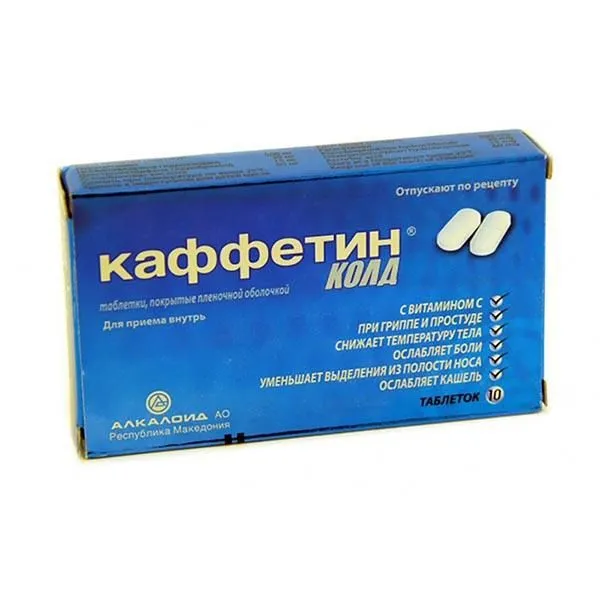
Table of Contents
INSTRUCTION FOR MEDICAL USE OF THE MEDICINAL PRODUCT CAFFETIN COLD®
Composition:
Active substances: 1 tablet contains paracetamol 500 mg, pseudoephedrine 24.6 mg (as pseudoephedrine hydrochloride 30 mg), dextromethorphan hydrobromide 15 mg, and ascorbic acid 60 mg;
Excipients: pregelatinized starch, microcrystalline cellulose, povidone, sodium croscarmellose, colloidal anhydrous silicon dioxide, talc, magnesium stearate; Opadry II Blue [polyvinyl alcohol, partially hydrolyzed; polyethylene glycol 3350; titanium dioxide (E 171); talc (E 553b); indigo carmine dye (E 132)].
Pharmaceutical form. Film-coated tablets.
Main physicochemical properties: blue, oblong, biconvex, film-coated tablets with a break line on one side.
Pharmacotherapeutic group.
Paracetamol, combinations without psychotropic agents. ATC code N02BE51.
Pharmacological properties.
Pharmacodynamics. Kauffetin Cold**®** is a combined preparation whose action is determined by its components; it exerts analgesic, antipyretic, and vasoconstrictive effects and relieves cold symptoms.
Paracetamol provides analgesic and antipyretic effects. The mechanism of action of paracetamol is due to inhibition of prostaglandin synthesis by suppressing cyclooxygenase of arachidonic acid. This action results in reduced sensitivity to mediators such as kinins and serotonin, accompanied by an increased pain threshold. Decreased prostaglandin concentrations in the hypothalamus account for the antipyretic effect. Paracetamol does not inhibit platelet aggregation.
Pseudoephedrine affects alpha- and, to a lesser extent, beta-adrenergic receptors. Pseudoephedrine acts indirectly by promoting the release of norepinephrine from storage sites. By stimulating alpha-adrenergic receptors in the mucous membranes of the respiratory tract, it causes vasoconstriction, reduces nasal mucosal swelling and tissue hyperemia, and improves nasal breathing. It enhances drainage from the nasal sinuses and induces relaxation of bronchial smooth muscles. Pseudoephedrine may exert a mild stimulant effect on the central nervous system and does not cause or causes minimal withdrawal symptoms such as nasal congestion. After oral administration of 60 mg of pseudoephedrine, nasal congestion is relieved within 30 minutes and returns after 4–6 hours.
Dextromethorphan hydrobromide is a non-narcotic cough suppressant. It acts on the cough center located in the medulla oblongata, increasing the cough threshold. The antitussive effect of dextromethorphan is equivalent to that of codeine. It does not exert analgesic or narcotic effects. At therapeutic doses, dextromethorphan does not suppress ciliary activity.
Ascorbic acid, included in Kauffetin Cold**®** tablets, due to its antioxidant properties, helps normalize capillary permeability, participates in the synthesis of steroid hormones and collagen, tissue regeneration, regulation of various redox processes and carbohydrate metabolism, and enhances nonspecific resistance of the body, including against respiratory infections.
Pharmacokinetics. Since the preparation is combined, its pharmacokinetics has not been studied.
Dextromethorphan undergoes rapid and extensive first-pass metabolism in the liver following oral administration. Genetically controlled O-demethylation (CYP2D6) is the main determinant of dextromethorphan pharmacokinetics in volunteers.
There are likely different phenotypes of this oxidative process, leading to differences in pharmacokinetics among individuals. Unmetabolized dextromethorphan, along with three demethylated morphinan metabolites—dextrorphan (also known as 3-hydroxy-N-methylmorphinan), 3-hydroxymorphinan, and 3-methoxymorphinan—have been identified as excreted substances in urine.
Dextrorphan, which also has antitussive activity, is the primary metabolite. In some individuals, metabolism is slower, and unchanged dextromethorphan predominates in blood and urine.
Clinical characteristics.
Indications.
Symptomatic treatment of colds and infectious-inflammatory diseases of the respiratory tract accompanied by sore throat, headache, muscle pain, fever, nasal and paranasal sinus mucosa edema, and rhinitis.
Contraindications.
Hypersensitivity to the components of the drug, acute hepatitis, acute hepatic or renal failure, severe liver or kidney disease, congenital hyperbilirubinemia, epilepsy, severe arterial hypertension, ischemic heart disease, patients at risk of developing respiratory insufficiency, pulmonary insufficiency, bronchial asthma, pulmonary emphysema, respiratory depression, diabetes mellitus, benign prostatic hyperplasia with urinary retention, pheochromocytoma, closed-angle glaucoma, insomnia, hyperthyroidism, glucose-6-phosphate dehydrogenase deficiency, blood disorders, Gilbert's syndrome, severe anemia, leukopenia, alcohol abuse, concomitant use with beta-blockers or tricyclic antidepressants, thrombosis, predisposition to thrombosis, thrombophlebitis. Do not use concomitantly with monoamine oxidase inhibitors (MAOIs) or within 2 weeks after discontinuation of MAOIs. Pregnancy and breastfeeding period. Children under 12 years of age. Severe hypertension or uncontrolled hypertension. Severe acute or chronic kidney diseases/renal insufficiency.
Interaction with other medicinal products and other types of interactions.
Metoclopramide and domperidone increase the absorption rate of paracetamol, while cholestyramine reduces it.
Paracetamol may increase the elimination half-life of chloramphenicol.
Paracetamol should be used with caution concomitantly with flucloxacillin, as co-administration is associated with metabolic acidosis with a high anion gap due to pyroglutamic acidosis, especially in patients with risk factors (see section "Special precautions for use").
The anticoagulant effect of warfarin and other coumarins may be enhanced during prolonged use of paracetamol, thereby increasing the risk of bleeding.
Drugs that induce hepatic microsomal enzymes (anticonvulsants, barbiturates, rifampicin, and oral contraceptive steroids) may enhance the metabolism of paracetamol, resulting in decreased plasma concentrations and increased elimination rate of paracetamol. In patients taking these drugs and other potentially hepatotoxic agents (including alcohol), the risk of paracetamol toxicity may be increased (due to increased formation of hepatotoxic metabolites, especially in patients receiving paracetamol doses higher than recommended).
Barbiturates reduce the antipyretic effect of paracetamol.
Concomitant use of high doses of paracetamol with isoniazid increases the risk of hepatotoxic syndrome.
Paracetamol reduces the effectiveness of diuretics.
Pseudoephedrine hydrochloride, moclobemide: risk of hypertensive crisis; cardiac glycosides increase the risk of arrhythmias; ergot alkaloids increase the risk of ergotism; anorexigenic agents and oxytocin increase the risk of hypertension.
Pseudoephedrine partially counteracts the antihypertensive effects of drugs such as methyldopa, alpha- and beta-adrenergic blockers.
Dextromethorphan hydrobromide should not be taken concomitantly with amiodarone, paroxetine, propafenone, or thioridazine.
Concomitant use of fluoxetine and dextromethorphan may lead to serotonin syndrome or dextromethorphan toxicity (nausea, vomiting, blurred vision, hallucinations).
Concomitant use of dextromethorphan and MAO inhibitors may result in serotonin syndrome (nausea, arterial hypotension, leg tremor, muscle spasms, elevated body temperature, and even cardiac arrest).
Haloperidol increases dextromethorphan toxicity when used concomitantly.
CYP2D6 inhibitors. Dextromethorphan is metabolized by CYP2D6 and undergoes extensive first-pass metabolism. Concomitant administration of potent inhibitors of the CYP2D6 enzyme may increase dextromethorphan concentrations in the body to levels many times higher than normal. This increases the risk of dextromethorphan toxic effects (excitation, confusion, tremor, insomnia, diarrhea, and respiratory depression) and the possibility of developing serotonin syndrome. Potent inhibitors of the CYP2D6 enzyme include fluoxetine, paroxetine, quinidine, and terbinafine. When co-administered with quinidine, plasma concentrations of dextromethorphan increased up to 20-fold, intensifying adverse CNS effects of the drug. Amiodarone, flecainide, propafenone, sertraline, bupropion, methadone, cinacalcet, haloperidol, perphenazine, and thioridazine demonstrate similar effects on dextromethorphan metabolism. If concomitant use of CYP2D6 inhibitors and dextromethorphan is necessary, the patient should be under medical supervision, and dose reduction of dextromethorphan may be required.
Alcohol may intensify adverse reactions of dextromethorphan.
Ascorbic acid: absorption of ascorbic acid is reduced when used concomitantly with oral contraceptives, fruit or vegetable juices, or alkaline drinks; oral ascorbic acid increases the absorption of penicillin, tetracycline, and iron, reduces the effectiveness of heparin and indirect anticoagulants, increases the risk of crystalluria during salicylate therapy. Concomitant intake of vitamin C and deferoxamine increases tissue iron toxicity, especially in the myocardium, which may lead to circulatory decompensation. Vitamin C may be taken only 2 hours after deferoxamine injection.
Ascorbic acid increases the total clearance of ethanol.
Special precautions for use.
Do not use other medications containing paracetamol, as this may lead to overdose.
Avoid alcohol and caffeine consumption during the use of Kaффetin Cold®.
Use with caution in elderly patients.
Patients with mild to moderate renal or hepatic impairment may be prescribed the drug only under medical supervision.
Consider that in patients with alcoholic liver disease, the risk of hepatotoxic effects of paracetamol is increased.
Cases of high anion gap metabolic acidosis (HAGMA) due to 5-oxoproline (pyroglutamic acid) accumulation have been reported in critically ill patients, such as those with severe renal failure or sepsis, or in patients with malnutrition or other sources of glutathione deficiency (e.g., chronic alcoholism), who were treated with therapeutic doses of paracetamol over a prolonged period or in combination with flucloxacillin. If HAGMA due to pyroglutamic acidosis is suspected, immediate discontinuation of paracetamol is recommended, along with careful monitoring. Measurement of 5-oxoproline levels in urine may be helpful in identifying pyroglutamic acidosis as the underlying cause of HAGMA in patients with multiple risk factors. The drug may affect laboratory test results for blood glucose and uric acid levels.
The drug is not recommended for patients with heart disease, arterial hypertension, thyroid disorders, or increased intraocular pressure.
Prescribe with caution in debilitated and weakened patients.
During treatment, monitor peripheral blood parameters and liver function.
Do not exceed the recommended dosage or duration of treatment.
If symptoms persist, consult a physician.
Serious skin reactions, such as acute generalized exanthematous pustulosis (AGEP), may occur with medications containing pseudoephedrine. Acute pustular rash may develop within the first 2 days of treatment and is accompanied by fever and numerous small, predominantly non-follicular pustules arising on widespread edematous erythema, mainly localized in skin folds, trunk, and upper extremities. The patient's condition should be closely monitored. If symptoms such as hyperthermia, erythema, or multiple small pustules occur, discontinue the drug and take appropriate measures if necessary.
Consult a physician before use if the patient is taking warfarin or similar anticoagulant agents.
Ascorbic acid, being a reducing agent, may interfere with laboratory test results, for example, in determining blood glucose, bilirubin levels, transaminase activity, lactate dehydrogenase activity, etc.
Since ascorbic acid has a mild stimulating effect, it is not recommended to take the medication late in the day. Concurrent intake with alkaline beverages reduces the absorption of ascorbic acid; therefore, tablets should not be taken with alkaline mineral water. Absorption of ascorbic acid may also be impaired in intestinal dyskinesia, enteritis, and achylia. When high doses are used or the drug is administered for a prolonged period, kidney function, arterial blood pressure, and pancreatic function should be monitored. Use with caution in patients with a history of kidney disease. High doses of the drug should not be prescribed to patients with increased blood coagulability. Since ascorbic acid enhances iron absorption, its use in high doses may be hazardous in patients with hemochromatosis, thalassemia, polycythemia, leukemia, or sideroblastic anemia. Patients with high iron levels in the body should use the drug in minimal doses.
Regarding pseudoephedrine: if adverse reactions such as hallucinations, restlessness, or sleep disturbances occur, discontinue use of the drug.
Cases of ischemic colitis associated with pseudoephedrine use have been reported.
Discontinue pseudoephedrine and seek immediate medical attention if sudden abdominal pain, rectal bleeding, or other symptoms of ischemic colitis occur.
Cases of dextromethorphan abuse and dependence have been reported. Use with particular caution in adolescents and young adults, as well as in patients with a history of drug or psychoactive substance abuse.
Dextromethorphan is metabolized by hepatic cytochrome P450 2D6. The activity of this enzyme is genetically determined. Approximately 10% of the general population are poor metabolizers of CYP2D6. Poor metabolizers and patients taking CYP2D6 inhibitors concurrently may experience enhanced and/or prolonged effects of dextromethorphan. Therefore, caution is advised in patients who are slow metabolizers of CYP2D6 or who are taking CYP2D6 inhibitors (see section "Interaction with other medicinal products and other types of interactions").
Serotonin syndrome: serotonergic effects, including potentially life-threatening serotonin syndrome, have been reported with concomitant use of dextromethorphan and serotonergic agents, such as selective serotonin reuptake inhibitors (SSRIs), drugs that affect serotonin metabolism, including monoamine oxidase inhibitors (MAOIs), and CYP2D6 inhibitors.
Serotonin syndrome may include mental status changes, autonomic instability, neuromuscular disturbances, and/or gastrointestinal symptoms.
If serotonin syndrome is suspected, discontinue treatment with the drug.
Ischemic optic neuropathy: cases of ischemic optic neuropathy have been reported with pseudoephedrine use. Discontinue pseudoephedrine immediately if sudden vision loss or decreased visual acuity, such as scotoma, occurs.
Posterior reversible encephalopathy syndrome (PRES) and reversible cerebral vasoconstriction syndrome (RCVS).
Cases of PRES and RCVS have been reported with medications containing pseudoephedrine (see section "Adverse reactions"). The risk is increased in patients with severe or uncontrolled hypertension or with severe acute or chronic kidney disease/renal failure (see section "Contraindications").
Discontinue pseudoephedrine and seek immediate medical attention if symptoms such as sudden severe or thunderclap headache, nausea, vomiting, confusion, seizures, and/or visual disturbances occur. Most reported cases of PRES and RCVS resolved after discontinuation of the drug and appropriate treatment.
Use during pregnancy or breastfeeding.
The drug is contraindicated during pregnancy and breastfeeding.
Ability to affect reaction speed when driving or operating machinery.
The use of this drug may impair psychomotor performance. Therefore, patients should exercise caution when driving or engaging in other activities requiring high concentration and rapid psychomotor responses.
Method of Administration and Dosage.
Adults and children over 12 years of age take 1 tablet as a single dose. The drug should be administered no more than 4 times a day. The interval between doses should be at least 4 hours.
The maximum single dose is 2 tablets, and the maximum daily dose is 2 tablets taken 4 times a day within 24 hours.
Duration of treatment: 2–4 days.
Hepatic impairment
Caution is required in patients with impaired liver function.
Renal impairment
Caution is required in patients with impaired kidney function, especially when associated with cardiovascular diseases.
Children
The drug is contraindicated in children under 12 years of age.
Overdose
In case of overdose, each active ingredient may cause specific symptoms.
Paracetamol – liver damage is possible in adults who have ingested 10 g or more of paracetamol, and in children who have taken a dose exceeding 150 mg/kg body weight. In patients with risk factors (long-term treatment with carbamazepine, phenobarbital, phenytoin, primidone, rifampicin, St. John’s wort, or other drugs inducing liver enzymes; regular excessive alcohol consumption; glutathione depletion due to malnutrition, cystic fibrosis, HIV infection, fasting, or cachexia), ingestion of 5 g or more of paracetamol may lead to liver damage.
Symptoms within the first 24 hours: pallor, nausea, vomiting, anorexia, and abdominal pain. Signs of liver damage may become apparent 12–48 hours after overdose. Glucose metabolism disturbances and metabolic acidosis may occur. In severe poisoning, hepatic failure may progress to encephalopathy, hemorrhage, hypoglycemia, coma, and death. Acute renal failure with acute tubular necrosis may present as severe flank pain, hematuria, proteinuria, and may develop even in the absence of severe liver damage. Cardiac arrhythmias and pancreatitis have also been reported.
With prolonged use of the drug in high doses, hematological complications may include aplastic anemia, pancytopenia, agranulocytosis, neutropenia, leukopenia, and thrombocytopenia. Central nervous system (CNS) effects may include dizziness, psychomotor agitation, and disorientation. Urinary system effects may include nephrotoxicity (renal colic, interstitial nephritis, capillary necrosis).
Regarding overdose symptoms related to the active ingredient pseudoephedrine hydrochloride: overdose symptoms are primarily associated with effects on the central nervous and cardiovascular systems, including drowsiness, excitation, irritability, restlessness, tremor, and convulsions; tachycardia, palpitations, arterial hypertension; and urinary retention.
Regarding overdose symptoms related to the active ingredient dextromethorphan hydrobromide:
dextromethorphan overdose may be accompanied by nausea, vomiting, dystonia, excitation, confusion, drowsiness, stupor, nystagmus, cardiotoxicity (tachycardia, ECG abnormalities including QT interval prolongation), ataxia, and toxic psychosis with visual hallucinations, increased nervous excitability.
In cases of severe overdose, the following symptoms may occur: coma, respiratory depression, and convulsions.
Regarding overdose symptoms related to the active ingredient ascorbic acid:
when ascorbic acid is administered in doses exceeding 1 g per day, irritation of the gastrointestinal mucosa, nausea, vomiting, heartburn, and diarrhea may occur. After a single excessive dose, nausea, vomiting, bloating and abdominal pain, itching, skin rash, and increased nervous system excitability may occur.
With prolonged use in high doses, possible effects include suppression of the islet apparatus of the pancreas (pancreatic function should be monitored), development of cystitis, accelerated formation of urinary stones (urates, oxalates, cystine), damage to the glomerular apparatus of the kidneys, crystalluria, myocardial dystrophy, disturbances in zinc and copper metabolism, thrombocytosis, erythrocytopenia, thrombosis, neutrophilic leukocytosis, and hypercoagulability.
The consequences of ascorbic acid overdose may be attributed to severe hepatic failure caused by paracetamol overdose.
Treatment: in case of overdose, prompt medical intervention is required. The patient should be immediately transported to a hospital, even if early symptoms of overdose are absent. Symptoms may be limited to nausea and vomiting, or may not reflect the severity of overdose or risk of organ damage. Administration of activated charcoal should be considered if an excessive dose of paracetamol was ingested within the past hour. Plasma paracetamol concentration should be measured 4 hours or more after ingestion (earlier concentrations are unreliable). Treatment with N-acetylcysteine may be administered within 24 hours after paracetamol ingestion, but its maximum protective effect is achieved when administered within 8 hours after overdose. The efficacy of the antidote decreases sharply after this time. If necessary, intravenous N-acetylcysteine should be administered according to the established dosing schedule. In the absence of vomiting, oral methionine may be used as an appropriate alternative in remote areas outside hospital settings. In cases of dextromethorphan overdose, naloxone may be administered in standard doses to patients in a sedated or comatose state, as used in opioid overdose treatment. Benzodiazepines, including those indicated for seizure control, and external cooling measures in case of hyperthermia due to serotonin syndrome, may also be used.
Adverse Reactions
Therapeutic doses of the drug are generally well tolerated. Adverse effects are mainly due to the presence of paracetamol in the formulation. Pseudoephedrine may cause excitability.
Rarely, the following adverse events may occur, requiring immediate discontinuation of the drug:
Allergic reactions: allergic reactions including cross-reactions related to hypersensitivity, anaphylaxis, pruritus, skin and mucosal rashes (usually generalized erythematous rash, urticaria), angioneurotic edema, multiform exudative erythema (including Stevens–Johnson syndrome), toxic epidermal necrolysis (Lyell’s syndrome), difficulty breathing;
Skin and subcutaneous tissue disorders: severe skin reactions, including acute generalized exanthematous pustulosis (AGEP);
Central nervous system: restlessness, tremor, insomnia, hallucinations, drowsiness, irritability, anxiety, headache, weakness; at high doses – dizziness, psychomotor agitation, and disorientation; posterior reversible encephalopathy syndrome (PRES) (see section "Special precautions") – frequency unknown; reversible cerebral vasoconstriction syndrome (RCVS) (see section "Special precautions") – frequency unknown;
Eye disorders: blurred vision, ischemic optic neuropathy;
Gastrointestinal disorders: nausea, vomiting, epigastric pain, dry mouth, diarrhea, ischemic colitis;
Renal and urinary system disorders: dysuria;
Hepatic effects: increased activity of "liver" enzymes, usually without development of jaundice, liver function abnormalities, jaundice (yellowing of the skin and eyes), abdominal pain, pronounced fatigue, hepatonecrosis (dose-dependent effect);
Blood and lymphatic system disorders: in isolated cases – thrombocytopenia, leukopenia, neutropenia, anemia, agranulocytosis, sulfhemoglobinemia and methemoglobinemia (cyanosis, dyspnea, chest pain), hemolytic anemia, bruising or bleeding;
Endocrine system disorders: hypoglycemia, up to hypoglycemic coma;
Respiratory system disorders: bronchospasm in patients sensitive to aspirin and other NSAIDs;
Musculoskeletal system disorders: muscle spasm;
Cardiovascular disorders: arterial hypertension, hypotension, angina pectoris, arrhythmias, tachycardia;
Metabolism and nutrition disorders: metabolic acidosis with high anion gap* – frequency unknown;
Other: increased body temperature.
*Description of selected adverse reactions
Metabolic acidosis with high anion gap
Cases of metabolic acidosis with high anion gap as a result of pyroglutamic acidosis have been observed in patients with risk factors who used paracetamol (see section "Special precautions"). Pyroglutamic acidosis may occur as a consequence of low glutathione levels in these patients.
Shelf life.
2 years.
Storage conditions.
Store at a temperature not exceeding 25°C.
Keep out of reach of children.
Packaging.
10 tablets per blister; 1 blister per cardboard box.
Prescription status.
Prescription only.
Manufacturer.
ALKALOID AD Skopje.
Manufacturer's location and address of business site.
Boulevard of Alexander the Great, 12, Skopje, 1000, Republic of North Macedonia.