Isoniazid-darnitsa
Ukraine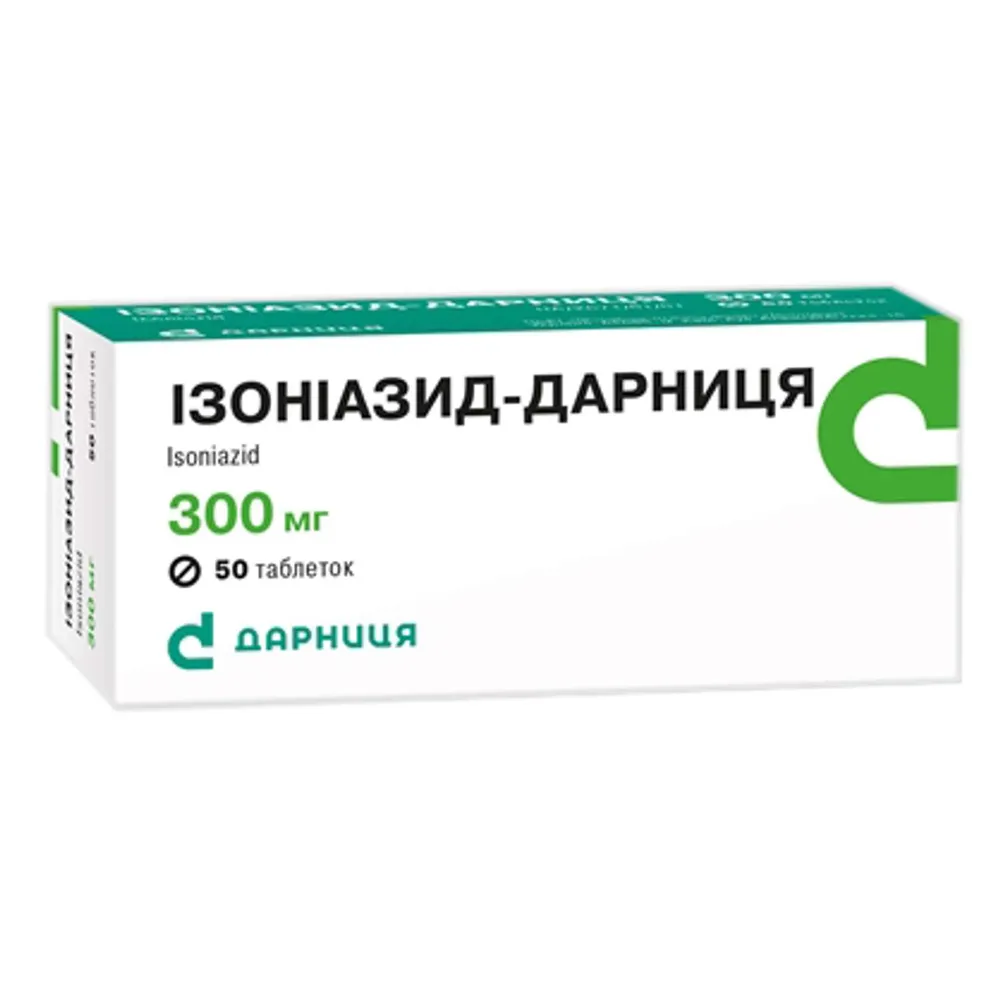
Table of Contents
INSTRUCTIONS FOR MEDICAL USE OF THE MEDICINAL PRODUCT ISONIAZID-DARNITSA (Isoniazid-Darnitsa)
Composition:
Active substance: isoniazid;
1 tablet contains 300 mg of isoniazid;
Excipients: microcrystalline cellulose, methylcellulose, sodium croscarmellose, calcium stearate.
Pharmaceutical form. Tablets.
Main physico-chemical properties: tablets of round shape with flat surface, white or white with cream shade, with a score line and chamfer.
Pharmacotherapeutic group.
Antituberculosis agents. ATC code J04A C01.
Pharmacological properties.
Pharmacodynamics.
Isoniazid-Darnitsia inhibits DNA-dependent RNA polymerase and suppresses the synthesis of mycolic acids in the cell wall of Mycobacterium tuberculosis. The drug exhibits high bacteriostatic activity against Mycobacterium tuberculosis, inhibiting their growth at a concentration of 0.03 mcg/mL. It is particularly active against rapidly multiplying microorganisms. It has weak effects on pathogens of other infectious diseases.
Pharmacokinetics.
Well absorbed from the gastrointestinal tract and readily penetrates the blood-brain barrier. Time to reach maximum plasma concentration (Tmax) is 1–4 hours. Plasma protein binding is up to 0.10 %. Volume of distribution is 0.56–0.76 L/kg. Tuberculostatic concentration after single dose administration persists for 6–24 hours. Widely distributed into tissues and body fluids, including cerebrospinal fluid, pleural effusion, ascitic fluid, skin, lungs, sputum, saliva, and caseous masses. Penetrates the placenta and is excreted into breast milk.
Metabolized in the liver via acetylation. The rate of acetylation is genetically determined and depends on the activity level of N-acetyltransferase. Based on acetylation rate, patients are classified as "fast" or "slow" inactivators. In "fast" inactivators, the half-life of isoniazid is 0.5–1.6 hours, and the amount of unchanged drug excreted by the kidneys is less than 10 % per day. In "slow" inactivators, the respective values are 2–5 hours and more than 10 % per day.
Clinical characteristics.
Indications.
- In combination with 3–4 other antituberculosis drugs – for treatment of active tuberculosis of all forms and localizations;
- as monotherapy – for treatment of latent tuberculosis infection;
- as monotherapy – for prevention of tuberculosis in individuals who have been or are in close contact with tuberculosis patients.
Contraindications.
Hypersensitivity to isoniazid or to excipients of the medicinal product.
Epilepsy and other disorders associated with predisposition to seizures, severe psychoses, poliomyelitis (including in medical history), toxic hepatitis in medical history due to use of hydrazide derivatives of isonicotinic acid (phthivazid), pronounced atherosclerosis, acute hepatic and/or renal failure.
Use of isoniazid at doses exceeding 10 mg/kg body weight per day is contraindicated during pregnancy, in presence of cardiopulmonary insufficiency, arterial hypertension grade II–III, ischemic heart disease, neurological disorders, bronchial asthma, chronic renal failure, hepatitis during exacerbation, liver cirrhosis, psoriasis, eczema in acute phase, myxedema, hypothyroidism.
Interaction with other medicinal products and other types of interactions.
Antacids – reduce absorption of isoniazid (interval between administration should be at least 1 hour).
Oral anticoagulants, benzodiazepines, phenytoin, carbamazepine, theophylline, MAO inhibitors – isoniazid potentiates effects of these medicinal products (including toxic effects).
Isoniazid may reduce hepatic metabolism of benzodiazepines (e.g., diazepam, flurazepam, triazolam, midazolam), leading to increased plasma concentrations of the latter. Patients should be carefully monitored for signs of benzodiazepine toxicity, and benzodiazepine doses should be adjusted accordingly.
Potentially hepatotoxic and neurotoxic agents (including ethanol, rifampicin, paracetamol) – increased risk of developing toxic hepatitis and neuropathy (with paracetamol, increased risk of hepatotoxicity).
Valproate – concomitant use increases valproate plasma concentration.
Stavudine – increased risk of developing distal sensory neuropathy.
Since clearance of isoniazid is doubled when co-administered with zalcitabine in HIV-infected patients, concentrations of both isoniazid and zalcitabine should be monitored to ensure treatment efficacy.
Vitamin B6 and glutamic acid – when used in combination, reduce the likelihood of isoniazid side effects.
To enhance efficacy, Isoniazid-Darnitsia should be used in combination with other antituberculosis medicinal products (e.g., rifampicin, ethambutol, pyrazinamide), and in case of mixed infection – simultaneously with broad-spectrum antibiotics: fluoroquinolones (e.g., ofloxacin, ciprofloxacin), sulfonamides (e.g., co-trimoxazole), macrolides (e.g., clarithromycin, azithromycin, roxithromycin).
Enhances antiarrhythmic properties of phenytoin.
Long-term use of isoniazid may reduce plasma clearance and prolong duration of action of alfentanil.
Glucocorticoids – concomitant use increases metabolism and elimination of isoniazid.
When prescribing isoniazid to patients with slow inactivation of the drug who are also receiving para-aminosalicylic acid, tissue concentration of the drug may be increased, thereby increasing the risk of adverse effects.
Isoniazid may slow hepatic metabolism of primidone, triazolam, chlorzoxazone, disulfiram, potentially leading to increased toxicity.
Isoniazid may reduce the therapeutic effect of levodopa.
Concomitant use with itraconazole is not recommended due to possible significant reduction in serum concentration of the latter and lack of therapeutic effect.
Isoniazid when used concomitantly with ketoconazole may reduce serum levels of the latter; therefore, drug concentration in blood should be monitored and dose increased if necessary.
Isoniazid when used with acetaminophen increases its toxicity due to generation and accumulation of metabolites in the liver, which may lead to serious adverse reactions.
Concomitant use of isoniazid with phenobarbital may result in enhanced hepatotoxicity.
Chlorpromazine: concomitant use may impair isoniazid metabolism. Patients should be monitored for isoniazid toxicity.
Haloperidol: concomitant use may increase haloperidol plasma levels. Dose adjustment of haloperidol is required.
Anticoagulants (coumarin- or indandione-derivatives, e.g., warfarin): concomitant use may inhibit enzymatic metabolism of anticoagulants, leading to increased plasma concentration and increased risk of bleeding. Prothrombin time should be closely monitored.
Enflurane: when used concomitantly, isoniazid may increase formation of potentially nephrotoxic inorganic fluorides – metabolites of enflurane.
Theophylline: plasma concentration of theophylline increases; therefore, theophylline levels in blood should be monitored and dosage adjusted accordingly.
Procainamide: plasma concentration of isoniazid increases. Monitoring of patients for isoniazid toxicity is required.
Corticosteroids (e.g., prednisolone): dose of isoniazid should be adjusted.
Aluminum hydroxide: reduces absorption of isoniazid. During isoniazid therapy, acid-suppressing medicinal products or antacids not containing aluminum hydroxide should be used.
Metabolism of isoniazid and its metabolite acetyl-isoniazid is not altered by excessive alcohol consumption, although increased levels may occur in individuals who abuse alcohol; however, this effect is not well defined.
Possible interaction of isoniazid with food products containing histamine and tyramine (hard cheese, red wine, tuna, and other tropical fish): adverse reactions such as headache, excessive sweating, palpitations, flushing, and hypotension may occur.
Isoniazid-Darnitsia should not be taken with food. Studies have shown that bioavailability of isoniazid is significantly reduced when administered with food.
Special precautions for use.
Due to the development of resistant strains of mycobacteria during monotherapy with isoniazid, it should be used in combination with other antituberculosis agents. In mixed infections, antibiotics with broad-spectrum activity, fluoroquinolones, and sulfonamides should be prescribed concurrently with isoniazid.
Dosage must be properly adjusted according to the patient's ability to inactivate isoniazid. Prior to initiating therapy, it is advisable to determine the rate of isoniazid inactivation by measuring the concentration of active substances in blood and urine. Patients who rapidly inactivate isoniazid should receive higher doses. "Fast inactivators" are defined as patients who excrete less than 10% of the administered dose of active isoniazid in urine within 24 hours (elimination half-life approximately 1 hour), whereas "slow inactivators" excrete more than 10% (elimination half-life of isoniazid approximately 3 hours).
To reduce adverse effects, pyridoxine hydrochloride (orally or intramuscularly), glutamic acid, thiamine chloride or thiamine bromide (intramuscularly), or sodium ATP should be co-administered with isoniazid.
All patients require monitoring of liver function during treatment.
Special precautions are necessary for patients with impaired liver function. Any deterioration in liver function in such patients is an indication for discontinuation of therapy.
If serum AST levels increase more than threefold or bilirubin levels rise, the drug must be discontinued.
Isoniazid should not be prescribed to individuals with serious adverse reactions to medications, including drug-induced liver disease.
The risk of isoniazid toxicity increases in severe renal insufficiency (creatinine clearance less than 10 ml/min).
Medical supervision is required during treatment, including regular liver function tests and ophthalmological examinations. During the first month, examinations should be performed at least twice, then once monthly.
Isoniazid should not be prescribed in cases of epilepsy or predisposition to seizures.
Extreme caution is required when prescribing isoniazid to patients taking other potentially hepatotoxic drugs, or those with diabetes mellitus, chronic alcoholism, or impaired liver or kidney function.
The risk of isoniazid-induced hepatotoxicity also increases in patients aged 35 years and older, particularly women, slow inactivators, HIV-infected individuals, those suffering from malnutrition, and patients with neuropathy.
If early symptoms of hepatitis appear (malaise, fatigue, nausea, loss of appetite), treatment must be discontinued immediately.
Alcohol consumption should be avoided during treatment.
In patients with diabetes mellitus, a false-positive result in glucose urine tests may occur.
Pyridoxine should be prescribed to patients at risk of developing neuropathy or pyridoxine deficiency (diabetic patients, chronic alcoholics, patients with hypotrophy, end-stage renal failure, pregnant women, HIV-infected individuals).
Potential interaction may occur between isoniazid and foods containing histamine and tyramine (e.g., aged cheese, red wine, tuna, and other tropical fish), which may lead to adverse reactions such as headache, increased sweating, palpitations, flushing, and arterial hypotension.
Isoniazid should not be taken with food. Studies have shown that the bioavailability of isoniazid is significantly reduced when administered with food.
This medicinal product contains sodium. This should be taken into account in patients on a controlled sodium diet.
Use during pregnancy or breastfeeding.
During pregnancy, the use of this medicinal product at doses exceeding 10 mg/kg/day is contraindicated. At doses up to 10 mg/kg body weight per day, isoniazid may be used only after careful consideration of the benefit-risk ratio. When prescribing Darnitsa Isoniazid to pregnant women (at a daily dose up to 10 mg/kg body weight), it should be noted that isoniazid crosses the placenta and may cause myelomeningocele and hypospadias, hemorrhages (due to vitamin K deficiency), and delayed psychomotor development in the fetus.
Isoniazid passes into breast milk; therefore, considering the potential risk of hepatitis and peripheral neuritis in the infant, a decision must be made either to discontinue breastfeeding or to discontinue the drug.
Ability to affect reaction speed when driving or operating machinery.
Drivers and operators of complex machinery should be aware of the potential for adverse effects on the nervous system that may impair the ability to concentrate and reaction speed.
Dosage and Administration.
The daily and total course dose should be determined individually, depending on the course and form of the disease, the degree of isoniazid inactivation, treatment efficacy, and the patient's tolerance to the drug.
Isoniazid should be administered orally either before meals or 30–40 minutes after eating.
For adults and children, the daily dose is 5 mg/kg of body weight once daily when administered daily, or 10 mg/kg of body weight when administered intermittently (three times per week).
The maximum daily dose is 600 mg for adults and 500 mg for children.
Treatment of active tuberculosis lasts 6–8 months; for prophylactic purposes, treatment lasts 2–3 months.
Children.
Should be used to treat children with body weight of 30 kg or more.
Overdose.
Symptoms: following overdose, within 0.5–3 hours after drug intake, gastrointestinal disturbances (including liver function) may occur—nausea, vomiting, anorexia, metabolic acidosis, acetonuria, hyperglycemia, glucosuria, neurotoxic manifestations (dizziness, fever, headache, visual and auditory disturbances, slurred speech, weakness, disorientation, visual hallucinations, hyperreflexia, respiratory insufficiency, and rapidly progressing central nervous system depression, stupor, convulsions, coma).
Treatment: induce vomiting, gastric lavage, and administration of activated charcoal within 2–3 hours after ingestion. Subsequently, provide supportive therapy: intravenous administration of pyridoxine (vitamin B6), repeated every 5–30 minutes as needed. Hemodialysis effectively removes isoniazid from the blood (up to 73% of isoniazid during a single five-hour session).
In case of seizures, diazepam, magnesium sulfate solution, vitamin B6 should be used; in case of liver dysfunction—methionine, lipamide, ATP, vitamin B12.
Further treatment should focus on careful monitoring and support of pulmonary ventilation and correction of metabolic acidosis. There is no specific antidote.
Adverse Reactions
Eye disorders: optic neuritis, optic nerve atrophy.
Ear and labyrinth disorders: hearing loss and tinnitus in patients with end-stage renal disease.
Respiratory, thoracic and mediastinal disorders: allergic pneumonitis.
Gastrointestinal disorders: abdominal discomfort, anorexia, nausea, dry mouth, vomiting, constipation, flatulence, acute pancreatitis.
Hepatobiliary disorders: liver function abnormalities, hepatitis, increased serum transaminases (SGOT, SGPT), bilirubinemia, bilirubinuria, jaundice, fulminant hepatic failure which may lead to necrosis, isoniazid-associated hepatitis (especially in patients with chronic liver disease or those who abuse alcohol).
Renal and urinary disorders: dysuria, urinary retention; nephrotoxicity, including interstitial nephritis.
Endocrine disorders: pyridoxine deficiency, pellagra, hyperglycemia, metabolic acidosis, Cushing's syndrome.
Nervous system disorders: dizziness, headache, irritability, nervousness, euphoria, sleep disturbances, insomnia, paresthesia, peripheral neuropathy, sensory disturbances, peripheral neuritis.
Psychiatric disorders: psychotic reactions (including toxic psychosis), ranging from minor personality changes to severe psychotic disorders, increased frequency of seizures in patients with epilepsy, muscle twitching and convulsions, hyperreflexia, toxic encephalopathy, memory disorders, confusion, disorientation, hallucinations.
Cardiac disorders: palpitations, chest pain and cardiac area pain, arterial hypertension, worsening of myocardial ischemia in elderly patients.
Blood and lymphatic system disorders: agranulocytosis, hemolytic anemia, sideroblastic anemia, aplastic anemia, thrombocytopenia, eosinophilia, leukopenia, neutropenia.
Immune system disorders: allergic reactions, including hypersensitivity reactions such as drug fever, skin rashes (measles-like, maculopapular dermatitis, purpura or exfoliative dermatitis), pruritus, interstitial pneumonitis, bronchial mucosa edema, lymphadenopathy and vasculitis; possible exacerbation of systemic lupus erythematosus symptoms or development of lupus-like syndrome.
Skin and subcutaneous tissue disorders: erythema multiforme, Stevens-Johnson syndrome, toxic epidermal necrolysis.
Musculoskeletal and connective tissue disorders: rheumatoid syndrome.
Reproductive system and breast disorders: gynecomastia, menorrhagia.
General disorders: malaise, weakness, fever.
Withdrawal syndrome: headache, insomnia, irritability, nervousness.
Adverse effects usually resolve with dose reduction or temporary discontinuation of the drug.
Reporting of suspected adverse reactions.
Reporting of suspected adverse reactions after drug registration is an important procedure. It enables continued monitoring of the benefit-risk balance of the medicinal product. Healthcare professionals are required to report any suspected adverse reactions through the national reporting system.
Shelf life. 5 years.
Storage conditions.
Store in the original packaging at a temperature not exceeding 25 °C.
Keep out of reach and sight of children.
Packaging.
10 tablets in a blister pack; 5 blisters per carton; 1000, 1500, or 2500 tablets in containers.
Prescription status. Prescription only.
Manufacturer: JSC "Pharmaceutical Company "Darnytsia".
Manufacturer's address and location of its business activity.
13, Boryspylska Street, Kyiv, 02093, Ukraine.