Irinotecan fares
Ukraine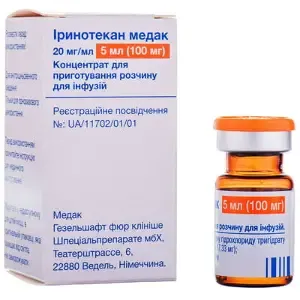
Table of Contents
INSTRUCTIONS for medical use of the medicinal product Irinotecan PhaRes (Irinotecan PhaRes)
Composition:
Active substance: irinotecan hydrochloride trihydrate;
1 ml of concentrate contains 20 mg of irinotecan hydrochloride trihydrate;
Excipients: sorbitol (E 420), lactic acid, sodium hydroxide, hydrochloric acid, water for injections.
Pharmaceutical form. Concentrate for solution for infusion.
Main physicochemical properties: clear, slightly yellowish solution.
Pharmacotherapeutic group. Antineoplastic agents. ATC code L01X X19.
Pharmacological properties.
Pharmacodynamics.
Irinotecan is a semi-synthetic derivative of camptothecin. Irinotecan FaRes is an antineoplastic agent that specifically inhibits DNA topoisomerase I. Under the action of carboxylesterase in most tissues, the drug is metabolized to SN-38, a compound that is more active against purified topoisomerase I and more cytotoxic than irinotecan against a number of human and murine tumor cell lines. Inhibition of DNA topoisomerase I by irinotecan or SN-38 leads to single-strand DNA breaks, which block the replication fork and result in cytotoxic effects. This cytotoxic effect has been shown to be time-dependent and specific to the S-phase of the cell cycle.
In vitro, irinotecan and SN-38 were poorly recognized by the multidrug resistance-associated P-glycoprotein and demonstrated cytotoxic activity against cell lines resistant to doxorubicin and vinblastine. Furthermore, irinotecan exhibits a broad spectrum of antitumor activity in vivo against murine tumor models (pancreatic duct adenocarcinoma P03, mammary adenocarcinoma MA16/C, colon adenocarcinomas C38 and C51) and human tumor xenografts (colon adenocarcinoma Co-4, mammary adenocarcinoma Mx-1, gastric adenocarcinomas ST-15 and ST-16). Irinotecan is also effective against tumors expressing multidrug resistance-associated P-glycoprotein (vincristine- and doxorubicin-resistant P388 leukemias). In addition to the antitumor activity of Irinotecan FaRes, the most significant pharmacological effect of the drug is inhibition of acetylcholinesterase activity.
Clinical study data
- First-line combination therapy for metastatic colorectal carcinoma.
- Combination therapy with folinic acid (FA) and 5-fluorouracil (5-FU)
A phase III study was conducted in 385 patients with metastatic colorectal cancer who had not previously received treatment for this disease. Treatment was administered according to the following regimens: once every 2 weeks (see section "Dosage and administration") or once weekly. In the regimen administered once every 2 weeks, on day 1, after administration of irinotecan at a dose of 180 mg/m² body surface area (once every 2 weeks), infusions of FA (200 mg/m² body surface area intravenously over 2 hours) and 5-FU (400 mg/m² body surface area intravenously as a bolus, followed by 600 mg/m² body surface area as a 22-hour intravenous infusion) were performed. On day 2, FA and 5-FU were administered at the same doses and according to the same schedule. In the weekly regimen, for 6 weeks, after administration of irinotecan at a dose of 80 mg/m² body surface area, infusions of FA (500 mg/m² body surface area intravenously over 2 hours) and 5-FU (2300 mg/m² body surface area as a 24-hour intravenous infusion) were performed.
In the study evaluating combination therapy using the two treatment regimens described above, the efficacy of irinotecan was assessed in 198 patients.
| Combination regimens (n=198) |
Once weekly (n=50) |
Once every 2 weeks (n=148) |
|||||
| irinotecan + 5-FU/FA |
5-FU/FA |
irinotecan + 5-FU/FA |
5-FU/FA |
irinotecan + 5-FU/FA |
5-FU/FA |
||
| Response rate (%) |
40.8* |
23.1* |
51.2* |
28.6* |
37.5* |
21.6* |
|
| p-value |
p < 0.001 |
p=0.045 |
p=0.005 |
||||
| Median time to progression (months) |
6.7 |
4.4 |
7.2 |
6.5 |
6.5 |
3.7 |
|
| p-value |
p < 0.001 |
NS |
p=0.001 |
||||
| Median duration of response (months) |
9.3 |
8.8 |
8.9 |
6.7 |
9.3 |
9.5 |
|
| p-value |
NS |
p=0.043 |
NS |
||||
| Median duration of response and disease stabilization (months) |
8.6 |
6.2 |
8.3 |
6.7 |
8.5 |
5.6 |
|
| p-value |
p < 0.001 |
NS |
p=0.003 |
||||
| Median treatment failure time (months) |
5.3 |
3.8 |
5.4 |
5.0 |
5.1 |
3.0 |
|
| p-value |
p=0.0014 |
NS |
p < 0.001 |
||||
| Median survival (months) |
16.8 |
14.0 |
19.2 |
14.1 |
15.6 |
13.0 |
|
| p-value |
p=0.028 |
NS |
p=0.041 |
||||
NS: Not significant.
*: According to the analysis performed in the per-protocol treatment group.
With the once-weekly regimen, the incidence of severe diarrhea was 44.4% in patients receiving irinotecan and 25.6% in patients receiving 5-FU/FA alone. The incidence of severe neutropenia (neutrophil count <500 cells/mm³) was 5.8% in patients receiving irinotecan and 2.4% in patients receiving 5-FU/FA alone. Furthermore, the median time to definitive deterioration in health status was significantly longer in the combination regimens containing irinotecan compared to the 5-FU/FA alone group (p=0.046). Quality of life in this Phase III study was assessed using the EORTC QLQ-C30 questionnaire. Time to definitive deterioration was consistently longer in the irinotecan treatment group. Gradual changes in the Global Health Status/Quality of Life score in the combination therapy group with irinotecan were slightly better (although not significant), suggesting that effective treatment with irinotecan as part of combination therapy does not compromise quality of life.
- In combination therapy with bevacizumab
The evaluation of bevacizumab in combination with irinotecan/5-FU/FA as first-line treatment for metastatic carcinoma of the colon or rectum was conducted in a randomized, double-blind, active-controlled, Phase III clinical trial (study AVF2107g). The addition of bevacizumab to the combination of irinotecan/5-FU/FA resulted in a statistically significant improvement in overall survival. The clinical benefit, assessed by the overall survival endpoint, was evident across all predefined patient subgroups, including those defined by age, sex, performance status, primary tumor location, number of affected organs, and duration of metastatic disease. Efficacy results from study AVF2107g are presented in the table below.
| Group 1 irinotecan/5-FU/FA + placebo |
Group 2 irinotecan/5-FU/FA + bevacizumab |
||
| Number of patients |
411 |
402 |
|
| Overall survival |
|||
|
15.6 |
20.3 |
|
|
14.29–16.99 |
18.46–24.18 |
|
|
0.660 |
||
|
0.00004 |
||
| Progression-free survival |
|||
|
6.2 |
10.6 |
|
|
0.54 |
||
|
<0.0001 |
||
| Overall response rate |
|||
|
34.8 |
44.8 |
|
|
30.2–39.6 |
39.9–49.8 |
|
|
0.0036 |
||
| Duration of response |
|||
| - Median (months) |
7.1 |
10.4 |
|
|
4.7–11.8 |
6.7–15.0 |
|
a - 5 mg/kg every 2 weeks;
b - compared with the control group.
- In combination therapy with cetuximab
The randomized EMR 62 202-013 study involving 599 patients with metastatic colorectal cancer who had not previously received treatment was conducted to compare the combination of cetuximab and irinotecan with or without the addition of 5-FU/FA infusions (599 patients). In the patient group evaluated for KRAS gene status, patients with tumors characterized by wild-type KRAS accounted for 64%. The efficacy results obtained in this study are presented in the table below.
| Variable/Statistical data |
Total number of patients |
Patients with wild-type KRAS gene |
||
| cetuximab + irinotecan + 5-FU/FA (n=599) |
irinotecan + 5-FU/FA (n=559) |
cetuximab + irinotecan + 5-FU/FA (n=172) |
irinotecan + 5-FU/FA (n=176) |
|
| Objective response rate (patients with complete or partial response) |
||||
|
46.9 (42.9; 51.0) |
38.7 (34.8; 42.8) |
59.3 (51.6; 66.7) |
43.2 (35.8; 50.9) |
|
0.0038 |
0.0025 |
||
| Progression-free survival |
||||
|
0.85 (0.726; 0.998) |
0.68 (0.501; 0.934) |
||
|
0.0479 |
0.0167 |
||
- In combination therapy with capecitabine
Results of a randomized controlled phase III study (CAIRO) confirm the use of capecitabine at an initial dose of 1000 mg/m² body surface area (for 2 weeks out of every 3) in combination with irinotecan as first-line therapy for the treatment of patients with metastatic colorectal cancer. 820 patients were randomized into sequential treatment (n=410) or combination therapy (n=410). Sequential treatment consisted of first-line therapy (capecitabine 1250 mg/m² body surface area twice daily for 14 days), second-line therapy (irinotecan 350 mg/m² body surface area on day 1), and third-line combination therapy (capecitabine 1000 mg/m² body surface area twice daily for 14 days and oxaliplatin 130 mg/m² body surface area on day 1). Combination therapy consisted of first-line therapy (capecitabine 1000 mg/m² body surface area twice daily for 14 days) in combination with irinotecan (250 mg/m² body surface area on day 1) (XELIRI) and second-line therapy (capecitabine 1000 mg/m² body surface area twice daily for 14 days and oxaliplatin 130 mg/m² body surface area on day 1). All treatment cycles were administered every 3 weeks. During first-line treatment, median progression-free survival in the group of patients initiating treatment was 5.8 months (95% CI: 5.1–6.2 months) for capecitabine monotherapy and 7.8 months (95% CI: 7.0–8.3 months) for XELIRI (p=0.0002).
Results of the interim analysis of a multicenter randomized controlled phase II study (AIO KRK 0604) confirm the feasibility of using capecitabine at an initial dose of 800 mg/m² body surface area (for 2 weeks out of every 3) in combination with irinotecan and bevacizumab as first-line therapy for the treatment of patients with metastatic colorectal cancer. 115 patients were randomized to treatment with the combination of capecitabine and irinotecan (XELIRI) and bevacizumab: capecitabine (800 mg/m² body surface area twice daily for 2 weeks with a 7-day break), irinotecan (200 mg/m² body surface area as a 30-minute infusion on day 1 of each 3-week cycle), and bevacizumab (7.5 mg/kg as a 30–90 minute infusion on day 1 of each 3-week cycle); overall, 118 patients were randomized to the treatment group receiving capecitabine in combination with oxaliplatin and bevacizumab: capecitabine (1000 mg/m² body surface area twice daily for 2 weeks with a 7-day break), oxaliplatin (130 mg/m² body surface area as a 2-hour infusion on day 1 of each 3-week cycle), and bevacizumab (7.5 mg/kg as a 30–90 minute infusion on day 1 of each 3-week cycle). Progression-free survival at 6 months in the group of patients initiating treatment was 80% in the XELIRI and bevacizumab group and 74% in the XELOX and bevacizumab group. Overall response rate (complete and partial response) was 45% (XELOX and bevacizumab) versus 47% (XELIRI and bevacizumab).
- Monotherapy as second-line treatment of metastatic colorectal carcinoma.
Phase II/III clinical trials using a dosing schedule of once every 3 weeks have been conducted in more than 980 patients with metastatic colorectal cancer who had previously failed treatment with 5-FU. The efficacy of irinotecan was evaluated in 765 patients who had documented disease progression on 5-FU at study entry.
| Phase III |
||||||
| Irwinotecan compared to supportive care |
Irwinotecan compared to 5-FU |
|||||
| irinotecan (n=183) |
supportive care (n=90) |
p value |
irinotecan (n=127) |
5-FU (n=129) |
p value |
|
| Progression-free survival at 6 months (%) |
NR |
NR |
33.5 * |
26.7 |
p=0.03 |
|
| Survival at 12 months (%) |
36.2* |
13.8 |
p=0.0001 |
44.8* |
32.4 |
p=0.0351 |
| Median survival (months) |
9.2* |
6.5 |
p=0.0001 |
10.8* |
8.5 |
p=0.0351 |
NC: not applicable.
*: Statistically significant difference.
In phase II studies involving 455 patients using a dosing regimen of once every 3 weeks, the 6-month progression-free survival rate was 30%, and median survival was 9 months. Median time to progression was 18 weeks. Additional non-comparative phase II studies were conducted involving 304 patients who received irinotecan at a dose of 125 mg/m² body surface area as 90-minute intravenous infusions weekly for 4 weeks followed by a 2-week rest period. In these studies, median time to progression was 17 weeks, and median survival was 10 months. The safety profile observed in 193 patients treated with the weekly regimen at an initial dose of 125 mg/m² body surface area was similar to that observed in studies using the every-3-weeks irinotecan administration schedule. The median time to the first episode of diarrhea was 11 days.
- In combination with cetuximab following failure of cytotoxic therapy containing irinotecan
The efficacy of the combination of cetuximab and irinotecan was evaluated in two clinical trials. Overall, 356 patients with metastatic colorectal cancer expressing epidermal growth factor receptors received combination therapy; these were patients for whom cytotoxic therapy with irinotecan had failed. The minimum Karnofsky performance status score was 60, but in most patients it was ≥ 80.
In the randomized trial EMR 62 202-007, combination therapy with cetuximab and irinotecan (218 patients) was compared to cetuximab monotherapy (111 patients).
In the open-label, single-arm trial IMCL CP02-9923, combination therapy was evaluated in 138 patients.
The efficacy results from these studies are presented in the table below.
| Study |
n |
Objective response rate |
Disease control rate |
Progression-free survival, months |
Overall survival, months |
|||||||||
| n (%) |
95% CI |
n (%) |
95% CI |
Median |
95% CI |
Median |
95% CI |
|||||||
| Cetuximab + irinotecan |
||||||||||||||
| EMR 62 202-007 |
218 |
50 (22.9) |
17.5; 29.1 |
121 (55.5) |
48.6; 62.2 |
41 |
2.8; 4.3 |
8.6 |
7.6; 9.6 |
|||||
| IMCLCP02-9923 |
138 |
21 (15.2) |
9.7; 22.3 |
84 (60.9) |
52.2; 69.1 |
29 |
2.6; 4.1 |
8.4 |
7.2; 10.3 |
|||||
| Cetuximab |
||||||||||||||
| EMR 62 202-007 |
111 |
12 (10.8) |
5.7; 18.1 |
36 (32.4) |
23.9; 42.0 |
1.5 |
1.4; 2.0 |
6.9 |
5.6; 9.1 |
|||||
1 - disease control rate (patients with complete response, partial response, or stable disease for at least 6 months);
2 - objective response rate (patients with complete or partial response).
Based on the objective response rate, disease control rate, and progression-free survival, the combination of cetuximab and irinotecan is more effective than cetuximab monotherapy. In a randomized study, no impact on overall survival was demonstrated (hazard ratio 0.91, p-value = 0.48). Pharmacokinetics/pharmacodynamics
The severity of major toxicities observed with irinotecan administration (e.g., leukopenia and diarrhea) is related to exposure levels (AUC) of the active substance and its metabolite SN-38. A significant correlation has been established between the severity of hematological toxicity (minimum values reached by leukocyte and neutrophil counts) or diarrhea and AUC values for irinotecan and its metabolite SN-38 during monotherapy.
- Patients with reduced UGT1A1 activity
Uridine diphosphate glucuronosyltransferase 1A1 (UGT1A1) is involved in the metabolic inactivation of SN-38, the active metabolite of irinotecan, forming the inactive SN-38 glucuronide (SN-38G). The UGT1A1 gene is highly polymorphic, resulting in various metabolic intensities within the population. The first specific variant of the UGT1A1 gene contains a polymorphic region in the promoter area; this variant is known as UGT1A1*28. This variant, as well as other inherited disorders of UGT1A1 expression (such as Gilbert's syndrome or Crigler-Najjar syndrome), are associated with reduced enzyme activity. Meta-analysis results indicate that patients with Crigler-Najjar syndrome (types 1 and 2) or homozygous for the UGT1A1*28 allele (Gilbert's syndrome) belong to a group at increased risk of developing hematological toxicity (grades III–IV) following administration of medium or high doses of irinotecan (>150 mg/m²). The relationship between UGT1A1 genotype and irinotecan-induced diarrhea has not been established.
Patients known to be homozygous for the UGT1A1*28 allele should receive the standard initial dose of irinotecan. However, such patients should be closely monitored for signs of hematological toxicity. For patients who have previously experienced hematological toxicity during earlier treatment cycles, consideration should be given to reducing the initial dose of irinotecan. The exact extent of initial dose reduction in this patient group has not been established. Any further dosage adjustments should be based on the patient's tolerance to treatment (see sections "Special precautions" and "Dosage and administration").
Currently, there are insufficient clinical data to draw conclusions regarding the usefulness of UGT1A1 allele genotyping in patients.
Pharmacokinetics.
Absorption
At the end of infusion with the recommended dose of 350 mg/m², mean peak plasma concentrations of irinotecan and SN-38 were 7.7 µg/mL and 56 ng/mL, respectively, and AUC values were 34 µg/mL and 451 ng/mL, respectively. For SN-38, there is considerable inter-individual variability in pharmacokinetic parameters.
Distribution
In a phase I study involving 60 patients (dosing regimen: 30-minute intravenous infusion at doses ranging from 100 to 750 mg/m² every three weeks), the steady-state volume of distribution (Vss) was 157 L/m². In vitro plasma protein binding for irinotecan and SN-38 was approximately 65% and 95%, respectively.
Biotransformation
More than 50% of the intravenously administered dose of irinotecan is excreted unchanged, with 33% eliminated in feces (mainly via bile) and 22% in urine.
Two metabolic pathways each account for approximately 12% of the administered dose:
- Hydrolysis by carboxylesterase to the active metabolite SN-38, which is predominantly glucuronidated and subsequently excreted in bile and kidneys (<0.5% of the irinotecan dose). SN-38 glucuronide is likely hydrolyzed in the intestine.
- Cytochrome P450 3A-dependent oxidation, leading to opening of the outer piperidine ring, resulting in the formation of APC (aminopentanoic acid derivative) and NPC (primary amine derivative).
Unchanged irinotecan is the main compound in plasma, followed in decreasing order of concentration by APC, SN-38 glucuronide, and SN-38. Only SN-38 has significant cytotoxic activity.
Elimination
In a phase I study involving 60 patients (dosing regimen: 30-minute intravenous infusion at doses ranging from 100 to 750 mg/m² every three weeks), irinotecan exhibited a biphasic or triphasic elimination profile. Mean plasma clearance was 15 L/h/m². The mean half-life of the first phase in the triphasic model was 12 minutes, the second phase was 2.5 hours, and the terminal phase half-life was 14.2 hours. SN-38 exhibited a biphasic elimination profile with a mean terminal half-life of 13.8 hours.
Irinotecan clearance is reduced by approximately 40% in patients with bilirubin levels 1.5 to 3 times above the upper limit of normal (ULN). In these patients, irinotecan at a dose of 200 mg/m² results in plasma drug concentrations comparable to those observed in cancer patients with normal liver function receiving 350 mg/m².
Linearity/non-linearity
Population pharmacokinetic analysis of irinotecan was performed in 148 patients with metastatic colorectal cancer who received various treatment regimens and doses during phase II studies. Pharmacokinetic parameters estimated using a three-compartment model were similar to those observed in phase I studies. All studies demonstrated that exposure to irinotecan and SN-38 increases proportionally with the administered dose of irinotecan; their pharmacokinetics are independent of the number of prior cycles and dosing schedule.
Clinical characteristics.
Indications.
Treatment of patients with advanced colorectal cancer:
- in combination with 5-fluorouracil and folinic acid in patients who have not received prior chemotherapy for advanced disease;
- as monotherapy in patients in whom a treatment regimen containing 5-fluorouracil has proven ineffective.
Irinotecan FaRes in combination with cetuximab may be used for the treatment of metastatic colorectal cancer with wild-type KRAS gene expressing epidermal growth factor receptors in patients who have not previously received treatment for metastatic disease or in whom cytotoxic therapy with irinotecan has proven ineffective.
Irinotecan FaRes in combination with 5-fluorouracil, folinic acid, and bevacizumab may be used as first-line therapy in patients with metastatic carcinoma of the colon or rectum.
Irinotecan FaRes in combination with capecitabine (with or without bevacizumab) may be used as first-line therapy in patients with metastatic colorectal cancer.
Contraindications.
Chronic inflammatory bowel disease and/or intestinal obstruction (see section "Special precautions").
Hypersensitivity to the active substance or to any of the excipients of the medicinal product.
Breastfeeding period.
Serum bilirubin level exceeding the upper limit of normal by more than 3 times.
Severe bone marrow insufficiency.
WHO performance status >2.
Concomitant treatment with St. John’s wort.
Administration of live attenuated vaccines.
Complete information on contraindications for cetuximab, bevacizumab, or capecitabine is provided in the instructions for medical use of these medicinal products.
Interaction with other medicinal products and other forms of interaction.
Medicinal products contraindicated for concomitant use with Irinotecan FaRes (see section "Contraindications").
St. John’s wort (Hypericum perforatum): reduced plasma levels of the active metabolite of irinotecan, SN-38. In a small pharmacokinetic study (n=5), where irinotecan at a dose of 350 mg/m² body surface area was administered in combination with St. John’s wort at a dose of 900 mg, a 42% reduction in plasma concentration of SN-38, the active metabolite of irinotecan, was observed. Therefore, St. John’s wort should not be used concomitantly with irinotecan.
Live attenuated vaccines (e.g., yellow fever vaccine): risk of systemic disease with potentially fatal outcome. Concomitant administration of live attenuated vaccines is contraindicated during treatment with irinotecan and for 6 months after completion of chemotherapy. Inactivated vaccines may be used, but the immune response to such vaccines may be diminished.
Medicinal products not recommended for concomitant use with Irinotecan FaRes (see section "Special precautions").
Concomitant use of irinotecan with strong inducers or inhibitors of cytochrome P450 3A4 (CYP3A4) may alter the metabolism of irinotecan and should therefore be avoided (see section "Special precautions").
Strong CYP3A4 and/or UGT1A1 inducers (e.g., rifampicin, carbamazepine, phenobarbital or phenytoin, apalutamide): risk of reduced efficacy of irinotecan, SN-38, SN-38 glucuronide, and reduced pharmacodynamic effect. Several studies have shown that concomitant use of anticonvulsant medicinal products, which are CYP3A4 inducers, reduces the efficacy of irinotecan, SN-38, SN-38 glucuronide, and leads to reduced pharmacodynamic effect. These anticonvulsants caused a reduction in AUC for SN-38 and SN-38 glucuronide by 50% or more. In addition to CYP3A4 enzyme induction, reduced efficacy of irinotecan and its metabolites may also be due to enhanced glucuronidation and more intensive biliary excretion. Additionally, with phenytoin: risk of seizure exacerbation due to reduced absorption of phenytoin in the gastrointestinal tract under the influence of the cytotoxic agent.
Strong CYP3A4 inhibitors (e.g., ketoconazole, itraconazole, voriconazole, posaconazole, protease inhibitors, clarithromycin, erythromycin, telithromycin): a study demonstrated that concomitant administration of ketoconazole resulted in an 87% reduction in AUC of the APC metabolite and a 109% increase in AUC of the SN-38 metabolite compared to irinotecan monotherapy.
UGT1A1 inhibitors (e.g., atazanavir, ketoconazole, regorafenib): risk of increased systemic exposure to SN-38, the active metabolite of irinotecan. Physicians should consider this when prescribing these two medicinal products concomitantly.
Other CYP3A4 inhibitors (e.g., crizotinib, idelalisib): risk of increased irinotecan toxicity due to reduced metabolism when used concomitantly with crizotinib or idelalisib.
Use with caution:
Vitamin K antagonists: increased risk of hemorrhage and thrombotic events in cancer patients. If vitamin K antagonists are indicated, International Normalized Ratio (INR) should be monitored more frequently than usual.
Concomitant use requiring attention:
Immunosuppressants (e.g., cyclosporine, tacrolimus): excessive immunosuppression with risk of lymphocyte proliferation.
Neuromuscular blocking agents: interaction between irinotecan and neuromuscular blocking agents cannot be excluded. Since irinotecan has anticholinesterase activity, medicinal products with anticholinesterase activity may prolong the neuromuscular blocking effect of succinylcholine and the neuromuscular blockade of non-depolarizing agents.
Other combinations
5-FU/FA: concomitant use of 5-FU/FA in combination therapy does not alter the pharmacokinetics of irinotecan.
Bevacizumab: results from specific drug interaction studies did not demonstrate a significant effect of bevacizumab on the pharmacokinetics of irinotecan and its active metabolite SN-38. However, this does not exclude any potential increase in toxicity due to their pharmacological properties.
Cetuximab: information on the effect of cetuximab on the safety profile of irinotecan or vice versa is lacking.
Antineoplastic agents (including flucytosine as a prodrug of 5-fluorouracil): adverse effects of irinotecan, such as myelosuppression, may be enhanced by other antineoplastic agents with a similar adverse effect profile.
Special precautions for use.
Irinotecan FaReS should be administered exclusively in a department specialized in cytotoxic chemotherapy and only under the supervision of a physician experienced in anticancer chemotherapy.
Due to the nature and frequency of adverse reactions, Irinotecan FaReS should be used in the following situations only after careful assessment of the benefit-risk ratio of treatment:
- For treatment of patients with risk factors, particularly patients with a WHO performance status score of 2.
- In rare individual cases when patients are unlikely to comply with recommendations for managing adverse reactions (the need for immediate and prolonged treatment of delayed diarrhea combined with high fluid intake at the onset of delayed diarrhea). Such patients should be closely monitored under inpatient conditions.
When irinotecan is used as monotherapy, it is typically administered on a schedule every 3 weeks. However, a weekly dosing regimen (see section "Pharmacological properties") may be considered for patients who may require closer monitoring or who are at particular risk of severe neutropenia.
Delayed diarrhea
Patients should be informed about the potential risk of developing delayed diarrhea, which occurs more than 24 hours after administration of irinotecan and may appear at any time before the start of the next treatment cycle. With monotherapy, the median time to first episode of loose stools was 5 days after irinotecan administration. Patients must report the onset of diarrhea to their physician as soon as possible and initiate appropriate therapy immediately. Patients at increased risk of diarrhea include those previously treated with abdominal or pelvic radiotherapy, patients with baseline hyperleukocytosis, patients with a performance status ≥ 2, and women. Without proper treatment, diarrhea may become life-threatening, especially when associated with neutropenia.
After the first episode of loose stools, patients should immediately begin high fluid intake containing electrolytes and initiate appropriate anti-diarrheal treatment. Anti-diarrheal therapy should be initiated in the department where Irinotecan FaReS was administered. After hospital discharge, patients should receive prescribed medications to allow immediate treatment of diarrhea upon its onset. Additionally, patients should inform their physician at the department where Irinotecan FaReS was administered about the occurrence of diarrhea.
The currently recommended anti-diarrheal treatment consists of high-dose loperamide (4 mg initially, then 2 mg every 2 hours). Treatment should continue for 12 hours after the last episode of loose stools. This regimen should not be modified. Loperamide at these doses should never be used for longer than 48 hours due to the risk of paralytic ileus; however, treatment should not last less than 12 hours.
In cases where diarrhea is accompanied by severe neutropenia (neutrophil count < 500 cells/mm³), broad-spectrum antibiotics should be administered prophylactically in addition to anti-diarrheal therapy.
Hospitalization is recommended in addition to antibiotic therapy in the following cases:
- Diarrhea associated with fever;
- Severe diarrhea requiring intravenous rehydration;
- Diarrhea persisting for 48 hours after initiation of high-dose loperamide treatment.
Loperamide should not be used prophylactically, even in patients who experienced delayed diarrhea during previous treatment cycles.
Patients with severe diarrhea should have their dose reduced in subsequent treatment cycles (see section "Dosage and administration").
Effects on the blood system
In clinical studies, the incidence of grade III–IV neutropenia according to the National Cancer Institute Common Toxicity Criteria (NCI CTC) was significantly higher in patients who had previously undergone pelvic/abdominal irradiation compared to those who had not. Patients with a baseline total serum bilirubin level of 1.0 mg/dL or higher also had a significantly higher probability of developing grade III–IV neutropenia during the first treatment cycle compared to patients with bilirubin levels below 1.0 mg/dL.
Complete blood counts should be monitored weekly during treatment with Irinotecan FaReS. Patients should be informed about the risk of neutropenia and the significance of fever. Febrile neutropenia (temperature >38°C and neutrophil count ≤1000 cells/mm³) must be treated immediately in an inpatient setting with intravenous broad-spectrum antibiotics. Patients experiencing severe hematological complications should have their dose reduced in subsequent treatment cycles (see section "Dosage and administration"). Patients with severe diarrhea are at increased risk of infections and hematological toxicity. Such patients require complete blood count monitoring.
Hepatic impairment
Liver function tests should be performed at baseline and before each treatment cycle. Patients with bilirubin levels 1.5–3 times above the upper normal limit (UNL) should have complete blood counts monitored weekly due to reduced irinotecan clearance (see section "Pharmacokinetics") and increased risk of hematotoxicity. For patients with bilirubin levels exceeding the UNL by more than 3 times – see section "Contraindications".
Nausea and vomiting
Prophylactic antiemetic therapy is recommended before each course of Irinotecan FaReS treatment. Nausea and vomiting are frequently reported with irinotecan use. Patients experiencing vomiting in combination with delayed diarrhea require immediate hospitalization for appropriate management.
Acute cholinergic syndrome
In the absence of clinical contraindications (see section "Adverse reactions"), subcutaneous administration of 0.25 mg atropine sulfate is recommended if acute cholinergic syndrome develops (early diarrhea combined with other symptoms such as increased sweating, abdominal cramps, miosis, and excessive salivation).
These symptoms, which may occur during or immediately after irinotecan infusion, are associated with the anticholinesterase activity of the parent compound irinotecan. Their frequency is expected to increase with higher irinotecan doses.
Patients with asthma should be treated with caution. Patients experiencing severe acute cholinergic syndrome should receive prophylactic atropine sulfate treatment before subsequent doses of Irinotecan FaReS.
Respiratory disorders
Rare cases of interstitial lung disease, manifesting as pulmonary infiltrates, may occur during irinotecan treatment. Interstitial lung disease can be fatal. Risk factors possibly associated with interstitial lung disease include use of lung-toxic drugs, radiation therapy, and colony-stimulating factors. Patients with existing risk factors should be closely monitored for respiratory symptoms before and during irinotecan treatment.
Extravasation
Although irinotecan is not a vesicant, it should be administered with caution, and the infusion site should be monitored for signs of inflammation. In case of extravasation, the site should be irrigated and ice applied.
Elderly patients
Due to the higher frequency of decreased biological functions, particularly liver function, the dose of Irinotecan FaReS should be selected cautiously in elderly patients (see section "Dosage and administration").
Chronic inflammatory bowel disease and/or bowel obstruction
Irinotecan FaReS should not be administered to patients until bowel obstruction has resolved (see section "Contraindications").
Patients with renal impairment
Elevations in serum creatinine or blood urea nitrogen have been observed. Cases of acute renal failure have been reported. These events were usually associated with complications of infection or dehydration due to nausea, vomiting, or diarrhea. Additionally, there have been isolated reports of renal impairment due to tumor lysis syndrome.
Cardiac disorders
After irinotecan administration, cases of myocardial ischemia have been observed, primarily in patients with pre-existing heart disease, other known risk factors for cardiac disease, and in patients previously treated with cytotoxic chemotherapy (see section "Adverse reactions"). Therefore, patients with known risk factors require careful monitoring. Measures should be taken to minimize all modifiable risk factors (e.g., smoking, hypertension, hyperlipidemia).
Vascular disorders
In patients with multiple risk factors in addition to the primary malignancy, irinotecan use has rarely been associated with thromboembolic complications (pulmonary embolism, venous thrombosis, and arterial thromboembolism).
Radiation therapy
Patients who have previously received pelvic or abdominal irradiation are at increased risk of myelosuppression during irinotecan treatment. Physicians should use this medicinal product with caution in patients who have previously undergone extensive radiation therapy (e.g., irradiation of >25% of bone marrow within 6 weeks before starting irinotecan treatment). Dose adjustment may be required for this patient group (see section "Dosage and administration").
Other factors
Since the medicinal product contains D-sorbitol, it should not be used in patients with hereditary fructose intolerance.
Renal failure, arterial hypotension, or circulatory failure have rarely occurred in patients with dehydration due to diarrhea and/or vomiting, as well as in patients with sepsis.
Patients should use effective contraception during treatment and for at least 3 months after completion of treatment.
Concomitant use of irinotecan with strong inhibitors (e.g., ketoconazole) or inducers (e.g., rifampicin, carbamazepine, phenobarbital, phenytoin, apalutamide, St. John's wort) of CYP3A4 should be avoided, as such combinations may alter irinotecan metabolism (see section "Interaction with other medicinal products and other forms of interaction").
Important information about excipients
This medicinal product contains less than 1 mmol (23 mg)/dose of sodium, i.e., essentially "sodium-free".
This medicinal product contains sorbitol. If intolerance to certain sugars is diagnosed, consult a physician before taking this medicinal product.
Use during pregnancy or breastfeeding.
Pregnancy
There are no data on the use of irinotecan in pregnant women. Animal studies have demonstrated embryotoxic and teratogenic effects of irinotecan. Therefore, considering the animal study results and the mechanism of action of irinotecan, Irinotecan FaReS should not be used during pregnancy except under extreme necessity.
Women of childbearing potential
Women of childbearing potential should use effective contraceptive measures during treatment and for 1 month after treatment. Men should use effective contraception during treatment and for 3 months after completion of treatment.
Effects on fertility
There is no information on the effects of irinotecan on human fertility. Adverse effects of irinotecan on reproductive function in animal offspring have been documented in animal studies.
Lactation
14C-labeled irinotecan has been detected in the milk of female rats. It is unknown whether irinotecan passes into human breast milk. Therefore, due to the potential for adverse reactions in breastfed infants, breastfeeding should be discontinued during treatment with Irinotecan FaReS (see section "Contraindications").
Ability to influence the speed of reactions while driving or operating machinery.
Patients should be warned about the possible occurrence of dizziness or visual disturbances within 24 hours after administration of Irinotecan FaReS and advised not to drive or operate machinery if these symptoms occur.
Method of Administration and Dosage
The medicinal product is intended for treatment of adult patients only. The infusion solution must be administered into a peripheral or central vein.
Preparation of the Intravenous Infusion Solution
As with other injectable medicinal products, the solution of Irinotecan FaRes should be prepared under aseptic conditions. If a precipitate is visible in the vial or after reconstitution, the product should be disposed of according to standard procedures for disposal of cytotoxic agents.
Under aseptic conditions, withdraw the required volume of Irinotecan FaRes solution from the vial using a calibrated syringe and transfer the dose into a 250 ml bag or bottle containing 0.9% sodium chloride solution or 5% glucose solution. Mix thoroughly by gently inverting the container.
Recommended Doses
For monotherapy, Irinotecan FaRes is usually administered once every 3 weeks. However, for patients who may require closer monitoring or who are at increased risk of developing severe neutropenia, a weekly dosing schedule may be considered (see section "Pharmacological Properties").
Monotherapy (for previously treated patients): The recommended dose of Irinotecan FaRes is 350 mg/m² body surface area administered by intravenous infusion over 30–90 minutes every 3 weeks (see section "Special Warnings and Precautions for Use").
Combination therapy (for previously untreated patients): The efficacy and safety of irinotecan in combination with 5-FU and FA were evaluated using the following dosing schedule (see section "Pharmacodynamics"): irinotecan and 5-FU/FA every 2 weeks. The recommended dose of Irinotecan FaRes is 180 mg/m² body surface area administered by intravenous infusion over 30–90 minutes once every 2 weeks, followed by infusion of FA or 5-FU. The same dose of irinotecan as used in the last cycles of irinotecan-containing treatment should usually be applied. Irinotecan should be administered no earlier than 1 hour after completion of cetuximab infusion. For information on the method of administration and dosage of irinotecan in combination with bevacizumab, refer to the package leaflet of the corresponding medicinal product containing bevacizumab.
For information on the method of administration and dosage of irinotecan in combination with capecitabine, refer to the package leaflet of the corresponding medicinal product containing capecitabine.
Dose Adjustments
Irinotecan should be administered only after all adverse reactions have resolved to grade 0 or 1 according to the NCI-CTC (National Cancer Institute Common Toxicity Criteria) and after treatment-related diarrhea has completely ceased.
At the beginning of the next infusion, the dose of Irinotecan FaRes and 5-FU (if used) should be reduced based on the most severe adverse reaction observed during the previous infusion.
Treatment initiation should be delayed by 1–2 weeks to allow resolution of treatment-related adverse reactions.
The dose of Irinotecan FaRes and/or 5-FU should be reduced by 15–20% in the event of the following adverse reactions:
- Hematotoxicity (grade IV neutropenia, febrile neutropenia (grade III–IV neutropenia accompanied by fever of grade II–IV), thrombocytopenia, and leukopenia (grade IV));
- Non-hematological toxicity (grade III–IV).
For patients aged 65 years and older receiving irinotecan and capecitabine, the dose of capecitabine should be reduced to 800 mg/m² body surface area twice daily.
Treatment Duration
Treatment with Irinotecan FaRes should continue until objective disease progression or until signs of unacceptable toxicity develop.
Patients with Hepatic Impairment
Monotherapy
- For patients with a performance status ≤ 2, the initial dose of Irinotecan FaRes should be determined based on serum bilirubin levels (when bilirubin levels are elevated up to 3 times above the upper limit of normal (ULN)). In such patients with hyperbilirubinemia and prothrombin time prolonged by more than 50%, irinotecan clearance is reduced (see section "Pharmacokinetics"), resulting in an increased risk of hematotoxicity. Therefore, these patients require weekly monitoring of complete blood counts.
- For patients with bilirubin levels up to 1.5 times above ULN, the recommended dose of Irinotecan FaRes is 350 mg/m² body surface area.
- For patients with bilirubin levels 1.5–3 times above ULN, the recommended dose of Irinotecan FaRes is 200 mg/m² body surface area.
- Irinotecan FaRes should not be administered to patients with bilirubin levels exceeding 3 times above ULN (see sections "Contraindications" and "Special Warnings and Precautions for Use"). There is no information available on the use of irinotecan in combination with other agents in patients with hepatic impairment.
Patients with Renal Impairment
Administration of Irinotecan FaRes to patients with renal impairment is not recommended, as studies on the use of irinotecan in this patient population have not been conducted (see sections "Pharmacokinetics" and "Special Warnings and Precautions for Use").
Elderly Patients
No specific pharmacokinetic studies have been conducted in elderly patients. However, dose selection for elderly patients should be cautious due to the higher likelihood of decreased physiological function. These patients require more intensive monitoring (see section "Special Warnings and Precautions for Use"). Irinotecan FaRes should be prepared and administered similarly to other antineoplastic agents, with caution. The use of protective eyewear, mask, and gloves is mandatory.
In case of contact of concentrate or infusion solution with the skin, the area should be immediately flushed with water and thoroughly washed with soap. In case of contact with mucous membranes, flush immediately with water.
Disposal
All materials used for reconstitution and administration of the medicinal product must be disposed of according to the standard procedures of the healthcare facility applicable to cytotoxic agents.
The solution of Irinotecan FaRes in infusion fluids (after dilution with 0.9% sodium chloride solution or 5% glucose solution) remains physically and chemically stable for 12 hours at 15–25°C and for 48 hours under subdued light at 2–8°C.
However, to minimize the risk of microbiological contamination, it is recommended to prepare infusion solutions immediately before administration and to administer infusions as soon as possible after preparation. If the solution is not administered immediately after preparation, the responsibility for storage conditions and duration prior to administration lies with the user. If the solution was not prepared under controlled and validated aseptic conditions, it should be stored at 2–8°C for no longer than 24 hours.
Children
The medicinal product is intended for treatment of adult patients only.
Overdose
Cases of overdose, which may be fatal, have been reported following administration of irinotecan doses approximately twice the recommended therapeutic dose. The most significant adverse reactions were severe neutropenia and severe diarrhea. There is no known antidote for Irinotecan FaRes. Intensive supportive therapy should be administered to prevent dehydration due to diarrhea and to treat possible infectious complications.
Side effects
Clinical trials
Data on adverse reactions were carefully collected during studies of metastatic colorectal cancer; the frequency of their occurrence is presented below. When the drug is used for indications other than colorectal cancer, similar adverse reactions are expected.
The most common (≥ 1/10) dose-limiting adverse reactions of irinotecan are delayed diarrhea (occurring more than 24 hours after drug administration) and hematological disorders, including neutropenia, anemia, and thrombocytopenia.
Neutropenia is the dose-limiting toxic effect. Neutropenia was reversible and not cumulative; during monotherapy or combination therapy, the median time to reach the nadir neutrophil count was 8 days.
A transient acute cholinergic syndrome of severe degree was very frequently observed. Its main symptoms included early diarrhea and various other symptoms such as abdominal pain, increased sweating, miosis, and increased salivation, occurring during or within the first 24 hours after irinotecan infusion. These symptoms resolved after administration of atropine (see section "Special precautions").
Monotherapy
The following adverse reactions, possibly or probably related to irinotecan administration, were reported in 765 patients receiving the recommended dose of 350 mg/m² as monotherapy. The frequency of adverse reactions is classified as follows: very common (≥ 1/10), common (≥ 1/100 to < 1/10), uncommon (≥ 1/1,000 to < 1/100), rare (≥ 1/10,000 to < 1/1,000), and very rare (< 1/10,000). Within each frequency group, adverse reactions are listed in decreasing order of severity.
Adverse reactions reported during monotherapy with irinotecan (regimen 350 mg/m² every 3 weeks):
Infections and infestations
Common: infections.
Blood and lymphatic system disorders
Very common: neutropenia, anemia.
Common: thrombocytopenia, febrile neutropenia.
Metabolism and nutrition disorders
Very common: decreased appetite.
Nervous system disorders
Very common: cholinergic syndrome.
Gastrointestinal disorders
Very common: diarrhea, vomiting, nausea, abdominal pain.
Common: constipation.
Skin and subcutaneous tissue disorders
Very common: alopecia (reversible).
General disorders and administration site conditions
Very common: mucositis, pyrexia, asthenia.
Investigations
Common: increased blood creatinine levels, increased transaminase levels (ALT and AST), increased bilirubin levels, increased alkaline phosphatase levels in blood.
Description of selected adverse reactions (during monotherapy)
Severe diarrhea was observed in 20% of patients who followed recommendations for diarrhea control. In evaluable treatment cycles, severe diarrhea occurred in 14%. The median time to onset of loose stools after irinotecan infusion was 5 days. Nausea and vomiting were severe in approximately 10% of patients receiving antiemetic medications.
Constipation was observed in less than 10% of patients.
Neutropenia occurred in 78.7% of patients, of whom severe grade (neutrophil count <500 cells/mm³) was observed in 22.6%. In evaluable treatment cycles, neutrophil count was below 1,000 cells/mm³ in 18%, including 7.6% with neutrophil count <500 cells/mm³.
Complete recovery of counts usually took up to 22 days.
Febrile neutropenia with severe neutropenia was observed in 6.2% of patients and 1.7% of all treatment cycles.
Infection episodes occurred in approximately 10.3% of patients (2.5% of all treatment cycles) and were associated with severe neutropenia in approximately 5.3% of patients (1.1% of all treatment cycles); in two cases, this complication led to a fatal outcome.
Anemia was reported in approximately 58.7% of patients (8% with hemoglobin level <8 g/dL and 0.9% with hemoglobin level <6.5 g/dL).
Thrombocytopenia (<100,000 cells/mm³) was observed in 7.4% of patients (1.8% of all treatment cycles), of whom 0.9% of patients (0.2% of treatment cycles) had platelet counts ≤50,000 cells/mm³.
In nearly all patients, recovery of counts took up to 22 days.
Acute cholinergic syndrome
Transient acute cholinergic syndrome of severe degree was observed in 9% of patients receiving monotherapy.
Asthenia was severe in less than 10% of patients receiving monotherapy. The causal relationship between this event and irinotecan administration was not clearly established. Fever in the absence of infection or concomitant severe neutropenia occurred in 12% of patients receiving monotherapy.
Laboratory tests
Mild or moderate transient increases in serum transaminase, alkaline phosphatase, or bilirubin levels were observed in 9.2%, 8.1%, and 1.8% of patients, respectively, in the absence of progressive liver metastases.
Mild or moderate transient increase in serum creatinine levels was observed in 7.3% of patients.
Combination therapy
The adverse reactions described in this section relate to irinotecan.
There is no evidence that cetuximab affects the safety profile of irinotecan or vice versa. During combination therapy with cetuximab, additional adverse reactions expected with cetuximab use were reported (e.g., acneiform rash in 88% of cases). Information on adverse reactions of combined use of irinotecan and cetuximab is also provided in the instructions for medical use of the respective medicinal products.
Below are adverse reactions reported in patients receiving capecitabine in combination with irinotecan, in addition to those observed during monotherapy with capecitabine or occurring with higher frequency compared to capecitabine monotherapy. Very common, all grades of severity: thrombosis/embolism.
Common, all grades of severity: hypersensitivity reactions, ischemia/myocardial infarction.
Common, grade III and IV adverse reactions: febrile neutropenia.
Complete information on capecitabine adverse reactions is provided in the instructions for medical use of this medicinal product.
Below are grade III and IV adverse reactions reported in patients receiving capecitabine in combination with irinotecan and bevacizumab, in addition to those observed during monotherapy with capecitabine or occurring with higher frequency compared to capecitabine monotherapy.
Common, grade III and IV adverse reactions: neutropenia, thrombosis/embolism, arterial hypertension, ischemia/myocardial infarction.
Complete information on adverse reactions of capecitabine and bevacizumab is provided in the instructions for medical use of these medicinal products.
Development of grade III arterial hypertension was the main significant risk associated with adding bevacizumab to the bolus regimen of irinotecan/5-FU/FA. Additionally, with this treatment regimen, a slight increase in the frequency of grade III/IV chemotherapy-related adverse reactions—diarrhea and leukopenia—was observed compared to patients receiving only the bolus regimen of irinotecan/5-FU/FA. Other information on adverse reactions of combination therapy with bevacizumab is provided in the instructions for medical use of this medicinal product.
Studies have been conducted on the use of irinotecan in combination with 5-FU and FA for the treatment of metastatic colorectal cancer.
Safety data on adverse reactions obtained during clinical trials show that very common adverse reactions of grade III or IV according to the National Cancer Institute scale, possibly or probably related to therapy, occurred in the following MedDRA organ system classes: blood and lymphatic system, gastrointestinal tract, skin and subcutaneous tissue.
Below are adverse reactions possibly or probably related to irinotecan administration, reported in 145 patients receiving irinotecan at the recommended dose of 180 mg/m² in combination therapy with 5-FU/FA every 2 weeks. Adverse reactions reported during combination therapy with irinotecan (regimen 180 mg/m² every 2 weeks):
Infections and infestations
Common: infections.
Blood and lymphatic system disorders
Very common: thrombocytopenia, neutropenia, anemia.
Common: febrile neutropenia.
Metabolism and nutrition disorders
Very common: decreased appetite.
Nervous system disorders
Very common: cholinergic syndrome.
Gastrointestinal disorders
Very common: diarrhea, vomiting, nausea.
Common: abdominal pain, constipation.
Skin and subcutaneous tissue disorders
Very common: alopecia (reversible).
General disorders and administration site conditions
Very common: mucositis, asthenia.
Common: pyrexia.
Investigations
Very common: increased transaminase levels (ALT and AST), increased bilirubin levels, increased alkaline phosphatase levels in blood.
Description of selected adverse reactions (during combination therapy)
Severe diarrhea was observed in 13.1% of patients who followed recommendations for diarrhea control. In evaluable treatment cycles, severe diarrhea occurred in 3.9%.
Severe nausea and vomiting were observed at a lower frequency (in 2.1% and 2.8% of patients, respectively).
Constipation due to irinotecan and/or loperamide was observed in 3.4% of patients.
Neutropenia occurred in 82.5% of patients, of whom severe grade (neutrophil count <500 cells/mm³) was observed in 9.8%. In evaluable treatment cycles, neutrophil count was below 1,000 cells/mm³ in 67.3% of patients, including 2.7% with neutrophil count <500 cells/mm³. Complete recovery of counts usually took 7–8 days.
Febrile neutropenia with severe neutropenia was observed in 3.4% of patients and 0.9% of all treatment cycles.
Infection episodes occurred in approximately 2% of patients (0.5% of all treatment cycles) and were associated with severe neutropenia in approximately 2.1% of patients (0.5% of all treatment cycles); in one case, this complication led to a fatal outcome.
Anemia was observed in 97.2% of patients (2.1% with hemoglobin level <8 g/dL).
Thrombocytopenia (<100,000 cells/mm³) was observed in 32.6% of patients and 21.8% of all treatment cycles. No cases of severe thrombocytopenia (<50,000 cells/mm³) were observed.
Acute cholinergic syndrome
Transient acute cholinergic syndrome of severe degree was observed in 1.4% of patients receiving combination therapy.
Asthenia was severe in 6.2% of patients receiving combination therapy. The causal relationship between this event and irinotecan administration was not clearly established.
Pyrexia in the absence of infection or concomitant severe neutropenia occurred in 6.2% of patients receiving combination therapy.
Laboratory tests
Transient increases (grades I and II) in serum levels of AST, ALT, alkaline phosphatase, or bilirubin were observed in 15%, 11%, 11%, and 10% of patients, respectively, in the absence of progressive liver metastases. Transient grade III increases in these parameters were observed in 0%, 0%, 0%, and 1% of patients, respectively. No grade IV adverse reactions of this type were observed.
Very rare reports of increased amylase and/or lipase levels were received. Rare cases of hypokalemia and hyponatremia were reported, primarily associated with diarrhea and vomiting.
Other adverse reactions reported in clinical trials of weekly irinotecan regimens
In clinical trials of irinotecan use, the following additional adverse reactions related to drug administration were reported: pain, sepsis, rectal disorders, gastrointestinal candidiasis, hypomagnesemia, rash, skin reactions, gait disturbance, confusion, headache, syncope, hot flashes, bradycardia, urinary tract infections, chest pain, increased gamma-glutamyl transferase, hemorrhage, tumor lysis syndrome, cardiovascular disorders (angina, cardiac arrest, myocardial infarction, myocardial ischemia, peripheral vascular disorders, vascular diseases), and thromboembolic events (arterial thrombosis, ischemic stroke, cerebrovascular accident, deep vein thrombophlebitis, lower extremity venous embolism, pulmonary embolism, thrombophlebitis, thrombosis, and sudden death) (see section "Special precautions").
Post-marketing surveillance
The frequency of adverse reactions during post-marketing surveillance is unknown (cannot be estimated from available data).
Infections and infestations: pseudomembranous colitis, one case of which was confirmed bacteriologically (Clostridium difficile), sepsis, fungal infection*, viral infection**.
Blood and lymphatic system disorders: peripheral thrombocytopenia with formation of antiplatelet antibodies.
Metabolism and nutrition disorders: dehydration (due to diarrhea and vomiting), hypovolemia.
Immune system disorders: hypersensitivity reactions, anaphylactic reaction.
Nervous system disorders: speech disorders, mostly reversible and in some cases associated with cholinergic syndrome observed during or immediately after irinotecan infusion, paresthesia, involuntary muscle contractions.
Cardiac disorders: arterial hypertension (during or after infusion), cardiac failure***.
Vascular disorders: hypotension***.
Respiratory, thoracic and mediastinal disorders: interstitial lung disease, manifesting as pulmonary infiltrates, which are uncommon during irinotecan treatment (cases of early effects such as dyspnea have been reported; see section "Special precautions"); dyspnea (see section "Special precautions"), hiccups.
Gastrointestinal disorders: intestinal obstruction, ileus: cases of ileus without prior colitis were also reported, megacolon, gastrointestinal hemorrhage, colitis, in some cases colitis complicated by ulcers, bleeding, ileus, or infection; typhlitis, ischemic colitis, ulcerative colitis, gastrointestinal bleeding, symptomatic or asymptomatic increase in pancreatic enzyme levels, intestinal perforation.
Hepatobiliary disorders: steatohepatitis, hepatic steatosis.
Skin and subcutaneous tissue disorders: skin reactions.
General disorders and administration site conditions: infusion site reactions.
Investigations: increased blood amylase levels, increased lipase levels, hypokalemia, hyponatremia, primarily associated with diarrhea and vomiting, very rare reports of increased serum transaminase levels (AST and ALT) in the absence of progressive liver metastases.
Musculoskeletal and connective tissue disorders: muscle contractions or spasms.
Renal and urinary disorders: renal function impairment and acute renal failure usually observed in patients with infection and/or hypovolemia developed due to severe gastrointestinal toxicity***, renal failure***.
*e.g., Pneumocystis pneumonia, bronchopulmonary aspergillosis, systemic candidiasis.
**Herpes zoster, influenza, hepatitis B reactivation, cytomegalovirus colitis.
***Rare cases of renal failure, hypotension, or cardiac failure were observed in patients who experienced dehydration due to diarrhea and/or vomiting or sepsis.
Shelf life. 3 years.
Storage conditions.
Do not freeze.
Incompatibilities. Do not mix with other medicinal products. Incompatibility of the drug is unknown.
Packaging.
2 ml, 5 ml, 15 ml, or 25 ml concentrate in a vial; 1 vial per cardboard box.
Prescription status.
Prescription only.
Manufacturer.
Timoorgan Pharma GmbH.
Manufacturer's address and location of business operations.
Schiffgraben 23, Goslar, Niedersachsen, 38690, Germany.