Irbetan
Ukraine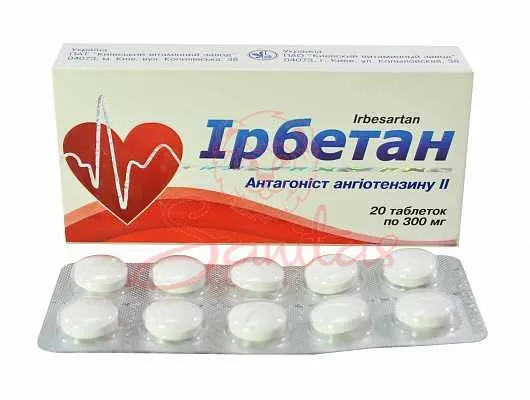
Table of Contents
INSTRUCTIONS FOR MEDICAL USE OF THE MEDICINAL PRODUCT IRBETAN (IRBETAN)
Composition:
Active substance: 1 tablet contains 300 mg of irbesartan;
Excipients: lactose monohydrate, microcrystalline cellulose, pregelatinized starch, sodium croscarmellose, poloxamer, colloidal anhydrous silicon dioxide, magnesium stearate.
Pharmaceutical form. Tablets.
Main physicochemical properties: round, biconvex tablets, white or almost white in color, with a score line.
Pharmacotherapeutic group. Angiotensin II receptor antagonists, plain preparations.
ATC code C09C A04.
Pharmacological Properties
Pharmacodynamics
Mechanism of action. Irbesartan is a potent, orally active, selective antagonist of angiotensin II receptors (type AT1). It blocks all effects of angiotensin II mediated by the AT1 receptor, regardless of the source or pathway of angiotensin II synthesis.
Selective antagonism of angiotensin II receptors (AT1) leads to increased plasma levels of renin and angiotensin II, as well as decreased plasma aldosterone concentration.
Irbesartan alone, when administered at recommended doses, has no significant effect on serum potassium levels. Irbesartan does not inhibit angiotensin-converting enzyme (kininase II), the enzyme responsible for converting angiotensin I to angiotensin II and for degrading bradykinin to inactive metabolites. Irbesartan is active without metabolic activation.
Clinical efficacy
Arterial hypertension. Irbesartan reduces arterial blood pressure with minimal effect on heart rate. The antihypertensive effect is dose-dependent, with a tendency toward a plateau at doses exceeding 300 mg. When administered at doses of 150–300 mg once daily, irbesartan reduces systolic/diastolic blood pressure in the supine or sitting position at trough (i.e., 24 hours after dosing) by an average of 8–13/5–8 mm Hg compared to placebo.
Maximum reduction in blood pressure occurs within 3–6 hours after administration, and the antihypertensive effect persists for at least 24 hours. With recommended doses, the blood pressure reduction at 24 hours after dosing is 60–70% of the peak diastolic and systolic response. Administration of 150 mg once daily provides a minimal effect and average 24-hour response similar to that observed with twice-daily administration of the same total daily dose.
The antihypertensive effect of the medicinal product Irbetan develops within 1–2 weeks, with maximum effect achieved within 4–6 weeks of initiating therapy. This antihypertensive effect is maintained during long-term treatment.
After discontinuation of the medicinal product, blood pressure gradually returns to baseline levels. Rebound hypertension has not been observed.
The blood pressure-lowering effect of irbesartan and thiazide diuretics is additive. In patients in whom monotherapy with irbesartan does not provide adequate blood pressure control, adding a low dose of hydrochlorothiazide (12.5 mg) once daily to irbesartan results in additional placebo-corrected blood pressure reductions of 7–10/3–6 mm Hg (systolic/diastolic) at trough.
The efficacy of the medicinal product Irbetan is independent of age or gender. As with other drugs affecting the renin-angiotensin system, a markedly reduced response to irbesartan monotherapy is observed in black patients with arterial hypertension. When irbesartan is combined with a low dose of hydrochlorothiazide (e.g., 12.5 mg daily), the antihypertensive response in black patients approaches that seen in Caucasian patients.
Clinically significant effects of the medicinal product on serum uric acid levels or urinary excretion of uric acid are not observed.
Pharmacokinetics
After oral administration, irbesartan is well absorbed, with a bioavailability of 60–80%.
Concomitant food intake has no significant effect on the bioavailability of irbesartan. Plasma protein binding of irbesartan is approximately 96%, while binding to blood cellular components is negligible. The volume of distribution of irbesartan ranges from 53 to 93 liters.
Following oral or intravenous administration of 14C-irbesartan, 80–85% of the radioactivity circulating in plasma corresponds to unchanged irbesartan.
Irbesartan is metabolized in the liver via glucuronidation and oxidation.
The main circulating metabolite of irbesartan is the glucuronide (approximately 6%). Available data indicate that irbesartan is primarily oxidized by the CYP2C9 enzyme of the cytochrome P450 system; CYP3A4 plays a minor role in its metabolism.
Irbesartan exhibits linear and dose-proportional pharmacokinetics within the dose range of 10 to 600 mg. Less than dose-proportional increases in absorption after oral administration have been observed at doses exceeding 600 mg (twice the maximum recommended dose); the mechanism of this phenomenon is not fully understood. Maximum plasma concentrations are reached within 1.5–2 hours after oral administration.
Total and renal clearance of the drug are approximately 157–176 ml/min and 3–3.5 ml/min, respectively.
The terminal elimination half-life of irbesartan is 11–15 hours. Steady-state plasma concentrations are achieved within 3 days of once-daily dosing. With repeated once-daily administration of irbesartan, limited accumulation in plasma is observed (< 20%). Higher plasma concentrations of irbesartan have been observed in female hypertensive patients compared to males. However, no differences in elimination half-life or accumulation between males and females have been observed. Dose adjustment is not required in female patients. AUC and Cmax values of irbesartan were also slightly higher in elderly patients (≥ 65 years) compared to younger patients (18–40 years). However, the terminal elimination half-life did not differ significantly. Dose adjustment is not required in elderly patients.
Irbesartan and its metabolites are excreted both via bile and urine. After both oral and intravenous administration of 14C-irbesartan, approximately 20% of radioactivity is excreted in urine, and the remainder in feces. Less than 2% of the dose is excreted unchanged in urine.
Renal impairment. Pharmacokinetic parameters of irbesartan are not significantly altered in patients with renal insufficiency or in patients undergoing hemodialysis. Irbesartan is not removed by hemodialysis.
Hepatic impairment. Pharmacokinetic parameters of irbesartan are not significantly altered in patients with mild to moderate hepatic impairment. Studies in patients with severe hepatic dysfunction have not been conducted.
Clinical characteristics.
Indications.
- Treatment of essential arterial hypertension in adults.
- Treatment of chronic kidney disease in adult patients with arterial hypertension and type 2 diabetes mellitus as part of an antihypertensive therapy regimen.
Contraindications.
- Hypersensitivity to the active substance or to any of the excipients (see section "Composition").
- Pregnancy and women who are planning to become pregnant (see section "Use in pregnancy or breastfeeding").
- Concomitant use of the medicinal product Irbetan with medicinal products containing aliskiren is contraindicated in patients with diabetes mellitus or renal dysfunction (glomerular filtration rate (GFR) < 60 mL/min/1.73 m²) (see section "Interaction with other medicinal products and other forms of interaction").
Interaction with other medicinal products and other forms of interaction.
Diuretics and other antihypertensive agents. The risk of developing arterial hypotension during irbesartan therapy may be increased when it is used concomitantly with other antihypertensive agents; however, irbesartan has been safely used with certain other antihypertensive agents such as beta-blockers, long-acting calcium channel blockers, and thiazide diuretics. Prior treatment with high doses of diuretics may lead to hypovolemia and increase the risk of arterial hypotension after initiation of the medicinal product Irbetan (see section "Special precautions for use").
Aliskiren-containing medicinal products or ACE inhibitors. It is known that dual blockade of the renin-angiotensin-aldosterone system (RAAS) by combining ACE inhibitors, angiotensin II receptor antagonists, or aliskiren is associated with an increased incidence of adverse events such as arterial hypotension, hyperkalemia, and worsening renal function (including development of acute renal failure), compared to using a single agent acting on the RAAS (see sections "Contraindications", "Special precautions for use").
Potassium supplements and potassium-sparing diuretics. Based on experience with other medicinal products affecting the renin-angiotensin system, concomitant use of potassium-sparing diuretics, potassium supplements, potassium-containing salt substitutes, or other medicinal products that may increase serum potassium levels (e.g., heparin) may lead to increased serum potassium levels and is therefore not recommended (see section "Special precautions for use").
Lithium. Reversible increases in serum lithium concentrations and lithium toxicity have been observed during concomitant use of lithium preparations with angiotensin-converting enzyme inhibitors. Very rare cases of similar effects have been reported with irbesartan. Therefore, this combination is not recommended (see section "Special precautions for use"). If combination therapy is necessary, careful monitoring of serum lithium levels is recommended.
Nonsteroidal anti-inflammatory drugs (NSAIDs). When angiotensin II antagonists are used concomitantly with nonsteroidal anti-inflammatory drugs (specifically: selective COX-2 inhibitors, acetylsalicylic acid (> 3 g per day), and nonselective nonsteroidal anti-inflammatory drugs), a reduction in antihypertensive effect may occur.
As with use of angiotensin-converting enzyme inhibitors, concomitant administration of angiotensin II antagonists and nonsteroidal anti-inflammatory drugs may lead to worsening of renal function, including occurrence of acute renal failure, and to increased serum potassium levels, particularly in patients with pre-existing renal impairment. Such combination should be used with caution, especially in elderly patients.
Patients should be adequately hydrated, and monitoring of renal function at the start of such combination therapy, and periodically thereafter, may be advisable.
Additional information on irbesartan interactions. In clinical studies, hydrochlorothiazide did not interfere with the pharmacokinetics of irbesartan. Irbesartan is metabolized primarily by the CYP2C9 enzyme and, to a lesser extent, via glucuronidation. No significant pharmacokinetic or pharmacodynamic interactions were observed during concomitant administration of irbesartan with warfarin (a medicinal product metabolized by the CYP2C9 enzyme). The effect of CYP2C9 inducers such as rifampicin on the pharmacokinetics of irbesartan has not been evaluated.
When irbesartan was administered concomitantly with digoxin, the pharmacokinetics of digoxin were not altered.
Special precautions for use.
Intravascular hypovolemia. In patients who develop hypovolemia and/or hyponatremia due to intensive diuretic therapy, restricted dietary salt intake, diarrhea, or vomiting, symptomatic arterial hypotension may occur, particularly after the first dose of the medicinal product. Such conditions should be corrected prior to initiating treatment with Irbetan.
Renovascular hypertension. There is an increased risk of severe arterial hypotension and renal failure in patients with bilateral renal artery stenosis or stenosis of the artery of a single functioning kidney when treated with medicinal products affecting the renin-angiotensin-aldosterone system. Therefore, similar effects should be anticipated when using any angiotensin II receptor antagonists.
Renal impairment and kidney transplantation. During treatment with the medicinal product in patients with impaired renal function, periodic monitoring of serum potassium and creatinine levels is recommended. Experience with the use of Irbetan in patients who have recently undergone kidney transplantation is lacking.
Patients with arterial hypertension, type 2 diabetes, and chronic kidney disease. The effects of irbesartan on both renal and cardiovascular outcomes were not consistent across all subgroups analyzed in studies of patients with advanced chronic kidney disease. In particular, its benefits were less pronounced in women and in individuals of non-Caucasian race.
Dual blockade of the renin-angiotensin-aldosterone system (RAAS). Evidence indicates that concomitant use of ACE inhibitors, angiotensin II receptor antagonists, or aliskiren increases the risk of arterial hypotension, hyperkalemia, and impaired renal function (including acute renal failure). Therefore, dual blockade of the RAAS by combining ACE inhibitors, angiotensin II receptor antagonists, or aliskiren is not recommended (see section "Interaction with other medicinal products and other forms of interaction"). If such dual blockade therapy is considered absolutely necessary, it should be administered only under specialist supervision and
with frequent monitoring of renal function, electrolyte levels, and blood pressure.
ACE inhibitors and angiotensin II receptor antagonists must not be used concomitantly in patients with diabetic nephropathy.
Hyperkalemia. As with other medicinal products affecting the renin-angiotensin-aldosterone system, hyperkalemia may occur during treatment with irbesartan, particularly in the presence of renal dysfunction, overt proteinuria due to diabetic nephropathy, and/or heart failure. Careful monitoring of serum potassium levels is recommended in patients at risk of this complication (see section "Interaction with other medicinal products and other forms of interaction").
Lithium. Concomitant use of lithium and irbesartan is not recommended (see section "Interaction with other medicinal products and other forms of interaction").
Aortic and mitral valve stenosis, obstructive hypertrophic cardiomyopathy. As with other vasodilators, special precautions should be taken in patients with aortic or mitral valve stenosis or obstructive hypertrophic cardiomyopathy.
Primary hyperaldosteronism. Patients with primary hyperaldosteronism generally do not respond to antihypertensive medicinal products acting through inhibition of the renin-angiotensin system. Therefore, use of Irbetan is not recommended in such patients.
General warnings. In patients in whom vascular tone and renal function primarily depend on the activity of the renin-angiotensin-aldosterone system (e.g., patients with severe congestive heart failure or primary renal disease, including renal artery stenosis), treatment with ACE inhibitors or angiotensin II receptor antagonists affecting this system has been associated with episodes of acute hypotension, azotemia, oliguria, or (rarely) acute renal failure. As with any antihypertensive agent, excessive reduction in blood pressure in patients with ischemic heart disease or ischemic cerebrovascular disease may lead to myocardial infarction or stroke.
Similar to ACE inhibitors, irbesartan and other angiotensin receptor antagonists have been found to be less effective in lowering blood pressure in Black patients compared to other racial groups, which may be explained by the higher prevalence of low renin levels among Black patients with arterial hypertension (see section "Pharmacological properties").
Intestinal angioedema. Cases of intestinal angioedema have been reported in patients taking angiotensin II receptor blockers, [including irbesartan] (see section "Adverse reactions"). These patients experienced abdominal pain, nausea, vomiting, and diarrhea. Symptoms resolved after discontinuation of angiotensin II receptor blockers. If intestinal angioedema is diagnosed, irbesartan should be discontinued and appropriate monitoring initiated until symptoms completely resolve.
Lactose. This medicinal product contains lactose. Patients with rare hereditary disorders such as galactose intolerance, Lapp lactase deficiency, or glucose-galactose malabsorption should not take this medicinal product.
Use during pregnancy or breastfeeding.
Pregnancy. The medicinal product should not be administered to pregnant women or women planning to become pregnant. If pregnancy is confirmed during treatment with this product, administration must be discontinued immediately and replaced with another medicinal product approved for use during pregnancy.
Lactation period. Since information on the use of Irbetan during breastfeeding is currently unavailable, its use in such patients is not recommended. Alternative medicinal products with better-established safety profiles during breastfeeding should be preferred, especially when nursing newborns or preterm infants. It is unknown whether irbesartan or its metabolites are excreted in human milk.
Fertility. Irbesartan had no effect on fertility or offspring of rats up to dose levels causing the first signs of maternal toxicity.
Ability to influence reaction speed when driving or operating machinery.
Studies on the effect of the medicinal product on the ability to drive vehicles or operate machinery have not been conducted. Based on the pharmacodynamic properties of irbesartan, its effect on this ability is unlikely. However, when driving vehicles or operating machinery, it should be considered that dizziness or increased fatigue may occur during treatment.
Dosage and Administration
The medicinal product is intended for oral administration.
The usual recommended initial and maintenance dose is 150 mg (1/2 tablet) once daily, independent of food intake. Irbesartan at a dose of 150 mg once daily generally provides better 24-hour blood pressure control than 75 mg. However, initiating treatment with a dose of 75 mg should be considered, particularly in patients undergoing hemodialysis and in elderly patients over 75 years of age.
In patients in whom the 150 mg once-daily dose does not provide adequate control, the dose may be increased to 300 mg (1 tablet) or other antihypertensive agents may be added. In particular, the additional use of a diuretic such as hydrochlorothiazide has been shown to have an additive effect to the action of the medicinal product Irbetan (see section "Interaction with other medicinal products and other forms of interaction").
In patients with hypertension and type 2 diabetes mellitus, therapy with irbesartan should be initiated at a dose of 150 mg once daily and titrated to 300 mg once daily, which is the recommended maintenance dose for the treatment of chronic kidney disease. The benefits of the medicinal product Irbetan on renal function in patients with hypertension and type 2 diabetes mellitus have been demonstrated in clinical studies where irbesartan was used in addition to other antihypertensive agents, if necessary, to achieve the target blood pressure.
Special patient groups.
Renal impairment. Dose adjustment of the medicinal product is not required in patients with impaired renal function. For patients undergoing hemodialysis, the appropriateness of initiating treatment with a lower dose (75 mg) should be considered (see section "Special precautions for use").
Hepatic impairment. Dose adjustment is not required in patients with mild to moderate hepatic dysfunction. There is no clinical experience with the use of the product in patients with severe hepatic dysfunction.
Elderly patients. In patients aged 75 years and older, initiating treatment with a dose of 75 mg should be considered. Dose adjustment is generally not required.
Children.
The safety and efficacy of the medicinal product Irbetan in pediatric patients (under 18 years of age) have not been established.
The effect of irbesartan has been studied in pediatric patient populations aged 6 to 16 years, but currently available data are insufficient to extend the indication for use of the product to children (see section "Adverse reactions") until additional data become available.
Overdose.
When the medicinal product was administered to adult subjects at doses up to 900 mg/day for 8 weeks, no toxic reactions were observed. The most likely manifestations of irbesartan overdose are hypotension and tachycardia; bradycardia may also occur. There is currently no specific antidote for irbesartan overdose. The patient's condition should be closely monitored, and treatment should be symptomatic and supportive.
Recommended measures include induction of emesis and/or gastric lavage.
Activated charcoal may be beneficial in the management of overdose.
Irbesartan is not removed by hemodialysis.
Adverse reactions.
In placebo-controlled studies involving patients with arterial hypertension, the overall incidence of adverse effects was similar in patients receiving irbesartan (56.2%) and those receiving placebo (56.5%). Discontinuation of the drug due to any clinical or laboratory adverse effect occurred less frequently in the irbesartan group (3.3%) than in the placebo group (4.5%). The incidence of adverse effects did not depend on the dose of the drug (within the recommended dose range), sex, age, race of patients, or duration of treatment.
In patients with arterial hypertension and diabetes mellitus with microalbuminuria and normal renal function, orthostatic dizziness and orthostatic hypotension were observed in 0.5% of patients (i.e., uncommonly) during treatment with the drug, but more frequently than in the placebo group.
The adverse reactions listed below were observed in placebo-controlled clinical trials in which 1965 patients with arterial hypertension received irbesartan. Terms marked with an asterisk (*) indicate additional reported adverse reactions observed in >2% of patients with arterial hypertension, diabetes mellitus, chronic renal failure, and overt proteinuria, and with a higher frequency than in the placebo group.
Also listed are adverse reactions additionally identified from post-marketing experience. Reports of these adverse reactions were spontaneous.
Immune system disorders: hypersensitivity reactions such as angioedema, rash, urticaria.
Metabolism and nutrition disorders: hyperkalemia.
Nervous system disorders: dizziness, orthostatic dizziness, vertigo, headache.
Ear and labyrinth disorders: tinnitus.
Cardiac disorders: tachycardia.
Vascular disorders: orthostatic hypotension, flushing.
Respiratory, thoracic and mediastinal disorders: cough.
Gastrointestinal disorders: nausea/vomiting, diarrhea, dyspepsia/heartburn, dysgeusia; rarely – intestinal angioedema.
Hepatobiliary disorders: jaundice, hepatitis, liver function abnormalities.
Skin and subcutaneous tissue disorders: leukocytoclastic vasculitis.
Musculoskeletal and connective tissue disorders: muscle and bone pain, arthralgia, myalgia (in some cases associated with elevated plasma creatine kinase levels), muscle spasms.
Renal and urinary disorders: renal function impairment, including cases of renal failure in patients at increased risk of this complication (see section "Special precautions").
Reproductive system and breast disorders: sexual dysfunction.
General disorders and administration site conditions: increased fatigue, chest pain.
Investigations: hyperkalemia* occurred more frequently in diabetic patients receiving irbesartan than in those receiving placebo. In patients with arterial hypertension, diabetes mellitus, microalbuminuria, and normal renal function, hyperkalemia (≥ 5.5 mEq/L) was observed in 29.4% of patients in the irbesartan 300 mg group and in 22% of patients in the placebo group. In patients with arterial hypertension, diabetes mellitus, chronic renal failure, and overt proteinuria, hyperkalemia (≥ 5.5 mEq/L) was observed in 46.3% of patients in the irbesartan group and in 26.3% of patients in the placebo group.
Significant increases in plasma creatine kinase levels were frequently observed in patients treated with irbesartan (1.7%). None of these increases were associated with identifiable clinical manifestations in the musculoskeletal system.
A decrease in hemoglobin levels* was observed in 1.7% of patients with arterial hypertension and advanced diabetic nephropathy treated with irbesartan; however, this decrease was not clinically significant.
Paediatric population. In a randomized study involving 318 children and adolescents (aged 6 to 16 years) with arterial hypertension, the following adverse reactions were observed during the 3-week double-blind phase: headache (7.9%), arterial hypotension (2.2%), dizziness (1.9%), cough (0.9%). During the 26-week open-label phase of this study, the most common laboratory abnormalities were increased creatinine levels (6.5%) and increased creatine kinase levels (2%) in children receiving the drug.
Shelf life. 3 years.
Storage conditions.
Store in the original packaging at a temperature not exceeding 25 °C.
Keep out of the reach of children.
Packaging.
10 tablets in a blister; 2 blisters in a carton.
Prescription status. Prescription only.
Manufacturer: JSC "KYIV VITAMIN PLANT".
Manufacturer's address and location of business activity:
38 Kopilivska Street, Kyiv, 04073, Ukraine.
Web-site: www.vitamin.com.ua.