Ipratropium-intel
Ukraine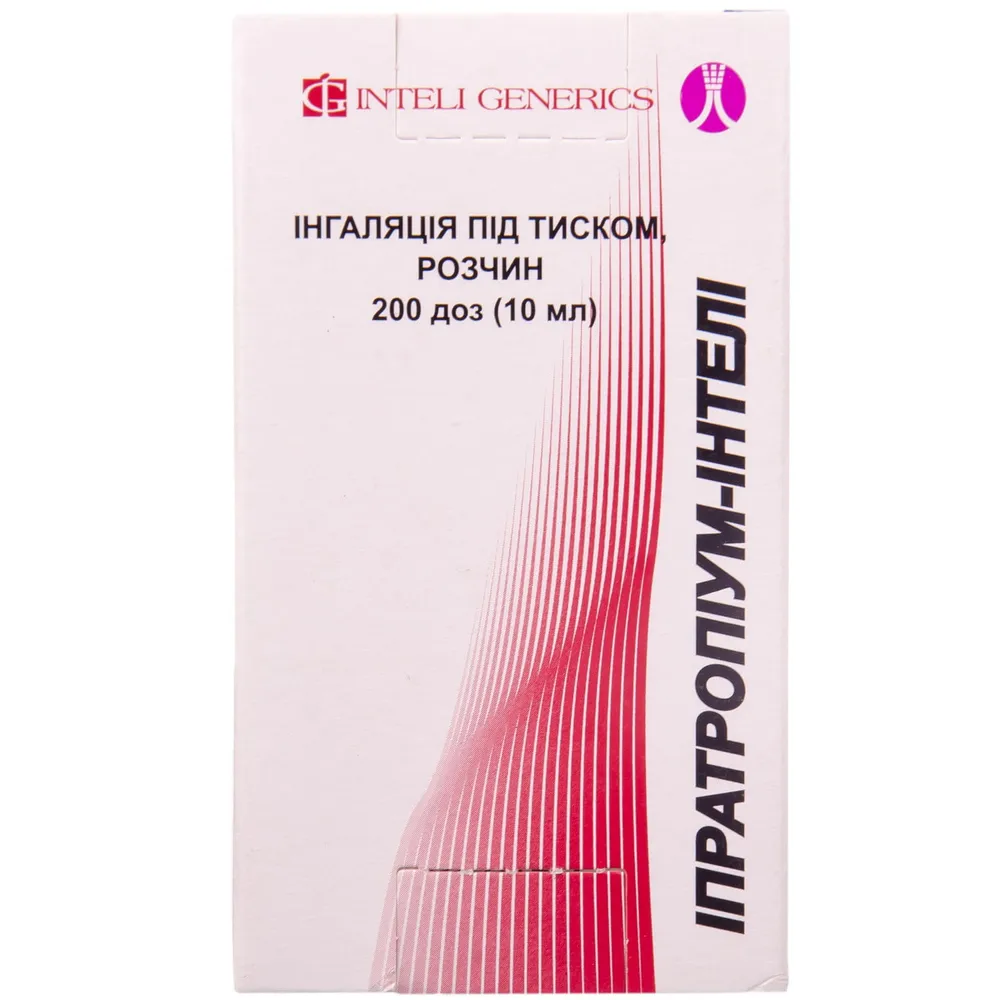
Table of Contents
INSTRUCTIONS FOR MEDICAL USE OF THE MEDICINAL PRODUCT IPRAVITROPIUM-INTELI (IPRATROPIUM-INTELI)
Composition:
Active substance: ipratropium bromide;
One dose contains 21 mcg of ipratropium bromide monohydrate (equivalent to 20 mcg of anhydrous ipratropium bromide);
Excipients: citric acid anhydrous, purified water, 1,1,1,2-tetrafluoroethane (HFA-134a), absolute ethanol.
Pharmaceutical form. Pressurized inhalation, solution.
Main physicochemical properties: clear, colorless solution.
Pharmacotherapeutic group. Drugs for obstructive respiratory diseases. Other antiasthmatic agents administered by inhalation. Anticholinergic agents. Ipratropium bromide.
ATC code R03BB01.
Pharmacological properties.
Pharmacodynamics.
Ipratropium bromide is a quaternary ammonium salt that blocks muscarinic cholinergic receptors and reduces the formation of cyclic guanosine monophosphate (cGMP), thereby preventing the interaction of acetylcholine with muscarinic receptors in bronchial smooth muscle. Elevated cGMP levels lead to degranulation of mast cells and contraction of bronchial smooth muscle.
Ipratropium bromide is a non-selective muscarinic antagonist and does not penetrate into the bloodstream, thus preventing the development of systemic adverse effects. Ipratropium bromide is a derivative of atropine and also a quaternary amine; therefore, it does not cross the blood-brain barrier, which prevents the development of central nervous system side effects (anticholinergic syndrome).
When inhalers are used by patients with bronchospasm associated with chronic obstructive pulmonary diseases, significant improvement in lung function has been observed (forced expiratory volume FEV1 increases by 15% or more).
No harmful effects of ipratropium bromide on mucus secretion in the respiratory tract, mucociliary clearance, or gas exchange have been observed.
Pharmacokinetics.
After inhalation, generally 10 to 30% of the dose, depending on the formulation, device, and inhalation technique, deposits in the lungs. The majority of the dose is swallowed and passes through the gastrointestinal tract.
Due to minimal absorption of ipratropium bromide in the gastrointestinal tract, the bioavailability of the swallowed dose is only approximately 2%.
This fraction of the dose has no significant effect on the drug concentration in plasma. The fraction of the dose deposited in the lungs rapidly reaches systemic circulation.
Based on urinary excretion data (0–24 hours), the total systemic bioavailability (pulmonary and gastrointestinal fractions) of inhaled ipratropium bromide doses ranges from 7 to 28%.
The ipratropium ion does not cross the blood-brain barrier, consistent with the ammonium structure of the molecule.
This drug is metabolized via hydrolysis of the ester group, forming inactive metabolites. Approximately 40% of the systemic dose is excreted in urine, corresponding to an experimental renal clearance value of 0.9 L/min.
The terminal elimination half-life is approximately 1.6 hours. This drug exhibits minimal plasma protein binding.
In excretion balance studies following intravenous administration of a radioactive dose, less than 10% of drug-related radioactivity (including parent compound and all metabolites) was excreted in bile and feces. The majority of drug-related radioactivity was eliminated via the kidneys.
Clinical characteristics.
Indications.
Maintenance treatment of reversible bronchospasm associated with chronic obstructive pulmonary disease (COPD) and chronic bronchial asthma.
Contraindications.
Hypersensitivity to atropine or its derivatives (e.g. tiotropium), ipratropium bromide, or to any excipient of the medicinal product.
Safety precautions.
Caution must be exercised when administering inhalations, and care should be taken to avoid getting the solution into the eyes.
Interaction with other medicinal products and other forms of interaction.
The concomitant use of ipratropium bromide with other anticholinergic agents has not been studied. Therefore, concomitant use of the medicinal product IPRAVITIUM-INTELI with other anticholinergic agents is not recommended.
There is evidence that the use of ipratropium bromide in combination with beta-adrenergic agents and xanthine derivatives may produce an additive bronchodilating effect.
Special precautions for use.
Hypersensitivity
After administration of ipratropium bromide, hypersensitivity reactions in the form of urticaria, angioedema, rashes, bronchospasm, edema of the oral and pharyngeal mucosa, and anaphylaxis have been reported.
Paradoxical bronchospasm
As with other inhaled therapies, this medicinal product may induce bronchospasm with an immediate increase in wheezing after dosing. This condition must be treated immediately with inhaled fast-acting bronchodilators. Administration of ipratropium bromide should be discontinued immediately, the patient's condition assessed, and alternative therapy initiated if necessary.
Ocular complications
Anticholinergic agents should be used with caution in patients predisposed to narrow-angle glaucoma or those who already have it.
In isolated cases, ocular complications (e.g., mydriasis, increased intraocular pressure, narrow-angle glaucoma, eye pain) have been reported after contact of the eyes with ipratropium bromide in aerosol form, administered alone or in combination with a beta2-adrenergic agonist. Therefore, patients should be advised to use ipratropium bromide correctly and warned about the consequences of accidental exposure of the aerosol contents to the eyes. Since the inhaler is used with a mouthpiece and manually actuated, the risk of aerosol entering the eyes is limited. Antiglaucoma therapy is effective in preventing the development of acute narrow-angle glaucoma in predisposed individuals. Patients who may be predisposed to glaucoma should be explicitly warned about the need to protect their eyes.
Eye pain or discomfort, blurred vision, visual hallucinations, or colored halos around lights, associated with eye redness due to conjunctival congestion and corneal edema, may be signs of acute narrow-angle glaucoma. If any combination of these symptoms occurs, treatment with miotic agents should be initiated immediately and medical advice sought without delay.
At the beginning of treatment, patients should be informed that ipratropium bromide has a slower onset of action compared to inhaled sympathomimetic bronchodilators.
Adverse reactions affecting the kidneys and urinary tract
IPRATROPIUM-INTELI should be used with caution in patients with urinary tract obstruction (e.g., due to prostatic hyperplasia).
Gastrointestinal motility disorders
Since patients with cystic fibrosis may be predisposed to gastrointestinal motility disorders, ipratropium bromide, like other anticholinergic agents, should be used with caution in these patients.
Excipients
One dose of the medicinal product contains 8.4 mg of ethanol.
The amount of alcohol released with each dose of this medicinal product is equivalent to less than 1 ml of beer or 1 ml of wine. The small amount of alcohol in this product does not cause any noticeable effect.
Use during pregnancy or breastfeeding.
There is no experience with the use of IPRATROPIUM-INTELI during pregnancy or breastfeeding. It should not be used during pregnancy or breastfeeding except when the expected benefit to the woman outweighs any potential risk to the fetus or newborn. The safety of ipratropium bromide during pregnancy has not been established.
No embryotoxic or teratogenic effects were observed after inhalation or intranasal administration of ipratropium bromide at doses significantly higher than those recommended for humans.
It is unknown whether ipratropium bromide is excreted in breast milk. It is unlikely that it would reach the infant in significant amounts, but caution should be exercised when administering ipratropium to breastfeeding women.
Ability to affect reaction speed while driving or operating machinery.
Data on the effect on reaction speed while driving or operating machinery are lacking. However, patients should be warned that during treatment with IPRATROPIUM-INTELI, adverse effects such as dizziness, accommodation disorders, mydriasis, and blurred vision may occur. If patients experience any of these adverse effects, they should avoid potentially hazardous activities such as driving or operating machinery.
Method of Administration and Dosage
For inhalation use only.
Adults (including elderly patients)
The recommended dose of the drug, depending on the severity of the disease, is 1–2 inhalations (equivalent to 20–40 mcg of anhydrous ipratropium bromide) three or four times daily at intervals of 6–8 hours. For some patients, up to 4 inhalations 3–4 times daily may be used to achieve maximum benefit at the beginning of treatment; however, the total daily dose must not exceed 12 inhalations (240 mcg). The interval between repeated inhalations should be determined by a physician.
Children
Aged 6 to 12 years: 1–2 inhalations three times daily are recommended.
IPRATROPIUM-INTELI should be used in children only under medical supervision. To ensure proper use of the inhaler, inhalations must be performed under adult supervision.
If treatment does not lead to significant improvement, if the patient's condition worsens, or if a reduced response to treatment becomes apparent, medical advice must be sought. In case of acute dyspnea or sudden deterioration in condition, treatment should be discontinued and medical help should be sought immediately.
The duration of treatment depends on the severity and course of the disease and is determined individually. The dose should always be reduced to the lowest level necessary to maintain effective symptom control.
Instructions for Use
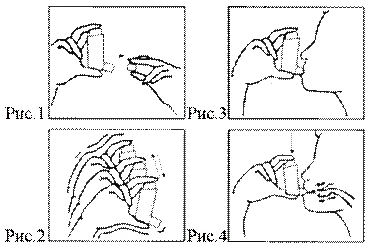
- Remove the cap (Fig. 1). When using a new inhaler for the first time, or if the inhaler has not been used for several days, shake it well (Fig. 2), then release one dose into the air to ensure the inhaler is functioning properly. If the inhaler is used regularly, follow the instructions below.
- Shake the inhaler (Fig. 2).
- Breathe out as much air as possible from the lungs.
- Place the inhaler in the mouth as shown in Fig. 3.
- Inhale as deeply as possible.
While inhaling, press down on the device as indicated by the arrows in Fig. 4.
- Remove the inhaler from the mouth and, if possible, hold your breath for a few seconds.
- The metering valve should be cleaned periodically. To do this, remove the valve from the inhaler and rinse it thoroughly with water.
- After use, replace the cap over the mouthpiece to protect it from dust and dirt.
- Rinsing the mouth with water after each inhalation is recommended.
Children
The medicinal product is indicated for use in children aged 6 years and older.
Overdose
No specific symptoms of overdose have been reported. Due to the wide therapeutic window and minimal systemic absorption of ipratropium bromide, serious anticholinergic effects are not expected. However, as with other anticholinergic agents, potential overdose symptoms may include dry mouth, blurred vision (accommodation disorders), and tachycardia.
Adverse Reactions
The most commonly reported adverse reactions during ipratropium bromide administration were: headache, cough, throat irritation, dry mouth, gastrointestinal motility disorders (including constipation, diarrhea, and vomiting), nausea, and dizziness.
Immune system disorders: Uncommon (≥ 1/1,000 to < 1/100): hypersensitivity, anaphylactic reactions, angioedema.
Nervous system disorders: Common (≥ 1/100 to < 1/10): headache, dizziness.
Eye disorders: Uncommon (≥ 1/1,000 to < 1/100): closed-angle glaucoma(1), blurred vision, appearance of halos around lights, conjunctival hyperemia, corneal swelling, increased intraocular pressure(1), eye pain(1), and mydriasis(1); rare (≥ 1/10,000 to < 1/1,000): visual accommodation disorder.
Cardiovascular system disorders: Uncommon (≥ 1/1,000 to < 1/100): palpitations, supraventricular tachycardia; rare (≥ 1/10,000 to < 1/1,000): atrial fibrillation, increased heart rate.
Respiratory system disorders: Common (> 1/100 to < 1/10): throat irritation, cough; uncommon (> 1/1,000 to < 1/100): bronchospasm, laryngospasm, pharyngeal edema, dry throat, paradoxical bronchospasm(2).
Gastrointestinal disorders: Common (≥ 1/100 to < 1/10): dry mouth, gastrointestinal motility disorders, nausea; uncommon (≥ 1/1,000 to < 1/100): diarrhea, constipation, vomiting, stomatitis.
Skin and subcutaneous tissue disorders: Uncommon (≥ 1/1,000 to < 1/100): skin rash, pruritus; rare (≥ 1/10,000 to < 1/1,000): urticaria.
Renal and urinary disorders: Uncommon (≥ 1/1,000 to < 1/100): urinary retention(3).
(1) Ocular adverse events have been reported following exposure of the eyes to aerosolized ipratropium bromide, alone or in combination with an adrenergic β2-agonist.
(2) As with other inhaled therapies, bronchospasm induced by inhalation may occur immediately after administration, with prompt worsening of wheezing. This condition should be treated immediately with inhaled fast-acting bronchodilators. Administration of ipratropium bromide should be discontinued immediately, the patient’s condition assessed, and alternative therapy initiated if necessary.
(3) The risk of urinary retention increases in patients with pre-existing urinary tract obstruction.
Reporting suspected adverse reactions after drug authorization is of great importance. It allows continuous monitoring of the benefit-risk balance of the medicinal product. Healthcare and pharmaceutical professionals, as well as patients or their legal representatives, are encouraged to report all suspected adverse reactions and lack of efficacy via the Automated Pharmacovigilance Information System at: https://aisf.dec.gov.ua/
Shelf life.
3 years.
Storage conditions.
Keep out of reach of children.
Store at temperatures not exceeding 30 °C. Protect from direct sunlight and do not freeze. Do not puncture or incinerate the canister, even if it appears to be empty.
Packaging.
10 mL of solution (200 doses) in an aluminum pressurized canister with a metering valve and adapter. One canister per cardboard box.
Prescription status.
Prescription only.
Manufacturer.
Laboratorio Aldo-Union, S.L.
Manufacturer's name and address of manufacturing site.
Baroness de Maldà, 73, 08950 Esplugues de Llobregat, Barcelona, Spain.