Intellan
Ukraine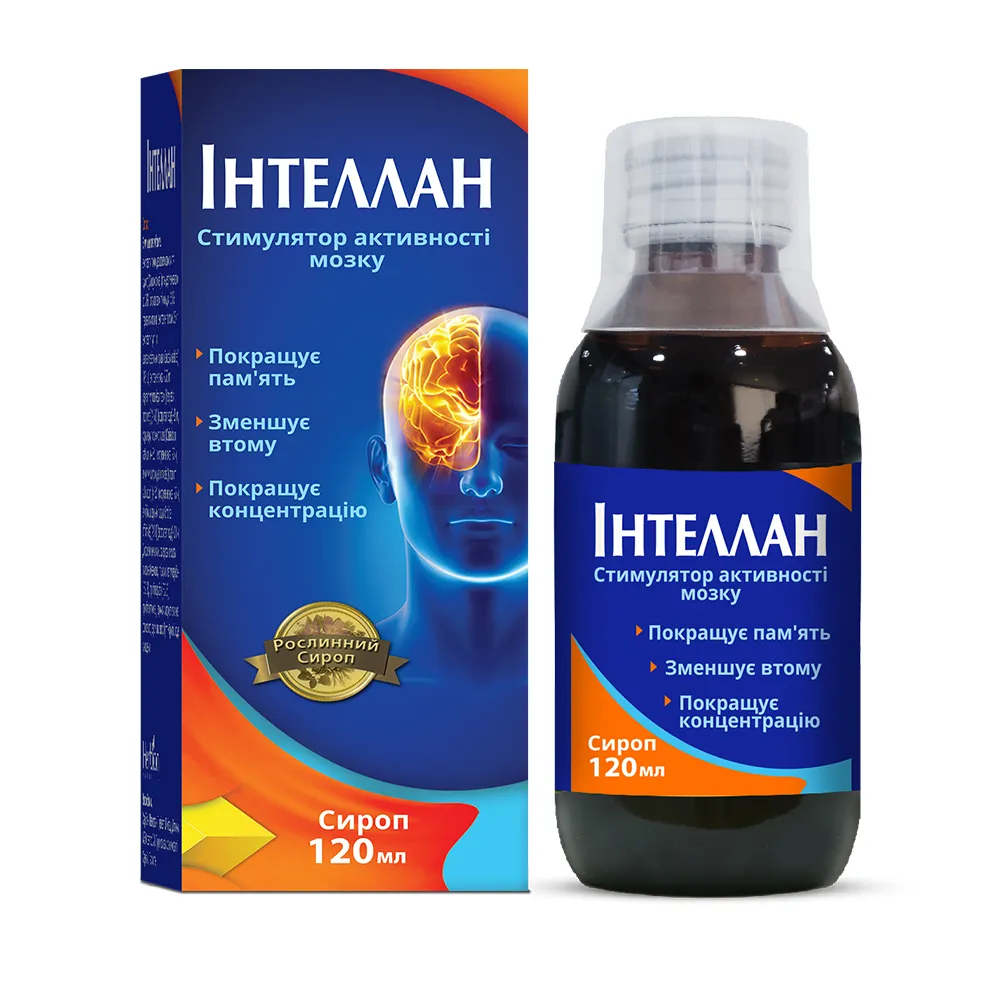
Table of Contents
INSTRUCTIONS FOR MEDICAL USE OF THE MEDICINAL PRODUCT INTELLAN (INTELLAN)
Composition:
Active substances: 5 ml of syrup contains:
Ginkgo biloba leaf dry extract (Ginkgo biloba) (extractant: water) (standardized to 24% flavonoid glycosides and 6.5% terpene lactones) – 25 mg;
Liquid extracts from:
Centella asiatica herb (4–5:1) (extractant: water) – 250 mg;
Herpestis monniera herb (4–5:1) (extractant: water) – 25 mg;
Coriandrum sativum seed (4–5:1) (extractant: water) – 75 mg;
Amomum subulatum fruit (4–5:1) (extractant: water) – 75 mg;
Emblica officinalis fruit (4–5:1) (extractant: water) – 100 mg.
Excipients: sucrose, anhydrous citric acid, glycerin, methylparaben E 218, propylparaben E 216, propylene glycol, sweet orange flavor, Tutti-Frutti flavor, purified water.
Pharmaceutical form. Syrup.
Main physicochemical characteristics: brown syrup-like liquid with a characteristic odor, sour-sweet taste and a bitter aftertaste. Slight sedimentation may occur, which dissolves upon shaking.
Pharmacotherapeutic group.
Agents affecting the nervous system. ATC code: N07XX.
Pharmacological Properties
Pharmacodynamics
The medicinal product contains 6 pharmacologically active herbs that include amino acids, trace elements, biologically active alkaloids, and glycosides. Through glutamic and aspartic acids, as well as biologically active alkaloids and glycosides, the medicinal product acts as a neurohumoral modulator of neurotransmission and exerts a stimulating effect on the metabolism of the cerebral cortex, thereby enhancing brain activity and improving memory.
It also improves nourishment of nerve cells and promotes the elimination of toxic metabolic waste products (ammonia), thus optimizing the function of brain structures. It enhances cerebral circulation, which manifests as reduced feelings of fatigue. The mild neurostimulating effect alleviates feelings of anxiety and aids in the treatment of subacute depressive states.
The medicinal product improves blood flow in brain structures and lower extremities.
Trace elements (iron, zinc) contained in the medicinal product influence the course of biosynthetic reactions in the body.
Each of the herbal components of the medicinal product possesses specific properties:
Ginkgo biloba extract improves capillary circulation in the limbs, internal organs, and brain, and prevents thrombosis.
Centella asiatica. The primary active component of centella is nitric oxide, which enhances memory processes, learning retention and recall, blood flow and microcirculation, and supports liver and kidney functions. In addition, centella possesses antioxidant properties.
Herpestis monniera. The components of this herb improve memory and attention, mediate the synthesis of gamma-aminobutyric acid (GABA) in brain neurons—providing anticonvulsant effects—and reduce arterial blood pressure. It also has calming, analgesic, and antioxidant properties.
Coriandrum sativum (Coriander). Exerts antihyperglycemic, antihyperlipidemic, antioxidant, antiproliferative, hypotensive, and anticonvulsant effects.
Amomum xanthioides is used as a tonic, anti-inflammatory, and analgesic agent. It has the ability to neutralize toxins of both exogenous origin and those produced within the body.
Phyllanthus emblica (Emblica officinalis) is a source of vitamin C; by stimulating mucocytes, it produces an expectorant effect, has moderate antibacterial activity, and improves cardiovascular functions (adrenaline-like effect).
Pharmacokinetics
Pharmacokinetic data are not available.
Clinical characteristics.
Indications.
Memory impairment, chronic stress conditions, nervous tension and increased fatigue, impaired concentration and disorientation, functional cognitive insufficiency, dizziness, disturbances of balance sensation, anxiety, depression – as part of complex therapy or as an adjunctive treatment.
Contraindications.
Hypersensitivity (allergy) to any component of the medicinal product.
Pregnancy or breastfeeding period.
Interaction with other medicinal products and other forms of interaction.
Clinical studies on the interaction with Ginkgo biloba (EGb 761) have demonstrated potentiation or inhibition of cytochrome P450 isoenzymes. Changes in midazolam concentration levels were observed after concomitant administration of Ginkgo biloba (EGb 761), suggesting possible interaction via CYP3A4. Therefore, medicinal products that are primarily metabolized via CYP3A4 and have a narrow therapeutic index should be used with caution.
When Ginkgo preparations are used concomitantly with medicinal products that inhibit blood coagulation (coumarin anticoagulants (phenprocoumon and warfarin), acetylsalicylic acid), the effect of the latter may be enhanced – increasing the risk of bleeding. The medicinal product should not be taken during prolonged use of thiazide diuretics.
Ginkgo preparations accelerate the metabolism of antiepileptic drugs (valproate, phenytoin) that are metabolized via the CYP2C enzyme system. When used concomitantly with antiepileptic agents, the seizure threshold may decrease, increasing the likelihood of epileptic seizures.
If simultaneous use with any other medicinal products is required, medical advice should be sought.
Special precautions for use.
The first signs of improvement appear after 1 month of treatment. Careful monitoring is recommended for patients taking medicinal products metabolized by cytochrome P450 3A4. There is no evidence of abuse with Ginkgo biloba (EGb 761). Based on the pharmacological characteristics of Ginkgo biloba (EGb 761), the potential for abuse is absent.
Taking Intelan before bedtime may cause sleep disturbances.
Before initiating treatment with the medicinal product, it should be confirmed that the pathological symptoms observed are not due to an underlying condition requiring specific treatment.
Patients with an increased predisposition to bleeding (hemorrhagic diathesis), as well as those receiving medications that interfere with blood coagulation, antidiabetic agents, or antihypertensive drugs, should consult a physician prior to starting treatment.
If hypersensitivity to the medicinal product occurs, its use should be discontinued.
Prior to surgical intervention, the patient should inform the physician about the use of Ginkgo preparation.
It cannot be excluded that Ginkgo extract-containing preparations may provoke seizures in patients with epilepsy. A causal relationship between this effect and the use of the medicinal product has not been established.
Important information about excipients.
The syrup contains sucrose, which should be taken into account by patients with diabetes mellitus and individuals on a low-calorie diet. The medicinal product should also not be used in patients with rare hereditary conditions such as fructose intolerance or sucrase-isomaltase deficiency.
Since the medicinal product contains methylparaben and propylparaben, it may cause allergic reactions (possibly delayed).
Use during pregnancy or breastfeeding.
The use of the medicinal product is contraindicated during pregnancy and breastfeeding due to insufficient clinical experience.
Ability to influence reaction speed when driving or operating machinery.
The medicinal product affects the ability to drive vehicles and operate precision machinery (possible reduction in attention). Therefore, after taking the medicinal product, patients should avoid driving vehicles or operating potentially hazardous equipment.
Dosage and Administration.
Take the medication orally after meals. The adult dose is 2 teaspoons (10 ml) of syrup twice daily. The duration of treatment is from 1 to 3 months and depends on the course of the disease and the improvement of symptoms. If symptoms persist or worsen, consult a physician.
Children. Do not use in children.
Overdose.
Overdose is unlikely. No cases of accidental overdose have been reported.
In case of overdose, dyspeptic disorders, impaired consciousness, and headache may occur.
Treatment is symptomatic.
Adverse Reactions.
Since taking the medicinal product before bedtime may disturb sleep, it is recommended to take the product at least 3 hours before going to sleep.
In some cases, adverse reactions may occur:
Gastrointestinal disorders: digestive disturbances; dyspepsia; nausea, vomiting, diarrhea; abdominal pain;
Nervous system disorders: headache, dizziness, decreased attention; syncope (including vasovagal);
Cardiovascular system disorders: arterial hypertension;
Immune system disorders: hypersensitivity reactions, including: angioedema, urticaria, dyspnea;
Skin and subcutaneous tissue disorders: skin inflammation, redness, swelling, skin rashes, itching, eczema.
If any unusual reactions occur, discontinue use of the medicinal product immediately and consult a physician without delay.
Shelf life. 3 years.
Storage conditions.
Store in the original packaging at a temperature not exceeding 25 °C.
Keep out of reach of children.
Packaging. Syrup, 90 ml, 120 ml or 150 ml in bottles No. 1, in a cardboard box.
Availability category. Over-the-counter.
Manufacturer.
Herbion Pakistan Private Limited, Pakistan.
Manufacturer's address and site of operations.
Plot No. 30, Sector 28, Industrial Area Korangi, Karachi, Pakistan.