Indomethacin-zdorovya
Ukraine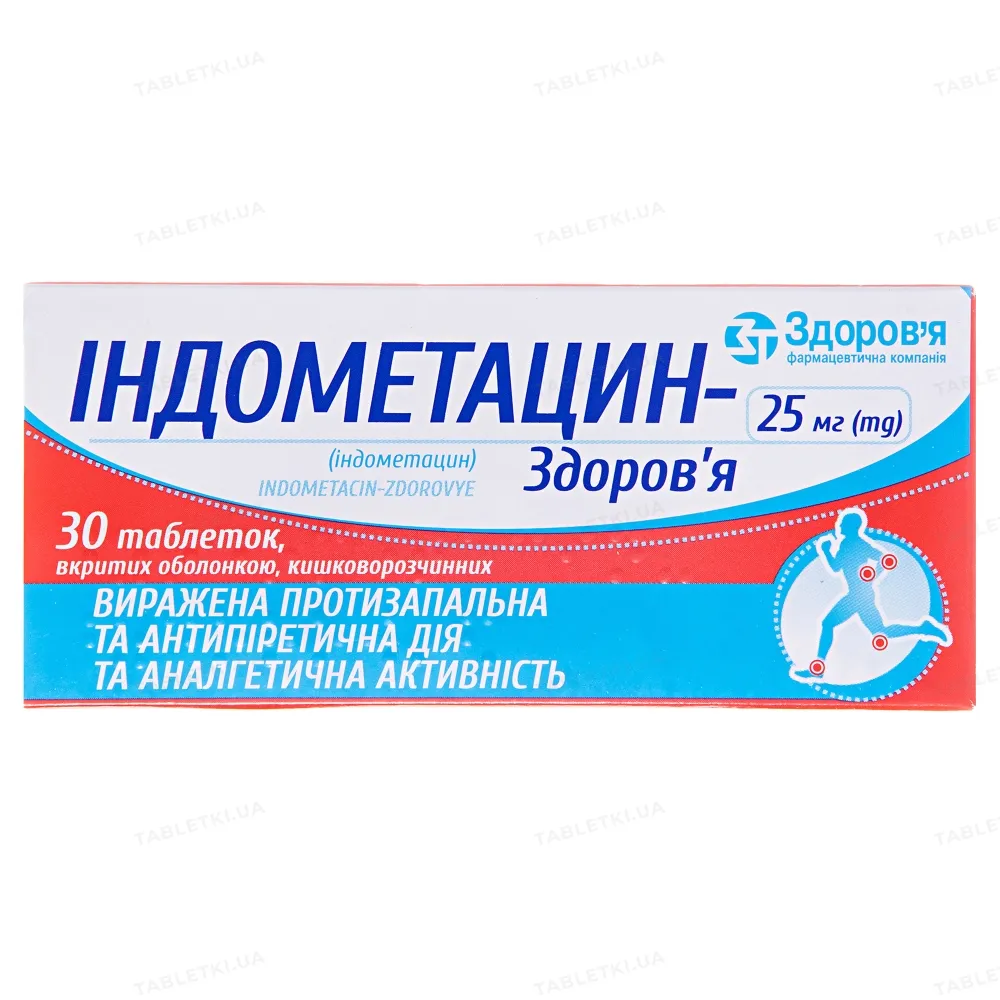
Table of Contents
INSTRUCTIONS FOR MEDICAL USE OF THE MEDICINAL PRODUCT INDOMETACIN-ZDOROVYE (INDOMETACIN-ZDOROVYE)
Composition:
Active substance: indometacin;
1 tablet contains 25 mg of indomethacin;
Excipients: maize starch; colloidal anhydrous silicon dioxide; magnesium stearate; microcrystalline cellulose; lactose monohydrate; crospovidone; talc; colorant Yellow Sunset FCF (E 110); dry mixture "Akryl-eze white" of white color containing talc, triethyl citrate, methacrylate copolymer, sodium bicarbonate, titanium dioxide (E 171), silicon dioxide, sodium lauryl sulfate.
Pharmaceutical form. Enteric-coated tablets.
Main physicochemical properties: enteric-coated tablets of yellow-orange to orange color, biconvex. Two layers are visible in cross-section.
Pharmacotherapeutic group. Non-steroidal anti-inflammatory and antirheumatic agents.
ATC code M01AB01.
Pharmacological properties.
Pharmacodynamics.
Indomethacin is a derivative of indole acetic acid and belongs to the group of nonsteroidal anti-inflammatory drugs (NSAIDs). It has pronounced anti-inflammatory activity, which significantly exceeds that of phenylbutazone and acetylsalicylic acid. Its analgesic activity is comparable to that of metamizole. It also possesses antipyretic properties. Indomethacin strongly inhibits prostaglandin synthesis by suppressing cyclooxygenase. Additionally, it reduces platelet aggregation and lipoxygenase activity at the site of inflammation, thereby decreasing leukotriene activity. It also reduces the release of endogenous pyrogens, inactivates lysosomal enzymes, and inhibits the activity of neutral proteases. Other effects may also be significant, such as uncoupling of oxidative phosphorylation, inhibition of catecholamine reuptake, enhanced metabolism of noradrenaline, and its known ganglion-blocking action.
Pharmacokinetics.
Absorption: following oral administration, 80–90 % of the administered dose is absorbed through the mucous membrane of the small intestine. Maximum plasma concentration is reached within 1–2 hours.
Distribution: distributes throughout all tissues and organs. It crosses the placental and blood-brain barrier. It penetrates through the synovial membrane into the joints, where its concentration in synovial fluid is higher than in plasma. It is 90–98 % bound to plasma proteins, and therefore is capable of displacing other drugs from protein binding sites, thereby enhancing their therapeutic effects when used concomitantly.
Metabolism: metabolized in the liver via oxidation and conjugation.
Excretion: the elimination half-life of indomethacin ranges between 2.6 and 11.2 hours, averaging 5.8 hours. Up to 60–75 % is excreted by the kidneys, of which 10–20 % is excreted unchanged, while the remainder is excreted via bile and feces. It passes into breast milk.
Clinical characteristics.
Indications.
The efficacy of short-term symptomatic treatment with indomethacin has been established for the following conditions:
- Acute and chronic pain associated with inflammatory and degenerative disorders of the musculoskeletal system: rheumatoid arthritis; acute and exacerbation phases of chronic ankylosing spondylitis (Bechterev's disease); gout attack and gouty arthritis; moderate to severe osteoarthritis;
- Disorders of periarticular tissues: tendinitis, bursitis (acute painful shoulder), tenosynovitis, tendovaginitis; pain and inflammation following trauma (including in athletes) and surgical procedures;
- Discopathies, plexitis, radiculoneuritis;
- Dysmenorrhea.
Contraindications.
- Hypersensitivity to the components of the medicinal product;
- Hypersensitivity to acetylsalicylic acid or other NSAIDs clinically manifested as asthma attack, angioedema, urticaria, or rhinitis;
- Active peptic ulcer of the stomach or duodenum or recurrent episodes (two or more documented cases of ulcers or bleeding), ulcerative colitis and/or enterocolitis;
- History of gastrointestinal bleeding or perforation associated with the use of NSAIDs;
- Concomitant use of other NSAIDs, including specific cyclooxygenase-2 inhibitors, due to increased risk of adverse effects;
- Severe heart failure;
- Severe renal or hepatic impairment;
- Pre- and postoperative pain associated with coronary artery bypass graft (CABG) surgery.
Interaction with other medicinal products and other forms of interactions.
The use of two or more NSAIDs should be avoided due to an increased risk of adverse effects.
When taken concomitantly with antibacterial agents, the risk of seizures may increase; with ciprofloxacin, the risk of skin reactions and neurotoxicity.
Concomitant use of quinolones and indomethacin may increase the risk of seizures in patients with or without a history of epilepsy or seizures.
Concomitant administration of zalcitabine and indomethacin causes changes in their pharmacodynamics.
Concomitant use of zidovudine and indomethacin increases the risk of hematological toxicity. The risk of indomethacin toxicity is increased when used with ritonavir.
Caution is advised when using indomethacin concomitantly with cyclophosphamide due to the risk of water intoxication.
Concomitant use with antiepileptic drugs should be done cautiously due to enhanced effects of phenytoin.
Concomitant use with haloperidol enhances drowsiness.
Concomitant intake with triamterene should be avoided due to the risk of reversible renal failure.
Concomitant use with tacrolimus increases the risk of nephrotoxicity.
Indomethacin increases the bioavailability of diphosphonates when used concomitantly with tiludronic acid.
Concomitant use with benzodiazepines increases the risk of dizziness.
Concomitant use with desmopressin enhances the effect of the latter.
NSAIDs should be avoided for 8–12 days after administration of mifepristone.
Indomethacin can reduce the elimination rate of baclofen, thereby increasing its toxic effects.
In patients receiving concomitant indomethacin and muromonab-CD3, the risk of psychosis and encephalopathy is increased.
Indomethacin can interfere with laboratory test results:
- May cause elevated levels of one or more liver enzymes;
- The drug may lead to false-negative results in the dexamethasone suppression test.
Concomitant use of NSAIDs and COX-2 inhibitors increases the risk of developing "analgesic" nephropathy and renal papillary necrosis. Therefore, their concomitant use should be avoided.
Concomitant use with vasodilators increases the risk of bleeding.
Other NSAIDs, alcohol: concomitant use of indomethacin with other NSAIDs and alcohol increases the risk of gastrointestinal adverse effects.
Diffunisal: increases plasma levels and reduces renal clearance of indomethacin. Fatal gastrointestinal hemorrhages may occur. This combination is not recommended.
Digoxin: indomethacin may increase the plasma concentration of digoxin (by reducing its renal excretion), requiring dose adjustment and monitoring of digoxin levels.
Lithium salts: indomethacin prolongs and potentiates the effect of lithium salts and increases lithium toxicity, necessitating monitoring of lithium levels.
Immunosuppressants: concomitant use of indomethacin and immunosuppressants, such as methotrexate and cyclosporine, leads to increased toxicity.
Diuretics: NSAIDs reduce the therapeutic efficacy of diuretics (due to decreased tubular secretion). There may be an increased risk of hyperkalemia when used concomitantly with potassium-sparing diuretics, and reduced kidney function with an increased risk of acute renal failure when combined with thiazide diuretics (triamterene). Diuretics may enhance the nephrotoxicity of indomethacin.
Antihypertensive agents: indomethacin may reduce the antihypertensive effect of angiotensin-converting enzyme (ACE) inhibitors and beta-blockers when used concomitantly.
Corticosteroids: increased risk of gastrointestinal ulceration and hemorrhage (see section "Special precautions").
Anticoagulants: increased risk of ulceration and hemorrhage due to inhibition of platelet function and aggressive effects on the gastrointestinal mucosa.
Bleeding time and prothrombin time should be monitored. Indomethacin competitively interacts with coumarin anticoagulants at plasma protein binding sites, resulting in increased plasma concentrations. When used concomitantly, indomethacin should be prescribed at the lowest possible dose, and the possibility of prescribing protective agents should be considered (see section "Special precautions").
Antiplatelet agents and selective serotonin reuptake inhibitors (SSRIs): increased risk of gastrointestinal bleeding (see section "Special precautions").
Concomitant use with antidepressants (selective serotonin reuptake inhibitors) should be done cautiously due to increased risk of bleeding.
Probenecid slows excretion and increases the toxicity of indomethacin.
Antidiabetic agents: indomethacin does not alter the therapeutic efficacy of oral antidiabetic agents or insulin, despite observations of hypoglycemic or hyperglycemic effects during concomitant use. The effect of sulfonylurea derivatives may be enhanced by NSAIDs. In isolated cases, concomitant use with metformin may cause metabolic acidosis.
Special precautions for use.
The risk of adverse effects can be minimized by using the lowest effective dose for the shortest duration necessary to control symptoms of the disease (see section "Dosage and administration", as well as the gastrointestinal and cardiovascular risk factors described below).
The medicinal product should be used with caution in patients with impaired renal, hepatic, or cardiac function, as well as in conditions where fluid retention may occur, since indomethacin may cause reduced renal function and fluid retention.
In patients with systemic lupus erythematosus and connective tissue disorders, there may be an increased risk of developing aseptic meningitis.
Caution should be exercised when administering the drug to patients after surgical procedures, as bleeding time may be prolonged.
In isolated cases, indomethacin may mask signs of infectious-inflammatory processes; caution is also advised when using live vaccines.
Patients undergoing long-term treatment should have periodic blood tests, liver function tests, and gastrointestinal monitoring to detect any adverse effects as early as possible.
The drug should be used cautiously in patients with sigmoid colon abnormalities.
In patients with compromised blood flow, in whom renal prostaglandins play an important role in maintaining renal perfusion, NSAIDs may provoke marked renal decompensation. Patients at risk of such reactions include those with renal or hepatic dysfunction, patients with diabetes mellitus, elderly patients, patients with reduced extracellular fluid volume, congestive heart failure, sepsis, and those concurrently taking nephrotoxic drugs. Renal function should be monitored in these patients during treatment.
Caution is advised when using the drug in patients with bronchial asthma due to the possibility of bronchospasm.
Concomitant use of indomethacin with other NSAIDs, including selective COX-2 inhibitors, should be avoided.
Use of NSAIDs may be associated with a risk of hyperkalemia, particularly in patients aged 65 years or older, patients with renal impairment, and those receiving beta-blockers, ACE inhibitors, or potassium-sparing diuretics. Serum potassium levels should be monitored in such patients.
Use with special caution in patients with hypersensitivity to food or drugs and in patients with allergic conditions such as hay fever, bronchial asthma, or nasal polyps.
Elderly patients (aged 65 years and older).
Use of NSAIDs in patients aged 65 years and older is more frequently associated with adverse effects, particularly gastrointestinal bleeding or perforation, sometimes fatal (see section "Dosage and administration").
Gastrointestinal bleeding, ulceration, and perforation.
Gastrointestinal bleeding, ulceration, and perforation (sometimes fatal) have been reported with all NSAIDs at any time during treatment, with or without warning symptoms or prior history of serious gastrointestinal events.
The risk of gastrointestinal adverse effects is higher when high doses of NSAIDs are used, in patients with a history of peptic ulcer, especially if complicated by hemorrhage or perforation, and in elderly patients. For such patients, treatment with NSAIDs should be initiated at the lowest possible dose, and consideration should be given to concomitant use of gastroprotective agents (e.g., misoprostol or proton pump inhibitors). This approach is also recommended when low-dose acetylsalicylic acid or other drugs increasing the risk of gastrointestinal complications (corticosteroids, anticoagulants, antiplatelet agents, SSRIs) are used concomitantly.
Particular caution is required when treating patients with other gastrointestinal disorders (e.g., ulcerative colitis, Crohn’s disease), which may be exacerbated by NSAIDs.
The risk of gastrointestinal complications is increased in patients who abuse alcohol or are smokers; therefore, treatment in these patients should be carried out with particular caution.
Patients with a history of gastrointestinal disorders (especially elderly patients) should be advised to report any unusual abdominal symptoms (particularly signs of gastrointestinal bleeding), especially at the beginning of treatment.
Special caution is required when using drugs that may increase the risk of ulceration or bleeding (e.g., oral corticosteroids, anticoagulants such as warfarin, SSRIs, or antiplatelet agents such as acetylsalicylic acid (see section "Interaction with other medicinal products and other forms of interaction")).
Treatment with the medicinal product should be discontinued if gastrointestinal lesions or bleeding occur.
Cardiovascular and cerebrovascular disorders.
Appropriate monitoring and medical advice should be provided to patients with a history of hypertension and/or mild to moderate congestive heart failure, as edema and fluid retention have been reported with NSAID therapy.
Clinical trials and epidemiological data suggest that use of certain NSAIDs (particularly at high doses and for prolonged periods) may be associated with a small increased risk of arterial thrombotic events (e.g., myocardial infarction or stroke). There is insufficient data to exclude such a risk with indomethacin.
Patients with uncontrolled hypertension, congestive heart failure, established ischemic heart disease, peripheral arterial disease, and/or cerebrovascular disease, as well as those with cardiovascular risk factors (e.g., hypertension, hyperlipidemia, diabetes mellitus, smoking), should be treated with indomethacin only after careful assessment of benefit-risk balance.
Such assessment is also required prior to initiating long-term treatment in patients with cardiovascular risk factors (e.g., hypertension, hyperlipidemia, diabetes mellitus, smoking).
Skin reactions.
Very rarely, serious (including fatal) skin reactions, such as exfoliative dermatitis, Stevens-Johnson syndrome, and toxic epidermal necrolysis, have been observed with NSAIDs. The highest risk of such reactions occurs early in treatment (within the first month). The drug should be discontinued at the first signs of skin rash or other symptoms of hypersensitivity.
Renal effects.
Indomethacin should be used with caution in patients with renal disease (creatinine clearance < 30 mL/min) due to the potential for renal injury.
Hematological effects.
The drug should be prescribed with caution in patients with a history of coagulation disorders, as it inhibits prostaglandin biosynthesis and affects platelet function.
Hepatic effects.
Prolonged treatment with indomethacin, as with other NSAIDs, may lead to changes in liver function, requiring periodic monitoring of liver enzymes.
Infections and infestations.
Due to its anti-inflammatory effect, the drug may mask symptoms of acute inflammation; therefore, bacterial infection should be ruled out before initiating treatment.
Effect on fertility.
In women of reproductive age, there is a risk of reversible suppression of fertility with use of the drug.
Psychiatric effects.
Use with caution in patients with psychiatric disorders, depression, epilepsy, or Parkinsonism, as it may worsen the course of the underlying disease.
Excipients.
The medicinal product contains lactose; therefore, patients with known sugar intolerance should consult their physician before taking this medicine.
The colorant "Yellow FCF" (E 110) may cause allergic reactions.
Use during pregnancy or breastfeeding.
Pregnancy
The medicinal product is contraindicated during pregnancy.
From the 20th week of pregnancy, use of NSAIDs may cause oligohydramnios due to fetal renal dysfunction. This condition may occur soon after starting treatment and is usually reversible upon discontinuation. Additionally, there have been reports of fetal ductus arteriosus constriction following NSAID use during the second trimester of pregnancy, which in most cases resolved after stopping treatment.
Breastfeeding
Breastfeeding should be discontinued during treatment, as indomethacin passes into breast milk in small amounts.
Effect on ability to drive and use machines.
The drug may cause adverse reactions (e.g., tinnitus, dizziness, somnolence, hearing and vision disturbances) that may impair attention and reflexes, thus affecting the ability to drive or operate machinery.
Method of Administration and Dosage
Method of Administration
Take orally during or after meals, without chewing, with milk.
Dosage
Adults and children aged 14 years and older: The initial dose is 25–50 mg 2–3 times daily.
If the therapeutic effect is insufficient, the dose may be increased to 150 mg daily, divided into 3 doses. The maximum daily dose is 200 mg. For long-term use, the daily dose should not exceed 75 mg.
Gout
To suppress an acute gout attack, administer an initial dose of 100 mg, followed by 50 mg three times daily until pain subsides.
Elderly patients (aged 65 years and older)
Elderly patients should receive the lowest possible dose for the shortest duration of treatment, strictly adhering to the recommended guidelines due to an increased risk of adverse reactions.
Duration of Treatment
Treatment should be conducted for the shortest possible duration and at the lowest effective dose to minimize the risk of adverse effects (see section "Special Instructions").
Children
Indometacin is not recommended for use in children under 14 years of age.
Overdose
Symptoms: Nausea, vomiting, abdominal pain, severe headache, dizziness, memory impairment, confusion, disorientation, or lethargy. There have been reports of paresthesia, stiffness, and seizures.
Treatment: Symptomatic and supportive care.
Gastric emptying should be performed as soon as possible if the drug was recently ingested. If spontaneous vomiting does not occur, induce vomiting using ipecac preparations. If vomiting does not occur, gastric lavage should be performed. After gastric emptying, 25 g or 50 g of activated charcoal may be administered. Continuous medical and nursing supervision may be required depending on the patient's condition. The patient should remain under observation for several days, as gastrointestinal ulcers and bleeding have been reported as adverse effects of indometacin. The use of antacids may be beneficial. Indometacin cannot be effectively removed from the body by hemodialysis.
Side effects.
The most common adverse reactions are gastrointestinal disorders. Peptic ulceration, perforation or gastrointestinal bleeding (sometimes fatal) may occur, primarily in elderly patients (see section "Special precautions").
Blood and lymphatic system disorders: leucopenia, neutropenia, thrombocytopenia, agranulocytosis, anaemia (including haemolytic and aplastic anaemia), disseminated intravascular coagulation.
Immune system disorders: bronchospasm, asthmatic attacks, anaphylactic or anaphylactoid reactions in hypersensitive patients, fever, vasculitis, anaphylaxis, pulmonary oedema, cerebral oedema.
Metabolism and nutrition disorders: increased blood urea levels, weight gain, elevated liver enzymes, excessive sweating, accelerated cartilage degeneration, fluid retention, hyperglycaemia, glucosuria, hyperkalaemia.
Nervous system disorders: excitation, convulsions, muscle weakness, involuntary muscle movements, psychiatric disorders, exacerbation of epilepsy and Parkinsonism, impaired consciousness, coma, dysarthria, aseptic meningitis, hallucinations, fear, dizziness, headache, somnolence, depression, fatigue, anxiety, weakness, difficulty concentrating; sensory disturbances including paraesthesia; disorientation, insomnia, irritability, peripheral neuropathy, memory disorders, psychotic reactions.
Respiratory system disorders: epistaxis, pulmonary subacute eosinophilia, dyspnoea, acute respiratory distress.
Eye disorders: optic neuritis, corneal deposits and retinal damage, conjunctivitis, periorbital pain, diplopia, blurred vision.
Ear and labyrinth disorders: deafness, hearing impairment, tinnitus.
Cardiac disorders: tachycardia, angina pectoris, palpitations, arrhythmias, oedema; worsening of heart failure associated with NSAID use.
Clinical studies and epidemiological data indicate that the use of certain NSAIDs (particularly at high doses and over prolonged periods) may be associated with a small increased risk of arterial thrombotic events (e.g., myocardial infarction or stroke) (see section "Special precautions").
Vascular disorders: arterial hypertension, hypotension, thrombotic microangiopathy.
Gastrointestinal disorders: anorexia, taste disturbances, gastroenteritis, erosive-ulcerative lesions, gastrointestinal bleeding and perforation, proctitis, intestinal strictures, gastritis, bleeding from the sigmoid colon or from a diverticulum, regional ileitis, cholestasis, nausea, vomiting, diarrhoea, dyspepsia, constipation, abdominal pain, flatulence, melaena, haematemesis, ulcerative stomatitis, exacerbation of ulcerative colitis, Crohn’s disease, exacerbation of pre-existing ulcers.
Hepatobiliary and biliary tract disorders: toxic hepatitis with or without jaundice, fulminant hepatitis.
Skin and subcutaneous tissue disorders: alopecia, exacerbation of psoriasis, eczema, pruritus with or without rash, urticaria, petechiae, ecchymoses, angioneurotic oedema, exfoliative dermatitis, purpura, nodular erythema, erythema multiforme, bullous eruptions including Stevens-Johnson syndrome and toxic epidermal necrolysis.
Renal and urinary system disorders: impaired renal function, oedema, vaginal bleeding, breast enlargement and tenderness, gynaecomastia, proteinuria, haematuria, nephrotic syndrome, interstitial nephritis, acute renal failure, papillary necrosis.
Effects on laboratory and instrumental test results: increased serum aminotransferase levels [alanine aminotransferase (ALT), aspartate aminotransferase (AST)], transient increase in bilirubin levels.
Shelf life. 5 years.
Storage conditions. Store in the original packaging at a temperature not exceeding 25 °C.
Keep out of reach of children.
Packaging. Enteric-coated tablets, 25 mg, pack of 30 (30x1), pack of 30 (10x3) in blisters within a box.
Prescription status. Prescription only.
Manufacturer. LIMITED LIABILITY COMPANY "CORPORATION "ZDOROVIYA".
Limited Liability Company "FARMEKS GROUP".
Manufacturer's address and place of business. Ukraine, 61013, Kharkiv region, Kharkiv, Shevchenko Street, 22.
(LIMITED LIABILITY COMPANY "CORPORATION "ZDOROVIYA")
Ukraine, 08301, Kyiv region, Boryspil, Shevchenko Street, 100.
(Limited Liability Company "FARMEKS GROUP")