Indometacin sofarma
Ukraine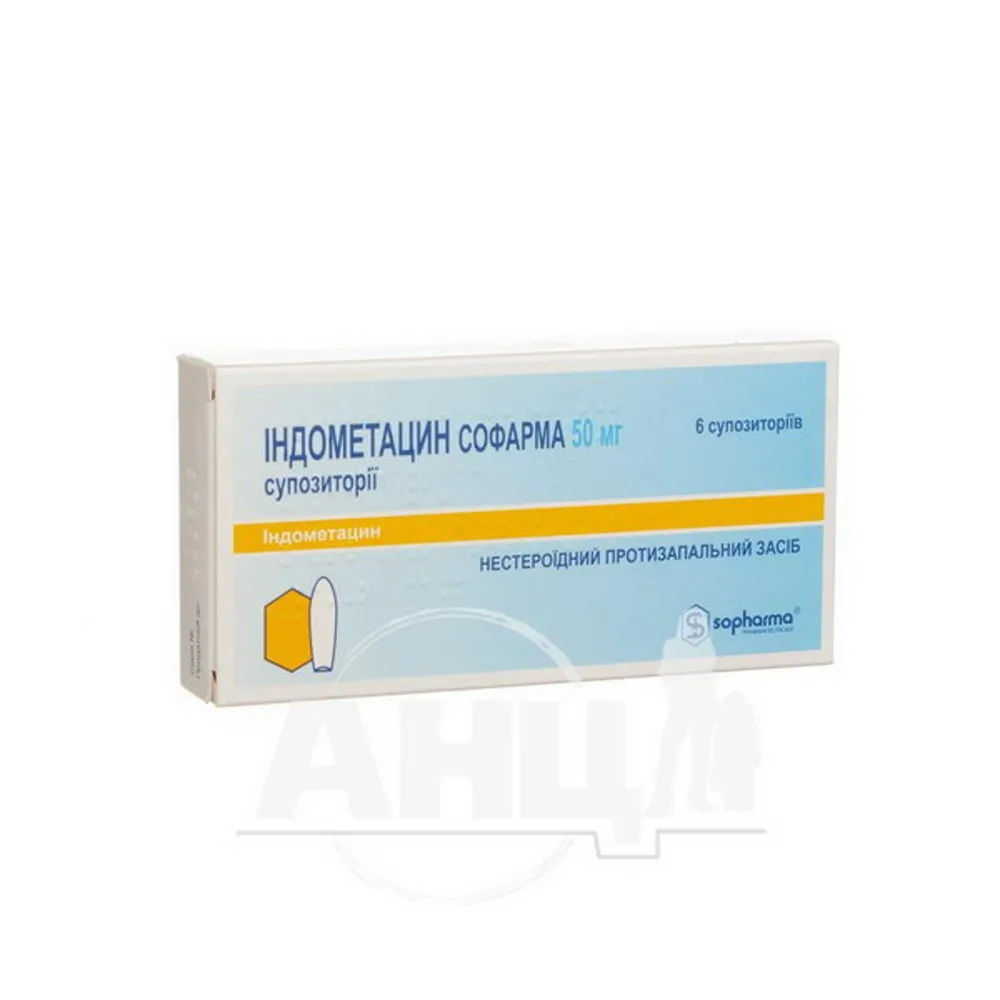
Table of Contents
INSTRUCTIONS FOR MEDICAL USE OF THE MEDICINAL PRODUCT INDOMETACIN SOPHARMA
Composition:
Active substance: indometacin;
1 suppository contains 50 mg of indometacin;
Excipients: hard fat (type I), hard fat (type II).
Pharmaceutical form. Suppositories.
Main physico-chemical characteristics: suppositories of proper torpedo-like shape with smooth surface, white to pale yellow in color; odorless.
Pharmacotherapeutic group.
Non-steroidal anti-inflammatory and antirheumatic agents. Acetic acid derivatives and related substances.
ATC code M01AB01.
Pharmacological Properties
Pharmacodynamics
Indometacin is a derivative of indoleacetic acid and belongs to the group of nonsteroidal anti-inflammatory drugs (NSAIDs). It has pronounced anti-inflammatory activity, which significantly exceeds that of phenylbutazone and acetylsalicylic acid. Its analgesic activity corresponds to that of metamizole. It possesses antipyretic properties. Indometacin strongly inhibits prostaglandin synthesis by suppressing cyclooxygenase. In addition, it reduces platelet aggregation and lipoxygenase activity at the site of inflammation, thereby decreasing leukotriene production. It also reduces the release of endogenous pyrogens, inactivates lysosomal enzymes, and inhibits the activity of neutral proteases. Other effects are also significant, such as uncoupling of oxidative phosphorylation, inhibition of catecholamine reuptake, enhancement of noradrenaline metabolism, and a known ganglion-blocking effect.
Pharmacokinetics
Absorption: When administered rectally, 80–90% of the dose is rapidly absorbed. Maximum plasma concentration is reached within 1–2 hours.
Distribution: It distributes into all tissues and organs. It penetrates the placental and blood-brain barrier. It crosses the synovial membrane into the joint, where its concentration in synovial fluid increases. It is 90–98% bound to plasma proteins. Indometacin is capable of displacing other drugs and enhancing their therapeutic effects when used concomitantly.
Metabolism: It is metabolized in the liver through oxidation and conjugation.
Excretion: The elimination half-life of indometacin ranges between 2.6 and 11.2 hours, averaging 5.8 hours. 60–75% is excreted by the kidneys, of which 10–20% is excreted unchanged, while the remainder is excreted via bile and feces. It penetrates into breast milk.
Clinical characteristics.
Indications.
The efficacy of short-term symptomatic treatment with indometacin has been established for the following conditions:
- Acute and chronic pain associated with inflammatory and degenerative disorders of the musculoskeletal system: rheumatoid arthritis; acute and exacerbation stages of chronic ankylosing spondylitis (Bechterew's disease); gout attacks and gouty arthritis; moderate to severe osteoarthritis;
- Disorders of periarticular tissues: tendinitis, bursitis (acute painful shoulder), tendobursitis, tenosynovitis, pain and inflammation following trauma (including in athletes) and surgical procedures;
- Discopathy, plexitis, radiculoneuritis;
- Dysmenorrhea.
The potential benefits and risks of using indometacin, as well as alternative treatment options, should be carefully evaluated before deciding to initiate indometacin therapy. The lowest effective dose for the shortest duration necessary to achieve the individual patient's treatment goal should be used (see section «Special precautions»).
Contraindications.
Hypersensitivity to the active substance or to any of the excipients of the medicinal product.
Hypersensitivity to acetylsalicylic acid or other nonsteroidal anti-inflammatory drugs (NSAIDs), manifested clinically by asthmatic attacks, urticaria, or rhinitis, or angioneurotic edema.
History of gastrointestinal bleeding or perforation related to previous use of NSAIDs.
Active or recurrent peptic ulceration or bleeding (two or more confirmed episodes of ulcers or bleeding), ulcerative colitis and/or enterocolitis.
Concomitant use of other nonsteroidal anti-inflammatory drugs, including selective cyclooxygenase-2 (COX-2) inhibitors, due to increased risk of adverse effects.
Severe heart failure.
Severe hepatic or renal insufficiency.
Hemorrhoids, anal fistulas and fissures, proctitis, and other diseases of the rectum and anus.
Bleeding from hemorrhoidal nodes.
Pre- and postoperative pain associated with coronary artery bypass graft (CABG) surgery.
Interaction with other medicinal products and other forms of interaction.
Concomitant use of zalcitabine and indometacin causes changes in their pharmacodynamics.
Zidovudine: Concurrent administration with zidovudine increases the myelotoxicity of indometacin and the risk of hematological toxicity.
The risk of indometacin toxicity is increased when used with ritonavir.
Concomitant use with antiepileptic drugs should be done with caution due to enhanced effects of phenytoin.
Concomitant use with haloperidol enhances sedation.
Concomitant use with benzodiazepines increases the risk of dizziness.
Concomitant use with desmopressin enhances the effect of the latter.
Avoid taking nonsteroidal anti-inflammatory drugs for 8–12 days after administration of mifepristone.
Indometacin may reduce the elimination rate of baclofen, thereby increasing its toxic effects.
Indometacin may interfere with laboratory test results:
- May cause elevated levels of one or more liver enzymes;
- May lead to false-negative results in the dexamethasone suppression test.
Concomitant use of NSAIDs and COX-2 inhibitors increases the risk of developing "analgesic" nephropathy and renal papillary necrosis. Therefore, their combined use should be avoided.
Other NSAIDs: Concomitant use of indometacin with other NSAIDs increases the risk of gastrointestinal complications. The use of two or more NSAIDs should be avoided due to increased risk of adverse effects.
Diffunisal: Increases plasma levels of indometacin and reduces its renal clearance. There is a possible risk of fatal gastrointestinal bleeding. This combination is not recommended.
Digoxin: Indometacin may increase digoxin plasma concentrations, requiring dose adjustment and monitoring of digoxin levels.
Lithium salts: Indometacin prolongs and potentiates the effect of lithium salts and increases lithium toxicity.
Immunosuppressants: Concomitant use of indometacin and immunosuppressants, such as methotrexate and cyclosporine, leads to increased toxicity. In patients receiving concomitant indometacin and muromonab-CD3, the risk of psychosis and encephalopathy is increased. Concomitant use with tacrolimus increases the nephrotoxicity of indometacin. Caution is advised when using concomitantly with cyclophosphamide due to the risk of water intoxication.
Diuretics: NSAIDs reduce the therapeutic efficacy of diuretics. There may be an increased risk of hyperkalemia when used concomitantly with potassium-sparing diuretics, and reduced renal function when combined with thiazide diuretics. Diuretics may enhance the nephrotoxicity of indometacin. Concomitant use with triamterene should be avoided due to the risk of reversible renal failure.
Probenecid: Slows excretion and increases the toxicity of indometacin.
Antihypertensive agents: Indometacin may attenuate the antihypertensive effect of ACE inhibitors and β-blockers when used concomitantly.
Corticosteroids: Increased risk of gastrointestinal ulceration and bleeding.
Anticoagulants: NSAIDs may enhance the effect of anticoagulants when used in combination. The risk of ulceration and bleeding is increased. Bleeding time and prothrombin time should be monitored. Indometacin competitively interacts with coumarin anticoagulants at plasma protein binding sites, resulting in increased anticoagulant concentrations in plasma. When used concomitantly, indometacin should be prescribed at the lowest possible dose, and the addition of protective agents should be considered.
Antiplatelet agents and selective serotonin reuptake inhibitors (SSRIs): Increased risk of gastrointestinal bleeding. Concomitant use with antidepressants (SSRIs) should be done with caution due to increased bleeding risk.
Antibacterial agents: Concomitant use with antibacterial agents may increase the risk of seizures; with ciprofloxacin, the risk of skin reactions and neurotoxicity increases. Caution is advised in patients taking quinolone antibacterial drugs.
Antidiabetic agents: Indometacin does not alter the therapeutic efficacy of oral antidiabetic agents or insulin, despite observations of hypoglycemic or hyperglycemic effects during concomitant use. The effect of sulfonylurea derivatives may be enhanced by nonsteroidal anti-inflammatory drugs. In isolated cases, concomitant use with metformin may cause metabolic acidosis.
Vasodilators: Concomitant use with vasodilators (pentoxifylline) increases the risk of bleeding.
Bisphosphonates: Concomitant use with bisphosphonates increases the bioavailability of indometacin.
Special precautions for use.
The adverse effects can be minimized by using the lowest effective dose for the shortest duration necessary to control symptoms.
In patients with systemic lupus erythematosus and connective tissue diseases, there is a possible increased risk of developing viral meningitis.
Caution should be exercised when administering the drug to patients after surgical procedures, as the duration of bleeding may increase.
Due to its anti-inflammatory action, the medicinal product may mask symptoms of acute inflammation; therefore, bacterial infection must be ruled out before initiating treatment. In isolated cases, indomethacin may mask signs of infectious-inflammatory processes. Caution is also advised when administering live vaccines.
The drug should be used with caution in patients with bronchial asthma due to the possibility of bronchospasm.
Concomitant use of indomethacin with other NSAIDs, including selective COX-2 inhibitors, should be avoided.
Patients undergoing long-term treatment should have periodic blood tests, liver function tests, and gastrointestinal assessments to detect any adverse effects as early as possible.
The medicinal product should be used cautiously in patients with impaired renal, hepatic, or cardiac function, or conditions associated with fluid retention, since indomethacin may cause reduced renal function and fluid retention.
In patients with compromised blood flow in whom renal prostaglandins play an important role in maintaining renal perfusion, NSAIDs may provoke pronounced renal decompensation. Patients at risk of such reactions include those with renal or hepatic dysfunction, diabetes mellitus, elderly patients, patients with reduced extracellular fluid volume, congestive heart failure, sepsis, and those concurrently taking nephrotoxic drugs. Renal function should be monitored during treatment in these patients.
Indomethacin should be used cautiously in patients with renal disease due to the potential for renal damage.
Gastrointestinal bleeding, ulceration, and perforation, including fatal outcomes, may occur during treatment with all NSAIDs at any time, regardless of the presence of warning symptoms or prior history of serious gastrointestinal complications.
The risk of gastrointestinal adverse effects is higher with high-dose NSAID therapy, particularly in patients with a history of peptic ulcer disease, especially if complicated by bleeding or perforation, and in elderly patients. In such patients, treatment should be initiated at the lowest possible dose, with consideration given to concomitant use of protective agents (e.g., misoprostol or proton pump inhibitors). This approach is also recommended when low-dose acetylsalicylic acid or other drugs increasing the risk of gastrointestinal complications (corticosteroids, anticoagulants, antiplatelet agents, selective serotonin reuptake inhibitors) are used concomitantly.
The drug should be used with caution in patients with sigmoid colon abnormalities.
Particular caution is required when treating patients with gastrointestinal disorders such as Crohn’s disease, which may be exacerbated by NSAID therapy.
Patients who abuse alcohol or are smokers have an increased risk of gastrointestinal complications and should therefore be treated with special caution.
Patients with a history of gastrointestinal disorders (particularly elderly patients) should be advised to report any unusual abdominal symptoms (especially gastrointestinal bleeding), particularly at the beginning of treatment.
If gastrointestinal ulceration or bleeding occurs, indomethacin therapy should be discontinued.
Appropriate monitoring is required in patients with hypertension and/or mild to moderate congestive heart failure in their medical history, as edema and fluid retention associated with NSAID therapy have been reported.
Clinical studies and epidemiological data suggest that the use of certain NSAIDs (particularly at high doses and for prolonged periods) may be associated with a small increased risk of arterial thrombotic events (e.g., myocardial infarction or stroke). There is insufficient data to exclude such a risk for indomethacin.
Patients with uncontrolled hypertension, congestive heart failure, established ischemic heart disease, peripheral arterial disease, and/or cerebrovascular disease should be treated with indomethacin only after careful evaluation, particularly when initiating long-term treatment in patients with risk factors for cardiovascular complications (e.g., hypertension, hyperlipidemia, diabetes mellitus, smoking).
The drug should be used with particular caution in patients showing signs of hypersensitivity to food or medications, and in patients with allergic conditions such as hay fever, bronchial asthma, or nasal polyps.
Use with caution is advised in patients with psychiatric disorders, depression, epilepsy, or Parkinsonism, as the drug may worsen the underlying condition.
The drug should be prescribed with caution to patients with a history of coagulation disorders, as the medicinal product inhibits prostaglandin biosynthesis and affects platelet function.
Indomethacin, like other NSAIDs, may cause changes in liver function with prolonged use, necessitating periodic monitoring of liver enzymes.
Serious skin reactions, including fatal outcomes, are very rare during NSAID use and include cases of exfoliative dermatitis, Stevens-Johnson syndrome, and toxic epidermal necrolysis. The highest risk of such reactions occurs during the initial phase of treatment (within the first month). The medicinal product should be discontinued at the first signs of skin reactions or other symptoms of hypersensitivity.
In women of reproductive age, there is a risk of reversible impairment of fertility during treatment.
There is a risk of oligohydramnios and fetal arterial duct constriction with accidental/potential use during pregnancy or breastfeeding.
Use of NSAIDs carries a risk of hyperkalemia, particularly in patients aged 65 years or older, patients with renal impairment, and those receiving treatment with β-blockers, ACE inhibitors, or potassium-sparing diuretics. Serum potassium levels should be monitored in such patients.
Use during pregnancy or breastfeeding.
Pregnancy. The medicinal product is contraindicated during pregnancy.
Breastfeeding. Breastfeeding should be discontinued during treatment, as indomethacin passes into breast milk in small amounts.
Ability to affect reaction speed when driving or operating machinery.
Indomethacin Sopharma may cause adverse effects (tinnitus, dizziness, somnolence, hearing and visual disturbances) that may impair attention and reflexes, thereby affecting the ability to drive vehicles or operate machinery.
Dosage and Administration.
Dosage:
Adults: The usual dose is 50 mg (1 suppository) twice daily or 100 mg (2 suppositories) once daily. The maximum daily dose is 200 mg.
When the daily dose exceeds 150–200 mg, the risk of adverse effects increases.
Elderly patients: It is recommended to use the lowest effective dose for the shortest duration, as there is an increased risk of adverse effects. Patients should be monitored, as gastrointestinal bleeding may occur.
Duration of treatment:
The duration of treatment with the drug should not exceed 7 days.
Administration:
Indometacin Sofarma suppositories are administered rectally.
The frequency of adverse effects can be reduced by using the lowest effective dose for the shortest duration necessary to control symptoms.
Children.
Safety in children has not been established.
The drug should not be used for the treatment of children under 14 years of age.
Overdose.
Symptoms: nausea, vomiting, severe headache, dizziness, memory impairment, and disorientation. In more severe cases, paresthesia and convulsions may occur.
Treatment: symptomatic and supportive. Indomethacin cannot be removed from the body by hemodialysis.
Adverse reactions.
The most common adverse reactions are gastrointestinal disorders. Peptic ulcer, perforation or gastrointestinal bleeding (sometimes fatal) may occur, predominantly in elderly patients.
Blood and lymphatic system disorders: leukopenia, neutropenia, thrombocytopenia, agranulocytosis, anemia (including hemolytic and aplastic anemia), bone marrow suppression, disseminated intravascular coagulation.
Immune system disorders: very rarely – bronchospasm, asthmatic attacks, anaphylactic or anaphylactoid reactions in allergic patients, fever, vasculitis, anaphylaxis, pulmonary edema, cerebral edema.
Metabolism and nutrition disorders: increased urea levels, weight gain, elevated liver enzymes, increased sweating, accelerated cartilage degeneration, fluid retention, hyperglycemia, glucosuria, hyperkalemia.
Respiratory system disorders: epistaxis, pulmonary subacute eosinophilia, dyspnea, acute respiratory distress.
Nervous system disorders: excitation, convulsions, muscle weakness, involuntary muscle movements, psychiatric disorders, exacerbation of epilepsy and parkinsonism, impaired consciousness, coma, dysarthria, aseptic meningitis, hallucinations, fear, dizziness, headache, vertigo, somnolence, depression, fatigue, anxiety, weakness, difficulty concentrating, sensory disturbances including paresthesia, disorientation, insomnia, irritability, peripheral neuropathy, memory disorders, psychotic reactions, loss of consciousness, depersonalization.
Eye disorders: optic neuritis, corneal deposits and retinal damage including macular lesions, conjunctivitis, periorbital pain, diplopia, blurred vision.
Ear and labyrinth disorders: very rarely – hearing disturbances, tinnitus, deafness.
Cardiac disorders: tachycardia, angina pectoris, palpitations, arrhythmias, edema; very rarely – heart failure associated with NSAID use.
Use of indometacin (especially at high doses and for prolonged periods) may be associated with a weakly increased risk of myocardial infarction or stroke.
Vascular disorders: arterial hypertension, hypotension, thrombotic microangiopathy.
Gastrointestinal disorders: anorexia, taste disturbances, gastroenteritis, erosive-ulcerative lesions, bleeding and perforations of the gastrointestinal tract, proctitis, intestinal strictures, gastritis, bleeding from the sigmoid colon or from a diverticulum, regional ileitis, cholestasis, nausea, vomiting, diarrhea, dyspepsia, constipation, abdominal pain, flatulence, melena, hematemesis, ulcerative stomatitis, exacerbation of ulcerative colitis (Crohn's disease), exacerbation of pre-existing ulcers.
Liver and biliary system disorders: toxic hepatitis with or without jaundice; very rarely – fulminant hepatitis.
Skin and subcutaneous tissue disorders: alopecia, exacerbation of psoriasis, eczema, pruritus with or without rash, urticaria, petechiae, ecchymoses; very rarely – angioneurotic edema, exfoliative dermatitis, purpura, nodular erythema, erythema multiforme, bullous rashes including Stevens-Johnson syndrome and toxic epidermal necrolysis.
Renal and urinary system disorders: impaired renal function, edema, vaginal bleeding, breast enlargement and tenderness, gynecomastia, proteinuria, hematuria, nephrotic syndrome, interstitial nephritis, acute renal failure, papillary necrosis.
General disorders and administration site conditions: local irritation, local bleeding and hemorrhoid exacerbation, pruritus in the anorectal area, tenesmus.
Laboratory findings: elevated serum aminotransferase levels (ALT, AST), transient elevation of bilirubin levels.
Shelf life. 2 years.
Storage conditions.
Keep out of reach and sight of children.
Store in the original packaging at a temperature not exceeding 25 °C.
Packaging.
6 suppositories per strip. 1 strip per cardboard box.
Prescription status.
Prescription only.
Manufacturer.
Sofarma AD.
Manufacturer's name and address.
16 Iliensko Shose Blvd., Sofia, 1220, Bulgaria.