Indometacin plus
Ukraine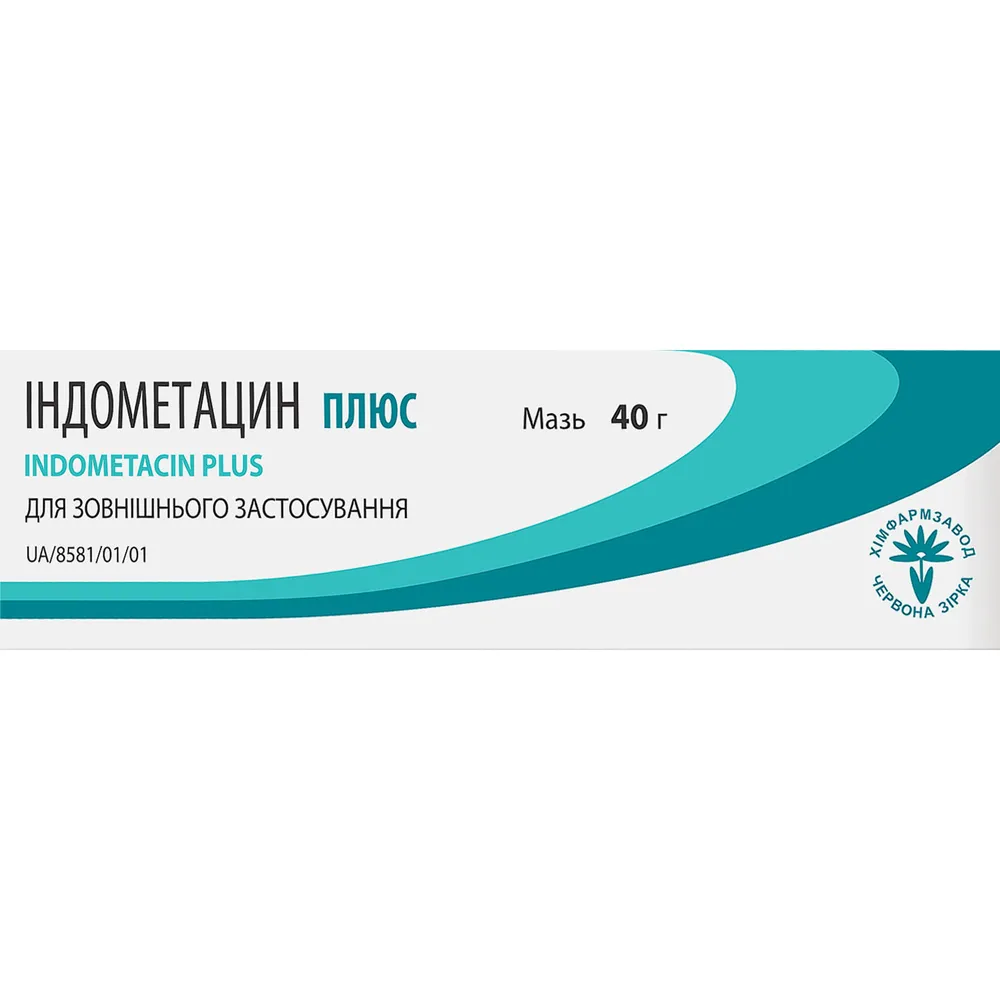
Table of Contents
INSTRUCTIONS FOR MEDICAL USE OF THE MEDICINAL PRODUCT INDOMETACIN PLUS
Composition:
Active substances: indometacin, dimethyl sulfoxide;
1 g of ointment contains indometacin 50 mg, dimethyl sulfoxide 50 mg;
Excipients: peppermint oil, propylene glycol, polyethylene glycol 400, polyethylene glycol 1500.
Pharmaceutical form. Ointment.
Main physicochemical properties: ointment of greenish-yellow color with a weak specific odor.
Pharmacotherapeutic group. Non-steroidal anti-inflammatory drugs for topical use.
ATC code M02A A.
Pharmacological properties.
Pharmacodynamics.
Anti-inflammatory, analgesic, anti-aggregation agent. Inhibits the enzyme cyclooxygenase (COX), which is involved in the conversion of arachidonic acid, thereby disrupting the synthesis of prostaglandins that play an important role in the development of inflammatory reactions, fever, and pain. Suppresses the activity of inflammatory mediators, hyaluronidase, and lysosomal hydrolases.
Indomethacin reduces or eliminates pain syndrome of rheumatic and non-rheumatic origin.
Dimethyl sulfoxide, penetrating through biological membranes, including the skin, enhances the penetration of indomethacin through intact skin.
Pharmacokinetics.
When applied topically, indomethacin is partially absorbed into systemic circulation. The time to reach maximum plasma concentration is approximately 2 hours. Indomethacin penetrates well into tissues. It is metabolized in the liver, forming inactive metabolites of indomethacin and its glucuronide conjugates. Unchanged indomethacin and inactive metabolites are excreted by the kidneys and with bile.
Clinical characteristics.
Indications.
- Adjunctive agent in the complex treatment of acute and chronic rheumatoid arthritis, osteoarthritis, osteoarthrosis, ankylosing spondylitis, psoriatic polyarthritis, gouty arthritis;
- localized forms of extra-articular rheumatism of the musculoskeletal system: tendinitis, synovitis, tenosynovitis, fasciitis, joint ligament inflammation, bursitis;
- local symptomatic treatment of inflammation, pain, and swelling associated with post-traumatic injuries of the musculoskeletal system – sprains, dislocations, contusions.
Contraindications.
Hypersensitivity to the components of the drug. Hypersensitivity to aspirin or other nonsteroidal anti-inflammatory drugs (NSAIDs) manifested clinically by asthmatic attacks, urticaria, or allergic rhinitis. Peptic ulcer of the stomach and duodenum, ulcerative colitis, bronchial asthma, rhinitis, conjunctivitis, or bronchospasm induced by NSAIDs, hemophilia, hypocoagulation, glucose-6-phosphate dehydrogenase deficiency, blood disorders.
Interaction with other medicinal products and other types of interactions.
When applied topically, no interactions of the drug with other medicinal products have been established.
However, it should be taken into account that simultaneous use of Indometacin Plus increases blood concentration of lithium and digoxin preparations; increases the risk of adverse effects of mineralocorticoids, glucocorticosteroids, and estrogens; increases the risk of bleeding and enhances the effect of anticoagulants, antiplatelet agents, and fibrinolytics; potentiates the hypoglycemic effect of sulfonylurea derivatives; reduces the effectiveness of uricosuric agents, β-adrenoblockers, and diuretics of the thiazide and furosemide groups. Caution should be exercised when using NSAIDs no less than 24 hours before starting or after completing methotrexate therapy, as its blood level (and, accordingly, toxicity) may increase.
Concomitant use with medicinal products from the NSAID group, including selective COX-2 inhibitors, increases the risk of adverse effects.
When used simultaneously with antibacterial agents, the risk of seizures may increase; with ciprofloxacin – the risk of skin reactions.
Concomitant use of indomethacin with aspirin or corticosteroids increases the risk of gastrointestinal complications.
NSAIDs may interact with medicinal products that reduce blood pressure, although this possibility is extremely low with topical application.
Special precautions for use.
The product should be applied only to intact areas of skin (in the absence of open wounds or injuries), avoiding contact with eyes and mucous membranes. After application, hands should be washed unless the hands are the area being treated.
Contraindications and precautions: Use with caution in elderly patients, as well as in patients with a history of liver, kidney, or gastrointestinal disorders, in the presence of dyspeptic symptoms at the time of prescribing, in patients with arterial hypertension, heart failure, immediately after major surgical procedures, and in patients with Parkinson's disease or epilepsy.
Although systemic absorption of indomethacin after topical application to the skin is minimal, patients with active gastric or duodenal ulcers, or with a history of kidney disease or heart failure, should use this ointment only after consultation with a physician.
Treatment with this product should be administered with particular caution and only after consultation with a physician in patients with hypersensitivity to food or medicinal products, or with allergic conditions such as hay fever, bronchial asthma, or nasal polyps.
Cross-sensitivity to other NSAIDs may occur; therefore, patients who have exhibited hypersensitivity to any drug in this class may also experience hypersensitivity reactions to indomethacin.
During prolonged treatment (more than 10 days), laboratory monitoring of leukocyte and platelet counts is recommended.
When used concomitantly with antibiotics, anticoagulants, or antidiabetic medications, appropriate laboratory parameters should be monitored.
The product contains propylene glycol and dimethyl sulfoxide (dimexide), which may cause skin irritation.
The product should be prescribed only in emergency cases if there is a history of allergic reactions. During treatment, regular monitoring of liver and kidney function and peripheral blood picture is required. If 17-ketosteroids need to be measured, the product should be discontinued 48 hours before the test.
Use during pregnancy or breastfeeding.
Do not use during pregnancy or breastfeeding.
Ability to affect reaction rate when driving or operating machinery.
Use with increased caution when driving or operating complex machinery.
Method of Administration and Dosage
For adults and children aged 14 years and older, apply 2.5 g of ointment (a strip 7.5 cm in length) twice daily to the affected area as a thin layer, gently rubbing it into the skin. To enhance therapeutic efficacy, occlusive dressings and/or physiotherapeutic methods (high-frequency ultrasound therapy) may be used.
The average daily dose for adults and children aged 14 years and older is 5 g of ointment (250 mg of indomethacin). Treatment duration is 7–10 days. If no improvement in symptoms is observed during this period, the treatment should be re-evaluated. For prolonged treatment (more than 10 days), laboratory monitoring of leukocyte and platelet counts is recommended.
Children
Do not use in children under 14 years of age.
Overdose
Symptoms: dyspepsia, erosive-hemorrhagic gastrointestinal tract lesions, headache, dizziness, hepatotoxicity. Monitoring of leukocyte and platelet counts is required.
Treatment: discontinue the drug or reduce the dose. There is no specific antidote; treatment is symptomatic.
Symptoms following contact with eyes, mucous membranes, or open wounds: local irritation occurs—lacrimation, redness, burning, pain.
Treatment: thoroughly rinse the affected area with distilled water or physiological saline until symptoms subside.
In case of accidental ingestion, symptoms may include a burning sensation in the oral cavity, salivation, nausea, and vomiting. In such cases, rinse the mouth and perform gastric lavage; symptomatic treatment should be administered if necessary.
To prevent overdose, strictly adhere to the prescribed treatment regimen.
Side effects.
Side effects are related to the route of administration.
The likelihood of systemic adverse reactions with topical application of indomethacin is low compared to the frequency of adverse reactions with oral administration.
Skin and subcutaneous tissue: occasionally, when applied topically, petechial and erythematous-papular rashes, pruritus, hyperemia and burning at the site of application, desquamation, dryness of the skin, swelling may occur in predisposed patients.
Respiratory system: dyspnea.
Hepatobiliary system: increased levels of liver enzymes.
Immune system: rarely, local swelling and vesicular rash may develop; in individual cases — angioneurotic edema, hypersensitivity reaction.
Gastrointestinal tract: when applied over a large skin surface area, resorptive adverse effects may occur, such as gastrointestinal disturbances (including loss of appetite, nausea, vomiting, diarrhea, pain, hemorrhages and ulcers), increased levels of liver enzymes.
With prolonged use of the drug or application over a large skin surface area, systemic adverse reactions may occur: dyspepsia, headache, dizziness.
In such cases, the use of the drug should be discontinued.
Shelf life.
2 years.
Do not use after the expiry date stated on the packaging.
Storage conditions.
Keep out of reach of children.
Store in the original packaging at a temperature not exceeding 25 °C.
Packaging.
40 g in a tube.
1 tube in a cardboard box.
Prescription status.
Over-the-counter.
Manufacturer.
JSC "CHEMICAL PHARMACEUTICAL PLANT "CHERVONA ZIRKA".
Manufacturer's address and location of its business activity.
Ukraine, 61010, Kharkiv region, city of Kharkiv, Gordeyenkivska Street, building 1.