Inbutol®
Ukraine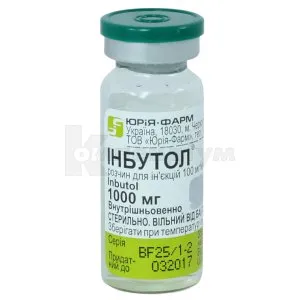
Table of Contents
INSTRUCTIONS FOR MEDICAL USE OF THE MEDICINAL PRODUCT INBUTOL® (INBUTOL)
Composition:
Active substance: ethambutol hydrochloride;
1 ml of solution contains 100 mg of ethambutol hydrochloride;
Excipients: sodium hydroxide, water for injections.
Pharmaceutical form. Concentrate for solution for infusion.
Main physicochemical properties: clear, colorless or slightly yellow solution.
Pharmacotherapeutic group. Antituberculosis agents. ATC Code J04AK02.
Pharmacological Properties
Pharmacodynamics
Mechanism of action
Ethambutol is used for the treatment of tuberculosis caused by mycobacteria of the Mycobacterium tuberculosis complex, with Mycobacterium tuberculosis being the most common causative agent of tuberculosis, as well as less frequently occurring species such as Mycobacterium bovis, Mycobacterium microti, and Mycobacterium africanum.
The antibacterial efficacy of ethambutol is manifested by bacteriostatic or bactericidal activity depending on the drug concentration. At ethambutol concentrations of 6–8 µg/mL and higher, it exhibits bactericidal activity; at lower concentrations, it shows bacteriostatic efficacy.
Ethambutol acts on extracellular proliferating mycobacteria and on macrophages containing proliferating intracellular mycobacteria. Intracellular concentrations are 7 times higher than extracellular concentrations.
The mechanism of action of ethambutol is not fully understood, but it is most likely related to the inhibition of arabinosyltransferase EmbB, which disrupts the structure of the bacterial cell wall. Despite the rapid diffusion of ethambutol into the bacterial cell, significant growth inhibition occurs only after 24 hours.
The action of isoniazid and rifampicin is synergistically enhanced by ethambutol.
Mechanism of resistance
In M. tuberculosis, resistance to ethambutol is associated with mutations in the embCAB operon, particularly in the embB gene, which encodes arabinosyltransferase.
Prevalence of acquired resistance
The prevalence of acquired resistance to Mycobacterium tuberculosis, the most common causative agent of tuberculosis within the Mycobacterium tuberculosis complex, varies depending on region and time.
According to available reports, tuberculosis-causing organisms are generally susceptible to ethambutol. However, advice from specialists should always be sought regarding treatment.
Even when other antituberculosis chemotherapeutic agents are contraindicated due to patient intolerance or in individuals requiring retreatment—usually indicating resistance problems caused by various factors—it is advisable to use ethambutol if susceptibility is confirmed.
Ethambutol has no effect on other bacteria, viruses, or fungi.
Pharmacokinetics
Serum concentrations of the active ingredient after intravenous administration depend on the dose level and time of administration. Thus, the average drug concentration was approximately 4.2 µg/mL when administering 20 mg/kg body weight, measured 2 hours after intravenous injection. A serum concentration of the drug (approximately 5 µg/mL when administering 25 mg/kg body weight) was achieved about 2 hours after oral administration.
Distribution
Ethambutol is rapidly cleared from blood plasma. Ethambutol binds to serum proteins in a concentration-dependent manner and penetrates into many different tissues and cells. It distributes well into lung tissue and accumulates in cells, such as erythrocytes and macrophages. In erythrocytes, ethambutol remains bound for a prolonged period, 2–4 times longer than the corresponding plasma concentration. Erythrocytes are considered a reservoir from which ethambutol is slowly released. The concentration of ethambutol in macrophages increases 7-fold compared to the extracellular space.
Ethambutol crosses the blood-brain barrier in sufficient amounts only in patients with inflammatory meningitis. Ethambutol reaches the fetal circulation. In fetal blood, the concentration of ethambutol is approximately 32% of the maternal blood concentration.
Binding of ethambutol to blood proteins depends on its concentration; for example, at an ethambutol concentration of 0.6 µg/mL, plasma protein binding is 39%, whereas at a concentration of 4.8 µg/mL, binding is only 8.3%.
Metabolism and elimination
The elimination half-life in healthy patients without kidney problems is (2)–4–(6) hours. Ethambutol remains largely unchanged during the first few hours after oral administration, and only 15% is excreted in urine as inactive metabolites.
After intravenous administration, on average (50)–70–80% of the dose is recovered in urine within 24 hours, and approximately 0.8% of the dose is found in feces within 48 hours. Ethambutol is primarily eliminated via glomerular filtration, with a smaller portion secreted tubularly. If creatinine clearance values fall below 100 mL/min, accumulation of ethambutol is expected if the dosing regimen remains unchanged.
Since preservation of kidney function is crucial for drug excretion, renal impairment increases the risk of drug accumulation, necessitating dose adjustment (see section "Dosage and administration").
Ethambutol is removed by hemodialysis and, to a lesser extent, by peritoneal dialysis.
Clinical characteristics.
Indications.
Inbutol®, concentrate for solution for infusion, is indicated for the treatment of tuberculosis.
Inbutol® is used for the treatment of adults, adolescents, and children.
- Treatment of all forms and stages of pulmonary and extrapulmonary tuberculosis sensitive to ethambutol, and only in combination with other antituberculosis chemotherapeutic agents.
- Empirical therapy in the initial phase of standard tuberculosis treatment when resistance patterns are unclear or in cases of retreatment.
- For use in modified treatment regimens for tuberculosis with proven resistance to one or more components of standard combination therapy.
After completion of the physician-recommended treatment period with the intravenous form of ethambutol, the patient should continue treatment with oral formulations of the drug.
When using Inbutol®, official recommendations regarding the use of antimicrobial agents should be taken into account.
Contraindications.
- Hypersensitivity to the active substance or to any of the excipients;
- history of optic nerve damage;
- other existing serious eye diseases (e.g., severe diabetic retinopathy);
- eye disorders that interfere with monitoring visual acuity;
- patients in whom reliable monitoring of visual acuity is impossible or no longer feasible for other reasons.
Interaction with other medicinal products and other forms of interaction.
Patients suffering from alcoholism and receiving disulfiram have an increased risk of visual function impairment when using ethambutol.
Effect on laboratory test results
At sufficient serum concentrations, ethambutol may interact with phentolamine, leading to false-positive results in testing for pheochromocytoma.
Special precautions.
The main adverse effect of ethambutol is optic nerve damage. Unilateral or bilateral retrobulbar optic neuritis manifests as impaired color vision (mainly green and red), decreased visual acuity, or central scotoma, periaxial neuritis with visual field defects. Therefore, ophthalmological examinations (visual acuity monitoring) should be performed before initiating treatment and every 4 weeks throughout therapy. For patients with impaired renal function, ophthalmological monitoring should be performed more frequently.
Patients should be informed about the possibility of visual disturbances, and attention should be paid to reading ability (reading newspapers, etc.). Any visual abnormalities should be reported to the physician immediately. In such cases, ethambutol treatment should be discontinued immediately to avoid irreversible damage.
In renal impairment, dose adjustment is recommended (see section "Dosage and administration").
In patients with renal insufficiency, plasma concentrations of ethambutol should be monitored regularly.
Use with caution is recommended in patients with hyperuricemia and/or gout.
To avoid high serum concentrations of ethambutol, the concentrate for infusion solution Inbutol® should be diluted in an appropriate solvent and administered intravenously at a controlled rate over at least 2 hours.
Children under 6 years of age, in whom reliable assessment of visual acuity is not yet possible, should receive ethambutol only after careful evaluation of benefit-risk ratio.
The intravenous formulation should be used with caution in children aged 6 to 12 years, due to insufficient clinical data in this age group. Therefore, Inbutol® should only be used to maintain vital functions and under monitoring of active substance concentration in serum.
Disorders of the skin and subcutaneous tissue
During the post-marketing period, severe cutaneous adverse reactions (SCARs) have been reported in association with ethambutol use, including drug-induced eosinophilia with systemic symptoms (DRESS), which may be life-threatening or fatal.
Patients should be informed about the signs and symptoms, and skin reactions should be closely monitored during treatment.
If signs or symptoms suggestive of these reactions occur, ethambutol should be discontinued immediately and alternative therapy considered (if necessary).
If a serious reaction such as DRESS develops during ethambutol therapy, re-administration of ethambutol is absolutely contraindicated.
In children, rash may be mistakenly attributed to the underlying infection or an alternative infectious process. Physicians should consider the possibility of an ethambutol-related reaction in children who develop rash and fever during ethambutol therapy.
Use during pregnancy or breastfeeding.
Pregnancy
Ethambutol crosses the placenta. Limited data are insufficient to conclude on any adverse effects of ethambutol at therapeutic doses on pregnancy or fetal and neonatal health. Experimental animal studies have shown reproductive toxicity of ethambutol at high doses. Ethambutol is contraindicated during pregnancy.
Period of breastfeeding
Ethambutol is excreted in breast milk. Drug concentrations in breast milk correspond to maternal serum concentrations. Ethambutol is contraindicated during breastfeeding.
Fertility
Ethambutol causes fertility problems in male rats. There are no data on the effect of Inbutol® on human fertility.
Ability to affect reaction speed when driving or operating machinery.
During treatment, ethambutol may affect reaction speed; therefore, driving or operating machinery is not recommended. If visual disturbances caused by ethambutol occur, driving and machine operation may pose a danger to the patient and others.
Administration and Dosage
Ethambutol is part of standard therapeutic regimens for the treatment of tuberculosis (always as part of combination therapy).
The choice of treatment regimen and combination drugs is based on local resistance data, results of susceptibility testing for each individual patient, and the patient's willingness to cooperate and level of responsibility.
Standard Tuberculosis Treatment
Ethambutol should be used as part of standard tuberculosis treatment for daily therapy during the initial phase together with isoniazid, rifampicin, and pyrazinamide for 2 months.
Dosage
For the treatment of tuberculosis, use the following ethambutol doses based on body weight for single daily administration:
Adults and adolescents:
15 (15−20) mg/kg body weight;
maximum daily dose: 1600 mg.
Children under 12 years of age:
(where visual acuity monitoring can be effectively applied)
20 (15−25) mg/kg body weight.
All cases of childhood tuberculosis should be managed in close collaboration with experienced centers. Intravenous administration of ethambutol in this age group should only be performed under life-threatening indications and with therapeutic drug monitoring in serum.
Intermittent Tuberculosis Therapy
Daily administration of anti-tuberculosis drugs throughout the entire treatment period is recommended, as this regimen ensures maximum therapeutic efficacy and safety.
If daily drug administration is not feasible for justified reasons, intermittent therapy should only be applied during the continuation phase and only in
HIV-negative patients with full drug susceptibility and as supervised treatment.
Adults:
3 times per week: 30 mg/kg body weight.
Dosing in Renal Impairment
Dosing in patients with renal impairment depends on the glomerular filtration rate (GFR in mL/min). Dose adjustment is achieved by modifying the dosing interval and, if necessary, guided by serum drug concentration monitoring. However, dose individualization based on serum drug level determination is particularly required in patients with severe renal function impairment.
| Dosing interval depending on GFR (mL/min) |
||||
| Dose (mg/kg body weight) |
30–60 |
10–29 |
GFR < 10 |
Notes |
| 15 |
24 hours |
48 hours |
48 hours* |
Avoid as long as possible. Increased risk of visual effects → testing |
* Perform determination of serum drug levels: ethambutol: Cmax = 2−6 mg/L 2 hours after administration (peak level) or < 1.0 mg/L before the next dose (trough level).
Ethambutol is effectively removed by dialysis. Rapid elimination during hemodialysis (t1/2 is 2 hours), moderate elimination during peritoneal dialysis (t1/2 is 5 hours).
Ethambutol should be administered on dialysis days, 4−6 hours before the start of dialysis or immediately after dialysis.
Dosing in hepatic impairment
In severe hepatic dysfunction, ethambutol serum concentrations increase; therefore, monitoring of serum drug levels is required.
Route of administration
Daily administration of the medicinal product Inbutol® is performed via intravenous infusion. The required amount of Inbutol® (corresponding to the prescribed daily dose) should be dissolved in 500 mL of isotonic sodium chloride solution or isotonic glucose solution. The infusion duration should be no less than 2 hours. The daily dose should be administered as a single intravenous infusion.
Duration of treatment
The duration of intravenous administration of Inbutol® should be considered in the context of the possibility of switching the patient to the oral formulation of the drug for continuation of the treatment course.
The duration of ethambutol therapy in tuberculosis generally depends on the prescribed treatment regimen.
In cases of resistance to one of the drugs used in standard therapy (e.g., isoniazid or rifampicin) or in the presence of multidrug resistance (confirmed resistance to at least isoniazid and rifampicin), ethambutol should be used with appropriate sensitivity throughout the extended and modified treatment regimen.
The infusion solution should be visually inspected before use. Only clear solutions free of visible particles should be used.
Any unused medicinal product or waste material must be disposed of in accordance with local requirements.
Children
Children under 6 years of age, in whom reliable assessment of visual acuity is not yet possible, should receive ethambutol only after careful evaluation of the benefit-risk ratio.
The intravenous formulation should be used with caution in children aged 6 to 12 years due to insufficient clinical data in this age group (see section "Special precautions").
Overdose
Symptoms of intoxication
Dizziness, headache, polyneuritis, optic neuritis (blindness may occur), deterioration of visual acuity, development of neurological disorders, confusion, hallucinations, loss of appetite, nausea, vomiting, gastrointestinal disturbances, diarrhea, fever, respiratory depression, asystole.
Treatment
There is no specific antidote. If symptoms of intoxication occur, the drug should be discontinued.
Treatment is symptomatic. Intravenous infusion of Ringer's solution, Sorbilact, Reosorbilact, and forced diuresis should be administered. In case of neurological or ophthalmological adverse reactions, administration of vitamins B1, B6, and B12, kallikrein, and steroids is recommended. Monitoring and supportive measures for vital functions should be implemented; resuscitation measures should be performed if necessary.
Peritoneal dialysis or hemodialysis is indicated. In life-threatening conditions, exchange blood transfusion is recommended, as it removes erythrocytes in which ethambutol accumulates in significant amounts.
Adverse reactions
The frequency of the following adverse reactions varies significantly in the commonly accepted literature. Informative studies with a sufficient number of patients are not available.
Assessment of adverse reactions is based on the following frequency categories: very common (≥ 1/10), common (≥ 1/100 to < 1/10), uncommon (≥ 1/1000 to < 1/100), rare (≥ 1/10000 to < 1/1000), very rare (≥ 1/10000), frequency not known (frequency cannot be estimated from the available data).
Eye disorders
Very common: dose-dependent optic neuritis with impaired color vision (predominantly green and red), decreased visual acuity, central scotoma or limitation of peripheral visual fields*.
Frequency not known: irreversible visual impairment (blindness) if treatment is not discontinued in time.
Nervous system disorders
Common: paraesthesia (especially in the extremities), headache, dizziness, hand tremor.
Psychiatric disorders
Common: confusion, disorientation, hallucinations.
Renal and urinary disorders
Uncommon: nephrotoxic effects.
Metabolism and nutrition disorders
Very common: increased uric acid levels (especially in patients with gout)*.
Immune system disorders
Uncommon: allergic reactions such as rash, itching, fever and/or leucopenia.
Rare: severe acute hypersensitivity reactions (anaphylactic shock).
Frequency not known: pneumonitis, neutropenia with eosinophilia, Stevens−Johnson syndrome.
Gastrointestinal disorders
Frequency not known: flatulence, sensation of heaviness and fullness, abdominal discomfort, nausea.
Skin and subcutaneous tissue disorders
Uncommon: itching, rash, lichen.
Frequency not known: drug-induced eosinophilia with systemic symptoms (DRESS) (see section "Description of selected adverse reactions").
Hepatobiliary disorders
Uncommon: liver function disorders (elevated transaminase levels, hepatitis)*.
Blood and lymphatic system disorders
Uncommon: leucopenia (as part of allergic reactions).
Rare: changes in blood picture, e.g. thrombocytopenia.
Frequency not known: neutropenia with eosinophilia (as part of allergic reactions).
Respiratory, thoracic and mediastinal disorders
Frequency not known: pneumonitis (as part of allergic reactions).
*see description of selected adverse reactions
Description of selected adverse reactions
Optic neuritis: symptoms are usually reversible if detected early and if Inbutol® is discontinued immediately.
Increased uric acid levels: approximately 50% of treated patients, especially those with gout, showed elevated blood uric acid levels. A competitive mechanism of uric acid excretion in the tubular system is presumed. This effect may appear as early as 24 hours after a single dose or even after 90 days of treatment, and may be influenced by concomitant treatment with isoniazid and pyridoxine. Cases of arthralgia associated with 4-drug combination therapy (rifampicin, isoniazid, pyrazinamide, and ethambutol) have also been reported.
Liver function disorders: may occur, particularly with high doses of ethambutol.
Actions in case of adverse reactions
Severe acute hypersensitivity reactions (e.g. anaphylaxis)
Treatment with Inbutol® should be discontinued immediately and appropriate measures initiated (e.g. administration of antihistamines, corticosteroids, sympathomimetics, and mechanical ventilation if necessary).
Reporting suspected adverse reactions
Reporting of adverse reactions after medicinal product registration is important. It allows ongoing monitoring of the benefit-risk balance of the medicinal product. Healthcare professionals, pharmacists, patients, and their legal representatives should report all suspected adverse reactions and lack of efficacy through the Automated Pharmacovigilance Information System at: https://aisf.dec.gov.ua.
Shelf life. 2 years.
Storage conditions.
Store at a temperature not exceeding 25 °C. Keep out of reach of children.
Do not freeze.
Packaging.
10 ml or 20 ml in glass bottles.
Prescription status. Prescription only.
Manufacturer.
LLC "Yuria-Pharm".
Manufacturer's address and location of its business activity.
108, Kobzarska Street, Cherkasy, 18030, Cherkasy region, Ukraine. Tel.: (044) 281-01-01.