Imuran
Ukraine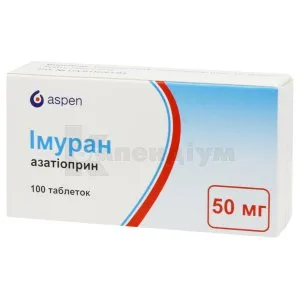
Table of Contents
INSTRUCTIONS FOR MEDICAL USE OF THE MEDICINAL PRODUCT IMURAN (IMURAN)
Composition:
Active substance: azathioprine;
1 tablet contains 50 mg of azathioprine;
Excipients: lactose monohydrate; corn starch; pregelatinized starch; magnesium stearate; stearic acid; hypromellose; macrogol 400.
Pharmaceutical form. Film-coated tablets.
Main physicochemical properties: yellow, round, biconvex, film-coated tablets with a score line and marking "IM 5".
Pharmacotherapeutic group. Antineoplastic and immunomodulating agents. Immunosuppressants, azathioprine. ATC code L04A X01.
Pharmacological Properties.
Pharmacodynamics.
Azathioprine is a prodrug of 6-mercaptopurine (6-MP). 6-MP is inactive per se but acts as a purine antagonist and requires cellular uptake and intracellular anabolism to thioguanine nucleotides (TGNs) for immunosuppressive effects. TGNs and other metabolites (e.g., 6-methyl-mercaptopurine ribonucleotides) inhibit de novo purine synthesis and interconversion of purine nucleotides. TGNs are also incorporated into nucleic acids, contributing to the immunosuppressive effects of the drug.
Other potential mechanisms of action include inhibition of multiple pathways of nucleic acid biosynthesis, resulting in delayed proliferation of cells involved in immune response determination and amplification.
Due to this mechanism of action, the therapeutic effect of Imuran develops over several weeks or months.
The activity of methylnitroimidazole, a metabolite of azathioprine but not of 6-MP, is not fully understood. However, in some systems, it influences the activity of azathioprine compared to 6-MP.
Pharmacokinetics.
Plasma levels of azathioprine and 6-mercaptopurine do not have a clear correlation with the therapeutic efficacy or toxicity of Imuran.
Absorption.
Azathioprine is well absorbed after oral administration. The mean absolute bioavailability (range) of 6-MP following a 50 mg dose of azathioprine is 47% (27–80%). The extent of absorption of azathioprine is similar throughout the gastrointestinal tract, including the stomach, small intestine, and colon. However, the extent of 6-MP absorption following azathioprine administration is variable and may differ at various absorption sites, with the highest absorption observed in the small intestine, lower in the stomach, and even lower in the colon.
Although studies on the effect of food intake during azathioprine treatment have not been conducted, pharmacokinetic studies of 6-MP, relevant to azathioprine, have been performed. The mean relative bioavailability of 6-MP was approximately 27% lower after food or milk intake compared to fasting. 6-MP is unstable in milk due to the presence of xanthine oxidase (30% degradation within 30 minutes) (see sections "Pharmacokinetics: Metabolism" and "Dosage and Administration"). Azathioprine may be taken with or without food, but patients should standardize their method of administration. The drug should not be taken with milk or dairy products (see section "Dosage and Administration").
After oral administration of [35S]-azathioprine, maximum radioactivity in plasma occurs within 1–2 hours, followed by a decline with an elimination half-life of 4–6 hours. This does not represent the half-life of azathioprine itself but reflects the clearance of azathioprine and [35S]-containing metabolites from plasma. Due to the rapid and extensive metabolism of azathioprine, only a fraction of the radioactivity measured in plasma corresponds to the unmetabolized drug. In studies measuring plasma concentrations of azathioprine and 6-mercaptopurine after intravenous administration of azathioprine, the mean T1/2 in plasma for azathioprine was found to be in the range of 6–28 minutes, and the mean T1/2 in plasma for 6-mercaptopurine was in the range of 38–114 minutes after intravenous administration.
Distribution.
The volume of distribution at steady state for azathioprine is unknown. The observed mean volume of distribution at steady state (± SD) for 6-MP is 0.9 (± 0.8) L/kg, although this may be an underestimation since 6-MP is distributed throughout the body (not only in the liver).
After intravenous or oral administration of 6-MP, its concentrations in cerebrospinal fluid are low or negligible.
Metabolism.
Azathioprine is rapidly converted in vivo to 6-MP and methylnitroimidazole by glutathione-S-transferase. 6-MP rapidly crosses the cell membrane and undergoes extensive metabolism via multiple pathways into active and inactive metabolites, with no single enzyme being predominant. Due to the complex metabolism, inhibition of one enzyme cannot explain all cases of inadequate treatment response and/or severe myelosuppression. The main enzymes responsible for the metabolism of 6-MP or its subsequent metabolites are the polymorphic enzyme thiopurine S-methyltransferase (TPMT) (see "Special Warnings and Precautions for Use" and "Interaction with Other Medicinal Products and Other Forms of Interaction: Aminosalicylates"), xanthine oxidase (see "Interaction with Other Medicinal Products and Other Forms of Interaction: Allopurinol/oxypurinol/thiopurinol" and "Pharmacokinetics: Absorption"), inosine monophosphate dehydrogenase (IMPDH) (see "Interaction with Other Medicinal Products and Other Forms of Interaction: Ribavirin"), and hypoxanthine-guanine phosphoribosyltransferase (HGPRT). Other enzymes involved in the formation of active and inactive metabolites include guanosine monophosphate synthetase (GMPS, forming TGNs) and inosine triphosphate pyrophosphatase (ITPase). Azathioprine itself is also metabolized by aldehyde oxidase, forming 8-hydroxyazathioprine, which may be active. Numerous inactive metabolites are also formed via other pathways.
There is evidence that polymorphisms in genes encoding various enzyme systems involved in azathioprine metabolism may predict adverse effects of azathioprine treatment.
Thiopurine S-methyltransferase (TPMT).
TPMT activity is inversely proportional to erythrocyte concentrations of 6-MP-derived thioguanine nucleotides; higher thioguanine nucleotide concentrations are associated with greater reductions in leukocyte and neutrophil counts. Patients with TPMT deficiency develop very high concentrations of cytotoxic thioguanine nucleotides.
Genotyping can determine the patient's allelic profile. Currently, three alleles—TPMT*2, TPMT*3A, and TPMT*3C—are responsible for reduced TPMT activity in 95% of patients. Approximately 0.3% (1:300) of patients have two non-functional alleles (homozygous deficiency) of the TPMT gene and have low or undetectable enzyme activity. Approximately 10% of patients have one non-functional allele (heterozygous deficiency), resulting in low or intermediate TPMT activity, and 90% of patients have normal TPMT activity with two functional alleles. There is also a group of patients (approximately 2%) who have very high TPMT activity. Phenotypic testing, which measures thiopurine nucleotide levels or TPMT activity in erythrocytes, can also be informative (see section "Special Warnings and Precautions for Use").
Elimination.
Within 24 hours after oral administration of 100 mg of 35S-azathioprine, 50% of radioactivity was excreted in urine and 12% in feces. Azathioprine is primarily excreted in urine as the inactive oxidized metabolite 6-thiouric acid. Less than 2% was excreted in urine as azathioprine or 6-MP. Azathioprine has a high clearance rate with total clearance exceeding 3 L/min in healthy volunteers. Data on renal clearance or elimination half-life of azathioprine are lacking. Renal clearance and elimination half-life of 6-MP are 191 mL/min/m² and 0.9 hours, respectively.
1-Methyl-4-nitro-5-thioimidazole is also detected in urine as a minor excretion product. This likely indicates that azathioprine is exclusively cleaved via nucleophilic attack at the 5-position of the nitroimidazole ring, forming 6-mercaptopurine and 1-methyl-4-nitro-5-(S-glutathionyl)imidazole. A small fraction of the drug may be cleaved between the S atom and the purine ring. Only a small amount of administered azathioprine is excreted in unchanged form in urine.
Special Patient Groups.
Elderly Patients.
Studies in elderly patients have not been conducted (see "Dosage and Administration").
Children with Excess Body Weight.
In a clinical study in the USA, 18 children (aged 3 to 14 years) were equally divided into two groups based on whether their body weight-to-height ratio was above or below the 75th percentile. Each child received maintenance therapy with 6-MP, and dosing was based on the child's body surface area. The mean AUC (0–∞) of 6-MP in the group with a ratio above the 75th percentile was 2.4 times lower than in the group with a ratio below the 75th percentile. Therefore, higher permissible doses of azathioprine may be required for children with excess body weight, and monitoring of treatment response in these patients is recommended (see section "Dosage and Administration").
Renal Impairment.
Studies of azathioprine did not show differences in the pharmacokinetics of 6-MP between patients with uremia and those with renal transplants. Due to the lack of data on active metabolites of azathioprine in renal impairment, dose reduction should be considered for patients with impaired renal function (see section "Dosage and Administration").
Azathioprine and/or its metabolites are removed during hemodialysis, with approximately 45% of radioactive metabolites eliminated over 8 hours of dialysis.
Hepatic Impairment.
Azathioprine studies were conducted in three groups of patients with renal transplants: patients without hepatic impairment, patients with hepatic impairment (but without cirrhosis), and patients with hepatic impairment and cirrhosis. The study showed that the exposure to 6-mercaptopurine was 1.6 times higher in patients with hepatic impairment (but without cirrhosis) and 6 times higher in patients with hepatic impairment and cirrhosis compared to patients without hepatic impairment. Therefore, dose reduction should be considered for patients with impaired hepatic function (see section "Dosage and Administration").
Clinical characteristics.
Indications.
As an immunosuppressive antimetabolite, alone or more commonly in combination with other agents (usually corticosteroids) and procedures affecting the immune response. The therapeutic effect may become evident only after several weeks or months and may include a steroid-sparing effect, thereby reducing the toxicity associated with high-dose and long-term corticosteroid use.
In combination with corticosteroids and/or other immunosuppressive agents and procedures for the prevention of organ rejection in kidney, heart, and liver transplantation, as well as for reducing corticosteroid requirements in kidney transplantation.
For the treatment of moderate to severe inflammatory bowel disease (IBD) (Crohn’s disease or ulcerative colitis) in patients who require corticosteroid therapy, in patients who are corticosteroid-intolerant, or in patients whose disease is refractory to other standard first-line treatment options.
As monotherapy or more commonly in combination with corticosteroids and/or other agents and procedures for clinical improvement (which may include reduction or discontinuation of corticosteroids) in subsets of patients with the following conditions:
- severe rheumatoid arthritis;
- systemic lupus erythematosus;
- dermatomyositis and polymyositis;
- autoimmune chronic active hepatitis;
- pemphigus vulgaris;
- polyarteritis nodosa;
- autoimmune hemolytic anemia;
- chronic refractory idiopathic thrombocytopenic purpura;
- relapsing-remitting multiple sclerosis.
Contraindications.
Imuran is contraindicated in patients with known hypersensitivity to azathioprine and other components of the medicinal product. Hypersensitivity to 6-mercaptopurine.
Special precautions.
Healthcare professionals handling uncoated tablets must follow local recommendations and/or requirements for handling cytotoxic agents.
There is no risk associated with handling Imuran film-coated tablets if the film coating is intact. Imuran film-coated tablets should be administered whole; therefore, no additional precautions are required when handling the product, provided the coating remains undamaged.
Disposal. Imuran tablets should be disposed of in accordance with existing local regulatory requirements for the disposal of hazardous substances.
Interaction with other medicinal products and other forms of interaction.
Food, milk, and dairy products.
Administration of azathioprine with food may slightly reduce systemic exposure; however, this is unlikely to be clinically significant (see section "Adverse reactions"). Therefore, azathioprine may be taken with or without food, but patients should standardize their method of administration. The product should not be taken with milk or dairy products, as they contain xanthine oxidase (an enzyme that metabolizes 6-mercaptopurine), which may lead to reduced plasma concentrations of 6-mercaptopurine (see sections "Pharmacokinetics" and "Dosage and administration").
Vaccines.
The immunosuppressive activity of Imuran may have atypical and potentially negative effects on the efficacy of live vaccines; therefore, administration of live vaccines to patients is not recommended for at least 3 months after discontinuation of azathioprine therapy (see section "Special precautions").
A diminished response to inactivated vaccines is possible; a reduced response has been observed with the hepatitis B vaccine when administered to patients receiving a combination of azathioprine and corticosteroids.
Data from a small clinical study have shown that standard therapeutic doses of azathioprine do not impair the response to administration of the polyvalent pneumococcal vaccine, as assessed by mean concentrations of anticapsular specific antibodies.
Effect of concomitantly administered medicinal products on azathioprine.
Ribavirin.
Ribavirin inhibits the enzyme inosine monophosphate dehydrogenase (IMPDH), leading to reduced production of active 6-thioguanine nucleotides. Severe myelosuppression has been reported with concomitant administration of azathioprine and ribavirin; therefore, their concomitant use is not recommended (see sections "Pharmacokinetics: Metabolism" and "Special precautions").
Cytostatic agents/Myelosuppressive agents (see section "Special precautions").
Concomitant use with cytostatic agents and drugs with myelosuppressive effects, such as penicillamine, should be avoided whenever possible. Serious hematological changes have been reported with concomitant use of Imuran and trimethoprim/sulfamethoxazole (co-trimoxazole).
There are also reports of possible hematological abnormalities with concomitant use of azathioprine and angiotensin-converting enzyme (ACE) inhibitors.
Cimetidine and indomethacin may also have myelosuppressive effects, which may be enhanced by concomitant administration of azathioprine.
Allopurinol/Oxypurinol/Thiopurinol and other xanthine oxidase inhibitors.
Xanthine oxidase activity is inhibited by allopurinol, oxypurinol, and thiopurinol, resulting in reduced conversion of biologically active 6-thioinosinic acid to biologically inactive 6-thiouric acid. When allopurinol, oxypurinol, and/or thiopurinol are used concomitantly with 6-mercaptopurine or azathioprine, the doses of the latter should be reduced to 25% of the usual dose (see sections "Dosage and administration" and "Interaction with other medicinal products and other forms of interaction").
Based on preclinical data, other xanthine oxidase inhibitors, such as febuxostat, may prolong the effect of azathioprine, potentially leading to enhanced bone marrow suppression. Concomitant use is not recommended, as there is insufficient data to determine an appropriate dose reduction for azathioprine.
Salicylates (aminosalicylates).
There is evidence that derivatives of aminosalicylates (e.g., olsalazine, mesalazine, or sulfasalazine) inhibit the TPMT enzyme in vitro and in vivo. Therefore, when used concomitantly with aminosalicylate derivatives, a reduction in azathioprine dosage should be considered (see section "Special precautions").
MTX (Methotrexate).
Methotrexate (20 mg/m² orally) increased the AUC of 6-mercaptopurine by approximately 31%, and methotrexate (2 or 5 g/m² intravenously) increased the AUC of 6-mercaptopurine by 69% and 93%, respectively. Therefore, when azathioprine is taken concomitantly with high-dose methotrexate, dosage adjustments are necessary to maintain adequate blood leukocyte levels.
Infliximab.
An interaction between azathioprine and infliximab has been observed. In patients receiving azathioprine, a transient increase in 6-thioguanine nucleotide levels (the active metabolite of azathioprine) and a decrease in mean leukocyte count have been observed during the first weeks after infliximab infusion, returning to baseline values within 3 months.
Medicinal products affecting neuromuscular transmission.
Clinical evidence indicates that azathioprine is an antagonist of non-depolarizing neuromuscular blockers such as curare, d-tubocurarine, and pancuronium. Experimental data confirm that azathioprine reverses neuromuscular blockade caused by non-depolarizing agents such as d-tubocurarine, and demonstrate that azathioprine potentiates neuromuscular blockade caused by depolarizing agents such as succinylcholine (see section "Special precautions").
Effect of azathioprine on other medicinal products.
Anticoagulants.
Reduced anticoagulant effect of warfarin and acenocoumarol has been reported when administered concomitantly with azathioprine; therefore, higher doses of anticoagulants may be required. Thus, careful monitoring of coagulation parameters is recommended during concomitant use of anticoagulants with azathioprine.
Special precautions.
Vaccination with a live vaccine may potentially cause an infectious disease in a patient with suppressed immunity. Therefore, live vaccines should not be administered at least 3 months after completion of azathioprine treatment (see section "Interaction with other medicinal products and other types of interactions").
Concomitant use of ribavirin and azathioprine is not recommended. Ribavirin may reduce the efficacy and increase the toxicity of azathioprine (see section "Interaction with other medicinal products and other types of interactions").
Monitoring.
The use of Imuran is potentially hazardous. Therefore, it should be prescribed only when adequate patient monitoring for detection of toxic effects is possible throughout the entire treatment period.
Hematological response must be closely monitored, and the maintenance dose should be reduced to the minimum sufficient to achieve a clinical response.
It is recommended to perform a complete blood count, including platelet count, weekly or more frequently (when high doses are used or in the presence of severe renal and/or hepatic impairment) during the first 8 weeks of Imuran treatment. Thereafter, the frequency of blood testing may be reduced, but not less than once a month, or at minimum, not less than once every 3 months.
At the first signs of pathological deterioration in blood parameters, treatment must be discontinued immediately, as leukocyte and platelet levels may continue to decline after stopping therapy.
Patients receiving Imuran should promptly inform their physician about the occurrence of infections, sudden bruising or bleeding, and other signs of bone marrow suppression. Bone marrow suppression is reversible if azathioprine is discontinued promptly.
Azathioprine is a hepatotoxic agent, and liver function tests should be performed periodically during treatment. More frequent monitoring is recommended for patients with pre-existing liver disease or those receiving other potentially hepatotoxic therapies. Patients should be warned to discontinue azathioprine immediately if pronounced jaundice occurs.
Very rarely, some patients with deficiency of the enzyme thiopurine methyltransferase (TPMT) may exhibit unusually increased sensitivity to the myelosuppressive effect of azathioprine, which may lead to rapid bone marrow suppression after initiation of Imuran therapy. These effects may be exacerbated when drugs that inhibit TPMT, such as olsalazine, mesalazine, or sulfasalazine, are co-administered. There have also been reports of a possible association between reduced TPMT activity and the development of secondary leukemia and myelodysplasia in some patients treated with 6-mercaptopurine (the active metabolite of azathioprine) in combination with other cytotoxic agents (see section "Adverse reactions"). Although some laboratories perform tests to detect TPMT deficiency, such tests do not identify all patients at risk of severe toxicity. Therefore, careful monitoring of blood counts is essential.
Dosage reduction of azathioprine may be necessary when used concomitantly with other medicinal products whose primary or secondary toxicity includes myelosuppression (see section "Interaction with other medicinal products and other types of interactions: Cytostatics/Myelosuppressants").
Patients with NUDT15 variant.
Patients with an inherited mutation in the NUDT15 gene have an increased risk of developing severe toxic effects of azathioprine, such as early-onset leukopenia and alopecia, when standard doses of thiopurines are administered. Such patients usually require dose reduction, especially those with the homozygous NUDT15 variant (see section "Dosage and administration"). The frequency of the NUDT15 c.415C>T variant varies ethnically: approximately 10% in East Asian populations, 4% in Latin American populations, 0.2% in European populations, and 0% in African populations. In any case, careful monitoring of blood parameters is required.
Hypersensitivity.
Patients with a history of suspected hypersensitivity reaction to 6-mercaptopurine should not be given its prodrug azathioprine, and vice versa, unless hypersensitivity to a specific agent has been confirmed and cross-reactivity to other drugs has been excluded by allergological testing.
Lactose.
Imuran contains lactose; therefore, patients with rare hereditary forms of galactose intolerance, Lapp lactase deficiency, or glucose-galactose malabsorption should not take this medicinal product.
Renal and/or hepatic impairment.
Caution is required when administering azathioprine to patients with renal and/or hepatic impairment. Consideration should be given to reducing the initial dose in such patients, and hematological response should be closely monitored (see sections "Pharmacokinetics" and "Dosage and administration").
Lesch-Nyhan syndrome.
Limited data indicate that Imuran is not beneficial in patients with hypoxanthine-guanine phosphoribosyltransferase deficiency (Lesch-Nyhan syndrome). Therefore, due to metabolic disturbances in these patients, Imuran should not be prescribed.
Mutagenicity.
Chromosomal abnormalities have been observed in both men and women treated with Imuran, although it is difficult to assess the exact role of Imuran in their development. Transient chromosomal abnormalities have been observed in lymphocytes of offspring of patients treated with Imuran. Except for very rare cases, no physical abnormalities have been detected in offspring of patients treated with Imuran (see section "Use during pregnancy or breastfeeding"). A synergistic clastogenic effect has been observed when azathioprine is used in combination with UV radiation for treatment of certain conditions.
Carcinogenicity (see "Adverse reactions").
The risk of lymphoproliferative disorders and other malignancies, particularly skin cancer (melanoma and other types), sarcomas (Kaposi's sarcoma and others), and cervical carcinoma in situ, is increased in patients treated with immunosuppressive agents, including azathioprine. This risk is more closely related to the intensity and duration of immunosuppressive therapy than to the specific agent used. There have been reports that discontinuation of immunosuppressive therapy led to partial regression of lymphoproliferative disorders.
Therefore, treatment regimens combining multiple immunosuppressants (including thiopurines) should be used with caution, as they may lead to lymphoproliferative disorders, sometimes fatal. The combination of several immunosuppressants used concomitantly increases the risk of Epstein-Barr virus (EBV)-associated lymphoproliferative disorders.
Patients receiving multiple immunosuppressive agents have a greater risk of excessive immune system suppression; therefore, Imuran therapy should be administered at the lowest effective doses. As with all patients at increased risk of skin cancer, exposure to sunlight and UV radiation should be minimized, protective clothing should be worn, and high-protection sunscreens should be used.
Patients with rheumatoid arthritis previously treated with alkylating agents (cyclophosphamide, chlorambucil, melphalan, etc.) may have an excessively high risk of neoplasia when treated with azathioprine.
Cases of hepatosplenic T-cell lymphoma have been reported when azathioprine was used alone or in combination with tumor necrosis factor inhibitors or other immunosuppressants. Although most reported cases occurred in patients with inflammatory bowel disease, cases have also been documented outside this patient population (see section "Adverse reactions").
Macrophage activation syndrome.
Macrophage activation syndrome (MAS) is a known life-threatening condition that may develop in patients with autoimmune disorders, particularly inflammatory bowel disease; therefore, there is a potential increased susceptibility to this condition with azathioprine use. If MAS is diagnosed or suspected, prompt patient evaluation and initiation of treatment are required, and azathioprine should be discontinued. Physicians should monitor for signs of infection, such as EBV and cytomegalovirus infection, as they are known triggers of MAS.
Infections caused by varicella zoster virus (see section "Adverse reactions").
Infections caused by the varicella zoster virus (chickenpox or herpes zoster) may become more severe during treatment with immunosuppressants. Caution is required, and prior to initiating immunosuppressants, it is necessary to determine whether the patient has had prior exposure to the varicella zoster virus. Serological testing before starting treatment may be helpful. In the absence of prior exposure, contact with individuals with chickenpox or herpes zoster should be avoided. If exposure occurs, preventive measures should be taken to avoid development of chickenpox or shingles in the patient, and consideration should be given to passive immunization with varicella zoster immunoglobulin. In case of varicella zoster infection, appropriate measures including antiviral and supportive therapy should be initiated.
Progressive multifocal leukoencephalopathy.
Cases of progressive multifocal leukoencephalopathy—an opportunistic infection caused by the JC (John Cunningham) virus—have been reported in patients treated with azathioprine in combination with other immunosuppressive agents. Immunosuppressive therapy should be discontinued at the first signs or symptoms suggestive of progressive multifocal leukoencephalopathy, and appropriate diagnostic investigations should be performed (see section "Adverse reactions").
Hepatitis B (see section "Adverse reactions").
Patients with chronic hepatitis B (defined as those positive for hepatitis B surface antigen (HBsAg) for more than six months) or those with documented history of HBV infection who receive immunosuppressants are at risk of HBV reactivation, with asymptomatic increases in serum HBV DNA and ALT levels. Local guidelines, including prophylactic treatment with oral anti-HBV agents, should be considered.
Neuromuscular blocking agents.
Special caution is required when azathioprine is used concomitantly with neuromuscular blocking agents such as atracurium, rocuronium, cisatracurium, or succinylcholine (also known as suxamethonium) (see section "Interaction with other medicinal products and other types of interactions"). Patients should be advised to inform their anesthesiologist about azathioprine treatment prior to surgery.
Use during pregnancy or breastfeeding.
Fertility.
The specific effect of azathioprine treatment on human fertility is unknown.
Pregnancy.
Significant transplacental and transamniotic transfer of azathioprine and its metabolites from mother to fetus has been demonstrated.
Imuran should not be administered to pregnant women or to women who may become pregnant in the near future without careful assessment of the benefits versus the potential risks of treatment.
Evidence regarding the teratogenicity of Imuran in humans is inconclusive. Animal studies indicate that administration during organogenesis leads to congenital defects of varying severity. As with other cytotoxic agents, adequate contraception should be used by both partners if either is receiving Imuran.
Mutagenicity
Transient chromosomal abnormalities have been observed in lymphocytes of offspring of patients treated with Imuran. Except for very rare cases, no physical abnormalities have been observed in offspring of patients treated with Imuran. A synergistic clastogenic effect has been observed when azathioprine is used in combination with long-wave ultraviolet light (see section "Special precautions").
There have been reports of preterm delivery and low birth weight infants following maternal use of Imuran during pregnancy, particularly in combination with corticosteroids. Spontaneous abortions have also been reported following treatment with Imuran in either the mother or father.
Leukopenia and/or thrombocytopenia have been observed in some neonates whose mothers were treated with azathioprine during pregnancy. Therefore, careful monitoring of blood parameters in pregnant women is essential.
Imuran should be avoided during pregnancy as much as possible. The drug may harm the fetus. The drug should not be used in pregnant patients with rheumatoid arthritis. If the drug is used during pregnancy or if a patient becomes pregnant while being treated, she should be informed of the potential risks to the fetus.
Breastfeeding.
6-Mercaptopurine is excreted into colostrum and breast milk of women receiving azathioprine. Available data indicate low levels of excretion into breast milk. Given the limited available data, the risk to newborns/infants is considered unlikely but cannot be excluded.
Women taking azathioprine are advised to avoid breastfeeding unless the benefit outweighs the potential risks.
If a decision is made to breastfeed, since 6-mercaptopurine is a potent immunosuppressant, the infant receiving breast milk should be closely monitored for signs of immunosuppression, leukopenia, thrombocytopenia, hepatotoxicity, pancreatitis, or other symptoms of 6-mercaptopurine exposure.
Ability to affect reaction speed when driving or operating machinery.
There are no data on the effect of azathioprine on the ability to drive or operate machinery, and such an effect cannot be predicted based on the pharmacological properties of the drug.
Method of Administration and Dosage.
General Note.
If oral administration is not possible, azathioprine may be administered parenterally only by intravenous injection. However, intravenous administration must be discontinued immediately once oral administration becomes feasible. Healthcare professionals should refer to specialized medical literature for guidance on clinical use in individual cases.
Administration to Adults.
Dosage in Transplantation.
Depending on the immunosuppressive regimen, a daily dose of up to 5 mg/kg body weight may be administered on the first day in 2–3 divided doses orally or intravenously. The maintenance dose is 1–4 mg/kg body weight per day and should be adjusted according to clinical response and hematological tolerance.
Clinical study data indicate that azathioprine therapy should be continued indefinitely, even with low-dose regimens, due to the risk of transplant rejection.
Dosage for the Treatment of Multiple Sclerosis.
The recommended dosage for the treatment of relapsing-remitting multiple sclerosis is 2–3 mg/kg body weight per day in 2–3 divided doses. It may take more than one year to achieve therapeutic efficacy. Assessment of disease progression may be established after two years of treatment.
Dosage in Other Diseases.
The initial dose is 1–3 mg/kg body weight per day and should be adjusted within this range according to clinical response (which may not manifest for weeks or months of treatment) and hematological tolerance.
Once a therapeutic effect is achieved, the maintenance dose should be reduced to the lowest level at which the therapeutic effect is sustained. If no therapeutic effect is observed after 3 months of treatment, the continued use of Imuran should be re-evaluated. However, for patients with inflammatory bowel disease, treatment duration of at least 12 months may be considered, and the response to treatment may not become clinically evident until 3 to 4 months after initiation of therapy.
The maintenance dose may range from less than 1 mg/kg to 3 mg/kg body weight per day, depending on the clinical condition and individual patient response, including hematological tolerance.
Children.
Dosage in Transplantation.
For prevention of transplant rejection in children, the method of administration and dosage are the same as for adults.
Dosage in Other Diseases.
The method of administration and dosage are the same as for adults.
Children with Excess Body Weight.
Children with excess body weight may require higher permissible doses; therefore, careful monitoring of their response to therapy is recommended (see section "Pharmacokinetics: Special Patient Groups. Children with Excess Body Weight").
Administration to Elderly Patients.
Experience with the use of Imuran in elderly patients is limited. Although available data suggest that the incidence of adverse effects in elderly patients treated with Imuran does not differ from that in other patients, renal and hepatic function should be monitored, and dosage should be reduced in case of organ impairment (see sections "Method of Administration and Dosage: Administration to Patients with Renal Impairment. Administration to Patients with Hepatic Impairment").
Administration to Patients with Renal Impairment.
Since the pharmacokinetics of azathioprine have not been formally studied in patients with impaired renal function, specific dosage recommendations cannot be provided. As impaired renal function may lead to delayed elimination of azathioprine and its metabolites, consideration should be given to reducing the initial dose in patients with renal impairment. Patients should be monitored for the development of dose-dependent adverse reactions (see sections "Pharmacokinetics" and "Special Warnings and Precautions for Use").
Administration to Patients with Hepatic Impairment.
Since the pharmacokinetics of azathioprine have not been formally studied in patients with impaired hepatic function, specific dosage recommendations cannot be provided. As impaired hepatic function may lead to reduced elimination of azathioprine and its metabolites, consideration should be given to reducing the initial dose in patients with hepatic impairment. Patients should be monitored for the development of dose-dependent adverse reactions (see sections "Pharmac游戏副本инетика" and "Special Warnings and Precautions for Use").
Interaction with Other Medicinal Products.
When azathioprine is co-administered with xanthine oxidase inhibitors such as allopurinol, only 25% of the usual azathioprine dose should be used, as allopurinol reduces the catabolism of azathioprine (see section "Interaction with Other Medicinal Products and Other Forms of Interaction").
Patients with Thiopurine S-Methyltransferase (TPMT) Deficiency.
Patients with partial or complete inherited TPMT deficiency are at increased risk of severe azathioprine toxicity when treated with standard doses and generally require significant dose reduction. An optimal initial dose for patients with homozygous TPMT deficiency has not been established (see sections "Pharmacokinetics" and "Special Warnings and Precautions for Use").
Most patients with heterozygous TPMT deficiency tolerate recommended doses of azathioprine, but some may require dose reduction. Genotypic and phenotypic TPMT tests are available (see sections "Pharmacokinetics" and "Special Warnings and Precautions for Use").
Patients with NUDT15 Variant.
Patients with inherited NUDT15 gene mutations have an increased risk of developing severe toxic effects from azathioprine (see section "Special Warnings and Precautions for Use"). Such patients typically require dose reduction, especially those with homozygous NUDT15 variants (see section "Special Warnings and Precautions for Use"). Genotyping for NUDT15 variants may be considered before initiating azathioprine therapy. In any case, careful monitoring of blood parameters is necessary.
Method of Administration.
For oral use.
Azathioprine may be taken with or without food, but patients should standardize the method of administration. At the start of treatment, some patients may experience nausea. When taken orally, nausea may be alleviated by taking the tablets after food. However, taking azathioprine tablets after food may reduce oral absorption; therefore, monitoring of treatment efficacy should be considered after such administration (see section "Adverse Reactions").
The medicine should not be taken with milk or dairy products (see "Interaction with Other Medicinal Products and Other Forms of Interaction"). Azathioprine should be taken at least 1 hour before or 2 hours after consuming milk or dairy products (see section "Pharmacokinetics").
Children.
The medicine may be used for the treatment of children, except for the treatment of multiple sclerosis, for which Imuran is not recommended in pediatric patients.
Overdose.
Symptoms
Infections of unknown origin, development of oral ulcers, bruising, and bleeding are the main symptoms of Imuran overdose, resulting from bone marrow suppression, which peaks at 9–14 days. These symptoms are more typical of chronic overdose than acute overdose. There is a report of a patient who ingested a single dose of 7.5 g of azathioprine, resulting in immediate nausea, vomiting, and diarrhea, followed by moderate leukopenia and impaired liver function. Recovery occurred without complications.
Treatment
As there is no specific antidote, careful monitoring of blood parameters and general supportive measures, including blood transfusions if necessary, are required. Active interventions (e.g., activated charcoal) may be ineffective in azathioprine overdose unless administered within 60 minutes of ingestion.
Supportive therapy should be provided based on the clinical condition and in accordance with national guidelines for the management of poisoning.
The therapeutic value of dialysis in patients who have taken an overdose of Imuran is unknown, although azathioprine is partially dialyzable.
Adverse Reactions
The most important adverse reactions include bone marrow suppression, which most commonly manifests as leukopenia, thrombocytopenia, or anemia; viral, fungal, and bacterial infections; life-threatening liver damage, hypersensitivity, Stevens-Johnson syndrome, and toxic epidermal necrolysis.
Adverse reactions are classified by frequency as follows: very common (> 1/10), common (> 1/100, < 1/10), uncommon (> 1/1000, < 1/100), rare (> 1/10,000, < 1/1000), very rare (< 1/10,000), and not known (cannot be estimated from available data).
Infections and infestations
Very common: viral, fungal, and bacterial infections in transplant patients receiving azathioprine in combination with other immunosuppressants.
Uncommon: viral, fungal, and bacterial infections in other patient populations.
Very rare: cases of progressive multifocal leukoencephalopathy associated with JC (John Cunningham) virus have been reported following the use of azathioprine in combination with other immunosuppressants (see section "Special Warnings and Precautions for Use").
Patients receiving Imuran as monotherapy or in combination with other immunosuppressants, especially corticosteroids, have increased susceptibility to viral, fungal, and bacterial infections, including severe or atypical infections caused by varicella zoster, herpes zoster, hepatitis B virus, and other infectious agents (see section "Special Warnings and Precautions for Use").
Benign, malignant and unspecified neoplasms (including cysts and polyps)
Rare: neoplasms, including lymphoproliferative disorders, skin cancer (melanoma and other types), sarcomas (Kaposi's and others), in situ cervical cancer, acute myeloid leukemia, and myelodysplasia (see section "Special Warnings and Precautions for Use").
Not known: hepatosplenic T-cell lymphoma (see section "Special Warnings and Precautions for Use").
The risk of developing non-Hodgkin’s lymphoma and other malignancies, particularly skin cancer (melanoma and other types), sarcomas (Kaposi's and others), and in situ cervical cancer, is increased in patients treated with immunosuppressive agents, especially in transplant recipients receiving intensive therapy. Therefore, Imuran therapy should be maintained at the lowest effective doses. The increased risk of non-Hodgkin’s lymphoma in patients with rheumatoid arthritis treated with immunosuppressive agents compared to the general population is likely related to the disease itself. Isolated cases of acute myeloid leukemia and myelodysplasia (sometimes associated with chromosomal aberrations) have been reported.
Blood and lymphatic system
Very common: bone marrow suppression, leukopenia.
Common: thrombocytopenia.
Uncommon: anemia.
Rare: agranulocytosis, pancytopenia, aplastic anemia, megaloblastic anemia, erythroid hypoplasia.
Imuran use may be associated with dose-dependent and generally reversible bone marrow suppression, most commonly manifesting as leukopenia, sometimes as anemia and thrombocytopenia, and rarely as agranulocytosis, pancytopenia, and aplastic anemia. This is particularly characteristic of patients predisposed to myelotoxicity, such as those with thiopurine methyltransferase (TPMT) deficiency, renal or hepatic impairment. It also applies to patients who did not have their Imuran dose reduced when concomitantly prescribed allopurinol.
During Imuran therapy, reversible dose-dependent increases in red blood cell volume and hemoglobin content have been observed. Megaloblastic changes in the bone marrow have also been reported, although severe megaloblastic anemia and erythroid hypoplasia are rare.
Immune system
Uncommon: hypersensitivity reactions.
Very rare: Stevens-Johnson syndrome and toxic epidermal necrolysis.
A variety of clinical syndromes indicative of hypersensitivity have been observed occasionally after administration of azathioprine in tablet and injectable forms. Clinical symptoms included malaise, dizziness, nausea, vomiting, diarrhea, fever, chills, exanthema, rash, nodular erythema, vasculitis, myalgia, arthralgia, hypotension, renal dysfunction, hepatic dysfunction, and cholestasis (see "Hepatobiliary system" below).
In many cases, adverse effects recurred upon re-administration of Imuran.
In most cases, immediate discontinuation of the drug and, if necessary, supportive therapy led to recovery.
In cases of other significant pathological changes, isolated reports of fatal outcomes have been documented.
After a hypersensitivity reaction, the necessity of continuing Imuran therapy should be carefully evaluated on an individual basis.
Lungs and thoracic organs
Very rare: reversible pneumonitis.
Gastrointestinal tract
Common: nausea.
Uncommon: pancreatitis.
Very rare: colitis, diverticulitis, and intestinal perforation in transplant patients; severe diarrhea in patients with inflammatory bowel disease.
In some patients, nausea may occur after the first dose of Imuran, which may be avoided by taking tablets after meals. However, taking azathioprine tablets after meals may reduce oral absorption; therefore, monitoring of treatment efficacy should be considered after such administration (see sections "Pharmacokinetics", "Interaction with Other Medicinal Products and Other Forms of Interaction", and "Dosage and Administration").
Serious complications such as colitis, diverticulitis, and intestinal perforation have been described in organ transplant recipients on immunosuppressive therapy. However, the etiology has not been established, and one possible cause may be the use of high-dose corticosteroids. Severe diarrhea that recurred upon re-administration of Imuran has been observed in patients with inflammatory bowel disease treated with Imuran. The possibility that symptom exacerbation may be drug-related should be considered when treating such patients.
Cases of pancreatitis have been reported in a small number of patients treated with azathioprine, particularly in kidney transplant recipients and patients with inflammatory bowel disease. Establishing a definitive link between pancreatitis and a specific drug is difficult, although in some cases symptoms recurred upon re-administration of Imuran.
Hepatobiliary system
Uncommon: cholestasis and liver function abnormalities.
Rare: life-threatening liver injury.
Occasionally, during Imuran treatment, cases of cholestasis and liver function abnormalities have been reported, usually reversible upon discontinuation of the drug. These may be associated with symptoms of hypersensitivity reactions (see "Immune system" above).
Very rarely, life-threatening liver injury may occur during chronic azathioprine use, particularly in organ transplant recipients. Histological findings include sinusoidal dilatation, hepatic purpura, veno-occlusive disease, and nodular regenerative hyperplasia. In some cases, discontinuation of azathioprine led to temporary or stable improvement in histological findings and liver-related symptoms.
Hepatotoxicity may manifest as elevated serum alkaline phosphatase, bilirubin, and transaminase levels.
Skin and subcutaneous tissues
Rare: alopecia.
Not known: Sweet’s syndrome (acute febrile neutrophilic dermatosis), photosensitivity.
Hair loss has been observed in some patients receiving azathioprine and other immunosuppressive therapies. In many cases, this condition resolved spontaneously despite continued therapy. A clear causal relationship between azathioprine intake and alopecia has not been established.
Investigations
Uncommon: abnormal liver function tests.
Other adverse reactions, including: headache, arrhythmia, oral and lip lesions, meningitis, paresthesia, worsening of myasthenia gravis, worsening of dermatomyositis, altered taste and smell sensations.
Children
The frequency, type, and severity of adverse reactions in children are expected to be the same as in adults.
Reporting suspected adverse reactions
Reporting of suspected adverse reactions after marketing authorization is important. It allows for continuous monitoring of the benefit-risk balance of the medicinal product. Healthcare professionals are encouraged to report any suspected adverse reactions through the national reporting system.
Shelf life. 5 years.
Storage conditions. Store at temperatures not exceeding 25 °C, in the original packaging, and in a place inaccessible to children.
Packaging. 25 tablets per blister. 4 blisters per cardboard box.
Prescription status. Prescription only.
Manufacturer. Excella GmbH & Co. KG.
Manufacturer's location and address of place of business.
Nürnberger Str. 12, 90537 Feucht, Germany.
or
Manufacturer. Aspen Bad-Oldesloe GmbH.
Manufacturer's location and address of place of business.
Industriestr. 32 - 36, 23843 Bad-Oldesloe, Germany.