Imiaar
Ukraine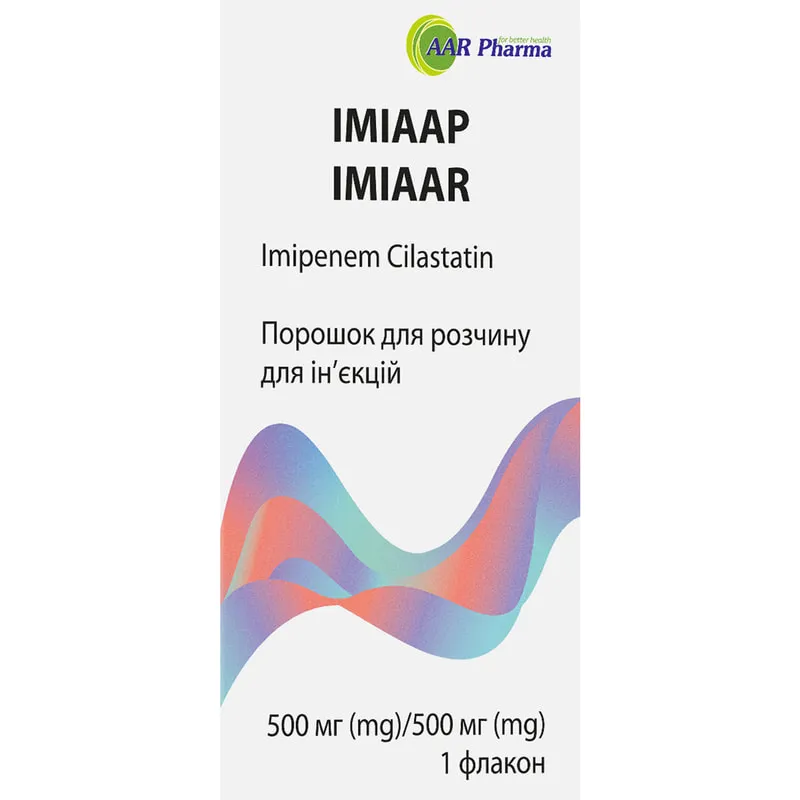
Table of Contents
INSTRUCTIONS FOR MEDICAL USE OF THE MEDICINAL PRODUCT IMIAAR (IMIAAR)
Composition:
Active substances: imipenem, cilastatin;
One vial contains 500 mg of imipenem monohydrate calculated as imipenem and 500 mg of sodium cilastatin calculated as cilastatin;
Excipients: sodium hydrogencarbonate.
Pharmaceutical form. Powder for solution for infusion.
Main physicochemical characteristics: powder from white to almost white or pale yellow.
Pharmacotherapeutic group. Antibacterials for systemic use. Imipenem and enzyme inhibitor. ATC code J01DH51.
Pharmacological properties.
Pharmacodynamics.
Mechanism of action
The medicinal product consists of two components: imipenem and cilastatin sodium, in a 1:1 weight ratio.
Imipenem, also known as N-formimidoyl-thienamycin, is a semisynthetic derivative of thienamycin, the parent compound produced by the filamentous bacterium Streptomyces cattleya.
Imipenem exhibits bactericidal activity by inhibiting the synthesis of the bacterial cell wall in Gram-positive and Gram-negative bacteria through binding to penicillin-binding proteins (PBPs).
Cilastatin sodium is an inhibitor that exerts a competitive, reversible, and specific effect on dehydropeptidase-I, a renal enzyme that metabolizes and inactivates imipenem. Cilastatin has no intrinsic antibacterial activity and does not influence the antibacterial activity of imipenem.
Pharmacokinetic/pharmacodynamic (PK/PD) relationship
As with other beta-lactam antibiotics, the parameter that best correlates with efficacy is the duration of time during which the concentration of imipenem exceeds the minimum inhibitory concentration (T > MIC).
Mechanism of resistance
Resistance to imipenem may be due to the following mechanisms:
- reduced permeability of the outer membrane of Gram-negative bacteria (due to decreased porin production);
- reduced affinity of imipenem for PBPs;
- imipenem is stable against hydrolysis by most beta-lactamases, including penicillinases and cephalosporinases produced by Gram-positive and Gram-negative bacteria, except for relatively rare beta-lactamases that hydrolyze carbapenems. Organisms resistant to other carbapenems are generally cross-resistant to imipenem. There is no target-site cross-resistance between imipenem and quinolone antibiotics, aminoglycosides, macrolides, or tetracyclines.
Breakpoints
The European Committee on Antimicrobial Susceptibility Testing (EUCAST) has established the following minimum inhibitory concentration (MIC) breakpoints for imipenem (v.12.0 effective from 01-01-2022):
| Microorganism group |
Minimum inhibitory concentration (mg/l) |
|
| Susceptible ≤ |
Resistant > |
|
| Enterobacterales |
2 |
4 |
| Enterobacterales 1 (Morganella morganii, Proteus spp. and Providencia spp.) |
0.001 |
4 |
| Pseudomonas spp. |
0.001 |
4 |
| Acinetobacter spp. |
2 |
4 |
| Staphylococcus spp. |
Based on susceptibility data to cefoxitin |
|
| Enterococcus spp. |
0.001 |
4 |
| Streptococcus A, B, C, G |
Based on susceptibility data to benzylpenicillin |
|
| Streptococcus pneumoniae |
2 |
2 |
| Viridans group streptococci |
2 |
2 |
| Haemophilus influenzae |
2 |
2 |
| Moraxella catarrhalis 2 |
2 |
2 |
| Gram-positive anaerobic microorganisms, except Clostridioides difficile |
2 |
4 |
| Gram-negative anaerobic microorganisms |
2 |
4 |
| Burkholderia pseudomallei |
2 |
2 |
| Breakpoints not associated with any strain3 |
2 |
4 |
1 Naturally low activity of imipenem against Morganella morganii, Proteus spp., and Providencia spp. requires high imipenem exposure.
2 Resistant isolates are rare or have not yet been reported. Identification results and antimicrobial susceptibility testing for any isolate should be confirmed, and the isolate should be sent to a reference laboratory.
3 Breakpoints not associated with any strain have been determined primarily based on PK/PD data and independently of the MIC distribution for specific species. These breakpoints are intended for use only for species not listed in the strain-associated breakpoint table or in the footnotes.
Susceptibility
The frequency of acquired resistance may vary geographically and over time for individual species; therefore, local information on resistance is desirable, especially when treating severe infections. If necessary, a physician should be consulted when the local resistance frequency raises doubts about the usefulness of the drug, at least for certain types of infections.
| Commonly susceptible organisms: |
| Gram-positive aerobic microorganisms |
| Enterococcus faecalis |
| Staphylococcus aureus (methicillin-susceptible)* |
| Coagulase-negative Staphylococcus (methicillin-susceptible) |
| Streptococcus agalactiae |
| Streptococcus pneumoniae |
| Streptococcus pyogenes |
| Streptococcus viridans group |
| Gram-negative aerobic microorganisms |
| Citrobacter freundii |
| Enterobacter cloacae |
| Escherichia coli |
| Haemophilus influenzae |
| Klebsiella oxytoca |
| Klebsiella pneumoniae |
| Klebsiella aerogenes (formerly Enterobacter aerogenes) |
| Moraxella catarrhalis |
| Serratia spp., including S. marcescens |
| Gram-positive anaerobic microorganisms |
| Clostridium perfringens** |
| Peptostreptococcus spp.** |
| Gram-negative anaerobic microorganisms |
| Bacteroides fragilis |
| group Bacteroides fragilis |
| Fusobacterium spp. |
| Porphyromonas asaccharolytica |
| Prevotella spp. |
| Veillonella spp. |
| Organisms for which acquired resistance may be a problem: |
| Gram-negative aerobic microorganisms |
| Acinetobacter calcoaceticus baumannii complex |
| Pseudomonas aeruginosa |
| Naturally resistant organisms: |
| Gram-positive aerobic microorganisms |
| Enterococcus faecium |
| Gram-negative aerobic microorganisms |
| Some strains of the Burkholderia cepacia complex |
| Legionella spp. |
| Stenotrophomonas maltophilia (formerly Xanthomonas maltophilia, formerly Pseudomonas maltophilia) |
| Others: |
| Chlamydia spp. |
| Chlamydophila spp. |
| Mycoplasma spp. |
| Ureoplasma urealyticum |
- All methicillin-resistant staphylococci are resistant to imipenem/cilastatin.
** The EUCAST breakpoint values used are not strain-specific.
Pharmacokinetics.
Imipenem
Absorption
In healthy volunteers, after a 20-minute or longer intravenous infusion of IMIAAR at a dose of 500 mg/500 mg, plasma concentrations of imipenem were observed to be in the range of 12 to 20 mcg/mL for the 250 mg/250 mg dose, 21 to 58 mcg/mL for the 500 mg/500 mg dose, and 41 to 83 mcg/mL for the 1000 mg/1000 mg dose. The mean peak plasma concentration of imipenem after administration of 250 mg/250 mg, 500 mg/500 mg, and 1000 mg/1000 mg doses was 17, 39, and 66 mcg/mL, respectively. Plasma levels of imipenem declined to less than 1 mcg/mL within 4–6 hours.
Distribution
The protein binding of imipenem to human serum proteins is approximately 20%.
Metabolism
When administered alone, imipenem is metabolized in the kidneys by dehydropeptidase-I. Individual recovery in urine ranged from 5 to 40%, averaging 15–20% in several studies.
Cilastatin is a specific inhibitor of dehydropeptidase-I enzyme and effectively inhibits the metabolism of imipenem. Therefore, the concomitant administration of imipenem and cilastatin allows achieving therapeutic antibacterial levels of imipenem in urine and plasma.
Elimination
The elimination half-life of imipenem from plasma is approximately 1 hour. Approximately 70% of the administered antibiotic was recovered unchanged in urine within 10 hours, with no further elimination of imipenem in urine thereafter. The concentration of imipenem in urine remained above 10 mcg/mL for up to 8 hours after administration of IMIAAR 500 mg/500 mg. The remainder of the dose was excreted in urine as microbiologically inactive metabolites, and fecal elimination of imipenem was virtually negligible.
When IMIAAR was administered every 6 hours, no accumulation of imipenem in plasma or urine was observed in patients with normal renal function.
Cilastatin
Absorption
The peak plasma concentration of cilastatin after a 20-minute intravenous infusion of IMIAAR was 21 to 26 mcg/mL for the 250 mg/250 mg dose, 21 to 55 mcg/mL for the 500 mg/500 mg dose, and 56 to 88 mcg/mL for the 1000 mg/1000 mg dose. The mean peak plasma concentrations of cilastatin after administration of 250 mg/250 mg, 500 mg/500 mg, and 1000 mg/1000 mg doses were 22, 42, and 72 mcg/mL, respectively.
Distribution
The protein binding of cilastatin to human serum proteins is approximately 40%.
Metabolism and Elimination
The elimination half-life of cilastatin from plasma is approximately 1 hour. About 70–80% of the administered dose of cilastatin is excreted unchanged in urine within 10 hours after administration of IMIAAR. After this period, cilastatin was not detected in urine. Approximately 10% was excreted as the N-acetyl metabolite, which has inhibitory activity against dehydropeptidase-I comparable to that of cilastatin. Renal dehydropeptidase-I activity returned to normal shortly after cilastatin was eliminated from the bloodstream.
Pharmacokinetics in Special Patient Populations
Renal Impairment
After a single intravenous dose of 250 mg/250 mg, the area under the concentration-time curve (AUC) for imipenem increased by 1.1, 1.9, and 2.7 times in patients with mild (creatinine clearance (CrCL) 50–80 mL/min/1.73 m²), moderate (CrCL 30–<50 mL/min/1.73 m²), and severe (CrCL <30 mL/min/1.73 m²) renal impairment, respectively, compared to patients with normal renal function (CrCL >80 mL/min/1.73 m²). The AUC for cilastatin increased by 1.6, 2, and 6.2 times in patients with mild, moderate, and severe renal impairment, respectively, compared to those with normal renal function. After a single intravenous dose of 250 mg/250 mg administered 24 hours after hemodialysis, the AUC for imipenem and cilastatin was 3.7 and 16.4 times higher, respectively, compared to patients with normal renal function. Following intravenous administration, urinary excretion, renal clearance, and plasma clearance of both imipenem and cilastatin decrease with declining renal function. Dose adjustment is required for patients with impaired renal function (see section "Dosage and Administration").
Hepatic Impairment
The pharmacokinetics of imipenem in patients with hepatic impairment has not been established. Due to the limited hepatic metabolism of imipenem, hepatic impairment is not expected to affect its pharmacokinetics. Therefore, dose adjustment is not recommended for patients with hepatic impairment (see section "Dosage and Administration").
Children
The mean clearance and volume of distribution of imipenem were approximately 45% higher in children (aged 3 months to 14 years) compared to adults. The AUC for imipenem after administration of a 15/15 mg/kg dose of imipenem/cilastatin in children was approximately 30% higher than exposure in adults receiving a 500 mg/500 mg dose. At a higher dose, exposure after administration of 25/25 mg/kg imipenem/cilastatin in children was 9% higher compared to exposure in adults receiving a 1000 mg/1000 mg dose.
Elderly Patients
In healthy elderly volunteers (aged 65 to 75 years with normal renal function for their age), the pharmacokinetics of a single 20-minute intravenous dose of IMIAAR 500 mg/500 mg were consistent with expected results in patients with mild renal impairment, for whom any dose adjustment is considered unnecessary. The mean elimination half-lives of imipenem and cilastatin from plasma were 91 ± 7 minutes and 69 ± 15 minutes, respectively. Repeated dosing did not affect the pharmacokinetics of imipenem or cilastatin, and no accumulation of imipenem/cilastatin was observed (see section "Dosage and Administration").
Preclinical Safety Data
No special hazard for humans was identified in preclinical safety data based on standard safety pharmacology studies, repeated-dose toxicity studies, and genotoxicity studies.
Animal studies showed that the toxicity of imipenem as a single agent was limited to effects on the kidneys. The concomitant administration of cilastatin with imipenem in a 1:1 ratio prevented the nephrotoxic effects of imipenem in rabbits and macaques. Available data indicate that cilastatin prevents nephrotoxicity by inhibiting the uptake of imipenem into tubular cells.
Teratology studies in pregnant crab-eating macaques receiving imipenem-cilastatin sodium at doses of 40/40 mg/kg/day (intravenous bolus injection) resulted in signs of maternal toxicity, including vomiting, anorexia, weight loss, diarrhea, abortion, and death in some cases. When doses of imipenem-cilastatin sodium (approximately 100/100 mg/kg/day or approximately three times the usual recommended daily intravenous dose for humans) were administered to pregnant crab-eating macaques via intravenous infusion at a rate simulating clinical use in humans, minimal intolerance (occasional vomiting) was observed, with no mortality, no signs of teratogenicity, but an increased incidence of embryonic loss compared to control groups (see section "Pregnancy and Lactation").
Long-term animal studies to assess the carcinogenic potential of imipenem-cilastatin have not been conducted.
Clinical characteristics.
Indications.
The medicinal product is indicated for the treatment of the following infections in adults and children aged 1 year and older (see sections "Pharmacological properties" and "Special precautions for use"):
- complicated intra-abdominal infections;
- severe pneumonia, including hospital-acquired and ventilator-associated pneumonia;
- intrauterine and postpartum infections;
- complicated urinary tract infections;
- complicated skin and soft tissue infections.
The medicinal product may be used for the treatment of patients with neutropenia accompanied by fever, likely due to bacterial infection.
Treatment of patients with bacteremia associated or likely associated with any of the above-mentioned infections.
Official recommendations on appropriate use of antibacterial agents should be taken into account.
Contraindications.
Hypersensitivity to the active substances or to any other component of the medicinal product, other carbapenem-containing products, or acute hypersensitivity reactions (e.g., anaphylactic reactions, severe skin reactions) to other β-lactam antibiotics (e.g., penicillins or cephalosporins).
Interaction with other medicinal products and other forms of interaction.
Generalized seizures have been reported in patients who received ganciclovir concomitantly with the intravenous medicinal product. These drugs should be used together only if the expected benefit outweighs the potential risk.
Decreased plasma levels of valproic acid to values potentially below therapeutic levels have been reported when valproic acid is co-administered with carbapenems. Reduced valproic acid levels may lead to inadequate seizure control; therefore, concomitant administration of imipenem and valproic acid/sodium valproate is not recommended. Alternative antibacterial or anticonvulsant therapy should also be considered (see section "Special precautions for use").
Oral anticoagulants
Concomitant use of antibiotics with warfarin may enhance its anticoagulant effects.
Numerous reports have documented increased anticoagulant effects of oral anticoagulants, including warfarin, in patients receiving antibiotics concomitantly. The risk may vary depending on the type of infection, age, and overall condition of the patient, making it difficult to assess the exact role of the antibiotic in increasing the international normalized ratio (INR). Frequent monitoring of INR is recommended during and after concomitant use of antibiotics with oral anticoagulant agents.
Concomitant administration of the IMIAAR product and probenecid resulted in minimal increases in imipenem plasma concentration and plasma elimination half-life. Renal excretion of active (unmetabolized) imipenem decreased to approximately 60% of the dose when the medicinal product was administered with probenecid. Concomitant use of the IMIAAR product and probenecid doubled the plasma levels and elimination half-life of cilastatin, but had no effect on cilastatin urinary excretion.
Children
Interaction studies have been conducted only in adults.
Special precautions for use.
General recommendations
When selecting imipenem/cilastatin for treatment of an individual patient, consideration should be given to the appropriateness of using a carbapenem antibacterial agent, taking into account factors such as severity of infection, prevalence of resistance to other suitable antibacterial agents, and the risk of selecting for treatment of infections caused by carbapenem-resistant bacteria.
Hypersensitivity reactions
Severe, and sometimes fatal, hypersensitivity reactions (including anaphylaxis) have been reported in patients receiving β-lactam antibiotics. These reactions are more likely to occur in individuals with a history of sensitivity to multiple allergens. The patient's history should be carefully reviewed before initiating therapy with the drug to determine prior hypersensitivity reactions to carbapenems, penicillins, cephalosporins, other β-lactam antibiotics, and other allergens (see section "Contraindications"). If an allergic reaction occurs during administration of the drug, it should be discontinued immediately. Serious anaphylactic reactions require emergency treatment.
Liver function
Liver function should be closely monitored during treatment with imipenem/cilastatin due to the risk of hepatotoxicity (elevated transaminase levels, liver failure, and fulminant hepatitis).
Use in patients with liver disease: patients with pre-existing liver disease require monitoring of liver function during treatment with imipenem/cilastatin. Dose adjustment is not required (see section "Dosage and administration").
Hematological investigations
A positive direct or indirect Coombs test may occur during treatment with imipenem/cilastatin.
Antibacterial spectrum
Prior to any empirical therapy, the antibacterial spectrum of imipenem/cilastatin should be considered, especially in life-threatening conditions. In addition, caution should be exercised due to limited susceptibility of certain pathogens (e.g., those associated with skin and soft tissue infections) to imipenem/cilastatin. Use of imipenem/cilastatin is appropriate for treatment of these types of infections only when the specific pathogen has been documented and is known to be susceptible, or when there are strong clinical grounds to believe that the most likely pathogen(s) are amenable to such treatment. Concomitant use of this agent against methicillin-resistant Staphylococcus aureus (MRSA) may be indicated when MRSA infection is suspected or confirmed in approved indications. Concomitant use of an aminoglycoside may be indicated when Pseudomonas aeruginosa infection is suspected or confirmed in approved indications (see section "Indications").
Interaction with valproic acid
Concomitant administration of imipenem/cilastatin and valproic acid/sodium valproate is not recommended (see section "Interaction with other medicinal products and other forms of interaction").
Clostridioides difficile
Antibiotic-associated colitis and pseudomembranous colitis, ranging in severity from mild to life-threatening, have been reported with the use of imipenem/cilastatin, as with nearly all antibacterial agents. It is important to consider this diagnosis in patients who develop diarrhea during or after administration of imipenem/cilastatin (see section "Adverse reactions"). Discontinuation of imipenem/cilastatin therapy and initiation of specific treatment for Clostridioides difficile should be considered. Antiperistaltic medicinal products should not be prescribed.
Meningitis
The medicinal product is not recommended for the treatment of meningitis.
Renal function impairment
Imipenem and cilastatin accumulate in patients with impaired renal function. If the dose is not adjusted according to renal function, adverse reactions affecting the central nervous system (CNS) may occur (see section "Dosage and administration" and the subsection "Central nervous system" below).
Central nervous system
Adverse effects affecting the CNS such as myoclonia, confusion, or seizures have been reported, particularly when recommended doses based on renal function and body weight have been exceeded. Such disorders usually occurred in patients with CNS disorders (e.g., brain injury or history of seizures) and/or in patients with impaired renal function, in whom drug accumulation may occur. Therefore, strict adherence to recommended doses and treatment regimens is essential, especially for such patients (see section "Dosage and administration"). Anticonvulsant therapy should be continued in patients with a history of seizures.
Particular caution is required regarding neurological symptoms or seizures in children with known risk factors for seizures and in children receiving concomitant treatment with anticonvulsant medicinal products.
If focal tremor, myoclonia, or seizures occur during treatment, patients should undergo neurological evaluation and anticonvulsant therapy should be initiated if not already prescribed. If CNS adverse effects persist, the dose of IMIAAR should be reduced or the drug discontinued.
The medicinal product is not indicated for use in patients with creatinine clearance < 15 ml/min, except when hemodialysis will be performed within 48 hours. For patients undergoing hemodialysis, IMIAAR should only be used when the potential benefits outweigh the risk of seizures (see section "Dosage and administration").
Children
Due to insufficient clinical data, the use of IMIAAR is not recommended in children under 1 year of age and in children with impaired renal function (serum creatinine > 2 mg/dl).
Sodium
The medicinal product contains 37.6 mg of sodium (1.6 mmol) per vial, equivalent to 1.9% of the maximum daily sodium intake of 2 g for adults recommended by WHO.
This should be taken into account when administering the product to patients on a controlled sodium diet.
Use during pregnancy or breastfeeding.
Pregnancy.
Adequate and well-controlled studies of the use of the medicinal product in pregnant women have not been conducted.
Reproductive toxicity was observed in studies conducted in pregnant monkeys (see section "Pharmacological properties"). The potential risk to humans is unknown.
The medicinal product may be used during pregnancy only if the expected benefit to the pregnant woman outweighs the potential risk to the fetus.
Breastfeeding period.
Imipenem and cilastatin are excreted in small amounts in breast milk. Therefore, it is unlikely that a breastfed infant would receive significant amounts of the drug. If use of the drug is necessary, the benefits of breastfeeding for the infant should be weighed against the potential risks associated with drug exposure.
Fertility.
There are no data on the potential impact of imipenem/cilastatin treatment on male or female fertility.
Ability to affect reaction speed when driving or operating machinery.
Studies on the effect of the medicinal product on the ability to drive or operate machinery have not been conducted. However, certain adverse reactions (such as hallucinations, somnolence, dizziness, and vertigo) associated with the use of the drug may affect the ability of some patients to drive or operate machinery (see section "Adverse reactions").
Method of administration and dosage.
Dosage recommendations for the medicinal product refer to the amount of imipenem/cilastatin that should be administered.
The daily dose of the medicinal product is determined based on the type and severity of infection, the identified pathogen(s); the dose should be divided into several equal administrations, taking into account renal function and body weight.
Adults and adolescents
Recommended dosage regimen for patients with normal renal function (creatinine clearance ≥ 90 mL/min):
- 500 mg/500 mg every 6 hours, or
- 1000 mg/1000 mg every 8 hours or every 6 hours.
For treatment of infections caused by less susceptible bacterial species (such as Pseudomonas aeruginosa) or severe infections (e.g., febrile neutropenic patients), a dosage of 1000 mg/1000 mg every 6 hours is recommended.
The dose should be reduced if creatinine clearance is < 90 mL/min (see Table 1).
The maximum daily dose should not exceed 4000 mg/4000 mg per day.
Adult patients with impaired renal function
To determine the reduced dose for adult patients with impaired renal function, the following steps should be followed:
- Determine the total daily dose (i.e., 2000/2000, 3000/3000, or 4000/4000 mg) normally administered to patients with normal renal function.
- Select the appropriate reduced dosage regimen (see Table 1) according to the patient’s creatinine clearance and the duration of infusion (see section “Method of administration and dosage”).
Table 1
| Creatinine clearance (ml/min) |
Total daily dose 2000 mg |
Total daily dose 3000 mg |
Total daily dose 4000 mg |
| ≥ 90 (normal) |
500 every 6 hours |
1000 every 8 hours |
1000 every 6 hours |
| reduced dose (mg) for patients with impaired renal function |
|||
| < 90 – ≥ 60 |
400 every 6 hours |
500 every 6 hours |
750 every 8 hours |
| < 60 – ≥ 30 |
300 every 6 hours |
500 every 8 hours |
500 every 6 hours |
| < 30 – ≥ 15 |
200 every 6 hours |
500 every 12 hours |
500 every 12 hours |
Patients with creatinine clearance < 15 ml/min
The drug should not be administered to patients with creatinine clearance < 15 ml/min unless they are scheduled to undergo hemodialysis within the next 48 hours.
Hemodialysis
For treatment of patients with creatinine clearance < 15 ml/min who are undergoing hemodialysis, doses recommended for patients with creatinine clearance of 15–29 ml/min should be used (see Table 1).
Imipenem and cilastatin are removed during hemodialysis. The drug should be administered immediately after a hemodialysis session, and then every 12 hours thereafter. Patients undergoing hemodialysis, particularly those with underlying central nervous system (CNS) disorders, require close monitoring; the drug should be prescribed to such patients only if the anticipated benefit outweighs the potential risk of seizures (see section "Special precautions").
Currently, there is insufficient data on the use of the drug in patients undergoing peritoneal dialysis; therefore, its use is not recommended in this patient population.
Hepatic impairment
Dosage adjustment is not required for patients with hepatic impairment (see section "Pharmacological properties").
Elderly patients
Dosage adjustment is not required for elderly patients with normal renal function (see section "Pharmacological properties").
Children aged 1 year and older
For children aged 1 year and older, the recommended dose is 15/15 or 25/25 mg/kg/dose every 6 hours.
For treatment of infections where less susceptible organisms (such as Pseudomonas aeruginosa) are established or suspected, and for severe infections (e.g., febrile neutropenic patients), a dose of 25/25 mg/kg every 6 hours is recommended.
Children under 1 year of age
The drug is not recommended for children under 1 year of age due to insufficient clinical data.
Children with renal impairment
The drug is not recommended for children with renal impairment (serum creatinine > 2 mg/dl) due to insufficient clinical data (see section "Special precautions").
Administration method
The drug must be reconstituted and then diluted before administration.
Each dose not exceeding 500 mg/500 mg of the intravenous preparation should be administered over 20–30 minutes. Each dose exceeding 500 mg/500 mg should be administered over 40–60 minutes. If nausea occurs during infusion, the rate of administration should be reduced.
Preparation of solution for intravenous infusion
The drug for intravenous infusion is supplied as a sterile powder in vials containing 500 mg of imipenem and 500 mg of cilastatin.
Sodium hydrogencarbonate is included in the formulation as a buffer to ensure a solution pH between 6.5 and 8.5. These pH changes are not clinically significant provided the solution is prepared and stored according to the instructions provided. The intravenous preparation contains 37.5 mg of sodium (1.6 mEq).
The sterile powder should be reconstituted as specified in Table 2. The resulting solution should be shaken until a clear solution is obtained. Variation in solution color from colorless to yellow does not affect the drug's activity.
Table 2
Preparation of solution for intravenous administration of the drug
* * *
| Dosage of the medicinal product (imipenem/cilastatin) |
Required volume of solvent (ml) |
Approximate average concentration of the medicinal product (mg/ml) |
| 500/500 |
100 |
5/5 |
Preparation of the solution from 20 ml vials
The contents of the vial should be suspended and diluted to 100 ml with an appropriate infusion solution.
It is recommended to add approximately 10 ml of 0.9% sodium chloride solution to the vial. Under exceptional circumstances, when 0.9% sodium chloride solution cannot be used for clinical reasons, 5% glucose may be used as the solvent.
Shake well and transfer the resulting suspension to a container with the infusion solution.
WARNING: THE SUSPENSION IS NOT A READY-TO-USE INFUSION SOLUTION.
Repeat the procedure by adding another 10 ml of infusion solution to ensure complete transfer of the vial contents into the infusion solution. The mixture should be shaken until it becomes clear.
The concentration of the reconstituted solution after the above procedure is approximately 5 mg/ml of imipenem and cilastatin.
Diluted solutions should be used immediately. The time interval between the start of reconstitution and the end of intravenous infusion should not exceed 2 hours.
Children.
Due to insufficient clinical data, the medicinal product is not recommended for use in children under 1 year of age and in children with impaired renal function (serum creatinine > 2 mg/dl) (see section "Dosage and method of administration").
Overdose.
Symptoms of overdose may be consistent with the profile of adverse reactions and may include seizures, confusion, tremor, nausea, vomiting, hypotension, and bradycardia.
There is no specific information regarding treatment of overdose. The drug can be removed by hemodialysis. However, the effectiveness of this procedure in overdose has not been established. Treatment is symptomatic.
Adverse Reactions
In clinical trials involving 1723 patients who received intravenous imipenem/cilastatin, the most commonly reported systemic adverse reactions possibly related to treatment were: nausea (2.0%), diarrhea (1.8%), vomiting (1.5%), rash (0.9%), fever (0.5%), hypotension (0.4%), seizures (0.4%), dizziness (0.3%), pruritus (0.3%), urticaria (0.2%), and somnolence (0.2%). Local adverse reactions included: phlebitis/thrombophlebitis (3.1%), injection site pain (0.7%), injection site erythema (0.4%), and venous induration (0.2%). Elevations in serum transaminases and alkaline phosphatase levels were also observed.
The adverse reactions listed below and their frequencies are based on results from clinical trials and post-marketing experience.
All adverse reactions are categorized by system organ class and frequency: very common (> 1/10), common (> 1/100 to < 1/10), uncommon (> 1/1000 to < 1/100), rare (> 1/10,000 to < 1/1000), very rare (< 1/10,000), and frequency not known (cannot be estimated based on available data).
Infections and infestations: rare: pseudomembranous colitis, candidiasis; very rare: gastroenteritis.
Blood and lymphatic system disorders: common: eosinophilia; uncommon: pancytopenia, neutropenia, leukopenia, thrombocytopenia, thrombocytosis; rare: agranulocytosis; very rare: hemolytic anemia, bone marrow suppression.
Immune system disorders: rare: anaphylactic reactions.
Psychiatric disorders: uncommon: psychiatric disturbances, including hallucinations and confusion.
Nervous system disorders: uncommon: seizures, myoclonus, dizziness, somnolence; rare: encephalopathy, paresthesia, focal tremor, taste disturbance; very rare: worsening of severe myasthenia gravis, headache; frequency not known: agitation, dyskinesia.
Ear and labyrinth disorders: rare: hearing loss; very rare: vertigo, tinnitus.
Cardiac disorders: very rare: cyanosis, tachycardia, palpitations.
Vascular disorders: common: thrombophlebitis; uncommon: hypotension; very rare: flushing.
Respiratory, thoracic and mediastinal disorders: very rare: dyspnea, hyperventilation, pharyngalgia.
Gastrointestinal disorders: common: diarrhea, vomiting, nausea. Nausea and/or vomiting associated with the drug occur more frequently in patients with granulocytopenia than in those without granulocytopenia receiving the drug. Rare: discoloration of teeth and/or tongue; very rare: hemorrhagic colitis, abdominal pain, heartburn, glossitis, lingual papillae hypertrophy, increased salivation.
Hepatobiliary disorders: rare: liver failure, hepatitis; very rare: fulminant hepatitis.
Skin and subcutaneous tissue disorders: common: rash (e.g., exanthematous); uncommon: urticaria, pruritus; rare: toxic epidermal necrolysis, angioneurotic edema, Stevens-Johnson syndrome, polymorphic erythema, exfoliative dermatitis; very rare: hyperhidrosis, skin texture changes.
Musculoskeletal and connective tissue disorders: very rare: polyarthralgia, thoracic spine pain.
Renal and urinary disorders: rare: acute renal failure, oliguria/anuria, polyuria, change in urine color (harmless, should not be confused with hematuria). The effect of the drug on renal function is difficult to assess, as predisposing factors for prerenal azotemia or worsening renal function were usually present.
Reproductive system and breast disorders: very rare: genital pruritus.
General disorders and administration site conditions: uncommon: pyrexia, local pain and induration at injection site, erythema at injection site; very rare: chest discomfort, asthenia/weakness.
Investigations: common: increased serum transaminase levels, increased serum alkaline phosphatase levels; uncommon: positive direct Coombs test, prolonged prothrombin time, decreased hemoglobin, increased serum bilirubin levels, increased serum creatinine levels, increased blood urea nitrogen levels.
Children (≥ 3 months)
In studies involving 178 children aged > 3 months, adverse reactions were entirely similar to those observed in adult patients.
Reporting of suspected adverse reactions
Reporting suspected adverse reactions after drug registration is important. It allows ongoing monitoring of the benefit-risk balance of the medicinal product. Healthcare professionals and pharmacists, as well as patients or their legal representatives, should report all suspected adverse reactions and lack of efficacy through the Automated Information System for Pharmacovigilance at the following link: https://aisf.dec.gov.ua.
Shelf life.
2 years.
Storage conditions.
Store in the original packaging at a temperature not exceeding 30 °C.
Keep out of reach of children.
Do not freeze the reconstituted solution.
Incompatibilities.
The intravenous medicinal product is chemically incompatible with lactates (salts of lactic acid); therefore, it should not be diluted with solvents containing lactates. Nevertheless, the medicinal product may be administered through the same intravenous system used for lactate solution infusion.
The intravenous medicinal product must not be mixed with other medicinal products except those specified in the section "Directions for use and dosage."
Packaging.
1 vial in a cardboard box.
Prescription status. Prescription only.
Manufacturer.
Venus Remedies Limited.
Manufacturer's address and place of business.
Hill Top Industrial Estate, Jharmajri, EPZ Phase-I (Ext), Bhatoli Kalan, Baddi, Distt. Solan, Himachal Pradesh, 173205, India.