Imet® for children 2 %
Ukraine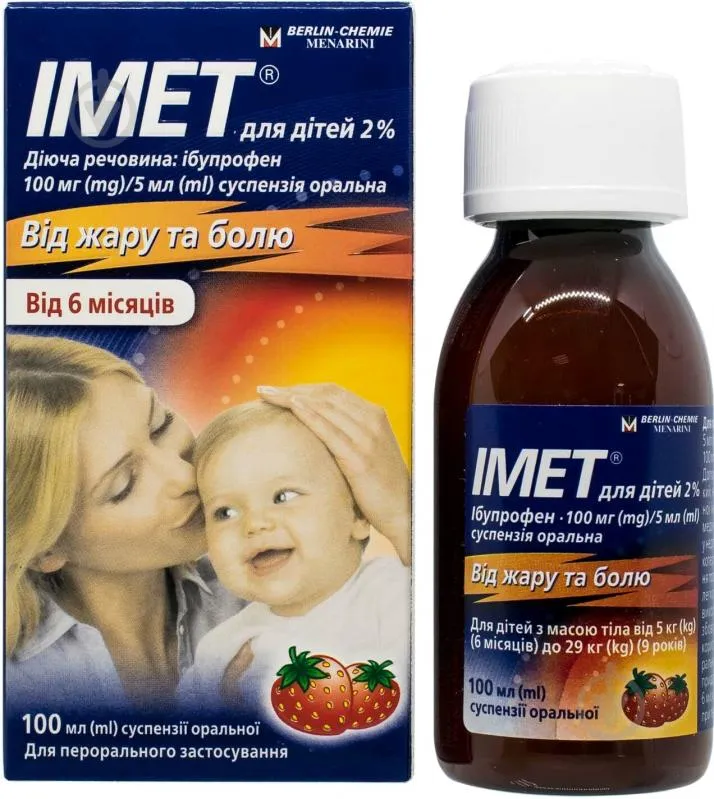
Table of Contents
INSTRUCTIONS FOR MEDICAL USE OF THE MEDICINAL PRODUCT IMET® FOR CHILDREN 2% (IMET® FOR CHILDREN 2%)
Composition:
Active substance: ibuprofen;
5 ml of oral suspension contains 100 mg of ibuprofen;
Excipients: sodium benzoate (E 211), anhydrous citric acid, sodium citrate, sodium saccharin, sodium chloride, hypromellose, xanthan gum, maltitol liquid (E 965), glycerol (E 422), purified water, strawberry flavoring.
Pharmaceutical form. Oral suspension.
Main physicochemical properties: viscous, homogeneous suspension free from foreign particles, white or almost white, with a characteristic strawberry odor.
Pharmacotherapeutic group. Non-steroidal anti-inflammatory and antirheumatic drugs. Propionic acid derivatives.
ATC code M01AE01.
Pharmacological properties.
Pharmacodynamics.
Ibuprofen is a nonsteroidal anti-inflammatory agent whose mechanism of action is based on inhibition of prostaglandin synthesis—mediators of pain, inflammation, and temperature response. The drug exerts analgesic and antipyretic effects, reduces inflammatory pain and swelling.
In addition, ibuprofen inhibits platelet aggregation.
Experimental data indicate that ibuprofen may competitively inhibit the effect of low-dose acetylsalicylic acid on platelet aggregation when these drugs are used concomitantly. In a study where a single 400 mg dose of ibuprofen was administered within 8 hours before or within 30 minutes after immediate-release acetylsalicylic acid (81 mg), a reduced effect of acetylsalicylic acid on thromboxane formation or platelet aggregation was observed. Although there is uncertainty regarding extrapolation of these data to the clinical setting, the possibility that regular long-term use of ibuprofen may reduce the cardioprotective effect of low-dose acetylsalicylic acid cannot be excluded (see section "Interaction with other medicinal products and other forms of interactions").
Pharmacokinetics.
After oral administration, ibuprofen is partially absorbed in the stomach and then completely in the small intestine. Following oral administration of the immediate-release dosage form, maximum plasma concentration is reached within 1–2 hours.
Following metabolic transformations of the drug in the liver (hydroxylation, carboxylation), the drug is approximately 99% bound to plasma proteins. Pharmacologically inactive metabolites are excreted completely, primarily in urine and to a lesser extent in bile. The elimination half-life in healthy volunteers and patients with liver or kidney disease ranges from 1.8 to 3.5 hours.
Renal insufficiency.
In patients with mild renal impairment, increased levels of unbound (S)-ibuprofen, higher values of the area under the plasma concentration-time curve (AUC) for (S)-ibuprofen, and increased enantiomeric AUC (S/R) ratio were observed compared to healthy volunteers.
In patients with end-stage renal disease undergoing hemodialysis, the mean free fraction of ibuprofen was approximately 3%, compared to about 1% in healthy volunteers. Severe renal dysfunction may lead to accumulation of ibuprofen metabolites. The clinical significance of this phenomenon is unknown. Metabolites may be removed during hemodialysis (see sections "Dosage and administration", "Contraindications", and "Special warnings and precautions for use").
Hepatic insufficiency.
In patients with liver cirrhosis and moderate hepatic impairment (Child–Pugh score 6–10) receiving racemic ibuprofen, the elimination half-life was on average twice as long, and the enantiomeric AUC (S/R) ratio was significantly lower compared to healthy volunteers, indicating impaired metabolic conversion of (R)-ibuprofen to the active (S)-enantiomer (see sections "Dosage and administration", "Contraindications", and "Special warnings and precautions for use").
Clinical characteristics.
Indications.
Short-term symptomatic treatment of fever and mild to moderate pain.
Contraindications.
- Hypersensitivity to the active substance or to any of the excipients of the medicinal product.
- Known history of bronchospasm, asthma, rhinitis, angioedema, or urticaria after taking acetylsalicylic acid or other nonsteroidal anti-inflammatory drugs (NSAIDs).
- Unspecified hematopoietic or blood coagulation disorders.
- Active or recurrent peptic ulcers or gastrointestinal bleeding (at least 2 separate episodes of confirmed ulceration or bleeding).
- History of gastrointestinal bleeding or perforation related to previous use of NSAIDs.
- Cerebrovascular or other active bleeding.
- Severe hepatic or renal dysfunction.
- Severe heart failure (NYHA class IV).
- Severe dehydration (caused by vomiting, diarrhea, or inadequate fluid intake).
- Third trimester of pregnancy (see section "Use during pregnancy or breastfeeding").
Interaction with other medicinal products and other forms of interaction.
Ibuprofen, like other NSAIDs, should be used with caution in combination with the following medicinal substances.
Other NSAIDs, including salicylates.
Concomitant use of multiple NSAIDs increases the risk of gastrointestinal ulcers and bleeding due to synergistic effects. Therefore, simultaneous use of ibuprofen with other NSAIDs is not recommended (see section "Special precautions for use").
Antihypertensive agents (ACE inhibitors, beta-blockers, angiotensin II antagonists) and diuretics.
NSAIDs may reduce the efficacy of diuretics and other antihypertensive agents. In some patients with impaired renal function (e.g., dehydrated patients or elderly patients with renal impairment), concomitant use of ACE inhibitors, beta-blockers, or angiotensin II antagonists with cyclooxygenase-inhibiting agents may lead to further deterioration of renal function, including acute renal failure, which is usually reversible. Therefore, concomitant use of these drugs requires caution, particularly in elderly patients. Adequate fluid intake should be ensured, and renal function should be closely monitored after initiation of concomitant therapy and periodically during treatment. Diuretics may increase the risk of nephrotoxic effects of NSAIDs.
Potassium-sparing diuretics.
Concomitant use of ibuprofen with potassium-sparing diuretics may lead to hyperkalemia (monitoring of serum potassium levels is recommended).
Corticosteroids.
Increased risk of gastrointestinal ulcers and bleeding (see section "Special precautions for use").
Antiplatelet agents and selective serotonin reuptake inhibitors (SSRIs).
Increased risk of gastrointestinal bleeding (see section "Special precautions for use").
Cardiac glycosides (e.g., digoxin).
NSAIDs may exacerbate heart failure, reduce glomerular filtration rate (GFR), and increase plasma levels of glycosides. Concomitant use of ibuprofen and digoxin may increase plasma concentrations of these drugs. Routine monitoring of digoxin plasma levels during short-term correct use (up to 3 days) is generally not required.
Lithium.
Evidence suggests a potential increase in plasma lithium concentration. Routine monitoring of serum lithium levels during short-term correct use (up to 3 days) is generally not required.
Acetylsalicylic acid.
Concomitant use of ibuprofen and acetylsalicylic acid is generally not recommended due to the potential for increased adverse effects.
Experimental data indicate that ibuprofen may competitively inhibit the effect of low-dose acetylsalicylic acid on platelet aggregation when used concomitantly. However, limitations in extrapolating these data to clinical settings prevent definitive conclusions regarding whether regular long-term use of ibuprofen may reduce the cardioprotective effect of low-dose acetylsalicylic acid. Clinically significant effects are considered unlikely with occasional use of ibuprofen (see section "Pharmacodynamics").
Methotrexate.
Possible increase in methotrexate plasma levels. Administration of ibuprofen within 24 hours before or after methotrexate administration may increase methotrexate concentration and enhance its toxic effects.
Cyclosporine.
Possible increase in cyclosporine nephrotoxicity when used concomitantly with certain NSAIDs; this risk cannot be excluded when cyclosporine is combined with ibuprofen.
Mifepristone.
NSAIDs should not be used earlier than 8–12 days after mifepristone administration, as they reduce its efficacy.
Anticoagulants.
NSAIDs may potentiate the effects of anticoagulants such as warfarin (see section "Special precautions for use").
Sulfonylurea derivatives.
Possible enhancement of the effect of these agents. Clinical studies indicate an interaction between NSAIDs and antidiabetic drugs (sulfonylureas). Although interaction between ibuprofen and sulfonylureas has not yet been described, monitoring of blood glucose levels is recommended as a precaution when these drugs are used concomitantly.
Phenytoin.
Concomitant use of ibuprofen with phenytoin may increase plasma concentrations of both drugs. Routine monitoring of serum phenytoin levels during short-term correct use (up to 3 days) is generally not required.
Tacrolimus.
Concomitant use of these two medicinal products increases the risk of nephrotoxicity.
Zidovudine.
Increased risk of hematological toxicity with concomitant use of NSAIDs and zidovudine. Evidence indicates an increased risk of hemarthrosis and hematomas in HIV-infected patients with hemophilia who are receiving concomitant treatment with zidovudine and ibuprofen.
Probenecid and sulfinpyrazone.
Medicinal products containing probenecid or sulfinpyrazone may delay the elimination of ibuprofen from the body.
Quinolone antibiotics.
Animal studies indicate that NSAIDs may increase the risk of seizures when used concomitantly with quinolone antibiotics. Patients receiving NSAIDs and quinolones may have an increased risk of developing seizures.
CYP2C9 inhibitors.
Concomitant use of ibuprofen and CYP2C9 inhibitors may increase the effect on the pharmacokinetics of ibuprofen (a CYP2C9 substrate). Studies with voriconazole and fluconazole (CYP2C9 inhibitors) have shown an approximately 80–100% increase in exposure to S(+)-ibuprofen. Consideration should be given to reducing the dose of ibuprofen when used concomitantly with potent CYP2C9 inhibitors, especially when high doses of ibuprofen are used together with voriconazole or fluconazole.
Special precautions for use.
Adverse effects can be minimized by using the lowest effective dose for the shortest duration necessary to relieve symptoms (see sections "Dosage and administration" and "Adverse reactions").
Effects on the gastrointestinal tract.
Concomitant use of Imet® for Children 2% with NSAIDs, including selective cyclooxygenase-2 inhibitors, should be avoided, as this increases the risk of adverse reactions.
Gastrointestinal bleeding, ulcers, or perforations, including fatal outcomes, have been reported during treatment with all NSAIDs at any time; these events may occur with or without preceding warning symptoms and may be observed in patients with or without a history of severe gastrointestinal complications.
The risk of bleeding, ulcers, or perforations increases with higher NSAID doses, in patients with a history of peptic ulcer, especially if complicated by bleeding or perforation (see section "Contraindications"), and in elderly patients. Treatment of such patients should be initiated with the lowest dose. For these patients, as well as for patients requiring concomitant therapy with low-dose acetylsalicylic acid or other drugs that increase the risk of gastrointestinal complications, consider the possibility of concomitant use of gastroprotective agents, such as misoprostol or proton pump inhibitors (see section "Interaction with other medicinal products and other forms of interaction").
Patients with gastrointestinal disorders in their medical history, particularly elderly patients, should inform their physician about any unusual abdominal symptoms (especially signs of gastrointestinal bleeding), particularly during the initial stages of treatment.
Particular caution is required when co-administering drugs that increase the risk of ulcers or bleeding, such as oral corticosteroids, anticoagulants like warfarin, selective serotonin reuptake inhibitors, or antiplatelet agents like acetylsalicylic acid (see section "Interaction with other medicinal products and other forms of interaction").
If gastrointestinal bleeding or ulceration occurs, treatment with Imet® for Children 2% should be discontinued.
NSAIDs should be prescribed with caution to patients with a history of gastrointestinal disorders (ulcerative colitis, Crohn’s disease) due to the risk of worsening the condition (see section "Adverse reactions"). Such patients should consult their physician.
Effects on the cardiovascular and cerebrovascular systems.
Patients with a history of arterial hypertension and/or heart failure require appropriate monitoring (physician consultation is necessary) before starting treatment, as NSAIDs may cause fluid retention and lead to elevated blood pressure and edema.
According to clinical trial data, the use of ibuprofen, especially at high doses (2400 mg per day), may slightly increase the risk of arterial thrombotic events (e.g., myocardial infarction or stroke). Available epidemiological studies suggest that low doses of ibuprofen (e.g., ≤ 1200 mg per day) do not increase the risk of arterial thrombosis.
Patients with uncontrolled arterial hypertension, congestive heart failure (NYHA class II–III), diagnosed ischemic heart disease, peripheral arterial disease, and/or cerebrovascular disease should be treated with ibuprofen only after careful assessment of the clinical picture. High doses (2400 mg per day) should be avoided.
Careful assessment should also be performed before initiating long-term therapy in patients with risk factors for cardiovascular disease (e.g., arterial hypertension, hyperlipidemia, diabetes, smoking), especially if high doses of ibuprofen (2400 mg per day) are required.
Cases of Kounis syndrome have been reported in patients receiving ibuprofen. Kounis syndrome is defined as cardiovascular symptoms caused by an allergic or hypersensitivity reaction associated with coronary artery spasm, which may potentially lead to myocardial infarction.
Severe skin adverse reactions (SSARs).
Severe skin adverse reactions (SSARs), including exfoliative dermatitis, erythema multiforme, Stevens–Johnson syndrome (SJS), toxic epidermal necrolysis (TEN), drug reaction with eosinophilia and systemic symptoms (DRESS syndrome), and acute generalized exanthematous pustulosis (AGEP), which may be life-threatening or fatal, have been reported with ibuprofen use (see section "Adverse reactions"). Most such reactions occurred within the first month of treatment. If signs or symptoms suggestive of these reactions appear, ibuprofen should be discontinued immediately and alternative therapy considered (if necessary).
In rare cases, severe infectious complications of the skin and soft tissues may develop in patients with varicella. The potential influence of NSAIDs on worsening the course of this infectious disease cannot currently be excluded; therefore, the use of Imet® for Children 2% is not recommended in patients with active varicella.
Masking symptoms of infection.
Ibuprofen may mask symptoms of infectious diseases, potentially delaying appropriate treatment and thereby worsening the course of infection. This has been observed in community-acquired bacterial pneumonia and bacterial complications of varicella. The use of ibuprofen for fever or pain associated with infection should be accompanied by monitoring of the disease course. When ibuprofen is used outside a hospital setting, patients should be advised to seek immediate medical attention if symptoms persist or worsen.
Other.
Imet® for Children 2% should be prescribed only after careful benefit-risk assessment in the following cases:
- systemic lupus erythematosus (SLE) and mixed connective tissue disease – increased risk of aseptic meningitis (see section "Adverse reactions");
- inherited porphyrin metabolism disorders (e.g., acute intermittent porphyria).
Close monitoring is required in patients with:
- renal function impairment (as acute renal failure may occur in patients with pre-existing kidney disease);
- dehydration (children and adolescents with dehydration are at risk of renal failure);
- hepatic function impairment;
- recent major surgical procedures;
- hay fever, nasal polyps, chronic nasal mucosal edema, or chronic obstructive airway diseases due to increased risk of allergic reactions, which may manifest as asthma attacks, so-called analgesic-induced asthma, Quincke’s edema, or urticaria;
- allergic reactions to other substances, as they are also at increased risk of hypersensitivity reactions when using Imet® for Children 2%.
Severe acute hypersensitivity reactions (e.g., anaphylactic shock) have been reported very rarely. If the first signs of a hypersensitivity reaction occur after taking/using Imet® for Children 2%, treatment must be discontinued. Medical interventions appropriate to the symptoms should be performed by specialized personnel.
Imet® for Children 2% should be used with caution in patients with current or past history of bronchial asthma or allergic diseases, as cases of NSAID-induced bronchospasm have been reported in such patients.
Ibuprofen, the active ingredient in Imet® for Children 2%, may temporarily inhibit platelet function (platelet aggregation). Therefore, careful monitoring is required in patients with coagulation disorders.
Patients receiving long-term treatment with Imet® for Children 2% should be regularly examined.
Liver function tests, renal function, and blood counts should be monitored regularly.
Prolonged use of any analgesic for headache treatment may worsen the condition. In such cases, treatment should be discontinued and medical advice sought. Medication-overuse headache should be considered in patients with frequent or daily headaches, despite (or because of) regular use of headache medications.
Generally, habitual use of analgesics, especially when combining multiple analgesics, may lead to chronic kidney damage with risk of renal failure (analgesic nephropathy).
Concomitant use of NSAIDs and alcohol may enhance the negative effects of active ingredients on the gastrointestinal tract and central nervous system.
This medicinal product contains 500 mg of liquid maltitol (E 965) per ml. Patients with rare hereditary fructose intolerance should not take this product. If you have been diagnosed with intolerance to certain sugars, consult your physician before taking this medicinal product.
This medicinal product contains 3.8 mg of sodium per ml, equivalent to 0.2% of the WHO recommended maximum daily intake for adults (2 g). Caution is advised when administering to patients on a sodium-restricted diet.
This medicinal product contains 1 mg of sodium benzoate (E 211) per ml.
This medicinal product contains 0.0002 mg of benzyl alcohol per ml.
Benzyl alcohol may cause allergic reactions.
Increased risk in young children (under 3 years) due to accumulation in the body.
Large quantities of this medicinal product should be used cautiously and only if necessary, especially in pregnant or breastfeeding women and in patients with hepatic or renal impairment due to the risk of accumulation and toxicity (metabolic acidosis).
Use during pregnancy or breastfeeding.
The medicinal product is intended for use in children under 9 years of age.
Pregnancy.
Inhibition of prostaglandin synthesis may negatively affect pregnancy and/or embryonic/fetal development. Epidemiological data indicate an increased risk of miscarriage, congenital heart defects, and gastroschisis after use of prostaglandin synthesis inhibitors in early pregnancy. The risk is considered to increase with higher doses and longer duration of treatment. The absolute risk of cardiovascular malformations increases from less than 1% to approximately 1.5%.
From the 20th week of pregnancy, ibuprofen use may cause oligohydramnios due to fetal renal dysfunction. This may occur soon after starting treatment and is usually reversible upon discontinuation. Additionally, there have been reports of arterial duct constriction after second-trimester treatment, most of which resolved after stopping treatment. Therefore, ibuprofen should not be used during the first two trimesters of pregnancy unless the potential benefit to the patient outweighs the potential risk to the fetus. If ibuprofen is used by a woman trying to conceive or during the first or second trimester of pregnancy, the lowest possible dose for the shortest duration should be used. Monitoring for oligohydramnios and arterial duct constriction should be considered after several days of ibuprofen exposure starting from the 20th gestational week. Ibuprofen use should be discontinued if oligohydramnios or arterial duct constriction is detected.
During the third trimester of pregnancy, all prostaglandin synthesis inhibitors may pose the following risks:
-
to the fetus:
-
cardiopulmonary toxicity characterized by premature constriction/closure of the arterial duct and pulmonary hypertension;
-
renal dysfunction, which may progress to renal failure associated with oligohydramnios (see above);
-
to the mother near term and to the newborn:
- prolonged bleeding time, antiplatelet effect, which may occur even at very low doses;
- inhibition of uterine contractions, leading to delayed or prolonged labor. Increased risk of maternal edema is possible.
Therefore, ibuprofen is contraindicated during the third trimester of pregnancy (see section "Contraindications").
Breastfeeding.
Ibuprofen and its metabolites are excreted in breast milk in very low concentrations. To date, no adverse effects on infants are known; therefore, breastfeeding usually does not need to be discontinued during short-term use of ibuprofen at recommended doses.
Fertility.
There is some evidence that medicinal products that inhibit cyclooxygenase/prostaglandin synthesis may impair female fertility by affecting ovulation. This effect is reversible upon discontinuation of treatment. Therefore, the use of ibuprofen is not recommended in women experiencing difficulty conceiving.
Ability to affect reaction speed when driving or operating machinery.
The medicinal product is intended for use in children under 9 years of age. At recommended doses and treatment duration, no effect on the ability to drive or operate machinery is expected.
Method of Administration and Dosage.
Dosage.
The lowest effective dose should be used for the shortest duration necessary to relieve symptoms (see section "Special Instructions for Use").
Dosage calculation is detailed in the table below. For children, the dosage of the Imet® for Children 2 % preparation is calculated based on body weight or age. The usual dose is 5 to 10 mg/kg of body weight as a single dose, and a maximum total daily dose of 30 mg/kg of body weight.
The recommended dose should not be exceeded.
The medicinal product is intended for oral administration only and for short-term treatment.
If this medicine needs to be taken for more than 3 days or if symptom severity worsens, a doctor should be consulted.
| Body weight (age) |
Dose per administration |
Maximum daily dose |
| 5–6 kg (infants aged 6–8 months) |
50 mg ibuprofen (2.5 ml) every 8 hours, but no more than 3 times a day |
150 mg ibuprofen per day |
| 7–9 kg (infants aged 9–12 months) |
50 mg ibuprofen (2.5 ml) every 6 hours, but no more than 4 times a day |
200 mg ibuprofen per day |
| 10–15 kg (infants and children aged 1–3 years) |
100 mg ibuprofen (5 ml) every 8 hours, but no more than 3 times a day |
300 mg ibuprofen per day |
| 16–20 kg (children aged 4–6 years) |
150 mg ibuprofen (7.5 ml) every 8 hours, but no more than 3 times a day |
450 mg ibuprofen per day |
| 21–29 kg (children aged 7–9 years) |
200 mg ibuprofen (10 ml) every 6 hours, but no more than 3 times a day |
600 mg ibuprofen per day |
Special patient groups.
Renal impairment (see sections "Special instructions" and "Pharmacokinetics").
Patients with mild or moderate renal impairment do not require dose reduction (patients with severe renal impairment, see section "Contraindications").
Hepatic impairment (see sections "Special instructions" and "Pharmacokinetics").
Patients with mild or moderate hepatic impairment do not require dose reduction (patients with severe hepatic impairment, see section "Contraindications").
Method of administration.
Imet® for children 2% should be taken during or after meals. Patients with sensitive stomach should take Imet® for children 2% during meals.
The suspension in the bottle should be shaken before use. An oral dosing syringe (calibrated in 0.5 ml increments up to 5 ml) is provided in the package for accurate dose measurement.
Children.
Imet® for children 2% is intended for use in children with body weight from 5 kg (6 months) to 29 kg (9 years).
Overdose.
Administration of more than 400 mg/kg body weight in children may cause symptoms of intoxication. The elimination half-life in overdose is 1.5–3 hours.
Symptoms of overdose.
In most patients who have ingested clinically significant amounts of NSAIDs, symptoms may include only nausea, vomiting, epigastric pain, and very rarely diarrhea. Tinnitus, headache, and gastrointestinal bleeding may also occur. In more severe poisoning, toxic effects on the central nervous system may develop, such as vertigo, dizziness, drowsiness, occasionally excitement, as well as disorientation or coma. Seizures may sometimes be observed in patients. Severe poisoning may lead to metabolic acidosis and prolonged prothrombin time/INR due to effects on blood coagulation factors. Acute renal failure, liver damage, hypotension, respiratory depression, and cyanosis are possible. In patients with bronchial asthma, exacerbation of the disease may occur. Nystagmus, visual disturbances, and loss of consciousness are also possible.
Prolonged use at doses exceeding the recommended or overdose may lead to development of renal tubular acidosis and hypokalemia.
Treatment.
There is no specific antidote. Treatment should be symptomatic and supportive, including airway management and monitoring of cardiac function and vital signs until a stable condition is achieved. Oral administration of activated charcoal or gastric lavage is recommended if the patient presents within 1 hour after ingestion of a potentially toxic amount of the drug. If ibuprofen has already been absorbed, alkalizing agents may be used to promote urinary excretion of the acidic ibuprofen. In case of frequent or prolonged muscle spasms, treatment should include intravenous administration of diazepam or lorazepam. Bronchodilators should be used in case of bronchial asthma.
Side effects.
The following list of side effects includes all adverse reactions reported during treatment with ibuprofen, including those observed with high-dose regimens and long-term therapy in patients with rheumatic diseases.
The frequency stated beyond very rare reports refers to short-term use of doses (maximum 1200 mg ibuprofen per day) for oral dosage forms.
It should be noted that the side effects listed are predominantly dose-dependent and may vary individually for each patient.
Adverse reactions reported with ibuprofen use are listed below by system organ class and frequency of occurrence. The frequency of adverse reactions is defined as follows: very common (≥ 1/10), common (≥ 1/100 to < 1/10), uncommon (≥ 1/1000 to < 1/100), rare (≥ 1/10,000 to < 1/1000), very rare (< 1/10,000), and not known (cannot be estimated from available data). Within each frequency grouping, adverse reactions are listed in order of decreasing severity.
The most commonly observed adverse reactions are gastrointestinal in nature. In particular, the risk of gastrointestinal bleeding is dose- and duration-dependent. Peptic ulceration, perforation, or gastrointestinal bleeding, sometimes fatal, may occur, especially in elderly patients (see section "Special precautions"). Nausea, vomiting, diarrhea, flatulence, constipation, dyspeptic symptoms, abdominal pain, melena, hematemesis, ulcerative stomatitis, and exacerbation of colitis and Crohn's disease may occur during treatment (see section "Special precautions"). Gastritis is less frequently observed.
Edema, arterial hypertension, and heart failure have also been reported with the use of NSAIDs.
Clinical trial data indicate that the use of ibuprofen, particularly at high doses (2400 mg per day) and during long-term treatment, may slightly increase the risk of arterial thrombotic events (e.g., myocardial infarction or stroke) (see section "Special precautions").
Infections and parasitic disorders.
Very rare: Exacerbation of infectious inflammatory processes (e.g., development of necrotizing fasciitis) has been observed following systemic use of NSAIDs. This may be related to the mechanism of action of NSAIDs. If signs of a new infection or worsening of an existing infection occur during treatment with Imet® for children 2%, patients are advised to seek immediate medical attention. It should be determined whether antimicrobial or antibiotic therapy is indicated.
Very rare: Aseptic meningitis2.
Blood and lymphatic system disorders.
Very rare: Blood dyscrasias (anemia, leukopenia, thrombocytopenia, pancytopenia, agranulocytosis). Initial symptoms may include fever, sore throat, oral mucosal erosions, influenza-like symptoms, severe malaise, epistaxis, skin bleeding, and ecchymoses. In such cases, treatment with the drug must be discontinued immediately. Self-medication with analgesics or antipyretics should be avoided. Patients should consult a physician. Regular blood monitoring is recommended during long-term ibuprofen therapy.
Immune system disorders1.
Uncommon: Hypersensitivity reactions with skin rash and pruritus, as well as asthma attacks (in some cases with arterial hypotension). Patients should be strongly advised to discontinue use of Imet® for children 2% and immediately inform their physician if such reactions occur.
Very rare: Severe systemic hypersensitivity reactions: facial, tongue, or laryngeal edema with airway narrowing, dyspnea, tachycardia, hypotension progressing to life-threatening shock. Asthma exacerbation.
If any of these symptoms occur, possibly even after the first dose, immediate medical attention is required and ibuprofen must be discontinued. Emergency medical care is necessary in such cases.
Psychiatric disorders.
Very rare: Psychotic reactions, depression; with prolonged use – hallucinations, confusion.
Nervous system disorders.
Uncommon: Headache, dizziness, insomnia, restlessness, irritability, or fatigue.
Eye disorders.
Uncommon: Visual disturbances. In such cases, patients should be strongly advised to discontinue ibuprofen and immediately consult a physician. Optic neuritis may occur during prolonged treatment.
Ear and labyrinth disorders.
Rare: Tinnitus, hearing loss.
Cardiovascular system disorders.
Very rare: Tachycardia, heart failure, edema, myocardial infarction.
Frequency not known: Coats’ syndrome.
Vascular disorders.
Very rare: Arterial hypertension, vasculitis.
Respiratory, thoracic and mediastinal disorders.
Very rare: Asthma, bronchospasm, dyspnea, and wheezing.
Gastrointestinal disorders.
Common: Heartburn, abdominal pain, nausea, dyspepsia, vomiting, flatulence, diarrhea, constipation, and minor gastrointestinal bleeding, which may exceptionally lead to anemia.
Uncommon: Gastrointestinal ulcers, sometimes with hemorrhage and perforation. Melena, hematemesis, occasionally fatal (especially in elderly patients). Ulcerative stomatitis, exacerbation of colitis and Crohn’s disease (see section "Special precautions"), gastritis.
Very rare: Esophagitis, pancreatitis, intestinal diaphragm-like strictures.
Patients should be informed that if severe upper abdominal pain, black stools, or hematemesis occur, treatment must be discontinued immediately and medical advice sought without delay.
Hepatobiliary disorders.
Very rare: Liver function abnormalities, hepatic injury (particularly during long-term therapy), liver failure, acute hepatitis, jaundice, hepatorenal syndrome, hepatonecrosis.
Skin and subcutaneous tissue disorders.
Uncommon: Various skin rashes1.
Very rare: Severe skin adverse reactions (SSARs) (including erythema multiforme, exfoliative dermatitis, Stevens-Johnson syndrome, and toxic epidermal necrolysis1), alopecia.
Frequency not known: Drug reaction with eosinophilia and systemic symptoms (DRESS syndrome), acute generalized exanthematous pustulosis (AGEP), photosensitivity reactions.
Severe skin infections and soft tissue complications during varicella infection may exceptionally occur (see also "Infections and parasitic disorders").
Renal and urinary disorders.
Rare: Acute renal failure, renal tissue injury (papillary necrosis), particularly during long-term therapy, increased blood uric acid concentration.
Very rare: Decreased urine output and edema formation, particularly in patients with arterial hypertension or renal impairment, nephrotic syndrome, interstitial nephritis, which may be associated with acute renal failure.
Regular monitoring of renal function is recommended.
Laboratory investigations.
Rare: Decreased hemoglobin levels.
General disorders.
Frequency not known: Malaise and fatigue.
Description of selected adverse reactions.
1 Reports exist of hypersensitivity reactions following ibuprofen treatment. These include (a) non-specific allergic reactions and anaphylaxis, (b) respiratory tract reactions including asthma, asthma exacerbation, bronchospasm, or dyspnea, or (c) various skin disorders including pruritus, urticaria, purpura, angioedema, and less frequently exfoliative and bullous dermatoses (including toxic epidermal necrolysis, Stevens-Johnson syndrome, and erythema multiforme).
2 The pathogenic mechanism of drug-induced aseptic meningitis is not fully understood. However, available data on aseptic meningitis associated with NSAID use suggest a hypersensitivity reaction (based on temporal association with drug intake and resolution of symptoms after drug discontinuation). In particular, isolated cases of aseptic meningitis symptoms (such as nuchal rigidity, headache, nausea, vomiting, fever, or disorientation) have been observed during ibuprofen treatment in patients with pre-existing autoimmune disorders (such as systemic lupus erythematosus, mixed connective tissue disease).
Reporting suspected adverse reactions.
Reporting suspected adverse reactions after medicine authorization is important. It allows continued monitoring of the benefit-risk balance of the medicine. Healthcare professionals are required to report any suspected adverse reactions.
Shelf life. 3 years.
After opening the bottle – 6 months, provided stored below 25 °C.
Do not use after the expiry date stated on the packaging.
Storage conditions.
No special storage conditions required. Keep out of reach of children.
Packaging.
100 ml, 150 ml, or 200 ml in a bottle; 1 bottle with a dosing device in a cardboard box.
Pharmaceutical category.
Over-the-counter (without prescription).
Manufacturer.
Laboratorios Alcala Farma, S.L.
Manufacturer's address and location.
Avenida de Madrid, 82, Alcala de Henares, Madrid, 28802, Spain.
Manufacturer.
BERLIN-CHEMIE AG.
Manufacturer's address and location.
Glinkiker Weg 125, 12489 Berlin, Germany.