Imbruvica
Ukraine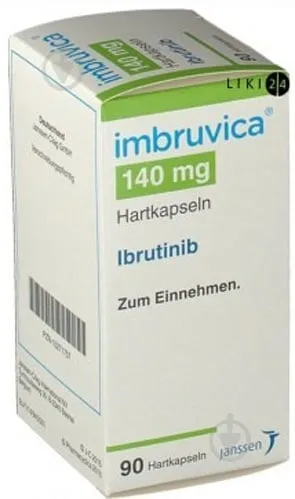
Table of Contents
INSTRUCTIONS FOR MEDICAL USE OF THE MEDICINAL PRODUCT IMBRUVICA (IMBRUVICA®)
Composition:
Active substance: ibrutinib;
1 capsule contains 140 mg of ibrutinib;
Excipients: magnesium stearate, microcrystalline cellulose, sodium croscarmellose, sodium lauryl sulfate, gelatin, titanium dioxide (E 171), pharmaceutical glaze, black iron oxide (E 172), butyl alcohol, isopropyl alcohol, ammonium hydroxide, propylene glycol.
Pharmaceutical form. Capsules.
Main physicochemical properties: hard gelatin capsules size "0", opaque, consisting of a white body and a white cap printed with "ibr 140 mg" in black ink. The contents of the capsules are a white or almost white powder.
Pharmacotherapeutic group. Antineoplastic agents, protein kinase inhibitors.
ATC code L01X E27.
Pharmacological Properties
Pharmacodynamics
Mechanism of Action. Ibrutinib is a potent small-molecule inhibitor of Bruton's tyrosine kinase (BTK). Ibrutinib forms a covalent bond with a cysteine residue (Cys-481) in the active site of BTK, resulting in sustained inhibition of enzymatic activity. Bruton's tyrosine kinase, a member of the Tec kinase family, is an important signaling molecule in pathways initiated by B-cell antigen receptors (BCR) and cytokine receptors. The BCR signaling pathway is involved in the pathogenesis of certain B-cell malignancies, including mantle cell lymphoma (MCL), diffuse large B-cell lymphoma (DLBCL), follicular lymphoma, and chronic lymphocytic leukemia (CLL). The key role of BTK in B-cell receptor signaling leads to activation of signaling pathways essential for B-cell migration, chemotaxis, and adhesion. Preclinical studies have demonstrated that ibrutinib inhibits proliferation and survival of malignant B-cells in vivo, as well as cell migration and adhesion to substrates in vitro.
Lymphocytosis. At the beginning of therapy, reversible increases in lymphocyte count (≥ 50% from baseline with absolute values exceeding 5,000/µL) were observed in the majority of patients (75%) with CLL treated with Imbruvica, accompanied by a reduction in lymphadenopathy. This effect was also observed in one-third of patients with relapsed MCL or no response to prior therapy who received Imbruvica. The observed lymphocytosis is a result of the pharmacodynamic action of the drug and should not be interpreted as disease progression in the absence of other clinical signs. In both conditions, lymphocytosis typically developed within the first few weeks of Imbruvica treatment (median: 1.1 weeks) and usually resolved with a median of 8 weeks in MCL patients and 14 weeks in CLL patients. In some patients, marked increases in circulating lymphocytes (> 400,000/µL) were observed.
Lymphocytosis was not observed in patients treated with Imbruvica for Waldenström’s macroglobulinemia (WM).
In vitro Platelet Aggregation. In an in vitro study, ibrutinib demonstrated inhibition of collagen-induced platelet aggregation. Ibrutinib did not show significant inhibition of platelet aggregation when other platelet aggregation agonists were used.
Effect on QT/QTc Interval and Cardiac Electrophysiology. The effect of ibrutinib on the QTc interval was evaluated in a randomized, double-blind, placebo- and active-controlled thorough QTc study involving 20 healthy men and women. At supratherapeutic doses of 1680 mg, ibrutinib did not cause clinically significant prolongation of the QTc interval. The upper bound of the two-sided 90% confidence interval (CI) for the baseline-adjusted mean change from placebo for ibrutinib was less than 10 ms. In the same study, a concentration-dependent shortening of the QTc interval was observed (-5.3 ms [90% CI: -9.4, -1.1] at a Cmax of 719 ng/mL following administration of the supratherapeutic dose of 1680 mg).
Clinical Efficacy and Safety of Treatment
Mantle Cell Lymphoma (MCL)
The clinical efficacy and safety of Imbruvica in patients with relapsed MCL or no response to prior therapy were evaluated in a single-arm, open-label, multicenter phase II study involving 111 patients. The median age of patients was 68 years (range: 40–84 years), 77% were male, and 92% were Caucasian. Patients with an Eastern Cooperative Oncology Group (ECOG) performance status ≥ 3 were excluded from the study. The median time since diagnosis was 42 months, and the median number of prior treatment regimens was 3 (range: 1–5), including high-dose chemotherapy in 35% of patients, bortezomib in 43%, lenalidomide in 24%, and autologous or allogeneic stem cell transplantation in 11%. At study entry, 39% of patients had bulky disease (≥ 5 cm), 49% had high-risk status according to the simplified Mantle Cell Lymphoma International Prognostic Index (MIPI), and 72% had progressive disease (with extranodal involvement and/or bone marrow involvement) at screening.
Imbruvica was administered orally at a dose of 560 mg once daily until disease progression or unacceptable toxicity. Tumor response to treatment was assessed according to guidelines of the International Working Group (IWG) for non-Hodgkin lymphomas (NHL). The primary endpoint of this study was overall response rate (ORR). Results are presented in Table 1.
Table 1. Overall Response Rate (ORR) and Duration of Response (DOR) in patients with relapsed MCL or no response to prior therapy (N = 111)
| ORR (%) |
67.6 |
| 95 % CI (%) |
(58.0; 76.1) |
| CR (%) |
20.7 |
| PR (%) |
46.8 |
| Median DOR (CR + PR) (months) |
17.5 (15.8; NE) |
| Median time to first response, months (range) |
1.9 (1.4–13.7) |
| Median time to CR, months (range) |
5.5 (1.7; 11.5) |
CR – complete response; PR – partial response; ND – not achieved; CI – confidence interval.
Treatment efficacy data were further evaluated by an independent review committee (IRC), which assessed the ORR to be 69%, with a complete response (CR) rate of 21%, a partial response (PR) rate of 48%, and a median PFS of 19.6 months.
The overall response to Imbruvica treatment was independent of prior therapies, including treatment with bortezomib and lenalidomide, as well as baseline risk/prognostic factors, presence of bulky disease, or patient's sex or age.
The safety and efficacy of Imbruvica were demonstrated in a randomized, open-label, multicenter Phase III study involving 280 patients with MCL who had received at least one prior line of therapy (study MCL3001). Patients were randomized 1:1; one group received Imbruvica orally at a dose of 560 mg once daily for 21 days, while the other group received temsirolimus intravenously at a dose of 175 mg on days 1, 8, and 15 of the first cycle, followed by 75 mg on days 1, 8, and 15 of each subsequent 21-day cycle. Treatment in each group continued until disease progression or occurrence of unacceptable toxicity. The median patient age was 68 years (range: 34–88 years), 74% of patients were male, and 87% were Caucasian. The median time since diagnosis was 43 months, the median number of prior treatment regimens was 2 (range: 1 to 9), 51% of patients had received high-dose chemotherapy; 18% had been treated with bortezomib, 5% with lenalidomide, and 24% had undergone stem cell transplantation. At baseline, 53% of patients had bulky disease (≥ 5 cm), 21% had a high risk score according to the simplified Mantle Cell Lymphoma International Prognostic Index (MIPI), 60% had extranodal disease, and 54% had bone marrow involvement at screening.
Progression-free survival (PFS) was assessed by the IRC according to the revised criteria of the International Working Group for Non-Hodgkin’s Lymphoma. Efficacy results from study MCL3001 are presented in Table 2.
Table 2. Efficacy results in patients with relapsed or refractory mantle cell lymphoma from study MCL3001
| Endpoint |
Imbruvica (n = 139) |
Temsirolimus (n = 141) |
| Progression-free survivalа |
||
| Median progression-free survival (95 % CI), months |
14.6 (10.4, not estimable) |
6.2 (4.2, 7.9) |
| Hazard ratio = 0.43 (95 % CI: 0.32, 0.58) |
||
| Overall response rate (%) |
71.9 |
40.4 |
| p-value |
p < 0.0001 |
|
and according to IRC assessment
A smaller proportion of patients receiving ibrutinib experienced clinically significant worsening of lymphoma symptoms compared to patients receiving temsirolimus (27% vs. 52%); time to symptom deterioration was longer in the ibrutinib group than in the temsirolimus group (hazard ratio 0.27, p < 0.0001).
Clinical efficacy and safety of treatment
CLL
Patients with previously untreated CLL
A randomized, multicenter, open-label Phase III study was conducted in patients aged 65 years and older with previously untreated CLL: Imbruvica was investigated in comparison with chlorambucil. Patients aged 65–70 years were required to have comorbidities precluding the use of first-line chemoimmunotherapy: fludarabine, cyclophosphamide, and rituximab. Patients (n = 269) were randomized 1:1; one group received Imbruvica at a dose of 420 mg once daily until disease progression or until unacceptable toxicity, while the other group received chlorambucil at an initial dose of 0.5 mg/kg on days 1 and 15 of each 28-day cycle for up to 12 cycles maximum, with dose escalation to 0.8 mg/kg permitted based on tolerability. After confirmed disease progression, patients who had received chlorambucil were crossed over to ibrutinib treatment.
The median patient age was 73 years (range 65–90 years), 63% were male, and 91% were of Caucasian race. At baseline, 91% of patients had an ECOG performance status of 0 or 1, and 9% had a score of 2. At study initiation, 45% of patients had Rai stage III or IV disease, 35% had at least one tumor ≥ 5 cm, 39% had anemia, 23% had thrombocytopenia, 65% had elevated β2-microglobulin levels > 3500 μg/L, and 47% had creatinine clearance < 60 mL/min. 20% of patients had 11q deletion.
Progression-free survival (PFS), as assessed by IRC according to International Workshop on CLL (IWCLL) criteria, demonstrated a statistically significant reduction in the risk of death or disease progression in 84% of patients in the Imbruvica treatment group. Efficacy results are presented in Table 3.
Additionally, a statistically significant and sustained increase in platelet and hemoglobin levels was observed in the Imbruvica group compared to the chlorambucil group. Among patients with baseline neutropenia, improvement in hematologic parameters was observed: platelets 77.1% vs. 42.9%; hemoglobin 84.3% vs. 45.5% in the ibrutinib and chlorambucil groups, respectively.
Table 3. Efficacy in patients with previously untreated CLL.
| Endpoint |
Imbruvica N = 136 |
Chlorambucil N = 133 |
| Median progression-free survivala |
||
| Number of events (%) |
15 (11.0) |
64 (48.1) |
| Median time (95 % CI), months |
Not reached |
18.9 (14.1, 22.0) |
| Relative risk (95 % CI) |
0.161 (0.091, 0.283) |
|
| Overall response to treatmenta (CR + PR) |
82.4 % |
35.3 % |
| p-value |
< 0.0001 |
|
| Overall survivalb |
||
| Number of deaths (%) |
3 (2.2) |
17 (12.8) |
| HR (95 % CI) |
0.163 (0.048, 0.558) |
|
a Based on IRC assessment, the median follow-up was up to 18.4 months.
b Median overall survival (OS) was not reached in either group; for OS, p < 0.0005.
Patients who received at least one prior line of therapy for CLL.
The clinical efficacy and safety of Imbruvica in patients with CLL were evaluated in one uncontrolled trial and one randomized controlled trial. An open-label, multicenter study included 51 patients with relapsed or refractory CLL who received 420 mg of ibrutinib once daily. Imbruvica was administered until disease progression or until unacceptable toxicity occurred. The median age of patients was 68 years (range: 37 to 82 years), the median time since diagnosis was 80 months, and the mean number of prior treatment regimens was 4 (range: 1 to 12), including 92.2% of patients previously treated with nucleoside analogs, 98.0% with rituximab, 86.3% with alkylating agents, 39.2% with bendamustine, and 19.6% with ofatumumab. At study entry, 39.2% of patients had RAI stage IV disease, 45.1% had bulky disease (≥ 5 cm), 35.3% had 17p deletion, and 31.4% had 11q deletion.
ORR was assessed by investigators and an independent review committee (IRC) using the 2008 International Workshop on CLL (IWCLL) criteria. After 16.4 months of follow-up, the ORR by IRC assessment in the 51 patients was 64.7% (95% CI: 50.1%, 77.6%), with all responses being partial. ORR including patients with CR and lymphocytosis was 70.6%. The median time to response was 1.9 months; DOR ranged from 3.9 to 24.2+ months, and the median DOR was not reached.
A randomized, multicenter, open-label Phase III trial evaluated Imbruvica versus ofatumumab in patients with relapsed or refractory CLL. Patients (n = 391) were randomized 1:1 to receive either Imbruvica 420 mg daily until disease progression or unacceptable toxicity, or ofatumumab up to 12 doses (300/2000 mg). Fifty-seven patients randomized to ofatumumab crossed over to the Imbruvica group upon disease progression. The median age of patients was 67 years (range: 30 to 88 years), 68% were male, and 90% were Caucasian. All patients had an ECOG performance status of 0 or 1 at baseline. The median time since diagnosis was 91 months, and the mean number of prior treatment regimens was 2 (range: 1 to 13). At baseline, 58% of patients had at least one lesion ≥ 5 cm. 32% of patients had 17p deletion, and 31% had 11q deletion.
Progression-free survival (PFS), as assessed by IRC per IWCLL criteria, demonstrated a statistically significant 78% reduction in the risk of progression or death in the Imbruvica treatment group. Analysis of overall survival (OS) showed a statistically significant 57% reduction in the risk of death in the Imbruvica treatment group. Efficacy results are presented in Table 4.
Table 4. Efficacy in patients with CLL
| Endpoint |
Imbruvica N = 195 |
Ofatumumab N = 196 |
| Median progression-free survival |
Not reached |
8.1 months |
| HR = 0.215 (95 % CI: 0.146; 0.317) |
||
| Overall survivala |
HR = 0.434 (95 % CI: 0.238; 0.789) |
|
| HR = 0.387 (95 % CI: 0.216; 0.695) |
||
| Overall response rate (%) |
42.6 |
4.1 |
| Overall response rate, including PR with lymphocytosis (%) |
62.6 |
4.1 |
HR – hazard ratio, calculated from survival curves.
a Median PFS not reached in both treatment groups.
Efficacy was similar across all patient subgroups, including patients with 17p deletion, a pre-specified stratification factor.
Final analysis with 65 months of follow-up
With a median follow-up of 65 months in the PCYC-1112-CA study, patients in the Imbruvica treatment group showed an 85% reduction in the risk of death or disease progression. Investigator-assessed median PFS by IWCLL criteria was 44.1 months [95% CI (38.47, 56.18)] in the Imbruvica group versus 8.1 months [95% CI (7.79, 8.25)] in the ofatumumab group; HR = 0.15 [95% CI (0.11, 0.20)]. Investigator-assessed ORR was 87.7% in the Imbruvica group versus 22.4% in the ofatumumab group. At the time of final analysis, 133 (67.9%) of the 196 patients initially randomized to the ofatumumab treatment arm had crossed over to receive ibrutinib therapy. Investigator-assessed median PFS2 (time from randomization to PFS event after first subsequent anti-cancer therapy) by IWCLL criteria was 65.4 months [95% CI (51.61, not estimable)] in the Imbruvica group versus 38.5 months [95% CI (19.98, 47.24)] in the ofatumumab group; HR = 0.54 [95% CI (0.41, 0.71)]. Median OS was 67.7 months [95% CI (61.0, not estimable)] in the Imbruvica group.
Combination therapy
The safety and efficacy of Imbruvica in patients with previously treated CLL were further evaluated in a randomized, double-blind Phase III study in which patients received Imbruvica in combination with bendamustine and rituximab (BR) or placebo plus BR. Patients (n = 578) were randomized 1:1 to receive ibrutinib 420 mg once daily or placebo in combination with BR until disease progression or unacceptable toxicity. All patients received BR for up to six 28-day cycles. Bendamustine was administered at 70 mg/m² by intravenous infusion over at least 30 minutes on days 2 and 3 of cycle 1, and on days 1 and 2 of cycles 2–6 for up to 6 cycles. Rituximab was administered at 375 mg/m² on day 1 of cycle 1 and at 500 mg/m² on day 1 of cycles 2–6. Ninety patients randomized to placebo + BR crossed over to the Imbruvica group upon confirmed disease progression per IRC assessment. The median age was 64 years (range: 31–86 years), 66% were male, and 91% were Caucasian. At baseline, all patients had an ECOG performance status of 0 or 1. The median time since diagnosis was 6 years, and the median number of prior therapies was 2 (range: 1–11). At baseline, 56% of patients had at least one tumor ≥5 cm, and 26% had 11q deletion.
Progression-free survival was assessed by IRC according to IWCLL criteria. Efficacy results are presented in Table 5.
Table 5. Efficacy in patients with CLL
| Endpoint |
Imbruvica + BR (n = 289) |
Placebo + BR (n = 289) |
| Progression-free survivala |
||
| Median (95% CI), months |
Not reached |
13.3 (11.3, 13.9) |
| Relative risk = 0.203 (95% CI: 0.150, 0.276) |
||
| Overall response rateb, % |
82.7 |
67.8 |
| Overall survival (OS)c |
Relative risk = 0.628 (95% CI: 0.385, 1.024) |
|
a According to IRC assessment.
b According to IRC assessment, overall treatment response (complete response, complete response with incomplete bone marrow recovery, nodular partial response, partial response).
c Median duration of complete response was not reached in either group.
Waldenström’s macroglobulinemia (WM).
The clinical efficacy and safety of Imbruvica in patients with WM (lymphoplasmacytic lymphoma with immunoglobulin M (IgM) secretion) were evaluated in an open-label, multicenter study involving 63 previously treated patients. The median age of patients was 63 years (range: 44 to 86 years), 76% of patients were male, and 95% were of Caucasian race. All patients had an ECOG performance status of 0 or 1 at baseline. The median time since diagnosis was 74 months, and the median number of prior therapies was 2 (range: 1 to 11). At baseline, the median IgM concentration was 3.5 g/dL, and 60% of patients had anemia (hemoglobin level ≤11 g/dL or 6.8 mmol/L).
Imbruvica was administered orally at a dose of 420 mg once daily until disease progression or unacceptable toxicity. The primary endpoint of this study was overall response rate (ORR). ORR and duration of response, assessed according to the criteria of the Third International Workshop on Waldenström’s Macroglobulinemia, are presented in Table 6.
Table 6. Overall Response Rate (ORR) and Duration of Response (DoR) in patients with WM (N = 63)
| ORR (%) |
87.3 |
| 95 % CI (%) |
(76.5; 94.4) |
| DCR (%) |
14.3 |
| CR (%) |
55.6 |
| PR (%) |
17.5 |
| Median DOR (months) |
NR (0.03+, 18.8+) |
CI – confidence interval, VGPR – very good partial response, PR – partial response, MR – minimal response, NR – not reached.
The median time to response was 1.0 month (range: 0.7–13.4 months).
Efficacy data were further evaluated by an independent review committee (IRC), which assessed the ORR to be 83%, with very good partial response (VGPR) at 11% and partial response (PR) at 51%.
Pharmacokinetics.
Absorption. Ibrutinib is rapidly absorbed after oral administration, with a median Tmax of 1–2 hours. The absolute bioavailability under fasting conditions (n=8) was 2.9% (90% confidence interval (CI) = 2.1–3.9) and doubled when administered with food. The pharmacokinetics of ibrutinib do not show significant differences in patients with various B-cell malignancies. Plasma concentrations of ibrutinib increase proportionally with dose escalation up to 840 mg. Steady-state AUC values at a dose of 560 mg were 953 ± 705 ng*h/mL (mean ± standard deviation). Plasma concentrations of ibrutinib (AUClast) were 60% lower when administered fasting compared to administration 30 minutes before or 30 minutes after a meal, or 2 hours after a high-fat breakfast.
Ibrutinib solubility is pH-dependent, with reduced solubility at higher pH values. In a single-dose study of 560 mg ibrutinib administered fasting to healthy volunteers, co-administration with omeprazole 40 mg once daily for 5 days resulted in geometric mean ratios (90% CI) of 83% (68–102%), 92% (78–110%), and 38% (26–53%) for AUC0–24h, AUClast, and Cmax, respectively, compared to ibrutinib alone.
Distribution. In vitro, reversible binding of ibrutinib to human plasma proteins is 97.3% and is independent of concentration within the range of 50 to 1000 ng/mL. The apparent volume of distribution at steady state (Vd,ss/F) is approximately 10,000 L.
Metabolism. Ibrutinib is primarily metabolized by CYP3A4 to form a dihydrodiol metabolite, which has approximately 15-fold lower BTK inhibitory activity compared to ibrutinib. CYP2D6 plays a negligible role in ibrutinib metabolism; therefore, no specific precautions are required for patients with different CYP2D6 genotypes.
Elimination. The apparent clearance (CL/F) of ibrutinib is approximately 1000 L/h, and the elimination half-life ranges from 4 to 13 hours. After a single oral dose of radiolabeled 14C-ibrutinib administered to healthy volunteers, approximately 90% of radioactivity was excreted within 168 hours, predominantly in feces (80%) and to a lesser extent in urine (<10%). Unchanged ibrutinib accounted for 1% in feces and was not detected in urine.
Special patient populations.
Elderly patients. Population pharmacokinetic analysis demonstrated no clinically significant effect of age on ibrutinib clearance.
Pediatric patients. The pharmacokinetics of ibrutinib in children (under 18 years of age) have not been studied.
Gender. Population pharmacokinetic analysis showed no clinically significant effect of gender on ibrutinib clearance.
Race. There are insufficient data to assess the potential impact of race on the pharmacokinetics of ibrutinib.
Body weight. Population pharmacokinetic analysis demonstrated that body weight (ranging from 41 to 146 kg, average 83 ± 19 kg) had no clinically significant effect on ibrutinib clearance.
Renal impairment. Renal elimination of ibrutinib is negligible; urinary excretion of ibrutinib metabolites accounts for <10% of the dose. Studies in patients with impaired renal function have not been conducted. There are no data on the use of ibrutinib in patients with severe renal impairment or those on dialysis (see section "Special warnings and precautions for use").
Hepatic impairment. Ibrutinib is metabolized in the liver. A study was conducted in patients with hepatic impairment but without malignancies, who received a single 140 mg dose of ibrutinib under fasting conditions. Substantial inter-subject variability was observed, but on average, ibrutinib exposure (AUClast) increased by 2.7-, 8.2-, and 9.8-fold in patients with mild (Child-Pugh class A, n=6), moderate (Child-Pugh class B, n=10), and severe (Child-Pugh class C, n=8) hepatic impairment, respectively. The concentration of the free fraction of ibrutinib also increased with increasing severity of hepatic impairment, reaching 3.0%, 3.8%, and 4.8% in subjects with mild, moderate, and severe hepatic impairment, respectively, compared to 3.3% in healthy volunteers. The concentration of unbound ibrutinib increased approximately 4.1-, 9.8-, and 13-fold in subjects with mild, moderate, and severe hepatic impairment, respectively (see section "Dosage and administration").
Concomitant use with substrates/inhibitors of transport proteins. In vitro studies demonstrated that ibrutinib is not a substrate of P-glycoprotein (P-gp) or other major transporter proteins, except for OCT2. The dihydrodiol metabolite of ibrutinib and other metabolites are substrates of P-gp. Ibrutinib is an inhibitor of P-gp and BCRP in vitro (see section "Interaction with other medicinal products and other forms of interaction").
Clinical characteristics.
Indications.
Imbruvica as monotherapy is indicated for the treatment of mantle cell lymphoma in adult patients with relapsed or refractory disease after prior therapy.
Imbruvica as monotherapy is indicated for the treatment of chronic lymphocytic leukemia in adult patients who have not received prior therapy.
Imbruvica as monotherapy or in combination with bendamustine and rituximab is indicated for the treatment of chronic lymphocytic leukemia in adult patients who have received at least one prior therapy.
Imbruvica as monotherapy is indicated for the treatment of Waldenström’s macroglobulinemia in adult patients who have received at least one prior therapy, or as first-line therapy in patients for whom chemotherapy-immunotherapy is not appropriate.
Contraindications.
Hypersensitivity to the active substance or to any of the excipients.
Concomitant use with medicinal products containing St. John’s wort extract.
Interactions with other medicinal products and other forms of interactions.
Ibrutinib is primarily metabolized by the cytochrome P450 enzyme 3A4 (CYP3A4).
Agents that may increase ibrutinib plasma concentrations
Concomitant use of Imbruvica with strong or moderate CYP3A4 inhibitors should be avoided, as such use may lead to increased ibrutinib plasma concentrations.
Strong CYP3A4 inhibitors. Administration of ibrutinib on an empty stomach with ketoconazole, a strong CYP3A4 inhibitor, to 18 healthy volunteers resulted in increased ibrutinib plasma concentrations (Cmax and AUC) by 29-fold and 24-fold, respectively. Modeling data using ibrutinib administered on an empty stomach suggest that the strong CYP3A4 inhibitor clarithromycin may increase ibrutinib AUC by 14-fold. In patients with B-cell malignancies receiving Imbruvica with food, concomitant administration of the strong CYP3A4 inhibitor voriconazole increased Cmax by 6.7-fold and AUC by 5.7-fold. Concomitant use of ibrutinib with strong CYP3A4 inhibitors (e.g., ketoconazole, indinavir, nelfinavir, ritonavir, saquinavir, clarithromycin, telithromycin, itraconazole, nefazodone, and cobicistat) should be avoided. If concomitant use of a strong CYP3A4 inhibitor is necessary and the anticipated benefit outweighs the potential risk, the dose of Imbruvica should be reduced to 140 mg (one capsule) or treatment should be temporarily interrupted (for 7 days or less). Close monitoring of patients for signs of toxicity should be ensured, and dose modification recommendations should be followed as needed (see sections "Dosage and administration" and "Special precautions").
Moderate CYP3A4 inhibitors. Modeling data using ibrutinib administered on an empty stomach suggest that moderate CYP3A4 inhibitors such as diltiazem, erythromycin, and voriconazole may increase ibrutinib AUC by 5- to 9-fold. Concomitant use of ibrutinib with moderate CYP3A4 inhibitors (e.g., voriconazole, erythromycin, amprenavir, aprepitant, atazanavir, ciprofloxacin, crizotinib, darunavir/ritonavir, diltiazem, fluconazole, fosamprenavir, imatinib, verapamil, amiodarone, dronedarone) should be avoided. If concomitant use of a strong CYP3A4 inhibitor is necessary, the dose of Imbruvica should be reduced to 140 mg (one capsule) for the duration of concomitant treatment.
In patients with B-cell malignancies receiving Imbruvica with food, concomitant use of the CYP3A4 inhibitor erythromycin increased Cmax by 3.4-fold and AUC by 3.0-fold. When administering a moderate CYP3A4 inhibitor (e.g., fluconazole, erythromycin, amprenavir, aprepitant, atazanavir, ciprofloxacin, crizotinib, diltiazem, fosamprenavir, imatinib, verapamil, amiodarone, dronedarone), the dose of Imbruvica should be reduced to 280 mg (two capsules) for the duration of the inhibitor's use. Close monitoring of patients for signs of toxicity should be ensured, and dose modification recommendations should be followed as needed (see sections "Dosage and administration" and "Special precautions").
Weak CYP3A4 inhibitors. Modeling data using ibrutinib administered on an empty stomach suggest that weak CYP3A4 inhibitors such as azithromycin and fluvoxamine may increase ibrutinib AUC by < 2-fold. Dose adjustment is not required when used with weak inhibitors. However, patients should be monitored for signs of toxicity, and dose modification recommendations should be followed as needed (see sections "Dosage and administration" and "Special precautions").
Concomitant use with grapefruit juice, which contains CYP3A4 inhibitors, in 8 healthy volunteers resulted in approximately 4-fold and 2-fold increases in ibrutinib concentration (Cmax and AUC, respectively). During treatment with Imbruvica, consumption of grapefruit and Seville oranges (bitter oranges) should be avoided, as they contain moderate CYP3A4 inhibitors (see section "Dosage and administration").
Agents that may reduce ibrutinib plasma concentrations
Concomitant use of Imbruvica with CYP3A4 inducers may reduce ibrutinib plasma concentrations.
Concomitant administration of ibrutinib on an empty stomach with rifampicin, a strong CYP3A4 inducer, in 18 healthy volunteers resulted in 92% and 90% reductions in ibrutinib concentration (Cmax and AUC), respectively. Concomitant use of ibrutinib with strong or moderate CYP3A4 inducers (e.g., carbamazepine, rifampicin, phenytoin) should be avoided. Medicinal products containing St. John’s wort extract are contraindicated for concomitant use with Imbruvica, as they may reduce treatment efficacy. Alternative medicinal products with weaker inductive effects should be considered. If concomitant use of a strong or moderate CYP3A4 inducer is necessary and the anticipated benefit outweighs the potential risk, close monitoring of patients for signs of loss of ibrutinib efficacy should be ensured (see sections "Contraindications" and "Special precautions"). Weak CYP3A4 inducers may be used concomitantly with Imbruvica; however, patients should be monitored for possible loss of treatment efficacy.
Since the solubility of ibrutinib is pH-dependent, there is a theoretical risk of reduced ibrutinib plasma concentrations when used concomitantly with medicinal products that increase gastric pH (proton pump inhibitors). This interaction has not been studied in vivo.
After administration of omeprazole 40 mg once daily for 5 days, a single 560 mg dose of ibrutinib administered on an empty stomach to healthy volunteers resulted in lower ibrutinib Cmax values. However, there is no evidence that lower Cmax values are clinically significant. In pivotal clinical trials, medicinal products that increase gastric pH (e.g., proton pump inhibitors) were used without restrictions.
Effect of ibrutinib on plasma concentrations of other medicinal products
Ibrutinib is an inhibitor of P-glycoprotein (P-gp) and breast cancer resistance protein (BCRP) in vitro. Clinical data on interactions via this mechanism are lacking; however, inhibition of intestinal P-gp and BCRP by ibrutinib after dosing cannot be excluded. To prevent potential drug interactions in the gastrointestinal tract, medicinal products with a narrow therapeutic index that are substrates of P-gp or BCRP (such as digoxin or methotrexate) should be administered at least 6 hours before or 6 hours after taking Imbruvica. Ibrutinib may also inhibit hepatic BCRP and increase concentrations of drugs subject to BCRP-mediated hepatic elimination, such as rosuvastatin.
In a drug interaction study in patients with B-cell malignancies, a single 560 mg dose of ibrutinib had no clinically significant effect on the pharmacokinetics of midazolam, a CYP3A4 substrate. In the same study, two weeks of treatment with ibrutinib 560 mg daily had no clinically significant effect on the pharmacokinetics of oral contraceptives (ethinylestradiol and levonorgestrel), midazolam (a CYP3A4 substrate), or bupropion (a CYP2B6 substrate).
Special precautions for use.
Hemorrhagic complications.
Hemorrhagic complications have been reported in patients with or without thrombocytopenia receiving Imbruvica treatment. These included minor hemorrhagic events such as skin bruising, epistaxis, and petechiae, as well as serious complications including gastrointestinal bleeding, intracranial hemorrhage, and hematuria.
Patients requiring treatment with warfarin or other vitamin K antagonists were excluded from phase II and III clinical trials. Concomitant use of warfarin or other vitamin K antagonists with Imbruvica is not recommended. The use of fish oil and vitamin E should also be avoided. The risk of bleeding increases when Imbruvica is used in patients requiring anticoagulant therapy or drugs that inhibit platelet function. Patients with inherited hemorrhagic diathesis were not included in clinical trials. Careful monitoring is required when anticoagulant therapy is prescribed.
Imbruvica treatment should be withheld for 3 to 7 days before and after surgical procedures, depending on the type of surgery and bleeding risk.
The mechanism of hemorrhagic complications is not fully understood.
Leukostasis.
Cases of leukostasis have been reported in patients receiving Imbruvica treatment. High numbers of circulating lymphocytes (>400,000/µL) increase the risk of leukostasis. In such cases, temporary interruption of Imbruvica therapy should be considered. Close monitoring of the patient is required. Supportive treatment, including hydration and/or cytoreduction, should be administered as needed.
Infections.
Infections (including sepsis, neutropenic sepsis, bacterial, viral, or fungal infections) have been observed in patients taking Imbruvica. Some of these infections required hospitalization or resulted in death (most patients also had neutropenia). Patients should be monitored for fever, neutropenia, and infections, and appropriate anti-infective therapy should be initiated as indicated. Prophylaxis should be considered according to standard therapy for patients at increased risk of opportunistic infections.
Cases of progressive multifocal leukoencephalopathy (PML), including fatal cases, have been reported in patients receiving ibrutinib, either during or after immunosuppressive therapy. In the event of onset or worsening of neurological, cognitive, or behavioral symptoms, physicians should consider PML in the differential diagnosis. If PML is suspected, appropriate diagnostic measures should be initiated and ibrutinib treatment should be suspended until PML is ruled out. In any case of suspicion, patients should be referred to a neurologist and appropriate diagnostic procedures performed, including MRI (preferably with contrast), analysis of cerebrospinal fluid for John Cunningham virus DNA, and repeated assessment of the patient's neurological status.
Cytopenia.
Treatment-emergent grade 3 or 4 cytopenias (neutropenia, thrombocytopenia, and anemia) have been observed in patients receiving Imbruvica. A complete blood count should be performed monthly.
Interstitial lung disease (ILD).
Cases of interstitial lung disease have been observed in patients receiving Imbruvica. Symptoms suggestive of ILD should be monitored. If such symptoms occur, Imbruvica treatment should be suspended and appropriate treatment for ILD initiated. If symptoms persist, the benefit-risk ratio of continuing Imbruvica therapy should be evaluated and dose adjustments made according to recommendations.
Atrial fibrillation/flutter.
Cases of atrial fibrillation, atrial flutter, and ventricular tachyarrhythmia have been reported in patients receiving Imbruvica treatment. Atrial fibrillation and flutter occurred more frequently in patients with risk factors for cardiac complications, hypertension, acute infections, and a history of atrial fibrillation. Periodic clinical monitoring for signs of cardiac arrhythmias is recommended.
The clinical status of patients with worsening arrhythmia symptoms or new onset dyspnea, dizziness, or loss of consciousness should be evaluated, and an ECG performed.
Patients who develop symptoms of ventricular tachyarrhythmia should temporarily discontinue Imbruvica treatment. A thorough clinical assessment of the benefit-risk ratio should be conducted before considering resumption of therapy.
Alternative treatment options should be considered for patients with pre-existing atrial fibrillation who require anticoagulant therapy. A careful assessment of thromboembolic risk is required in patients who develop atrial fibrillation during Imbruvica therapy. If the risk is high and alternative treatments are not acceptable, anticoagulant therapy under strict physician supervision may be considered.
Cerebrovascular complications.
Cerebrovascular complications, transient ischemic attacks, and ischemic strokes, including fatal cases, with or without concomitant atrial fibrillation and/or hypertension, have been reported during ibrutinib use. The time from initiation of ibrutinib therapy to the occurrence of central nervous system ischemic events was mostly several months (more than 1 month in 78% of cases and more than 6 months in 44% of cases), indicating the need for regular patient monitoring (see sections "Special precautions for use" – Atrial fibrillation/flutter, and "Adverse reactions").
Tumor lysis syndrome.
Cases of tumor lysis syndrome have been reported in patients receiving Imbruvica. Patients with high tumor burden are at risk of tumor lysis syndrome. Close monitoring of the patient is required, and appropriate preventive measures should be taken.
Non-melanoma skin cancer.
In pooled comparative phase III randomized trials, non-melanoma skin cancer was reported more frequently in the ibrutinib group than in comparator groups. Patients should be monitored for the development of non-melanoma skin cancer.
Effect on QT interval.
ECG analysis from patients in a phase II study showed that Imbruvica causes a minor shortening of the QTcF interval (on average by 7.5 ms). Although the primary mechanism and clinical significance of this effect are unknown, clinical judgment should guide decisions when prescribing ibrutinib to patients at risk of further QTc shortening (e.g., congenital short QT syndrome or family history of this condition).
Viral reactivation.
Cases of hepatitis B virus (HBV) reactivation, including fatal outcomes, have been reported in patients receiving Imbruvica. Testing for hepatitis B virus (HBV) should be performed before initiating Imbruvica treatment. For patients with positive test results, consultation with a specialist experienced in hepatitis B management is recommended. If a patient tests positive for HBV, consultation with a liver disease specialist is required before starting treatment, along with ongoing monitoring and management according to local guidelines for prevention of hepatitis B reactivation.
Drug interactions.
Concomitant use of Imbruvica with strong or moderate CYP3A4 inhibitors may increase ibrutinib plasma concentrations and the risk of toxicity. Conversely, concomitant use with CYP3A4 inducers may reduce ibrutinib concentrations and lead to loss of therapeutic efficacy. Therefore, concomitant use of Imbruvica with strong or moderate CYP3A4 inhibitors/inducers should be avoided whenever possible. If such use is necessary, it should only be considered when the expected benefit outweighs the potential risk. Continuous monitoring for signs of toxicity is required when co-administered with a CYP3A4 inhibitor (see sections "Dosage and administration" and "Interaction with other medicinal products and other forms of interaction"), and for signs of reduced efficacy when co-administered with a CYP3A4 inducer.
Women of reproductive potential.
Women of reproductive potential should use a highly effective method of contraception during treatment with Imbruvica (see section "Pregnancy and breastfeeding").
Use during pregnancy or breastfeeding.
Women of reproductive potential / Contraception in women
Based on animal studies, Imbruvica may have adverse effects on the fetus when administered to pregnant women. Women must use effective contraception to prevent pregnancy during treatment with Imbruvica and for 3 months after completion of therapy.
Pregnancy
Imbruvica should not be used during pregnancy. There are no data on the use of the drug in pregnant women. Animal studies have demonstrated reproductive toxicity.
Breastfeeding
It is unknown whether ibrutinib or its metabolites are excreted in human milk. A risk to breastfed infants cannot be excluded. Breastfeeding should be discontinued during treatment with Imbruvica.
Fertility
No effects on fertility or reproductive capacity were observed in male and female rats treated with the highest doses of 100 mg/kg/day (equivalent human dose: 16 mg/kg/day). There are no data on the effect of ibrutinib on fertility in humans.
Ability to drive and operate machinery.
Imbruvica has a minor influence on the ability to drive or operate machinery.
Fatigue, dizziness, and asthenia have been reported in some patients receiving Imbruvica. This should be taken into account when assessing the patient's ability to drive or operate machinery.
Dosage and Administration
The use of this medicinal product and monitoring of its use should be initiated only by a physician experienced in the use of antineoplastic agents.
Dosage
Mantle cell lymphoma (MCL)
The recommended dose of Imbruvica for the treatment of MCL is 560 mg (4 capsules) once daily.
Chronic lymphocytic leukemia (CLL) and Waldenström’s macroglobulinemia (WM)
The recommended dose of Imbruvica for the treatment of CLL as monotherapy or in combination with other medicinal products is 420 mg (3 capsules) once daily.
The recommended dose of Imbruvica for the treatment of WM is 420 mg (3 capsules) once daily.
Treatment should be continued until disease progression or until the patient no longer tolerates therapy.
Dose adjustments
Moderate and strong CYP3A4 inhibitors increase ibrutinib plasma concentrations (see sections "Special warnings and precautions for use" and "Interaction with other medicinal products and other forms of interaction"). The ibrutinib dose should be reduced to 280 mg (2 capsules) once daily when co-administered with moderate CYP3A4 inhibitors.
The ibrutinib dose should be reduced to 140 mg (1 capsule) once daily or treatment should be temporarily interrupted for up to 7 days when co-administered with strong CYP3A4 inhibitors.
In the event of development of non-hematologic toxicity grade 3 or higher, neutropenia grade 3 or higher with infection or fever, or hematologic toxicity grade 4, Imbruvica therapy should be withheld. After resolution of clinical manifestations of toxicity to grade 1 or baseline levels (recovery), resumption of Imbruvica at the original dose may be considered. In case of recurrence of toxicity, the daily dose should be reduced by one capsule (by 140 mg). A second dose reduction by another 140 mg may be considered if necessary. If toxicity manifestations persist or recur after two dose reductions, Imbruvica should be discontinued.
Dose adjustment recommendations are provided in Table 7.
Table 7
| Episode of toxicity |
Dose adjustment for MCL treatment after recovery |
Dose adjustment for CLL/SLL treatment after recovery |
| First |
resume at dose of 560 mg once daily |
resume at dose of 420 mg once daily |
| Second |
resume at dose of 420 mg once daily |
resume at dose of 280 mg once daily |
| Third |
resume at dose of 280 mg once daily |
resume at dose of 140 mg once daily |
| Fourth |
discontinue Imbruvica treatment |
|
Missed dose
If a dose of Imbruvica is missed, the missed dose should be taken as soon as possible on the day of the missed dose, and then the patient should return to the regular dosing schedule the following day. Do not take additional capsules to make up for the missed dose.
Special patient groups
Elderly patients. Dose adjustment is not required for elderly patients (aged 65 years and older).
Patients with renal impairment. Specific clinical studies of Imbruvica in patients with renal impairment have not been conducted; however, patients with mild or moderate renal impairment were included in clinical trials of Imbruvica. No dose adjustment of Imbruvica is necessary for patients with mild or moderate renal impairment (creatinine clearance > 30 mL/min). Adequate hydration should be ensured, and plasma creatinine levels should be monitored periodically. Imbruvica may be administered to patients with severe renal impairment (creatinine clearance < 30 mL/min) only if the anticipated benefit outweighs the potential risk and the patient is under close clinical monitoring for signs of toxicity. There are no data on the use of Imbruvica in patients with severe renal impairment or in patients on dialysis.
Patients with hepatic impairment. Ibrutinib is metabolized in the liver. During a clinical study involving patients with impaired liver function, increased plasma concentrations of ibrutinib were observed. The recommended dose for patients with mild and moderate hepatic impairment (Child-Pugh classes A and B) is 280 mg (2 capsules) and 140 mg (1 capsule) per day, respectively. Patients should be closely monitored for signs of toxicity, and dose adjustments should be made if necessary. Imbruvica is not recommended for use in patients with severe hepatic impairment (Child-Pugh class C).
Patients with severe cardiac diseases. Patients with severe cardiovascular diseases were excluded from clinical trials of Imbruvica.
Administration method
Imbruvica should be taken orally once daily with a glass of water, approximately at the same time each day. The capsule should be swallowed whole with water, without opening, breaking, or chewing. Capsules must not be taken with grapefruit or Seville orange juice.
Children. Safety and efficacy of Imbruvica in children (under 18 years of age) have not been established. No data are available.
Overdose.
Experience with Imbruvica overdose is limited. In Phase I studies, the maximum tolerated dose was not reached in patients receiving up to 12.5 mg/kg/day (1400 mg). In a separate study, a healthy volunteer who received a single dose of 1680 mg developed reversible Grade 4 elevation of liver enzymes AST and ALT (aspartate aminotransferase and alanine aminotransferase). There is no specific antidote. In case of overdose, standard supportive measures should be implemented, and the patient's clinical status should be closely monitored.
Adverse Reactions
The safety profile is based on pooled data from 981 patients who received treatment with Imbruvica in three Phase II clinical studies, four randomized Phase III studies, and the post-marketing period. In clinical studies, patients with MCL received Imbruvica at a dose of 560 mg once daily, while patients with CLL or WM received 420 mg once daily. All patients in clinical studies continued treatment until disease progression or until intolerance to the drug occurred.
The most common adverse reactions (≥ 20%) were diarrhea, neutropenia, bleeding (e.g., bruising), musculoskeletal pain, nausea, rash, fever, and upper respiratory tract infections. The most common Grade 3/4 adverse reactions (≥ 5%) were neutropenia, pneumonia, thrombocytopenia, febrile neutropenia, and anemia.
Adverse reactions reported during treatment of B-cell malignancies and in the post-marketing period are listed in Table 8 by system organ class and frequency: very common (≥ 1/10), common (≥ 1/100 to < 1/10), uncommon (≥ 1/1,000 to < 1/100), and not known (frequency cannot be estimated from available data). Within each frequency grouping, adverse reactions are listed in order of decreasing severity.
Table 8. Adverse reactions reported during clinical studies and in the post-marketing period with ibrutinib treatment for B-cell malignancies†
| System Organ Class |
Frequency Category |
Adverse Reaction |
All Grades (%) |
≥ Grade 3 |
| Infections and infestations |
very common |
pneumonia*, upper respiratory tract infection sinusitis* skin infections* |
16 19 11 10 |
10 1 1 3 |
| common |
sepsis*# urinary tract infections |
4 9 |
4 2 |
|
| uncommon |
hepatitis B virus reactivation@# |
<1 |
<1 |
|
| Benign and malignant neoplasms |
common |
non-melanoma skin cancer* basal cell carcinoma, squamous cell carcinoma |
6 3 2 |
1 <1 <1 |
| Blood and lymphatic system disorders |
very common |
neutropenia thrombocytopenia anemia |
30 20 18 |
26 10 8 |
| common |
febrile neutropenia, leukocytosis lymphocytosis |
5 2 2 |
5 1 1 |
|
| uncommon |
leukostasis |
<1 |
<1 |
|
| Immune system disorders |
common |
interstitial lung disease*,#,a |
2 |
<1 |
| Metabolism and nutrition disorders |
common |
tumor lysis syndrome hyperuricemia dehydration |
1 7 5 |
1 2 1 |
| Nervous system disorders |
very common |
headache |
13 |
1 |
| common |
peripheral neuropathy*,a dizziness |
5 9 |
<1 0 |
|
| uncommon |
cerebrovascular complications#a transient ischemic attacks a ischemic stroke#a |
<1 1 <1 |
<1 <1 <1 |
|
| Eye disorders |
common |
blurred vision |
7 |
0 |
| Cardiac disorders |
common |
atrial fibrillation ventricular tachyarrhythmia*b |
6 1 |
3 0 |
| Vascular disorders |
very common |
hemorrhagic complications*,# skin hemorrhages* |
30 22 |
1 <1 |
| common |
subdural hematoma# nosebleeds petechiae arterial hypertension* |
1 8 7 10 |
1 <1 0 4 |
|
| Gastrointestinal disorders |
very common |
diarrhea vomiting stomatitis* nausea constipation dry mouth |
41 14 13 27 16 10 |
3 <1 1 1 <1 <1 |
| Hepatobiliary disorders |
unknown |
hepatic failure*, a |
unknown |
unknown |
| Skin and subcutaneous tissue disorders |
very common |
rash* |
22 |
2 |
| common |
urticariaa erythemaa onycholysisa |
1 2 2 |
<1 0 0 |
|
| uncommon |
angioedemaa panniculitis |
<1 <1 |
<1 0 |
|
| unknown |
Stevens-Johnson syndromea |
unknown |
unknown |
|
| Musculoskeletal and connective tissue disorders |
very common |
arthralgia muscle spasms musculoskeletal pain* |
12 14 28 |
1 <1 3 |
| General disorders and administration site conditions |
very common |
fever peripheral edema |
20 14 |
2 1 |
† Frequency rate rounded to the nearest whole number.
* Umbrella term encompassing several adverse reactions.
Including cases with fatal outcome.
@ Preferred lower-level term.
a Spontaneous reports in the post-marketing period.
b Frequency calculated based on data obtained during clinical studies of Imbruvica as monotherapy.
Description of selected adverse reactions.
Discontinuation and dose reduction due to adverse reactions.
A total of 981 patients received treatment with Imbruvica for B-cell malignancies. Of these, 5% discontinued treatment primarily due to adverse reactions, including pneumonia, atrial fibrillation, hemorrhage, infections, and subdural hematoma.
In approximately 6% of cases, adverse reactions required dose reduction of the drug.
Elderly patients.
Among the 981 patients treated with Imbruvica, 62% were aged 65 years or older. Grade 3 or higher adverse reactions occurred more frequently in elderly patients receiving Imbruvica (in 13% of patients aged ≥65 years versus 7% of patients under 65 years). Adverse reactions of grade 3 or higher observed more frequently in elderly patients included pneumonia, atrial fibrillation, and urinary tract infections.
Long-term safety data.
Long-term safety data over 5 years were analyzed in 1178 patients (CLL, n = 162, treatment-naïve; relapsed/refractory CLL, n = 646; and relapsed/refractory MCL, n = 370) treated with Imbruvica. The median duration of treatment for CLL was 51 months (range: 0.2 to 98 months), with 70% and 52% of patients receiving treatment for more than 2 and 4 years, respectively. The median duration of treatment for MCL was 11 months (range: 0 to 87 months), with 31% and 17% of patients receiving treatment for more than 2 and 4 years, respectively. The overall known safety profile of patients exposed to Imbruvica remained consistent, except for an increasing incidence of hypertension, with no new safety concerns identified. The incidence of grade 3 or higher hypertension was 4% (year 0–1), 6% (year 1–2), 8% (year 2–3), 9% (year 3–4), and 9% (year 4–5). The cumulative incidence over the 5-year period was 11%.
Shelf life. 3 years.
Storage conditions.
Keep in the original packaging, in a place inaccessible to children.
Incompatibilities. Data not available.
Packaging.
90 capsules or 120 capsules in a high-density polyethylene bottle; 1 bottle in a cardboard box.
Prescription status.
Prescription only.
Manufacturer.
Manufacturer responsible for batch release:
Cilag AG / Cilag AG.
Manufacturer's address and site of activity.
Hochstrasse 201, 8200 Schaffhausen, Switzerland / Hochstrasse 201, 8200 Schaffhausen, Switzerland.