Xgeva®
Ukraine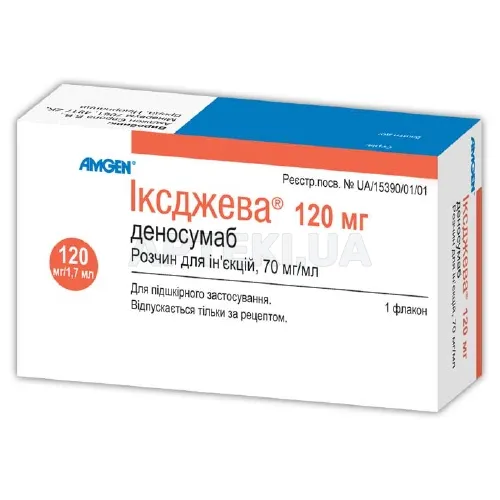
Table of Contents
INSTRUCTIONS FOR MEDICAL USE OF THE MEDICINAL PRODUCT IXDEJWA® (XGEVA®)
Composition:
Active substance: denosumab;
1 ml of solution contains 70 mg of denosumab; 1 vial (1.7 ml) contains 120 mg of denosumab;
Excipients: sorbitol (E 420), glacial acetic acid, sodium hydroxide, polysorbate 20, water for injections.
Pharmaceutical form. Solution for injection.
Main physicochemical properties: clear, colorless or slightly yellow solution, which may contain a small number of protein-like particles ranging from translucent to white.
Pharmacotherapeutic group. Medicinal products for the treatment of bone diseases. Other medicinal products affecting bone structure and mineralization.
ATC code M05BX04.
Pharmacological properties.
Pharmacodynamics.
Mechanism of action
RANKL exists as a transmembrane or soluble protein. RANKL is essential for the formation, function, and survival of osteoclasts – the only cell type responsible for bone resorption. Increased osteoclast activity, stimulated by RANKL, is the primary mediator of bone destruction in metastatic bone disease and multiple myeloma. Denosumab is a human monoclonal antibody (IgG2) that binds with high affinity and specificity to RANKL, thereby preventing the interaction of RANKL with RANK, resulting in reduced number and decreased function of osteoclasts. This leads to reduced cancer-induced bone resorption and destruction.
Giant cell tumor of bone is characterized by expression of RANK ligand by neoplastic stromal cells and RANK by osteoclast-like giant cells. In patients with giant cell tumor of bone, denosumab binds to RANK ligand, substantially reducing or eliminating osteoclast-like giant cells. As a result, osteolysis decreases and the proliferative tumor stroma is replaced by non-proliferative, differentiated fibrous tissue and new bone formation.
Pharmacodynamic effects
In phase II clinical studies in patients with advanced malignancies involving bone, subcutaneous administration of Xgeva® every 4 weeks (Q4W) or every 12 weeks resulted in a rapid reduction in bone resorption markers (uNTx/Cr, serum CTx), with a mean reduction of approximately 80% for uNTx/Cr occurring within 1 week, regardless of prior bisphosphonate therapy or baseline uNTx/Cr levels. In phase III clinical studies in patients with advanced malignancies involving bone, a mean reduction in uNTx/Cr of approximately 80% was maintained up to week 49 of treatment with Xgeva® (120 mg every 4 weeks [Q4W]).
Immunogenicity
In clinical studies, neutralizing antibodies to denosumab were not detected in patients with advanced cancer or giant cell tumor of bone. Using an enzyme immunoassay, < 1% of patients who received denosumab for up to 3 years tested positive for non-neutralizing binding antibodies, with no evidence of altered pharmacokinetics, toxicity, or clinical reactions.
Clinical efficacy and safety in patients with bone metastases from solid tumors
The efficacy and safety of Xgeva® at a dose of 120 mg administered subcutaneously every 4 weeks versus zoledronic acid at a dose of 4 mg (dose adjusted for impaired renal function) administered intravenously every 4 weeks were compared in three randomized, double-blind, active-controlled trials in patients who had not previously received intravenous bisphosphonates and who had advanced malignancies with bone involvement: adults with breast cancer (Study 1), other solid tumors or multiple myeloma (Study 2), and castration-resistant prostate cancer (Study 3). In these active-controlled clinical trials, safety was evaluated in 5931 patients. Patients with a history of osteonecrosis of the jaw (ONJ) or osteomyelitis of the jaw, patients with active dental or jaw disease requiring dental surgical intervention, patients with non-healing wounds following dental or oral surgical procedures, or patients with any planned invasive dental procedures were excluded from these studies. The primary and secondary endpoints assessed the occurrence of one or more skeletal-related events (SREs). In studies demonstrating superior efficacy of Xgeva® compared to zoledronic acid, patients were offered open-label Xgeva® treatment in a pre-specified 2-year extension phase. SREs were defined as follows: pathological fracture (vertebral or non-vertebral), radiation therapy to bone (including use of radiopharmaceuticals), surgery to bone, or spinal cord compression.
Xgeva® reduced the risk of developing SREs and the occurrence of multiple SREs (first and subsequent) in patients with bone metastases from solid tumors (see Table 1).
Table 1. Efficacy results in patients with advanced malignancies involving bone
| Pathology Name/ |
Study 1, Breast Cancer |
Study 2, Other Solid Tumors** or Multiple Myeloma |
Study 3, Prostate Cancer |
Overall Cancer (Pooled Data) |
||||
| Substance |
Xgeva® |
zoledronic acid |
Xgeva® |
zoledronic acid |
Xgeva® |
zoledronic acid |
Xgeva® |
zoledronic acid |
| N |
1026 |
1020 |
886 |
890 |
950 |
951 |
2862 |
2861 |
| First SRE |
||||||||
| Median Time (months) |
NR |
26.4 |
20.6 |
16.3 |
20.7 |
17.1 |
27.6 |
19.4 |
| Difference in median time (months) |
NA |
4.2 |
3.5 |
8.2 |
||||
| HR (95% CI) / RRR (%) |
0.82 (0.71; 0.95) / 18 |
0.84 (0.71; 0.98) / 16 |
0.82 (0.71; 0.95) / 18 |
0.83 (0.76; 0.90) / 17 |
||||
| p-value for non-inferiority / superiority |
< 0.0001† / 0.0101† |
0.0007† / 0.0619† |
0.0002† / 0.0085† |
< 0.0001 / < 0.0001 |
||||
| Proportion of patients (%) |
30.7 |
36.5 |
31.4 |
36.3 |
35.9 |
40.6 |
32.6 |
37.8 |
| First and Subsequent SREs* |
||||||||
| Mean |
0.46 |
0.60 |
0.44 |
0.49 |
0.52 |
0.61 |
0.48 |
0.57 |
| Rate Ratio (95% CI) / RRR (%) |
0.77 (0.66; 0.89) / 23 |
0.90 (0.77; 1.04) / 10 |
0.82 (0.71; 0.94) / 18 |
0.82 (0.75; 0.89) / 18 |
||||
| p-value for superiority |
0.0012† |
0.1447† |
0.0085† |
< 0.0001 |
||||
| SREs per year |
0.45 |
0.58 |
0.86 |
1.04 |
0.79 |
0.83 |
0.69 |
0.81 |
| First SRE or Death |
||||||||
| Median Time (months) |
NR |
25.2 |
19.0 |
14.4 |
20.3 |
17.1 |
26.6 |
19.4 |
| HR (95% CI) / RRR (%) |
0.82 (0.70; 0.95) / 18 |
0.83 (0.71; 0.97) / 17 |
0.83 (0.72; 0.96) / 17 |
0.83 (0.76; 0.90) / 17 |
||||
| p-value for superiority |
0.0074 |
0.0215 |
0.0134 |
< 0.0001 |
||||
| First Bone Radiation |
||||||||
| Median Time (months) |
NR |
NR |
NR |
NR |
NR |
28.6 |
NR |
33.2 |
| HR (95% CI) / RRR (%) |
0.74 (0.59; 0.94) / 26 |
0.78 (0.63; 0.97) / 22 |
0.78 (0.66; 0.94) / 22 |
0.77 (0.69; 0.87) / 23 |
||||
| p-value for superiority |
0.0121 |
0.0256 |
0.0071 |
< 0.0001 |
||||
ND – not reached; DV – data unavailable; HCM – hypercalcaemia of malignancy; SRE – skeletal-related event; HR – hazard ratio; RRR – relative risk reduction
† Adjusted p-values are from studies 1, 2, and 3 (first SRE, as well as endpoints for first and subsequent SREs). * Accounts for all skeletal events over time; only events occurring ≥ 21 days after the previous event are counted.
** Including NSCLC (non-small cell lung cancer), renal cell carcinoma, colorectal cancer, small cell lung cancer, bladder cancer, head and neck cancer, gastrointestinal/genitourinary cancers and other solid tumors, excluding breast cancer and prostate cancer.
Fig. 1. Kaplan–Meier curves for time to first on-study SRE
Disease progression and overall survival in patients with metastatic solid tumors to bone
Disease progression was similar between the Ixjeya® and zoledronic acid groups across all three studies and in the pre-specified pooled analysis of the three studies.
In studies 1, 2, and 3, overall survival was comparable between the Ixjeya® and zoledronic acid groups in patients with advanced stages of malignant tumors involving bone: patients with breast cancer (hazard ratio [95% CI] 0.95 [0.81; 1.11]), patients with prostate cancer (hazard ratio [95% CI] 1.03 [0.91; 1.17]), and patients with other solid tumors or multiple myeloma (hazard ratio [95% CI] 0.95 [0.83; 1.08]). A post-hoc analysis in study 2 (patients with other solid tumors or multiple myeloma) assessed overall survival according to one of three tumor types using stratification (non-small cell lung cancer, multiple myeloma, and others). Overall survival was longer in the Ixjeya® group for non-small cell lung cancer (hazard ratio [95% CI] 0.79 [0.65; 0.95]; n = 702), in the zoledronic acid group for multiple myeloma (hazard ratio [95% CI] 2.26 [1.13; 4.50]; n = 180), and similar in both groups for other tumor types (hazard ratio [95% CI] 1.08 [0.90; 1.30]; n = 894). This study was not controlled for prognostic factors or anticancer treatments. In the pre-specified pooled analysis of studies 1, 2, and 3, overall survival was similar between the Ixjeya® and zoledronic acid groups (hazard ratio [95% CI] 0.99 [0.91; 1.07]).
Effect on pain
Time to pain reduction (i.e., a decrease of ≥ 2 points from baseline on the pain assessment scale of the modified Brief Pain Inventory-Short Form [BPI-SF]) was similar for denosumab and zoledronic acid in each study and in integrated analyses. In a post-hoc analysis of combined data, the median time to pain progression (> 4-point increase on the pain assessment scale) in patients with mild or no pain at baseline was longer in the Ixjeya® group compared to the zoledronic acid group (198 vs. 143 days) (p = 0.0002).
Clinical efficacy in patients with multiple myeloma
In an international, randomized (1:1), double-blind, active-controlled study, Ixjeya® was compared with zoledronic acid in patients with newly diagnosed multiple myeloma (study 4).
In this study, 1718 patients with multiple myeloma and at least one bone lesion were randomized to receive subcutaneous Ixjeya® 120 mg every 4 weeks (Q4W) or intravenous zoledronic acid 4 mg every 4 weeks (dose adjusted according to renal function). The primary endpoint was to demonstrate non-inferiority of Ixjeya® versus zoledronic acid in time to first SRE. Secondary endpoints included superiority in time to first SRE, time to first and subsequent SREs, and overall survival. SREs were defined as: pathological fracture (vertebral or non-vertebral), radiation therapy to bone (including radioisotope use), surgery to bone, or spinal cord compression.
In both study groups, 54.5% of patients underwent autologous peripheral blood stem cell transplantation (PBSC), 95.8% used or planned to use a novel anti-myeloma agent (bortezomib, lenalidomide, or thalidomide) as first-line therapy, and 60.7% had prior SREs. In both groups, the proportion of patients with multiple myeloma at stage I, II, and III according to the International Staging System (ISS) at diagnosis was 32.4%, 38.2%, and 29.3%, respectively.
The median number of administered doses was 16 for Ixjeya® and 15 for zoledronic acid.
Efficacy results from study 4 are presented in Figure 2 and Table 2.
Fig. 2. Kaplan–Meier curves for time to first SRE in patients with newly diagnosed multiple myeloma
Table 2. Efficacy results for Ixjeya® compared with zoledronic acid in patients with newly diagnosed multiple myeloma
| Parameter |
Xgeva® (N = 859) |
Zoledronic Acid (N = 859) |
| First SRE |
||
| Number of patients with SREs (%) |
376 (43.8) |
383 (44.6) |
| Median time to SRE (months) |
22.8 (14.7; NE) |
23.98 (16.56; 33.31) |
| Hazard ratio (95 % CI) |
0.98 (0.85; 1.14) |
|
| First and subsequent SREs |
||
| Mean number of events/patient |
0.66 |
0.66 |
| Rate ratio (95 % CI) |
1.01 (0.89; 1.15) |
|
| Annual incidence of bone events |
0.61 |
0.62 |
| First SRE or death |
||
| Median time (months) |
22.14 (14.26; NE) |
21.32 (13.86; 29.7) |
| Hazard ratio (95 % CI) |
0.98 (0.85; 1.12) |
|
| First bone radiation |
||
| Hazard ratio (95 % CI) |
0.78 (0.53; 1.14) |
|
| Overall survival |
||
| Hazard ratio (95 % CI) |
0.90 (0.70; 1.16) |
|
NO – not suitable for assessment
HCM – hypercalcaemia of malignancy
Clinical efficacy and safety in adults and adolescents with mature skeletal systems who have giant cell tumour of bone
The safety and efficacy of Xgeva® were evaluated in two open-label, non-comparative phase II studies (studies 5 and 6) involving 554 patients with unresectable giant cell tumours of bone or for whom surgical intervention would result in severe morbidity. Xgeva® was administered subcutaneously at a dose of 120 mg every 4 weeks with loading doses of 120 mg on days 8 and 15. After discontinuation of Xgeva® treatment, patients entered a follow-up phase of at least 60 months to assess drug safety. Re-initiation of Xgeva® treatment during the safety follow-up period was permitted for study participants who had shown an initial response to Xgeva® (e.g., in case of disease recurrence).
Study 5 included 37 adult patients with histologically confirmed unresectable or recurrent giant cell tumours of bone. The primary endpoint was objective response, defined as elimination of giant cells by at least 90% compared to baseline (or complete elimination of giant cells if their proportion was less than 5% of tumour cells), or absence of progression of the target tumour lesion confirmed by radiographic imaging in the absence of histopathological data. Among the 35 patients included in the efficacy analysis, 85.7% (95% CI: 69.7; 95.2) responded to Xgeva® treatment. All 20 patients (100%) with available histopathological data met the response criteria. Among the remaining 15 patients, 10 (67%) showed no progression of the target tumour lesion based on radiographic assessments.
Study 6 included 535 adults or adolescents with mature skeletal systems who had giant cell tumour of bone. The age of 28 patients in this group ranged from 12 to 17 years. Patients were assigned to one of three cohorts: Cohort 1 included patients with non-resectable disease (e.g., sacral, spinal, or multiple tumour lesions, including lung metastases); Cohort 2 included patients with resectable disease for whom planned surgery would result in severe morbidity (e.g., joint resection, limb amputation, or hemipelvectomy); Cohort 3 included patients who transitioned into this study from Study 5. The primary objective was to evaluate the safety profile of denosumab in patients with giant cell tumour of bone. Secondary endpoints included: for Cohort 1 – time to disease progression (investigator-assessed); for Cohort 2 – proportion of patients who did not undergo any surgical intervention by month 6.
In the final analysis of Cohort 1, disease progression was observed in 28 of 260 treated patients (10.8%). In Cohort 2, 219 of 238 (92.0% CI, 95% CI: 87.8%, 95.1%) evaluable patients who received Xgeva® treatment did not undergo surgical intervention by month 6. In Cohort 2, 82 (34.3%) of 239 patients whose target tumour lesion was located outside the lungs and soft tissues at baseline or during study participation did not undergo surgery during the study. Overall, efficacy results in adolescents with mature skeletal systems and adults were similar.
Effect on pain
In the final analysis of the combined group from Cohorts 1 and 2, clinically meaningful reduction in severe pain (i.e., a decrease of ≥ 2 points from baseline) was reported in 30.8% of at-risk patients (i.e., those with the worst severe pain score ≥ 2 at baseline) within 1 week of treatment initiation and in ≥ 50% by week 5. This pain reduction was maintained at all subsequent assessments.
Paediatric population
The European Medicines Agency has deferred the obligation to submit the results of studies with Xgeva® in all paediatric subpopulations for the prevention of skeletal events in patients with bone metastases and in paediatric subpopulations under 12 years of age for the treatment of giant cell tumours of bone (see section "Posology and method of administration" for information on paediatric use).
In Study 6, Xgeva® was evaluated in a subgroup of 28 adolescents (aged 13 to 17 years) with giant cell tumours of bone and mature skeletal systems. Maturity was defined by completion of maturation of at least one long bone (e.g., closure of the humeral epiphyseal growth plate) and body weight ≥ 45 kg. One adolescent with non-resectable disease (N = 14) experienced recurrence during initial treatment. Of the 14 patients with resectable disease associated with severe surgical morbidity, 13 did not undergo surgical treatment by month 6.
Pharmacokinetics
Absorption
After subcutaneous administration, bioavailability was 62%.
Biotransformation
Denosumab consists solely of amino acids and carbohydrates, similar to natural immunoglobulins. Therefore, it is unlikely to be eliminated via hepatic metabolism. Its metabolism and elimination are believed to occur via the same pathways as immunoglobulin clearance, resulting in the breakdown of small proteins into individual amino acids.
Elimination
In patients with advanced cancer receiving multiple doses of 120 mg every 4 weeks, serum concentrations of denosumab increased nearly twofold, with steady-state achieved by 6 months, consistent with time-independent pharmacokinetics. In patients with multiple myeloma receiving 120 mg every 4 weeks, median trough concentrations differed by less than 8% at months 6 and 12. In patients with giant cell tumours of bone receiving 120 mg every 4 weeks with loading doses on days 8 and 15, steady-state levels were achieved within the first month of treatment. At weeks 9 and 49, median trough concentrations differed by less than 9%. In patients who discontinued 120 mg every 4 weeks, the mean elimination half-life was 28 days (range: 14–55 days).
Population pharmacokinetic analysis did not indicate clinically relevant changes in systemic exposure to denosumab at steady-state based on age (18–87 years), race/ethnicity (Black, Hispanic, Asian, and Caucasian patients), patient sex, types of solid tumours, or presence of multiple myeloma. Increased body weight was associated with decreased systemic exposure and vice versa. These changes were not considered clinically relevant, as pharmacodynamic effects based on bone remodelling markers were consistent across a wide range of body weights.
Linearity/Non-linearity
Denosumab exhibits non-linear pharmacokinetics over a wide dose range, but nearly dose-proportional increases in exposure were observed for doses of 60 mg (or 1 mg/kg) and higher. The non-linearity is most likely due to a target-mediated elimination pathway that becomes saturated at low concentrations.
Renal impairment
In studies of denosumab in patients (60 mg, n = 55 and 120 mg, n = 32) without advanced-stage cancer but with varying degrees of renal function, including patients on dialysis, the degree of renal impairment did not affect the pharmacokinetics of denosumab; therefore, no dose adjustment is required in renal impairment. Monitoring of renal function is not required during Xgeva® treatment.
Hepatic impairment
No specific studies have been conducted in patients with hepatic impairment. Generally, monoclonal antibodies are not eliminated via hepatic metabolism. Hepatic impairment is not expected to influence the pharmacokinetics of denosumab.
Elderly patients
There were no notable differences in safety or efficacy between elderly and younger patients. Controlled clinical studies of Xgeva® in patients aged 65 years and older with advanced malignancies involving bone demonstrated similar efficacy and safety profiles in older and younger patients. No dose adjustment is required for elderly patients.
Paediatric population
In adolescents with mature skeletal systems (aged 12 to 17 years) with giant cell tumour of bone receiving 120 mg every 4 weeks with loading doses on days 8 and 15, the pharmacokinetics of denosumab were comparable to those observed in adult patients with giant cell tumour of bone.
Preclinical safety data
Because the biological activity of denosumab is specific to primates, genetically modified mice (knockout technology) or other biological inhibitors of the RANK/RANKL pathway, such as OPG-Fc and RANK-Fc, were used to evaluate the pharmacodynamic properties of denosumab in rodent models.
In mouse models of bone metastases from oestrogen receptor-positive and -negative breast cancer, prostate cancer, and non-small cell lung cancer, OPG-Fc reduced osteolytic, osteoblastic, and mixed osteolytic/osteoblastic bone destruction, delayed the formation of de novo bone metastases, and inhibited tumour growth in bone. When OPG-Fc was combined with hormonal therapy (tamoxifen) or chemotherapy (docetaxel), additional suppression of bone tumour growth was observed in breast, prostate, and lung cancer, respectively. In a mouse model of induced breast cancer, RANK-Fc reduced hormone-mediated mammary epithelial proliferation and delayed tumour formation.
Standard tests to assess the genotoxic potential of denosumab were not performed, as such tests are not relevant for this molecule. However, it is unlikely that denosumab has any genotoxic potential.
The carcinogenic potential of denosumab has not been evaluated in long-term animal studies.
In single- and repeat-dose toxicity studies in cynomolgus monkeys, doses of denosumab that resulted in systemic exposure 2.7–15 times higher than the recommended human dose had no effect on cardiovascular physiology, male or female reproductive function, or on specific organ-target toxicity.
In a study in cynomolgus monkeys treated with denosumab during a period equivalent to the first trimester of human pregnancy, doses resulting in systemic exposure 9 times higher than the recommended human dose did not cause maternal or fetal toxicity during the first trimester equivalent period, although fetal lymph nodes were not examined.
In another study in cynomolgus monkeys treated throughout pregnancy with systemic exposure 12 times higher than the human dose, increased stillbirths and postnatal mortality were observed, along with pathological bone growth leading to reduced bone strength, decreased haematopoiesis, and malocclusion; absence of peripheral lymph nodes; and delayed neonatal growth. The maximum dose that did not cause observable adverse effects was not established. After 6 months postpartum, bone-related changes returned to normal, and no effect on tooth eruption was observed. However, effects on lymph nodes and malocclusion persisted, and one animal showed minimal to moderate mineralisation of multiple tissues (relationship to treatment not clear). There was no evidence of maternal harm prior to delivery; adverse reactions in mothers occurred infrequently during delivery. Mammary gland development in mothers was normal.
In preclinical bone quality studies in monkeys, prolonged denosumab treatment was associated with reduced remodelling, improved bone strength, and normal bone histological parameters.
In male mice genetically modified to express huRANKL (knock-in mice) subjected to trans-cortical fracture, denosumab delayed cartilage callus organisation and bone callus remodelling compared to controls, but biomechanical strength was not adversely affected.
In preclinical studies, mice with blocked RANK or RANKL genes failed to lactate due to impaired mammary gland maturation (lobuloalveolar development during pregnancy) and showed impaired lymph node formation. Newborn mice with blocked RANK/RANKL genes showed reduced body weight, impaired bone growth, growth plate abnormalities, and absence of tooth eruption. Impaired bone growth, growth plate abnormalities, and absence of tooth eruption were also observed in newborn rats treated with RANKL inhibitors, and these changes were partially reversible after discontinuation of RANKL inhibition. In adolescent primates treated with denosumab at doses 2.7 and 15 times higher (10 and 50 mg/kg) than the clinical dose, pathological changes in growth plates were observed. Thus, denosumab treatment may impair bone growth in children with open growth plates and may suppress tooth eruption.
Clinical characteristics.
Indications.
Prevention of skeletal events (pathological fracture, radiation to bone, spinal cord compression, or surgical intervention on bone) in adult patients with advanced stage malignancies involving bone (see section "Pharmacodynamics").
Treatment of adults and adolescents with mature skeletal systems who have giant cell tumor of bone that is unresectable or where surgical resection is likely to result in severe morbidity.
Contraindications.
Hypersensitivity to the active substance or to any of the excipients listed in the section "Composition".
Severe, untreated hypocalcemia (see section "Special precautions").
Non-healing oral surgical or dental procedures.
Interaction with other medicinal products and other forms of interaction.
Interaction studies have not been conducted. In clinical studies, Xgeva® was administered in combination with standard anti-cancer therapy and in patients previously treated with bisphosphonates. There were no clinically significant changes in trough serum concentrations or pharmacodynamics of denosumab (urine N-telopeptide corrected for creatinine, uNTx/Cr) when chemotherapy and/or hormonal therapy were administered concomitantly, or following prior intravenous bisphosphonate administration.
Special precautions for use.
Calcium and vitamin D supplementation. Calcium and vitamin D supplementation is required for all patients, except patients with hypercalcemia (see section "Dosage and administration").
Hypocalcemia. Pre-existing hypocalcemia must be corrected prior to initiating treatment with Xgeva®. Hypocalcemia may occur at any time during treatment with Xgeva®. Monitoring of calcium levels should be performed prior to the first dose of Xgeva®, within two weeks after the initial dose, and whenever symptoms suggestive of hypocalcemia occur (see section "Adverse reactions" for symptoms). Additional monitoring of calcium levels should be considered during treatment in patients with risk factors for hypocalcemia or in other cases depending on the patient's clinical condition.
Patients should be advised to report symptoms indicative of hypocalcemia. If hypocalcemia occurs during treatment with Xgeva®, additional calcium supplementation and further monitoring of calcium levels may be required.
During post-marketing use, severe symptomatic hypocalcemia (including fatal cases) has been reported (see section "Adverse reactions"), with most cases occurring within the first weeks of treatment initiation, although cases may also occur later.
Renal impairment. Patients with severe renal impairment (creatinine clearance < 30 mL/min) or patients on dialysis are at increased risk of developing hypocalcemia. The risk of hypocalcemia and associated elevation of parathyroid hormone levels increases with the severity of renal impairment. Continuous monitoring of calcium levels is particularly important in these patients.
Osteonecrosis of the jaw (ONJ). ONJ has been frequently reported in patients receiving Xgeva® (see section "Adverse reactions").
Initiation of treatment or a new course of treatment should be delayed in patients with unhealed open soft tissue lesions in the oral cavity. A dental examination with appropriate preventive dental treatment and individual benefit-risk assessment is recommended prior to starting denosumab therapy.
The following risk factors should be considered when assessing the risk of ONJ in a patient:
- Potency of the antiresorptive agent (higher risk with more potent agents), route of administration (higher risk with parenteral administration), and cumulative dose of antiresorptive agents used;
- Cancer, concomitant conditions (e.g., anemia, coagulopathy, infection), tobacco smoking;
- Concomitant therapy: corticosteroids, chemotherapy, angiogenesis inhibitors, head and neck radiation therapy;
- Poor oral hygiene, periodontal disease, ill-fitting dentures, presence of dental disease, invasive dental procedures (e.g., tooth extraction).
All patients should maintain adequate oral hygiene, undergo regular dental examinations, and promptly report any oral symptoms such as tooth mobility, pain or swelling, non-healing or draining ulcers during denosumab treatment. Invasive dental procedures should only be performed after careful consideration during treatment and should be avoided immediately prior to initiating Xgeva®.
Management of individual patients who develop ONJ should be planned in close collaboration between the treating physician and a dentist or oral and maxillofacial surgeon experienced in managing ONJ. Temporary discontinuation of Xgeva® should be considered until the condition resolves and, if possible, precipitating factors should be minimized.
Osteonecrosis of the external auditory canal. Osteonecrosis of the external auditory canal has been reported with denosumab use. Possible risk factors for this condition include steroid use, chemotherapy, and local risk factors such as infections and trauma. Osteonecrosis of the external auditory canal should be considered in patients receiving denosumab who present with symptoms related to the auditory organs, including chronic ear infections.
Atypical femoral fractures. Atypical femoral fractures have been reported in patients receiving denosumab (see section "Adverse reactions"). Atypical femoral fractures may occur with minimal or no trauma in the subtrochanteric or diaphyseal region of the femur. Specific radiographic findings characterize these events. Atypical femoral fractures have also been reported in patients with certain comorbidities (e.g., vitamin D deficiency, rheumatoid arthritis, hypophosphatasia) and with the use of certain medications (e.g., bisphosphonates, glucocorticoids, proton pump inhibitors). These events have also occurred without antiresorptive therapy. Similar fractures reported with bisphosphonate use are often bilateral; therefore, the contralateral femur should be examined in patients receiving denosumab who have a confirmed femoral shaft fracture. Discontinuation of Xgeva® should be considered in patients suspected of having an atypical femoral fracture, based on individual benefit-risk assessment. Patients receiving denosumab should be advised to report new or unusual pain in the hip, groin, or thigh. Patients with such symptoms should be evaluated for incomplete femoral fractures.
Hypercalcemia following discontinuation of treatment in patients with giant cell tumor of bone and in patients with growing skeleton. Clinically significant hypercalcemia requiring hospitalization and complicated by acute kidney injury has been reported after discontinuation of Xgeva® in patients with giant cell tumor of bone, occurring weeks or months after stopping treatment.
After discontinuation of treatment, patients should be monitored for signs and symptoms of hypercalcemia with periodic measurement of serum calcium levels and reassessment of the need for continued calcium and vitamin D supplementation (see section "Adverse reactions").
Xgeva® is not recommended for patients with a growing skeleton (see section "Dosage and administration"). Clinically significant hypercalcemia has also been reported in this patient group, occurring weeks to months after discontinuation of treatment.
Other conditions. Patients receiving Xgeva® should not concurrently receive other medicinal products containing denosumab (e.g., for osteoporosis).
Patients receiving Xgeva® should not concurrently receive bisphosphonates.
Malignant transformation of giant cell tumor or progression with metastasis is rare but a known risk in patients with giant cell tumor of bone. Patients should be monitored for radiological signs of malignancy, new areas of lucency, or osteolysis. Available clinical data do not indicate an increased risk of malignancy in patients with giant cell tumor of bone treated with Xgeva®.
Warnings regarding excipients. This medicinal product contains sorbitol. Patients with rare hereditary problems of fructose intolerance should not take this medicinal product.
This medicinal product contains less than 1 mmol sodium (23 mg) per 120 mg, i.e., essentially "sodium-free".
Use during pregnancy or breastfeeding.
Pregnancy. There are insufficient data on the use of denosumab in pregnant women. Reproductive toxicity has been demonstrated in animal studies (see section "Non-clinical safety data").
Xgeva® is not recommended for use in pregnant women or in women of reproductive potential who are not using contraception. Women should be advised to avoid pregnancy during treatment with Xgeva® and for at least 5 months thereafter. Any effects of Xgeva® are likely to be more pronounced during the second and third trimesters of pregnancy, as monoclonal antibodies cross the placenta more readily in a linear fashion as pregnancy progresses, with the greatest transfer occurring during the third trimester.
Breastfeeding. It is unknown whether denosumab is excreted in human breast milk. A risk to newborns/infants cannot be excluded. Knockout mouse studies have shown that the absence of RANKL during pregnancy may affect mammary gland maturation, leading to impaired lactation after delivery (see section "Non-clinical safety data"). A decision must be made whether to discontinue breastfeeding or to discontinue therapy with Xgeva®, taking into account the benefit of breastfeeding for the child and the benefit of Xgeva® therapy for the woman.
Fertility. There are no data on the effect of denosumab on human fertility. Animal studies have not shown direct or indirect harmful effects on fertility (see section "Non-clinical safety data").
Effect on ability to drive and use machines.
Xgeva® has no effect or has a negligible effect on the ability to drive and use machines.
Administration and Dosage
Xgeva® should be administered under the supervision of a physician.
Dosing
A daily dietary supplement of at least 500 mg of calcium and 400 IU of vitamin D is recommended, except in cases of hypercalcemia (see section "Special Precautions").
Prevention of skeletal-related events in adults with advanced malignancies involving bone. The recommended dose of Xgeva® is 120 mg administered as a subcutaneous injection every 4 weeks in the thigh, abdominal wall, or upper arm.
Giant cell tumor of bone. The recommended dose of Xgeva® is 120 mg administered as a subcutaneous injection every 4 weeks in the thigh, abdominal wall, or upper arm, with additional doses of 120 mg on day 8 and day 15 of the first month of treatment.
In a Phase II study, patients who underwent complete resection of giant cell tumor of bone received additional treatment for 6 months post-surgery according to the study protocol.
Patients with giant cell tumor of bone should be regularly evaluated to determine whether they continue to benefit from treatment. The effect of interrupting or temporarily discontinuing treatment in patients whose disease is controlled by Xgeva® has not been studied; however, limited data in these patients do not suggest a rebound effect after temporary discontinuation of treatment.
Renal impairment. No dose adjustment is required in patients with renal impairment (see section "Special Precautions" for recommendations on monitoring calcium levels, section "Adverse Reactions," and subsection "Pharmacokinetics").
Hepatic impairment. The safety and efficacy of denosumab in patients with hepatic impairment have not been studied (see subsection "Pharmacokinetics").
Elderly patients (age ≥ 65 years). No dose adjustment is necessary for elderly patients (see subsection "Pharmacokinetics").
Administration method
For subcutaneous use only.
- Prior to administration, visually inspect the Xgeva® solution. The solution may contain a small amount of transparent or white, protein-like particles. Do not administer if the solution is cloudy or discolored.
- Do not shake.
- To minimize injection site discomfort, allow the vial to warm to room temperature (up to 25°C) and administer the solution slowly.
- Administer the entire contents of the vial.
- A 27-gauge needle is recommended for administration of denosumab.
- Do not re-puncture the vial with a needle.
Any unused medicinal product or waste material must be disposed of in accordance with local requirements.
Pediatric population
The safety and efficacy of Xgeva® in children (under 18 years of age) have not been established, except in adolescents with mature skeletal systems (aged 12 to 17 years) who have giant cell tumor of bone.
Xgeva® is not recommended for use in children under 18 years of age, except in adolescents with mature skeletal systems (aged 12 to 17 years) with giant cell tumor of bone (see section "Special Precautions").
Treatment of adolescents with mature skeletal systems who have unresectable giant cell tumor of bone or for whom surgical resection is likely to result in severe morbidity: the dose is the same as that for adults.
In animal studies, inhibition of RANK/RANKL (receptor activator of nuclear factor kappa-B ligand) was associated with suppressed bone growth and failure of tooth eruption; these changes were partially reversible after cessation of RANKL inhibition (see subsection "Non-clinical Safety Data").
Overdose
There is no clinical experience with overdose. Xgeva® has been administered in clinical studies at doses up to 180 mg every 4 weeks and 120 mg every 3 weeks.
Adverse Reactions
Summary of Safety Profile
The overall safety profile is consistent across all approved indications for the medicinal product Xgeva®.
Hypocalcemia was reported very commonly following administration of Xgeva®, primarily within the first two weeks. Hypocalcemia could be severe and symptomatic (see section "Description of Selected Adverse Reactions"). Decreased serum calcium levels were generally managed effectively with calcium and vitamin D supplementation. The most commonly reported adverse reaction during treatment with Xgeva® was musculoskeletal pain. Osteonecrosis of the jaw was frequently reported in patients receiving Xgeva® (see section "Special Warnings and Precautions for Use" and "Description of Selected Adverse Reactions").
Summary Table of Adverse Reactions
Classification of adverse reactions reported in four Phase III clinical studies, two Phase II clinical studies, and during post-marketing use (see Table 3): very common (≥ 1/10), common (≥ 1/100 to < 1/10), uncommon (≥ 1/1,000 to < 1/100), rare (≥ 1/10,000 to < 1/1,000), very rare (< 1/10,000), and frequency not known (cannot be estimated from the available data). Within each frequency category and system organ class, adverse reactions are listed in order of decreasing severity.
Table 3. Adverse Reactions Reported in Patients with Advanced Malignancies Involving Bone, Multiple Myeloma, or Giant Cell Tumor of Bone
| MedDRA System Organ Class |
Frequency category |
Adverse reactions |
| Benign, malignant and unspecified neoplasms (including cysts and polyps) |
Common |
New primary malignant neoplasm1 |
| Immune system disorders |
Uncommon |
Drug hypersensitivity1 Anaphylactic reaction1 |
| Metabolism and nutrition disorders |
Very common |
Hypocalcemia1, 2 |
| Common |
Hypophosphatemia |
|
| Uncommon |
Hypercalcemia after discontinuation of treatment in patients with giant cell tumor of bone3 |
|
| Respiratory, thoracic and mediastinal disorders |
Very common |
Dyspnea |
| Gastrointestinal disorders |
Very common |
Diarrhea |
| Common |
Tooth extraction |
|
| Skin and subcutaneous tissue disorders |
Common |
Hyperhidrosis |
| Uncommon |
Drug-induced lichenoid eruption1 |
|
| Musculoskeletal and connective tissue disorders |
Very common |
Musculoskeletal pain1 |
| Common |
Osteonecrosis of the jaw1 |
|
| Uncommon |
Atypical femoral fracture1 |
|
| Frequency not known |
Osteonecrosis of the external auditory canal3, 4 |
1 See section "Description of individual adverse reactions".
2 See section "Other special patient groups".
3 See section "Special warnings and precautions for use".
4 Effect typical for this class of medicinal products.
Description of individual adverse reactions
Hypocalcaemia. A higher incidence of hypocalcaemia was observed in clinical trials for prevention of skeletal-related events (SREs) in patients receiving denosumab compared to patients receiving zoledronic acid.
The highest incidence of hypocalcaemia was observed in a phase III trial in patients with multiple myeloma. Hypocalcaemia occurred in 16.9% of patients receiving Xgeva®, and in 12.4% of patients receiving zoledronic acid. Grade 3 reductions in serum calcium occurred in 1.4% and 0.6% of patients receiving Xgeva® and zoledronic acid, respectively, and grade 4 reductions occurred in 0.4% and 0.1% of patients, respectively.
In three phase III active-controlled clinical trials involving patients with advanced malignancies with bone metastases, hypocalcaemia was reported in 9.6% of patients receiving Xgeva® and in 5.0% of patients receiving zoledronic acid.
Grade 3 reductions in serum calcium occurred in 2.5% of patients receiving Xgeva® and in 1.2% of patients receiving zoledronic acid. Grade 4 reductions in serum calcium occurred in 0.6% of patients receiving Xgeva® and in 0.2% of patients receiving zoledronic acid (see section "Special warnings and precautions for use").
In two phase II single-arm clinical trials, hypocalcaemia was reported in 5.7% of patients with giant cell tumour of bone. None of the adverse reactions were considered serious.
In the post-marketing period, severe symptomatic hypocalcaemia (including fatal cases) has been reported, with most cases occurring within the first weeks after initiation of treatment. Clinical manifestations of severe symptomatic hypocalcaemia included QT interval prolongation, tetany, seizures, and mental status changes (including coma) (see section "Special warnings and precautions for use"). Symptoms of hypocalcaemia observed in clinical trials included paraesthesia or muscle stiffness, muscle twitching, spasms, and muscle cramps.
Osteonecrosis of the jaw (ONJ). In clinical trials, the incidence of ONJ was higher with longer exposure to the drug; ONJ was also diagnosed after discontinuation of Xgeva®, with most cases occurring within 5 months after the last dose. Patients with a history of ONJ or osteomyelitis of the jaw, active dental or jaw conditions requiring surgical intervention, non-healing oral wounds following dental/surgical procedures, or patients with any planned invasive dental procedures were excluded from clinical trials.
A higher incidence of ONJ was observed in clinical trials for prevention of SREs in patients receiving denosumab compared to zoledronic acid. The highest incidence of ONJ occurred in a phase III trial in patients with multiple myeloma. In the double-blind treatment phase of this trial, ONJ was confirmed in 5.9% of patients receiving Xgeva® (median exposure 19.4 months; range: 1–52) and in 3.2% of patients receiving zoledronic acid. At the end of the double-blind treatment phase, the patient-year adjusted incidence rate of confirmed ONJ cases in the Xgeva® group (median exposure 19.4 months; range: 1–52) was 2.0 per 100 patient-years during the first year of treatment, 5.0 during the second year, and 4.5 in subsequent years. The median time to onset of ONJ was 18.7 months (range: 1–44).
In the primary treatment phases of three active-controlled phase III clinical trials involving patients with advanced malignancies with bone metastases, ONJ was confirmed in 1.8% of patients receiving Xgeva® (mean exposure 12 months; range: 0.1–40.5) and in 1.3% of patients receiving zoledronic acid. Clinical characteristics of these cases were similar between treatment groups. In most patients with confirmed ONJ (81% in both treatment groups), a history of tooth extraction, poor oral hygiene, and/or denture use was reported. Most patients were receiving or had previously received chemotherapy.
A study in patients with breast or prostate cancer included an extended treatment phase with Xgeva® (mean total exposure 14.9 months; range: 0.1–67.2). ONJ was confirmed in 6.9% of patients with breast or prostate cancer during the extended treatment phase.
The patient-year adjusted incidence rate of confirmed ONJ cases was 1.1 per 100 patient-years during the first year of treatment, 3.7 during the second year, and 4.6 in subsequent years. The median time to onset of ONJ was 20.6 months (range: 4–53).
Data from a non-randomized, retrospective observational study involving 2,877 patients with malignancies treated with Xgeva® or zoledronic acid in Sweden, Denmark, and Norway showed that the 5-year incidence of confirmed ONJ was 5.7% (95% CI: 4.4, 7.3; median observation time: 20 months [range 0.2–60]) in the Xgeva® cohort and 1.4% (95% CI: 0.8, 2.3; median observation time: 13 months [range 0.1–60]) in the separate zoledronic acid cohort. The 5-year incidence of ONJ in patients who switched to Xgeva® after receiving zoledronic acid was 6.6% (95% CI: 4.2, 10.0; median observation time: 13 months [range 0.2–60]).
In a phase III clinical trial in patients with non-metastatic prostate cancer (a condition for which Xgeva® is not indicated), with prolonged exposure up to 7 years of treatment, the patient-year adjusted incidence of confirmed ONJ was 1.1 per 100 patient-years during the first year of treatment, 3.0 during the second year, and 7.1 in subsequent years.
In a long-term open-label phase II clinical trial in patients with giant cell tumour of bone (Study 6, see section "Pharmacodynamics"), ONJ was confirmed in 6.8% of patients, including one adolescent (median number of doses: 34; range: 4–116). At study completion, the median duration of participation in the study, including the follow-up phase, was 60.9 months (range: 0–112.6). The patient-year adjusted overall incidence of confirmed ONJ was 1.5 per 100 patient-years (0.2 per 100 patient-years during the first year of treatment, 1.5 during the second year, 1.8 during the third year, 2.1 during the fourth year, 1.4 during the fifth year, and 2.2 in subsequent years). The median time to onset of ONJ was 41 months (range: 11–96).
Drug-related hypersensitivity reactions. In the post-marketing setting, hypersensitivity reactions, including rare cases of anaphylactic reactions, have been reported in patients receiving Xgeva®.
Atypical femoral fractures. In the clinical trial programme in patients receiving Xgeva®, atypical femoral fractures were infrequently reported, with risk increasing with longer duration of treatment. These events occurred during treatment and up to 9 months after discontinuation of treatment (see section "Special warnings and precautions for use").
Musculoskeletal pain. In the post-marketing setting, musculoskeletal pain, including severe cases, has been reported in patients receiving Xgeva®. In clinical trials, musculoskeletal pain was very commonly reported in both denosumab and zoledronic acid groups, although it rarely led to discontinuation of the drug.
New primary malignancy. In the primary phases of four active-controlled phase III clinical trials involving patients with advanced malignancies involving bone, primary malignancies were observed in 54 of 3,691 (1.5%) patients receiving Xgeva® (median exposure 13.8 months; range: 1.0–51.7) and in 33 of 3,688 (0.9%) patients receiving zoledronic acid (median exposure 12.9 months; range: 1.0–50.8).
The cumulative incidence at one year was 1.1% for denosumab and 0.6% for zoledronic acid.
No treatment-related pattern was observed for individual cancer types or cancer distribution across groups.
Drug-induced lichenoid eruptions. Drug-induced lichenoid eruptions (e.g., reactions resembling lichen planus) have been observed in patients during the post-marketing period.
Paediatric population
Xgeva® was studied in an open-label trial involving 28 adolescents with mature skeletal systems who had giant cell tumour of bone. Based on these limited data, the adverse reaction profile was similar to that in adults.
In the post-marketing period, clinically significant hypercalcaemia after discontinuation of treatment has been reported in children (see section "Special warnings and precautions for use").
Other special patient groups
Renal impairment
In a clinical trial in patients without advanced cancer and with severe renal impairment (creatinine clearance < 30 mL/min) or patients on dialysis, a higher risk of hypocalcaemia was observed in the absence of calcium supplementation. The risk of developing hypocalcaemia during treatment with Xgeva® increases with the severity of renal impairment. In a clinical trial involving patients without advanced cancer, hypocalcaemia occurred in 19% of patients with severe renal impairment (creatinine clearance < 30 mL/min) and in 63% of patients on haemodialysis, despite calcium supplementation. The overall incidence of clinically significant hypocalcaemia was 9%.
Concomitant elevations in parathyroid hormone levels were also observed in patients receiving Xgeva® who had severe renal impairment or were on dialysis. Monitoring of calcium levels and adequate intake of calcium and vitamin D are particularly necessary for patients with renal impairment (see section "Special warnings and precautions for use").
Reporting of suspected adverse reactions
It is important to report suspected adverse reactions after marketing authorisation. This allows continued monitoring of the benefit-risk balance of the medicinal product. Healthcare professionals are required to report any suspected adverse reactions via the national reporting system.
Shelf life.
3 years.
Storage conditions.
Store in a refrigerator at 2–8 °C in the original packaging to protect from light. Do not freeze. Do not shake. Keep out of the reach of children. After removal from the refrigerator, Xgeva® can be stored at room temperature (up to 25 °C) in the original packaging for no more than 30 days and should be used within these 30 days.
Incompatibilities.
Since compatibility studies with other medicinal products have not been conducted, this medicinal product must not be mixed with or used concurrently with other medicinal products.
Packaging.
1.7 mL (70 mg/mL) solution for injection in a vial made of Type I glass (complies with European Pharmacopoeia requirements), with a fluoropolymer laminated elastomeric stopper and an aluminium seal with a protective plastic cap. One vial in a cardboard box.
Prescription status.
Prescription only.
Manufacturer.
Amgen Europe B.V.
Manufacturer's address.
Minervum 7061, 4817 ZK, Breda, The Netherlands.