Ibufen® for children strawberry
Ukraine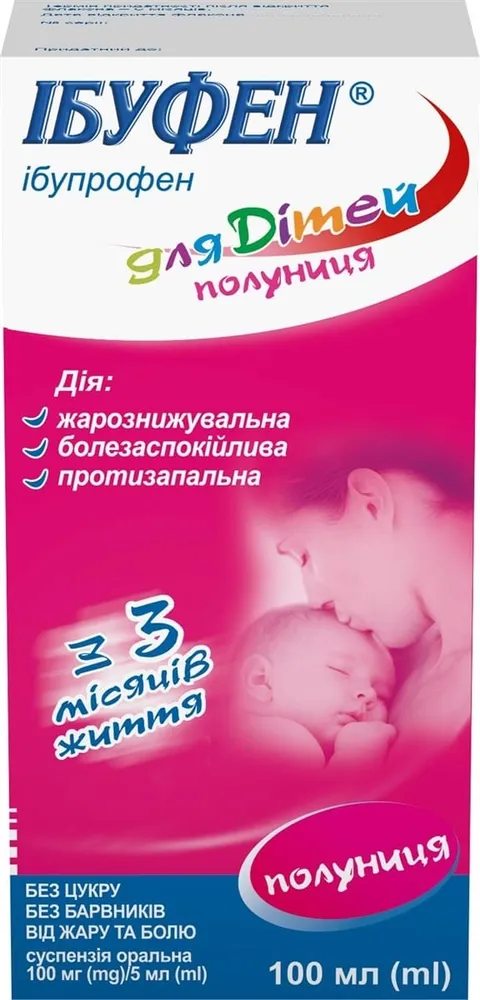
Table of Contents
INSTRUCTIONS FOR MEDICAL USE OF THE MEDICINAL PRODUCT IBUFEN® for children strawberry (IBUFEN for children strawberry)
Composition:
Active substance: ibuprofenum;
5 ml of suspension contain 100 mg of ibuprofen;
Excipients: hypromellose, xanthan gum, glycerin, sodium benzoate (E 211), maltitol liquid, sodium citrate, citric acid monohydrate, sodium saccharin, sodium chloride, strawberry flavor, purified water.
Pharmaceutical form. Oral suspension.
Main physicochemical properties: white or almost white suspension with uniform opalescence and a strawberry odor.
Pharmacotherapeutic group. Non-steroidal anti-inflammatory and antirheumatic drugs. Propionic acid derivatives. ATC code M01AE01.
Pharmacological properties.
Pharmacodynamics.
Ibuprofen is a nonsteroidal anti-inflammatory drug (NSAID), a derivative of propionic acid, which has demonstrated efficacy by inhibiting the synthesis of prostaglandins. In humans, ibuprofen reduces pain associated with inflammation, swelling, and fever. Ibuprofen exerts analgesic, antipyretic, and anti-inflammatory effects. The onset of analgesic and antipyretic action of ibuprofen has been shown to occur within 30 minutes. In addition, ibuprofen reversibly inhibits platelet aggregation.
Experimental data indicate that ibuprofen may inhibit the effect of low-dose acetylsalicylic acid (aspirin) on platelet aggregation when these drugs are used concomitantly. In a study, when a single dose of ibuprofen 400 mg was taken within 8 hours before or within 30 minutes after immediate-release aspirin (81 mg), a reduced effect of acetylsalicylic acid on thromboxane formation or platelet aggregation was observed. However, the limited nature of these data and uncertainty regarding extrapolation of ex vivo data to clinical outcomes preclude definitive conclusions about the systematic use of ibuprofen. Therefore, with occasional use of ibuprofen, such clinically significant effects are considered unlikely.
Pharmacokinetics.
Ibuprofen is rapidly absorbed after administration and quickly distributed throughout the body. Elimination is rapid and complete, occurring via the kidneys.
Maximum plasma concentrations are achieved within 45 minutes after oral administration on an empty stomach. When administered with food, peak levels are observed within 1–2 hours. This time may vary depending on different pharmaceutical forms.
The elimination half-life is approximately 2 hours.
In limited studies, ibuprofen has been detected in breast milk at very low concentrations.
Clinical characteristics.
Indications.
Symptomatic treatment of fever and pain of various origins in children aged 3 months to 12 years with body weight of at least 5 kg (including post-vaccination fever, acute respiratory viral infections, influenza, teething pain, pain after tooth extraction, dental pain, headache, sore throat, pain due to ligament sprains, and other types of pain, including those of inflammatory origin).
Contraindications.
Hypersensitivity to ibuprofen or other nonsteroidal anti-inflammatory drugs (NSAIDs), or to any component of the medicine.
History of hypersensitivity reactions (e.g., bronchospasm, bronchial asthma, rhinitis, angioedema, or urticaria) following administration of ibuprofen, acetylsalicylic acid (aspirin), or other NSAIDs.
Active peptic ulcer/gastric or duodenal ulcer/bleeding, or history of recurrence (two or more documented episodes of peptic ulcer disease or gastrointestinal bleeding).
History of gastrointestinal bleeding or gastrointestinal tract perforation associated with previous use of NSAIDs.
Severe hepatic insufficiency, renal insufficiency, or severe heart failure (NYHA functional class IV).
Severe dehydration (caused by vomiting, diarrhea, or inadequate fluid intake).
Third trimester of pregnancy.
Cerebrovascular or other bleeding disorders.
Unexplained disturbances in blood formation or coagulation, hemorrhagic diathesis, thrombocytopenia.
Hereditary fructose intolerance.
Interaction with other medicinal products and other forms of interaction.
Ibuprofen, like other NSAIDs, should not be used in combination with:
- Acetylsalicylic acid or other NSAIDs: due to the high risk of adverse reactions, except when low-dose acetylsalicylic acid (dose not exceeding 75 mg per day) is prescribed by a physician. Experimental data indicate that ibuprofen may inhibit the antiplatelet effect of low-dose acetylsalicylic acid when administered concomitantly. However, limited data and uncertainty regarding extrapolation of ex vivo findings to clinical outcomes preclude definitive conclusions about systematic use of ibuprofen. Therefore, occasional use of ibuprofen is considered unlikely to cause clinically significant interactions;
- Other NSAIDs, including selective cyclooxygenase-2 (COX-2) inhibitors. Concomitant use of two or more NSAIDs should be avoided, as this may increase the risk of adverse effects.
Ibuprofen should be used with caution in combination with the following medicines:
Anticoagulants: NSAIDs may enhance the effects of anticoagulants such as warfarin.
Antihypertensive agents (ACE inhibitors, angiotensin II antagonists, beta-blockers) and diuretics: NSAIDs may reduce the efficacy of diuretics and other antihypertensive agents. In some patients with impaired renal function (e.g., dehydrated patients or elderly patients with compromised kidney function), concomitant use of ACE inhibitors, beta-blockers, or angiotensin II antagonists with cyclooxygenase inhibitors may lead to further deterioration of renal function, including possible acute renal failure, which is usually reversible. Therefore, such combinations should be prescribed with caution, especially in elderly patients. If prolonged treatment is necessary, adequate hydration should be ensured and monitoring of renal function should be considered at the start of combined therapy and periodically thereafter. Diuretics may increase the risk of nephrotoxic effects of NSAIDs.
Corticosteroids: may increase the risk of gastrointestinal ulcers and bleeding.
Antiplatelet agents and selective serotonin reuptake inhibitors (SSRIs): increased risk of gastrointestinal bleeding.
Cardiac glycosides, e.g., digoxin: NSAIDs may exacerbate heart failure, reduce glomerular filtration rate, and increase plasma levels of glycosides. Concomitant use of ibuprofen with digoxin may increase serum levels of digoxin. With appropriate use (maximum duration of 4 days), monitoring of digoxin serum levels is usually not required.
Lithium: evidence suggests a potential increase in plasma lithium levels. With appropriate use (maximum duration of 4 days), monitoring of lithium serum levels is usually not required.
Methotrexate: there is a possibility of increased plasma methotrexate levels. Administration of ibuprofen within 24 hours before or after methotrexate may lead to elevated methotrexate concentrations and increased toxicity.
Cyclosporine: increased risk of nephrotoxicity.
Mifepristone: NSAIDs should not be used earlier than 8–12 days after administration of mifepristone, as they may reduce its efficacy.
Tacrolimus: possible increased risk of nephrotoxicity when used concomitantly with NSAIDs.
Zidovudine: increased risk of hematological toxicity is known when zidovudine is used concomitantly with NSAIDs. Evidence suggests an increased risk of hemarthrosis and hematoma in HIV-infected patients with hemophilia receiving concomitant treatment with zidovudine and ibuprofen.
Quinolone antibiotics: animal studies indicate that NSAIDs may increase the risk of seizures associated with quinolone antibiotics. Patients taking both NSAIDs and quinolones may have an increased risk of developing seizures.
Sulfonylurea agents: possible potentiation of effect. Clinical studies have demonstrated interactions between NSAIDs and antidiabetic agents (sulfonylureas). Although interactions between ibuprofen and sulfonylureas have not been specifically reported, monitoring of blood glucose levels is recommended as a precautionary measure when these medicines are used concomitantly.
Phenytoin: possible increased serum levels of this medicine. With appropriate use (maximum duration of 4 days), monitoring of phenytoin serum levels is usually not required.
Probenecid and sulfinpyrazone: medicines containing probenecid or sulfinpyrazone may delay the excretion of ibuprofen.
Potassium-sparing diuretics: concomitant use of potassium-sparing diuretics with ibuprofen may lead to hyperkalemia (monitoring of serum potassium levels is recommended).
CYP2C9 inhibitors: concomitant use of ibuprofen with CYP2C9 inhibitors may enhance the effects of ibuprofen (a CYP2C9 substrate). A study using voriconazole and fluconazole (CYP2C9 inhibitors) demonstrated an approximately 80–100% increase in the effect of S(+)-ibuprofen. When ibuprofen is used concomitantly with strong CYP2C9 inhibitors, a reduction in ibuprofen dosage is recommended, especially when high doses of ibuprofen are used together with voriconazole or fluconazole.
Ritonavir: ritonavir may increase plasma concentrations of NSAIDs.
Aminoglycosides: NSAIDs may reduce the excretion of aminoglycosides.
Baclofen: possible toxic effects of baclofen after initiation of ibuprofen therapy.
Cholestyramine: concomitant use of cholestyramine and ibuprofen delays and reduces ibuprofen absorption by 25%. Ibuprofen should be administered with a several-hour interval.
Special precautions for use.
Adverse effects associated with ibuprofen can be minimized by using the lowest effective dose required to treat symptoms, for the shortest possible duration.
Elderly individuals have an increased frequency of adverse reactions to NSAIDs, particularly gastrointestinal bleeding and perforation, which may be fatal. Elderly patients are at increased risk of serious adverse reactions. Long-term use of NSAIDs is not recommended in elderly individuals. If long-term therapy is necessary, patients should be monitored regularly.
Caution is advised in patients with the following conditions:
- Systemic lupus erythematosus and mixed connective tissue diseases – due to an increased risk of aseptic meningitis;
- Inherited disorders of porphyrin metabolism, such as acute intermittent porphyria;
- Gastrointestinal disorders and chronic inflammatory bowel diseases (ulcerative colitis, Crohn’s disease);
- History of hypertension and/or heart failure, as there are reports of fluid retention and edema associated with NSAID therapy;
- Renal impairment – due to the possibility of worsening kidney function;
- Hepatic dysfunction;
- Immediately following major surgical procedures;
- Hay fever, nasal polyps, or chronic obstructive respiratory diseases, due to an increased risk of allergic reactions, including asthma attacks (so-called analgesic-induced asthma), Quincke’s edema (angioedema), or urticaria;
- Patients with a history of allergic reactions to other substances, due to an increased risk of hypersensitivity reactions to ibuprofen.
Respiratory effects.
Bronchospasm may occur in patients suffering from bronchial asthma or allergic diseases, or with a history of such conditions.
Other NSAIDs.
Concomitant use of ibuprofen with other NSAIDs, including selective cyclooxygenase-2 (COX-2) inhibitors, should be avoided, as this increases the risk of adverse reactions.
Systemic lupus erythematosus and mixed connective tissue disease.
Ibuprofen should be used with caution in patients with systemic lupus erythematosus and mixed connective tissue disease due to an increased risk of aseptic meningitis.
Cardiovascular and cerebrovascular effects.
Patients with a history of hypertension and/or heart failure should begin treatment cautiously (medical consultation is required), as fluid retention, hypertension, and edema have been reported during ibuprofen therapy, as with other NSAIDs.
Data from clinical trials and epidemiological studies indicate that the use of ibuprofen, particularly at high doses (2400 mg per day) and during long-term treatment, may be associated with a small increased risk of arterial thrombotic complications (e.g., myocardial infarction or stroke). Overall, epidemiological studies do not show that low doses of ibuprofen (e.g., ≤1200 mg per day) are associated with an increased risk of myocardial infarction.
Cases of Kounis syndrome have been reported in patients receiving ibuprofen therapy. Kounis syndrome is characterized by cardiovascular symptoms associated with coronary artery spasm due to allergy or hypersensitivity reactions, which may lead to myocardial infarction.
Renal effects.
In general, regular use of analgesics, especially combinations of different painkillers, may lead to chronic kidney damage with a risk of renal failure (analgesic nephropathy).
Caution is advised in patients with renal impairment due to the possibility of worsening kidney function.
There is a risk of renal failure in dehydrated children and adolescents.
Hepatic effects.
Hepatic function impairment.
Gastrointestinal effects.
NSAIDs should be used with caution in patients with a history of gastrointestinal disorders (ulcerative colitis, Crohn’s disease), as their condition may worsen. Such patients should consult a physician.
There have been reports of gastrointestinal bleeding, perforation, and ulcers, which may be fatal, occurring at any stage of NSAID therapy, regardless of the presence of warning symptoms or a history of severe gastrointestinal disorders.
The risk of gastrointestinal bleeding, ulceration, or perforation increases with higher NSAID doses, a history of peptic ulcer disease (especially complicated by bleeding or perforation), and in elderly patients. These patients should start treatment with the lowest dose. For such patients, as well as those requiring concomitant use of low-dose acetylsalicylic acid or other drugs that may increase gastrointestinal risk, combination therapy with protective agents (e.g., misoprostol or proton pump inhibitors) is recommended.
Patients with a history of gastrointestinal toxicity, particularly elderly individuals, should be advised to report any unusual gastrointestinal symptoms (especially gastrointestinal bleeding), particularly at the beginning of treatment.
Caution is required when treating patients who are concurrently using medications that may increase the risk of ulcers or bleeding, such as oral corticosteroids, anticoagulants (e.g., warfarin), selective serotonin reuptake inhibitors, or antiplatelet agents (e.g., acetylsalicylic acid).
In case of gastrointestinal bleeding or ulceration in patients receiving ibuprofen, treatment should be discontinued immediately.
Impairment of fertility in women.
Limited data suggest that inhibitors of cyclooxygenase/prostaglandin synthesis may impair female fertility by affecting ovulation. This effect is reversible upon discontinuation of therapy.
Serious skin adverse reactions (SSARs).
Serious skin adverse reactions (SSARs) associated with ibuprofen use have been reported, including exfoliative dermatitis, erythema multiforme, Stevens-Johnson syndrome (SJS), toxic epidermal necrolysis (TEN), drug reaction with eosinophilia and systemic symptoms (DRESS syndrome), and acute generalized exanthematous pustulosis (AGEP), which may be life-threatening or fatal (see section "Adverse reactions"). Most of these reactions occurred within the first month of treatment.
If signs or symptoms suggestive of these reactions occur, ibuprofen should be discontinued immediately and alternative treatment options should be considered (if necessary).
In rare cases, varicella (chickenpox) may lead to severe skin and soft tissue infections. At present, a negative influence of NSAIDs on the course of these infections cannot be excluded; therefore, the use of ibuprofen is not recommended in cases of varicella.
Very rare cases of severe acute hypersensitivity reactions (e.g., anaphylactic shock) have been observed. If signs of hypersensitivity occur after ibuprofen administration, treatment should be discontinued immediately and medical advice should be sought.
Ibuprofen may temporarily inhibit platelet aggregation. Therefore, careful monitoring is recommended in patients with coagulation disorders.
With prolonged use of ibuprofen, liver function, kidney function, and hematological parameters/blood counts should be monitored regularly.
Prolonged use of any analgesic for headache treatment may worsen the condition. In such cases, patients should consult a physician and discontinue treatment. Medication-overuse headache should be considered in patients suffering from frequent or daily headaches, despite (or because of) regular use of headache medications.
Concomitant alcohol consumption and NSAID use may enhance adverse reactions related to the active substance, particularly those affecting the gastrointestinal tract or the central nervous system.
NSAIDs may mask symptoms of infection and fever.
Masking of underlying infection symptoms: ibuprofen may mask symptoms of infectious disease, potentially delaying appropriate treatment and thereby complicating the course of illness. This has been observed in community-acquired bacterial pneumonia and bacterial complications of varicella. When ibuprofen is used for fever or pain relief during infection, monitoring of the infectious condition is recommended. In outpatient settings, patients should consult a physician if symptoms persist or worsen.
If a patient has intolerance to certain sugars, medical advice should be sought before taking this medication.
The product contains liquid maltitol, a source of fructose. The medication should not be used by patients with rare hereditary fructose intolerance. Since the product contains maltitol, it may cause a mild laxative effect.
The medication contains sodium benzoate and should therefore be used with caution in patients with hypersensitivity, particularly children with atopic dermatitis or asthma. Due to the presence of sodium benzoate, the medication should be used with caution in low-birth-weight infants and/or those with jaundice.
Use during pregnancy or breastfeeding.
The medication is intended for children under 12 years of age.
Pregnancy.
Inhibition of prostaglandin synthesis may adversely affect pregnancy and/or embryonic/fetal development. Epidemiological data suggest an increased risk of miscarriage and congenital malformations following the use of prostaglandin synthesis inhibitors in early pregnancy. The risk is considered to increase with higher doses and longer duration of treatment. The absolute risk of cardiovascular malformations increases from less than 1% to approximately 1.5%. The risk rises with increasing dose and duration of treatment.
From the 20th week of pregnancy, the use of "Ibufen® for children strawberry" may cause oligohydramnios due to fetal renal dysfunction. Impaired kidney function may occur almost immediately after starting treatment and is usually reversible upon discontinuation of ibuprofen. Additionally, constriction of the ductus arteriosus has been reported after treatment in the second trimester, which resolved after stopping treatment. Therefore, ibuprofen should not be used during the first two trimesters of pregnancy unless, in the opinion of the physician, the expected benefit to the patient outweighs the potential risk to the fetus. If ibuprofen is used by a woman attempting to conceive or during the first or second trimester of pregnancy, the lowest possible dose for the shortest duration should be used. Antenatal monitoring for oligohydramnios and ductus arteriosus constriction may be advisable after several days of ibuprofen use starting from the 20th week of pregnancy. Ibuprofen should be discontinued if signs of oligohydramnios or ductus arteriosus constriction are detected.
During the third trimester of pregnancy, all prostaglandin synthesis inhibitors may pose the following risks:
to the fetus: cardiopulmonary toxicity (characterized by premature constriction/closure of the ductus arteriosus and pulmonary hypertension); impaired renal function, which may progress to renal failure associated with oligohydramnios (see above);
to the mother at the end of pregnancy and the newborn: prolonged bleeding time, antiplatelet effect (which may occur even at very low doses); inhibition of uterine contractions, leading to delayed or prolonged labor.
There may be an increased risk of edema in the mother.
Therefore, ibuprofen is contraindicated during the third trimester of pregnancy.
Breastfeeding period. Ibuprofen and its metabolites are excreted in breast milk in low concentrations. No adverse effects on the infant have been reported to date; therefore, breastfeeding usually does not need to be discontinued during short-term treatment of pain and fever at recommended doses.
Fertility.
Available data suggest that drugs inhibiting cyclooxygenase/prostaglandin synthesis may impair female fertility by affecting ovulation. This effect is reversible upon discontinuation of treatment.
The use of ibuprofen is not recommended in women attempting to conceive. For women experiencing infertility or undergoing fertility investigations, discontinuation of this medication should be considered.
Ability to affect reaction speed when driving or operating machinery.
The medication is intended for children under 12 years of age.
When used according to recommended doses and treatment duration, the medication does not affect reaction speed when driving or operating machinery. However, patients experiencing dizziness, drowsiness, disorientation, or visual disturbances while taking NSAIDs should refrain from driving or operating machinery.
Method of Administration and Dosage.
Adverse effects can be minimized by using the lowest effective dose required to control symptoms, administered for the shortest duration necessary.
For short-term use only.
The medication is intended for oral use only.
5 ml of suspension contains 100 mg of ibuprofen.
Shake well before use to obtain a homogeneous suspension.
Administer the medication after food, with liquid.
The dosing syringe with scale provided in the package enables accurate dosing of the medication.
After use, the parts of the dosing syringe should be thoroughly rinsed with warm water.
The recommended daily dose is 20–30 mg per kg of body weight, divided into equal doses according to age and body weight, with intervals of 6–8 hours between doses.
The single dose should be 7–10 mg/kg of the child's body weight.
The maximum daily dose should not exceed 30 mg/kg. Do not exceed the recommended dose.
| Age (body weight) |
Single dose |
Maximum daily dose |
| 3-6 months (5-7.6 kg) |
2.5 ml (50 mg) |
3 times 2.5 ml (150 mg) |
| 6-12 months (7.7-9 kg) |
2.5 ml (50 mg) |
3-4 times 2.5 ml (150-200 mg) |
| 1-3 years (10-15 kg) |
5.0 ml (100 mg) |
3 times 5.0 ml (300 mg) |
| 4-6 years (16-20 kg) |
7.5 ml (150 mg) |
3 times 7.5 ml (450 mg) |
| 7-9 years (21-29 kg) |
10.0 ml (200 mg) |
3 times 10.0 ml (600 mg) |
| 10-12 years (30-40 kg) |
15.0 ml (300 mg) |
3 times 15.0 ml (900 mg) |
Do not use in children under 3 months of age unless recommended by a physician.
Do not use this medicinal product in children weighing less than 5 kg.
For children aged 3 to 6 months: if symptoms persist for longer than 24 hours after starting treatment or worsen (after 3 doses), consult a physician immediately.
For children aged 6 months to 12 years: if symptoms persist for more than 3 days after starting treatment or worsen, consult a physician.
Fever after vaccination (in children aged 3–6 months): 2.5 mL (50 mg), and if necessary, another 2.5 mL (50 mg) after 6 hours, but not more than 5 mL (100 mg) within 24 hours. If symptoms persist, consult a physician.
Special patient categories.
Renal impairment: dose reduction is not required in patients with mild to moderate renal dysfunction (for patients with severe renal impairment, see section "Contraindications").
Hepatic impairment: dose reduction is not required in patients with mild to moderate hepatic dysfunction (for patients with severe hepatic impairment, see section "Contraindications").
In case of administration of a dose exceeding the recommended dose, seek immediate medical advice.
Instructions for using the dosing syringe.
- Unscrew the cap on the bottle (press down firmly and turn counterclockwise).
- Firmly insert the dosing syringe into the neck opening of the bottle.
- Shake the bottle vigorously.
- To fill the syringe, turn the bottle upside down, then slowly pull the syringe plunger down to draw the liquid up to the desired mark on the syringe scale.
- Return the bottle to its upright position and carefully remove the syringe by twisting it out.
- Place the tip of the syringe into the child's mouth, then slowly press the plunger to administer the liquid.
- After use, close the bottle by replacing and screwing on the cap, and rinse the syringe with water and dry it.
Children.
The product is administered to children aged 3 months to 12 years weighing at least 5 kg.
Overdose.
In pediatric patients, overdose symptoms may occur with ibuprofen doses exceeding 400 mg/kg. In adults, reactions to overdose are generally less pronounced. The elimination half-life in overdose is 1.5–3 hours.
Symptoms. In most patients, ingestion of a clinically significant amount of NSAIDs causes only nausea, vomiting, epigastric pain, or less commonly, diarrhea. Tinnitus, headache, and gastrointestinal bleeding may also occur. In more severe poisoning, toxic effects on the central nervous system may develop, such as vertigo, dizziness, drowsiness, occasionally excitement, disorientation, or coma. Seizures may occasionally develop. Severe poisoning may lead to hyperkalemia and metabolic acidosis, as well as prolonged prothrombin time/INR (likely due to interaction with circulating blood coagulation factors). Acute renal failure, liver damage, hypotension, respiratory depression, and cyanosis may occur. In patients with bronchial asthma, asthma symptoms may worsen. Nystagmus, visual disturbances, and loss of consciousness may also occur.
Treatment. There is no specific antidote. Treatment should be symptomatic and supportive, including maintaining airway patency and monitoring cardiac function and vital signs until the patient's condition stabilizes. Consider administering activated charcoal orally or performing gastric lavage if less than 1 hour has passed since ingestion of a potentially toxic dose. If ibuprofen has already been absorbed, alkalizing agents may be used to enhance urinary excretion of acidic ibuprofen. For frequent or prolonged seizures, intravenous diazepam or lorazepam should be administered. In case of bronchial asthma exacerbation, bronchodilators should be administered. Seek immediate medical help.
Adverse Reactions.
The following list of adverse reactions includes all undesirable effects reported during treatment with ibuprofen, including those observed with high doses and long-term therapy in patients with rheumatism. The frequencies exceeding very rare reports refer to short-term use of doses (maximum 1200 mg ibuprofen per day) for oral dosage forms.
It should be noted that the adverse reactions listed are predominantly dose-dependent and may vary individually for each patient.
Adverse reactions reported during ibuprofen use are listed below by system organ class and frequency of occurrence. Frequency of adverse reactions is defined as follows: very common (≥1/10), common (≥1/100 to <1/10), uncommon (≥1/1000 to <1/100), rare (≥1/10,000 to <1/1000), very rare (<1/10,000), and not known (cannot be estimated based on available data). Within each frequency group, adverse reactions are listed in order of decreasing severity.
The most commonly observed adverse reactions were gastrointestinal. Most adverse reactions are dose-dependent; in particular, the risk of gastrointestinal bleeding depends on both dose and duration of treatment. Gastrointestinal ulcers, perforation, or gastrointestinal hemorrhage, sometimes fatal, may occur, especially in elderly patients. Nausea, vomiting, diarrhea, abdominal distension, constipation, dyspepsia, abdominal pain, melena, hematemesis, ulcerative stomatitis, and exacerbation of colitis or Crohn’s disease have been reported after ibuprofen use. Gastritis has been observed less frequently.
Edema, arterial hypertension, and heart failure have been reported in association with NSAID therapy.
Clinical trial data and epidemiological evidence suggest that the use of ibuprofen, particularly at high doses of 2400 mg per day and during long-term treatment, may be associated with a slightly increased risk of arterial thrombotic events (e.g., myocardial infarction or stroke).
Cases of worsening inflammation associated with infection, such as development of necrotizing fasciitis, have been described and temporally coincided with NSAID use. This may be related to the mechanism of action of NSAIDs.
If signs or symptoms of infection develop or worsen during ibuprofen use, patients should be advised to seek immediate medical attention. The need for antimicrobial/antibiotic therapy should be evaluated.
Regular blood tests are recommended during long-term therapy.
Patients should immediately consult a physician and discontinue ibuprofen if any symptoms of hypersensitivity reactions occur, which may develop even after the first dose of the drug. Immediate medical intervention is required in such cases.
In case of severe epigastric pain, melena, or hematemesis, the drug should be discontinued and immediate medical attention sought.
Infections and infestations.
Very rare: exacerbation of infection-related inflammation (e.g., development of necrotizing fasciitis). In exceptional cases, varicella may lead to severe skin and soft tissue infections.
Blood and lymphatic system disorders.
Very rare: blood disorders (anemia, leukopenia, thrombocytopenia, pancytopenia, agranulocytosis). Initial symptoms include malaise, sore throat, oral ulcers, flu-like symptoms, severe fatigue, epistaxis and skin bleeding, and bruising.
Immune system disorders.
Hypersensitivity reactions1; uncommon: urticaria and pruritus.
Very rare: severe hypersensitivity reactions, symptoms of which may include facial, tongue, and laryngeal swelling, dyspnea, tachycardia, hypotension (anaphylactic reaction, angioedema, or severe shock). Asthma exacerbation.
Nervous system disorders.
Uncommon: headache, dizziness, insomnia, restlessness, irritability, or fatigue. Very rare: aseptic meningitis2.
Cardiac disorders.
Very rare: heart failure, tachycardia, edema, myocardial infarction.
Frequency not known: Kounis syndrome.
Vascular disorders.
Very rare: arterial hypertension, vasculitis.
Gastrointestinal disorders.
Common: abdominal pain, nausea, dyspepsia, diarrhea, flatulence, constipation, heartburn, vomiting, and minor gastrointestinal blood loss, which in exceptional cases may lead to anemia.
Uncommon: gastric and duodenal ulceration, perforation or gastrointestinal hemorrhage, melena, hematemesis, sometimes fatal (especially in elderly patients), ulcerative stomatitis, gastritis, exacerbation of colitis and Crohn’s disease.
Very rare: esophagitis, formation of diaphragm-like intestinal strictures, pancreatitis.
Hepatobiliary disorders.
Very rare: liver function abnormalities, hepatic injury, particularly during long-term therapy, liver failure, acute hepatitis.
Skin and subcutaneous tissue disorders.
Uncommon: various skin rashes1.
Very rare: serious skin adverse reactions (SSARs) (including erythema multiforme, exfoliative dermatitis, Stevens-Johnson syndrome, and toxic epidermal necrolysis)1, alopecia.
Frequency not known: drug reaction with eosinophilia and systemic symptoms (DRESS syndrome), generalized pustular eruption (AGEP), photosensitivity reactions.
Respiratory, thoracic and mediastinal disorders.
Frequency not known: respiratory tract reactivity, including asthma, bronchospasm, or dyspnea1.
Renal and urinary disorders.
Rare: acute renal function impairment, particularly with prolonged NSAID use, associated with increased serum urea levels. Also includes papillary necrosis.
Very rare: fluid retention and edema, particularly in patients with arterial hypertension or renal insufficiency, nephrotic syndrome, interstitial nephritis, which may lead to acute renal failure.
Investigations.
Rare: decreased hemoglobin levels.
Psychiatric disorders.
Very rare: psychotic reactions, depression; with prolonged use: hallucinations, confusion.
Eye disorders.
Frequency not known: visual disturbances, optic neuritis may occur with prolonged treatment.
Ear and labyrinth disorders.
Frequency not known: dizziness may occur with prolonged treatment.
Rare: tinnitus.
General disorders.
Frequency not known: malaise and fatigue.
Description of selected adverse reactions.
1 Reports of hypersensitivity reactions following ibuprofen treatment exist. These include (a) non-specific allergic reactions and anaphylaxis, (b) respiratory tract reactions, including bronchial asthma, asthma exacerbation, bronchospasm, or dyspnea, or (c) various skin disorders, including rashes of different types, pruritus, urticaria, purpura, angioedema, and less frequently exfoliative and bullous dermatoses (including epidermal necrolysis, Stevens-Johnson syndrome, and erythema multiforme).
2 The pathogenic mechanism of drug-induced aseptic meningitis is not fully understood. However, available data on aseptic meningitis associated with NSAID use suggest a hypersensitivity reaction (based on temporal relationship to drug intake and resolution of symptoms after drug discontinuation). In particular, isolated cases of aseptic meningitis symptoms (such as neck stiffness, headache, nausea, vomiting, malaise, or disorientation) have been observed during ibuprofen treatment in patients with pre-existing autoimmune disorders (such as systemic lupus erythematosus, mixed connective tissue disease).
Reporting suspected adverse reactions.
Reporting suspected adverse reactions after drug authorization is important. It allows continuous monitoring of the benefit-risk balance of the medicinal product. Healthcare professionals and patients or their legal representatives should report all suspected adverse reactions and lack of efficacy via the Automated Pharmacovigilance Information System at: https://aisf.dec.gov.ua.
Shelf life. 2 years.
Storage conditions.
Store in the original packaging at a temperature not exceeding 25 °C, in a place inaccessible to children.
Shelf life after first opening of the bottle – 6 months.
Packaging.
White plastic (PET) bottles of 100 ml with a screw cap, “child-resistant” (child-proof), with a tamper-evident seal and an oral dosing syringe.
One bottle with dosing syringe in a cardboard box.
White plastic (PET) bottles of 120 ml with a screw cap, “child-resistant” (child-proof), with a tamper-evident seal and an oral dosing syringe.
One bottle with dosing syringe in a cardboard box.
Prescription status. Over-the-counter.
Manufacturer.
Pharmaceutical Works POLPHARMA S.A.
Pharmaceutical Works POLPHARMA S.A.
Address of manufacturer and location of operations.
Medana Branch in Sieradz, 10 Wladyslawa Lokietka Str., 98-200 Sieradz, Poland /
Medana Branch in Sieradz, 10 Wladyslawa Lokietka Str., 98-200 Sieradz, Poland