Gripho hotmix®
Ukraine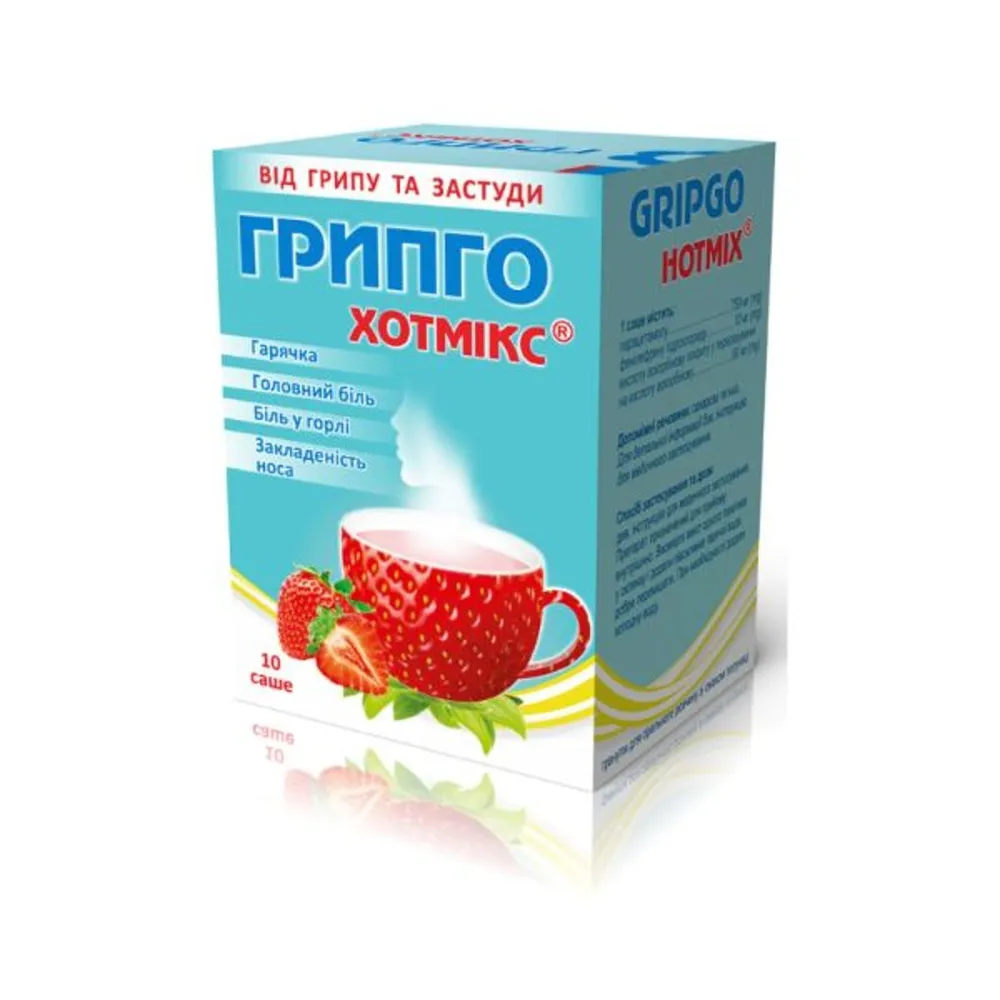
Table of Contents
- INSTRUCTIONS FOR MEDICAL USE OF THE MEDICINAL PRODUCT GRIPGO HOTMIX® (GRIPGO HOTMIX®)
- Composition:
- Pharmacological Properties
- Clinical characteristics.
- Special precautions for use.
- Dosage and Administration.
- Adverse Reactions
- Composition:
- Pharmacological properties.
- Clinical characteristics.
- Special precautions for use.
- Dosage and Administration
- Adverse Reactions
INSTRUCTIONS FOR MEDICAL USE OF THE MEDICINAL PRODUCT GRIPGO HOTMIX® (GRIPGO HOTMIX®)
Composition:
Active substances: paracetamol, phenylephrine hydrochloride, ascorbic acid;
One sachet contains 750 mg of paracetamol, 10 mg of phenylephrine hydrochloride, and 60 mg of ascorbic acid (calculated as ascorbic acid);
Excipients: sucrose, sodium saccharin, povidone, anhydrous citric acid, sodium citrate, pregelatinized starch, indigo carmine (E 132), carmoisine (E 122), blackcurrant flavoring.
Pharmaceutical form. Granules for oral solution with blackcurrant flavor.
Main physicochemical properties: granular powder ranging from light violet to violet in color, containing white granules of various shapes.
Pharmacotherapeutic group. Analgesics and antipyretics. Paracetamol combinations without psychotropic agents. ATC code N02BE51.
Pharmacological Properties
Pharmacodynamics
Grippgo Hotmix® is a combined medicinal product, the action of which is determined by the components contained in its formulation.
Paracetamol exerts analgesic and antipyretic effects. It has the ability to inhibit prostaglandin synthesis by suppressing cyclooxygenase of arachidonic acid in the central nervous system (CNS). As a result, the sensitivity of the CNS to the action of kinins and serotonin is reduced, thereby decreasing pain perception. Additionally, reduced prostaglandin concentrations in the hypothalamus produce an antipyretic effect. Paracetamol does not affect platelet aggregation.
Phenylephrine hydrochloride belongs to sympathomimetic amines and primarily acts directly on adrenergic receptors, predominantly α-adrenergic receptors, thereby reducing nasal mucosal hyperemia.
Ascorbic acid (vitamin C) is an essential vitamin, deficiency of which may occur at the onset of acute viral infections.
The sedative effect of the active substances of the medicinal product has not been established.
Pharmacokinetics
Paracetamol is rapidly and almost completely absorbed in the gastrointestinal tract and evenly distributed throughout all body fluids. The rate of absorption is reduced when paracetamol is taken with food. At therapeutic doses, paracetamol is only minimally bound to plasma proteins. The drug is metabolized in the liver and is almost entirely excreted in the urine, primarily as glucuronide and sulfate conjugates.
A potentially hepatotoxic intermediate metabolite, N-acetyl-p-benzoquinoneimine (NAPQI), formed in small amounts (~5%), is eliminated via conjugation with glutathione, resulting in excretion as cysteine or mercapturic acid conjugates. When large doses of paracetamol are administered, glutathione reserves in the liver become depleted, leading to accumulation of toxic metabolites. This may result in hepatocyte damage, cell death, and acute liver failure.
Less than 5% of the administered dose of paracetamol is excreted unchanged.
The average elimination half-life of paracetamol ranges from 1 to 4 hours.
Patients with hepatic impairment. The elimination half-life of paracetamol in patients with compensated liver insufficiency is similar to that in healthy individuals. In cases of severe liver insufficiency, the elimination half-life of paracetamol may be prolonged. The clinical significance of prolonged elimination half-life in patients with liver disease is unknown. However, no accumulation, hepatotoxicity, or impaired conjugation with glutathione has been observed.
Patients with renal impairment. Over 90% of a therapeutic dose of paracetamol is typically excreted in the urine as metabolites within 24 hours. In patients with chronic renal failure, the ability to excrete polar metabolites is limited, potentially leading to their accumulation. Patients with chronic renal failure are advised to increase the dosing interval of paracetamol.
Ascorbic acid (vitamin C) is rapidly absorbed in the gastrointestinal tract and distributed to all body tissues; 25% is bound to plasma proteins. Excess ascorbic acid exceeding the body's requirements is excreted in the urine as metabolites.
Phenylephrine hydrochloride is readily and rapidly absorbed in the gastrointestinal tract. It undergoes first-pass metabolism by monoamine oxidase in the intestine and liver, resulting in a bioavailability of approximately 40%. Maximum plasma concentration is reached within 1–2 hours. The elimination half-life ranges from 2 to 3 hours. It is primarily excreted in the urine as sulfate conjugates.
Clinical characteristics.
Indications.
Short-term relief of symptoms of colds and influenza, including headache, fever, nasal congestion, sinus congestion and associated pain, sore throat, and body aches.
Contraindications.
- Hypersensitivity to any component of the medicinal product.
- Severe impairment of liver function, congenital hyperbilirubinemia.
- Blood disorders (including severe leukopenia, anemia), glucose-6-phosphate dehydrogenase deficiency, thrombosis, thrombophlebitis.
- Severe cardiac and vascular insufficiency, arterial hypertension, severe forms of atherosclerosis, ischemic heart disease.
- Severe impairment of kidney function, benign prostatic hyperplasia.
- Conditions of increased excitation, sleep disorders, epilepsy.
- Hyperthyroidism, diabetes mellitus, pheochromocytoma.
- Acute pancreatitis.
- Closed-angle glaucoma.
- Alcoholism.
- Concomitant use with:
- monoamine oxidase inhibitors (MAO inhibitors) and within 2 weeks after discontinuation of their use;
- tricyclic antidepressants;
- beta-blockers or other antihypertensive drugs;
- sympathomimetics.
Interaction with other medicinal products and other types of interactions.
The absorption rate of paracetamol may be increased when used concomitantly with metoclopramide and domperidone, and decreased with cholestyramine. The anticoagulant effect of warfarin and other coumarins may be enhanced, increasing the risk of bleeding, during prolonged, regular daily use of paracetamol. When used short-term according to the recommended dosage regimen, these interactions are not clinically significant. Barbiturates reduce the antipyretic effect of paracetamol. Anticonvulsants (including phenytoin, barbiturates, carbamazepine), which stimulate hepatic microsomal enzyme activity, may enhance the hepatotoxic effect of paracetamol due to increased formation of hepatotoxic metabolites. Concomitant use of high doses of paracetamol with isoniazid increases the risk of hepatotoxic syndrome. Paracetamol reduces the effectiveness of diuretics. Do not use concomitantly with alcohol.
Caution should be exercised when using paracetamol concomitantly with flucloxacillin, as this combination has been associated with metabolic acidosis with a high anion gap due to pyroglutamic acidosis, particularly in patients with risk factors (see section "Special precautions for use").
Interaction of phenylephrine with MAO inhibitors causes a hypertensive effect; with tricyclic antidepressants (e.g., amitriptyline) — increases the risk of cardiovascular adverse effects; with digoxin and cardiac glycosides — may lead to cardiac arrhythmias or myocardial infarction. Phenylephrine combined with other sympathomimetics increases the risk of cardiovascular adverse reactions. Phenylephrine may reduce the effectiveness of beta-blockers and other antihypertensive agents (including debrisoquin, guanethidine, reserpine, methyldopa), increasing the risk of hypertension and other cardiovascular adverse effects.
Concomitant use of phenylephrine with ergot alkaloids (ergotamine and methysergide) increases the risk of ergotism.
Ascorbic acid enhances the absorption of penicillin and iron when administered orally, reduces the effectiveness of heparin and indirect anticoagulants, and increases the risk of crystalluria during salicylate therapy. Antidepressants, antiparkinsonian and antipsychotic drugs, phenothiazine derivatives increase the risk of urinary retention, dry mouth, and constipation. Glucocorticoids increase the risk of glaucoma development.
Absorption of vitamin C is reduced when used concomitantly with oral contraceptives, consumption of fruit or vegetable juices, or alkaline beverages. Ascorbic acid should be taken only 2 hours after deferoxamine injection, as their concomitant use increases iron toxicity, especially in the myocardium. Prolonged use of large doses in individuals treated with disulfiram inhibits the "disulfiram–alcohol" reaction.
Special precautions for use.
Before using the medicine, consult a doctor.
Gripgo Hotmix® contains paracetamol. Concomitant use with other symptomatic cold and flu remedies, vasoconstrictor agents for the treatment of rhinitis, or other medicines containing paracetamol should be avoided. Concurrent use with other paracetamol-containing products may result in overdose. Paracetamol overdose can cause liver failure, which may require liver transplantation or lead to death. The risk of overdose is higher in patients with non-cirrhotic alcoholic liver disease.
Cases of hepatic dysfunction/failure have been reported in patients with reduced glutathione levels, such as those suffering from severe malnutrition, anorexia, low body mass index, chronic alcohol dependence, or sepsis.
Cases of high anion gap metabolic acidosis (HAGMA) due to 5-oxoprolinuria have been reported in patients with severe underlying conditions such as severe renal failure and sepsis, or in patients with malnutrition or other sources of glutathione deficiency (e.g., chronic alcoholism), who were treated with paracetamol at therapeutic doses for prolonged periods or in combination with flucloxacillin. If HAGMA due to pyroglutamic acidosis is suspected, immediate discontinuation of paracetamol is recommended, along with careful monitoring. Measurement of urinary 5-oxoproline levels may be helpful in identifying pyroglutamic acidosis as the underlying cause of HAGMA in patients with multiple risk factors.
Patients taking warfarin, or those with Raynaud's disease (which may manifest as pain in fingers and toes in response to cold or stress), hypertension, cardiovascular disorders, or impaired liver or kidney function should consult a doctor before using this medicine.
The medicine contains phenylephrine, which may provoke angina attacks.
One sachet (1 dose) contains 2.9 g of sucrose. This should be taken into account for diabetic patients.
This medicine should not be used in patients taking other sympathomimetics (e.g., decongestants, appetite suppressants, or amphetamine-type psychostimulants). Use with caution in patients taking digoxin, cardiac glycosides, or ergot alkaloids (e.g., ergotamine, methysergide).
Patients should consult a doctor if symptoms persist for more than 5 days, worsen, or are accompanied by high fever, skin rash, or persistent headache.
In patients with severe infections such as sepsis, associated with reduced glutathione levels, the use of paracetamol increases the risk of metabolic acidosis. Symptoms of metabolic acidosis include deep, rapid, or labored breathing, nausea, vomiting, and loss of appetite. Immediate medical attention should be sought if these symptoms occur.
Excipients.
This medicine contains sucrose. If you have been diagnosed with an intolerance to certain sugars, consult your doctor before taking this medicine.
The medicine contains carmoisine (E 122), which may cause allergic reactions.
Use during pregnancy or breastfeeding.
Do not use this medicine during pregnancy.
Paracetamol and phenylephrine may pass into breast milk; therefore, breastfeeding should be discontinued if use of the medicine is necessary.
Effect on ability to drive or operate machinery.
If certain adverse effects such as dizziness occur, the medicine may affect the ability to drive or operate complex machinery.
Dosage and Administration.
The medicinal product is intended for oral administration. Empty the contents of 1 sachet into a cup and add hot water (but not boiling water). Stir until completely dissolved. Cold water may be added if necessary.
Adults and children aged 12 years and older: 1 sachet. The contents of 1 sachet should be taken every 4–6 hours as needed. The minimum interval between doses should be 4 hours. The maximum daily dose is 5 sachets. Do not use the medicinal product for more than 5 days without consulting a physician.
Do not exceed the recommended doses. The lowest effective dose should be used for the shortest possible duration.
Children.
The medicinal product is not recommended for children under 12 years of age.
Overdose.
Overdose is usually caused by paracetamol and manifests as pallor, anorexia, nausea, vomiting, abdominal pain, hepatonecrosis, increased activity of liver transaminases, and prolonged prothrombin time.
In patients with risk factors such as long-term treatment with carbamazepine, phenobarbital, phenytoin, primidone, rifampicin, St. John’s wort, or other drugs that induce liver enzymes; chronic alcohol abuse; glutathione deficiency (due to gastrointestinal disorders, cystic fibrosis, HIV infection, malnutrition, cachexia), liver damage may occur after ingestion of 5 g or more of paracetamol.
Symptoms of liver damage appear within 12–48 hours after overdose and may peak within 4–6 days. Glucose metabolism disturbances and metabolic acidosis may occur. In severe poisoning, liver failure may progress and lead to toxic encephalopathy with impaired consciousness; in some cases, liver transplantation may be required or death may occur. Liver damage is possible in adults who have ingested 10 g or more of paracetamol, and in children who have ingested more than 150 mg/kg body weight.
Acute kidney injury with acute tubular necrosis may present as severe back pain, hematuria, and proteinuria, and may develop even in the absence of severe liver damage. Cardiac arrhythmias and pancreatitis have also been reported.
With prolonged use at high doses, aplastic anemia, pancytopenia, agranulocytosis, neutropenia, leukopenia, and thrombocytopenia are possible.
Treatment of paracetamol overdose: Immediate medical attention is required, even if no symptoms of overdose are apparent. Symptoms may be limited to nausea and vomiting and may not reflect the severity of overdose or risk of organ damage. Gastric lavage should be performed, activated charcoal should be administered (within 1 hour of overdose), and symptomatic therapy should be provided. Administration of paracetamol antidotes—N-acetylcysteine intravenously and methionine orally—may be effective within 24 hours after overdose.
Overdose due to phenylephrine may result in effects similar to those described in the section "Adverse Reactions." In addition, irritability, restlessness, hypertension, and reflex bradycardia may occur. In severe cases, confusion, hallucinations, seizures, and arrhythmias are possible. However, the amount of the medicinal product required to cause serious phenylephrine toxicity is greater than the amount causing paracetamol-induced hepatotoxicity.
Treatment of phenylephrine overdose: Gastric lavage, administration of activated charcoal, symptomatic therapy, and use of alpha-blockers such as phentolamine in cases of severe hypertension are required.
High doses of ascorbic acid (over 3000 mg) may cause temporary osmotic diarrhea and gastrointestinal disturbances such as nausea and abdominal discomfort. The consequences of ascorbic acid overdose may overlap with those caused by severe liver damage due to paracetamol overdose.
Adverse Reactions
Skin and subcutaneous tissue disorders: skin and mucosal rashes (usually erythematous, urticaria), pruritus, allergic dermatitis, erythema multiforme including Stevens-Johnson syndrome, toxic epidermal necrolysis (Lyell's syndrome), purpura, hemorrhages.
Immune system disorders: hypersensitivity reactions, allergic reactions (including angioedema), anaphylaxis, anaphylactic shock.
Psychiatric disorders: psychomotor agitation and disorientation, restlessness, nervousness, fear, irritability, sleep disturbances, insomnia, confusion, depression, hallucinations.
Nervous system disorders: headache, tremor, paresthesia, nervous agitation, sedative state, anxiety, general weakness, dizziness, excitement; impaired concentration the following day, especially with insufficient sleep after drug administration.
Ear and labyrinth disorders: tinnitus, vertigo.
Eye disorders: mydriasis, increased intraocular pressure, closed-angle glaucoma (more common in patients with glaucoma), visual disturbances and accommodation disorders.
Gastrointestinal disorders: nausea, vomiting, epigastric discomfort and pain, heartburn, decreased appetite, constipation, diarrhea, flatulence, dry mouth, oral mucosal ulcers, hypersalivation, hemorrhages.
Hepatobiliary disorders: elevated liver enzyme activity, usually without jaundice, hepatonecrosis (dose-dependent effect), liver function disturbances, hepatic failure.
Endocrine disorders: hypoglycemia, up to hypoglycemic coma.
Blood and lymphatic system disorders: anemia, sulfhemoglobinemia and methemoglobinemia (cyanosis, dyspnea, chest pain), hemolytic anemia, thrombocytopenia, bruising or bleeding, leukopenia, agranulocytosis, pancytopenia.
Renal and urinary disorders: with high-dose use — impaired urination, urinary retention (more likely in patients with prostate hyperplasia), nephrotoxicity (renal colic, interstitial nephritis, papillary necrosis), oliguria, aseptic pyuria.
Cardiovascular disorders: increased blood pressure, arterial hypertension, chest pain, palpitations, tachycardia, sinus tachycardia, dyspnea, edema, reflex bradycardia.
Respiratory, thoracic and mediastinal disorders: bronchospasm in patients sensitive to aspirin and other nonsteroidal anti-inflammatory drugs.
Metabolism and nutrition disorders: metabolic acidosis with high anion gap.
Other: general weakness, fever, glucosuria, disturbances in zinc and copper metabolism.
The medicinal product may have a mild laxative effect.
Description of selected adverse reactions.
Metabolic acidosis with high anion gap: cases of metabolic acidosis with high anion gap as a result of pyroglutamic acidosis have been observed in patients with risk factors taking paracetamol (see section "Special precautions for use"). Pyroglutamic acidosis may occur due to low glutathione levels in these patients.
Reporting suspected adverse reactions.
Reporting of suspected adverse reactions after medicinal product registration is highly important. It allows continuous monitoring of the benefit-risk balance of the medicinal product. Healthcare professionals, pharmacists, patients, and their legal representatives are encouraged to report all suspected adverse reactions and lack of efficacy through the Automated Pharmacovigilance Information System at: https://aisf.dec.gov.ua.
Shelf life.
3 years.
Storage conditions.
Store in the original packaging at a temperature not exceeding 25 °C.
Keep out of reach and sight of children.
Packaging.
5 g per sachet. 5, 10, or 20 sachets per cardboard pack.
Availability.
Over-the-counter (without prescription).
Manufacturer.
Kusum Healthcare Pvt Ltd.
Manufacturer's address and location of operations.
SP-289 (A), RIICO Industrial area, Chopanki, Bhiwadi, Dist. Alwar (Rajasthan), India.
INSTRUCTIONS
for medical use of the medicinal product
GRIPGO HOTMIX®
(GRIPGO HOTMIX®)
Composition:
Active ingredients: paracetamol, phenylephrine hydrochloride, ascorbic acid;
One sachet contains: paracetamol 750 mg, phenylephrine hydrochloride 10 mg, ascorbic acid (calculated as ascorbic acid) 60 mg;
Excipients: sucrose, sodium saccharin, povidone, anhydrous citric acid, sodium citrate, pregelatinized starch, indigocarmine (E 132), carmoisine (E 122), flavouring agent "Black currant".
Pharmaceutical form. Oral granules with black currant flavour.
Main physico-chemical properties: granular powder ranging from light violet to violet in colour, containing white granules of various shapes.
Pharmacotherapeutic group: Analgesics and antipyretics. Paracetamol combinations without psychotropic agents. ATC code N02BE51.
Pharmacological properties.
Pharmacodynamics.
Grippgo Hotmix® is a combined medicinal product, the action of which is due to the components contained in its formulation.
Paracetamol exerts analgesic and antipyretic effects. It is capable of inhibiting prostaglandin synthesis by suppressing cyclooxygenase of arachidonic acid in the central nervous system (CNS). As a result, sensitivity of the CNS to the action of kinins and serotonin is reduced, thereby decreasing pain perception. In addition, reduced prostaglandin concentrations in the hypothalamus produce an antipyretic effect. Paracetamol does not affect platelet aggregation.
Phenylephrine hydrochloride belongs to sympathomimetic amines and primarily acts directly on adrenergic receptors, predominantly affecting α-adrenergic receptors, thereby reducing nasal mucosal hyperemia.
Ascorbic acid (vitamin C) is an essential vitamin, deficiency of which may occur at the onset of acute viral infections.
Sedative effects of the active substances of the medicinal product have not been established.
Pharmacokinetics.
Paracetamol is rapidly and almost completely absorbed in the gastrointestinal tract and evenly distributed throughout all body fluids. The rate of absorption is reduced when paracetamol is taken with food. At therapeutic doses, paracetamol is only slightly bound to plasma proteins. The drug is metabolized in the liver and is almost completely excreted in urine, primarily in the form of glucuronide and sulfate conjugates.
A potentially hepatotoxic intermediate metabolite, N-acetyl-p-benzoquinone imine (NAPQI), which is formed in small amounts (~5%), is eliminated via conjugation with glutathione and excreted as cysteine or mercapturic acid conjugates. When large doses of paracetamol are administered, glutathione reserves in the liver become depleted, leading to accumulation of toxic metabolites. This may result in hepatocyte damage, cell death, and acute liver failure.
Less than 5% of the administered paracetamol dose is excreted unchanged.
The average elimination half-life of paracetamol ranges from 1 to 4 hours.
Patients with impaired liver function. The elimination half-life of paracetamol in patients with compensated liver insufficiency is similar to that in healthy individuals. In cases of severe liver failure, the elimination half-life of paracetamol may be prolonged. The clinical significance of prolonged half-life in patients with liver disease is unknown. However, no accumulation, hepatotoxicity, or impaired conjugation with glutathione has been observed.
Patients with impaired kidney function. Over 90% of a therapeutic dose of paracetamol is usually excreted in urine as metabolites within 24 hours. In patients with chronic renal failure, the ability to excrete polar metabolites is limited, which may lead to their accumulation. Patients with chronic renal failure are advised to increase the interval between doses of paracetamol.
Ascorbic acid (vitamin C) is rapidly absorbed in the gastrointestinal tract and delivered to all body tissues; 25% is bound to plasma proteins. Excess ascorbic acid exceeding the body's requirements is excreted in urine as metabolites.
Phenylephrine hydrochloride is readily and rapidly absorbed in the gastrointestinal tract. It undergoes first-pass metabolism by monoamine oxidase in the intestine and liver, resulting in a bioavailability of approximately 40%. Maximum plasma concentration is reached within 1–2 hours. The elimination half-life ranges from 2 to 3 hours. It is primarily excreted in urine in the form of sulfates.
Clinical characteristics.
Indications.
Short-term relief of symptoms of colds and influenza, including headache, fever, nasal congestion, sinusitis and associated pain, sore throat, and body aches.
Contraindications.
- Hypersensitivity to any component of the medicinal product.
- Severe hepatic dysfunction, congenital hyperbilirubinemia.
- Blood disorders (including severe leukopenia, anemia), glucose-6-phosphate dehydrogenase deficiency, thrombosis, thrombophlebitis.
- Severe heart failure, arterial hypertension, severe forms of atherosclerosis, ischemic heart disease.
- Severe renal impairment, prostatic hypertrophy.
- Conditions of increased excitation, sleep disorders, epilepsy.
- Hyperthyroidism, diabetes mellitus, pheochromocytoma.
- Acute pancreatitis.
- Closed-angle glaucoma.
- Alcoholism.
- Concomitant use with:
- monoamine oxidase inhibitors (MAOIs) and within 2 weeks after discontinuation of these drugs;
- tricyclic antidepressants;
- beta-blockers or other antihypertensive agents;
- sympathomimetics.
Interaction with other medicinal products and other forms of interactions.
The absorption rate of paracetamol may be increased when used concomitantly with metoclopramide and domperidone, and decreased with cholestyramine. The anticoagulant effect of warfarin and other coumarins may be enhanced, increasing the risk of bleeding, with long-term regular daily use of paracetamol. When used short-term according to the recommended regimen, these interactions are not clinically significant. Barbiturates reduce the antipyretic effect of paracetamol. Anticonvulsants (including phenytoin, barbiturates, carbamazepine), which stimulate hepatic microsomal enzyme activity, may enhance the hepatotoxic effect of paracetamol due to increased formation of hepatotoxic metabolites. Concomitant use of high doses of paracetamol with isoniazid increases the risk of hepatotoxic syndrome. Paracetamol reduces the effectiveness of diuretics. Do not use concomitantly with alcohol.
Caution should be exercised when using paracetamol concomitantly with flucloxacillin, as this combination has been associated with metabolic acidosis with a high anion gap due to pyroglutamic acidosis, particularly in patients with risk factors (see section "Special precautions").
Interaction of phenylephrine with MAO inhibitors causes a hypertensive effect; with tricyclic antidepressants (e.g., amitriptyline) — increases the risk of cardiovascular adverse effects; with digoxin and cardiac glycosides — may lead to arrhythmias or myocardial infarction. Phenylephrine combined with other sympathomimetics increases the risk of cardiovascular adverse reactions. Phenylephrine may reduce the effectiveness of beta-blockers and other antihypertensive agents (including debrisoquin, guanethidine, reserpine, methyldopa), increasing the risk of hypertension and other cardiovascular adverse effects.
Concomitant use of phenylephrine with ergot alkaloids (ergotamine, methysergide) increases the risk of ergotism.
Ascorbic acid enhances the absorption of penicillin and iron when administered orally, reduces the effectiveness of heparin and indirect anticoagulants, and increases the risk of crystalluria during salicylate therapy. Antidepressants, antiparkinsonian and antipsychotic agents, phenothiazine derivatives increase the risk of urinary retention, dry mouth, and constipation. Glucocorticoids increase the risk of glaucoma.
Absorption of vitamin C is reduced when used concomitantly with oral contraceptives, fruit or vegetable juices, and alkaline beverages. Ascorbic acid should be taken only 2 hours after deferoxamine injection, as their concomitant use increases iron toxicity, especially in the myocardium. Prolonged use of large doses in individuals being treated with disulfiram inhibits the disulfiram–alcohol reaction.
Special precautions for use.
Before using the medicine, consult a physician.
GrippHOT Mix® contains paracetamol. Concomitant use with other symptomatic cold and flu remedies, vasoconstrictor agents for the treatment of rhinitis, or other medicines containing paracetamol should be avoided. Concurrent use with other paracetamol-containing products may lead to overdose. Paracetamol overdose can cause liver failure, which may require liver transplantation or result in death. The risk of overdose is higher in patients with non-cirrhotic alcoholic liver disease.
Cases of hepatic dysfunction/failure have been reported in patients with reduced glutathione levels, such as those suffering from severe malnutrition, anorexia, low body mass index, or chronic alcohol dependence, as well as in patients with sepsis.
Cases of high anion gap metabolic acidosis (HAGMA) due to 5-oxoproline (pyroglutamic) acidosis have been reported in patients with severe conditions such as severe renal failure and sepsis, or in patients with malnutrition or other sources of glutathione deficiency (e.g., chronic alcoholism), who were treated with paracetamol at therapeutic doses over a prolonged period or in combination with flucloxacillin. If HAGMA due to pyroglutamic acidosis is suspected, immediate discontinuation of paracetamol is recommended, along with careful monitoring. Measurement of 5-oxoproline levels in urine may be useful in identifying pyroglutamic acidosis as the underlying cause of HAGMA in patients with multiple risk factors.
Patients taking warfarin, those with Raynaud's disease (which may manifest as pain in fingers and toes in response to cold or stress), hypertension, cardiovascular disorders, or impaired liver or kidney function should consult a physician before using this medicine.
The medicine contains phenylephrine, which may provoke angina attacks.
One sachet (1 dose) contains 2.9 g of sucrose. This should be taken into account in patients with diabetes mellitus.
This medicine should not be used in patients taking other sympathomimetic agents (e.g., decongestants, appetite suppressants, or amphetamine-type psychostimulants). Use with caution in patients taking digoxin, cardiac glycosides, or ergot alkaloids (e.g., ergotamine, methysergide).
Patients should consult a physician if symptoms persist for more than 5 days, worsen, or are accompanied by high fever, skin rash, or persistent headache.
In patients with severe infections such as sepsis, associated with reduced glutathione levels, the use of paracetamol increases the risk of metabolic acidosis. Symptoms of metabolic acidosis include deep, rapid, or labored breathing, nausea, vomiting, and loss of appetite. Immediate medical attention should be sought if these symptoms occur.
Excipients.
This medicine contains sucrose. If you have been diagnosed with an intolerance to certain sugars, consult your doctor before taking this medicine.
The medicine contains carmoisine (E 122), which may cause allergic reactions.
Use during pregnancy or breastfeeding.
Do not use this medicine during pregnancy.
Paracetamol and phenylephrine may pass into breast milk; therefore, if use of the medicine is necessary, breastfeeding should be discontinued.
Effect on ability to drive vehicles or operate machinery.
This medicine may affect the ability to drive vehicles or operate machinery if certain adverse effects, such as dizziness, occur.
Dosage and Administration
The medicinal product is intended for oral administration. Empty the contents of 1 sachet into a cup and add hot water (but not boiling water). Stir until completely dissolved. Cold water may be added if necessary.
Adults and children aged 12 years and older: 1 sachet. The contents of 1 sachet should be taken every 4–6 hours as needed. The minimum interval between doses should be 4 hours. The maximum daily dose is 5 sachets. Do not use the product for more than 5 days without consulting a physician.
Do not exceed the recommended doses. The lowest effective dose should be used for the shortest possible duration.
Children.
The use of this medicinal product is not recommended in children under 12 years of age.
Overdose.
Overdose is usually caused by paracetamol and manifests as pallor, anorexia, nausea, vomiting, abdominal pain, hepatonecrosis, elevated liver transaminase activity, and increased prothrombin index.
In patients with such risk factors as long-term treatment with carbamazepine, phenobarbital, phenytoin, primidone, rifampicin, St. John’s wort, or other drugs that induce liver enzymes; chronic alcohol abuse; glutathione deficiency (digestive disorders, cystic fibrosis, HIV infection, malnutrition, cachexia), liver damage may occur after ingestion of 5 g or more of paracetamol.
Symptoms of liver damage appear within 12–48 hours after overdose and may peak at 4–6 days. Glucose metabolism disturbances and metabolic acidosis may occur. In severe poisoning, liver failure may progress and lead to toxic encephalopathy with impaired consciousness; in some cases, liver transplantation may be required or the outcome may be fatal. Liver damage is possible in adults who have ingested 10 g or more of paracetamol and in children who have ingested more than 150 mg/kg body weight.
Acute kidney injury with acute tubular necrosis may present as severe back pain, hematuria, proteinuria, and may develop even in the absence of severe liver damage. Cardiac arrhythmias and pancreatitis have also been reported.
With prolonged use at high doses, aplastic anemia, pancytopenia, agranulocytosis, neutropenia, leukopenia, and thrombocytopenia are possible.
Treatment of paracetamol overdose: Immediate medical attention is required, even if no symptoms of overdose are present. Symptoms may be limited to nausea and vomiting or may not reflect the severity of overdose or risk of organ damage. Gastric lavage should be performed, activated charcoal should be administered (within 1 hour of overdose), and symptomatic therapy should be provided. Antidotes for paracetamol—N-acetylcysteine administered intravenously and methionine administered orally—may be effective if administered within 24 hours of overdose.
Overdose due to phenylephrine may cause effects similar to those described in the section "Adverse Reactions." Additionally, irritability, restlessness, hypertension, and reflex bradycardia may occur. In severe cases, confusion, hallucinations, seizures, and arrhythmias are possible. However, the amount of the medicinal product required to cause serious phenylephrine toxicity is greater than the amount causing paracetamol-induced hepatotoxicity.
Treatment of phenylephrine overdose: Gastric lavage, activated charcoal, symptomatic therapy, and use of alpha-blockers such as phentolamine in cases of severe hypertension are indicated.
High doses of ascorbic acid (over 3000 mg) may cause temporary osmotic diarrhea and gastrointestinal disturbances such as nausea and abdominal discomfort. The consequences of ascorbic acid overdose may overlap with those caused by severe liver damage due to paracetamol overdose.
Adverse Reactions
Skin and subcutaneous tissue disorders: skin and mucous membrane rashes (usually erythematous, urticaria), pruritus, allergic dermatitis, erythema multiforme, including Stevens-Johnson syndrome, toxic epidermal necrolysis (Lyell's syndrome), purpura, hemorrhages.
Immune system disorders: hypersensitivity reactions, allergic reactions (including angioneurotic edema), anaphylaxis, anaphylactic shock.
Psychiatric disorders: psychomotor agitation and disorientation, anxiety, restlessness, fear, irritability, sleep disturbances, insomnia, confusion, depression, hallucinations.
Nervous system disorders: headache, tremor, paresthesia, nervous excitement, sedative state, anxiety, general weakness, dizziness, excitation; impaired concentration the following day, especially with insufficient sleep after taking the medication.
Ear and labyrinth disorders: tinnitus, vertigo.
Eye disorders: mydriasis, increased intraocular pressure, closed-angle glaucoma (more frequently in patients with glaucoma), visual disturbances and accommodation disorders.
Gastrointestinal disorders: nausea, vomiting, epigastric discomfort and pain, heartburn, decreased appetite, constipation, diarrhea, flatulence, dry mouth, oral mucosal ulcers, hypersalivation, hemorrhages.
Hepatobiliary disorders: elevated liver enzyme activity, usually without jaundice, hepatonecrosis (dose-dependent effect), liver function impairment, hepatic failure.
Endocrine system disorders: hypoglycemia, up to hypoglycemic coma.
Blood and lymphatic system disorders: anemia, sulfhemoglobinemia and methemoglobinemia (cyanosis, dyspnea, chest pain), hemolytic anemia, thrombocytopenia, bruising or bleeding, leukopenia, agranulocytosis, pancytopenia.
Renal and urinary system disorders: with high-dose use — impaired urination, urinary retention (more likely in patients with prostate hyperplasia), nephrotoxicity (renal colic, interstitial nephritis, papillary necrosis), oliguria, aseptic pyuria.
Cardiovascular system disorders: increased blood pressure, arterial hypertension, chest pain, palpitations, rapid heartbeat, tachycardia, sinus tachycardia, dyspnea, edema, reflex bradycardia.
Respiratory, thoracic and mediastinal disorders: bronchospasm in patients sensitive to aspirin and other nonsteroidal anti-inflammatory drugs.
Metabolism and nutrition disorders: metabolic acidosis with high anion gap.
Other: general weakness, fever, glucosuria, disturbances in zinc and copper metabolism.
The medicinal product may have a mild laxative effect.
Description of individual adverse reactions.
Metabolic acidosis with high anion gap: cases of metabolic acidosis with high anion gap as a result of pyroglutamic acidosis have been observed in patients with risk factors who used paracetamol (see section "Special precautions"). Pyroglutamic acidosis may occur due to low glutathione levels in these patients.
Reporting suspected adverse reactions.
Reporting of suspected adverse reactions after marketing authorization of the medicinal product is of great importance. It allows continuous monitoring of the benefit-risk balance of the medicinal product. Healthcare and pharmacy professionals, as well as patients or their legal representatives, are encouraged to report all suspected adverse reactions and lack of efficacy through the Automated Pharmacovigilance Information System at the following link: https://aisf.dec.gov.ua.
Shelf life.
3 years.
Storage conditions.
Store in the original packaging at a temperature not exceeding 25 °C.
Keep out of reach and sight of children.
Packaging.
5 g per sachet. 5, 10, or 20 sachets per cardboard box.
Availability.
Over-the-counter.
Manufacturer.
Kusum Healthcare Pvt Ltd.
Manufacturer's address and location of manufacturing.
Plot No. M-3, Indore Special Economic Zone, Phase-II, Pithampur, Distt. Dhar, Madhya Pradesh, Pin 454774, India.