Grastim
Ukraine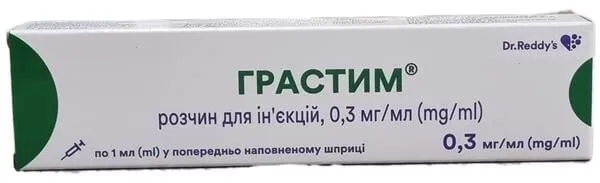
Table of Contents
INSTRUCTIONS FOR MEDICAL USE OF THE MEDICINAL PRODUCT GRASTIM® (GRASTIMTM)
Composition:
Active substance: filgrastim;
1 ml of solution contains human granulocyte colony-stimulating factor (G-CSF) 0.3 mg (30 million IU or 300 µg);
Excipients: sorbitol (E 420), polysorbate 80, sodium acetate trihydrate, glacial acetic acid, water for injections.
Pharmaceutical form. Solution for injection.
Main physicochemical properties: clear, colorless solution, free from visible particles and foreign inclusions.
Pharmacotherapeutic group. Immunostimulants. Colony-stimulating factors. ATC code L03A A02.
Pharmacological Properties
Pharmacodynamics
The active substance of the medicinal product is filgrastim – a recombinant human granulocyte colony-stimulating factor (G-CSF). Filgrastim has the same biological activity as endogenous human G-CSF and differs from the latter only by being a non-glycosylated protein with an additional N-terminal methionine residue. Filgrastim produced by recombinant DNA technology is isolated from Escherichia coli bacteria, whose genetic apparatus has been modified to include the gene encoding the G-CSF protein.
Endogenous G-CSF is a growth factor synthesized by monocytes, endothelial cells, and fibroblasts. The secretion of G-CSF by these cells is influenced by fluctuations in blood neutrophil concentrations and stimulation by mediators of inflammatory reactions. The growth factor itself binds directly to high-affinity receptors on the surface of granulocytes, thereby stimulating their proliferation, differentiation, and activation. The drug acts only on those hematopoietic cells capable of becoming neutrophils, which is why it is known as a lineage-specific agent. The physiological effects of colony-stimulating factors are numerous and complex, and the consequences of their action have not been fully elucidated.
Human granulocyte colony-stimulating factor—a glycoprotein—regulates the production of functionally active neutrophilic granulocytes and their release into the bloodstream from the bone marrow. Filgrastim significantly increases the number of neutrophilic granulocytes in peripheral blood within the first 24 hours after administration and simultaneously causes a slight increase in the number of monocytes. The increase in neutrophilic granulocyte count with filgrastim administration within the recommended dose range is dose-dependent. Their functional properties are normal or enhanced, as evidenced by studies of chemotaxis and phagocytosis. After discontinuation of treatment, the number of neutrophilic granulocytes in peripheral blood decreases by 50% within 1–2 days and returns to normal levels within 1–7 days.
The use of filgrastim significantly reduces the frequency, severity, and duration of neutropenia in patients following cytotoxic chemotherapy or myeloablative therapy followed by bone marrow transplantation. Administration of filgrastim, both prior to and after chemotherapy, mobilizes peripheral blood hematopoietic progenitor cells (PBPCs). These autologous PBPCs can be collected from the patient and reinfused after high-dose cytotoxic therapy either instead of or in addition to bone marrow transplantation. The infusion of PBPCs accelerates hematopoietic recovery, reduces the risk of hemorrhagic complications, and decreases the need for platelet transfusions.
In children and adults with severe chronic neutropenia, filgrastim consistently increases the number of neutrophilic granulocytes in peripheral blood and reduces the frequency of infectious complications.
In patients with chemotherapy-induced neutropenia, filgrastim reduces fever and the risk of infections associated with severe neutropenia, stimulates the proliferation, differentiation, and maturation of neutrophil precursor cells, and enhances the function of mature neutrophils, including antibody-dependent cellular cytotoxicity (ADCC), infiltration, phagocytosis, and chemotaxis. The clinical response to filgrastim therapy may be reduced in patients who have previously undergone extensive radiotherapy or long-term chemotherapy, as these patients may have a reduced number of target precursor cells.
Pharmacokinetics
After both intravenous and subcutaneous administration, a positive linear relationship is observed between the plasma concentration of the drug and the administered dose. Following subcutaneous injection of recommended doses, serum concentrations exceed 10 ng/mL for 8–16 hours; the volume of distribution in blood is approximately 150 mL/kg. After both subcutaneous and intravenous administration, elimination of the drug follows first-order kinetics. The mean elimination half-life of filgrastim in serum is approximately 3.5 hours, and the clearance rate is about 0.6 mL/min/kg. Continuous infusion over 28 days in patients recovering after autologous bone marrow transplantation was not associated with signs of drug accumulation or prolonged elimination half-life.
Clinical characteristics.
Indications.
- Reduction of the duration and frequency of occurrence of neutropenia and febrile neutropenia in patients receiving cytotoxic chemotherapy for malignant diseases (with the exception of chronic myeloid leukemia and myelodysplastic syndrome);
- reduction of the duration of neutropenia and its clinical consequences in patients undergoing myeloablative therapy followed by allogeneic or autologous bone marrow transplantation;
- mobilization of peripheral blood stem cells (PBSC), including after myelosuppressive therapy;
- long-term therapy to increase neutrophil counts and reduce the frequency and duration of infectious complications in children and adults with severe congenital, cyclic, or idiopathic neutropenia and an absolute neutrophil count ≤ 0.5 × 10⁹/L, and with a history of severe or recurrent infections;
- reduction of the risk of bacterial infections and treatment of persistent neutropenia (absolute neutrophil count ≤ 1 × 10⁹/L) in patients with advanced HIV infection when other methods of controlling neutropenia are ineffective;
- mobilization of peripheral blood stem cells (PBSC) in healthy donors for allogeneic PBSC transplantation.
Contraindications.
- Hypersensitivity to filgrastim, colony-stimulating factors, Escherichia coli, or to any excipients.
- Severe congenital neutropenia (Kostmann's syndrome) with cytogenetic abnormalities and autoimmune neutropenia.
- Terminal stage of chronic renal failure.
- Chronic myeloid leukemia and myelodysplastic syndrome.
Interaction with other medicinal products and other forms of interactions.
The safety and efficacy of administering the drug on the same day as myelosuppressive cytotoxic chemotherapy agents have not been established. Due to the sensitivity of rapidly dividing myeloid cells, administration of Grastim® within 24 hours before or after myelosuppressive cytotoxic chemotherapy is not recommended.
When filgrastim is administered concomitantly with 5-fluorouracil, the severity of neutropenia may be increased. Interaction with other hematopoietic growth factors and cytokines is unknown.
Since lithium stimulates the release of neutrophils, an enhanced effect of the drug is possible when administered in combination.
Due to pharmaceutical incompatibility, the drug must not be mixed with 0.9% sodium chloride solution.
Special precautions for use.
The established dose of the drug should not be exceeded during chemotherapy with cytotoxic agents.
The drug should not be administered to patients with severe congenital neutropenia who have developed leukemia or show signs of developing leukemia.
Hypersensitivity reactions, including anaphylactic reactions, have been observed in patients receiving filgrastim therapy, occurring at the beginning of treatment or during subsequent administration. Filgrastim should be completely discontinued in patients with clinically significant hypersensitivity. Filgrastim should not be used in patients with a history of hypersensitivity to filgrastim or pegfilgrastim.
As with all therapeutic proteins, there is a potential for immunogenicity. The incidence of antibody formation against filgrastim is generally low. As expected, antibody binding occurs with all biological products; however, such antibodies are currently not associated with neutralizing activity.
Concomitant use with chemotherapy and radiation therapy
The safety and efficacy of filgrastim when used concomitantly with cytotoxic chemotherapy have not been established. Due to the potential sensitivity of rapidly dividing myeloid cells to cytotoxic chemotherapy, filgrastim should not be administered within 24 hours before or 24 hours after cytotoxic chemotherapy.
The efficacy of filgrastim has not been evaluated in patients receiving chemotherapy associated with delayed myelosuppression (e.g., nitrosoureas), mitomycin-C, or myelosuppressive doses of antimetabolites such as 5-fluorouracil.
The safety and efficacy of filgrastim have not been evaluated in patients receiving concurrent radiation therapy; therefore, concomitant use of filgrastim with chemotherapy and radiation therapy should be avoided.
Potential effects on malignant cells
Filgrastim is a growth factor that primarily stimulates neutrophils. However, the possibility that filgrastim may act as a growth factor for any type of tumor cannot be excluded. In a randomized study evaluating the effects of filgrastim versus placebo in patients who achieved remission induction in acute myeloid leukemia (AML), no significant differences were observed in remission rates, relapse-free survival, or overall survival. When filgrastim is used to mobilize peripheral blood progenitor cells, tumor cells may be released from the bone marrow and subsequently collected in the leukapheresis product. The effect of reinfusion of tumor cells has not been sufficiently studied, and available limited data are not conclusive. Granulocyte colony-stimulating factor can promote the growth of myeloid cells in vitro, and similar effects may be observed in some non-myeloid cells in vitro.
The safety and efficacy of filgrastim use in patients with myelodysplastic syndrome or chronic myeloid leukemia have not been established. Filgrastim is not indicated for use in these conditions. Particular attention should be paid to distinguishing blast transformation of chronic myeloid leukemia from acute myeloid leukemia. Due to limited safety and efficacy data, filgrastim should be used with caution in patients with secondary AML.
The safety and efficacy of filgrastim use in patients under 55 years of age who have not previously had AML and who have favorable prognostic cytogenetic factors {t(8;21), t(15;17), and inv(16)} have not been established.
Other special precautions
Monitoring of bone mineral density may be indicated in patients with osteoporotic bone lesions undergoing continuous filgrastim therapy for more than 6 months.
Pulmonary adverse effects, including interstitial lung disease, have been reported after administration of G-CSF. Patients with recent pulmonary infiltrates or pneumonia may be at higher risk. The onset of pulmonary symptoms such as cough, fever, and dyspnea, in combination with radiological signs of lung infiltrates and worsening lung function, may be early signs of acute respiratory distress syndrome (ARDS). If ARDS develops, filgrastim should be discontinued and appropriate treatment initiated.
Cases of capillary leak syndrome, characterized by hypotension, hypoalbuminemia, edema, and hemoconcentration, have been reported after administration of granulocyte colony-stimulating factor. Patients developing symptoms of capillary leak syndrome should be closely monitored and managed with standard symptomatic treatment, which may include the need for intensive care.
Cases of glomerulonephritis have been reported in patients receiving filgrastim and pegfilgrastim. Typically, signs of glomerulonephritis resolve after dose reduction or discontinuation of filgrastim and pegfilgrastim. Monitoring of urine analysis parameters is recommended.
The needle cap of the pre-filled syringe may contain dry natural rubber (a latex derivative), which may cause allergic reactions.
Cancer patients receiving myelosuppressive chemotherapy
Rare cases of splenomegaly and splenic rupture have been reported after filgrastim administration. Some cases of splenic rupture were fatal. Patients receiving filgrastim who report pain in the left upper quadrant of the abdomen and/or left shoulder should be evaluated for splenomegaly or splenic rupture.
Leukocytosis
Leukocyte counts of 100 × 10⁹/L or higher occur in less than 5% of patients receiving filgrastim at doses exceeding 0.3 million IU/kg/day (3 µg/kg/day). No adverse reactions directly related to such levels of leukocytosis have been reported. Due to the potential risk associated with severe leukocytosis, leukocyte counts should be monitored at regular intervals during filgrastim therapy. If leukocyte counts exceed 50 × 10⁹/L after the expected nadir, filgrastim should be discontinued immediately. However, during filgrastim use for mobilization of peripheral blood hematopoietic progenitor cells (PBPCs), the drug should be discontinued or the dose reduced if leukocyte counts increase to levels > 70 × 10⁹/L.
Risks associated with increased doses of chemotherapeutic agents
Treatment of patients with high-dose chemotherapy should be performed with particular caution, as improved tumor response to such treatment has not been observed, while increased doses of chemotherapeutic agents may lead to increased toxicity, including cardiac, pulmonary, neurological, and dermatological manifestations (see instructions for use of specific chemotherapeutic agents). Treatment with filgrastim alone does not prevent the occurrence of thrombocytopenia and anemia resulting from myelosuppressive chemotherapy.
Due to the potential use of higher doses of chemotherapeutic agents (e.g., full doses administered on schedule), patients may have an increased risk of developing thrombocytopenia and anemia. Regular monitoring of platelet count and hematocrit is recommended. Particular attention should be paid when using single-agent or combination chemotherapy regimens that may cause severe thrombocytopenia.
Other special precautions
The effects of filgrastim in patients with significantly reduced numbers of myeloid progenitor cells have not been studied. Filgrastim acts predominantly on neutrophil progenitor cells, leading to an increase in neutrophil count. Therefore, the neutrophil response may be diminished in patients with reduced numbers of progenitor cells (e.g., patients who have received extensive radiation therapy or chemotherapy, or patients with tumor infiltration of the bone marrow).
Vascular disorders, including veno-occlusive disease and fluid and electrolyte imbalances, have occasionally been reported in patients receiving high-dose chemotherapy followed by transplantation.
Graft-versus-host disease (GVHD) and fatal cases have been reported in patients receiving G-CSF after allogeneic bone marrow transplantation (see sections "Adverse reactions" and "Pharmacological properties").
Increased hematopoietic activity of the bone marrow in response to growth factor therapy has been associated with transient pathological changes detected on bone imaging. This should be considered when interpreting bone imaging results.
Special precautions for patients with HIV infection
Cases of splenomegaly have frequently been reported after filgrastim administration. Therefore, patients receiving filgrastim who report pain in the left upper quadrant of the abdomen and/or left shoulder should be monitored for splenomegaly or splenic rupture.
Complete blood count
Absolute neutrophil count (ANC) should be monitored regularly, especially during the first few weeks of filgrastim treatment. Some patients may exhibit a very rapid response with a significant increase in neutrophil count following the initial dose of filgrastim. ANC should be determined daily during the first 2–3 days after filgrastim administration. Thereafter, ANC should be determined at least twice weekly during the first two weeks, and then once weekly or every week during maintenance therapy. During intermittent administration of filgrastim at a dose of 30 million IU/day (300 µg/day), wide fluctuations in ANC may occur. To determine the patient's minimum or lowest ANC, blood samples should be taken immediately before any scheduled filgrastim administration.
Risk associated with increased doses of myelosuppressive agents
When filgrastim is used as monotherapy in patients receiving myelotoxic therapy, the risk of developing thrombocytopenia and anemia remains. Due to the potential use of high-dose chemotherapy, patients may have an increased risk of developing thrombocytopenia and anemia. Regular monitoring of blood test parameters is recommended.
Infections and malignant neoplasms causing myelosuppression
Neutropenia may be associated with infiltrative opportunistic bone marrow infections such as Mycobacterium avium complex, or with malignant tumors, particularly lymphoma. In patients with infiltrative infections or malignant tumors of the bone marrow, appropriate therapy for the underlying disease should be considered in addition to filgrastim treatment for neutropenia. The effect of filgrastim on neutropenia caused by infiltrative bone marrow infection or malignancy has not been adequately established.
Special precautions in sickle cell trait and sickle cell anemia
Sickle cell crisis, in some cases fatal, has been observed with filgrastim use in individuals with sickle cell trait or sickle cell anemia. Physicians should exercise caution when considering filgrastim administration in patients with sickle cell trait or sickle cell anemia.
All patients
The drug contains sorbitol (E 420). Patients with rare hereditary fructose intolerance should not take this medication.
Filgrastim contains less than 1 mmol (23 mg) of sodium per 0.6 mg/mL, i.e., it is practically sodium-free.
Aortitis
Cases of aortitis have been observed after administration of colony-stimulating factor in healthy volunteers and oncology patients. Symptoms included fever, abdominal pain, back pain, malaise, and elevated inflammatory markers—e.g., C-reactive protein and white blood cell count. In most cases, aortitis was diagnosed by CT scan and generally resolved after discontinuation of the colony-stimulating factor.
Use during pregnancy or breastfeeding
Pregnancy
There are insufficient data on the use of filgrastim in pregnant women. Reproductive toxicity was observed in animal studies. Increased rates of fetal loss and maternal toxicity were observed in rabbits. Published data show transplacental passage of filgrastim when administered to pregnant women. Filgrastim use during pregnancy is not recommended.
Breastfeeding
It is unknown whether filgrastim passes into breast milk. Risk to the newborn/infant cannot be excluded. The decision to discontinue breastfeeding or to withhold/stop the drug should be made by considering the benefit of treatment for the mother versus the risk to the child. Use during breastfeeding is not recommended.
Fertility
Filgrastim did not affect reproductive function or fertility in rats.
Ability to affect reaction speed when driving or operating machinery
No adverse effects of Grastim® on psychomotor performance have been reported. The effect of the drug on the ability to drive or operate machinery has not been established.
Administration and Dosage
Treatment with Grastim® can be administered in medical facilities equipped with appropriate diagnostic equipment. Physicians should have experience in using medicinal products containing granulocyte colony-stimulating factor (G-CSF) and in managing patients with hematological disorders.
Procedures for mobilization and apheresis should be performed in collaboration with physicians who have appropriate experience and the capability for necessary monitoring of hematopoietic progenitor cells.
Neutropenia in patients receiving cytotoxic chemotherapy for malignant diseases.
The recommended daily dose is 0.5 million IU/kg (5 mcg/kg) of body weight, administered once daily. The first dose should be given no sooner than 24 hours after completion of a course of cytotoxic chemotherapy. Treatment should continue until the total neutrophil count in the blood exceeds the expected nadir and reaches normal levels. After chemotherapy for solid tumors, lymphomas, and lympholeukemias, the duration of treatment to achieve these values is up to 14 days. After induction and consolidation therapy for acute myeloid leukemia, the treatment duration may be significantly prolonged (up to 38 days), depending on the type, dose, and regimen of the cytotoxic chemotherapy used.
In patients receiving cytotoxic chemotherapy, a transient increase in neutrophil count is typically observed within 1–2 days after initiating treatment with Grastim®. However, to achieve a stable therapeutic effect, treatment should be continued until the neutrophil count exceeds the expected nadir and reaches normal values. Premature discontinuation of Grastim® before the neutrophil count crosses the expected nadir is not recommended.
Route of administration.
Grastim® should be administered once daily via subcutaneous injection or by intravenous infusion after dilution with 5% glucose solution over 30 minutes. In most cases, the subcutaneous route is preferred. When administered intravenously, the duration of effect of a single dose may be shortened. The clinical significance of these findings with repeated dosing has not been established. The choice of administration route depends on the specific clinical circumstances and should be determined individually for each patient.
Patients undergoing myeloablative therapy followed by bone marrow transplantation.
The recommended initial dose of Grastim® is 1 million IU/kg (10 mcg/kg) of body weight per day. The first dose should be administered no sooner than 24 hours after cytotoxic chemotherapy and no later than 24 hours after bone marrow transplantation.
Dose adjustment.
After the nadir in neutrophil count has been reached, the daily dose of the drug should be adjusted according to changes in neutrophil count (see Table 1).
Table 1
Dose selection of Grastim® after reaching the lowest neutrophil count.
| Neutrophil count |
Grastim® dosage adjustment |
| > 1 x 10⁹/l for 3 consecutive days |
Reduce dose to 0.5 million IU/kg (5 µg/kg) body weight per day |
| Then, if > 1 x 10⁹/l for the subsequent 3 consecutive days |
Discontinue the drug |
| If ANC decreases to <1 x 10⁹/l during treatment, increase the drug dose according to the above-mentioned scheme. |
|
Administration method.
The drug should be dissolved in 20 ml of 5% glucose solution and administered as a short-term intravenous infusion over 30 minutes or as a prolonged subcutaneous or intravenous infusion over 24 hours.
Mobilization of peripheral blood stem cells (PBSCs) in patients receiving myelosuppressive or myeloablative therapy followed by autologous PBSC transfusion.
For PBSC mobilization using Grastim® as monotherapy, the recommended dose is 1 million IU/kg (10 mcg/kg) body weight per day for 5–7 consecutive days as a prolonged subcutaneous infusion over 24 hours. Perform 1–2 leukapheresis sessions on days 5 and 6. In some cases, an additional leukapheresis session may be performed. The drug dose should not be changed until the final leukapheresis.
For PBSC mobilization following myelosuppressive chemotherapy, the recommended dose of Grastim® is 0.5 million IU/kg (5 mcg/kg) body weight per day, starting on the first day after completion of chemotherapy and continuing until neutrophil count passes the expected nadir and returns to normal. Leukapheresis should be performed during the period of rising ANC from <0.5×10⁹/L to >5×10⁹/L. Patients who have not received intensive chemotherapy should undergo one leukapheresis session. Additional leukapheresis sessions may be recommended in individual cases.
Mobilization of PBSCs in healthy donors prior to allogeneic PBSC transplantation.
For PBSC mobilization prior to allogeneic PBSC transplantation in healthy donors, the recommended dose of Grastim® is 1 million IU/kg (10 mcg/kg) body weight per day for 4–5 consecutive days. Leukapheresis should begin on day 5 and, if necessary, continue on day 6 to achieve a yield of 4×10⁶ CD34+ cells/kg body weight of the recipient.
Administration method.
The drug should be administered by subcutaneous injection.
Patients with severe chronic neutropenia.
Congenital neutropenia.
The recommended initial dose is 1.2 million IU/kg (12 mcg/kg) body weight per day administered as a single subcutaneous injection or divided into multiple doses.
Idiopathic or periodic neutropenia.
The recommended initial dose is 0.5 million IU/kg (5 mcg/kg) body weight per day administered once daily or in divided doses subcutaneously.
Dose adjustment.
Grastim® should be administered daily until the neutrophil count reaches and stably exceeds 1.5×10⁹/L. After achieving the therapeutic effect, the minimal effective dose required to maintain this level should be determined. Long-term daily administration of the drug is necessary to maintain the required neutrophil count. After 1–2 weeks of treatment, the initial dose may be doubled or halved depending on the therapeutic response. Subsequently, individual dose adjustments should be made every 1–2 weeks to stabilize the average neutrophil count within the range of 1.5×10⁹/L to 10×10⁹/L. In patients with severe infections, a more rapid dose escalation regimen may be used. The safety of long-term filgrastim treatment at doses exceeding 2.4 million IU (24 mcg/kg) per day has not been established.
Reduction of the risk of bacterial infections and treatment of persistent neutropenia in patients with advanced HIV infection.
Neutrophil count recovery.
The recommended initial dose is 0.1 million IU/kg (1 mcg/kg) body weight per day, increasing the dose to 0.4 million IU/kg (4 mcg/kg) body weight per day via a single subcutaneous injection until normalization of neutrophil count (ANC >2.0×10⁹/L). Neutrophil count normalization usually occurs within 2 days. In rare cases (<1% of patients), the dose may be increased up to 1 million IU/kg (10 mcg/kg body weight per day) to restore neutrophil count.
Maintenance of normal neutrophil count.
After achieving the therapeutic effect, the maintenance dose is 30 million IU (300 mcg) administered 2–3 times per week on an alternate-day schedule. Subsequently, individual dose adjustments and long-term drug administration may be required to maintain an average neutrophil count >2×10⁹/L.
Special patient categories.
Dose adjustment is not required in patients with severe hepatic or renal impairment, as their pharmacokinetic and pharmacodynamic parameters have been found to be similar to those in healthy volunteers.
There are no specific recommendations for the use of the drug in elderly patients.
Recommendations for drug dilution.
Grastim® may be administered diluted in 5% glucose solution. Dilution to a concentration below 0.2 million IU/ml (2 mcg/ml) is not recommended. When diluting to a concentration of 1.5 million IU/ml (15 mcg/ml), human albumin should be added to achieve a final concentration of 2 mg/ml. For example, with a final solution volume of 20 ml and a total filgrastim dose of 30 million IU (300 mcg), an additional 0.2 ml of 20% (200 mg/ml) albumin solution should be added. The diluted drug may adsorb onto glass and other materials used for infusion administration. Unused medicinal product should be disposed of according to local requirements.
The use of sodium chloride solution for drug dilution is prohibited.
Recommendations prior to administration.
Before administration, visually inspect the contents of the vial or pre-filled syringe. Solution preparation should be performed under aseptic conditions. The solution should be clear and free of visible particles.
Physical and chemical stability of the diluted solution is maintained for up to 24 hours at a temperature of 2 to 8°C. In known cases, short-term exposure to low temperatures has not shown any negative impact on drug stability. From a microbiological standpoint, the prepared solution should be used immediately. If the prepared solution is not used immediately, the user bears responsibility for its condition after preparation. Vials and pre-filled syringes are intended for single use only.
Preferred sites for subcutaneous administration are shown in the figure:
Children.
The safety and efficacy of the drug in neonates have not been established. Dosing recommendations for pediatric patients are the same as for adults receiving myelosuppressive cytotoxic chemotherapy.
Overdose.
In cancer patients receiving filgrastim as an adjunct to myelosuppressive chemotherapy, the potential risk of excessive leukocytosis should be avoided; filgrastim therapy should be discontinued if ANC exceeds 10,000/mm³ after the nadir ANC induced by chemotherapy. Filgrastim doses that increase ANC above 10,000/mm³ may not provide additional clinical benefit. The maximum tolerated dose of filgrastim has not been determined. Efficacy has been observed at doses of 4–8 mcg/kg per day in non-myeloablative chemotherapy. Patients undergoing bone marrow transplantation have received up to 138 mcg/kg per day without toxic effects, although a less pronounced response was observed when daily doses exceeded 10 mcg/kg.
Within 1–2 days after discontinuation of treatment, the number of circulating neutrophilic granulocytes typically decreases by 50%, and returns to normal within 1–7 days.
Adverse reactions
The most common adverse effects observed during filgrastim therapy are mild to moderate bone and muscle pain. Bone and muscle pain is generally relieved with standard analgesic medications.
Allergic reactions occur more frequently in patients receiving intravenous administration of the drug. In some cases, symptoms recurred during provocation testing, indicating a causal relationship. Filgrastim should not be administered again to patients who have experienced serious allergic reactions.
A. Summary of safety profile
In clinical trials, the most common adverse effect in cancer patients was bone and musculoskeletal pain: mild or moderate in 10% of patients and severe in 3% of patients. Capillary leak syndrome, which may be life-threatening if treatment is delayed, occurred rarely (from ≥ 1/1000 to < 1/100) in cancer patients undergoing chemotherapy and in healthy donors following mobilization of peripheral blood progenitor cells after administration of granulocyte colony-stimulating factor; see sections "Special precautions" and section B of "Adverse reactions". In clinical trials in HIV patients, the only adverse effects considered to be related to filgrastim administration were joint pain, bone pain, and myalgia.
B. Tabulated summary of adverse reactions – the data in the tables below describe adverse reactions reported in clinical trials and spontaneous reports. Within each frequency category, adverse events are listed in order of decreasing severity. The data are presented separately for oncology patients and HIV patients, reflecting the different profiles of adverse reactions in these patient groups.
Oncology patients
| System organ class MedDRA |
Adverse reactions |
|||||
| Very common (≥ 1/10) |
Common (from ≥ 1/100 to < 1/10) |
Uncommon (from ≥ 1/1000 to < 1/100) |
Rare (from ≥ 1/10000 to < 1/1000) |
Very rare (< 1/10000) |
Frequency not known |
|
| Blood and lymphatic system disorders |
Thrombocytopenia, anemia |
Splenomegalya, ґ Decreased hemoglobin level |
Rupture of spleena Sickle cell crisis |
|||
| Immune system disorders |
Graft-versus-host reactionb Hypersensitivity to the druga |
Anaphylactic reactions |
Allergic reactions, including anaphylactic reactions, skin rash, urticaria, angioedema; dyspnea and arterial hypotension |
|||
| Metabolism and nutrition disorders |
Increased blood lactate dehydrogenase level Decreased appetitea |
Increased blood uric acid level |
Pseudogouta (chondrocalcinosis, pyrophosphate arthropathy) Decreased glucose level Fluid and electrolyte imbalance |
Increased blood alkaline phosphatase, gamma-glutamyl transferase (GGT) concentrations. In patients who received chemotherapy with high-dose drugs followed by autologous bone marrow transplantation, vascular disorders were observed. A causal relationship of the reaction to filgrastim administration has not been established. There have been reports of isolated cases of Sweet's syndrome (acute febrile neutrophilic dermatosis) in patients with oncological diseases. However, considering that most of these patients had leukemia, a disease which often leads to Sweet's syndrome, a causal relationship with filgrastim administration has not been confirmed. |
||
| Nervous system disorders |
Headachea |
Dizziness Hypoesthesia Paraesthesia |
||||
| Psychiatric disorders |
Insomnia |
|||||
| Vascular disorders |
Hypotension Hypertension |
Veno-occlusive diseaseg Capillary leak syndrome a |
Aortitis Capillary leak syndrome |
|||
| Respiratory, thoracic and mediastinal disorders |
Hemoptysisґ Oropharyngeal pain Cougha Dyspnea |
Acute respiratory distress syndromea Respiratory failurea Pulmonary edemaa Interstitial lung diseasea Lung infiltration Pulmonary hemorrhage Hypoxia |
||||
| Gastrointestinal disorders |
Diarrheaa Vomitinga Nauseaa |
Constipationa Oral pain |
||||
| Hepatobiliary disorders |
Hepatomegaly Elevated blood alkaline phosphatase level |
Elevated level of gamma-glutamyl transferase Elevated level of aspartate aminotransferase |
||||
| Skin and subcutaneous tissue disorders |
Alopeciaa |
Rasha Erythema |
Maculopapular rash |
Sweet's syndrome Skin vasculitisa |
||
| Musculoskeletal and connective tissue disorders |
Bone-muscle painv |
Muscle spasms |
Osteoporosis |
Exacerbation of rheumatoid arthritis Decreased bone density |
||
| Renal and urinary disorders |
Dysuria |
Proteinuria |
Glomerulonephritis Pathological urine changes |
|||
| General disorders and administration site conditions |
Weaknessa Mucosal inflammationa Pyrexia |
Chest paina Pain, astheniaa Malaise, Peripheral edema |
Injection site reactions Transfusion reactions |
|||
a) See section B)
b) Cases of GVHD (graft-versus-host disease) and fatal outcomes have been reported following allogeneic bone marrow transplantation (see section B).
c) Includes bone pain, back pain, arthralgia, myalgia, limb pain, musculoskeletal pain, musculoskeletal chest pain, neck pain.
d) Cases identified during the post-marketing period in patients who underwent bone marrow transplantation or peripheral blood progenitor cell mobilization.
e) Cases identified during clinical trials.
Adverse reactions observed in patients with aHUS.
| MedDRA System Organ Class |
Adverse reactions |
|||||
| Very common (≥ 1/10) |
Common (from ≥ 1/100 to < 1/10) |
Uncommon (from ≥ 1/1000 to < 1/100) |
Rare (from ≥ 1/10000 to < 1/1000) |
Very rare (< 1/10000) |
Frequency not known |
|
| Blood and lymphatic system disorders |
Splenomegalya, ґ Anaemia |
Rupture of spleena Thrombocytopenia |
Sickle cell crisis |
Impaired spleen function |
||
| Metabolism and nutrition disorders |
Increased blood uric acid level Elevated blood lactate dehydrogenase level Decreased glucose level |
Increased blood alkaline phosphatase concentration |
||||
| Nervous system disorders |
Headache |
|||||
| Respiratory, thoracic and mediastinal disorders |
Nosebleed |
|||||
| Gastrointestinal disorders |
Diarrhea |
|||||
| Hepatobiliary disorders |
Hepatomegaly Elevated blood alkaline phosphatase level |
|||||
| Skin and subcutaneous tissue disorders |
Rash |
Skin vasculitis Alopecia |
||||
| Musculoskeletal and connective tissue disorders |
Musculoskeletal pain Arthralgia |
Osteoporosis |
||||
| Renal and urinary disorders |
Glomerulonephritis Haematuria |
Proteinuria |
||||
| General disorders and administration site conditions |
Administration site reaction |
Pain at injection site |
||||
Adverse reactions observed in healthy donors undergoing PBPC mobilization.
| System organ class preferred terms according to MedDRA |
Adverse reactions |
|||||
| Very common (≥ 1/10) |
Common (from ≥ 1/100 to < 1/10) |
Uncommon (from ≥ 1/1000 to < 1/100) |
Rare (from ≥ 1/10000 to < 1/1000) |
Very rare (< 1/10000) |
Frequency unknown |
|
| Blood and lymphatic system disorders |
Thrombocytopenia Leukocytosis |
Splenomegalya |
Spleen rupturea Splenomegalya, ґ Sickle cell crisis |
Spleen function disorders |
||
| Immune system disorders |
Anaphylactic reactions |
Angioneurotic edema, urticaria, skin rash |
||||
| Metabolism and nutrition disorders |
Increased blood lactate dehydrogenase levels |
Elevated blood uric acid levels |
Increased blood concentration of aspartate aminotransferase (AST), increased blood concentration of alkaline phosphatase |
|||
| Nervous system disorders |
Headache |
|||||
| Vascular disorders |
Capillary leak syndrome |
|||||
| Respiratory, thoracic and mediastinal disorders |
Dyspnea |
Pulmonary hemorrhage Hemoptysis Lung infiltration Hypoxia |
Shortness of breath In some cases, adverse events related to the lungs were observed, leading to respiratory failure or adult respiratory distress syndrome (ARDS), sometimes fatal. There have been reports of very rare cases of lung-related adverse events (hemoptysis, pulmonary hemorrhage, lung infiltration, dyspnea, and oxygen deficiency) in healthy donors. |
|||
| Hepatobiliary disorders |
Elevated alkaline phosphatase levels |
Elevated aminotransferase levels |
||||
| Musculoskeletal and connective tissue disorders |
Skeletal muscle pain |
Exacerbation of rheumatoid arthritis |
Exacerbation of arthritis symptoms |
|||
| Renal and urinary disorders |
Glomerulonephritis |
|||||
HIV patients
| System organ class MedDRA |
Adverse reactions |
|||||
| Very common (≥ 1/10) |
Common (from ≥ 1/100 to < 1/10) |
Uncommon (from ≥ 1/1000 to < 1/100) |
Rare (from ≥ 1/10000 to < 1/1000) |
Very rare (< 1/10000) |
Frequency not known |
|
| Blood and lymphatic system disorders |
Splenomegalya |
Sickle cell crisis |
Spleen function disorders |
|||
| Musculoskeletal and connective tissue disorders |
Musculoskeletal painb |
According to medical evaluations, in all cases the degree of spleen enlargement in HIV-infected patients was mild to moderate, and the clinical course of the disorder was benign; no patient was diagnosed with hypersplenism nor underwent splenectomy. Since spleen enlargement is a common complication in HIV-infected patients and is observed with varying severity in most AIDS patients, a causal relationship with filgrastim use remains unclear. |
||||
| Renal and urinary disorders |
Glomerulonephritis |
|||||
a) See section B)
b) Includes bone pain, back pain, arthralgia, myalgia, limb pain, musculoskeletal pain, musculoskeletal chest pain, neck pain
Description of selected adverse reactions
Capillary leak syndrome and fatal cases have been reported in patients receiving G-CSF after allogeneic bone marrow transplantation (see sections "Special precautions" and "Pharmacological properties").
Cases of capillary leak syndrome have been reported in patients after administration of granulocyte colony-stimulating factor. This usually occurred in patients with advanced malignancies, sepsis, receiving multiple chemotherapeutic agents, or undergoing apheresis (see section "Special precautions").
Oncology patients
Clinical studies have shown that filgrastim does not increase the frequency of adverse effects associated with cytotoxic chemotherapy. In these clinical studies, adverse effects reported with similar frequency in patients receiving filgrastim plus chemotherapy and in those receiving placebo plus chemotherapy included nausea and vomiting, alopecia, diarrhea, fatigue, anorexia (decreased appetite), mucositis, headache, cough, rash, chest pain, asthenia, pharyngolaryngeal (oropharyngeal) pain, constipation, and pain.
Post-marketing cases of cutaneous vasculitis have been reported in patients receiving filgrastim therapy. The mechanism of vasculitis in patients receiving filgrastim is currently unknown. Based on clinical trial data, the incidence is classified as "uncommon".
Cases of Sweet's syndrome (acute febrile neutrophilic dermatosis) have been reported in the post-marketing period. Based on clinical trial data, the incidence is classified as "uncommon".
In clinical studies and during the post-marketing period, adverse events related to the respiratory system have been reported, including interstitial lung disease, pulmonary edema, and pulmonary infiltration, and in some cases, development of respiratory failure or acute respiratory distress syndrome (ARDS), which may be fatal (see section "Special precautions").
Cases of splenomegaly and spleen rupture after filgrastim administration have been reported rarely. Some cases of spleen rupture were fatal (see section "Special precautions"). Hypersensitivity reactions, including anaphylaxis, rash, urticaria, angioneurotic edema, dyspnea, and hypotension occurring during initial or subsequent therapy, have been observed in clinical studies and the post-marketing period. Overall, reactions were more frequent after intravenous administration. In some cases, symptoms recurred upon re-administration of the drug, suggesting a causal relationship. Filgrastim should be permanently discontinued in patients experiencing severe allergic reactions.
In the post-marketing period, isolated cases of sickle cell crises have been reported in patients with sickle cell anemia (see section "Special precautions"). Based on clinical trial data, the incidence is classified as "uncommon". Pseudogout has been reported in cancer patients treated with filgrastim. Based on clinical trial data, the incidence is classified as "uncommon".
HIV-infected patients
Filgrastim-associated splenomegaly was observed in < 3% of patients. In all cases, it was mild or moderate upon physical examination, and the clinical course was benign; no patient developed hypersplenism and no patient underwent splenectomy. Since splenomegaly is common in HIV-infected patients and to some extent in most AIDS patients, a causal relationship with filgrastim treatment remains unclear (see section "Special precautions").
Pediatric patients
Available data in pediatric patients indicate that the safety and efficacy of filgrastim are similar in both adults and children receiving cytotoxic chemotherapy, suggesting no age-related differences in filgrastim pharmacokinetics. The only consistently reported adverse event was musculoskeletal pain, which did not differ from that observed in the adult population. Data are insufficient for further evaluation of filgrastim use in children.
Other special populations
Geriatric patients
No overall differences in safety and efficacy were observed between patients over 65 years of age and younger patients (over 18 years) receiving cytotoxic chemotherapy, and clinical experience has not revealed differences in therapeutic response between elderly and younger adult patients. Data are insufficient to evaluate the use of filgrastim in elderly patients for other clinical indications.
Shelf life. 3 years.
Storage conditions. Store out of reach of children at 2–8 °C.
Do not freeze.
Packaging. 1 ml in a vial, 1 vial in a cardboard box.
1 ml in a pre-filled syringe, 1 syringe in a cardboard box.
Prescription status. Prescription only.
Manufacturer. Dr. Reddy’s Laboratories Ltd, India.
Manufacturer’s address and location of operations.
Biologics, Plot No. 47 and 44p, Bachupally, Bachupally Mandal, Medchal-Malkajgiri District, 500090, Telangana State, India.