Goserelin-vista
Ukraine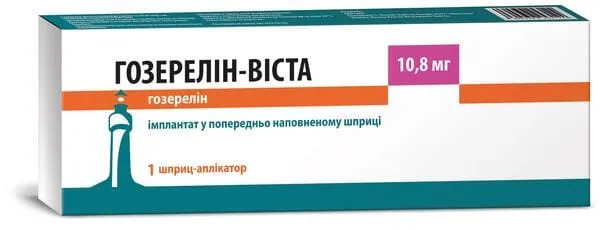
Table of Contents
INSTRUCTIONS FOR MEDICAL USE OF THE MEDICINAL PRODUCT GOSERELIN-VISTA (GOSERELIN-VISTA)
Composition:
Active substance: goserelin;
One implant contains 12.50 mg goserelin acetate, equivalent to 10.8 mg goserelin;
Excipients: poly(D,L-lactide), poly(D,L-lactide-co-glycolide) 75:25.
Pharmaceutical form. Implant in pre-filled syringes.
Main physicochemical properties: the implant is visible in the implant holder. Dimensions: length approximately 20 mm, width approximately 1.5 mm. Functionality: after activation of the applicator, an intact cylindrical rod of white to almost white color emerges from the needle.
Pharmacotherapeutic group.
Gonadotropin-releasing hormone analogs. ATC code L02A E03.
Pharmacological Properties.
Pharmacodynamics.
Goserelin (D-Ser (But)6 Azgly10-LH-RH) is a synthetic analogue of the natural luteinizing hormone-releasing hormone (LH-RH). With continuous administration, goserelin 10.8 mg suppresses pituitary secretion of luteinizing hormone, resulting in decreased serum testosterone concentrations in men and estradiol concentrations in women. Initially, goserelin 10.8 mg, like other LH-RH agonists, may cause a transient increase in serum testosterone levels in men and estradiol levels in women.
Approximately 21 days after the first injection, testosterone concentrations in men decrease to castrate levels and remain low with continued administration of the drug every 12 weeks. Data indicate that, in exceptional circumstances where the next dose of goserelin is not administered at 3 months, testosterone concentrations remain at castrate levels in most patients for up to 16 weeks. In clinical studies of metastatic prostate cancer, goserelin has demonstrated survival outcomes comparable to those of surgical castration.
In studies comparing monotherapy with bicalutamide 150 mg versus castration (primarily using goserelin), no significant difference in overall survival was observed between patients with prostate cancer receiving bicalutamide and those undergoing castration (relative risk = 1.05 [CI 0.81 to 1.36]). However, statistical equivalence between the two treatment approaches cannot be established. In comparative trials, goserelin improved both recurrence-free survival and overall survival when used as adjuvant therapy prior to radiotherapy in patients with high-risk localized (T1-T2 with PSA [prostate-specific antigen] ≥10 ng/mL or Gleason score ≥7) or locally advanced (T3-T4) prostate cancer. The optimal duration of adjuvant therapy has not been established: a comparative trial demonstrated that three years of adjuvant goserelin therapy significantly improved survival outcomes compared to radiotherapy alone. Neoadjuvant therapy prior to radiotherapy has shown improved recurrence-free survival in patients with high-risk localized or locally advanced prostate cancer.
Following prostatectomy in patients with extracapsular extension of prostate cancer, adjuvant therapy with goserelin may improve disease-free survival, although significant improvement in overall survival has not been demonstrated, particularly in patients without lymph node involvement at the time of surgery. Patients with locally advanced disease at pathological staging have additional risk factors, such as pre-adjuvant PSA levels ≥10 ng/mL or a Gleason score ≥7, and should be carefully evaluated before initiating goserelin adjuvant therapy. There is no evidence of improved clinical outcomes with neoadjuvant goserelin therapy following radical prostatectomy.
In women, serum estradiol concentrations decrease within 4 weeks after administration of the first implant and remain suppressed throughout the treatment period. In patients whose estradiol levels are already suppressed due to prior LH-RH analogue therapy, estradiol concentrations remain low after switching to goserelin 10.8 mg. Suppression of estradiol leads to clinical responses in patients with endometriosis or uterine fibroids and results in amenorrhea in most patients.
At the beginning of goserelin therapy, some women may experience vaginal bleeding of variable duration and intensity. Such bleeding is likely a response to estrogen withdrawal and usually resolves spontaneously.
During treatment with LH-RH analogues, natural menopause may occur in some women; in rare cases, menstruation does not resume after discontinuation of therapy.
Pharmacokinetics.
Administration of goserelin 10.8 mg every 12 weeks provides stable drug exposure without clinically significant accumulation. Goserelin has minimal plasma protein binding, and its serum half-life is 2 to 4 hours in patients with normal renal function. In patients with impaired renal function, the half-life is prolonged. However, when the drug is administered as a 10.8 mg implant every 12 weeks, this change does not lead to drug accumulation, and dosage adjustment is not required in such patients. No significant pharmacokinetic changes are observed in patients with hepatic insufficiency.
Clinical characteristics.
Indications.
Prostate cancer. Use for the treatment of prostate cancer in which hormonal influence is possible.
Endometriosis. Use for the treatment of endometriosis, including symptom relief such as pain, and reduction in the size and number of endometrial lesions.
Uterine fibroids. Use for the treatment of fibroids, including reduction of lesions, improvement of hematological status, and relief of symptoms such as pain. As an adjunct prior to surgery to facilitate surgical technique and reduce blood loss during surgery.
Breast cancer in premenopausal women.
Contraindications.
Hypersensitivity to the active substance or to any of the excipients.
Pregnancy or breastfeeding period.
Childhood age.
Interaction with other medicinal products and other forms of interaction.
Since androgen deprivation therapy may lead to prolongation of the QT interval, careful consideration should be given to the concomitant use of goserelin with medicinal products capable of prolonging the QT interval, or with medicinal products that may cause torsades de pointes ventricular tachycardia, such as class IA antiarrhythmics (e.g., quinidine, disopyramide) or class III antiarrhythmics (e.g., amiodarone, sotalol, dofetilide, ibutilide), methadone, moxifloxacin, and antipsychotic medicinal products (see section "Special precautions").
Special precautions for use.
Injection site reactions, including pain, hematoma, bleeding, and vascular injury, have been reported with the use of goserelin. Patients should be monitored for signs or symptoms of abdominal bleeding. In very rare cases, administration errors have led to vascular injury and hemorrhagic shock requiring blood transfusion and surgical intervention. Particular caution should be exercised when administering goserelin to patients with low body mass index (BMI) and/or those receiving full anticoagulant therapy (see section "Method of administration and dosage").
There are no data on removal or dissolution of the implant.
There is a high risk of developing depression (which may be severe) in patients receiving treatment with gonadotropin-releasing hormone (GnRH) agonists such as goserelin. Patients should be informed of this risk, and appropriate treatment should be initiated if symptoms occur.
Cases of bleeding around the injection site leading to hemorrhagic shock have been reported.
Therefore, injections should be administered in areas with a lower likelihood of vascular injury. The benefit-risk ratio should be carefully considered before administering goserelin to patients with a predisposition to bleeding (e.g., those taking anticoagulants). Androgen deprivation therapy may lead to QT interval prolongation.
Before prescribing goserelin to patients with a history of QT interval prolongation or risk factors for QT prolongation, as well as to patients concurrently using medicinal products that may cause QT prolongation (see section "Interaction with other medicinal products and other forms of interaction"), the benefit-risk ratio should be assessed, including the potential for development of torsades de pointes.
Men.
Goserelin 10.8 mg should be used with caution in men at risk of urinary tract obstruction or spinal cord compression, and such patients should be closely monitored during the first month of therapy. In case of existing or developing spinal cord compression or renal insufficiency due to urinary tract obstruction, standard treatment for these complications should be initiated. Consideration should be given to prescribing antiandrogens during the initial treatment period with GnRH analogs (e.g., cyproterone acetate 300 mg/day for 3 days before and 3 weeks after goserelin administration), as this has been reported to prevent potential consequences of the initial surge in serum testosterone levels. It is unlikely that such treatment will benefit patients with non-hormone-dependent prostate cancer. This resistance to treatment may result from lack of response to castration or hormonal therapy.
Testosterone measurement before initiating treatment is recommended to allow assessment of therapeutic benefit.
Use of GnRH agonists may lead to decreased bone mineral density. Preliminary data suggest that bisphosphonates, when used in addition to GnRH agonists, may reduce bone mineral loss in men. Particular caution should be exercised in patients with additional risk factors for osteoporosis (chronic alcohol abuse, smoking, long-term anticonvulsant or corticosteroid therapy, family history of osteoporosis). Close monitoring is required for patients with established depression and those with hypertension.
There is a high risk of hypotension (which may be serious) in patients treated with GnRH agonists such as goserelin. Patients should be informed of this risk and managed appropriately if symptoms occur.
In a pharmacoepidemiological study of GnRH agonists used for the treatment of prostate cancer, cases of myocardial infarction and heart failure were observed. The risk increases when goserelin is used in combination with antiandrogen agents.
Reduced glucose tolerance has been observed in men using GnRH agonists. This may manifest as diabetes or loss of glycemic control in individuals with pre-existing diabetes. Blood glucose levels should be monitored.
Women.
In premenopausal women with breast cancer, the hormonal receptor status of the tumor should be determined before initiating treatment with Goserelin-Vista 10.8 mg. If the disease is found to be receptor-negative, Goserelin-Vista 10.8 mg implant should not be used.
Following initiation of therapy with GnRH agonists, a transient increase in serum estradiol levels may occur in women.
Decrease in bone mineral density.
The use of GnRH agonists may lead to a decrease in bone mineral density of approximately 1% per month during a 6-month treatment period. Each 10% reduction in bone mineral density increases the risk of fractures by 2–3 times.
Available data indicate that in most women, bone density recovers after discontinuation of goserelin.
In patients receiving goserelin for endometriosis, additional hormone replacement therapy (HRT) has been shown to reduce bone mineral loss and alleviate vasomotor symptoms. However, there is no experience with HRT in women using goserelin 10.8 mg.
There are no specific data on the use of goserelin in patients with established osteoporosis or risk factors for its development (such as chronic alcohol abuse, smoking, long-term therapy with drugs that reduce bone mineral density, e.g., anticonvulsants or corticosteroids, family history of osteoporosis, eating disorders such as anorexia nervosa). Since bone mineral loss may be more dangerous in such patients, the use of goserelin should be carefully considered on a case-by-case basis and initiated only after thorough evaluation confirming that benefits outweigh risks. Additional measures to counteract bone mineral loss should be considered.
Decrease in bone mineral density during breast cancer treatment in women.
The use of GnRH agonists may cause a decrease in bone mineral density. After 2 years of treatment for early-stage breast cancer, the average loss in bone mineral density was 6.2% at the femoral neck and 11.5% in the lumbar spine. This loss has been shown to be partially reversible: during one year of observation after treatment, recovery was observed at 3.4% and 6.4% at the femoral neck and lumbar spine, respectively, although this recovery is based on very limited data. Current data for most women suggest that bone tissue recovery occurs after discontinuation of treatment.
Preliminary data suggest that the use of goserelin in combination with tamoxifen in breast cancer patients may reduce bone demineralization.
Withdrawal bleeding.
Vaginal bleeding of varying duration and intensity may occur in some patients at the beginning of goserelin therapy. This usually occurs within the first month after starting treatment, likely as a response to estrogen withdrawal, and typically resolves spontaneously. If bleeding persists, its cause should be investigated. The time to resumption of menstruation after discontinuation of the drug may be prolonged in some cases (the average duration of secondary amenorrhea after stopping goserelin 10.8 mg is 7–8 months). If rapid resumption of menstruation is desired, goserelin 3.6 mg is recommended.
Goserelin use may increase cervical resistance; therefore, caution should be exercised during cervical dilation.
There are no clinical data on the effect of goserelin use for the treatment of benign gynecological conditions beyond 6 months.
Women of reproductive age should use non-hormonal contraception during goserelin therapy and until menstruation resumes after treatment completion. Close monitoring is required for patients with established depression and those with arterial hypertension.
Goserelin use may lead to a positive anti-doping test result. There is a high risk of excessive hypotension (which may be serious) in patients treated with GnRH agonists such as goserelin. Patients should be informed of this risk and managed appropriately if symptoms occur.
Use during pregnancy or breastfeeding.
Goserelin should not be used during pregnancy or breastfeeding, as there is a theoretical risk of miscarriage or fetal abnormalities if GnRH agonists are administered during pregnancy. Women who may become pregnant should be carefully evaluated to exclude the possibility of pregnancy.
Non-hormonal contraception should be used during treatment until menstruation resumes.
Fertility.
For women: GnRH analogs such as Goserelin-Vista 3.6 mg and Goserelin-Vista 10.8 mg are intended to suppress LH and FSH. As a result, this may affect libido (see section "Side effects") and cause cessation of ovulation and menstruation, leading to a negative but reversible effect on female fertility. Natural menopause may occur during GnRH analog therapy. Rarely, menstruation may not resume in some women after discontinuation of treatment. Studies in rats indicate that the effect on female fertility is reversible.
For men: GnRH analogs such as Goserelin-Vista 3.6 mg and Goserelin-Vista are intended to suppress LH and FSH. As a result, this may cause erectile dysfunction and affect libido (see section "Side effects"), and possibly spermatogenesis. Although there are no data on effects on male fertility, based on the reversibility of fertility effects in rats and the reversibility of histopathological changes in the reproductive system of dogs after one year of goserelin treatment, the effect in men is expected to be reversible.
Ability to affect reaction speed when driving or operating machinery.
The medicinal product has no effect or has a negligible effect on the ability to drive or operate machinery.
Method of Administration and Dosage.
Goserelin-Vista should be administered with caution into the anterior abdominal wall due to the proximity of the inferior epigastric artery and its branches.
Particular caution is required when administering the medicinal product to patients with low BMI or those receiving anticoagulants (see section "Special Warnings and Precautions for Use").
Local anesthesia may be used, but in most cases it is not necessary. Adult men (including elderly patients).
1 implant (10.8 mg) of Goserelin-Vista administered subcutaneously into the anterior abdominal wall every 12 weeks.
Adult women (including elderly patients).
1 implant (10.8 mg) of Goserelin-Vista administered subcutaneously into the anterior abdominal wall every 12 weeks.
Endometriosis and uterine fibroids: treatment should last only 6 months, as clinical data regarding longer treatment periods are lacking.
Repeated treatment courses should not be performed due to the risk of loss of bone mineral content and decreased bone density.
In women who received goserelin for endometriosis treatment, additional hormone replacement therapy (daily administration of estrogen and progestogen medicinal products) reduced bone mineral density loss and the severity of vasomotor symptoms.
Experience with hormone replacement therapy in women receiving goserelin at a dose of 10.8 mg is lacking.
No dose adjustment is necessary for patients with renal or hepatic impairment, or for elderly patients.
Instructions for Administration.
Use according to the recommendations of the physician who prescribed the medicinal product.
Ensure that the injection is administered subcutaneously using the technique described in the administration instructions. Do not inject the medicinal product into blood vessels, muscle, or the peritoneal cavity.
Directions for Use
Use only if the applicator syringe pouch is undamaged. Use immediately after opening the pouch.
Local anesthesia may be used, but in most cases it is not necessary. Dispose of the syringe using special sharps containers. The following information is intended only for healthcare professionals:
Goserelin-Vista is administered by subcutaneous injection. Read the following instructions carefully before administration.
Position the patient comfortably with the upper body slightly elevated. Prepare the injection site according to current recommendations.
NOTE. Exercise caution when administering Goserelin-Vista into the anterior abdominal wall due to the proximity of the inferior epigastric artery and its branches; very thin patients may be at increased risk of vascular injury.
Figure 1
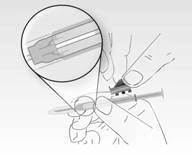
Inspect the sterile packaging and applicator syringe for damage. Remove the syringe from the sterile packaging. Hold the applicator syringe at a slight angle to the light. Ensure that the Goserelin-Vista implant is at least partially visible.
Remove the protective ring.
Figure 2
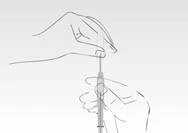
Hold the applicator syringe by the body and remove the protective cap.
Unlike liquid injections, do not attempt to expel air bubbles—doing so may displace the Goserelin-Vista implant.
Figure 3
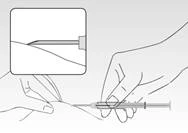
Pinch the patient’s skin with two fingers while simultaneously holding the syringe body, and insert the needle obliquely (almost parallel to the skin).
Insert the needle into the subcutaneous tissue (not into muscle or the peritoneal cavity) of the anterior abdominal wall below the umbilical line, advancing until the body of the applicator syringe contacts the patient’s skin.
This contact with the skin must be maintained throughout the implant administration process!
NOTE. The Goserelin-Vista applicator syringe cannot be used for aspiration. If the injection needle penetrates a large blood vessel, blood will be immediately visible in the syringe chamber. In case of vascular puncture, withdraw the needle, immediately control the resulting bleeding, and monitor the patient for signs or symptoms of abdominal hemorrhage. After confirming hemodynamic stability, another Goserelin-Vista implant may be administered using a new syringe at a different injection site. Exercise particular caution when administering goserelin to patients with low BMI and/or those receiving full-dose anticoagulant therapy.
Figure 4
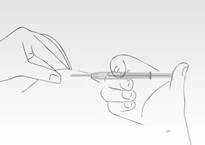
Press the plunger. As the plunger is pressed, the subcutaneous implant moves from the holder to the tip of the needle.
Under no circumstances should the syringe be pulled back. During implant administration, the body of the applicator syringe must remain in contact with the patient’s skin!
Figure 5
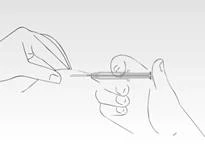
When the plunger reaches its final position, the automatic needle retraction mechanism activates, and the plunger secures the implant in the subcutaneous tissue.
Figure 6
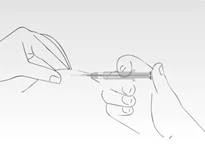
The needle retracts from the patient’s tissue into the polymer body of the applicator syringe. The syringe body should remain in contact with the patient’s skin. Typically, forward movement of the plunger and needle retraction occur in one smooth motion.
Figure 7
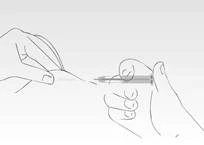
The subcutaneous implant administration process is complete. The needle is fully retracted into the syringe body.
The protective covering of the applicator syringe body prevents injury from the needle tip.
Figure 8
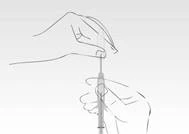
Replace the protective cap.
Do not inject the needle into muscle or the peritoneal cavity.
Dispose of the syringe in a special sharps container.
NOTE. If surgical removal of the implant becomes necessary—though this is unlikely—its location can be identified using ultrasound scanning.
Children.
The medicinal product is not intended for use in children, as safety and efficacy in this age group have not been established.
Overdose.
Symptoms. Human experience with overdose is limited. No clinically significant adverse effects have been observed following administration of goserelin earlier than scheduled or at higher than prescribed doses. Animal studies do not indicate any effects other than the therapeutic ones on sex hormone concentrations and reproductive organs when higher doses of goserelin are administered.
Treatment. In case of overdose, symptomatic treatment should be provided.
Adverse reactions.
The frequency of adverse reactions was determined based on data from clinical trials and post-marketing reports. The most commonly reported adverse reactions included hot flushes, sweating, and injection site reactions.
Adverse events are categorized by frequency as follows: very common (≥ 1/10), common (≥ 1/100 to < 1/10), uncommon (≥ 1/1000 to < 1/100), rare (≥ 1/10000 to < 1/1000), very rare (< 1/10000), and frequency not known (cannot be estimated from the available data). Adverse reactions to goserelin by organ systems according to MedDRA.
| Organ systems |
Frequency |
Men |
Women |
| Benign, malignant and unspecified neoplasms (including cysts and polyps) |
Very rare |
Pituitary tumors |
Pituitary tumors |
| Frequency unknown |
- |
Uterine fibroid degeneration |
|
| Immune system disorders |
Uncommon |
Hypersensitivity reactions to the drug. |
Hypersensitivity reactions to the drug. |
| Rare |
Anaphylactic reactions |
Anaphylactic reactions |
|
| Endocrine system disorders |
Very rare |
Pituitary hemorrhage |
Pituitary hemorrhage |
| Metabolism and nutritional disorders |
Common |
Impaired glucose tolerancea |
- |
| Psychiatric disorders |
Very common |
Decreased libidob |
Decreased libidob |
| Common |
Mood changes, depression |
Mood changes, depression |
|
| Very rare |
Psychiatric disorders |
Psychiatric disorders |
|
| Nervous system disorders |
Common |
Paresthesia |
Paresthesia |
| Spinal cord compression |
- |
||
| - |
Headache |
||
| Cardiovascular disorders |
Very common |
Hot flushesb |
Hot flushesb |
| Common |
Heart failuref, myocardial infarctionf, |
Blood pressure disturbancesc |
|
| Frequency unknown |
QT interval prolongation (see sections "Special precautions" and "Interaction with other medicinal products and other forms of interaction") |
- |
|
| Skin and subcutaneous tissue disorders |
Very common |
Hyperhidrosisb |
Hyperhidrosisb, acnei |
| Common |
Rashd |
Rashd, hair lossh |
|
| Frequency unknown |
Alopeciag |
(see common) |
|
| Musculoskeletal and connective tissue disorders |
Common |
Bone paine |
- |
| Uncommon |
Arthralgia |
Arthralgia |
|
| Renal and urinary disorders |
Uncommon |
Ureteral obstruction |
- |
| Reproductive system and breast disorders |
Very common |
Erectile dysfunction |
- |
| - |
Vulvovaginal dryness |
||
| - |
Breast enlargement |
||
| Common |
Gynecomastia |
- |
|
| Uncommon |
Breast tenderness |
- |
|
| Rare |
- |
Ovarian cysts |
|
| Frequency unknown |
- |
Withdrawal bleeding |
|
| General disorders and administration site conditions |
Very common |
- |
Injection site reactions |
| Common |
Injection site reactions |
Injection site reactions |
|
| - |
Tumor swelling, painful tumor |
||
| Laboratory findings |
Common |
Decreased bone mineral density (see section "Special precautions"), increased body weight |
Decreased bone mineral density, increased body weight |
a Decreased glucose tolerance has been observed in men receiving GnRH agonists. This may manifest as diabetes mellitus or loss of glycemic control in patients with pre-existing diabetes.
b These pharmacological effects rarely require discontinuation of therapy. Hyperhidrosis and hot flushes may persist after cessation of goserelin administration.
c Hypo- or hypertension has occasionally been reported in patients receiving goserelin. These changes are usually temporary and resolve either during continued therapy or after discontinuation of goserelin. Rarely, such changes required medical intervention, including discontinuation of goserelin.
d Usually mild and often decreases without the need to discontinue treatment.
e Initially, patients with prostate cancer may experience a temporary increase in bone pain; in such cases, symptomatic treatment may be prescribed.
f Observed in pharmacoepidemiological studies of GnRH agonists used for the treatment of prostate cancer. The risk apparently increases when used in combination with antiandrogen agents.
g Particularly, loss of body hair is an expected effect due to decreased androgen levels.
h Hair loss on the head has been observed in women, including young women, treated for benign gynecological conditions. This phenomenon is usually mild, but sometimes may be severe.
i In most cases, acne occurred within one month after initiation of treatment.
During goserelin use, the following may occur: hepatic dysfunction and development of jaundice with increased levels of alanine aminotransferase, aspartate aminotransferase, gamma-glutamyl transferase; increased levels of lactate dehydrogenase, alkaline phosphatase, triglycerides; epistaxis, urticaria, pruritus.
Also observed during administration of the medicinal product: urinary system – dysuria, increased blood urea nitrogen, increased creatinine levels, proteinuria; blood system – anemia, leukopenia, thrombocytopenia.
During goserelin administration, local reactions at the injection site (bleeding, hematoma, abscess, induration, pain) and bleeding around the injection site leading to hemorrhagic shock may occur.
Post-marketing experience.
Rarely, abnormal blood test results, cases of hepatic dysfunction, pulmonary embolism, and interstitial pneumonia have been observed during goserelin use. In women receiving the drug for endometriosis and/or fibroids, hypercalcemia has been rarely reported. In case of symptoms suggestive of hypercalcemia (e.g., thirst), appropriate investigations should be performed to rule it out.
Furthermore, in women receiving the drug for benign gynecological conditions, the following adverse reactions have been observed: acne, changes in body hair, dry skin, weight gain, increased serum cholesterol levels, ovarian hyperstimulation syndrome (when used in combination with gonadotropins), vaginitis, vaginal discharge, nervousness, sleep disorders, fatigue, peripheral edema, myalgia, calf muscle spasms, nausea, vomiting, diarrhea, constipation, gastrointestinal disorders, voice changes.
At the beginning of treatment, disease symptoms may temporarily worsen; in such cases, symptomatic treatment may be prescribed.
Rarely, during treatment with GnRH analogs in women, menopause may occur, and menstruation may not resume after completion of therapy. It is unclear whether this is due to the effect of goserelin or the consequence of the underlying gynecological conditions.
Reporting of suspected adverse reactions.
Reporting suspected adverse reactions after drug authorization is important. It allows ongoing monitoring of the benefit-risk balance of the medicinal product. Healthcare professionals, pharmacists, patients, or their legal representatives are encouraged to report all suspected adverse reactions and lack of efficacy to the State Expert Center of the Ministry of Health of Ukraine via the following link: https://aisf.dec.gov.ua/
Shelf life. 4 years.
Use only if the pouch containing the applicator syringe is undamaged.
Use immediately after opening the pouch.
Storage conditions.
Store in the original packaging at a temperature not exceeding 30 °C. Keep out of the reach of children.
Packaging.
One implant in an applicator syringe (the applicator syringe consists of a polymer body with an implant holder, needle, and plunger). One syringe in a pouch with a desiccant capsule. One or three pouches in a cardboard box.
Prescription status.
Prescription only.
Manufacturer.
AMW GmbH / AMW GmbH
Manufacturer's address and place of business.
Birkerfeld 11, Lochham, Warngau, Bavaria, 83627, Germany / Birkerfeld 11, Lochham, Warngau, Bavaria, 83627, Germany
Marketing Authorization Holder.
Mistral Capital Management Limited