Glurenorm
Ukraine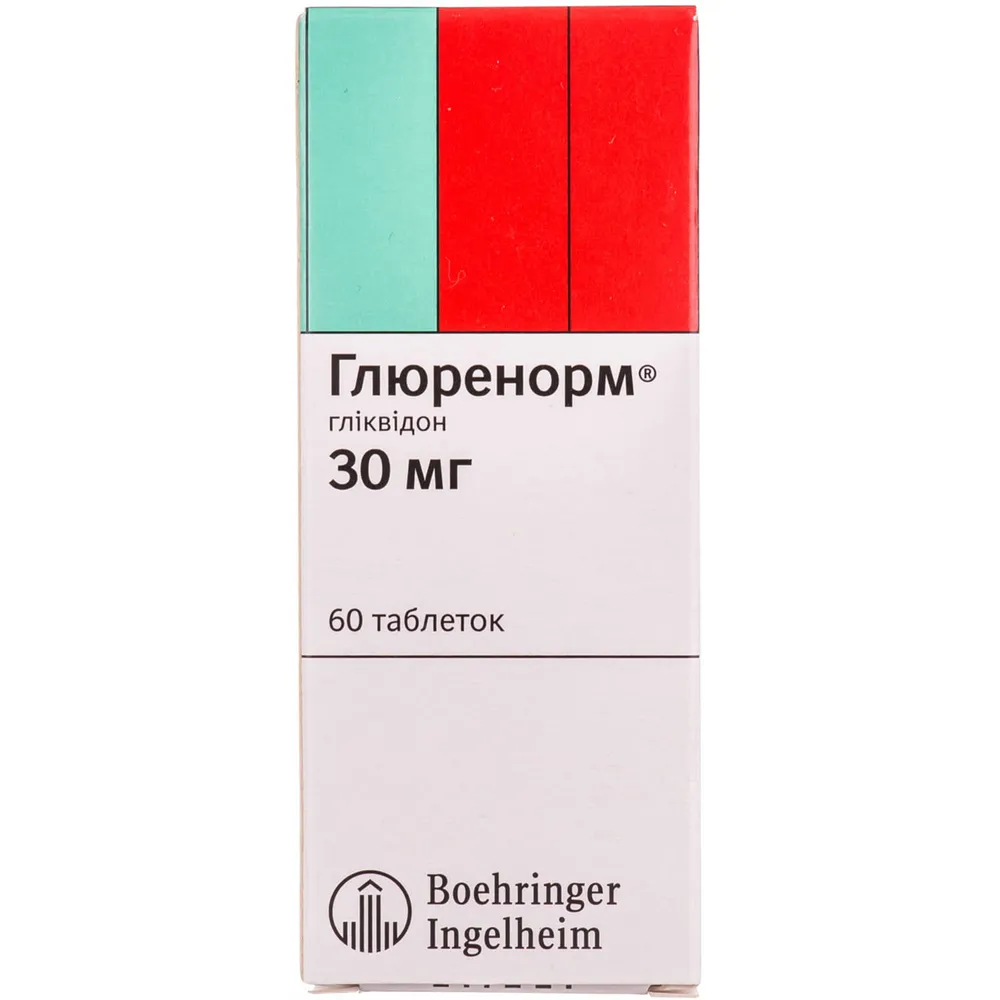
Table of Contents
INSTRUCTIONS FOR MEDICAL USE OF THE MEDICINAL PRODUCT Glurenorm®
Composition:
Active substance: gliquidone;
One tablet contains 30 mg of gliquidone;
Excipients: lactose monohydrate; corn starch; magnesium stearate.
Pharmaceutical form. Tablets.
Main physicochemical properties: white, round, flat on both sides, bevelled edge tablets; on one side – a score line and the marking "57C" on both sides of the score; on the other side – company symbol.
Pharmacotherapeutic group. Blood glucose lowering agents, excluding insulin. Sulfonylurea derivatives. Gliquidone.
ATC code A10BB08.
Pharmacological Properties
Pharmacodynamics
Mechanism of action. Gliquidone stimulates the secretion of endogenous insulin by the beta cells of the pancreas.
Pharmacodynamic effects. The blood glucose-lowering effect begins 60–90 minutes after oral administration, reaches its maximum 2–3 hours after intake, and lasts approximately 8–10 hours. Gliquidone can be considered a short-acting agent; therefore, it is recommended for the treatment of patients with type 2 diabetes who are at increased risk of hypoglycemia, such as elderly patients and those with renal impairment. Since renal elimination of gliquidone is negligible, GLURENORM can primarily be prescribed to patients with renal impairment or diabetic nephropathy. Efficacy and safety of gliquidone treatment have been demonstrated in a limited number of diabetic patients who respond to sulfonylurea therapy and have concomitant liver disease. Only the elimination of metabolically inactive metabolites was delayed. However, severe hepatic impairment is a contraindication (see section "Contraindications").
Pharmacokinetics
Absorption. After oral administration of a single 30 mg dose, gliquidone is rapidly and almost completely (80–95%) absorbed in the gastrointestinal tract, achieving a maximum plasma concentration of 0.65 µg/mL (range: 0.12–2.14 µg/mL). Maximum plasma concentration is reached within 2.25 hours (range: 1.25–4.75 hours).
Based on a two-compartment model, the mean maximum plasma concentration of gliquidone under the concentration-time curve from zero to infinity (AUC0–∞) is 5.1 µg·h/mL (range: 1.5–10.1 µg·h/mL). No differences in plasma concentration levels were observed between diabetic patients and healthy volunteers.
Distribution. Gliquidone is highly bound to plasma proteins (>99%). There are no clinical data on the ability of gliquidone or its metabolites to cross the blood-brain barrier or placenta. Preclinical data indicate that gliquidone and its metabolites do not cross these barriers. There are no data on the ability of gliquidone to pass into breast milk.
Metabolism. Gliquidone is completely metabolized, primarily via hepatic hydroxylation and demethylation. The metabolites of gliquidone exhibit very low or no pharmacological activity compared to the parent drug.
Elimination. Gliquidone is primarily excreted as metabolites via the biliary system into feces. Regardless of the route or amount administered, only a small portion of the dose is excreted by the kidneys and appears in urine as metabolites (approximately 5%). Even after repeated dosing, renal excretion of gliquidone remains minimal. According to the two-compartment model, the mean initial elimination half-life (t½α) of gliquidone is 1.2 hours (range: 0.4–3 hours), while the mean terminal elimination half-life (t½β) is approximately 8 hours (range: 5.7–9.4 hours).
Special patient groups
Elderly patients. Pharmacokinetic characteristics in elderly patients are equivalent to those in middle-aged individuals.
Patients with renal/hepatic impairment. In patients with hepatic impairment, the metabolism of gliquidone is maintained. Gliquidone can be safely used in patients with liver disease. In patients with renal impairment, there is no accumulation of the drug, given that the majority is excreted via the biliary system into feces. The drug can be safely used in patients at risk of chronic nephropathy.
Clinical characteristics.
Indications.
Treatment of type 2 diabetes mellitus in middle-aged and elderly patients when carbohydrate metabolism cannot be successfully controlled by diet therapy alone.
Contraindications.
Hypersensitivity to the active substance or to sulfonylurea derivatives, sulfonamides, or other components of the drug; insulin-dependent type 1 diabetes mellitus; diabetic coma or precoma; metabolic disturbances complicated by acidosis and ketosis; pancreatectomy; periods of severe infections; preoperative period; severe hepatic dysfunction; intermittent acute (hepatic) porphyria.
GLURENORM should not be used during pregnancy and breastfeeding (see section "Use in pregnancy or lactation").
Interaction with other medicinal products and other forms of interaction.
The physician should consider possible interactions with medicinal products affecting glucose metabolism.
Pharmacokinetic and pharmacodynamic interactions with GLURENORM may alter its hypoglycemic effect. Sulfonylureas are highly protein-bound and may therefore be displaced by medicinal products exhibiting high affinity.
Concomitant use of the following medicinal products may enhance the hypoglycemic effect of Glurenorm: ACE inhibitors, allopurinol, analgesics and nonsteroidal anti-inflammatory agents (e.g. salicylates, phenylbutazone), antifungal agents, chloramphenicol, clarithromycin, clofibrates, coumarin anticoagulants, fluoroquinolones, heparin, MAO inhibitors, sulfinpyrazone, sulfonamides, tetracyclines and tricyclic antidepressants, cyclophosphamide and its derivatives, insulin and other oral antidiabetic agents – with or without significant risk of hypoglycemia.
Beta-blockers, other sympatholytics (e.g. clonidine), reserpine and guanethidine may possibly enhance the hypoglycemic effect of Glurenorm and may also mask symptoms of hypoglycemia.
Concomitant use of the following medicinal products may reduce the hypoglycemic effect of Glurenorm: aminoglutethimide, corticosteroids, diazoxide, oral contraceptives, sympathomimetics, rifampicins, thiazide or loop diuretics, thyroid hormones, glucagon, phenothiazines and nicotinic acid.
Barbiturates, rifampicin, phenytoin and similar substances may possibly reduce the hypoglycemic effect of Glurenorm by stimulating liver enzymes.
Decreased or increased hypoglycemic effect of Glurenorm has been observed during concomitant use with H2-receptor antagonists (cimetidine, ranitidine) and alcohol.
Concomitant use of GLURENORM with alcohol reduces alcohol tolerance and impairs metabolism in patients. In addition, excessive use of laxatives leads to metabolic disturbances.
Special precautions for use.
Diabetes treatment requires regular medical supervision. Particular caution should be exercised when adjusting the dose or switching medications.
Although only 5% of Glurenorm is excreted by the kidneys, patients with severe renal insufficiency should be treated under careful medical supervision. In case of symptoms of hypoglycemia such as tachycardia, shock, hyperthermia, moist skin, motor agitation, and hyperreflexia, immediate medical consultation is required, as hypoglycemia may lead to life-threatening conditions, such as coma (see section "Overdose"). During studies with GLURENORM, hypoglycemia was also associated with fever, skin rashes, and nausea. In cases of potentially prolonged hypoglycemia, temporary improvement of the hypoglycemic state after the next dose may be followed by a recurrence of hypoglycemic episode.
Treatment of patients with glucose-6-phosphate dehydrogenase deficiency with sulfonylureas may cause hemolytic anemia. Since GLURENORM belongs to the sulfonylurea class, it should be used with caution in patients with glucose-6-phosphate dehydrogenase deficiency, and alternative non-sulfonylurea therapy should be considered.
Oral antidiabetic therapy should not replace the therapeutic diet, which enables control of the patient's body weight and is mandatory regardless of the use of any prescribed medication.
As with all oral antidiabetic medications, delayed meals or failure to follow the dosing regimen recommended by the physician may lead to a significant drop in blood glucose levels or loss of consciousness, for example, if a tablet is taken before a meal instead of at the beginning of a meal. The impact on blood glucose levels always increases the risk of hypoglycemia. In case of clinical signs of hypoglycemia, sugar-containing food should be consumed immediately. If hypoglycemia persists, prompt treatment should be initiated and medical advice sought.
Physical exertion may enhance the hypoglycemic effects. Alcohol or stress may either enhance or diminish the hypoglycemic effect of sulfonylureas.
Particular attention should be paid to concomitant use of GLURENORM with other medicinal products, especially those that enhance the hypoglycemic effect of GLURENORM (see section "Interaction with other medicinal products and other forms of interaction").
One 30 mg tablet contains 134.6 mg of lactose, and at the maximum recommended dose, 538.4 mg of lactose enters the body. Therefore, this medication is not recommended for patients with rare hereditary galactose intolerance, Lapp lactase deficiency, or glucose-galactose malabsorption.
One tablet of GLURENORM contains 0.1346 g of carbohydrates, equivalent to 0.011 carbohydrate units (CHU).
Use during pregnancy or breastfeeding.
Pregnancy. Studies on the use of Glurenorm during pregnancy or breastfeeding have not been conducted. Therefore, Glurenorm should be avoided for treating women during pregnancy or breastfeeding. If pregnancy is confirmed, Glurenorm should be discontinued and replaced with insulin therapy.
Breastfeeding. It is unknown whether gliclazide or its metabolites are excreted in human breast milk.
Fertility. There are no clinical or preclinical data on the effect of GLURENORM on fertility.
Ability to affect reaction speed when driving or operating machinery.
No studies have been conducted. Patients should be warned about the possible occurrence of drowsiness, dizziness, accommodation disorders, or other clinical signs of hypoglycemia during treatment with GLURENORM. Caution should be exercised when driving or operating machinery. Patients experiencing hypoglycemic effects should avoid potentially hazardous activities.
Dosage and Administration
Patients should strictly follow the physician's recommendations regarding dosage and diet, tailored to the individual metabolic needs of each patient. The patient should not discontinue treatment without consulting a physician.
Initial Therapy
The usual initial dose of GLURENORM U is ½ tablet (15 mg) taken with breakfast. GLURENORM should be taken at the beginning of a meal. After taking the tablet, the patient should not skip the meal. If ½ tablet taken with breakfast is ineffective, the dose may be gradually increased. When the prescribed dose does not exceed two tablets (60 mg), the daily dose of GLURENORM U can be taken as a single dose with breakfast. However, for higher doses, optimal control is achieved by dividing the daily dose into two or three administrations. In such cases, the highest dose should be taken with breakfast. It should be noted that increasing the dose to 4 tablets (120 mg) per day usually does not result in further therapeutic effect enhancement. Therefore, the maximum recommended daily dose is 4 tablets (120 mg).
Special Patient Groups
Patients with Renal Impairment
GLURENORM is primarily excreted as metabolites via the biliary system into feces (see section "Pharmacological Properties. Pharmacokinetics"). The elimination of GLURENORM is not affected by renal function. However, daily doses of gliclazide exceeding 50 mg have not been studied in this patient group. Based on available data, dosage adjustment in patients with impaired renal function is not required (see section "Special Warnings and Precautions for Use").
Patients with Hepatic Impairment
Daily doses of GLURENORM exceeding 75 mg require careful medical monitoring. Since 95% of GLURENORM is metabolized by the liver and excreted via the biliary system, the use of the drug is contraindicated in patients with severe hepatic impairment (see section "Contraindications").
Switching from Another Oral Hypoglycemic Agent with a Similar Mechanism of Action
The initial dose should be determined based on the patient's current disease status at the time of initiating therapy. When switching from another antidiabetic agent to GLURENORM, it should be noted that the effect of 1 tablet of GLURENORM (30 mg) is approximately equivalent to the effect of 1000 mg of tolbutamide. The switch is usually initiated with ½ tablet of GLURENORM.
Combination Therapy
If monotherapy with GLURENORM does not provide adequate glycemic control, additional treatment with metformin is recommended.
Duration of Treatment
GLURENORM is intended for long-term therapy. Dose adjustments, temporary discontinuation of the drug, or changes in therapy should only be made under medical supervision.
Children
GLURENORM is not recommended for use in children due to insufficient data on safety and efficacy.
Overdose
Overdose of sulfonylurea may cause hypoglycemia.
Symptoms
Prolonged hypoglycemic reactions may occur, which can lead to recurrent episodes of hypoglycemia despite successful initial treatment. Patients may develop life-threatening hypoglycemic shock characterized by symptoms such as unconsciousness, tachycardia, moist skin, motor agitation, hyperreflexia, gastrointestinal disturbances, and skin reactions.
Treatment
In case of hypoglycemia, urgent oral or intravenous administration of glucose is required. Plasma glucose concentration should be monitored, and continued glucose administration may be necessary. In case of allergic reactions, discontinue the drug and replace it with another oral antidiabetic agent or insulin.
Adverse reactions.
The frequency of adverse reactions is defined as: very common (≥ 1/10); common (≥ 1/100 < 1/10); uncommon (≥ 1/1000 < 1/100); rare (≥ 1/10000 < 1/1000); very rare (< 1/10000); not known (cannot be estimated from available data).
Blood and lymphatic system disorders:
rare – agranulocytosis*, leukopenia, thrombocytopenia.
Metabolism and nutrition disorders:
common – hypoglycemia;
rare – decreased appetite;
not known – weight gain.
Nervous system disorders:
uncommon – somnolence, dizziness, headache;
rare – paresthesia.
Eye disorders:
uncommon – accommodation disorder.
Cardiac disorders:
rare – angina pectoris, extrasystoles.
Vascular disorders:
rare – cardiac failure, arterial hypotension.
Gastrointestinal disorders:
uncommon – diarrhea, vomiting, abdominal discomfort, nausea, constipation, dry mouth.
Hepatobiliary disorders:
rare – cholestasis.
Skin and subcutaneous tissue disorders:
uncommon – rash, pruritus;
rare – Stevens-Johnson syndrome, photosensitivity reactions, urticaria.
General disorders:
rare – chest pain, fatigue.
*Adverse reactions not observed during clinical trials but reported during the post-marketing period.
Shelf life. 3 years.
Storage conditions.
Store at temperatures not exceeding 25 ºC in a place inaccessible to children.
Packaging.
10 tablets in a blister, 6 blisters in a cardboard box.
Prescription category.
Prescription only.
Manufacturer.
Boehringer Ingelheim Hellas Single Member S.A.
Boehringer Ingelheim Hellas Single Member S.A.
Manufacturer's address and place of business.
5th km Paiania-Markopoulo, Koropi Attiki, 19441, Greece
5th km Paiania-Markopoulo, Koropi Attiki, 19441, Greece.