Glucose
Ukraine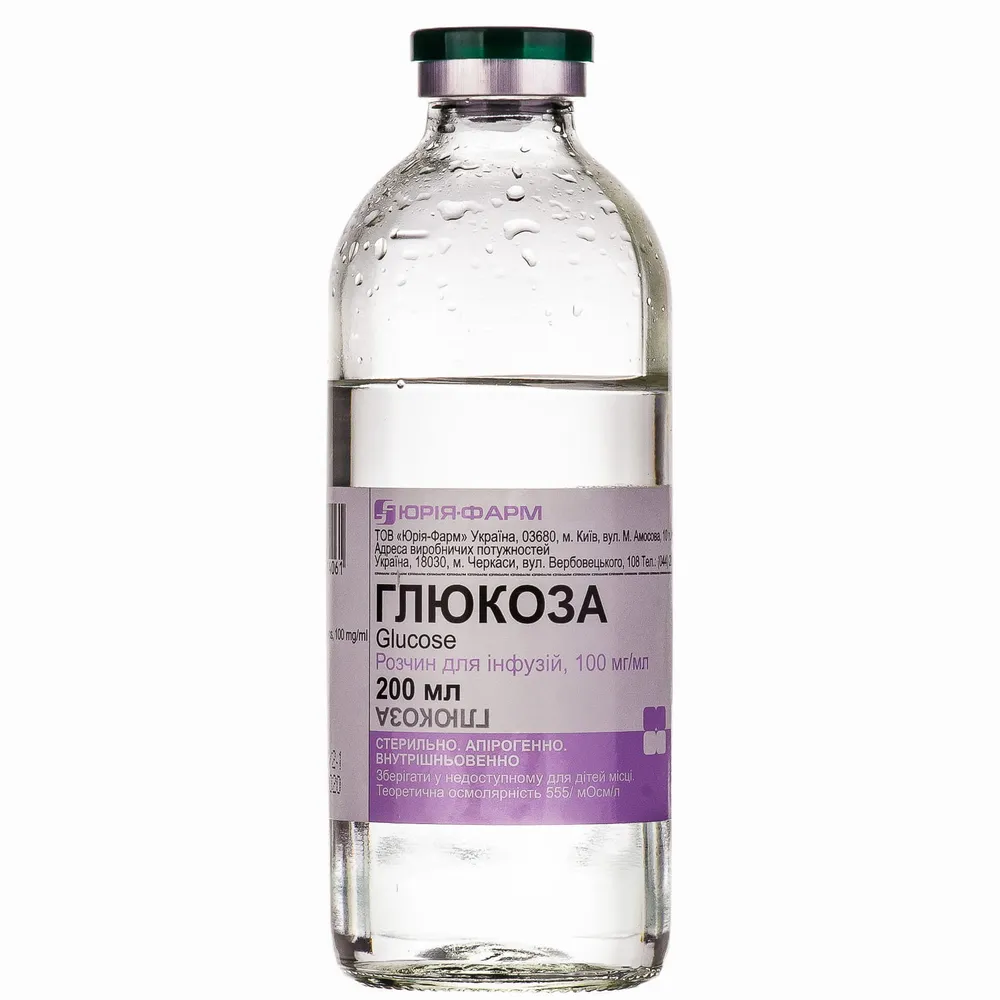
Table of Contents
INSTRUCTIONS FOR MEDICAL USE OF THE MEDICINAL PRODUCT GLUCOSE (GLUCOSE)
Composition:
Active substance: glucose monohydrate;
1 ml of solution contains 50 mg of glucose monohydrate (calculated as 100 % substance);
Excipient: water for injections.
Pharmaceutical form. Infusion solution.
Main physicochemical properties: colorless or slightly yellowish clear liquid.
Theoretical osmolarity: 278 mOsm/L; pH: 3.5−6.5.
Pharmacotherapeutic group. Blood substitutes and perfusion solutions.
ATC code B05C X01.
Pharmacological properties.
Pharmacodynamics.
The pharmacological properties of this solution are determined by the properties of glucose, which is the primary source of energy for cellular metabolism. Glucose is administered as a source of carbohydrates in parenteral nutrition. In addition, glucose infusion solution provides water homeostasis without ionic additives.
5% glucose infusion solution is an isoosmotic solution with an osmolarity of 278 mOsm/L.
The pharmacodynamics of medicinal products diluted in glucose solution will depend on the properties of the dissolved drug.
Pharmacokinetics.
Glucose is metabolized via pyruvic or lactic acid to carbon dioxide and water, producing energy.
The pharmacokinetics of medicinal products diluted in glucose solution will depend on the properties of the dissolved drug.
Clinical characteristics.
Indications.
- Hyper- and isotonic dehydration.
- Intoxication.
- Hypoglycemia.
- In children, to prevent disturbances of water-electrolyte balance during surgical procedures.
- As a solvent for other compatible medicinal solutions.
Contraindications.
The solution is contraindicated in uncompensated diabetes mellitus, other known conditions of glucose intolerance (e.g., metabolic stress states), hyperosmolar coma, hyperglycemia, hyperlactatemia, and in patients with hypersensitivity to the active substance.
The medicinal product must not be administered simultaneously with blood preparations.
Interaction with other medicinal products and other forms of interaction.
5% glucose solution has a direct glycemic effect and also influences fluid and electrolyte balance. This must be taken into account when administering 5% glucose solution to patients receiving other agents affecting serum glucose levels or water-electrolyte balance.
The following medicinal products enhance the effect of vasopressin, which in turn leads to reduced renal excretion of electrolytes, water retention, and an increased risk of hospital-acquired hyponatremia following inadequately balanced intravenous therapy (see sections "Method and route of administration and dosage", "Special precautions for use", and "Adverse reactions").
- Agents stimulating vasopressin release: chlorpropamide, clofibrate, carbamazepine, vincristine, selective serotonin reuptake inhibitors,
3,4-methylenedioxy-N-methamphetamine, ifosfamide, antidepressants, narcotics. - Agents potentiating vasopressin action: chlorpropamide, NSAIDs (non-steroidal anti-inflammatory drugs), cyclophosphamide.
- Vasopressin analogs: desmopressin, oxytocin, vasopressin, terlipressin.
Other medicinal products that increase the risk of hyponatremia include diuretics in general and antiepileptic agents such as oxcarbazepine.
When used concomitantly with thiazide diuretics and furosemide, their potential to affect serum glucose levels should be considered. Insulin promotes glucose uptake into peripheral tissues. Glucose solution reduces the hepatotoxic effect of pyrazinamide. Administration of large volumes of glucose solution may lead to hypokalemia, thereby increasing the toxicity of concurrently administered cardiac glycosides. Glucose is incompatible in solution with aminophylline, barbiturates, hydrocortisone, kanamycin, soluble sulfonamides, and cyanocobalamin.
Concomitant administration of catecholamines and steroids reduces glucose uptake.
Special precautions for use.
Glucose solutions for intravenous infusion are usually isotonic. However, in the body, glucose-containing solutions may become physiologically hypotonic due to the rapid metabolism of glucose.
Dilution and effects on serum electrolytes
Depending on the volume and rate of infusion, the patient's clinical condition, and glucose metabolism, intravenous administration of glucose may lead to:
- hyperosmolar state, osmotic diuresis, and dehydration;
- hypoosmolar state;
- electrolyte imbalances such as:
- hyponatremia (see below);
- hypokalemia;
- hypophosphatemia;
- hypomagnesemia;
- fluid overload/hypervolemia;
- congestion phenomena, including pulmonary congestion and edema.
The above effects may result not only from the administration of electrolyte-free solutions but also from glucose infusion itself.
To prevent the development of plasma hypoosmolality, 5% glucose solution may be combined with isotonic sodium chloride solution.
Patients with non-osmotic vasopressin release [e.g., in acute illness, pain, postoperative stress, infections, burns, and CNS (central nervous system) disorders], patients with heart, liver, or kidney disease, and patients receiving vasopressin agonists (see section "Interaction with medicinal products and other forms of interaction") are at high risk of developing acute hyponatremia when infused with hypotonic solutions.
Acute hyponatremia may lead to acute hyponatremic encephalopathy (cerebral edema), characterized by headache, nausea, seizures, lethargy, and vomiting. Patients with cerebral edema are at particularly high risk of life-threatening and irreversible brain damage. The medicinal product should be used with extreme caution in patients with intracranial or intraspinal hemorrhage.
Children, women of reproductive age, and patients with cerebral complications (e.g., meningitis, intracranial hemorrhage, or traumatic brain injury) are at increased risk of severe and life-threatening cerebral edema due to acute hyponatremia.
Clinical assessment and periodic laboratory monitoring of fluid balance, electrolyte concentrations, and acid-base balance may be required during prolonged parenteral therapy or whenever the patient's condition or infusion rate warrants such evaluation.
Particular attention is required for patients at increased risk of fluid and electrolyte imbalance, which may be exacerbated by increased free water volume, hyperglycemia, or the need for insulin administration (see below).
Hyperglycemia
- Rapid infusion of glucose solutions may lead to marked hyperglycemia and hyperosmolar syndrome.
- In case of hyperglycemia, the infusion rate should be adjusted and/or insulin administered. When large doses are infused, insulin may be required subcutaneously at a dose of 1 IU per 4–5 g of glucose. Blood glucose levels must be monitored during prolonged intravenous administration of the product.
- Parenteral potassium administration may be necessary if required.
- 5% intravenous glucose solution should be administered with special caution to patients:
- with impaired glucose tolerance (e.g., in diabetes mellitus (except uncompensated forms, see section "Contraindications"), renal failure, sepsis, trauma, or shock);
- with severe malnutrition (risk of refeeding syndrome,
see below); - with thiamine deficiency, such as in patients with chronic alcoholism (risk of severe lactic acidosis due to impaired oxidative metabolism of pyruvate);
- with ischemic stroke or severe traumatic brain injury.
Infusion is not recommended during the first 24 hours after head injury. Blood glucose levels should be monitored, as early hyperglycemia may lead to complications in patients with severe traumatic brain injury;
- neonates.
Effect on insulin secretion
Prolonged intravenous glucose administration and associated hyperglycemia may lead to reduced glucose-stimulated insulin secretion.
Hypersensitivity reactions
- Hypersensitivity/infusion reactions, including anaphylactic/anaphylactoid reactions, have been reported with glucose solutions (see section "Adverse reactions"). Therefore, glucose-containing solutions are not recommended for patients with hypersensitivity to glucose.
- Infusion must be stopped immediately if any signs or symptoms indicating hypersensitivity reactions occur. The patient's condition should be assessed and appropriate treatment initiated.
Refeeding syndrome
- Severe malnutrition in patients may lead to refeeding syndrome, characterized by shifts in intracellular potassium, phosphorus, and magnesium, resulting in an anabolic state. Thiamine deficiency and fluid retention may also occur. To prevent such complications, careful monitoring and gradual increase in nutrient intake are required, avoiding overfeeding.
Pediatric population
Infusion rate and volume depend on the patient's age, body weight, clinical and metabolic status, concomitant therapy, and must be determined by a physician experienced in intravenous infusion therapy in children.
To avoid potentially life-threatening infusions in neonates, special attention must be paid to the method of administration. A syringe infusion pump should be used for intravenous administration of fluids or medicinal products in neonates.
When using an infusion pump, all clamps in the intravenous infusion set must be completely closed before disconnecting the set, or the pump must be turned off. This rule is mandatory regardless of whether the infusion set has a free-flow protection device.
Intravenous infusion sets and administration devices must be continuously monitored.
Glycemic issues in pediatric patients
Neonates, especially those born prematurely or with low birth weight, are at increased risk of hypo- or hyperglycemia and therefore require careful monitoring during intravenous glucose therapy to ensure adequate glycemic control and avoid adverse effects. Hypoglycemia in neonates may lead to prolonged seizures, coma, and brain damage. Hyperglycemia may be associated with intraventricular hemorrhage, delayed onset of bacterial and fungal infections, retinopathy of prematurity, necrotizing enterocolitis, bronchopulmonary dysplasia, potentially requiring prolonged hospitalization and leading to fatal outcomes.
Hyponatremia-related issues in pediatric patients
- Children (including neonates and older children) are at increased risk of hypotonic hyponatremia and are prone to developing hyponatremic encephalopathy.
- Plasma electrolyte concentrations must be closely monitored in pediatric patients.
- Rapid correction of hypotonic hyponatremia may be dangerous (risk of severe neurological complications).
- Dosage, infusion rate, and duration must be determined by a physician experienced in intravenous infusion therapy in children.
Use in elderly patients
When selecting the type of infusion solution, volume/infusion rate for elderly patients, it should be considered that geriatric patients often have heart, kidney, liver diseases, or other comorbidities, or are receiving concomitant medication.
Administration with blood
5% glucose solution for intravenous infusion (i.e., aqueous glucose solution without electrolytes) should not be administered simultaneously, before, or after blood transfusion through the same infusion set due to the risk of hemolysis and pseudoagglutination. Addition of other medicinal products or improper administration technique may lead to pyrogenic reactions (febrile reactions). Infusion must be stopped immediately if adverse reactions occur.
Use during pregnancy or breastfeeding.
When a medicinal product is added to the glucose solution, the properties of each drug and its use during pregnancy and breastfeeding should be considered separately.
Maternal intravenous glucose infusion during labor may stimulate fetal insulin production, thereby increasing the risk of fetal hyperglycemia and metabolic acidosis, as well as drug-induced hypoglycemia in newborns.
Pregnancy
5% glucose solution may be used during pregnancy when clinically indicated. However, the medicinal product should be administered with special caution to pregnant women during labor, especially when combined with oxytocin, due to the risk of hyponatremia (see sections "Special precautions for use", "Interaction with other medicinal products and other forms of interaction", and "Adverse reactions").
Fertility
There are no data on the effect of 5% glucose solution on fertility. Harmful effects are not expected when the medicinal product is used according to indications.
Breastfeeding
There is insufficient evidence regarding the effect of glucose solution on breastfeeding. Harmful effects are not expected when the product is used according to indications. 5% glucose solution may be used during breastfeeding.
Ability to affect performance and drive vehicles or operate machinery.
Data are unavailable due to the exclusive use of the medicinal product in a hospital setting.
Method of Administration and Dosage
The medicinal product is administered intravenously by drip infusion. The dose for adults is up to 1500 mL per day. The maximum daily dose for adults is 2000 mL. If necessary, the maximum infusion rate for adults is 150 drops per minute (500 mL/h).
Method of Administration
The solution is intended for intravenous infusion (into peripheral and central veins).
When glucose solution is used as a solvent for other medicinal products for intravenous infusion, the method of administration of the added medicinal products will be determined according to the appropriate volumes for the specific therapeutic regimen.
5% glucose infusion solution is an iso-osmotic solution (see section "Basic physicochemical properties").
Precautions for Use of the Medicinal Product
Before administration, the solution should be visually inspected for the presence of particulate matter and discoloration. Only clear, colorless or slightly yellowish solution, free from visible particles and in undamaged packaging, should be used. The solution should be administered immediately after the infusion system is connected.
The product should be administered using sterile equipment and following aseptic technique. During preparation of the intravenous infusion system, care must be taken to prevent air from entering the infusion system (risk of air embolism).
Depending on the patient's clinical needs, electrolytes may be prescribed and administered before or during infusion by injection into the system.
When diluting medicinal products in glucose solution, the final osmolarity of the prepared infusion solution must be monitored. Administration of hyperosmolar solutions may cause venous irritation and phlebitis. The addition of drugs to glucose solution should be performed under aseptic conditions. The prepared solution should be used immediately.
The contents of a glass bottle are intended for use in a single patient only. After the bottle seal is broken, any unused portion of the solution must be discarded.
Children
The rate and volume of infusion depend on the age, body weight, clinical and metabolic condition of the patient, concomitant therapy, and are determined by a physician experienced in intravenous infusion therapy in children.
Overdose
Prolonged administration or infusion at an increased rate of a large volume of 5% glucose solution may lead to hyperosmolarity, hyponatremia, dehydration, hyperglycemia, glucosuria, osmotic diuresis (due to hyperglycemia), water intoxication, and edema. Severe hyperglycemia and hyponatremia may have fatal outcomes (see sections "Adverse Reactions" and "Special Warnings and Precautions for Use").
In case of suspected overdose, administration of 5% glucose solution should be stopped immediately. Symptomatic treatment and administration of regular insulin should be initiated in case of overdose.
Adverse reactions.
Unwanted reactions that occurred in patients receiving 5% glucose solution during the post-marketing period are listed in the table below.
The frequency of adverse reactions is defined according to the following categories: very common (≥ 1/10); common (≥ 1/100 to < 1/10); uncommon (≥ 1/1000 to < 1/100); rare (≥ 1/10000 to < 1/1000); very rare (< 1/10000); frequency not known (cannot be estimated from available data).
| System Organ Class |
Adverse reactions (MedDRA [Medical Dictionary for Regulatory Activities] term) |
Frequency |
| Immune system disorders |
Anaphylactic reactions, hypersensitivity, allergic reactions (angioedema, shock) |
Unknown |
| Nervous system disorders |
Hypotonic encephalopathy* |
Unknown |
| Metabolism and nutrition disorders |
Electrolyte imbalance, hypokalemia, hypomagnesemia, hypophosphatemia, hyperglycemia, dehydration, hypervolemia, acquired hospital hyponatremia* |
Unknown |
| Gastrointestinal disorders |
Nausea of central origin |
Very rare |
| Skin and subcutaneous tissue disorders |
Rash |
Unknown |
| Vascular disorders |
Vein thrombosis, phlebitis |
Unknown |
| Renal and urinary disorders |
Polyuria |
Unknown |
| General disorders and administration site conditions |
Chills, pyrexia, infusion site infection, infusion site irritation (e.g., erythema), extravasation, local reaction, local pain |
Unknown |
* Acquired hospital-acquired hyponatremia may lead to irreversible brain damage and fatal outcomes due to the development of acute hyponatremic encephalopathy (see section "Special precautions").
If adverse reactions occur, administration of the solution should be discontinued, the patient's condition assessed, and appropriate medical assistance provided.
Reporting suspected adverse reactions
Reporting of adverse reactions following drug registration is of great importance. It enables ongoing monitoring of the benefit-risk balance of the medicinal product. Healthcare and pharmacy professionals, as well as patients or their legal representatives, should report all suspected adverse reactions and lack of efficacy through the Automated Pharmacovigilance Information System at the following link: https://aisf.dec.gov.ua
Shelf life.
3 years.
Storage conditions.
Store out of reach of children at a temperature not exceeding 30 °C. Store in the original packaging.
Incompatibility.
Glucose is incompatible in solutions with aminophylline, soluble barbiturates, erythromycin, hydrocortisone, warfarin, kanamycin, soluble sulfonamides, and cyanocobalamin.
Do not use in the same system simultaneously or immediately before/after blood transfusion due to the risk of pseudoagglutination.
Prior to diluting medicinal products in 5% glucose solution, compatibility with the solvent must be evaluated. Incompatibility should be assessed by the physician through visual inspection of the final solution for presence of precipitate, undissolved complexes or crystals, and color change. Medicinal products incompatible with 5% glucose solution should not be diluted in it.
Packaging.
250 ml or 500 ml in glass bottles.
Prescription status.
Prescription only.
Manufacturer.
DIAKO BIOFARMACEUTICI S.R.L.
DIACO BIOFARMACEUTICI S.R.L.
Manufacturer's address and location of operations.
VIA FLAVIA, 124, TRIESTE (TS), 34147, Italy