Glucagen® 1 mg hypokit
Ukraine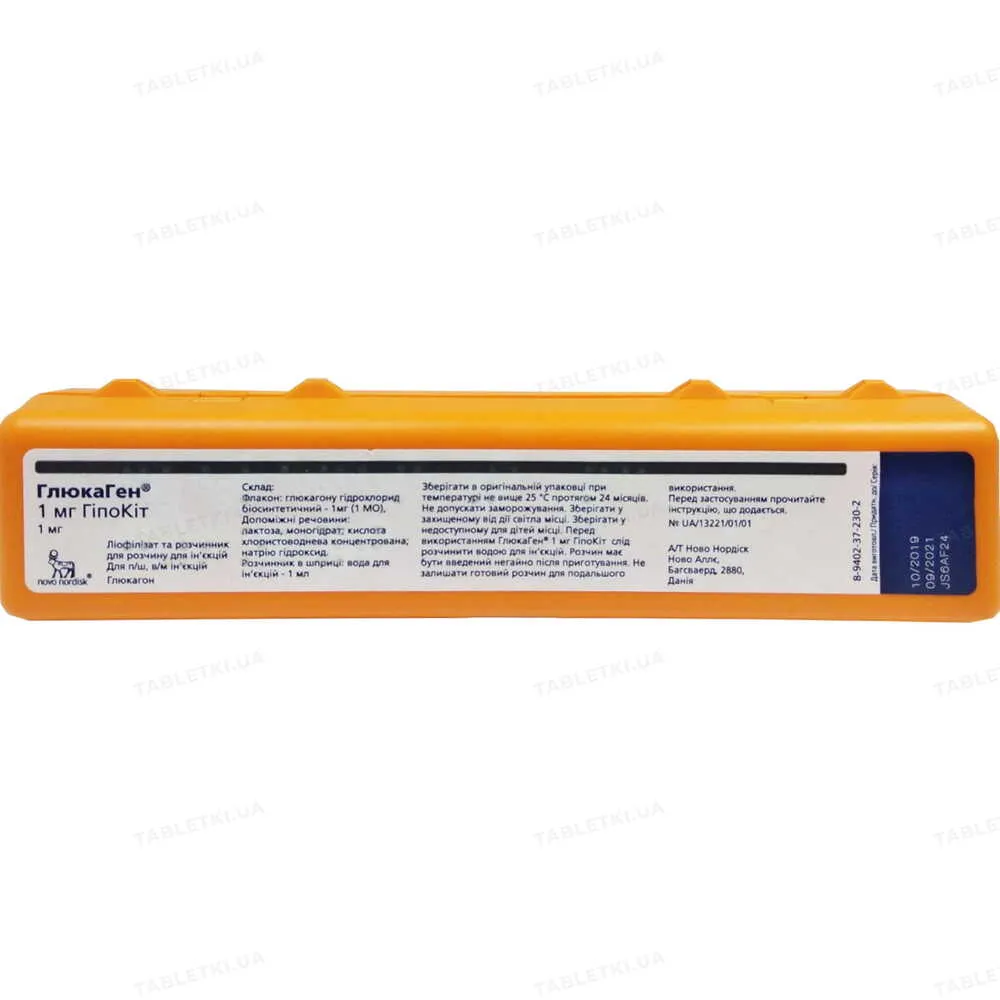
Table of Contents
I N S T R U C T I O N for medical use of the medicinal product GLUCAGEN® 1 MG HYPOKIT (GLUCAGEN® 1 MG HYPOKIT)
Composition:
Active substance: glucagon,
human glucagon produced by recombinant DNA technology in Saccharomyces cerevisiae.
One vial contains 1 mg of glucagon as hydrochloride of biosynthetic origin, equivalent to 1 mg (1 IU) of glucagon/ml after reconstitution of the preparation;
Excipients: lactose monohydrate; hydrochloric acid concentrated; sodium hydroxide; solvent: water for injections.
The reconstituted solution contains 107 mg/ml of lactose monohydrate.
Pharmaceutical form. Lyophilisate and solvent for solution for injection.
Main physicochemical properties: prior to reconstitution, the lyophilized powder should be white or almost white. The solvent should be clear, colourless and free from visible particles.
Pharmacotherapeutic group. Pancreatic hormones. Glycogenolytic hormones.
ATC code H04AA01.
Pharmacological properties.
Glucagen® 1 mg HypoKit is a preparation containing biosynthetic glucagon, which is structurally identical to human glucagon.
Pharmacodynamics.
Glucagon is a hyperglycemic agent that mobilizes hepatic glycogen, which is released into the bloodstream as glucose. Glucagon suppresses tone and peristalsis of smooth muscles in the gastrointestinal tract.
When treating severe hypoglycemia, the effect on blood glucose levels occurs within 10 minutes. The onset of the inhibitory effect on gastrointestinal motility occurs within 1 minute after intravenous injection. The duration of action is 5–20 minutes, depending on the dose. After intramuscular injection, the onset of action occurs within 5–15 minutes and lasts for 10–40 minutes.
Pharmacokinetics.
Glucagon is degraded by enzymes in blood plasma and in organs into which it penetrates. The kidneys and liver are the organs where glucagon degradation predominantly occurs, each accounting for approximately 30% of metabolic clearance. The half-life of glucagon in blood is short and amounts to 3–6 minutes.
The metabolic clearance of glucagon in the human body is 10 ml/kg/min.
Preclinical safety data
No relevant preclinical safety data providing useful information for healthcare professionals prescribing the medicinal product are available.
Clinical characteristics.
Indications.
Therapeutic indication
Glucagen® 1 mg HypoKit is indicated for the treatment of severe hypoglycemic reactions occurring in adults and children with insulin-dependent diabetes mellitus who are receiving insulin.
Diagnostic indication
Glucagen® 1 mg HypoKit is indicated for inhibition of intestinal peristalsis in adults.
Contraindications.
Hypersensitivity to the active substance or to any of the excipients. Pheochromocytoma.
Interaction with other medicinal products and other forms of interaction.
The interactions listed below may occur when using Glucagen® 1 mg HypoKit.
Insulin acts antagonistically to glucagon. In the presence of indomethacin, glucagon may lose its ability to increase blood glucose levels or may act paradoxically and even cause hypoglycemia. Glucagon may enhance the anticoagulant effect of warfarin. In patients receiving beta-blockers, a more pronounced increase in pulse rate and blood pressure may be expected; however, this increase will be transient due to the short half-life of glucagon. In patients with ischemic heart disease, such an increase in blood pressure and pulse rate may require symptomatic therapy.
When Glucagen® 1 mg HypoKit is used according to approved indications, interactions with other medicinal products have not been observed.
Special precautions for use.
Traceability
In order to improve the traceability of biological medicinal products, the name and batch number of the administered product must be clearly documented on the packaging.
Due to the instability of GlucaGen® 1 mg HypoKit in solution, the product should be administered immediately after reconstitution and must not be given as an intravenous infusion.
Therapeutic indication
To prevent recurrence of hypoglycemia, the patient should ingest carbohydrates orally as soon as the effect of the drug is observed, in order to restore hepatic glycogen stores.
Glucagon will not be effective in patients with depleted liver glycogen stores. Therefore, the effect of glucagon is minimal or absent in patients who have not eaten for prolonged periods, in patients with adrenal insufficiency, chronic hypoglycemia, or in cases where hypoglycemia is caused by excessive alcohol consumption. Unlike epinephrine, glucagon does not affect muscle phosphorylase and therefore cannot promote the mobilization of carbohydrates from sites where significantly larger glycogen stores are present than in skeletal muscle.
Diagnostic indication
Administration of glucagon for diagnostic procedures may be associated with discomfort, especially when administered on an empty stomach. Nausea, hypoglycemia, and changes in blood pressure have been reported in such cases. After completion of the diagnostic procedure, the patient should be given a carbohydrate-rich meal, unless contraindicated by the diagnostic procedure itself. If the diagnostic procedure requires fasting after completion or if the patient develops severe hypoglycemia, intravenous glucose administration may be necessary.
GlucaGen® 1 mg HypoKit may increase myocardial oxygen demand and may also cause elevated blood pressure and increased pulse rate. When using GlucaGen® 1 mg HypoKit as a diagnostic agent, patients with heart disease should be closely monitored and appropriate treatment should be administered if indicated.
When used as a diagnostic agent, GlucaGen® 1 mg HypoKit may cause transient hyperglycemia in patients with diabetes mellitus. Patients with diabetes should be closely monitored for changes in blood glucose levels during use, and appropriate treatment should be initiated if indicated.
The product should be used with caution as a diagnostic agent in patients with glucagonoma.
Therapeutic and diagnostic indications
It should be remembered that glucagon is an antagonist of insulin.
Caution should be exercised when administering GlucaGen® 1 mg HypoKit to patients with insulinoma.
Do not use the solution if it has a gel-like consistency or if the GlucaGen® 1 mg HypoKit powder has not dissolved completely.
Glucagon stimulates the release of catecholamines. In patients with pheochromocytoma, glucagon may trigger the release of large amounts of catecholamines, leading to an acute hypertensive reaction.
Glucagon is contraindicated in patients with pheochromocytoma (see section "Contraindications").
Excipients
GlucaGen® 1 mg HypoKit contains less than 1 mmol of sodium (23 mg) per maximum dose (2 mL), i.e. it is practically sodium-free.
Use during pregnancy or breastfeeding.
Pregnancy
GlucaGen® 1 mg HypoKit does not cross the human placental barrier. Glucagon has been used in pregnant women with diabetes mellitus, but no harmful effects of the drug on the course of pregnancy or on fetal or neonatal health have been reported to date.
GlucaGen® 1 mg HypoKit may be used for the treatment of severe hypoglycemia during pregnancy.
Breastfeeding
Glucagon is rapidly eliminated from the blood (mainly by the liver) (t1/2 3–6 min); therefore, the amount of glucagon excreted into breast milk in women who are breastfeeding, following treatment of severe hypoglycemic episodes, is expected to be extremely low. Since glucagon is degraded in the gastrointestinal tract and cannot be absorbed in its intact form, it does not produce any metabolic effect on the infant. GlucaGen® 1 mg HypoKit may be used during breastfeeding.
Reproductive function
Studies on the effects of GlucaGen® 1 mg HypoKit on reproductive function in animals have not been conducted. Studies in rats did not reveal any adverse effects on reproductive function following glucagon administration.
Effect on ability to drive and use machines.
After an episode of severe hypoglycemia, a patient's concentration and reaction ability may be impaired. Therefore, patients should not drive or operate machinery until their health status has fully stabilized.
In some cases, hypoglycemia has been reported after diagnostic procedures. Therefore, driving or operating machinery should only be resumed after ingestion of a carbohydrate-rich meal.
Method of Administration and Dosage
Dosage
Therapeutic Indication (Severe Hypoglycemia)
Dosage for adults: Administer 1 mg by subcutaneous or intramuscular injection.
Special Patient Groups
Children (< 18 years of age): GlucaGen® 1 mg HypoKit may be used to treat severe hypoglycemia in children and adolescents.
Pediatric dosage: Administer 0.5 mg (for children with body weight below 25 kg or age below 6–8 years) or 1 mg (for children with body weight above 25 kg or age 6–8 years and older).
Elderly patients (≥ 65 years of age): GlucaGen® 1 mg HypoKit may be used in elderly individuals.
Renal and hepatic impairment: GlucaGen® 1 mg HypoKit may be used in patients with renal or hepatic insufficiency.
Diagnostic Indication (Inhibition of Gastrointestinal Motility)
Dosage for adult patients: The diagnostic dose for relaxation of the stomach, duodenal bulb, duodenum, and small intestine is 0.2–0.5 mg given as an intravenous injection or 1 mg intramuscularly; the dose for relaxation of the large intestine is 0.5–0.7 mg intravenously or 1–2 mg intramuscularly.
Special Patient Groups
Children (< 18 years of age): The safety and efficacy of GlucaGen® 1 mg HypoKit for inhibition of gastrointestinal motility in children and adolescents have not been studied. Data are lacking.
Elderly patients (≥ 65 years of age): GlucaGen® 1 mg HypoKit may be used in elderly individuals.
Renal and hepatic impairment: GlucaGen® 1 mg HypoKit may be used in patients with renal or hepatic insufficiency.
GlucaGen® 1 mg HypoKit is supplied as a sterile lyophilized glucagon powder (GlucaGen®) in a 2 mL vial, included in a kit with a solvent (sterile water for injection) in a single-use 1.5 mL syringe. The vial has a protective plastic cap that must be removed to reconstitute the powder. If the cap is loose or missing, the product should not be used.
After reconstitution of the glucagon powder with sterile water for injection, a solution with a concentration of 1 mg (1 IU) in 1 mL is obtained.
Reconstitute the lyophilized powder with the provided solvent as described below in the section “Preparation and Administration of the Injection.” The reconstituted solution of GlucaGen® 1 mg HypoKit is intended for subcutaneous, intramuscular, or intravenous injection.
Therapeutic Indication (Severe Hypoglycemia)
The medication is administered subcutaneously or intramuscularly. The clinical effect usually occurs within 10 minutes after administration. Once the patient is able to swallow, they should consume carbohydrate-rich food orally to restore liver glycogen stores and prevent recurrence of hypoglycemia. If the patient does not respond within 10 minutes, intravenous glucose should be administered.
Diagnostic Use (Inhibition of Gastrointestinal Motility)
GlucaGen® 1 mg HypoKit is administered by healthcare professionals. The onset of action occurs within 1 minute after intravenous administration of 0.2–0.5 mg and lasts for 5–20 minutes. After intramuscular administration of 1–2 mg, onset of action occurs within 5–15 minutes and lasts for 10–40 minutes.
After completion of the diagnostic procedure, the patient should be given oral carbohydrate-containing food, unless contraindicated by the diagnostic procedure performed.
Special Precautions for Handling and Disposal of the Medicinal Product
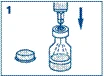
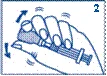
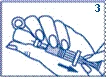
The reconstituted solution must be clear and colorless. Prepare an injection of 1 mg (1 IU) per 1 mL for subcutaneous, intramuscular, or intravenous administration.
Preparation and Administration of the Injection
|
|
|
|
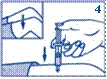
It is important to remove all air bubbles from the syringe:
Continue pressing the plunger until the correct injection dose is obtained. A small amount of liquid will be expelled from the syringe. See section "Required amount of medication" below. |
|
|
|
After using the medicinal product GlucaGen® 1 mg Hypokit, it is necessary to contact a doctor or healthcare professional. The cause of the severe drop in blood sugar levels should be determined, as well as how to prevent such situations in the future. |
|
Required amount of the medicinal product
The recommended dose is:
- Adults: administer the full dose of the medicinal product (1 mL), i.e. the amount corresponding to the mark "1.0" on the syringe.
- Children under 8 years of age or children aged 8 years and older with body weight less than 25 kg: administer half the dose of the medicinal product (0.5 mL), i.e. the amount corresponding to the mark "0.5" on the syringe.
- Children aged 8 years and older or children under 8 years of age with body weight more than 25 kg: administer the full dose of the medicinal product (1 mL), i.e. the amount corresponding to the mark "1" on the syringe.
Please note that for diagnostic procedures, it may be appropriate to use a syringe with a finer needle and finer graduation.
Any unused portion of the medicinal product and all waste materials must be disposed of according to local requirements.
Administration by other persons
In case of severe hypoglycemia, when the patient is unable to take carbohydrates orally, friends or relatives should administer glucagon subcutaneously or intramuscularly into the upper outer part of the thigh muscle (at the doses specified above).
After the patient regains consciousness, they should take carbohydrate-containing food orally to prevent recurrence of hypoglycemia and should contact a physician.
Children.
Use in children depends on age and/or body weight.
The following dosing regimen should be applied:
- children with body weight more than 25 kg or aged 6–8 years: administer the entire contents of the vial – 1 mg;
- children with body weight up to 25 kg or aged under 6–8 years: administer the contents of ½ vial – 0.5 mg.
Overdose.
Administration of an excessive dose of GlucaGen® 1 mg HypoKit may cause nausea and vomiting. Due to the short half-life of glucagon, these symptoms rapidly resolve. Specific treatment is generally not required in such cases. In case of very significant overdose, a decrease in serum potassium concentration may occur, which requires monitoring and, if necessary, correction.
Adverse reactions.
Summary of safety profile
Severe adverse reactions are very rare; however, nausea, vomiting, and abdominal pain may sometimes occur. Hypersensitivity reactions, including anaphylactic reactions, have been reported very rarely (less than 1 case per 10,000 patients). When the product was used for diagnostic indications, cases of hypoglycemia/hypoglycemic coma were reported, particularly if the diagnostic procedure was performed in the fasting state. When GlucaGen® 1 mg HypoKit was used as an adjunct during endoscopic or radiological procedures, adverse reactions related to the cardiovascular system, such as tachycardia and changes in blood pressure, have been reported.
Summary table of adverse reactions
The most common adverse effects following administration of GlucaGen® 1 mg HypoKit are nausea and vomiting, especially when doses exceeding 1 mg are administered or when the product is injected rapidly (in less than 1 minute). Occasionally, nausea and vomiting may occur 2–3 hours after injection.
Secondary hypoglycemia may occur in isolated cases (see section "Special precautions").
The frequency of adverse reactions identified during clinical studies and/or post-marketing surveillance associated with the use of the product is listed below. The frequency of adverse events not observed during clinical studies but reported spontaneously is categorized as very rare (< 1/10,000).
Reporting frequency of adverse reactions during marketing use is very rare. However, during the post-marketing period, not all cases of adverse reactions may have been reported, and this should be taken into account when analyzing the reported frequency.
Therapeutic indication
Immune system disorders: very rare (< 1/10,000) – hypersensitivity reactions, including anaphylactic reactions/shock.
Gastrointestinal disorders:
frequent (≥ 1/100 to < 1/10) – nausea;
uncommon (≥ 1/1,000 to < 1/100) – vomiting;
rare (≥ 1/10,000 to < 1/1,000) – abdominal pain.
General disorders and administration site conditions:
unknown (cannot be estimated from available data) – reactions at the injection site.
Children
Based on data obtained during clinical studies and in the post-marketing period, it can be concluded that the frequency, type, and severity of adverse reactions in children do not differ from those observed in adult patients.
Other specific patient groups
Based on data obtained during clinical studies and in the post-marketing period, it can be concluded that the frequency, type, and severity of adverse reactions in elderly patients, as well as in patients with renal or hepatic impairment, do not differ from those observed in the general population.
Diagnostic indication
Immune system disorders:
very rare (< 1/10,000) – hypersensitivity reactions, including anaphylactic reactions/shock.
Metabolism and nutrition disorders:
uncommon (≥ 1/1,000 to < 1/100) – hypoglycemia: after completion of diagnostic procedures performed in the fasting state, hypoglycemia may be particularly pronounced (see section "Special precautions");
very rare (< 1/10,000) – hypoglycemic coma.
Cardiac disorders:
very rare (< 1/10,000) – tachycardia, hypotension, hypertension: adverse reactions related to the cardiovascular system have been reported only when GlucaGen® 1 mg HypoKit was used as an adjunct during endoscopic or radiological procedures.
Gastrointestinal disorders:
frequent (≥ 1/100 to < 1/10) – nausea;
uncommon (≥ 1/1,000 to < 1/100) – vomiting;
rare (≥ 1/10,000 to < 1/1,000) – abdominal pain.
General disorders and administration site conditions:
unknown (cannot be estimated from available data) – reactions at the injection site.
Children
Data on the use of GlucaGen® 1 mg HypoKit for diagnostic purposes in children are lacking.
Other specific patient groups
Based on data obtained during clinical studies and in the post-marketing period, it can be concluded that the frequency, type, and severity of adverse reactions in elderly patients, as well as in patients with renal or hepatic impairment, do not differ from those observed in the general population.
Reporting of suspected adverse reactions
Reporting of suspected adverse reactions after authorization of the medicinal product is of great importance, as it allows continued monitoring of the benefit-risk balance of the medicinal product.
Shelf life.
2 years.
The reconstituted solution of GlucaGen® 1 mg HypoKit must be administered immediately after preparation.
The expiry date is indicated on the label of the primary packaging and on the carton label after the words "Exp. date".
Storage conditions.
Store in the original packaging at a temperature not exceeding 25 °C.
Do not freeze. Store in a place protected from light.
Keep out of the reach of children.
The solution must be administered immediately after reconstitution. Do not store the reconstituted solution for later use.
Never use the medicinal product after the expiry date stated on the packaging.
In rare cases, if fibrils or insoluble particles are observed in the solution after reconstitution, the product must be discarded.
Incompatibilities. Do not mix with other medicinal products in the same syringe or vial. The product should be administered using the original syringe provided in the pack. Incompatibilities of GlucaGen® 1 mg HypoKit with other medicinal products are unknown.
Packaging.
Packaging for GlucaGen® 1 mg HypoKit lyophilisate
Glass vial (Type I), stoppered with a bromobutyl rubber stopper and sealed with an aluminum cap.
Packaging for solvent
Pre-filled syringe made of glass (Type I), with a plunger made of bromobutyl rubber and a needle.
The vial has a protective plastic cap, which should be removed for reconstitution of the powder.
Prescription status.
Prescription only.
Manufacturer/Marketing Authorization Holder.
A/S Novo Nordisk / Novo Nordisk A/S.
Address of manufacturer and location of its operations / address of Marketing Authorization Holder.
A/S Novo Nordisk, Novo Allé, Bagsværd, 2880, Denmark / Novo Nordisk A/S, Novo Alle, Bagsvaerd, 2880, Denmark.