Gliclada
Ukraine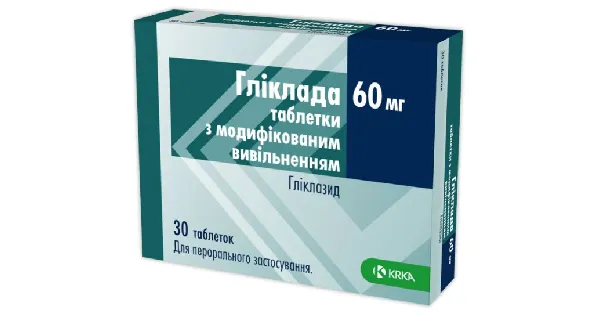
Table of Contents
INSTRUCTIONS FOR MEDICAL USE OF THE MEDICINAL PRODUCT GLICLADA (Gliclada®)
Composition:
Active substance: gliclazide;
One modified-release tablet contains 60 mg of gliclazide;
Excipients: hypromellose, lactose monohydrate, colloidal anhydrous silicon dioxide, magnesium stearate.
Pharmaceutical form. Modified-release tablets.
Main physicochemical characteristics: tablets from white to almost white, oval-shaped, biconvex.
Pharmacotherapeutic group. Antidiabetic agents. Blood glucose-lowering agents, excluding insulin. Sulfonylureas, urea derivatives. Gliclazide. ATC code A10B B09.
Pharmacological Properties
Pharmacodynamics
Gliclazide is an oral hypoglycemic agent, a derivative of sulfonylurea, distinguished from other agents by the presence of a heterocyclic ring containing nitrogen and having endocyclic bonds.
Gliclazide reduces glucose levels in blood plasma by stimulating insulin secretion from pancreatic β-cells of the islets of Langerhans. Increased postprandial insulin levels and C-peptide secretion are maintained even after 2 years of treatment. Gliclazide also has hemovascular properties.
Effect on insulin secretion
In patients with type 2 diabetes, gliclazide restores the early peak of insulin secretion in response to glucose intake and enhances the second phase of insulin secretion. A significant increase in insulin release occurs in accordance with food intake or glucose load.
Hemovascular properties
Gliclazide reduces microthrombosis through two mechanisms that may be involved in the development of complications of diabetes mellitus:
- Partially inhibits platelet aggregation and adhesion, reduces levels of platelet activation markers (β-thromboglobulin, thromboxane B2);
- Affects endothelial fibrinolytic activity (increases tPA activity).
The primary endpoint consisted of major macrovascular (cardiovascular death, non-fatal myocardial infarction, non-fatal stroke) and microvascular (new onset or worsening of nephropathy, retinopathy) events.
A total of 11,140 patients were included in clinical trials. During a 6-week run-in period, patients continued their usual antihyperglycemic therapy. Subsequently, patients were randomly assigned to either a standard glycemic control regimen (n = 5,569) or an intensive glycemic control strategy based on modified-release gliclazide tablets (n = 5,571). The intensive glycemic control strategy was based on initiating treatment with modified-release gliclazide tablets from the beginning or switching to modified-release gliclazide tablets from standard therapy (therapy used by the patient at enrollment), with possible dose escalation up to the maximum, followed by addition of other antihyperglycemic agents such as metformin, acarbose, thiazolidinediones, or insulin, if needed. Patients were under close medical supervision and strictly adhered to dietary recommendations.
The follow-up period lasted 4.8 years. Treatment with modified-release gliclazide tablets, as the basis of the intensive glycemic control strategy (mean achieved HbA1c level – 6.5%), compared to standard glycemic control (mean achieved HbA1c level – 7.3%), resulted in a statistically significant overall 10% relative risk reduction in major macro- and microvascular complications (HR 0.90, 95% CI [0.82; 0.98], p = 0.013; 18.1% of patients in the intensive control group vs. 20% in the standard control group). The benefits of the intensive glycemic control strategy with modified-release gliclazide tablets as the cornerstone of therapy were due to:
− A statistically significant 14% relative risk reduction in major microvascular events (HR 0.86, 95% CI [0.77; 0.97], p = 0.014; 9.4% vs. 10.9%);
− A statistically significant 21% relative risk reduction in new-onset or progression of nephropathy (HR 0.79, 95% CI [0.66–0.93], p = 0.006; 4.1% vs. 5.2%);
− A statistically significant 8% relative risk reduction in new-onset microalbuminuria (HR 0.92, 95% CI [0.85–0.99], p = 0.030; 34.9% vs. 37.9%);
− A statistically significant 11% relative risk reduction in renal events (HR 0.89, 95% CI [0.83; 0.96], p = 0.001; 26.5% vs. 29.4%).
At the end of the study, 65% and 81.1% of patients in the intensive control group (vs. 28.8% and 50.2% in the standard control group) achieved HbA1c targets of ≤6.5% and ≤7%, respectively. 90% of patients in the intensive control group were taking modified-release gliclazide tablets (mean daily dose was 103 mg), with 70% of them receiving the maximum daily dose of 120 mg. In the intensive glycemic control group based on modified-release gliclazide tablets, patients' body weight remained stable.
The benefits of the intensive glycemic control strategy based on modified-release gliclazide tablets were independent of blood pressure reduction.
Pharmacokinetics
Absorption
Plasma levels of gliclazide increase within the first 6 hours, reaching a plateau maintained from six to twelve hours after administration.
Individual variations are minor.
Gliclazide is completely absorbed. Food intake does not affect the rate or extent of absorption.
Distribution
Plasma protein binding is approximately 95%. The relationship between administered doses up to 120 mg and the area under the concentration-time curve (AUC) is linear. The volume of distribution is approximately 30 liters.
Metabolism
Gliclazide is primarily metabolized in the liver and excreted in urine; less than 1% of the active substance is excreted unchanged in urine. No active metabolites are present in plasma.
Elimination
The elimination half-life of gliclazide ranges from 12 to 20 hours.
Clinically significant changes in pharmacokinetics are not observed in elderly patients.
A single daily dose of Gliclada modified-release tablets maintains an effective plasma concentration of gliclazide for 24 hours.
Clinical characteristics.
Indications
Type 2 diabetes mellitus in adults:
- reduction and control of blood glucose when it is not possible to normalize glucose levels by diet, physical exercise, and weight reduction alone.
Contraindications
- Hypersensitivity to gliclazide or to other sulfonylurea drugs, sulfonamides, or to any component of the drug;
- diabetes mellitus (type 1);
- diabetic precoma and coma, diabetic ketoacidosis;
- severe hepatic or renal insufficiency (in such cases insulin therapy is recommended);
- concomitant treatment with miconazole (see section "Interaction with other medicinal products and other forms of interaction");
- breastfeeding period.
Interaction with other medicinal products and other forms of interaction
When using drugs that may cause hypoglycemia or hyperglycemia when used concomitantly, patients should be warned about the necessity of careful monitoring of blood glucose levels during treatment. Dose adjustment of the antidiabetic drug may be required during and after treatment with these agents.
Medicinal products whose concomitant use may increase the risk of hypoglycemia Contraindicated combination
Miconazole (for systemic use, oral gel) enhances the hypoglycemic effect, possibly leading to symptoms of hypoglycemia or even coma.
Combinations not recommended
Phenylbutazone (for systemic use) enhances the hypoglycemic effect of sulfonylureas (by displacing them from plasma protein binding sites and/or reducing their excretion).
It is advisable to use an alternative anti-inflammatory agent. The patient should be warned and advised about the importance of self-monitoring. If necessary, the dose of the antidiabetic drug should be adjusted during and after anti-inflammatory therapy.
Alcohol enhances the hypoglycemic reaction (by suppressing compensatory mechanisms), potentially leading to hypoglycemic coma. Consumption of alcohol and medicinal products containing alcohol should be avoided.
Combinations requiring caution
Enhancement of the hypoglycemic effect of the drug and, in some cases, development of hypoglycemia may occur when used concomitantly with the following medicinal products: other antidiabetic agents (insulin, acarbose, metformin, thiazolidinediones, dipeptidyl peptidase-4 inhibitors, glucagon-like peptide-1 (GLP-1) receptor agonists), beta-blockers, fluconazole, angiotensin-converting enzyme (ACE) inhibitors (captopril, enalapril), H2-receptor antagonists, monoamine oxidase (MAO) inhibitors, sulfonamides, clarithromycin, and nonsteroidal anti-inflammatory drugs.
Medicinal products that may cause increased blood glucose levels
Combinations not recommended
Danazol: exerts a diabetogenic effect. If use of this active substance cannot be avoided, the patient should be warned and advised about the importance of monitoring glucose levels in blood and urine. Dose adjustment of the antidiabetic agent may be required during and after danazol therapy.
Combinations requiring caution
Chlorpromazine (neuroleptic): use of high doses of chlorpromazine (>100 mg/day) increases blood glucose levels (due to reduced insulin secretion). The patient should be warned and advised about the importance of monitoring blood glucose levels. Dose adjustment of the antidiabetic agent may be required during and after neuroleptic therapy.
Glucocorticoids (for systemic and local use: intra-articular, topical, and rectal preparations) and tetracosactide increase blood glucose levels, possibly leading to ketoacidosis (due to reduced carbohydrate tolerance). The patient should be warned and advised about the importance of monitoring blood glucose levels, especially at the beginning of treatment. Dose adjustment of the antidiabetic agent may be required during and after glucocorticoid therapy.
Ritodrine, salbutamol, terbutaline (intravenous) increase blood glucose levels due to β-2 agonist effects. The patient should be advised about the importance of monitoring blood glucose levels. If necessary, the patient should be switched to insulin therapy.
St. John's wort (Hypericum perforatum) decreases gliclazide concentration. Emphasis should be placed on the importance of blood glucose monitoring.
Medicinal products that may cause dysglycemia
Combinations requiring caution
Fluoroquinolones: when used concomitantly with gliclazide, patients should be warned about the risk of dysglycemia and the importance of monitoring blood glucose levels.
Combinations with warnings
Anticoagulant therapy (e.g., warfarin and others): sulfonylurea drugs may enhance the anticoagulant effect during concomitant treatment. Dose adjustment of the anticoagulant may be required.
Special precautions for use.
Hypoglycemia
Treatment should be prescribed only to patients able to adhere to a balanced and regular meal schedule (including breakfast). Regular intake of carbohydrates is essential due to the increased risk of hypoglycemia that may occur if meals are delayed, inadequate in quantity, or low in carbohydrate content. The risk of hypoglycemia increases with low-calorie diets, prolonged or intense physical exertion, alcohol consumption, or when combining hypoglycemic agents.
Hypoglycemia may occur during concomitant use of sulfonylurea drugs (see section "Adverse reactions") and, in some cases, may be severe and prolonged. Hospitalization and administration of glucose for several days may sometimes be required.
Careful patient evaluation, appropriate dosing, and strict adherence to dosing and administration schedules are necessary measures to reduce the risk of hypoglycemic episodes.
Factors increasing the risk of hypoglycemia:
- Patient refusal or (especially in elderly patients) inability to follow medical advice;
- Low-calorie or irregular eating patterns, skipped meals, fasting periods, or dietary changes;
- Imbalance between physical activity and carbohydrate intake;
- Renal insufficiency;
- Severe hepatic insufficiency;
- Overdose of Glucida;
- Certain endocrine disorders: thyroid disease, hypopituitarism, and adrenal insufficiency;
- Concomitant use of certain other medicinal products (see section "Interaction with other medicinal products and other forms of interaction").
Renal and hepatic impairment
The pharmacokinetics and/or pharmacodynamics of gliclazide may be altered in patients with hepatic impairment or severe renal insufficiency. Hypoglycemic episodes occurring in such patients may be prolonged and require specific interventions.
Information for patients
Patients and their family members should be informed about the risk of hypoglycemia, its symptoms (see section "Adverse reactions"), and how to manage them.
Patients must understand the importance of diet, regular physical activity, and regular blood glucose monitoring.
Loss of blood glucose control
Worsening glycemic control in patients receiving antidiabetic drugs may be triggered by: St. John's wort (Hypericum perforatum) preparations, infection, fever, trauma, or surgery. In some cases, insulin therapy may become necessary. The hypoglycemic efficacy of any oral antidiabetic agent, including gliclazide, may gradually decrease over time in some patients—this may be due to progression of diabetes severity or reduced responsiveness to treatment. This phenomenon is known as secondary failure, distinct from primary failure, where the active substance is ineffective from the start of treatment. Appropriate dose adjustment and dietary compliance should be attempted before classifying a patient as having secondary failure.
Dysglycemia
Cases of blood glucose disturbances, including hypoglycemia and hyperglycemia, have been reported in diabetic patients receiving concomitant therapy with fluoroquinolones, particularly in elderly patients. Therefore, close monitoring of blood glucose levels is recommended for all patients receiving gliclazide and fluoroquinolones simultaneously.
Laboratory tests
Measurement of glycosylated hemoglobin (or fasting plasma glucose) is recommended. Self-monitoring of blood glucose may also be useful.
Treatment of patients with glucose-6-phosphate dehydrogenase deficiency with sulfonylurea drugs may lead to hemolytic anemia. Since gliclazide belongs to the sulfonylurea chemical class, caution is advised in patients with glucose-6-phosphate dehydrogenase deficiency, and alternative non-sulfonylurea antidiabetic agents should be considered.
Patients with porphyria: Cases of acute porphyria have been reported with the use of certain other sulfonylurea drugs in patients with porphyria.
Special warnings regarding certain excipients
Glucida contains lactose. Patients with rare hereditary problems of lactose intolerance, galactosemia, or glucose-galactose malabsorption syndrome should not take this medicine.
Use during pregnancy or breastfeeding
Pregnancy. Data on the use of gliclazide during pregnancy are lacking or limited (less than 300 cases in pregnant women), as are data on other sulfonylurea drugs. Animal studies have shown that gliclazide has no teratogenic effect.
As a precautionary measure, it is advisable to avoid using gliclazide during pregnancy.
Glycemic control should be achieved before pregnancy is planned to reduce the risk of abnormalities associated with uncontrolled diabetes.
Insulin is the treatment of choice for managing diabetes during pregnancy; oral hypoglycemic agents are not considered appropriate.
Women should be switched from oral antidiabetic agents to insulin at the time of planning pregnancy or immediately after pregnancy is confirmed.
Breastfeeding period. There are no data on the passage of gliclazide or its metabolites into breast milk. Gliclazide is contraindicated during breastfeeding due to the potential risk of neonatal hypoglycemia. Risk to newborns and infants cannot be excluded.
Fertility. No effects on fertility or reproductive performance in male or female rats were observed in preclinical studies.
Ability to affect reaction speed when driving or operating machinery.
Glucida may have a negligible influence on the ability to drive or operate machinery. However, patients should be cautious about the onset of hypoglycemic symptoms and exercise care when driving or operating machinery, especially at the beginning of treatment.
Dosage and Administration
Oral administration is intended for adults only.
The daily dose may vary from 30 to 120 mg once daily with breakfast. The tablet should be swallowed whole, without chewing.
If a dose is missed, the dose should not be doubled the next day.
As with any antidiabetic agents, dosage must be individualized according to the patient's response to treatment (blood glucose levels, glycated hemoglobin HbA1c).
Initial dose and dose titration.
The recommended initial dose is 30 mg once daily. If adequate glucose control is achieved, treatment may be continued at this dose. If enhanced glycemic control is needed, the daily dose may be gradually increased to 60 mg, 90 mg, or 120 mg. Dose escalation should be performed at intervals of 1 month (except for patients who do not show a reduction in blood glucose levels within 2 weeks of treatment, in which case the dose may be increased at the end of the second week).
The maximum recommended daily dose is 120 mg (2 tablets).
One modified-release tablet of Gluklada 60 mg is equivalent to two 30 mg modified-release tablets of gliclazide.
Switching patients from immediate-release gliclazide 80 mg to Gluklada modified-release 60 mg tablets.
One tablet containing 80 mg of gliclazide corresponds to one 30 mg modified-release tablet. Blood glucose levels must be closely monitored during the switch to Gluklada modified-release 60 mg tablets.
Switching patients from other oral antidiabetic drugs to Gluklada modified-release tablets.
Gliclazide may be initiated as a substitute for another oral antidiabetic agent. The dosage and elimination half-life of the previous drug should be taken into account. A transition period is usually not required. Treatment should be initiated at a dose of 30 mg, with subsequent dose adjustments as described above ("Initial dose and dose titration").
When switching from sulfonylurea hypoglycemic agents with a longer elimination half-life than gliclazide, a treatment-free interval of several days may be necessary to avoid the cumulative effect of both agents and prevent hypoglycemia. When switching patients from other oral antidiabetic drugs to gliclazide modified-release tablets, treatment should be initiated as described above ("Initial dose and dose titration").
Concomitant use with other antidiabetic agents.
Gliclazide may be used in combination with biguanides, alpha-glucosidase inhibitors, and insulin. If adequate blood glucose control is not achieved in patients taking gliclazide, concomitant insulin therapy may be initiated under close medical supervision.
Elderly patients.
No dose adjustment is required for patients aged 65 years and older.
Patients with renal impairment.
No dose adjustment is required for patients with mild to moderate renal impairment. However, such patients should be under close medical supervision.
Patients at risk of hypoglycemia:
- patients suffering from undernutrition or inadequate diet;
- patients with severe endocrine disorders or endocrine dysfunction (hypopituitarism, hypothyroidism, adrenocorticotropic insufficiency);
- patients after discontinuation of prolonged and/or high-dose corticosteroid therapy;
- patients with severe vascular diseases (severe ischemic heart disease, severe carotid insufficiency, diffuse vascular disease).
A minimal initial daily dose of 30 mg is recommended.
Patients with severe vascular diseases (ischemic heart disease, severe carotid artery disease, diffuse vascular disease).
A minimal initial dose of 30 mg once daily is recommended.
Prevention of complications in type 2 diabetes.
An intensive glycemic control strategy should be followed (HbA1c level ≤6.5%). Intensive glycemic control involves gradual dose escalation from 60 mg to 120 mg daily. Dose increases should be performed under HbA1c monitoring, with strict adherence to dietary and physical activity recommendations, while minimizing the risk of hypoglycemia. Additional antidiabetic agents such as metformin, acarbose, thiazolidinediones, or insulin may also be added.
Children.
Gluklada is not recommended for use in children due to lack of data on safety and efficacy in this patient population.
Overdose.
Overdose with sulfonylurea derivatives may lead to hypoglycemia.
Symptoms of mild to moderate hypoglycemia (without loss of consciousness or neurological signs) should be treated by carbohydrate intake, dose adjustment, and/or dietary modification. Close monitoring of the patient is required until the condition normalizes.
In cases of severe hypoglycemia with coma, seizures, or other neurological disturbances, the patient must be immediately hospitalized and emergency medical measures initiated.
In the event of diagnosed or suspected hypoglycemic coma, the patient should receive a rapid intravenous injection of 50 mL of concentrated glucose solution (20–30%). This should be followed by a continuous infusion of a less concentrated glucose solution (10%) at a rate sufficient to maintain blood glucose levels above 1 g/L. The physician must ensure close monitoring of the patient and decide, based on the patient's condition, whether further observation is necessary.
Due to the strong plasma protein binding of gliclazide, dialysis is not effective in these patients.
Adverse Reactions
Based on experience with gliclazide and other sulfonylurea derivatives, the following adverse effects have been reported.
Hypoglycemia
Irregular eating habits, particularly skipping meals during treatment with sulfonylurea agents, including Gluklada, may lead to the development of hypoglycemia. Probable symptoms of hypoglycemia include headache, intense hunger, nausea, vomiting, fatigue, sleep disturbances, anxiety, irritability, reduced concentration and attention, slowed reaction time, depression, confusion, visual and speech disturbances, aphasia, tremor, paresis, sensory disturbances, dizziness, weakness, loss of self-control, delirium, convulsions, shallow breathing, bradycardia, drowsiness, loss of consciousness, and even coma which may be fatal.
In addition, symptoms of adrenergic system activation may occur: excessive sweating, clammy skin, anxiety, tachycardia, hypertension, palpitations, chest pain, and arrhythmia.
Symptoms usually resolve after carbohydrate intake (sugar). Artificial sweeteners are ineffective. Experience with other sulfonylurea agents shows that hypoglycemia may recur, even after prompt and effective intervention.
If episodes of hypoglycemia are severe and prolonged, hospitalization is required immediately, even if the patient's condition is temporarily controlled by sugar intake.
Gastrointestinal disorders: abdominal pain, nausea, vomiting, dyspepsia, diarrhea, and constipation. These symptoms can be avoided or minimized by taking gliclazide with breakfast.
The following adverse effects occur less frequently.
Skin and subcutaneous tissue disorders: rash, pruritus, urticaria, angioedema, erythema, maculopapular eruptions, bullous reactions (e.g., Stevens-Johnson syndrome, toxic epidermal necrolysis, and autoimmune bullous disorders), very rarely drug reaction with eosinophilia and systemic symptoms (DRESS).
Blood and lymphatic system disorders: hematological changes including anemia, leukopenia, thrombocytopenia, granulocytopenia. These events are rare and usually resolve after discontinuation of the drug.
Hepatobiliary disorders: increased levels of liver enzymes (AST, ALT, alkaline phosphatase), hepatitis (isolated cases). If cholestatic jaundice occurs, the drug should be discontinued.
These adverse effects usually resolve after discontinuation of the drug.
Eye disorders: transient visual disturbances. Fluctuations in blood glucose levels may cause transient visual disturbances, particularly at the beginning of treatment.
Effects associated with sulfonylurea agents:
As with other sulfonylurea agents, cases of erythropenia, agranulocytosis, hemolytic anemia, pancytopenia, allergic vasculitis, hyponatremia, elevated liver enzymes, and even liver dysfunction (e.g., with cholestasis and jaundice) and hepatitis have been observed. These effects usually resolve after discontinuation of the sulfonylurea, but in isolated cases may lead to life-threatening liver failure.
Clinical studies.
During the ADVANCE study, serious adverse reactions were monitored. In the group of patients with type 2 diabetes treated according to an intensive glycemic control strategy, no previously unreported adverse reactions were observed. Several patients experienced severe hypoglycemia. Most episodes of hypoglycemia occurred in patients receiving concomitant insulin therapy.
Reporting suspected adverse reactions.
Reporting suspected adverse reactions after drug authorization is of great importance. It allows continuous monitoring of the benefit-risk balance associated with the use of the medicinal product. Healthcare professionals should report any suspected adverse reactions through the national reporting system.
Shelf life.
Laminated foil blisters OPA/Al/PVC and aluminum foil
3 years.
Storage conditions.
Laminated foil blisters OPA/Al/PVC and aluminum foil
Store in the original packaging to protect from moisture.
Keep out of reach of children.
Packaging.
15 tablets per blister, 2, 4, or 6 blisters per cardboard box.
Prescription category. Prescription only.
Manufacturer.
KRKA, d.d., Novo mesto, Slovenia.
Manufacturer's address and location of operations.
Smarjeska cesta 6, 8501 Novo mesto, Slovenia.