Glibomet®
Ukraine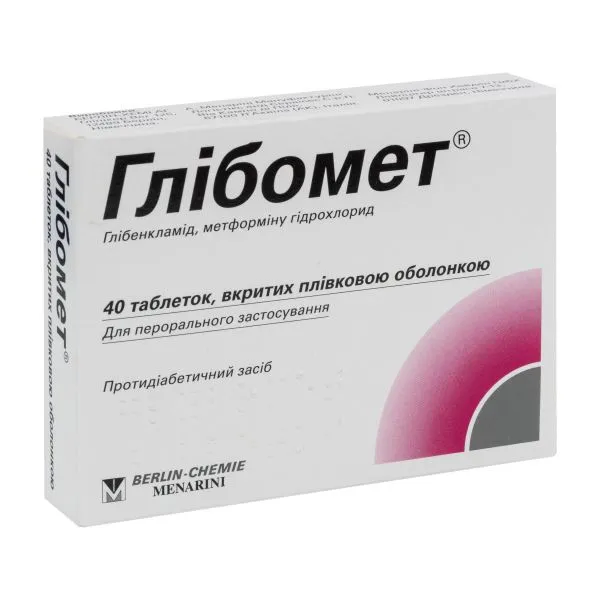
Table of Contents
INSTRUCTIONS FOR MEDICAL USE OF THE MEDICINAL PRODUCT GLIBOMET®
Composition:
Active substances: metformin hydrochloride and glibenclamide;
One film-coated tablet contains 400 mg of metformin hydrochloride and 2.5 mg of glibenclamide;
Excipients: colloidal anhydrous silicon dioxide, macrogol 6000, povidone, sodium croscarmellose, microcrystalline cellulose, glyceryl dibehenate, magnesium stearate; coating Opadry White (hypromellose, titanium dioxide (E 171), talc, macrogol 6000).
Pharmaceutical form. Film-coated tablets.
Main physicochemical properties: White to almost white, round, biconvex, film-coated tablets with a score line on one side. On the side without the score line, there is an embossed "2.5"; on the semicircular halves of the other side, there are embossed letters "B" and "1".
Pharmacotherapeutic group.
Antidiabetic agents. Combination of oral hypoglycemic agents.
ATC code A10B D02.
Pharmacological properties.
Pharmacodynamics.
Glibomet® contains glimepiride – a second-generation sulfonylurea that at low doses affects the kinetics of insulin production over a relatively short period of time and repeatedly after each administration, and metformin – a biguanide that stimulates peripheral tissue sensitivity to insulin (increased insulin binding to receptors, enhanced post-receptor effects), regulates glucose absorption in the intestine, inhibits gluconeogenesis, and restores lipid metabolism. It also reduces excess body weight in diabetic patients with overweight, decreases platelet adhesiveness, and exerts fibrinolytic activity. All these effects are associated with improved tolerability, ease of use, and reduced risk of lactic acidosis compared to other biguanides.
The mutually potentiating activity of the two active components of the drug: the stimulatory effect of sulfonylurea on endogenous insulin production (pancreatic action) and the direct effect of biguanide on muscle tissue leading to a significant increase in glucose uptake (extrapancreatic action), as well as on liver tissue (reducing gluconeogenesis), allows, at a certain dose ratio, reduction of the amount of each component. This helps prevent excessive stimulation of pancreatic beta-cells, thereby reducing the risk of organ dysfunction, while also ensuring safety and lower incidence of adverse effects.
Pharmacokinetics.
Glimepiride is 84% absorbed in the gastrointestinal tract and is excreted via the gastrointestinal tract and urine after its transformation in the liver into inactive metabolites; the elimination half-life is 5 hours; plasma protein binding is 97%.
Metformin is absorbed in the gastrointestinal tract; it is rapidly excreted in feces and urine; it does not bind to plasma proteins and is not metabolized in the body; the plasma elimination half-life is approximately two hours.
Preclinical safety data
Results of acute toxicity studies conducted in animals showed no evidence of synergistic toxicity between the active substances. Oral administration to animals for 26 weeks did not result in mortality, changes in health status, or reduced water or food intake.
The treatment did not affect growth curves, blood cell counts, liver function, blood biochemical parameters, urine analyses, organ weights, or macro- and microscopic appearance of organs and systems.
Teratogenicity studies revealed no toxic effects on pregnancy or fetus.
Clinical characteristics.
Indications.
Type 2 diabetes mellitus (non-insulin-dependent diabetes mellitus – NIDDM) when dietary therapy alone or dietary therapy combined with sulfonylurea or biguanide agents is insufficiently effective.
Contraindications.
- Hypersensitivity to the active substances (glibenclamide, metformin), to other components of the medicinal product, to other sulfonylurea drugs, or to sulfonamides;
- Complete ineffectiveness of glibenclamide treatment in type 2 diabetes mellitus;
- Gestational diabetes;
- Type 1 diabetes mellitus (insulin-dependent);
- Any form of acute metabolic acidosis (e.g., lactic acidosis, diabetic ketoacidosis);
- Diabetic coma and precoma;
- Diabetes with a history of episodes of lactic acidosis;
- Pancreatectomy;
- Hepatic insufficiency;
- Severe renal impairment (glomerular filtration rate (GFR) < 30 mL/min);
- Concomitant therapy with diuretics or antihypertensive agents that may impair renal function; administration within 48 hours before or after intravenous administration of iodinated contrast agents;
- Severe cardiovascular diseases (heart failure NYHA class I–IV (New York Heart Association), cardiogenic or toxic shock, recent myocardial infarction, unstable angina, peripheral arterial circulation disorders);
- Respiratory insufficiency;
- Adrenocortical insufficiency;
- Acute alcohol intoxication, chronic alcoholism;
- Strict low-calorie diet, especially fasting, and/or inadequate nutrition;
- Acute conditions associated with a risk of developing renal dysfunction: dehydration, severe infections;
- Severe dystrophic diseases;
- Severe acute hemorrhage;
- Shock;
- Gangrene;
- Pregnancy and lactation;
- Concomitant treatment with bosentan;
- Administration within 2 days before or after surgical intervention;
- Porphyria;
- Concomitant therapy with miconazole (see section "Interaction with other medicinal products and other forms of interaction").
Interaction with other medicinal products and other forms of interaction.
Combinations contraindicated.
Related to glibenclamide.
Miconazole (systemic use, oral gel) enhances the hypoglycemic effect, potentially causing symptoms of hypoglycemia or even coma (see section "Contraindications").
Combinations not recommended.
Related to sulfonylurea derivatives.
Alcohol – disulfiram-like reaction (alcohol intolerance), especially when using chlorpropamide, glibenclamide, glipizide, or tolbutamide.
Enhancement of hypoglycemic effect (due to inhibition of compensatory responses) may lead to hypoglycemic coma.
Alcohol consumption and use of medicinal products containing alcohol should be avoided during treatment.
Phenylbutazone (systemic use) enhances the hypoglycemic effect of sulfonylurea derivatives (by displacing their binding to plasma proteins and/or reducing their elimination). It is recommended to use another anti-inflammatory agent with fewer interactions or to warn the patient about the need for increased self-monitoring. If necessary, the dose of the medicinal product should be adjusted during and after anti-inflammatory therapy.
Antibacterial agents. Concomitant use of sulfonylurea derivatives, including glibenclamide, with certain antibacterial agents such as sulfonamides (e.g., co-trimoxazole), levofloxacin, or clarithromycin may increase the risk of severe hypoglycemia.
Cyclophosphamide. Concomitant use of sulfonylurea derivatives, including glibenclamide, and cyclophosphamide may increase the risk of severe hypoglycemia.
Pheniramidol. Concomitant use of sulfonylurea derivatives, including glibenclamide, and pheniramidol increases the risk of severe hypoglycemia.
Related to all antidiabetic agents.
Danazol. If this combination is unavoidable, the patient should be warned about the need for intensified monitoring of blood glucose levels. The dose of the antidiabetic agent may need to be adjusted during and after danazol therapy.
Related to metformin.
Alcohol. Increased risk of lactic acidosis during acute alcohol intoxication, especially in cases of:
- Fasting, undernutrition;
- Hepatic insufficiency.
Alcohol consumption and use of medicinal products containing alcohol should be avoided.
- Iodinated contrast agents.* Metformin should be discontinued before or during radiological procedures and not resumed earlier than 48 hours after the procedure, and only after re-evaluation of renal function and confirmation of no further deterioration in renal status (see sections "Dosage and administration", "Special warnings and precautions for use").
Combinations requiring caution.
Interactions with all antidiabetic agents.
Chlorpromazine. When high doses are administered (100 mg chlorpromazine per day), blood glucose levels increase (reduced insulin production). The patient should be warned about the need for intensified monitoring of blood glucose levels. The dose of the glucose-lowering agent may need to be adjusted during and after neuroleptic therapy.
Pergolide. Pergolide use may lead to hypoglycemia. When pergolide is used concomitantly with antidiabetic agents, the patient should be warned about the need for intensified monitoring of blood glucose levels.
Corticosteroids (glucocorticoids) and tetracosactide (systemic and local use). Blood glucose levels increase, sometimes accompanied by ketosis (reduced carbohydrate tolerance due to corticosteroid use, relative insulin deficiency). The patient should be warned about the need for intensified monitoring of blood glucose levels. The dose of the antidiabetic agent may need to be adjusted during and after corticosteroid therapy.
β2-agonists. Blood glucose levels increase. The patient should be warned about the need for intensified monitoring of blood glucose levels; if necessary, the patient should be switched to insulin therapy.
Angiotensin-converting enzyme (ACE) inhibitors (e.g., captopril, enalapril). Blood glucose levels decrease. The dose of Glucophage® should be adjusted during and after ACE inhibitor therapy if necessary.
Related to metformin.
Organic cation transporters OCT1 and OCT2.
Metformin is a substrate for both OCT1 and OCT2 transporters.
Concomitant use of metformin with:
- OCT1 inhibitors (such as verapamil) may reduce metformin efficacy;
- OCT1 inducers (such as rifampicin) may increase gastrointestinal absorption and efficacy of metformin;
- OCT2 inhibitors (such as cimetidine, dolutegravir, ranolazine, trimethoprim, vandetanib, isavuconazole) may reduce renal excretion of metformin, leading to increased plasma metformin concentrations;
- Inhibitors of both OCT1 and OCT2 transporters (such as crizotinib, olaparib) may affect metformin efficacy and renal excretion.
In patients with type 2 diabetes, concomitant use of metformin (1000 mg twice daily) and ranolazine at doses of 500 mg and 1000 mg twice daily resulted in 1.4- and 1.8-fold increases in plasma metformin exposure, respectively.
In a study involving 7 healthy volunteers, cimetidine at a dose of 400 mg twice daily increased systemic exposure (AUC) of metformin by 50% and Cmax by 81%.
Therefore, particular caution is recommended when these drugs are used concomitantly with metformin, especially in patients with impaired renal function, as plasma metformin concentrations may increase. Dose adjustment of metformin should be considered, as OCT inhibitors/inducers may affect metformin efficacy.
Other interactions.
Some medicinal products may adversely affect renal function, increasing the risk of lactic acidosis. These include NSAIDs, including selective cyclooxygenase (COX-2) inhibitors, ACE inhibitors, angiotensin II receptor antagonists, and diuretics, particularly loop diuretics. Careful monitoring of renal function is required at the start and during treatment with these agents in combination with metformin.
Related to glibenclamide.
β-adrenergic blockers, clonidine, reserpine, guanethidine, and sympathomimetics.
All β-adrenergic blockers, clonidine, reserpine, guanethidine, and sympathomimetics may mask symptoms of hypoglycemia such as palpitations and tachycardia. Most non-selective β-adrenergic blockers increase the frequency and severity of hypoglycemic episodes. The patient should be warned and blood glucose monitoring intensified, especially at the beginning of therapy.
Fluconazole. Prolongation of the elimination half-life of sulfonylurea derivatives, potentially causing symptoms of hypoglycemia. The patient should be warned and blood glucose monitoring intensified. The dose of the medicinal product may need to be adjusted during and after fluconazole therapy.
Bosentan. Concurrent use increases the risk of hepatotoxicity; therefore, these medicinal products should not be used concomitantly. There is also a risk of reduced hypoglycemic effect of glibenclamide, as bosentan decreases plasma glibenclamide concentrations.
Other interactions to consider.
Related to glibenclamide.
Desmopressin. Reduced antidiuretic effect.
The hypoglycemic effect of sulfonylurea derivatives may be enhanced when used concomitantly with monoamine oxidase inhibitors, chloramphenicol, probenecid, salicylates, or sulfinpyrazone; conversely, it may be reduced by oral contraceptives, thiazide diuretics, and barbiturates.
It should be noted that biguanides may potentiate the effect of anticoagulants.
- Colesevelam.* Concomitant use reduces plasma concentration of glibenclamide, potentially leading to reduced hypoglycemic effect. This effect was not observed when glibenclamide was taken before other medicinal products. It is recommended to take Glucophage® at least 4 hours before colesevelam.
Special precautions for use.
Any treatment, and in particular switching from one hypoglycemic agent to another, must be prescribed by a physician. The patient must strictly follow the physician's recommendations regarding dosage and administration of the medicinal product, as well as concomitant diet and physical activity regimen. Routine diagnostic tests (fasting and postprandial blood glucose, HbA1c) are recommended periodically.
Since glibenclamide is a sulfonylurea derivative, Glucomet® should be administered only to patients with type 2 diabetes mellitus when dietary therapy is insufficient.
In case of symptoms of hypoglycemia (see section "Adverse reactions"), carbohydrates (sugar) should be taken; in more severe cases, which may lead to loss of consciousness, slow intravenous infusion of glucose solution is indicated.
In cases of trauma, surgery, infections, and febrile conditions, temporary insulin therapy should be initiated to ensure precise metabolic control.
The possibility of a disulfiram-like reaction after ethanol intake should be considered.
Treatment should be discontinued 48 hours before angiography or urography and, if necessary, resumed 48 hours after the procedure.
According to some epidemiological studies, glibenclamide use has been associated with an increased risk of cardiovascular mortality compared to treatment with glimepiride. Increased cardiovascular mortality risk has been observed, in particular, in patients with acute ischemic heart disease.
Lactic acidosis is a rare but very serious metabolic disorder, most commonly occurring in acute worsening of renal function or cardiopulmonary diseases, or sepsis. Accumulation of metformin occurs in acute deterioration of kidney function and increases the risk of lactic acidosis.
In case of dehydration (due to severe diarrhea or vomiting, fever, or inadequate fluid intake), metformin should be temporarily discontinued and medical advice sought. Medicinal products that may cause acute renal failure (such as antihypertensives, diuretics, NSAIDs [nonsteroidal anti-inflammatory drugs]) should be used with caution in patients receiving metformin. Other risk factors for lactic acidosis include alcohol abuse, hepatic insufficiency, poorly controlled diabetes, ketoacidosis, prolonged fasting, and any conditions causing hypoxia, as well as concomitant use of medicinal products that may cause lactic acidosis (see sections "Contraindications" and "Interaction with other medicinal products and other forms of interaction").
Patients and/or caregivers should be informed about the risk of lactic acidosis. Lactic acidosis is characterized by acidotic dyspnea, abdominal pain, muscle cramps, asthenia, and hypothermia; coma may develop subsequently. In case of suspected lactic acidosis, further administration of metformin should be discontinued immediately and urgent medical assistance sought. Diagnostic laboratory findings include low blood pH (< 7.35), elevated plasma lactate level (> 5 mmol/L), increased anion gap, and increased lactate/pyruvate ratio.
Diagnosis.
Lactic acidosis is characterized by acidotic dyspnea, abdominal pain, and hypothermia; coma may develop subsequently. Lactic acidosis should be suspected in the presence of nonspecific symptoms such as severe fatigue and malaise, vomiting, muscle spasms, and gastrointestinal disturbances, e.g., abdominal pain and complete loss of appetite. Diagnostic laboratory findings include low blood pH, elevated plasma lactate level exceeding 5 mmol/L, increased anion gap, and increased lactate/pyruvate ratio. In case of suspected metabolic acidosis, further use of the medicinal product should be discontinued immediately and the patient urgently hospitalized. The risk of lactic acidosis depends on metformin accumulation in the body, which may occur with worsening renal function. Therefore, renal function must be monitored before starting treatment and regularly during therapy. Patients should be provided with comprehensive information regarding the risk of lactic acidosis.
Renal function
Glomerular filtration rate (GFR) should be determined before initiating treatment and regularly during therapy; see section "Method of administration and dosage." Metformin is contraindicated in patients with GFR < 30 mL/min. The drug should be temporarily discontinued in case of conditions that may impair renal function; see section "Contraindications."
Worsening of renal function in elderly patients is common and may not be accompanied by specific symptoms. Special caution is required in cases where renal function may deteriorate, e.g., after initiation of antihypertensive or diuretic therapy, or after starting treatment with nonsteroidal anti-inflammatory drugs (NSAIDs).
Administration of iodine-containing contrast agents
Intravascular administration of iodine-containing radiopaque agents may induce contrast-induced nephropathy, leading to metformin accumulation and increased risk of lactic acidosis. Metformin should be discontinued before such procedures and may be resumed no earlier than 48 hours after the procedure, provided renal function has been checked and stable kidney function confirmed (see sections "Method of administration and dosage" and "Interaction with other medicinal products and other forms of interaction").
Surgical procedures
Metformin should be discontinued before surgical procedures performed under general, spinal, or epidural anesthesia. Resumption of metformin may be considered no earlier than 48 hours after completion of surgery or restoration of independent feeding, provided renal function has been checked and stable kidney function confirmed.
Hypoglycemia
Since the drug contains a sulfonylurea derivative, its use is associated with the risk of hypoglycemia. Appropriate dose adjustment after initiation of therapy helps prevent hypoglycemia. The therapy is indicated only for patients who maintain a regular eating schedule (including breakfast). Regular sugar intake is important, as the risk of hypoglycemia increases with delayed meals, insufficient or unbalanced carbohydrate intake. The likelihood of hypoglycemia increases with a low-calorie diet, after intense or prolonged physical exertion, alcohol consumption, or concomitant use of other hypoglycemic agents.
Elderly patients
Age 65 years and older is an identified risk factor for hypoglycemia in patients receiving sulfonylurea drugs. Hypoglycemia may be difficult to diagnose in elderly individuals. Careful dose adjustment is required at the beginning of treatment and when using maintenance doses of glibenclamide to reduce the risk of hypoglycemia (see section "Method of administration and dosage").
Diagnosis.
Symptoms of hypoglycemia include: headache, hunger sensation, nausea, vomiting, severe fatigue, sleep disturbances, nervousness, aggressiveness, difficulty concentrating and impaired reaction, depression, confusion, speech disturbances, visual disturbances, tremor, paralysis and paresthesia, dizziness, delirium, seizures, somnolence, unconsciousness, shallow breathing, and bradycardia. Excessive sweating, fear sensation, tachycardia, hypertension, rapid heartbeat, angina, and arrhythmia due to counter-regulatory mechanisms triggered by hypoglycemia may also occur. These latter symptoms may be absent if hypoglycemia develops slowly, in the presence of autonomic neuropathy, or in patients taking beta-blockers, clonidine, reserpine, guanethidine, and other sympathomimetics.
Treatment of hypoglycemia.
In cases of mild hypoglycemia without impaired consciousness or neurological symptoms, immediate sugar intake is required. Dose and/or dietary adjustments should also be made. In cases of severe hypoglycemia with impaired consciousness, coma or neurological symptoms may also occur; therefore, before urgent hospitalization, immediate assistance should be provided, requiring intravenous glucose administration immediately after diagnosis confirmation or suspicion of such diagnosis. In case of suspected hypoglycemia, specialist evaluation in a hospital setting is always required.
Individual dose determination and proper patient education are important factors in reducing the risk of hypoglycemic episodes. If a patient experiences recurrent hypoglycemic episodes, or severe or unpredictable episodes, the need to change therapy and prescribe another antidiabetic medicinal product different from Glucomet® should be considered.
Factors predisposing to hypoglycemia:
- concomitant alcohol consumption, especially in combination with fasting;
- non-cooperation or (particularly in elderly patients) inability of the patient to cooperate;
- undernutrition, irregular eating, skipped meals, fasting, or dietary changes;
- imbalance between physical activity and carbohydrate intake;
- renal insufficiency;
- severe hepatic insufficiency;
- overdose of Glucomet®;
- certain endocrine disorders: hypothyroidism, hypoparathyroidism, and adrenal medulla insufficiency;
- concomitant use with certain other medicinal products (see section "Interaction with other medicinal products and other forms of interaction").
Hepatic and renal insufficiency.
Pharmacokinetic and/or pharmacodynamic characteristics may change when Glucomet® is administered to patients with hepatic insufficiency or severe renal insufficiency. Hypoglycemia in such patients may be persistent, requiring adequate treatment.
Patient information.
Patients and their close relatives should be informed about the risk of hypoglycemia, symptoms of the condition, appropriate treatment, and predisposing factors. The risk of lactic acidosis should be considered, and appropriate information should be provided to the patient in case of nonspecific symptoms such as muscle spasms associated with gastrointestinal disturbances, abdominal pain, severe asthenia, acidotic dyspnea, hypothermia, and coma.
Patients should be informed about the importance of adhering to dietary regimen, regular physical exercise program, and regular monitoring of glucose levels.
Potential metabolic decompensation
In case of trauma, surgery, infection, fever, or other potential causes of diabetes decompensation, the need for temporary insulin therapy instead of current treatment should be considered to maintain adequate metabolic control.
Symptoms of hyperglycemia include frequent urination, intense thirst, and dry skin.
Concomitant use of glibenclamide and other medicinal products
Concomitant use of glibenclamide with alcoholic beverages, phenylbutazone, or danazol is not recommended (see section "Interaction with other medicinal products and other forms of interaction").
Other warnings
All patients should adhere to a dietary regimen ensuring regular carbohydrate intake throughout the day. Patients with excess body weight should continue to follow a low-calorie diet.
Regular physical activity is as important as taking Glucomet®.
Regular laboratory tests (blood glucose, HbA1c) are required.
Hemolytic anemia may develop in patients with G6PD (glucose-6-phosphate dehydrogenase) enzyme deficiency when taking sulfonylurea derivatives.
Since glibenclamide belongs to the sulfonylurea derivative group, caution is recommended when using Glucomet® in patients with G6PD deficiency. Consideration should be given to treating such patients without using sulfonylurea derivatives.
Metformin may reduce serum vitamin B12 levels. The risk of low vitamin B12 levels increases with higher metformin doses, longer treatment duration, and/or in patients with risk factors known to cause vitamin B12 deficiency. In case of suspected vitamin B12 deficiency (e.g., anemia or neuropathy), serum vitamin B12 levels should be monitored. Periodic monitoring of vitamin B12 may be required in patients with risk factors for vitamin B12 deficiency. Metformin therapy should be continued as long as it is tolerated and not contraindicated, with appropriate corrective treatment for vitamin B12 deficiency provided according to current clinical guidelines.
Use during pregnancy or breastfeeding.
The medicinal product is contraindicated during pregnancy and breastfeeding.
Pregnancy.
There are no preclinical or clinical data on the use of Glucomet® during pregnancy.
Glucomet® should not be used for the treatment of diabetes during pregnancy. In case of gestational diabetes, it is recommended to switch the patient from oral antidiabetic agents to insulin as soon as pregnancy planning begins or as soon as pregnancy is confirmed, as well as when the patient starts breastfeeding.
Monitoring of glucose levels in the newborn is recommended. Animal studies did not reveal teratogenic effects of the combination of active substances (see section "Preclinical safety data").
Risk associated with diabetes.
Uncontrolled diabetes during pregnancy (gestational or other type) increases the risk of congenital anomalies and perinatal mortality. Diabetes must be controlled at conception to reduce the risk of congenital anomalies.
Risk associated with metformin (see section "Preclinical safety data").
Animal studies did not reveal any teratogenic effects; therefore, fetal malformations are not expected in humans, as all known teratogenic effects of substances have been observed in animal studies. Clinical studies have not shown evidence of fetal malformations associated with metformin use (see section "Contraindications").
Risk associated with glibenclamide (see section "Preclinical safety data").
Animal studies did not reveal any teratogenic effects. In clinical practice, there are no data on which to base an assessment of teratogenic or fetotoxic effects of glibenclamide use during pregnancy.
Treatment.
Adequate control of blood glucose levels contributes to normal pregnancy course in this patient group. Glucomet® should not be used for diabetes treatment during pregnancy.
If dietary therapy is insufficient for adequate metabolic compensation, insulin treatment should be initiated regardless of disease type (type 1 or type 2 diabetes, gestational diabetes).
For gestational diabetes, replacement of oral antidiabetic agents with insulin is recommended from the moment of pregnancy planning or immediately upon pregnancy confirmation and use of this medicinal product. Monitoring of blood glucose levels in the newborn is recommended.
Breastfeeding.
Due to insufficient data on the passage of metformin and glibenclamide into human breast milk, and due to the risk of hypoglycemia in the newborn, the drug is contraindicated during breastfeeding.
Ability to affect reaction speed when driving or operating machinery.
Patients should be informed about symptoms of hypoglycemia. Special caution is required when driving or operating machinery due to the risk of developing hypoglycemic symptoms.
Method of Administration and Dosage.
Dosing.
The dose is determined by a physician individually for each patient, based on laboratory test results (glycemia, HbA1c).
Generally, the initial dose is 2 tablets per day, taken during meals. If necessary, the dose may be gradually increased until adequate control of blood glucose levels is achieved. Gradually, the dose of Glucomet® can be reduced to the minimum dose sufficient to maintain blood glucose control.
The maximum recommended daily dose of Glucomet® is 6 tablets.
Adults with normal renal function (eGFR ≥ 90 mL/min).
The usual initial dose is 2 film-coated tablets per day.
The dosing regimen depends on the individual daily dose, for example:
• 1 film-coated tablet per day taken with breakfast, if the recommended daily dose is 1 tablet;
• 1–2 film-coated tablets twice daily, in the morning and evening, if the recommended daily dose is 2–4 tablets;
• 1–2 film-coated tablets three times daily, in the morning, afternoon, and evening, if the recommended daily dose is 3–6 tablets.
Renal Impairment.
Before initiating treatment and at least once a year thereafter, glomerular filtration rate (eGFR) should be assessed in patients receiving medications containing metformin. In patients at increased risk of worsening renal function, as well as in elderly patients, renal function should be monitored more frequently, i.e., every 3–6 months.
The maximum daily dose should be divided into 2–3 doses per day. Prior to initiating treatment with Glucomet®, potential factors increasing the risk of lactic acidosis (see section "Special Warnings and Precautions for Use") should be evaluated in patients with eGFR <60 mL/min.
If Glucomet® is unavailable, separate monotherapy medicinal products should be used instead of the fixed-dose combination of active substances.
| eGFR mL/min |
Metformin |
Glibenclamide |
| 60–89 |
Maximum daily dose – 3000 mg Dose reduction should be considered if renal function worsens. |
In case of worsening renal function, substance accumulation may occur, leading to increased frequency of hypoglycemic episodes. |
| 45–59 |
Maximum daily dose – 2000 mg Initial dose should not exceed half of the maximum dose. |
|
| 30–44 |
Maximum daily dose – 1000 mg Initial dose should not exceed half of the maximum dose. |
|
| < 30 |
Metformin is contraindicated |
For patients with eGFR ≥ 60 and ≤ 89 mL/min, the daily dose of the medicinal product Glubomet® should not exceed the maximum dose, i.e., 6 film-coated tablets.
For patients with eGFR ≥ 45 and ≤ 59 mL/min, the maximum daily dose of Glubomet® should not exceed 5 film-coated tablets.
For patients with eGFR ≥ 30 and < 45 mL/min, the daily dose of Glubomet® should not exceed 2 film-coated tablets.
Glubomet® is contraindicated in patients with eGFR < 30 mL/min.
Geriatric patients.
In this patient group, the dose of Glubomet® depends on renal function (at the start of therapy – 1 tablet of Glubomet®); renal function should be monitored regularly (see section "Special precautions").
Patients aged 65 years and older: initial and maintenance doses of Glubomet® should be carefully adjusted to reduce the risk of hypoglycemia. Treatment should be initiated at the lowest possible dose, gradually increasing the dose as needed (see section "Special precautions").
Method of administration.
Tablets should be swallowed whole during meals, without chewing, and taken with sufficient amount of liquid. To prevent the development of hypoglycemia after taking the medicinal product, it is recommended to consume food containing adequate amounts of carbohydrates.
Combination therapy with insulin.
There are no clinical data on the use of this medicinal product in combination with insulin.
Children.
The medicinal product is contraindicated in children.
Overdose.
Since the product contains metformin, overdose may lead to lactic acidosis (see section "Special precautions").
In case of lactic acidosis, the patient should be immediately hospitalized and appropriate therapy initiated. Hemodialysis is the most effective measure for removing lactate and metformin from the body.
Since the product contains a sulfonylurea, overdose may result in hypoglycemia (see section "Special precautions") and gastrointestinal symptoms.
Plasma clearance of glibenclamide may be prolonged in patients with liver disease.
Due to its tight protein binding, glibenclamide is not removed during hemodialysis.
Adverse Reactions
The most common adverse reactions at the beginning of treatment are gastrointestinal symptoms such as nausea, vomiting, diarrhea, abdominal pain, and loss of appetite. In most cases, these symptoms diminish with continued treatment. Gastrointestinal tolerability improves when the dose is gradually increased.
Transient visual disturbances may occur at the beginning of treatment due to hypoglycemia.
Life-threatening or even fatal lactic acidosis may develop during metformin therapy, particularly in patients with risk factors such as renal insufficiency and cardiogenic shock. In such severe cases, metformin therapy must be discontinued immediately and appropriate measures initiated.
Elevated blood lactate levels, increased lactate/pyruvate ratio, decreased blood pH, and hyperazotemia with an exclusively unfavorable course have been reported.
Alcohol consumption during treatment may promote the development of lactic acidosis (see section "Special Warnings and Precautions for Use").
During treatment with Glubomet®, adverse reactions may occur. The following classification is used to assess the frequency of adverse reactions:
Very common >1/10; Common >1/100, <1/10; Uncommon >1/1000, <1/100; Rare >1/10000, <1/1000; Very rare <1/10000.
Blood and lymphatic system disorders.
Rare: Leukopenia, thrombocytopenia.
Very rare: Agranulocytosis, hemolytic anemia, bone marrow aplasia, pancytopenia, acute hemolysis in patients with glucose-6-phosphate dehydrogenase deficiency.
These reactions are reversible and resolve after discontinuation of treatment.
Metabolism and nutrition disorders.
Common: Vitamin B12 deficiency/reduction (see section "Special Warnings and Precautions for Use").
Uncommon: Acute hepatic porphyria, skin porphyria.
Rare: Hypoglycemia.
Very rare: Lactic acidosis, decreased vitamin B12 levels due to reduced absorption. This etiology should be considered in patients with megaloblastic anemia.
Disulfiram-like reaction after alcohol consumption.
Eye disorders.
Common: Visual disturbances (transient).
Nervous system disorders.
Common: Headache, taste disturbances.
Gastrointestinal disorders.
Very common: Nausea, vomiting, diarrhea, abdominal pain, loss of appetite. These adverse effects most frequently occur at the beginning of treatment and usually resolve spontaneously. To prevent gastrointestinal adverse effects, a gradual increase in dosage is recommended, along with administration of Glubomet® 2–3 times daily.
Hepatobiliary disorders.
Very rare: Hepatitis (treatment must be discontinued immediately); abnormal liver function test results.
Skin and subcutaneous tissue disorders.
Cross-sensitivity to sulfonamides and their derivatives may occur.
Rare: Pruritus, urticaria, maculopapular rash.
Very rare: Allergic granulomatous angiitis, erythema multiforme, exfoliative dermatitis, photosensitivity reactions, urticaria, up to and including shock.
Investigations.
Uncommon: Mild to marked increase in serum urea and creatinine levels.
Very rare: Hyponatremia.
Elderly patients.
Hypoglycemic symptoms may occur, especially in frail elderly patients, under conditions of unusual physical exertion, irregular eating patterns, alcohol consumption, or impaired renal and/or hepatic function (see section "Special Warnings and Precautions for Use").
Reporting of suspected adverse reactions.
Reporting suspected adverse reactions after marketing authorization is important. It allows continued monitoring of the benefit-risk balance of the medicinal product. Healthcare professionals are required to report any suspected adverse reactions.
Shelf life: 3 years.
Do not use the medicinal product after the expiry date.
Storage conditions.
No special storage conditions required. Keep out of the reach of children.
Packaging.
20 film-coated tablets in a blister; 2 or 5 blisters per cardboard box.
Prescription status.
Prescription only.
Marketing Authorization Holder.
Laboratori Guidotti S.p.A.
Address of Marketing Authorization Holder.
Via Livornese, 897, 56122 La Vettola (Pisa), Italy.
Manufacturer.
Berlin-Chemie AG.
Address of Manufacturer and location of manufacturing operations.
Glinker Weg 125, 12489 Berlin, Germany.
Manufacturer.
A. Menarini Manufacturing Logistics and Services S.r.l.
Address of Manufacturer and location of manufacturing operations.
Via Campo di Pile, 67100 L’Aquila (AQ), Italy.
Manufacturer.
Menarini - von Heyden GmbH.
Address of Manufacturer and location of manufacturing operations.
Leipziger Strasse 7-13, 01097 Dresden, Germany.