Glentsev advans
Ukraine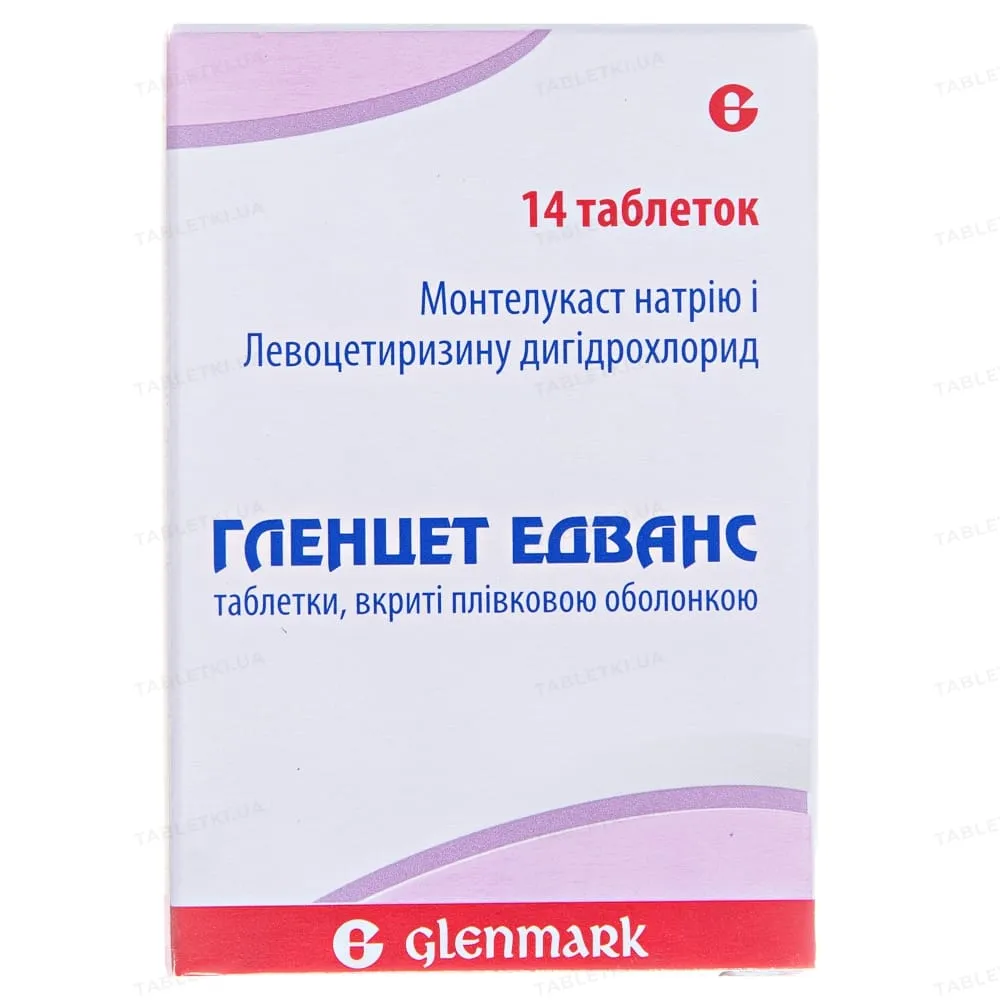
Table of Contents
INSTRUCTIONS FOR MEDICAL USE OF THE MEDICINAL PRODUCT GLENCET ADVANCE (GLENCETADVANCE)
Composition:
Active substances: montelukast, levocetirizine;
One film-coated tablet contains montelukast sodium equivalent to montelukast 10 mg, levocetirizine dihydrochloride 5 mg;
Excipients: lactose monohydrate, microcrystalline cellulose, calcium hydrogen phosphate anhydrous, sodium croscarmellose, hydroxypropylcellulose, magnesium stearate, Opadry Yellow 13B52204 (hypromellose, titanium dioxide (E 171), macrogol, iron oxide yellow (E 172), polysorbate 80, iron oxide red (E 172)).
Pharmaceutical form. Film-coated tablets.
Main physicochemical characteristics: yellow, round, biconvex film-coated tablets, smooth on both sides.
Pharmacotherapeutic group. Drugs acting on the respiratory system.
ATC code R07AX.
Pharmacological properties.
Pharmacodynamics.
Glenzet Advance contains a fixed combination of two active substances: montelukast and levocetirizine; therefore, the mechanisms of action described below apply to the medicinal product Glenzet Advance.
Montelukast is a selective leukotriene receptor antagonist. Cysteinyl leukotrienes (LTC4, LTD4, LTE4) are metabolites of arachidonic acid released from various cell types, including mast cells and eosinophils. These eicosanoids bind to cysteinyl leukotriene receptors (CysLT). CysLT type 1 receptors (CysLT1) in humans are located in airway cells (including smooth muscle cells and airway macrophages), as well as in other proinflammatory cells (including eosinophils and certain hematopoietic progenitor cells). CysLT receptors are involved in the pathogenesis of asthma and allergic rhinitis. Leukotriene-mediated effects in asthma include airway edema, smooth muscle contraction, and changes in cellular activity associated with inflammation. In allergic rhinitis, CysLT receptors are released from nasal mucosa following allergen exposure during both immediate and delayed hypersensitivity reactions and are associated with symptoms of allergic rhinitis. Montelukast is an orally active compound that binds with high affinity and selectivity to CysLT1 receptors (with preference over binding to other pharmacologically important airway receptors such as prostaglandin, cholinergic, or β-adrenergic receptors). Montelukast inhibits the physiological effects of LTD4 at CysLT1 receptors without any agonist activity.
Montelukast blocks cysteinyl-leukotriene receptors in the airways, as confirmed by its ability to prevent bronchoconstriction induced by inhaled LTD4 in patients with asthma. Even at low doses such as 5 mg, montelukast effectively blocks LTD4-induced bronchoconstriction.
Levocetirizine is the active R-enantiomer of cetirizine, an antihistamine agent. Its main effects are mediated through selective inhibition of H1 receptors. The antihistaminic effect of levocetirizine has been confirmed in various studies using experimental models in animals and humans. In vitro receptor binding studies have shown that the affinity of levocetirizine for the human H1 receptor is twice that of cetirizine (Ki = 3 nmol/L vs. 6 nmol/L). The clinical significance of these data is currently unknown.
Pharmacokinetics.
Montelukast
Absorption
Montelukast is rapidly absorbed after oral administration. Following administration of 10 mg film-coated tablets to fasting adults, the mean peak plasma concentration (Cmax) of montelukast was reached within 3–4 hours (Tmax). The average oral bioavailability is 64%. A standard breakfast does not affect the bioavailability or Cmax of montelukast after oral administration. Ingestion of a high-fat meal in the morning did not alter the AUC of montelukast in the oral granule formulation; however, the Cmax was reduced by 35%, and the Tmax was prolonged from 2.3 ± 1.0 hours to 6.4 ± 2.9 hours.
Distribution
More than 99% of montelukast is bound to plasma proteins. The volume of distribution at steady state averages between 8 and 11 liters. Studies using radiolabeled montelukast in rats have shown minimal penetration across the blood-brain barrier. Furthermore, concentrations of radiolabeled montelukast in all other tissues of rats were minimal 24 hours after dose administration.
Metabolism
Montelukast is extensively metabolized. In studies using therapeutic doses, plasma concentrations of montelukast metabolites at steady state were not detected in adult and pediatric patients. In vitro studies using human liver microsomes have shown that cytochrome P450 enzymes CYP3A4 and 2C9 are involved in the metabolism of montelukast. Clinical studies on the effect of known CYP3A4 inhibitors (e.g., ketoconazole, erythromycin) or CYP2C9 inhibitors (e.g., fluconazole) on the pharmacokinetics of montelukast have not been conducted. According to in vitro studies using human liver microsomes, therapeutic plasma concentrations of montelukast do not inhibit cytochrome P450 enzymes CYP3A4, 2C9, 1A2, 2A6, 2C19, or 2D6. In vitro studies have shown that montelukast is a potent inhibitor of CYP2C8. However, clinical drug interaction studies with montelukast and rosiglitazone (a marker substrate metabolized primarily by CYP2C8) indicate that montelukast does not inhibit CYP2C8 in vivo, and therefore, it is not expected to affect the metabolism of drugs metabolized by this enzyme.
Elimination
The plasma clearance of montelukast in healthy adults averages 45 mL/min. After oral administration of radiolabeled montelukast, 86% of the radiolabel was recovered in feces within 5 days, and less than 0.2% in urine. These data, combined with bioavailability assessments, indicate that montelukast and its metabolites are almost entirely excreted via bile. According to several studies, the mean elimination half-life of montelukast in plasma in healthy young adults ranges from 2.7 to 5.5 hours. The pharmacokinetics of montelukast are nearly linear with oral doses up to 50 mg. With a once-daily 10 mg dose, a slight accumulation of the parent compound in plasma was observed (14%).
Patients with hepatic impairment. Dose adjustment is not required in patients with mild to moderate hepatic impairment. The pharmacokinetic profile of montelukast has not been evaluated in patients with more severe hepatic dysfunction.
Patients with renal impairment. Montelukast and its metabolites are not excreted in urine; therefore, the pharmacokinetic profile of montelukast has not been evaluated in patients with renal impairment. Dose adjustment is not required for these patients.
Levocetirizine
The pharmacokinetics of levocetirizine in the therapeutic dose range in healthy adults are linear.
Absorption
Levocetirizine is rapidly and extensively absorbed after oral administration. In adults, peak plasma concentration is reached within 0.9 hours after oral tablet intake. The accumulation ratio after daily oral dosing is 1.12; steady state is achieved within 2 days of starting treatment. Peak concentrations typically reach 270 ng/mL and 308 ng/mL after single and multiple doses of the 5 mg daily dose, respectively. Food intake does not affect the extent of exposure (AUC) of levocetirizine in tablet form; however, when taken with a high-fat meal, Tmax is prolonged by approximately 1.25 hours, and Cmax is reduced by approximately 36%. Therefore, levocetirizine can be administered regardless of food intake.
Distribution
The mean extent of levocetirizine binding to plasma proteins in in vitro studies ranged from 91% to 92%, independent of concentration, within a range of 90–5000 ng/mL, including therapeutic plasma concentrations. After oral dosing, the mean apparent volume of distribution was approximately 0.4 L/kg, which is typical for distribution in total body water.
Metabolism
Less than 14% of the administered dose of levocetirizine is metabolized in humans; therefore, differences due to genetic polymorphism or concomitant use of inhibitors of hepatic enzymes metabolizing this drug are expected to be negligible. Metabolic pathways include aromatic oxidation, N- and O-dealkylation, and conjugation with taurine. Dealkylation pathways are primarily mediated by CYP3A4, while aromatic oxidation involves multiple and/or unidentified CYP isoforms.
Elimination
The elimination half-life in plasma in healthy adults is 8 to 9 hours after oral administration. The mean value of total clearance of levocetirizine after oral administration is approximately 0.63 mL/kg/min. The primary route of excretion of levocetirizine and its metabolites is via urine, accounting for an average of 85.4% of the administered dose. Only 12.9% of the dose is excreted in feces.
Patients with renal impairment. Excretion of levocetirizine occurs via both glomerular filtration and active tubular secretion. Renal clearance of levocetirizine correlates with creatinine clearance. In patients with impaired renal function, clearance of levocetirizine is reduced. Therefore, in patients with moderate to severe renal impairment, the dosing interval of levocetirizine should be adjusted according to creatinine clearance. In anuric patients with end-stage renal disease, total clearance is reduced by approximately 80% compared to individuals without such impairment. The amount of levocetirizine removed during a standard 4-hour hemodialysis session is less than 10%.
Clinical characteristics.
Indications.
The fixed combination of montelukast and levocetirizine is indicated for reduction of symptoms associated with seasonal and perennial allergic rhinitis, as well as rhinitis in patients with bronchial asthma.
The risk of developing neuropsychiatric symptoms in patients with allergic rhinitis may outweigh the benefit of montelukast use; therefore, it should be used as a reserve medication in patients with inadequate response to or intolerance of alternative therapies.
Contraindications.
Hypersensitivity to sodium montelukast, levocetirizine, or cetirizine, as well as to other components of the drug. End-stage renal disease (glomerular filtration rate (GFR) <15 mL/min) requiring dialysis. Pediatric age under 15 years. The drug is also contraindicated in patients with severe hereditary galactose intolerance, lactase deficiency, or glucose-galactose malabsorption.
Interaction with other medicinal products and other forms of interaction.
Montelukast
Theophylline, prednisone, and prednisolone: When montelukast is used concomitantly with theophylline, prednisone, prednisolone, oral contraceptives, terfenadine, digoxin, warfarin, thyroid hormones, sedative decongestants, or cytochrome P450 (CYP) enzyme inducers, no dose adjustment is required.
Oral contraceptives, terfenadine, digoxin, and warfarin: In drug interaction studies using the recommended clinical dose of montelukast, no clinically significant effect of this compound on the following agents was observed: oral contraceptives (norethindrone 1 mg/ethinylestradiol 35 mcg), terfenadine, digoxin, and warfarin.
Thyroid hormones, sedative hypnotics, nonsteroidal anti-inflammatory agents, benzodiazepines, and decongestants: No interactions have been observed.
Cytochrome P450 (CYP) enzyme inducers: During concomitant use of phenobarbital, which induces hepatic metabolism, the area under the pharmacokinetic curve (AUC) of montelukast decreased by approximately 40% after a single 10 mg dose of montelukast. Since montelukast is metabolized via CYP 3A4, 2C8, and 2C9, caution is advised, especially in children, when montelukast is co-administered with inducers of CYP 3A4, 2C8, and 2C9, such as phenytoin, phenobarbital, and rifampicin. Montelukast is a potent inhibitor of cytochrome CYP2C8 in vitro. However, in a clinical drug interaction study involving montelukast and rosiglitazone (a marker substrate representing drugs primarily metabolized by CYP2C8) in 12 healthy volunteers, the pharmacokinetics of rosiglitazone remained unchanged when co-administered with montelukast, indicating absence of CYP2C8 inhibition by montelukast in vivo. Therefore, montelukast is not expected to alter the metabolism of drugs metabolized by this enzyme (e.g., paclitaxel, rosiglitazone, repaglinide).
In vitro studies have shown that montelukast is a substrate of CYP 2C8 and, to a lesser extent, of CYP 2C9 and 3A4. In a clinical drug interaction study using montelukast and gemfibrozil (an inhibitor of CYP 2C8 and 2C9), gemfibrozil increased systemic exposure to montelukast by 4.4-fold. When montelukast is used concomitantly with gemfibrozil or other potent CYP 2C8 inhibitors, dose adjustment is not required, but physicians should consider the increased risk of adverse reactions.
Based on in vitro data, clinically significant interactions with less potent inhibitors of CYP 2C8 (e.g., trimethoprim) are not expected. Concomitant administration of montelukast with itraconazole, a strong CYP 3A4 inhibitor, did not result in a significant increase in systemic exposure to montelukast.
Levocetirizine
In vitro data suggest that levocetirizine is not expected to cause pharmacokinetic interactions via inhibition or induction of hepatic enzymes metabolizing medicinal products. No in vivo studies on drug interactions with levocetirizine have been conducted.
Antipyrine, azithromycin, cimetidine, erythromycin, ketoconazole, theophylline, and pseudoephedrine: Pharmacokinetic interaction studies using racemic cetirizine showed no interaction with antipyrine, pseudoephedrine, erythromycin, azithromycin, ketoconazole, or cimetidine. However, a slight reduction (by 16%) in cetirizine clearance was observed when theophylline 400 mg was administered. Higher theophylline doses may have a more pronounced effect.
In a study of multiple-dose administration of ritonavir (600 mg twice daily) and cetirizine (10 mg daily), cetirizine exposure increased by approximately 40%, while ritonavir distribution was only slightly altered (–11%).
Food intake does not affect the extent of levocetirizine absorption, but co-ingestion with food reduces the rate of its absorption.
Concomitant use of cetirizine or levocetirizine with alcohol or other central nervous system depressants in sensitive patients may cause additional impairment of attention and ability to perform tasks.
Special precautions for use.
Montelukast
Acute asthma attack: montelukast is not intended for the relief of bronchospasm during acute episodes of asthma, including status asthmaticus. In such cases, patients should use available emergency treatments. Montelukast therapy may be continued during asthma exacerbations. Patients who experience asthma attacks following physical exertion should have short-acting β-agonist inhalers available.
Concomitant use with corticosteroids: while the dose of inhaled corticosteroids may be gradually reduced under medical supervision, montelukast should not be abruptly substituted for inhaled or oral corticosteroids.
Aspirin hypersensitivity: patients with known hypersensitivity to aspirin should avoid using aspirin or nonsteroidal anti-inflammatory drugs during montelukast therapy. Although montelukast is effective in improving respiratory function in patients with asthma and documented aspirin hypersensitivity, it does not reduce the bronchoconstrictor response to aspirin and other nonsteroidal anti-inflammatory drugs in patients with aspirin-sensitive asthma.
Neuropsychiatric disorders:
| Psychoneuropsychiatric reactions such as changes in behavior, depression, and suicidal ideation have been reported in patients of all age groups taking montelukast (see section "Adverse Reactions"). Symptoms may be severe and prolonged if treatment is not discontinued. Therefore, montelukast therapy should be discontinued if psychoneuropsychiatric symptoms occur. Patients and/or caregivers should be alert to psychoneuropsychiatric reactions and inform their physician if behavioral changes occur. |
During post-marketing surveillance, adverse events associated with montelukast use have been reported, including agitation, aggressive behavior or hostility, anxiety, depression, disorientation, sleep disturbances, hallucinations, insomnia, irritability, restlessness, tremor, somnambulism, suicidal ideation, and suicidal behavior (including suicide). The clinical details of some post-marketing reports of adverse events with montelukast are consistent with drug-induced effects. Physicians prescribing this medication and patients should be aware of the potential for neuropsychiatric disorders. Patients should be informed that if such symptoms occur, they must notify their physician. If such events occur in a patient, the physician must carefully evaluate the risks and benefits of continuing montelukast therapy.
Eosinophilic conditions: In patients with bronchial asthma, systemic eosinophilia may develop during montelukast treatment, sometimes presenting with clinical signs of vasculitis, suggestive of Churg-Strauss syndrome—a condition often requiring systemic corticosteroid therapy. These events usually occur in association with a reduction in oral corticosteroid dosage. Physicians should closely monitor patients for early signs of eosinophilia, vasculitic skin rashes, worsening pulmonary symptoms, cardiac complications, and/or neuropathy.
Levocetirizine
Use with caution in patients with chronic renal insufficiency (dose adjustment required) and in elderly patients (possible reduction in glomerular filtration rate).
When prescribing the drug to patients with certain risk factors for urinary retention (e.g., spinal cord injury, benign prostatic hyperplasia), it should be noted that levocetirizine may increase the risk of urinary retention.
Caution should be exercised when prescribing the drug to patients with epilepsy or those at risk of seizures, as levocetirizine may provoke seizure exacerbation.
Antihistamines suppress the response to skin allergy tests; therefore, administration of the drug should be discontinued 3 days prior to testing (elimination period).
Pruritus may occur after discontinuation of levocetirizine, even if these symptoms were not present before treatment initiation. Symptoms may resolve spontaneously. In some cases, symptoms may be severe and re-initiation of treatment with the drug after discontinuation may be necessary.
During clinical trials, cases of somnolence, increased fatigue, and general weakness have been reported in some patients receiving levocetirizine. Patients should be advised that during treatment they should avoid activities requiring high mental alertness and precise motor coordination, including operating machinery or driving vehicles. Alcohol consumption and concomitant use of central nervous system (CNS) depressants should be avoided during levocetirizine therapy, as these may lead to additional reduction in alertness and enhanced CNS depression.
Glenzet Advans contains lactose and therefore should not be administered to patients with rare hereditary conditions such as galactose intolerance, lactase deficiency, or glucose-galactose malabsorption syndrome.
The medicinal product contains less than 1 mmol (23 mg) of sodium per tablet, i.e., it is practically sodium-free.
Use in elderly patients.
Montelukast
No differences in safety and efficacy profiles were observed between elderly and younger patients during clinical use of this drug, and there is no clinical evidence indicating differential response between these two populations. However, increased sensitivity to this drug in some elderly patients cannot be excluded.
Levocetirizine
The number of patients aged 65 years and older included in clinical trials of levocetirizine for each approved indication was insufficient to determine whether their response differs from that of younger patients. In clinical practice, no evidence of differential response between elderly and younger patients has been reported. In general, dose selection for elderly patients should be cautious; therapy should usually start at the lower end of the recommended dose range, considering the higher likelihood of decreased hepatic, renal, or cardiac function, presence of concomitant diseases, and use of other medications in this population.
Use during pregnancy or breastfeeding.
No adequate and well-controlled clinical studies of this medicinal product in pregnant women have been conducted. Use during pregnancy is contraindicated.
Breastfeeding. Since many medicinal products are excreted in human milk, breastfeeding should be discontinued if use of the drug is necessary.
Ability to affect reaction speed when driving or operating machinery.
No studies have been conducted on the effect of the fixed-dose combination of montelukast and levocetirizine on the ability to drive or operate machinery. Some patients may experience somnolence, increased fatigue, and weakness during levocetirizine therapy. Patients should refrain from driving and operating potentially hazardous machinery during treatment with Glenzet Advans.
Dosage and Administration.
The recommended dose for adults and children aged 15 years and older is 1 tablet per day, taken in the evening, independent of food intake. Tablets should be swallowed whole, without chewing. The treatment course lasts 14 days.
Elderly patients
Dose adjustment is recommended for elderly patients with moderate to severe renal impairment.
Patients with renal impairment
Dosing intervals should be individually adjusted based on renal function (eGFR – estimated glomerular filtration rate). Refer to the table and adjust the dose as indicated.
Dosage adjustment of the drug in patients with impaired renal function
| Group |
eGFR, mL/min |
Dose and frequency |
| Normal renal function |
≥ 90 |
1 tablet once daily |
| Mild impairment |
60 – < 90 |
1 tablet once daily |
| Moderate impairment |
30 – < 60 |
1 tablet every 2 days |
| Severe renal function reduction |
15 – < 30 (not requiring dialysis) |
1 tablet every 3 days |
| End-stage renal disease |
< 15 (dialysis required) |
Contraindicated |
For children with impaired kidney function, the dose of the drug should be individually adjusted based on the patient's renal clearance and body weight.
There are no specific data regarding the use of the drug in children with impaired kidney function.
Patients with hepatic impairment
Dosage adjustment is not required in patients with hepatic impairment. In patients with both hepatic and renal impairment, dosage regimen should be adjusted according to the table above.
Children
The drug is administered to children aged 15 years and older.
Overdose
Montelukast
Currently, there are no specific recommendations for the treatment of montelukast overdose. Cases of acute montelukast overdose have been reported during post-marketing surveillance and clinical trials. These reports include cases in adults and children following ingestion of high doses such as 1000 mg. Clinical and laboratory findings were consistent with the safety profile of montelukast in adults and children. In most reported cases of overdose, no serious adverse reactions were observed. The most common adverse reactions were consistent with the safety profile of montelukast and included abdominal pain, somnolence, thirst, headache, vomiting, and psychomotor hyperactivity. It is unknown whether montelukast is eliminated by peritoneal dialysis or hemodialysis.
Treatment is symptomatic.
Levocetirizine
Cases of levocetirizine overdose have been reported. Symptoms of overdose may include somnolence in adults, and in children, initial excitation and restlessness followed by somnolence. There is no known specific antidote for levocetirizine. Symptomatic or supportive therapy is recommended in case of overdose. Levocetirizine is not removed by dialysis.
Adverse reactions.
Montelukast
The table below presents adverse reactions reported during post-marketing surveillance. The frequency of adverse events was assessed based on data from relevant clinical trials.
| System – Organ – Class |
Adverse Reactions |
Frequency* |
| Infections and parasitic disorders |
Upper respiratory tract infection |
Very common |
| Disorders of blood and lymphatic system |
Increased tendency to haemorrhagic events |
Rare |
| Thrombocytopenia |
Very rare |
|
| Immune system disorders |
Hypersensitivity reactions, including anaphylaxis |
Uncommon |
| Hepatic eosinophilic infiltration |
Very rare |
|
| Psychiatric disorders |
Sleep disorders, including nightmares, insomnia, somnambulism, irritability, anxiety, restlessness, excitement, aggressive behaviour or hostility, depression |
Uncommon |
| Psychomotor hyperactivity, tremor, tic |
Rare |
|
| Hallucinations, suicidal thoughts and suicidal behaviour, disorientation, attention disturbances, memory impairment, obsessive-compulsive symptoms, dysphemia |
Very rare |
|
| Nervous system disorders |
Dizziness, lethargy, somnolence, headache, paraesthesia/hypoaesthesia, convulsions |
Uncommon |
| Cardiac disorders |
Palpitations |
Rare |
| Respiratory, thoracic and mediastinal disorders |
Nosebleed |
Uncommon |
| Churg-Strauss syndrome (CSS), pulmonary eosinophilia |
Very rare |
|
| Gastrointestinal disorders |
Diarrhoea, nausea, vomiting |
Common |
| Dry mouth, dyspepsia |
Uncommon |
|
| Hepatobiliary disorders |
Elevated serum levels of transaminases (ALT, AST) |
Common |
| Hepatitis (including cholestatic, hepatocellular and mixed liver injury) |
Very rare |
|
| Skin and subcutaneous tissue disorders |
Skin rashes |
Common |
| Ecchymoses, urticaria, pruritus |
Uncommon |
|
| Angioneurotic oedema |
Rare |
|
| Nodular erythema, multiform erythema |
Very rare |
|
| Musculoskeletal and connective tissue disorders |
Arthralgia, myalgia, including muscle spasms |
Uncommon |
| Renal and urinary disorders |
Enuresis in children |
Uncommon |
| General disorders |
Fever |
Common |
| General weakness, increased fatigue, malaise, oedema |
Uncommon |
*Frequency is defined as: very common (≥1/10); common (from ≥1/100 to <1/10); uncommon (from ≥1/1,000 to <1/100); rare (from ≥1/10,000 to <1/1,000); very rare (<1/10,000).
Levocetirizine
The following adverse reactions have been reported from clinical trials:
- Common (from >1/100 to <1/10): headache, somnolence, dry mouth, fatigue;
- Uncommon (from ≥1/1,000 to <1/100): asthenia, abdominal pain.
In addition to the above-mentioned adverse reactions observed during clinical trials, rare cases of the following adverse reactions have been reported during post-marketing surveillance.
Immune system disorders: Hypersensitivity reactions, including anaphylaxis.
Psychiatric disorders: Aggression, excitation, sleep disturbances, hallucinations, depression, insomnia, suicidal thoughts, nightmares.
Nervous system disorders: Seizures, loss of consciousness, tremor, dysgeusia, vertigo, somnolence, headache, fatigue, weakness, asthenia, paraesthesia, dizziness.
Eye disorders: Vision disorders, blurred vision, nystagmus.
Cardiac disorders: Palpitations, tachycardia.
Respiratory, thoracic and mediastinal disorders: Dyspnoea.
Gastrointestinal disorders: Nausea, diarrhoea, vomiting, constipation, increased appetite, dry mouth, abdominal pain.
Hepatobiliary disorders: Hepatitis.
Renal and urinary disorders: Dysuria, urinary retention.
Skin and subcutaneous tissue disorders: Angioedema, fixed drug eruption, pruritus, rash, urticaria.
Musculoskeletal and connective tissue disorders: Myalgia, arthralgia.
*General disorders:* Oedema.
Investigations: Weight gain, liver function test abnormalities.
Description of selected adverse reactions: Pruritus has been reported after discontinuation of levocetirizine.
Shelf life.
2 years.
Storage conditions.
Store in a dry, light-protected place at a temperature not exceeding 30°C.
Keep out of reach of children.
Packaging.
14 or 28 tablets in a plastic container, placed in a cardboard box.
Each container contains, together with the tablets, a polymer cylinder with a desiccant (silica gel).
Prescription category.
Prescription only.
Manufacturer.
Glenmark Pharmaceuticals Ltd. / Glenmark Pharmaceuticals Ltd.
Manufacturer's address and place of business.
Village Kishanpura, Baddi-Nalagarh Road, Tehsil Baddi, Distt. Solan (H.P.) 173 205, India /
Village Kishanpura, Baddi-Nalagarh Road, Tehsil Baddi, Distt. Solan (H.P.) 173 205, India.