Hypnoranum®
Ukraine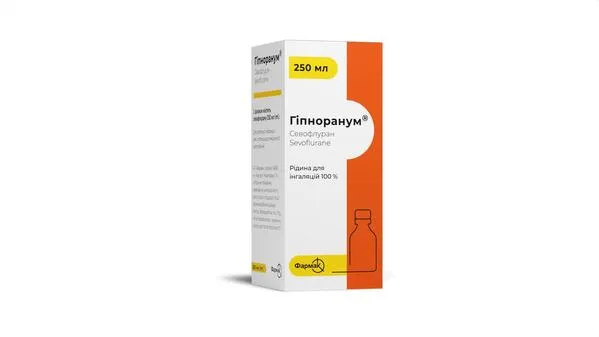
Table of Contents
INSTRUCTIONS FOR MEDICAL USE OF THE MEDICINAL PRODUCT HYPNORANUM® (HYPNORANUM)
Composition:
Active substance: sevoflurane;
1 vial contains 250 ml of sevoflurane.
Pharmaceutical form. Inhalation liquid.
Main physico-chemical properties: clear, colorless, volatile liquid.
Pharmacotherapeutic group. General anesthetics. Halogenated hydrocarbon derivatives. Sevoflurane. ATC code N01AB08.
Pharmacological Properties
Pharmacodynamics
Inhalation administration of the medicinal product for induction of anesthesia causes rapid loss of consciousness, which quickly recovers after termination of anesthesia. Induction anesthesia is accompanied by minimal excitation or signs of irritation of the upper respiratory tract and does not cause increased tracheobronchial secretion or stimulation of the central nervous system (CNS). In pediatric studies (mask induction), the incidence of coughing with sevoflurane was significantly lower than with halothane. Like other inhalational anesthetics, sevoflurane causes dose-dependent respiratory depression and reduction in arterial pressure. In humans, the adrenaline-induced arrhythmogenic threshold level of sevoflurane corresponds to that of isoflurane and exceeds the threshold level of halothane.
Sevoflurane has minimal effects on intracranial pressure and does not reduce the response to CO₂.
Sevoflurane does not have clinically significant effects on liver or kidney function and does not exacerbate existing renal or hepatic insufficiency. Sevoflurane does not affect renal concentrating ability even during prolonged anesthesia (approximately up to 9 hours).
Pharmacokinetics
Due to the low blood solubility of sevoflurane, alveolar concentration rises rapidly after initiation and declines rapidly after discontinuation of the anesthetic agent.
Rapid and extensive pulmonary elimination of sevoflurane minimizes the amount of anesthetic available for metabolism. In humans, less than 5% of absorbed sevoflurane is metabolized via cytochrome P450 (CYP) 2E1, resulting in the formation of hexafluoroisopropanol (HFIP), with release of inorganic fluoride and carbon dioxide (or one carbon-containing fragment). HFIP is then rapidly conjugated with glucuronic acid and excreted in urine. No other pathways of sevoflurane metabolism have been identified. This is the only fluorinated volatile anesthetic that does not metabolize to trifluoroacetic acid.
The concentration of fluoride ions depends on the duration of anesthesia, sevoflurane concentration, and the composition of the anesthetic mixture. Defluorination of sevoflurane is not induced by barbiturates. In approximately 7% of adult patients during clinical trials, serum inorganic fluoride concentrations exceeded 50 μM, but no clinical effects on renal function were observed.
Clinical Studies
Efficacy Studies
Numerous clinical studies of sevoflurane have been conducted as an anesthetic agent in both children and adult patients. Study results demonstrated that sevoflurane provides smooth, rapid induction and rapid emergence from anesthesia.
Use of sevoflurane in studies was associated with faster induction and more rapid emergence from anesthesia, response to commands, and orientation compared to comparator groups.
Anesthesia in Adults
In adult patients undergoing mask induction, sevoflurane provided smooth and rapid induction of anesthesia. In three outpatient and 25 inpatient studies involving 3591 adult patients (2022 received sevoflurane, 1196 isoflurane, 111 enflurane, and 262 propofol), sevoflurane proved to be an effective agent for maintenance of anesthesia. Sevoflurane demonstrated adequate efficacy when used in neurosurgery, cesarean section, coronary artery bypass grafting, and in patients without cardiac disease but at risk of myocardial ischemia.
Anesthesia in Children
In two outpatient and three inpatient studies involving 1498 children (837 received sevoflurane, 661 halothane), sevoflurane proved to be an effective agent for induction and maintenance of anesthesia. In pediatric studies (mask induction), the induction period was statistically significantly shorter, and the incidence of coughing was significantly lower with sevoflurane compared to halothane.
Safety Studies
Clinical studies were conducted in various patient groups (children, adults, elderly patients, patients with renal or hepatic impairment, obese patients, patients undergoing cardiac bypass surgery, patients receiving aminoglycosides or metabolic inducers, patients undergoing repeated surgeries, and patients undergoing surgery lasting more than 6 hours). Laboratory parameters (such as alanine aminotransferase [ALT], aspartate aminotransferase [AST], alkaline phosphatase, total bilirubin, serum creatinine, blood urea nitrogen) were assessed alongside the frequency of adverse reactions related to liver or kidney function. Results showed that sevoflurane does not have a clinically significant effect on liver or kidney function and does not worsen pre-existing renal or hepatic insufficiency in the studied patient population (see sections "Special Warnings and Precautions for Use" and "Adverse Reactions"). Data from these studies also demonstrated no statistically significant difference in the number of patients exhibiting changes in any clinical chemistry parameters when sevoflurane was compared with other inhalational anesthetics. The effect on renal function was comparable with sevoflurane and other inhalational anesthetics, regardless of anesthetic circuit type, fresh gas flow rate, and in patients with inorganic fluoride concentrations ≥ 50 μM and < 50 μM. The incidence of renal dysfunction in comparative studies was < 1% for both sevoflurane (0.17%) and other inhalational anesthetics (0.22% for isoflurane, halothane, enflurane, propofol). This incidence is consistent with that observed in general surgical practice. In all cases, there was either an alternative cause or a plausible explanation for the development of renal dysfunction.
Children
In some published studies involving children, cognitive deficits were observed after repeated or prolonged exposure to anesthetic agents early in life. These studies have significant limitations, and it remains unclear whether the observed effects were due to the use of anesthetic/sedative agents or other factors such as surgery or underlying illness. Furthermore, these findings have not been confirmed in later published registration studies. In published animal studies investigating certain anesthetic agents/sedative drugs, adverse effects on brain development in early life have been reported (see section "Preclinical Safety Data").
Patients with Hepatic Impairment
In clinical trials, sevoflurane was effective and well tolerated when used as the primary agent for maintenance of anesthesia in patients with Child-Pugh class A and B hepatic impairment. Sevoflurane did not worsen pre-existing hepatic insufficiency. Hepatic adverse reactions observed in post-marketing studies are described in the sections "Special Warnings and Precautions for Use" and "Adverse Reactions."
Patients with Renal Impairment
The effect of sevoflurane was evaluated in patients with renal impairment and serum creatinine levels ≥ 1.5 mg/dL (130 μmol/L). Based on the frequency and magnitude of changes in creatinine concentration, sevoflurane did not worsen renal function.
Pharmaceutical Characteristics
Formula for calculating saturated vapor pressure: Log₁₀ Pvapor = A + B/T,
where A = 8.086,
B = –1726.68,
T = °C + 273.16 K (temperature in Kelvin).
Partition coefficients at 37°C:
water/gas 0.36,
blood/gas 0.63–0.69,
olive oil/gas 47.2–53.9,
brain/gas 1.15.
Average partition coefficients component/gas at 25°C for polymers used in medical applications:
electrical conductive rubber 14.0,
butyl rubber 7.7,
polyvinyl chloride 17.4,
polyethylene 1.3.
Sevoflurane is a non-flammable, non-explosive liquid administered by inhalation of vaporized liquid using a vaporizer. Sevoflurane is chemically stable. No significant chemical decomposition occurs in the presence of strong acids or elevated temperatures.
Sevoflurane Degradation
Sevoflurane remains stable when stored under normal room lighting conditions. No significant degradation occurs in the presence of strong acids or heat. Sevoflurane does not damage stainless steel, brass, aluminum, nickel-plated copper, chrome-plated copper, or copper-beryllium alloy. Chemical degradation may occur due to interaction with CO₂ absorbent in the anesthesia circuit. When fresh absorbents are used, degradation of sevoflurane is minimal, and degradation products are either undetectable or non-toxic. Degradation of sevoflurane and subsequent formation of degradation products is enhanced by increased absorbent temperature, drying of the CO₂ absorbent (especially those containing potassium hydroxide, e.g., Baralyme®), increased sevoflurane concentration, and reduced fresh gas flow. Sevoflurane may undergo alkaline degradation via two pathways. The first pathway involves loss of hydrogen fluoride, forming Compound A. The second degradation pathway occurs only in the presence of dry CO₂ absorbent and leads to dissociation of sevoflurane into hexafluoroisopropanol (HFIP) and formaldehyde. HFIP is an inactive, non-genotoxic substance that is rapidly glucuronidated and excreted, with toxicity comparable to that of sevoflurane. Formaldehyde is normally present in metabolic processes. When used with very dry absorbent, formaldehyde may degrade to methanol and formate. Formate (residual formic acid) may contribute to carbon monoxide formation at high temperatures. Methanol may react with Compound A to form Compound B. Compound B undergoes further HF elimination to form Compounds C, D, and E. When very dry absorbents, especially those containing potassium hydroxide (e.g., Baralyme®), are used, formation of formaldehyde, methanol, carbon monoxide, Compound A, and some of its degradation products (Compounds B, C, and D) is possible.
Lewis Acid Degradation
The formulation contains at least 0.3% water as a Lewis acid inhibitor. No other chemical stabilizers are used.
Clinical characteristics.
Indications.
Induction and maintenance of general anesthesia in adult and pediatric patients undergoing inpatient and outpatient surgical procedures.
Contraindications.
Confirmed or suspected genetic predisposition to malignant hyperthermia.
Confirmed or suspected hypersensitivity to sevoflurane or to other halogenated anesthetics (e.g., history of liver dysfunction, typically with elevated liver enzymes, fever, leukocytosis, and/or eosinophilia of unexplained origin following administration of halogenated anesthetics).
When general anesthesia is contraindicated.
Interaction with other medicinal products and other forms of interaction.
Beta-sympathomimetics such as isoprenaline, and alpha- and beta-sympathomimetics such as adrenaline and noradrenaline, should be used with caution during sevoflurane anesthesia due to the potential risk of ventricular arrhythmias.
Non-selective MAO inhibitors: risk of crisis during surgery. It is recommended to discontinue therapy at least 2 weeks prior to surgical intervention.
Sevoflurane may cause marked arterial hypotension in patients receiving calcium channel antagonists, particularly dihydropyridine derivatives.
Caution is advised when co-administering calcium channel antagonists with inhaled anesthetics due to the risk of additive negative inotropic effects.
Concomitant use of succinylcholine and inhaled anesthetics has rarely been associated with elevated serum potassium levels leading to cardiac arrhythmias and fatal outcomes in pediatric patients during the postoperative period.
As with other medicinal products, after administration of an intravenous anesthetic agent such as propofol, lower concentrations of sevoflurane may be required.
Sevoflurane is safe and effective when used in combination with drugs commonly used in surgical practice, including agents acting on the CNS, autonomic nervous system, neuromuscular blockers, antimicrobial agents (including aminoglycosides), hormones, synthetic blood substitutes, and cardiovascular drugs, including epinephrine.
Epinephrine/adrenaline. Sevoflurane, like isoflurane, increases myocardial sensitivity to the arrhythmogenic effects of exogenously administered adrenaline.
Indirect-acting sympathomimetics. Interaction between sevoflurane and sympathomimetics (e.g., amphetamine, ephedrine) may carry a risk of acute hypertensive episodes.
Beta-blockers. Sevoflurane may enhance the negative inotropic, chronotropic, and dromotropic effects of beta-blockers (by blocking cardiovascular compensatory mechanisms).
Verapamil. Impaired atrioventricular conduction has been observed when verapamil is administered concomitantly with sevoflurane.
St. John’s wort. Cases of severe hypotension and delayed emergence from anesthesia have been reported in patients who have taken St. John’s wort for prolonged periods.
Metabolism of sevoflurane may be enhanced by known inducers of CYP2E1 (e.g., isoniazid and alcohol), but not by barbiturates. Concomitant use of sevoflurane and isoniazid may potentiate the hepatotoxic effect of isoniazid.
Sevoflurane may enhance the negative inotropic, chronotropic, and dromotropic effects of beta-blockers (by blocking cardiovascular compensatory mechanisms).
Barbiturates. Sevoflurane is compatible with barbiturates commonly used in surgical practice.
Benzodiazepines and opioids. A reduction in the minimum alveolar concentration (MAC) of sevoflurane is expected, as with other inhaled anesthetics; sevoflurane is compatible with benzodiazepines and opioids frequently used in surgical practice. Administration of opioids such as alfentanil and sufentanil in combination with sevoflurane may result in synergistic reductions in heart rate, arterial pressure, and respiratory rate.
Inducers of CYP2E1. Medicinal products and compounds that increase the activity of cytochrome P450 isoenzyme CYP2E1, such as isoniazid and alcohol, may enhance the metabolism of sevoflurane and lead to a significant increase in plasma fluoride ion concentration (see section "Pharmacological properties", pharmacokinetics, metabolism, and fluoride ion).
Nitrous oxide. As with other inhaled anesthetics, the MAC of sevoflurane is reduced (by 50% in adults and by 25% in children).
Neuromuscular blockers. Like other inhaled anesthetics, sevoflurane affects both the intensity and duration of neuromuscular blockade induced by non-depolarizing muscle relaxants.
In cases of additional alfentanil-N2O anesthesia, sevoflurane potentiates neuromuscular blockade caused by pancuronium, vecuronium, and atracurium. The effect of sevoflurane on succinylcholine and the duration of action of depolarizing neuromuscular blockers has not been studied.
Reducing the dose of neuromuscular blocking agents during induction anesthesia may delay achievement of conditions suitable for tracheal intubation or result in inadequate muscle relaxation, since potentiation of muscle relaxant effects occurs within several minutes after initiation of sevoflurane administration.
Interactions with non-depolarizing neuromuscular blocking agents such as pancuronium, vecuronium, and atracurium have been studied. In the absence of specific recommendations, the dose of non-depolarizing muscle relaxants should not be reduced for endotracheal intubation. During maintenance of anesthesia, the dose of non-depolarizing muscle relaxants should be reduced, as in N2O-opioid anesthesia. Additional doses of muscle relaxants should be administered only after assessment of response to neurostimulation. As with other agents, after administration of an intravenous anesthetic such as propofol, lower concentrations of sevoflurane may be required. Marked increases in plasma fluoride concentration have been observed following increased CYP2E1 activity.
Special precautions for use.
Sevoflurane may cause respiratory depression, which may be intensified during premedication with narcotics or other medicinal agents causing respiratory depression.
Respiration must be monitored and, if necessary, emergency medical assistance should be provided. Sevoflurane may be administered only by personnel trained in the conduct of general anesthesia. Equipment for maintaining airway patency, artificial pulmonary ventilation, oxygen supply, and circulatory resuscitation must be readily available. The concentration of sevoflurane delivered from the vaporizer must be accurately known. Since volatile anesthetics differ in their physical properties, only vaporizers specifically calibrated for use with sevoflurane should be used. General anesthesia should be individualized based on the patient's response to anesthetic agents. As anesthesia deepens, arterial hypotension and respiratory depression increase.
There have been reports that prior administration of anesthetic agents—halogenated hydrocarbons, particularly when the interval between administrations was less than 3 months—may increase the potential risk of liver injury.
Rare cases of QT interval prolongation, very rarely associated with torsades de pointes ventricular tachycardia, have been reported, with fatal outcomes in exceptional cases. Sevoflurane should be used with caution in patients predisposed to such conditions.
Isolated cases of ventricular extrasystoles have been reported in children with Pompe disease.
General anesthesia, including with sevoflurane, should be administered with caution in patients with mitochondrial disorders.
Liver
Very rare cases of mild, moderate, and severe postoperative liver dysfunction or hepatitis, with or without jaundice, have been reported in post-marketing studies. Clinical judgment should be exercised when using sevoflurane in patients with concomitant liver dysfunction or when using drugs that may cause liver injury (see section "Adverse reactions"). Prior use of halogenated hydrocarbon anesthetics may increase the risk of liver injury, especially if the interval between administrations is less than 3 months.
During maintenance of anesthesia, increasing the concentration of sevoflurane leads to dose-dependent decreases in arterial blood pressure. Excessive reduction in arterial pressure may be related to the depth of anesthesia; in such cases, it can be corrected by reducing the inhaled concentration of sevoflurane. As with any anesthetic, in patients with ischemic heart disease, it is important to maintain hemodynamic stability to prevent myocardial ischemia.
Recovery from anesthesia must be carefully assessed before transferring the patient from the post-anesthesia care unit.
Although recovery of consciousness after sevoflurane administration usually occurs within a few minutes, the effect on intellectual abilities during the 2–3 days following anesthesia has not been studied. As with other anesthetics, minor mood changes may occur for several days after anesthesia (see section "Ability to affect reaction speed when driving or operating machinery").
Sevoflurane should be used with caution in obstetric anesthesia, as its uterine relaxant effect may increase the risk of uterine bleeding.
Sevoflurane use has been associated with seizures in children and young people up to 21 years of age, as well as in elderly patients, regardless of the presence of seizure risk factors. A clinical assessment of seizure risk should be performed before administering sevoflurane. In children, the depth of anesthesia should be limited. EEG monitoring may help optimize the sevoflurane dose and prevent seizures in susceptible patients.
Dystonic movements have been observed in children.
Malignant hyperthermia
In susceptible individuals, potent inhalational anesthetics may trigger a hypermetabolic state in skeletal muscle, leading to increased oxygen demand and a clinical syndrome known as malignant hyperthermia. This syndrome manifests as hypercapnia and may include nonspecific signs such as muscle rigidity, tachycardia, tachypnea, cyanosis, arrhythmias, and/or unstable arterial pressure (some of these symptoms may also occur with light anesthesia, acute hypoxia, hypercapnia, or hypovolemia).
One case of malignant hyperthermia was reported in clinical trials. Malignant hyperthermia has also been observed in post-marketing studies, with some cases resulting in fatalities.
Treatment of malignant hyperthermia includes discontinuation of triggering agents (e.g., sevoflurane), intravenous administration of sodium dantrolene (see the prescribing information for sodium dantrolene), and supportive therapy involving aggressive measures to normalize body temperature, support respiratory and circulatory function, and correct fluid and electrolyte imbalances.
Renal failure may develop later; therefore, urine output should be monitored and maintained if possible.
Perioperative hyperkalemia
The use of inhalational anesthetics has been associated with rare cases of elevated plasma potassium levels, which may manifest as arrhythmias. Fatal cases have occurred in the postoperative period in children. Patients particularly susceptible include those with latent or overt neuromuscular disorders, especially Duchenne muscular dystrophy. In most reported cases, succinylcholine was administered concomitantly. Marked increases in plasma creatine phosphokinase (CPK) levels and, in some cases, myoglobinuria have also been observed in these patients. Although these manifestations resemble malignant hyperthermia, no patient exhibited signs or symptoms of muscle rigidity or hypermetabolic state. Early and intensive correction of hyperkalemia and treatment of arrhythmias are recommended, followed by evaluation for latent neuromuscular disorders.
Patients with renal impairment
Due to the limited number of studied patients with renal impairment (baseline serum creatinine level above 133 µmol/L (1.5 mg/dL)), the safety of sevoflurane in this group has not been fully established. Therefore, sevoflurane should be administered with caution in patients with renal impairment.
Neurosurgery
Sevoflurane should be used with caution in patients at risk of increased intracranial pressure, and measures to reduce intracranial pressure, such as hyperventilation, should be employed.
Seizures
Rare cases of seizures during sevoflurane administration have been reported (see special precautions in the sections "Children" and "Adverse reactions").
There is an association between sevoflurane use and the occurrence of seizures observed in children and young patients, as well as in elderly patients, both with and without seizure risk factors. A clinical assessment of seizure risk is necessary before administering sevoflurane to patients at risk. In children, the depth of anesthesia should be limited. EEG monitoring may help optimize sevoflurane dosing and prevent seizures in susceptible patients (see section "Children").
Children
The use of sevoflurane has been associated with seizures. Many occurred in children from two months of age and in young adults, most of whom had no known risk factors for seizures. Clinical judgment should be exercised when using sevoflurane in patients who may be at risk of seizures (see section "Adverse reactions").
Use in children with Down syndrome. During induction of anesthesia with sevoflurane in children with Down syndrome, episodes of severe bradycardia and cardiac arrest, unrelated to congenital heart defects, have been reported. In most cases, bradycardia improved with reduction in sevoflurane concentration, airway maneuvers, or administration of anticholinergic agents or epinephrine.
Heart rate should be closely monitored during induction, and a gradual increase in inhaled sevoflurane concentration should be considered until the desired level of anesthesia is achieved. The availability of anticholinergic agents and epinephrine should also be considered during sevoflurane induction in this patient group.
Replacement of dried-out CO₂ absorbents
When sevoflurane comes into direct contact with CO₂ absorbents, small amounts of compound A (pentafluoroisopropyl fluoromethyl ether, PIFE) and minimal amounts of compound B (pentafluoromethoxyisopropyl fluoromethyl ether, PMFE) are formed. The level of compound A increases with higher container temperature, higher anesthetic concentration, lower gas flow rate, and is greater when potassium hydroxide (e.g., Baralyme®) is used compared to soda lime.
Dried-out CO₂ absorbents should be replaced before using sevoflurane to prevent exothermic reactions that enhance sevoflurane degradation.
Use during pregnancy or breastfeeding
Reproductive studies in rats and rabbits at doses up to 1 MAC showed no adverse effects on fertility or fetal harm with sevoflurane. Adequate and well-controlled studies of sevoflurane use in pregnant women are lacking; therefore, it should be used during pregnancy only if clearly needed.
Animal studies on the use of certain anesthetics/sedatives have reported adverse effects on early brain development (see section "Preclinical safety data").
The safety of sevoflurane for both mother and newborn has been demonstrated in clinical studies during cesarean section. Safety during vaginal delivery has not been studied.
Sevoflurane, like other inhalational agents, has a uterine relaxant effect with a potential risk of uterine bleeding. Clinical judgment should be exercised when using sevoflurane in obstetric anesthesia.
It is unknown whether sevoflurane or its metabolites are excreted in breast milk. Due to the lack of documented experience with sevoflurane use during breastfeeding, women should discontinue breastfeeding for 48 hours after sevoflurane administration.
Fertility
Studies in rats and rabbits showed no evidence of impaired fertility with sevoflurane administered at doses up to 1 MAC.
Ability to affect reaction speed when driving or operating machinery
After anesthesia with sevoflurane, patients should not drive or operate machinery for a period determined individually by the physician.
Administration and Dosage
Sevoflurane must be administered using a vaporizer specifically calibrated for use with sevoflurane, so that the delivered concentration can be accurately controlled.
Induction
Dosage should be individualized and increased according to the desired effect, depending on the patient's age and clinical status. A short-acting barbiturate or another intravenous induction agent may be administered initially, followed by inhalation of sevoflurane. Alternatively, sevoflurane may be inhaled for induction either in oxygen or in a mixture of oxygen with nitrous oxide.
In adults, surgical anesthesia is usually achieved within less than 2 minutes by inhalation of sevoflurane at concentrations up to 5%. In pediatric patients, surgical anesthesia is usually achieved within less than 2 minutes by inhalation of sevoflurane at concentrations up to 7%.
Alternatively, for induction in non-premedicated patients, inhalation of sevoflurane at concentrations up to 8% may be used.
Maintenance
Surgical anesthesia can be maintained using sevoflurane concentrations ranging from 0.5% to 3%, with or without nitrous oxide (see section "Interaction with Other Medicinal Products and Other Forms of Interaction").
The MAC of sevoflurane decreases with age and when nitrous oxide is added. The average sevoflurane concentration required to achieve MAC in patients aged 80 years is approximately 50% of that required in patients aged 20 years.
The table below provides average MAC values for different age groups.
| MAC of sevoflurane in adults and children depending on patient age |
||
| Patient age |
Sevoflurane in oxygen |
Sevoflurane in 65% N2O/35% O2* |
| 0–1 month** |
3.3% |
2.0% |
| 1 month – <6 months |
3.0% |
|
| 6 months – <3 years |
2.8% |
|
| 3–12 years |
2.5% |
|
| 25 years |
2.6% |
1.4% |
| 40 years |
2.1% |
1.1% |
| 60 years |
1.7% |
0.90% |
| 80 years |
1.4% |
0.70% |
* For children aged 1 – < 3 years, 60% N2O/40% O2 was used.
** Term newborns. MAC has not been determined in preterm newborns.
Recovery from anesthesia
After sevoflurane anesthesia, the recovery period is usually short. Therefore, patients may require early postoperative analgesia.
Children
Sevoflurane can be used in term newborns from birth.
Overdose
In case of overdose (respiratory and cardiac depression), the following measures should be taken: discontinue administration of the drug, ensure airway patency, initiate artificial assisted or controlled ventilation with oxygen, and maintain adequate cardiovascular function.
Adverse Reactions
Like all potent inhalational anesthetic agents, sevoflurane may cause dose-dependent depression of respiratory and cardiac function. The severity of most adverse effects is mild to moderate, and adverse reactions are transient. In the postoperative period, nausea, vomiting, and delirium are frequently observed. These effects are often consequences of surgical intervention and general anesthesia, may be related to the inhalational anesthetic, other drugs administered intra- or postoperatively, and the patient's response to surgery; their incidence is similar to that observed with other inhalational anesthetics.
Adverse reactions observed in patients during clinical trials
Adverse reactions are categorized by organ systems and frequency of occurrence (>10% – very common; 1–10% – common; 0.1–1% – uncommon; 0.1–0.01% – rare; <0.01% – very rare, including isolated reports; frequency not known [cannot be estimated from available data]).
In adult patients, very common adverse reactions include nausea, vomiting, and arterial hypotension. In elderly patients, arterial hypotension, nausea, and bradycardia are very common. In children, nausea, vomiting, excitement, and cough are very common. The type, severity, and frequency of adverse reactions in patients receiving sevoflurane are similar to those observed with other anesthetic agents.
Blood and lymphatic system disorders:
Uncommon – leukopenia, leukocytosis.
Gastrointestinal disorders:
Very common – nausea, vomiting; common – hypersalivation.
Cardiac disorders:
Very common – bradycardia, arterial hypotension; common – tachycardia, arterial hypertension; uncommon – complete atrioventricular block, atrial fibrillation, arrhythmia, ventricular extrasystoles, supraventricular extrasystoles, extrasystoles; frequency not known — QT interval prolongation associated with torsade de pointes arrhythmia.
Psychiatric disorders:
Very common – excitement; uncommon – confusion.
Nervous system disorders:
Common – dizziness, somnolence, headache.
Respiratory, thoracic and mediastinal disorders:
Very common – cough; common – respiratory disorders, laryngospasm; uncommon – apnea, hypoxia, asthma.
Renal and urinary disorders:
Uncommon – urinary retention, glucosuria.
General disorders:
Common – chills, fever, hypothermia.
Investigations:
Common – changes in serum glucose levels, changes in liver function tests, increased ALT, AST (transient changes in liver function tests have been observed rarely with sevoflurane and similar agents), changes in leukocyte count, transient increase in serum inorganic fluoride levels, which may occur during and after sevoflurane anesthesia (maximum inorganic fluoride concentration typically occurs 2 hours after the end of sevoflurane anesthesia and returns to preoperative levels within 48 hours; in clinical studies, elevated fluoride levels were not associated with impaired renal function); uncommon – increased creatinine, lactate dehydrogenase levels.
Information on adverse reactions comes from spontaneous reports; therefore, frequency and causal relationship cannot be established.
Immune system disorders:
Anaphylactic reactions, hypersensitivity (may be associated with hypersensitivity reactions, especially with prolonged use of inhalational anesthetics), anaphylactoid reactions.
Nervous system disorders:
Seizures (see sections "Special precautions" and "Children"), muscle dystonia.
Cardiac disorders:
Cardiac arrest (very rare reports from post-marketing surveillance with sevoflurane use), QT prolongation, torsade de pointes arrhythmia, bradycardia in patients with Down syndrome.
Respiratory, thoracic and mediastinal disorders:
Dyspnea, stridor (may be associated with hypersensitivity reactions, especially with prolonged use of inhalational anesthetics), bronchospasm, pulmonary edema, apnea.
Hepatobiliary disorders:
Hepatitis, hepatic failure, and liver necrosis; however, a definitive link with sevoflurane has not been established.
Skin and subcutaneous tissue disorders:
Rash, contact dermatitis, facial swelling (may be associated with hypersensitivity reactions, especially with prolonged use of inhalational anesthetics), urticaria, pruritus.
Renal and urinary disorders:
Acute renal failure.
General disorders:
Chest discomfort (may be associated with hypersensitivity reactions, especially with prolonged use of inhalational anesthetics), malignant hyperthermia.
Musculoskeletal and connective tissue disorders:
Muscle twitching.
Preclinical safety data
Animal studies have demonstrated that hepatic and renal circulations are well preserved with sevoflurane administration.
Sevoflurane reduces cerebral oxygen metabolism (CMRO2) in a manner similar to isoflurane. CMRO2 decreases by approximately 50% at sevoflurane concentrations approaching 2.0 MAC. Animal studies have shown that sevoflurane has no significant effect on cerebral blood flow.
In animals, sevoflurane markedly suppresses electrical brain activity (as measured by EEG), comparable to the effect seen with equivalent doses of isoflurane. There is no evidence that sevoflurane administration is associated with epileptiform activity under conditions of normocapnia or hypocapnia. Unlike enflurane, attempts to elicit EEG activity resembling epileptic seizures during hypocapnia using rhythmic auditory stimuli were unsuccessful.
Compound A showed minimal nephrotoxicity at concentrations of 50–114 ppm for 3 hours in several rat studies. Toxicity was characterized by sporadic single-cell necrosis of proximal tubular cells. The mechanism of this renal toxicity in rats is unknown, and its relevance to humans has not been established. It is presumed that in humans, the comparative threshold for nephrotoxicity related to Compound A would be 150–200 ppm. Clinically observed concentrations of Compound A average 19 ppm in adults (maximum 32 ppm) when soda lime is used as the CO2 absorbent.
Published studies in pregnant and juvenile animals indicate that exposure to anesthetic and sedative agents that block NMDA (N-methyl-D-aspartate) receptors and/or enhance GABA (gamma-aminobutyric acid) activity during periods of rapid brain growth or synaptogenesis may lead to neuronal and oligodendrocyte cell loss in the developing brain, as well as changes in synaptic morphology and neurogenesis when administered for more than 3 hours. These studies involved anesthetic agents from various drug classes. The clinical significance of these non-clinical findings is still being investigated (see section "Pharmacodynamics").
Reporting of adverse reactions
Reporting of adverse reactions after drug registration is of great importance. It allows continuous monitoring of the benefit-risk balance of the medicinal product. Healthcare professionals, pharmacists, patients, and their legal representatives should report all suspected adverse reactions and lack of efficacy via the Automated Pharmacovigilance Information System at: https://aisf.dec.gov.ua.
Shelf life. 3 years from the date of manufacture of the bulk product.
Do not use the medicinal product after the expiry date stated on the packaging.
Storage conditions.
No special storage conditions are required for this medicinal product. Store in a tightly closed container. Keep out of reach of children.
Packaging.
250 ml in a bottle. 1 bottle per carton.
Prescription status. Prescription only.
Manufacturer.
JSC "Farmak", Ukraine (secondary packaging, labeling, quality control, batch release of bulk product manufactured by Shanghai Hengrui Pharmaceuticals Co., Ltd., China (manufacturing, packaging, batch release, and quality control)).
Manufacturer's address and location of operations.
74 Kyrylivska Street, Kyiv, 04080, Ukraine.