Hydroxycarbamide medak
Ukraine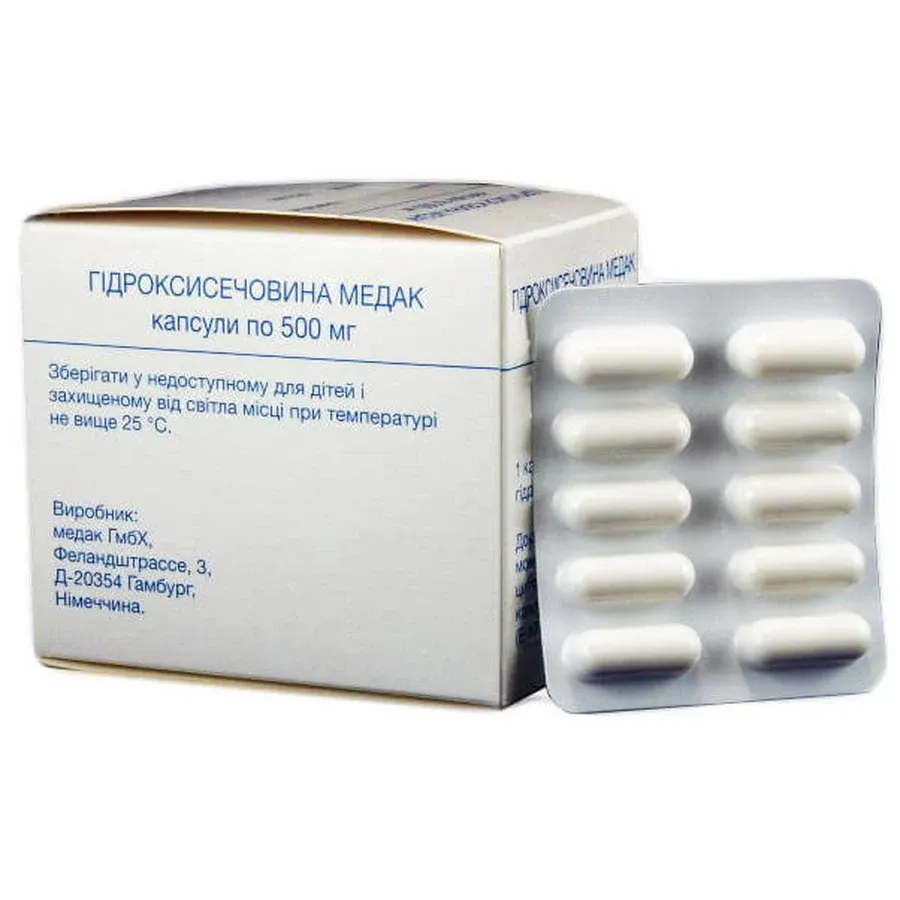
Table of Contents
INSTRUCTIONS FOR MEDICAL USE OF THE MEDICINAL PRODUCT HYDROXYUREA MEDAC (HYDROXYUREA MEDAC)
Composition:
Active substance: hydroxycarbamide (hydroxyurea);
One capsule contains 500 mg of hydroxycarbamide (hydroxyurea);
Excipients: lactose monohydrate; calcium citrate; sodium citrate; magnesium stearate;
Capsule shell: gelatin, titanium dioxide (E 171).
Dosage form. Capsules.
Main physicochemical properties: opaque white gelatin capsules containing an almost white powder.
Pharmacotherapeutic group. Other antineoplastic agents. ATC code L01X X05.
Pharmacological properties.
Pharmacodynamics.
The exact mechanism of the antitumor effect of the drug has not been elucidated, but it is believed to be related to inhibition of the ribonucleotide reductase complex, resulting in suppression of DNA synthesis. Cellular resistance is generally due to increased levels of ribonucleotide reductase caused by gene amplification.
Pharmacokinetics.
Pharmacokinetic information is limited. The drug is well absorbed from the gastrointestinal tract, with complete bioavailability. Maximum serum concentration is reached within 0.5–2 hours after administration.
Hydroxycarbamide crosses the blood-brain barrier.
The metabolism of hydroxycarbamide in humans has not been thoroughly studied.
Hydroxyurea is partially eliminated by renal excretion. The elimination half-life of the drug is 3–4 hours. Between 9 and 95% of the drug is excreted in the urine.
Clinical characteristics.
Indications.
Treatment of patients with chronic myeloid leukemia (CML) in the chronic or progressive phase of the disease.
Treatment of patients with essential thrombocythemia or polycythemia with a high risk of thromboembolic complications.
Contraindications.
Hypersensitivity to the active substance or to any other component of the medicinal product. If hypersensitivity is detected during treatment, the use of the medicinal product should be discontinued.
Suppressed bone marrow function (leukocyte count less than 2.5 × 10⁹/L, platelet count less than 100 × 109/L) or presence of severe anemia.
Interaction with other medicinal products and other forms of interaction.
In vitro studies have demonstrated the ability of hydroxycarbamide to enhance the cytotoxic effects of ara-C and fluoropyrimidines.
Hydroxyurea may enhance the antiretroviral activity of reverse transcriptase inhibitors such as didanosine and stavudine. Hydroxyurea inhibits HIV DNA synthesis and HIV replication by reducing intracellular deoxynucleotide levels.
Hydroxycarbamide should be administered with caution to patients who are undergoing or have previously undergone concomitant radiotherapy or cytotoxic therapy. In these cases, patients have an increased risk of bone marrow suppression, gastric irritation, and mucositis. In addition, exacerbation of erythema caused by prior or concurrent irradiation may occur.
In patients who received hydroxycarbamide in combination with didanosine, stavudine, and indinavir in study ACTG 5025, a decrease in CD4 cells of approximately 100/mm3 was observed. Hydroxyurea may also potentiate potential adverse effects of reverse transcriptase inhibitors, such as hepatotoxicity, pancreatitis, and peripheral neuropathy (see section "Adverse reactions").
Studies have shown that hydroxycarbamide causes analytical interference with enzymes (urease, uricase, and lactate dehydrogenase) used to measure urea, uric acid, and lactic acid, leading to false-positive results in patients who have received hydroxycarbamide.
Vaccination.
There is an increased risk of severe, potentially fatal infections with the concomitant use of live vaccines. Live vaccines are not recommended for immunocompromised patients (see section "Special precautions for use").
Special precautions for use
Monitoring during treatment
During treatment with the medicinal product, blood parameters should be monitored, including, if necessary, bone marrow examinations, as well as kidney and liver function. Experience in treating patients with impaired renal or hepatic function is limited. Therefore, treatment of such patients should be carried out with caution and under close supervision, especially at the beginning of therapy.
Hematological toxicity
Hydroxycarbamide may cause bone marrow suppression, most commonly manifested as leukopenia, and less frequently as thrombocytopenia and anaemia.
Complete blood counts, including measurement of haemoglobin levels, total leukocyte count, and differential platelet count, should be performed regularly, as well as after establishing the individual optimal dose. The frequency of monitoring should be determined individually, but weekly checks are generally recommended. Treatment should be discontinued if leukocyte counts fall below 2.5 × 10⁹/L or platelet counts fall below 100 × 109/L, until levels return to normal (see section "Dosage and administration").
If a dose is missed, the next dose should be taken only after consultation with a physician.
In case of development of anaemia before or during treatment, red blood cell transfusions may be required. Transient megaloblastic erythropoiesis is often observed at the beginning of hydroxycarbamide therapy. The morphological changes resemble those seen in pernicious anaemia but are not associated with vitamin B12 or folic acid deficiency.
Cases of haemolytic anaemia have been reported in patients receiving hydroxycarbamide for the treatment of myeloproliferative disorders. Patients who develop severe anaemia should undergo laboratory testing to assess for haemolysis. If haemolytic anaemia is diagnosed, hydroxycarbamide should be discontinued.
Secondary leukaemia
Patients receiving long-term hydroxycarbamide treatment for myeloproliferative disorders such as polycythaemia vera and essential thrombocythaemia may develop secondary leukaemia. To date, it is unclear to what extent this is related to the underlying disease or to hydroxycarbamide therapy.
Skin cancer
There have been reports of skin cancer in patients receiving long-term hydroxyurea therapy. Patients should be advised to protect their skin from sun exposure. In addition, patients should perform regular self-examination of the skin during and after treatment with hydroxyurea and undergo screening for secondary malignancies during routine follow-up examinations.
Leg ulcers
Hydroxyurea may induce the development of painful leg ulcers, which are usually difficult to treat and require discontinuation of hydroxyurea therapy. After stopping treatment, ulcers gradually heal over several weeks.
Toxic vasculitis
During hydroxycarbamide therapy in patients with myeloproliferative disorders, cutaneous toxic vasculitis, including vasculitic ulcers and gangrene, has been observed. The risk of toxic vasculitis is increased in patients who are receiving or have previously received interferon. Digital localization of these vasculitic ulcers and progressive clinical course of peripheral vascular insufficiency, leading to infarction of digital areas or gangrene, clearly distinguishes them from typical skin ulcers usually described with hydroxycarbamide use. Due to the potentially serious clinical consequences of cutaneous vasculitic ulcers in patients with myeloproliferative disorders, hydroxycarbamide should be discontinued and alternative cytoreductive agents initiated if vasculitic ulcers develop.
Interstitial lung disease
Interstitial lung diseases, including pulmonary fibrosis, lung infiltration, pneumonitis, and alveolitis/allergic alveolitis, have been observed in patients treated for myeloproliferative neoplasms and may be associated with fatal outcomes. Patients presenting with fever, cough, dyspnoea, or other respiratory symptoms should be thoroughly investigated, evaluated, and treated. If pulmonary complications occur, hydroxyurea treatment should be discontinued immediately and corticosteroid therapy initiated.
Elevated uric acid levels
Elevated serum uric acid levels may occur during treatment with hydroxycarbamide, which may lead to gout or, in severe cases, uric acid nephropathy, especially when used in combination with other cytotoxic agents. Therefore, regular monitoring of uric acid levels is important. Adequate fluid intake is recommended during treatment.
Effect on laboratory parameters
In studies, laboratory parameters of urea, uric acid (5–9%) and lactic acid (6–11%) were increased when measured by enzymatic in vitro assays in the presence of hydroxycarbamide (0.1–1 mM), indicating analytical interference. The clinical significance of these findings is unknown.
Effect on continuous glucose monitoring systems
Hydroxycarbamide may falsely elevate glucose readings on sensors of certain continuous glucose monitoring (CGM) systems, which could lead to hypoglycaemia if insulin dosing decisions are based solely on readings from such CGM systems.
If CGM systems are used concurrently with hydroxycarbamide therapy, patients should consult their prescribing physician regarding the need to consider alternative methods of glucose monitoring.
Reverse transcriptase inhibitors
Combination of hydroxycarbamide with nucleoside reverse transcriptase inhibitors (NRTIs) may increase the risk of NRTI-related adverse effects (see also section "Interaction with other medicinal products and other forms of interaction").
Fertility
Hydroxycarbamide may be genotoxic. Therefore, women of childbearing potential should use effective contraception during treatment with hydroxycarbamide and for 6 months after completion of therapy. Men should use reliable contraception during therapy and for 3 months after completion of therapy. They should be informed about the possibility of sperm cryopreservation prior to starting treatment.
Lactose
Hydroxyurea medac contains lactose. Patients with rare hereditary problems of galactose intolerance, Lapp lactase deficiency or glucose-galactose malabsorption should not take this medicinal product.
Vaccination
Concomitant use of Hydroxyurea medac with live viral vaccines may potentiate replication of the vaccine virus and/or enhance certain adverse reactions from the vaccine virus, as normal immune defence mechanisms may be suppressed by hydroxycarbamide. Vaccination with live vaccines in patients receiving Hydroxyurea medac may result in severe infection. Humoral immune response to the vaccine may be reduced. The use of live vaccines should be avoided during treatment and for at least 6 months after completion of therapy.
Excipients
This medicinal product contains 1 mmol (or 23 mg) of sodium per dose. Caution is advised when prescribing to patients on a sodium-restricted diet.
Use during pregnancy or breastfeeding
Pregnancy. Hydroxyurea may be a potent mutagenic agent. Animal studies have shown an increased incidence of congenital malformations. Hydroxyurea should not be used during pregnancy except when the clinical condition of the woman necessitates treatment with hydroxycarbamide. Hydroxyurea should not be administered to pregnant women or women who are breastfeeding, except when the benefit outweighs the risks.
If pregnancy occurs during treatment, genetic counselling should be offered to the patient. Hydroxycarbamide crosses the placenta.
Breastfeeding. Since hydroxycarbamide is excreted in breast milk, and due to the potential for serious adverse reactions in infants, a decision should be made whether to discontinue breastfeeding or to discontinue hydroxyurea therapy, taking into account the importance of the therapy for the mother.
Fertility. Hydroxycarbamide may be genotoxic. Therefore, patients planning pregnancy after hydroxycarbamide therapy are advised to undergo genetic counselling.
Men should use reliable contraception during therapy and for 3 months after completion of therapy. They should be informed about the possibility of sperm cryopreservation prior to starting treatment. Male fertility may be impaired by treatment. Reversible oligo- and azoospermia are very commonly observed.
Contraception in men and women
Due to the genotoxic potential of hydroxycarbamide, women of childbearing potential should use effective contraception during treatment with hydroxycarbamide and for 6 months after completion of therapy.
Men are advised to use effective contraception and to avoid planning conception during hydroxycarbamide treatment and for 3 months after completion of therapy.
Ability to affect reaction speed when driving or operating machinery
Reaction speed may be impaired during treatment with hydroxyurea. This should be taken into account when high attention is required, such as when driving vehicles or operating machinery.
Method of Administration and Dosage
Capsules should be swallowed whole, without chewing.
Treatment should be administered by a physician experienced in oncology and hematology. All dosing regimens should be based on the patient's actual or ideal body weight (whichever is lower).
Treatment of chronic myeloid leukemia. Hydroxycarbamide is usually prescribed at an initial dose of 40 mg/kg body weight per day, adjusted according to the blood leukocyte count. The dose should be halved (20 mg/kg per day) if the leukocyte count decreases below 20 × 109/L. The dosage is then individually adjusted to maintain the leukocyte count at 5–10 × 109/L. The dose of hydroxycarbamide should be reduced if the blood leukocyte count is below 5 × 10⁹/L and increased if the leukocyte count exceeds 10 × 109/L.
If the leukocyte count falls below 2.5 × 10⁹/L or the platelet count drops below 100 × 109/L, therapy should be discontinued until normal blood parameters are restored.
An adequate period to achieve an antineoplastic effect is 6 weeks. If disease progression occurs, the drug should be discontinued immediately. If an appropriate therapeutic response is observed, treatment should be continued indefinitely.
Treatment of essential thrombocythemia. The initial dose of hydroxycarbamide is 15 mg/kg/day, adjusted to maintain the platelet count at approximately 600 × 109/L, while ensuring that the leukocyte count does not fall below 4 × 10⁹/L.
Treatment of polycythemia. Hydroxycarbamide should be initiated at a dose of 15–20 mg/kg/day. Subsequently, the dosage should be individually adjusted to maintain the hematocrit below 45% and the platelet count below 400 × 109/L. In most patients, this is achieved with a continuous daily dose of hydroxycarbamide of 500–1000 mg.
If hematocrit and platelet counts are successfully controlled, therapy should be continued indefinitely.
Children. Since these diseases are rare in children, the dosing regimen in pediatric patients has not been established.
Elderly patients. Elderly patients may be more sensitive to the effects of hydroxycarbamide and may require dose reduction.
Patients with renal or hepatic impairment. There is insufficient data available. No dosage recommendations can be made for this patient group (see section "Special Warnings and Precautions for Use").
Children.
The safety and efficacy of treatment with this drug in this patient population have not been established.
Overdose.
In patients who have taken doses several times higher than the usual recommended doses, acute skin and mucous membrane disorders have been observed, including irritation, purple erythema, swelling of palms and soles followed by desquamation of the skin on hands and feet, intense generalized skin hyperpigmentation, and stomatitis.
Immediate treatment is required, including gastric lavage, followed by supportive therapy and monitoring of the hematopoietic system.
Adverse reactions.
Bone marrow suppression is the dose-limiting factor of toxicity.
Gastrointestinal adverse reactions are common, but they rarely require dose reduction or discontinuation of treatment.
Adverse reactions are categorized by frequency of occurrence as follows: very common (≥ 1/10); common (≥ 1/100 to < 1/10); uncommon (≥ 1/1000 to < 1/100); rare (≥ 1/10000 to < 1/1000); very rare (< 1/10000); frequency not known (cannot be estimated from available data).
| Infections and infestations |
Uncommon: gangrene. |
| Benign and malignant neoplasms (including cysts and polyps) |
Common: skin cancer (squamous cell carcinoma, basal cell carcinoma). |
| Blood and lymphatic system disorders |
Very common: bone marrow suppression, decreased CD4 lymphocyte count, leukopenia, thrombocytopenia, anemia. Common: megaloblastosis. Frequency unknown: hemolytic anemia. |
| Immune system disorders |
Uncommon: hypersensitivity reactions. |
| Metabolism and nutrition disorders |
Very common: anorexia. Uncommon: tumor lysis syndrome. Frequency unknown: hyperkalemia. |
| Psychiatric disorders |
Common: hallucinations, disorientation. |
| Nervous system disorders |
Common: peripheral neuropathy1, somnolence, neurological disorders including headache, dizziness, and seizures. |
| Respiratory, thoracic and mediastinal disorders |
Common: pulmonary fibrosis, pulmonary edema, acute pulmonary disorders including diffuse pulmonary infiltration, fever, dyspnea. Frequency unknown: interstitial lung disease, pneumonitis, alveolitis, allergic alveolitis, cough. |
| Gastrointestinal disorders |
Very common: pancreatitis1, nausea, vomiting, diarrhea, constipation, stomatitis, mucositis, gastric discomfort, dyspepsia, stomach pain, melena. |
| Hepatobiliary disorders |
Common: hepatotoxicity1, increased liver enzyme levels, cholestasis, hepatitis. Uncommon: increased blood bilirubin levels. |
| Skin and subcutaneous tissue disorders |
Very common: skin ulcers (especially leg ulcers), cutaneous vasculitis, pruritus, purple papules, dermatomyositis-like skin changes, alopecia, maculopapular rash, skin desquamation, skin atrophy (e.g., facial erythema, acral erythema), skin hyperpigmentation, nail disorders (e.g., nail pigmentation, nail atrophy). Uncommon: actinic keratosis. Isolated cases: cutaneous and systemic lupus erythematosus. Frequency unknown: dry skin. |
| Renal and urinary disorders |
Very common: dysuria, transient tubular renal dysfunction associated with increased blood uric acid, increased blood urea, and elevated serum creatinine. Isolated cases: renal failure. |
| Reproductive system and breast disorders |
Very common: azoospermia, oligospermia. |
| General disorders |
Very common: drug-related fever, asthenia, chills, malaise. |
1Cases of pancreatitis and hepatotoxicity (sometimes with fatal outcomes), as well as severe peripheral neuropathy, have been reported in HIV-infected patients receiving hydroxycarbamide in combination with antiretroviral agents, particularly didanosine in combination with stavudine.
Benign, malignant and unspecified neoplasms (including cysts and polyps).
Secondary leukemia may develop in patients receiving long-term hydroxycarbamide treatment for myeloproliferative disorders such as polycythemia vera and thrombocythemia. To date, it is unclear to what extent this is related to the underlying disease or to hydroxycarbamide therapy.
Blood and lymphatic system disorders.
Megaloblastic erythropoiesis, unresponsive to folic acid or vitamin B12 therapy, may occur during treatment with hydroxycarbamide.
Bone marrow suppression resolves upon discontinuation of therapy.
The drug may also reduce plasma iron clearance and impair iron utilization by erythrocytes; however, this does not affect erythrocyte lifespan.
Immune system disorders.
Hypersensitivity reactions: High fever (> 39°C), sometimes requiring hospitalization, has been reported, accompanied by gastrointestinal, pulmonary, musculoskeletal, hepatobiliary, dermatological, or cardiovascular manifestations. Symptoms typically appear within 6 weeks after initiation of treatment and resolve rapidly after discontinuation of hydroxycarbamide. Upon re-administration, fever recurred within 24 hours.
Metabolism and nutrition disorders.
Cases of hyponatremia have been reported during the post-marketing surveillance period.
Nervous system disorders.
High doses of the drug may cause mild drowsiness.
Gastrointestinal disorders.
Severe gastrointestinal disorders (anorexia, nausea, vomiting) induced by the combination of drug administration and radiation therapy can usually be managed by temporary discontinuation of the drug.
Skin and subcutaneous tissue disorders.
Hydroxycarbamide may enhance mucosal inflammation following radiation therapy. This may lead to recurrence of erythema and hyperpigmentation in previously irradiated tissues.
In patients who have previously received radiation therapy, exacerbation of radiation-induced erythema may occur.
Erythema, skin and nail atrophy, skin desquamation, purple papules, alopecia, skin changes resembling dermatomyositis, actinic keratosis, cutaneous toxic vasculitis including vasculitic ulcers (particularly leg ulcers) and gangrene, pruritus, skin and nail hyperpigmentation, and dry skin have been observed in individual cases after many years of daily maintenance therapy with hydroxycarbamide.
Use of the drug in combination with radiation therapy.
Adverse effects observed during combined treatment with the drug and radiation therapy are similar to those described during monotherapy with the drug: primarily bone marrow suppression (anemia and leukopenia) and gastric wall irritation. When the drug is used concomitantly with radiation therapy, leukopenia is observed in almost all patients. Occasionally (and only in the presence of marked leukopenia), thrombocyte counts may decrease to values below 100 × 109/L. During treatment with the drug, certain adverse reactions associated with radiation therapy may be intensified, such as gastric dysfunction and mucositis.
Other effects.
Pain or discomfort due to inflammation of mucous membranes at the irradiated site (mucositis) is usually controlled with local anesthetics or oral analgesics. If the reaction is severe, treatment with the drug should be temporarily discontinued; if the reaction is exceptionally severe, temporary discontinuation of radiation therapy may also be required. However, the need to discontinue both forms of treatment has been observed only occasionally.
Reporting suspected adverse reactions.
Reporting suspected adverse reactions after drug registration is of great importance. It allows continuous monitoring of the benefit-risk balance of the medicinal product. Medical and pharmaceutical professionals, as well as patients or their legal representatives, are encouraged to report all suspected adverse reactions and lack of drug efficacy via the Automated Pharmacovigilance Information System at the following link: https://aisf.dec.gov.ua
Shelf life. 4 years.
Storage conditions. Store in a place protected from light and inaccessible to children, at a temperature not exceeding 25°C.
Packaging. 10 capsules in blisters made of aluminum foil and PVC film; 10 blisters per cardboard box.
Prescription status. Prescription only.
Manufacturer.
Medac Gesellschaft für klinische Spezialpräparate mbH, Germany.
Manufacturer's address and location of operations.
Theaterstraße 6, 22880 Wedel, Germany.