Hydrocortisone acetate
Ukraine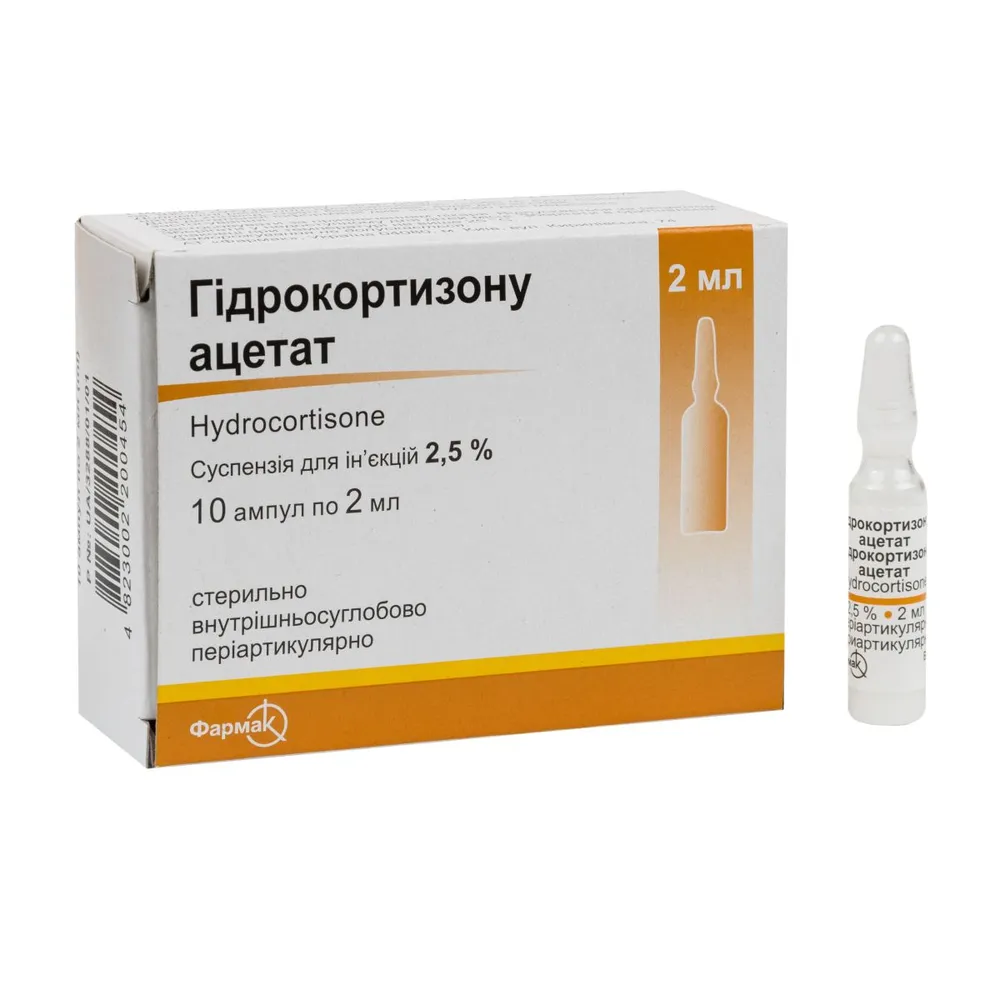
Table of Contents
INSTRUCTIONS FOR MEDICAL USE OF THE MEDICINAL PRODUCT HYDROCORTISONE ACETATE (HYDROCORTISONACETATE)
Composition:
Active substance: 1 ml of suspension contains 25 mg of hydrocortisone acetate;
Excipients: propylene glycol, benzyl alcohol, sorbitol (E 420), povidone, sodium chloride, water for injections.
Pharmaceutical form. Injection suspension.
Main physicochemical properties: white or white with a yellowish tint suspension, which settles upon standing.
Pharmacotherapeutic group. Corticosteroids for systemic use, simple preparations. Hydrocortisone. ATC code H02AB09.
Pharmacological properties.
Pharmacodynamics.
Hydrocortisone acetate belongs to the group of naturally occurring glucocorticosteroids. It exerts anti-shock, antitoxic, immunosuppressive, antiexudative, antipruritic, anti-inflammatory, desensitizing, and anti-allergic effects. It suppresses hypersensitivity reactions, as well as proliferative and exudative processes at the site of inflammation. The action of hydrocortisone acetate is mediated via specific intracellular receptors. Its anti-inflammatory effect involves inhibition of all phases of inflammation: stabilization of cellular and subcellular membranes, reduction in the release of proteolytic enzymes from lysosomes, and inhibition of superoxide anion and other free radicals formation. Hydrocortisone inhibits the release of inflammatory mediators, including interleukin-1 (IL-1), histamine, serotonin, and bradykinin; reduces the release of arachidonic acid from phospholipids and inhibits the synthesis of prostaglandins, leukotrienes, and thromboxane. It reduces inflammatory cellular infiltrates and decreases migration of leukocytes and lymphocytes into the inflammatory site. It suppresses connective tissue reactions during the inflammatory process and reduces the intensity of scar tissue formation. It decreases the number of mast cells producing hyaluronic acid, inhibits hyaluronidase activity, and contributes to reduced capillary permeability. It inhibits collagenase production and promotes synthesis of protease inhibitors. It reduces protein synthesis and enhances protein catabolism in muscle tissue. By stimulating steroid receptors, it induces the formation of a specific class of proteins—lipocortins—which possess anti-edematous activity. It has anti-insulin effects, increasing glycogen levels in the liver and causing hyperglycemia. It promotes sodium and fluid retention in the body, thereby increasing circulating blood volume and elevating arterial pressure (anti-shock effect). It stimulates potassium excretion, reduces calcium absorption from the gastrointestinal tract, and decreases bone tissue mineralization.
Like other glucocorticoids, hydrocortisone reduces the number of T-lymphocytes in the blood, thereby diminishing the influence of T-helper cells on B-lymphocytes, inhibits immune complex formation, and reduces manifestations of allergic reactions.
Pharmacokinetics.
Hydrocortisone applied locally may be absorbed and produce systemic effects. It is absorbed relatively slowly from the site of administration. Up to 90% of the drug is bound to plasma proteins (80% to transcortin, 10% to albumins), with approximately 10% remaining as free fraction. Metabolism occurs in the liver. In contrast to synthetic derivatives, only a small amount of the drug crosses the placenta (up to 67% is inactivated within the placenta itself to inactive metabolites). Hydrocortisone metabolites are primarily excreted by the kidneys.
Clinical characteristics.
Indications.
- Osteoarthritis;
- various monoarthritides (of knee, elbow, hip joints);
- rheumatoid arthritis and arthritis of other origins (except tuberculosis and gonococcal arthritis);
- periarthritis of the shoulder and scapula;
- bursitis;
- epicondylitis;
- tenosynovitis;
- prior to surgery on ankylosed joints;
- as a local adjunct to systemic corticosteroid therapy.
Contraindications.
Hypersensitivity to the components of the drug; intra-articular infection; infectious diseases and sepsis without antibacterial therapy; systemic fungal infections; Cushing's syndrome; treatment of Achilles tendon; predisposition to thromboembolism; severe arterial hypertension; herpes simplex; varicella (chickenpox). Intramuscular corticosteroids are contraindicated in idiopathic thrombocytopenic purpura.
Contraindicated for intrathecal administration.
Special precautions.
The drug may provoke bacterial joint infection; therefore, hydrocortisone acetate should be administered only under aseptic conditions.
Interaction with other medicinal products and other types of interactions.
Medicinal products that induce liver enzymes, such as phenobarbital and other barbiturates, phenylbutazone, phenytoin, and rifampicin, may increase corticosteroid clearance, and dosage adjustment (increase) of corticosteroids may be necessary when these drugs are used concomitantly to achieve the desired therapeutic response. Combination with barbiturates should be avoided in patients with Addison's disease (may provoke crisis).
Medicinal products such as troleandomycin and ketoconazole may inhibit corticosteroid metabolism and thereby reduce their clearance.
Corticosteroids may increase the clearance of aspirin and salicylates used for prolonged periods and in high doses. This may lead to decreased serum salicylate levels or increased risk of salicylate toxicity (development of occult gastrointestinal bleeding or ulcers) upon withdrawal of corticosteroids. Aspirin should be used cautiously with corticosteroids in patients with hypoprothrombinemia.
The effect of corticosteroids on oral anticoagulants varies significantly; they may either weaken or enhance their effect. Therefore, regular monitoring of coagulation parameters is required to maintain the desired anticoagulant effect.
Use with caution with drugs affecting potassium levels (e.g., diuretics, theophylline). Do not use with amphotericin B.
Antibiotics. Macrolide antibiotics have been reported to cause a significant reduction in corticosteroid clearance.
Cyclosporines. Concurrent use of these drugs may lead to increased activity of both cyclosporine and corticosteroids. Cases of seizures have also been reported.
Anticholinesterase agents. Concurrent use may lead to the development of severe weakness in patients with myasthenia gravis. Therefore, administration of these agents should be discontinued at least 24 hours before initiation of corticosteroid therapy.
Antidiabetic agents. Since corticosteroids may increase blood glucose concentrations, dosage adjustment of antidiabetic agents may be required.
Antituberculosis agents. A possible decrease in isoniazid plasma concentration may occur.
Cholestyramine may increase corticosteroid clearance.
Aminoglutethimide may cause loss of corticosteroid-induced adrenal suppression.
Cardiac glycosides. Patients receiving cardiac glycosides have an increased risk of arrhythmias due to hypokalemia.
Estrogens, including oral contraceptives. Estrogens may reduce the metabolism of certain corticosteroids in the liver, leading to enhanced effects.
Skin tests. Corticosteroids may suppress reactions to skin tests.
Vaccines. Patients on long-term corticosteroid therapy may exhibit a weak response to toxoids and live or inactivated vaccines due to suppressed antibody production. Corticosteroids may also potentiate the development of organisms contained in live attenuated vaccines.
Antihypertensive agents. Corticosteroids reduce the effectiveness of antihypertensive agents.
Mifepristone. The efficacy of corticosteroids is reduced.
Special precautions for use
Intra-articular administration of corticosteroids may increase the risk of recurrence of inflammatory processes.
Patients receiving corticosteroid therapy who experience unusual stress should be treated with increased doses of corticosteroids before, during, and after such stressful situations.
Corticosteroids may mask some signs of infection, and new infections may occur during their use. The use of corticosteroids may reduce the body's resistance to infections and its ability to localize infections.
Development of infections at any site, caused by any pathogens (including viral, bacterial, fungal, protozoal, or helminthic infections), may be associated with corticosteroid use, either as monotherapy or in combination with other immunosuppressive agents affecting cellular and humoral immunity or neutrophil function. Such infections may range from mild to severe and may occasionally be fatal. The frequency of infectious complications increases with higher corticosteroid doses.
Use with caution in infectious diseases and only in combination with specific antibacterial therapy.
Hydrocortisone may be used in active, disseminated, or fulminant tuberculosis only for the treatment of the disease, and only in conjunction with appropriate antituberculosis therapy. If corticosteroid use is indicated in patients with latent tuberculosis or a positive tuberculin reaction, careful monitoring is required, as the disease may become activated. Patients undergoing prolonged corticosteroid therapy should receive chemoprophylaxis.
Vaccination and toxoid administration are contraindicated in patients receiving corticosteroids in immunosuppressive doses. Immunization procedures are indicated in patients receiving corticosteroids in non-immunosuppressive doses.
Hydrocortisone may cause increased blood pressure, sodium and water retention, and increased potassium excretion. Therefore, a low-sodium diet and potassium-containing dietary supplements may be required. All corticosteroids increase calcium excretion.
Electrolyte balance should be monitored when corticosteroids are used concomitantly with diuretics.
Since anaphylactoid reactions (e.g., bronchospasm) have occurred in isolated cases in patients receiving parenteral corticosteroid therapy, appropriate precautions should be taken before administration, especially in patients with a history of allergy to any medicinal product.
Although recent studies have not specifically evaluated hydrocortisone, research on methylprednisolone sodium succinate in septic shock suggests that mortality may increase in certain high-risk patient subgroups (e.g., patients with serum creatinine levels above 2 mg/dL or with secondary infections).
The effect of hydrocortisone may be enhanced in patients with liver disease due to significantly reduced metabolism and elimination of hydrocortisone.
Corticosteroids should be used with caution in patients with ocular herpes simplex, as there is a risk of corneal perforation.
Psychiatric disorders may occur during corticosteroid therapy, ranging from euphoria, insomnia, mood changes, and personality changes to overt psychotic manifestations. Corticosteroids may also exacerbate existing emotional instability or a tendency toward psychosis. The drug should be prescribed cautiously in patients with a history of psychosis or epilepsy.
Corticosteroids should be used with caution in patients with ulcerative colitis, especially if there is a risk of perforation in the presence of an abscess or other pyogenic infections, diverticulitis, recent intestinal anastomoses, active or latent peptic ulcer, renal insufficiency, arterial hypertension, osteoporosis, myasthenia gravis, glaucoma, steroid myopathy, or a history of tuberculosis.
Cases of acute myopathy have been reported with high-dose corticosteroid therapy, particularly in patients with neuromuscular transmission disorders (e.g., myasthenia gravis) or those receiving concomitant neuromuscular blocking agents (e.g., pancuronium). This acute myopathy is generalized, may involve ocular and respiratory muscles, and may lead to quadriparesis. Increased creatine kinase levels may occur. Clinical improvement or recovery after discontinuation of corticosteroids may take from several weeks to several years.
Cases of Kaposi's sarcoma have been reported in patients receiving corticosteroid therapy; however, discontinuation of therapy may lead to clinical remission.
To minimize the risk of skin atrophy at the injection site, recommended doses should not be exceeded. Injections into the deltoid muscle should be avoided due to the high risk of subcutaneous atrophy.
High-dose corticosteroids should not be used to treat head injuries.
Published data suggest a possible association between corticosteroid use and myocardial rupture following recent myocardial infarction; therefore, corticosteroid therapy in such patients should be administered with particular caution.
Corticosteroids may cause suppression of the hypothalamic-pituitary-adrenal (HPA) axis, Cushing's syndrome, and hyperglycemia. The drug should be prescribed with caution in patients with diabetes mellitus (including family history).
During treatment with hydrocortisone acetate, dosages of oral antidiabetic agents and anticoagulants may require adjustment.
Cases of cardiac enlargement and development of heart failure have been reported when used concomitantly with amphotericin B (see section "Interaction with other medicinal products and other forms of interaction").
Corticosteroids may cause exacerbation of intercurrent infections caused by Amoeba, Candida, Cryptococcus, Mycobacterium, Nocardia, Pneumocystis, and Toxoplasma. Latent or active amoebiasis should be ruled out before initiating corticosteroid therapy in patients who have visited tropical countries or in patients with diarrhea of unknown origin.
Do not use in cerebral malaria, as there is currently no evidence of benefit from corticosteroid use in this condition.
Chickenpox and measles: may lead to serious or even fatal complications in adults and children. Patients who have not previously had these diseases should be protected from exposure.
Corticosteroid use may lead to posterior subcapsular cataracts, glaucoma, optic nerve damage, and may promote the development of secondary ocular infections of bacterial, fungal, or viral origin.
Use with particular caution in patients with known or suspected Strongyloides infestation. Immunosuppression in such patients may lead to hyperinfection and widespread larval migration, potentially causing severe enterocolitis and fatal gram-negative sepsis.
Use with caution in patients with congestive heart failure.
Corticosteroid dosage should be adjusted in patients with hypothyroidism.
An enhanced effect of corticosteroids may occur in patients with cirrhosis due to reduced metabolism.
Intraocular pressure may increase during corticosteroid therapy, requiring monitoring, especially during prolonged treatment.
Steroids may increase or decrease sperm motility and count in some patients.
Carcinogenicity, mutagenicity, effects on fertility. Adequate animal studies to determine the carcinogenic or mutagenic potential of corticosteroids have not been conducted.
This medicinal product contains sorbitol. If the patient has been diagnosed with intolerance to certain sugars, consult a physician before taking this medicinal product.
This medicinal product contains benzyl alcohol and therefore must not be used in preterm infants and newborns. It may cause toxic and allergic reactions in infants and children under 3 years of age.
This medicinal product contains less than 1 mmol (23 mg) of sodium per dose, i.e., essentially "sodium-free."
Use during pregnancy or breastfeeding
Use during pregnancy
Animal studies have shown that corticosteroids, when administered in high doses to pregnant animals, may cause fetal developmental abnormalities. Adequate studies on the effects on human reproductive function have not been conducted. Therefore, the use of this medicinal product during pregnancy or in women planning pregnancy requires careful assessment of the benefits versus potential risks to the pregnant woman and fetus.
Administration during the first trimester of pregnancy is contraindicated. Due to indirect evidence of safety in humans during pregnancy, hydrocortisone may be used during the second and third trimesters only if the therapeutic benefit outweighs the potential risks to the fetus.
Corticosteroids readily cross the placental barrier. Infants born to women who received high doses of corticosteroids during pregnancy should be carefully monitored for signs of adrenal insufficiency.
Use during breastfeeding
Corticosteroids pass into breast milk; therefore, breastfeeding should be discontinued during treatment.
Ability to influence reaction speed when driving or operating machinery
The effect of corticosteroids on the ability to drive or operate machinery has not been specifically evaluated. Adverse effects such as syncope, vertigo, and seizures may occur after corticosteroid therapy. Patients experiencing these effects should not drive or operate machinery.
Method of Administration and Dosage
Before use, shake the contents of the ampoule until a homogeneous suspension is formed.
Adults and children aged 14 years and older: The single dose, depending on the size of the joint and severity of the disease, is 5–50 mg of hydrocortisone administered intra-articularly and periarticularly.
Within 24 hours, injections may be administered into no more than three joints in adults.
Children: The single dose of hydrocortisone, depending on the size of the joint and severity of the disease, is 5–30 mg administered intra-articularly and periarticularly.
The therapeutic effect after intra-articular administration develops within 6–24 hours and lasts from several days to several weeks. Re-administration of the drug may be performed no sooner than 3 weeks later.
The drug must not be injected directly into tendons; therefore, in cases of tendinitis, the drug should be administered into the tendon sheath.
The drug must not be used for systemic corticosteroid therapy.
Children.
In children during growth periods, the drug should be used only under absolute indications, for shorter durations, and at the minimum effective dose due to the potential risk of growth suppression.
This medicinal product contains benzyl alcohol and therefore must not be used in premature infants and newborns. It may cause toxic and allergic reactions in infants and children up to 3 years of age.
Overdose.
There is no specific clinical syndrome associated with hydrocortisone acetate overdose.
In case of overdose, an intensification of both local and systemic adverse reactions may occur.
Treatment: symptomatic. There is no specific antidote. In cases of significant overdose, dialysis may be considered.
Adverse reactions.
The adverse reactions listed below are typical for all systemic corticosteroids. Their inclusion in this list does not necessarily mean that the specific event was observed during the use of this particular dosage form.
Laboratory and instrumental test abnormalities: increased levels of alanine aminotransferase (ALT, SGPT), aspartate aminotransferase (AST, SGOT), and alkaline phosphatase; these changes are usually mild, not associated with any clinical syndrome, and reversible upon discontinuation of treatment; increased intraocular pressure; leukocytosis; hypokalemia; decreased carbohydrate tolerance; negative nitrogen balance due to protein catabolism; increased or decreased sperm motility and sperm count.
Metabolism and nutrition disorders: sodium retention, fluid retention, potassium loss, hypokalemic alkalosis, increased requirement for insulin or oral antidiabetic agents in diabetes mellitus, manifestation of latent diabetes mellitus, increased calcium excretion, increased appetite, abnormal fat deposits, weight gain.
Cardiac disorders: bradycardia, cardiac arrest, cardiac arrhythmias, cardiac enlargement, hypertrophic cardiomyopathy, tachycardia, myocardial rupture following recent myocardial infarction, pulmonary edema, congestive heart failure in susceptible patients.
Vascular disorders: arterial hypertension, vascular collapse, fat embolism, thromboembolism, thrombophlebitis, vasculitis, telangiectasia.
Skin and subcutaneous tissue disorders: urticaria, acne, allergic dermatitis, skin and subcutaneous atrophy, dry and peeling skin, edema, hyperpigmentation, hypopigmentation, petechiae, ecchymoses, erythema, hirsutism, hypertrichosis, hyperhidrosis, rash, pruritus, folliculitis, irritation, increased sensitivity, alopecia; Kaposi's sarcoma has been reported in patients receiving corticosteroid therapy.
General disorders and administration site conditions: suppressed response to skin tests, false skin reactions, delayed wound healing, malaise; injection site reactions, including burning or stinging, edema, pain at injection site, which usually resolve spontaneously within a few hours after administration; injection site infections, sterile abscess.
Nervous system disorders: benign intracranial hypertension, seizures, dizziness, syncope, headache, neuritis, neuropathies, paresthesia.
Eye disorders: posterior subcapsular cataracts, exophthalmos, glaucoma, rare cases of blindness associated with periorbital injections, corneal ulceration, optic disc edema (papilledema); increased risk of cataract development in children.
Gastrointestinal disorders: hiccup, peptic ulcer with potential perforation and hemorrhage, gastrointestinal bleeding, pancreatitis, esophagitis, intestinal perforation, abdominal distension, intestinal dysfunction, nausea, vomiting.
Renal and urinary system disorders: glucosuria, bladder dysfunction.
Hepatobiliary disorders: hepatomegaly.
Musculoskeletal and connective tissue disorders: corticosteroid-induced myopathy, arthropathy, loss of muscle mass, muscle weakness, osteoporosis, pathological fractures, aseptic necrosis, tendon rupture (including Achilles tendon), growth retardation in children.
Reproductive system and breast disorders: menstrual irregularities.
Endocrine disorders: development of Cushingoid state, suppression of the hypothalamic-pituitary-adrenal (HPA) axis, delayed sexual development in children.
Immune system disorders: hypersensitivity reactions, including anaphylaxis and anaphylactoid reactions (e.g., bronchospasm, angioedema).
Psychiatric disorders: euphoria, insomnia, agitation, mood changes, personality changes, depression, psychiatric disturbances; exacerbation of pre-existing emotional instability or psychotic tendencies.
Infections and infestations: activation of latent infections, including reactivation of tuberculosis, opportunistic infections caused by any pathogen, of any localization from mild to fatal, masking of infections.
Injury, poisoning, and procedural complications: spinal compression fractures.
Adverse effects of corticosteroid therapy may be more pronounced in elderly patients.
Shelf life.
3 years.
Storage conditions.
Store in the original packaging at a temperature not exceeding 25 °C. Keep out of the reach of children. Do not freeze!
Incompatibilities.
The drug must not be mixed with other medicinal products in the same container.
Packaging.
2 ml in a vial; 10 vials in a carton, or 5 vials in a blister pack, 2 blisters per carton.
Prescription status.
Prescription only.
Manufacturer.
LLC "BIOLIK PHARMA".
Manufacturer's address and place of business.
Legal entity address:
70 Pomirky St., Kharkiv, Kharkiv Oblast, 61070, Ukraine.
Place of business address:
Pomirky-70, building n/a, Kharkiv, Kharkiv Oblast, 61070, Ukraine.