Hydrocortisone 10 mg mibe®
Ukraine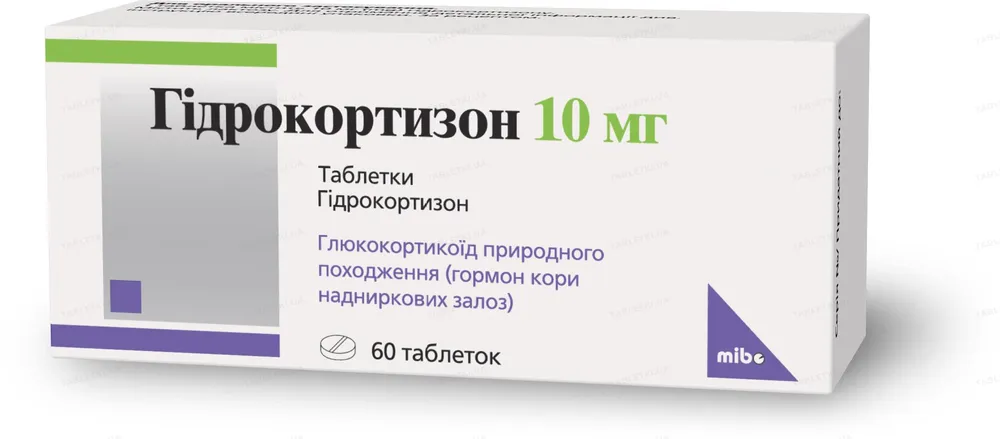
Table of Contents
INSTRUCTIONS FOR MEDICAL USE OF THE MEDICINAL PRODUCT HYDROCORTISONE 10 mg MIBE® (HYDROCORTISONE 10 mg)
Composition:
Active substance: hydrocortisone;
1 tablet contains 10 mg of hydrocortisone;
Excipients: lactose monohydrate, potato starch, gelatin, talc, magnesium stearate, sodium starch glycolate (type A), purified water.
Pharmaceutical form. Tablets.
Main physicochemical properties: round white tablets with a score line on one side and an embossed symbol "H" on the other side. The tablet can be divided into equal doses.
Pharmacotherapeutic group.
Glucocorticosteroids. ATC code H02A B09.
Pharmacological properties.
Pharmacodynamics.
Hydrocortisone belongs to glucocorticoids. Glucocorticoids are adrenocortical steroids, both of natural origin and synthetic, which are readily absorbed from the gastrointestinal tract.
Hydrocortisone is considered to be the principal corticosteroid secreted by the adrenal cortex. Naturally occurring glucocorticorticosteroids (hydrocortisone and cortisone), which also possess salt-retaining properties, are used as replacement therapy in conditions associated with adrenal insufficiency. In addition, they are used for their potent anti-inflammatory effects in many organ system disorders. Glucocorticoids exert pronounced and diverse effects on metabolism. Furthermore, they modify the body's immune response to various stimuli.
Pharmacokinetics.
Absorption
Hydrocortisone is readily absorbed from the gastrointestinal tract, and over 90% of the active substance is reversibly bound to protein.
Binding is determined by two protein fractions: one is corticosteroid-binding globulin, and the other is albumin.
Biotransformation
Hydrocortisone is metabolized in the liver and most tissues of the body to hydrogenated and degraded forms, such as tetrahydrocortisone and tetrahydrocortisol, which are excreted in urine, mainly conjugated as glucuronides, along with a small amount of unchanged hydrocortisone.
The elimination half-life is approximately 1.5 hours.
Clinical characteristics.
Indications.
Corticosteroid
For replacement therapy in primary, secondary, or acute adrenocortical insufficiency.
Prior to surgery and in severe trauma or illness in patients with known adrenocortical insufficiency or questionable adrenal reserve.
Contraindications.
Hypersensitivity to the active substance or to any of the excipients of the medicinal product.
Contraindicated in infections, including systemic infections, when anti-infective therapy has not been initiated.
High doses of corticosteroids suppress the immune response to vaccines; therefore, concomitant administration of live vaccines with corticosteroids should be avoided.
Interaction with other medicinal products and other forms of interaction.
Interactions with medicinal products have been reported when pharmacological doses of corticosteroids are used, which may not occur during corticosteroid replacement therapy.
Aspirin should be used with caution in combination with corticosteroids in hypoprothrombinemia. The concomitant use of corticosteroids with acetylsalicylic acid and nonsteroidal anti-inflammatory drugs (NSAIDs) increases the risk of gastrointestinal bleeding and ulcers, although topically applied NSAIDs generally do not interact with corticosteroids. Renal clearance of salicylates is increased by corticosteroids, and withdrawal of corticosteroids may lead to salicylate intoxication.
Corticosteroids reduce plasma salicylate concentrations; thus, such an interaction may occur with pharmacological doses of glucocorticoids.
Phenytoin, ephedrine, rifabutin, carbamazepine, barbiturates, rifampicin, primidone, sympathomimetics, and aminoglutethimide may increase the metabolic clearance of corticosteroids, resulting in lower blood levels and reduced physiological activity, which may require dose adjustment of corticosteroids.
The international normalized ratio (INR) or prothrombin time should be frequently monitored in patients receiving corticosteroids and coumarin anticoagulants concomitantly to avoid spontaneous bleeding, due to reports of altered response to these anticoagulants. Studies have shown that the usual effect of adding corticosteroids is suppression of the response to coumarins, although there are conflicting reports of enhanced effect, not substantiated by studies.
Monotherapy with ketoconazole may suppress adrenal corticosteroid synthesis in the adrenal glands and cause adrenal insufficiency upon withdrawal of corticosteroids (see section "Special precautions").
Corticosteroids are antagonists of diuretic effects. Glucocorticoids are necessary for free water clearance by the kidneys. When corticosteroids are used concomitantly with potassium-wasting diuretics (e.g., acetazolamide, loop diuretics, thiazides, carbenoxolone), patients should be closely monitored for the development of hypokalemia.
Corticosteroids may also affect the results of bacterial infection tests with nitroblue tetrazolium, yielding false-negative results.
Corticosteroids are antagonists of the antihypertensive effects of beta-blockers, alpha-blockers, calcium channel blockers, clonidine, diazoxide, methyldopa, moxonidine, nitrates, nitroprusside, hydralazine, minoxidil, adrenergic neuron blockers, ACE inhibitors, and angiotensin II receptor antagonists.
Corticosteroids increase the risk of hypokalemia when used with cardiac glycosides (e.g., digoxin), theophylline, and beta-2-sympathomimetics such as bambuterol, fenoterol, formoterol, ritodrine, salbutamol, salmeterol, and terbutaline.
There is an increased risk of hypokalemia when corticosteroids are used concomitantly with amphotericin. Concomitant use of amphotericin and corticosteroids should be avoided, except in cases where amphotericin is required to control reactions.
The effect of corticosteroids may be reduced for 3–4 days following interaction with mifepristone.
Plasma concentrations of corticosteroids are increased by oral contraceptives containing estrogens; dosage adjustment may be necessary when oral contraceptives are added or removed from a stable medication regimen. Interaction is also possible with contraceptive patches. In low-dose hormone replacement therapy, the likelihood of interaction is low.
Plasma concentrations of corticosteroids may be increased by ritonavir.
Corticosteroids reduce calcium salt absorption.
Metabolism of corticosteroids may be inhibited by erythromycin, except when small amounts of erythromycin are applied topically.
Corticosteroids are antagonists of the hypoglycemic effect of antidiabetic agents.
Concomitant use of corticosteroids with methotrexate increases the risk of hematological toxicity.
Corticosteroids may suppress the growth-promoting effect of somatropin.
High doses of corticosteroids impair immune response to vaccines — concomitant use with live vaccines should be avoided.
Corticosteroids are likely to reduce the effectiveness of sodium benzoate and sodium phenylbutyrate.
Concomitant use with CYP3A inhibitors, particularly agents containing cobicistat, is expected to increase the risk of systemic adverse reactions. This combination should be avoided unless the benefit outweighs the risk; in such cases, patients should be closely monitored for systemic corticosteroid adverse reactions.
Special precautions for use.
Patients should carry a "Steroid Treatment Record Card" containing detailed information about the prescribed medication, dosage, duration of treatment, and precautions to be taken to minimize risks.
The lowest possible corticosteroid dose should be used, and dosage reduction should be implemented whenever feasible. Dosage should be tapered gradually.
Patients and/or medical staff should be aware of potential severe psychiatric adverse reactions associated with systemic steroid use (see section "Adverse Reactions"). Symptoms typically appear within days or weeks after initiating treatment. The risk may be higher with high doses or significant systemic exposure (also see section "Interaction with other medicinal products and other forms of interaction" regarding pharmacokinetic interactions that increase the risk of adverse reactions), as the dosage level does not reliably predict the initial occurrence, type, severity, or duration of such reactions. Most reactions resolve either after dose reduction or discontinuation of the drug, although specific treatment may sometimes be required.
Patients and/or medical personnel should be encouraged to seek medical advice promptly if psychological symptoms develop, particularly if depressive mood or suicidal tendencies are suspected. Additionally, patients and/or medical staff should be aware of possible psychiatric disorders that may occur during or immediately after dose reduction or discontinuation of systemic corticosteroids, although such reactions are reported as uncommon.
Particular caution is required when considering systemic corticosteroid therapy in patients with existing or past history of severe affective disorders, either in themselves or in first-degree relatives. Such disorders may include depressive or manic-depressive psychosis and a history of steroid-induced psychosis.
The medicinal product should be used with caution in patients with impaired immunity.
Particular attention should be paid to varicella (chickenpox), as this usually mild disease may be fatal in immunocompromised patients. Patients (or parents of children taking hydrocortisone tablets) who have not had chickenpox should be advised to avoid close personal contact with individuals suffering from chickenpox or herpes zoster. In case of exposure, they should seek immediate medical advice. Passive immunization with Varicella zoster immunoglobulin is required for non-immune patients receiving systemic corticosteroids or who have received them within the previous 3 months; this should be administered within 10 days of exposure. If varicella is confirmed, specialist attention and urgent treatment are required.
Patients should be advised to take special precautions to avoid exposure to measles and to seek immediate medical attention if exposure occurs. Prophylactic measures, such as intramuscular administration of normal immunoglobulin, may be necessary.
Live vaccines should not be administered to patients with immunosuppression caused by high-dose corticosteroids. Inactivated vaccines or toxoids may be used, although their efficacy may be reduced.
Discontinuation of corticosteroids should not be abrupt and may require dose tapering. Corticosteroids may exacerbate systemic fungal infections and therefore should not be used in the presence of such infections, except when necessary to control life-threatening drug reactions, such as those managed with amphotericin. Additionally, cases of cardiac enlargement and congestive heart failure have been reported following concomitant use of amphotericin and hydrocortisone.
Scientific literature reports a clear association between corticosteroid use and left ventricular free wall rupture following recent myocardial infarction; therefore, corticosteroid therapy should be used with great caution in such patients.
Moderate and high doses of hydrocortisone or cortisone may cause elevated blood pressure, sodium and water retention, and increased potassium excretion. These effects are less likely with synthetic derivatives, except when used at high doses. Dietary sodium restriction and potassium supplementation may be required. All corticosteroids increase calcium excretion.
Corticosteroid use in cerebral malaria has been associated with prolonged coma and increased incidence of pneumonia and gastrointestinal bleeding.
Due to the risk of disease reactivation, careful monitoring is required when corticosteroids are prescribed to patients with latent tuberculosis or a positive tuberculin reaction. Such patients should receive prophylactic chemotherapy during prolonged corticosteroid therapy.
The use of hydrocortisone tablets is contraindicated in active tuberculosis, except in cases of progressive or disseminated tuberculosis.
Corticosteroids should be used with caution in patients with renal insufficiency, hypertension, diabetes mellitus or a family history of diabetes, congestive heart failure, thrombophlebitis, exanthematous diseases, chronic nephritis, acute glomerulonephritis, metastatic carcinoma, osteoporosis (postmenopausal patients are at particular risk), severe affective disorders (especially with a history of steroid-induced psychosis), epilepsy, previous steroid myopathy, hepatic insufficiency, glaucoma (or family history of glaucoma), myasthenia gravis, ulcerative colitis with risk of perforation, diverticulitis, recent gastrointestinal anastomosis, or active or latent peptic ulcer. Signs of peritoneal irritation following gastrointestinal perforation in patients receiving high-dose corticosteroids may be minimal or absent.
Patients should be monitored during treatment for psychotic reactions, weakness, electrocardiogram changes, arterial hypertension, and unwanted hormonal changes.
Fat embolism has been reported as a complication associated with elevated cortisol levels.
The effect of corticosteroids is enhanced in patients with hypothyroidism and cirrhosis.
Prolonged corticosteroid use increases susceptibility to infections and may intensify their severity. Furthermore, clinical manifestations of infection may be atypical.
Corticosteroids may mask certain signs of infection, and serious infections such as sepsis and tuberculosis may progress to advanced stages without recognition. Infection localization may be difficult in patients receiving corticosteroids. Corticosteroids may interfere with the nitroblue tetrazolium test for bacterial infections, leading to false-negative results.
Corticosteroids may activate latent amoebiasis or strongyloidiasis or worsen existing disease. Therefore, latent or active amoebiasis or strongyloidiasis should be ruled out before initiating corticosteroid therapy in at-risk patients or those with symptoms suggestive of either condition.
Prolonged corticosteroid use may cause posterior subcapsular cataracts, glaucoma with potential optic nerve damage, and may exacerbate pre-existing secondary ocular infections caused by fungi or viruses.
Corticosteroids should be used with caution in patients with herpes simplex keratitis due to the risk of corneal perforation.
Hypertrophic cardiomyopathy has been reported following hydrocortisone administration in premature infants; therefore, appropriate diagnostic evaluation and monitoring of cardiac function and structure are recommended.
Visual disturbances
Visual disturbances may occur with systemic and locally applied corticosteroids. If patients experience symptoms such as blurred vision or other visual disturbances, they should seek ophthalmological evaluation to assess possible contributing factors, including cataract, glaucoma, and rarely, central serous chorioretinopathy (CSCR), which has been reported after systemic and topical corticosteroid use.
Pheochromocytoma crisis
Pheochromocytoma crisis, which may be fatal, has been reported after systemic corticosteroid use. Corticosteroids should be prescribed to patients with diagnosed or suspected pheochromocytoma only after appropriate risk-benefit assessment.
Corticosteroids may increase or decrease sperm motility and count. Diabetes may be exacerbated, necessitating increased insulin dosage. Corticosteroids may unmask latent diabetes mellitus.
Menstrual irregularities may occur in women, and patients should be informed about this possibility.
Anaphylactoid reactions have been rarely observed in patients receiving corticosteroids, particularly in those with a history of allergic reactions to drugs.
Aspirin should be used with caution in patients with hypoprothrombinemia who are receiving corticosteroids.
Withdrawal syndrome. Abrupt discontinuation of corticosteroids may cause secondary adrenocortical insufficiency, which can be minimized by gradual dose reduction. This type of insufficiency may persist for several months after stopping therapy; therefore, corticosteroid therapy should be reinstated in any stressful situation occurring during this period. If a patient is already on steroids, the dose should be increased. Since mineralocorticoid secretion may also be impaired, salt and/or mineralocorticoid replacement should be considered concurrently (see section "Interaction with other medicinal products and other forms of interaction").
Discontinuation of corticosteroids after prolonged therapy may result in withdrawal symptoms such as fever, myalgia, arthralgia, and malaise. Patients who have received systemic corticosteroids in doses exceeding physiological levels (approximately 30 mg hydrocortisone) for more than 3 weeks should not abruptly stop the medication. The method of dose reduction largely depends on the improvement of disease symptoms with tapering systemic corticosteroids. Clinical assessment of disease activity may be required during discontinuation. If disease relapse is unlikely upon stopping systemic corticosteroids, but uncertainty remains regarding hypothalamic-pituitary-adrenal (HPA) axis suppression, the systemic corticosteroid dose may be rapidly reduced to physiological levels. Once the dose reaches 30 mg hydrocortisone per day, tapering should be slowed to allow recovery of the HPA axis.
Abrupt discontinuation of systemic corticosteroid therapy lasting up to 3 weeks is acceptable if disease relapse is considered unlikely. Abrupt cessation of up to 160 mg hydrocortisone for 3 weeks is unlikely to cause clinically significant HPA axis suppression in most patients. However, gradual discontinuation of systemic corticosteroid therapy is required for the following patient groups, even after courses lasting 3 weeks or less:
- Patients receiving repeated courses of systemic corticosteroids, especially if the course exceeds 3 weeks;
- Patients who receive a short course of therapy within one year after discontinuation of a prolonged course (lasting several months or years);
- Patients whose adrenocortical insufficiency has causes other than exogenous corticosteroid therapy;
- Patients receiving systemic corticosteroids at doses exceeding 160 mg hydrocortisone;
- Patients receiving repeated evening doses.
Patients with rare hereditary problems of galactose intolerance, total lactase deficiency, or glucose-galactose malabsorption should not take this medicinal product.
This medicinal product contains less than 1 mmol (23 mg) sodium per dose, i.e., essentially "sodium-free."
Use during pregnancy or breastfeeding.
The ability of corticosteroids to cross the placental barrier varies between individual drugs, but hydrocortisone readily crosses the placenta.
Administration of corticosteroids to pregnant animals may cause fetal abnormalities, including cleft palate, intrauterine growth retardation, and effects on brain growth and development. There is no evidence that corticosteroids increase the incidence of congenital malformations such as cleft palate or cleft lip in humans. However, prolonged or repeated use of corticosteroids during pregnancy increases the risk of intrauterine growth retardation. Pregnant patients should be carefully monitored if they develop fluid retention or preeclampsia. Newborns may theoretically exhibit adrenal insufficiency after prenatal corticosteroid exposure, but this is usually transient and rarely clinically significant. As with other medicinal products, corticosteroids should be prescribed to pregnant women and their children only when the benefit outweighs the risk. However, if corticosteroid use is necessary, patients with normal pregnancy may be treated similarly to non-pregnant patients.
Corticosteroids are excreted in breast milk, although data on hydrocortisone are limited. Infants of mothers receiving high-dose systemic corticosteroids for prolonged periods may exhibit some degree of adrenal suppression. Mothers receiving corticosteroids in pharmacological doses should be advised to discontinue breastfeeding. To facilitate ongoing monitoring, information on maternal treatment should be carefully documented in infant medical records.
Ability to influence reaction speed when driving vehicles or operating machinery.
Hydrocortisone has a negligible effect on the ability to drive vehicles or operate machinery.
Hydrocortisone may cause fatigue, dizziness, visual field defects, muscle atrophy, and weakness. If patients experience such impairments, they should refrain from driving vehicles or operating machinery (see section "Adverse Reactions").
Method of Administration and Dosage
Method of Administration
For oral use.
Dosage
Dosage must be individually adjusted according to the patient's response to treatment. The lowest possible dosage should be used. Doses should be multiples of 10 (e.g., 10 mg, 20 mg, 30 mg, etc.).
Adverse reactions may be minimized by using the lowest effective dose for the shortest duration, preferably as a single morning dose or, when possible, as an alternate-day single morning dose. Close patient monitoring is required to titrate the dose according to disease activity.
To avoid adrenal insufficiency and/or relapse of the underlying disease, gradual discontinuation of the medicinal product may be necessary (see section "Special Warnings and Precautions for Use").
Replacement Therapy
In chronic adrenocortical insufficiency, a daily dosage of 20 to 30 mg is usually recommended, sometimes in combination with 4–6 g of sodium chloride or 50–300 mcg of fludrocortisone daily.
In emergency situations, life-saving treatment may require a soluble adrenal corticosteroid preparation (e.g., dexamethasone sodium phosphate), which may be effective within minutes after parenteral administration.
Elderly Patients
Treatment of elderly patients, especially long-term therapy, should be planned with consideration of the more serious consequences of frequent corticosteroid adverse reactions in older age, particularly osteoporosis, diabetes, arterial hypertension, increased susceptibility to infections, and skin thinning.
For patients requiring replacement therapy, the daily dose should be administered, when possible, in two divided doses. The morning dose should be larger than the evening dose, mimicking the normal diurnal rhythm of cortisol secretion.
Use Prior to Surgical Intervention
The anesthesiologist must be informed that the patient is currently receiving or has previously received corticosteroids.
When long-term treatment is to be discontinued, the dosage should be gradually reduced over several weeks or months, depending on the dose and duration of therapy (see section "Special Warnings and Precautions for Use").
Children
Replacement Therapy
In chronic adrenal insufficiency, the dose should be approximately 0.4 to 0.8 mg/kg/day, divided into 2–3 doses, adjusted according to the individual needs of the child.
Use of the Medicinal Product in Severe Trauma or Illness in Patients with Known Adrenocortical Insufficiency or Suspected Adrenal Reserve
Generally, doses are higher than those used in chronic adrenal insufficiency and must be determined according to the clinical situation.
Patients must be closely monitored for signs requiring dose adjustment, including changes in clinical status due to remission or exacerbation of disease, individual sensitivity to the medicinal product, and stress effects (e.g., surgery, infection, trauma). Temporary dose increases may be necessary during periods of stress.
Corticosteroids may cause growth suppression in infants, children, and adolescents. Treatment should be limited to the lowest effective dose to minimize suppression of the hypothalamic-pituitary-adrenal axis and growth retardation. Growth and development should be carefully monitored in infants and children receiving long-term corticosteroid therapy.
Overdose
Acute toxicity and/or fatal outcomes following glucocorticoid overdose are rarely reported. No antidote is available.
Symptoms
Overdose may cause nausea and vomiting, sodium and water retention, hyperglycemia, and occasionally gastrointestinal bleeding.
Treatment
Treatment of reactions due to chronic intoxication is generally not indicated, except in patients whose condition renders them particularly vulnerable to corticosteroid adverse effects. In such cases, symptomatic treatment should be initiated. If necessary, cimetidine (200–400 mg administered by slow intravenous injection every 6 hours) or ranitidine (50 mg administered by slow intravenous injection every 6 hours) may be used to prevent gastrointestinal bleeding.
Anaphylactic reactions and hypersensitivity reactions can be treated with epinephrine, positive pressure artificial ventilation, and aminophylline. The patient should be kept warm and at rest.
The biological half-life of hydrocortisone is approximately 100 minutes.
Adverse reactions.
The frequency of expected adverse reactions, particularly suppression of the hypothalamic-pituitary-adrenal axis, correlates with the relative potency of the medicinal product, dosage, duration of administration, and length of treatment (see section "Special instructions").
Below are the adverse reactions that may be associated with prolonged systemic use of corticosteroids. The frequency of the specified adverse reactions is unknown (cannot be estimated from the available data).
| Body Systems |
Adverse Reactions |
| Infections and infestations |
Infection* |
| Blood and lymphatic system disorders |
Leukocytosis |
| Immune system disorders |
Increased sensitivity, including anaphylaxis |
| Endocrine system disorders |
Increased or decreased motility and sperm count, irregular menstruation, amenorrhea, development of Cushingoid syndrome, secondary adrenal insufficiency (particularly during stress such as trauma, surgery, or illness), reduced carbohydrate tolerance, manifestation of latent diabetes mellitus, hyperglycemia, increased insulin requirement or need for oral antidiabetic agents in diabetics, hirsutism |
| Metabolism and nutrition disorders |
Sodium retention, fluid retention, hypokalemia, hypokalemic alkalosis, increased calcium excretion, negative nitrogen balance due to protein catabolism, increased appetite |
| Psychiatric disorders |
Psychiatric disorders, psychological dependence, depression, insomnia. A broad range of psychiatric reactions including affective disorders (such as irritability, euphoria, depression and mood swings, suicidal thoughts), psychotic reactions (mania, delusions, hallucinations, and exacerbation of schizophrenia), exacerbation of epilepsy, behavioral disorders, irritability, anxiety, sleep disturbances and cognitive dysfunction, including confusion and amnesia**. |
| Nervous system disorders |
Seizures, increased intracranial pressure with optic nerve head swelling (pseudotumor cerebri), usually after treatment, vertigo, headache, malaise |
| Eye disorders |
Posterior subcapsular cataract, increased intraocular pressure, optic nerve head swelling, thinning of cornea or sclera, exacerbation of ocular viral or fungal infections, glaucoma, exophthalmos, blurred vision (see also section "Special precautions") |
| Cardiac disorders |
Myocardial rupture following myocardial infarction (see section "Special precautions"), congestive heart failure in susceptible patients |
| Vascular disorders |
Thromboembolism, hypertension, hypertrophic cardiomyopathy in premature infants |
| Respiratory, thoracic and mediastinal disorders |
Hiccups |
| Gastrointestinal disorders |
Peptic ulcer of stomach and duodenum with possible perforation and hemorrhage, perforation of small and large intestine, especially in patients with inflammatory bowel disease, pancreatitis, abdominal distension, ulcerative esophagitis, dyspepsia, esophageal candidiasis, nausea |
| Skin and subcutaneous tissue disorders |
Impaired wound healing, thin fragile skin, petechiae and ecchymoses, erythema, striae, acne, increased sweating, suppression of skin test reactions, other skin reactions such as allergic dermatitis, urticaria, angioneurotic edema |
| Musculoskeletal and connective tissue disorders |
Muscle weakness, steroid myopathy, loss of muscle mass, osteoporosis (especially in postmenopausal women), vertebral compression fractures, aseptic necrosis of humeral and femoral heads, pathological fractures of long bones, avascular osteonecrosis, tendon rupture |
| Investigations |
Increased body weight |
* Increased susceptibility and severity of infections with suppression of clinical symptoms and signs, opportunistic infections, and reactivation of latent tuberculosis (see section "Dosage and Administration").
** Reactions are common and may occur in adults and children. In adults, the frequency of severe reactions is 5–6%. Psychological effects have been reported upon withdrawal of corticosteroids.
Pediatric population
Growth suppression in infants, children, and adolescents; increased intracranial pressure with papilledema in children (pseudotumor cerebri), usually after discontinuation of treatment.
Withdrawal symptoms
Too rapid dose reduction of corticosteroids after prolonged therapy may lead to acute renal insufficiency, hypotension, and fatal outcome (see section "Dosage and Administration"). Withdrawal syndrome may also occur, including fever, myalgia, arthralgia, rhinitis, conjunctivitis, painful skin nodules with pruritus, and weight loss.
Reporting of suspected adverse reactions
Reporting of adverse reactions following marketing authorization is of great importance. It allows ongoing monitoring of the benefit-risk balance of the medicinal product. Healthcare professionals and patients, as well as their legal representatives, should report all suspected adverse reactions and lack of efficacy via the Automated Pharmacovigilance Information System at the following link: https://aisf.dec.gov.ua.
Shelf life. 5 years.
Storage conditions.
Store at temperatures not exceeding 30 °C. Keep out of reach and sight of children.
Packaging.
10 tablets per blister; 6 or 18 blisters per carton.
Prescription status. Prescription only.
Manufacturer.
mibe GmbH & Co. KG.
Manufacturer's address and location of business operation.
Muenchenstrasse 15, Breuna, Saxony-Anhalt, 06796, Germany.