Hydrochlorothiazide
Ukraine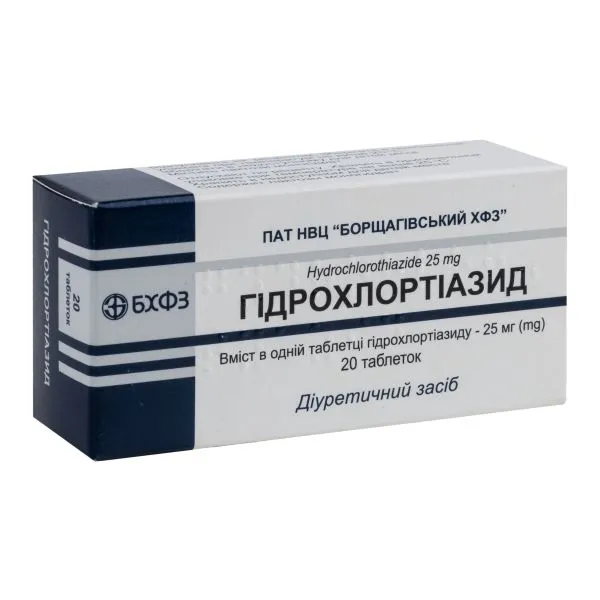
Table of Contents
INSTRUCTION FOR MEDICAL USE OF THE MEDICINAL PRODUCT HYDROCHLOROTHIAZIDE
Composition:
Active substance: hydrochlorothiazide;
1 tablet contains hydrochlorothiazide (calculated as 100 % dry substance) – 25 mg;
Excipients: lactose monohydrate, povidone, microcrystalline cellulose, corn starch, magnesium stearate.
Pharmaceutical form. Tablets.
Main physico-chemical properties: tablets are white or white with a yellowish tinge, with a biconvex surface. Marbling and grey specks may be present on the tablet surface.
Pharmacotherapeutic group. Diuretics with moderately expressed activity, thiazide group. Simple thiazide diuretics. Hydrochlorothiazide. ATC Code C C03A A03.
Pharmacological properties.
Pharmacodynamics.
Hydrochlorothiazide is a thiazide diuretic of moderate potency. It reduces sodium ion reabsorption at the level of the cortical segment of the loop of Henle, without affecting the segment passing through the renal medulla. Hydrochlorothiazide inhibits carbonic anhydrase in the proximal portion of the convoluted tubules, thereby accelerating urinary excretion of potassium ions, bicarbonates, and phosphates. It has virtually no effect on acid-base balance (sodium ions are excreted either with chloride ions or with bicarbonate ions; therefore, bicarbonate excretion increases in alkalosis and chloride excretion increases in acidosis). Hydrochlorothiazide increases magnesium ion excretion and reduces urate excretion. It decreases urinary calcium excretion, thereby reducing the formation of calcium kidney stones.
Hydrochlorothiazide exerts a hypotensive effect. Antihypertensive action begins within 3–4 days, but optimal therapeutic effect may require 3–4 weeks. Hypotensive effects persist for up to one week after discontinuation of the drug.
The effect of hydrochlorothiazide diminishes with reduced glomerular filtration rate and ceases when creatinine clearance falls below 30 mL/min.
Non-melanoma skin cancer. Results from two pharmacoepidemiological studies based on data from the Danish National Cancer Registry demonstrated a cumulative dose-dependent association between hydrochlorothiazide (HCTZ) and the occurrence of basal cell carcinoma (BCC) and squamous cell carcinoma (SCC).One study included a population of 71,533 patients with BCC and 8,629 patients with SCC, compared to 1,430,833 and 172,462 control subjects, respectively. High cumulative doses of HCTZ (≥ 50,000 mg) were associated with an adjusted risk coefficient (RR) of 1.29 (95% confidence interval (CI): 1.23–1.35) for BCC and 3.98 (95% CI: 3.68–4.31) for SCC. A clear cumulative dose-dependent relationship was observed for both BCC and SCC.
Another study indicated a possible association between lip cancer (SCC) and HCTZ use: 633 cases of lip cancer (SCC) were compared with 63,067 control subjects using a random sampling strategy. A cumulative dose-dependent association was demonstrated with an adjusted RR of 2.1 (95% CI: 1.7–2.6), increasing to RR 3.9 (3.0–4.9) for high doses (~25,000 mg) and RR 7.7 (5.7–10.5) for the highest cumulative dose (~100,000 mg) (see section "Special precautions").
Pharmacokinetics.
After oral administration, hydrochlorothiazide is rapidly but incompletely absorbed (60–80%) from the gastrointestinal tract. The diuretic effect begins within 1–2 hours, reaches its peak at 4 hours, and lasts for 10–12 hours. Plasma protein binding is approximately 40%. Hydrochlorothiazide crosses the placental barrier and is excreted into breast milk.
Hydrochlorothiazide undergoes no significant metabolism. The primary route of elimination is renal excretion in unchanged form. The elimination half-life is approximately 6 hours in patients with normal renal function and 11.5 hours in patients with moderate renal impairment.
Clinical characteristics.
Indications.
- Edematous syndrome of various etiologies (in congestive heart failure, liver cirrhosis with ascites, nephrotic syndrome, chronic renal insufficiency, premenstrual syndrome, fluid retention in obesity, as well as drug-induced, e.g., by corticosteroids);
- arterial hypertension (as monotherapy or in combination with other antihypertensive agents);
- symptomatic treatment of nephrogenic diabetes insipidus (to reduce polyuria);
- subcompensated forms of glaucoma;
- prevention of calcium-containing kidney stone formation.
Contraindications.
- Hypersensitivity to hydrochlorothiazide, other sulfonamides, or any component of the drug;
- severe renal impairment (creatinine clearance below 30 mL/min);
- mechanical obstruction of urinary tract;
- severe hepatic insufficiency, hepatic encephalopathy;
- anuria;
- gout (severe forms);
- hypovolemia;
- decompensated diabetes mellitus;
- fluid and electrolyte imbalances (hypokalemia, hypercalcemia, hyponatremia).
Interaction with other medicinal products and other types of interactions.
Cardiac glycosides:
Increased risk of glycoside toxicity (including ventricular excitability) due to thiazide-induced hypokalemia and hypomagnesemia.
Amphotericin B (parenteral), stimulant laxatives, glucocorticoids, adrenocorticotropic hormone, calcitonin:
Hydrochlorothiazide may exacerbate electrolyte imbalances, particularly hypokalemia.
Calcium salts and vitamin D:
Thiazide diuretics reduce calcium excretion and may increase serum calcium levels. Serum calcium levels should be monitored and dosage of calcium/vitamin D supplements adjusted accordingly.
Medicinal products causing changes in serum potassium levels:
Increased risk of cardiac arrhythmias, including ventricular tachycardia (e.g., torsade de pointes):
- class Ia antiarrhythmics (e.g., quinidine, hydroquinidine, disopyramide);
- class III antiarrhythmics (e.g., amiodarone, sotalol, dofetilide, ibutilide);
- neuroleptics (e.g., thioridazine, chlorpromazine, levomepromazine, trifluoperazine, zuclopenthixol, sulpiride, sultopride, amisulpride, tiapride, pimozide, haloperidol, droperidol);
- others (e.g., bepridil, cisapride, difemanil, erythromycin, halofantrine, mizolastine, pentamidine, terfenadine, vincamine).
Carbamazepine:
Risk of hyponatremia. Electrolyte levels should be monitored; if necessary, diuretics from other classes should be used.
Nonsteroidal anti-inflammatory drugs (NSAIDs), including selective COX-2 inhibitors, acetylsalicylic acid > 3 g/day, and non-selective NSAIDs:
Concomitant use of NSAIDs may reduce the antihypertensive effect of hydrochlorothiazide and enhance its effect on serum potassium levels.
Probenecid:
Increased plasma concentration of hydrochlorothiazide and reduced hyperuricemic effect.
Ethanol, barbiturates (e.g., phenobarbital), diazepam, narcotic analgesics, antidepressants:
May potentiate the hypotensive effect of hydrochlorothiazide.
Pressor amines (e.g., epinephrine, norepinephrine):
Hydrochlorothiazide reduces their effect on blood pressure.
Antihypertensive agents:
When used concomitantly with hydrochlorothiazide, dose reduction of antihypertensive agents may be required to prevent excessive hypotension.
Lithium salts:
Concomitant use with hydrochlorothiazide should be avoided due to the risk of increasing lithium plasma concentration to toxic levels.
Antidiabetic agents (oral agents, insulin):
Thiazide therapy may impair glucose tolerance and lead to hyperglycemia. Dose adjustment may be necessary.
Metformin:
Use with caution due to the risk of lactic acidosis associated with possible hydrochlorothiazide-induced functional renal impairment.
Non-depolarizing muscle relaxants (e.g., tubocurarine):
Possible potentiation of muscle relaxant effect.
Cytotoxic agents (e.g., cyclophosphamide, methotrexate):
Thiazides may reduce renal excretion of cytotoxic agents and enhance their myelosuppressive effects.
Cholestyramine and colestipol resins:
Even single-dose administration of cholestyramine or colestipol resins binds hydrochlorothiazide and reduces its gastrointestinal absorption by 85% and 43%, respectively.
Antigout agents (probenecid, sulfinpyrazone, allopurinol):
Dosage adjustment of uricosuric agents is required, as hydrochlorothiazide may increase serum uric acid levels. Increased doses of probenecid or sulfinpyrazone may be necessary. Concomitant use of thiazide diuretics, including hydrochlorothiazide, may increase the frequency of hypersensitivity reactions to allopurinol.
Anticholinergic agents (e.g., atropine, biperiden):
Increase bioavailability of thiazide diuretics by reducing gastrointestinal motility and gastric emptying rate.
Salicylates:
At high doses, hydrochlorothiazide may potentiate salicylate toxicity to the central nervous system.
Methyldopa:
Isolated cases of hemolytic anemia have been reported with concomitant use of hydrochlorothiazide.
Cyclosporine:
Increased risk of hyperuricemia and gout.
β-blockers and diazoxide:
Possible enhancement of their hyperglycemic effect by thiazides.
Amantadine:
Hydrochlorothiazide may increase the risk of amantadine adverse reactions.
Iodine-containing contrast agents:
In case of diuretic-induced dehydration, risk of acute renal failure is increased, especially with high-dose iodine agents. Rehydration should be performed prior to administration.
Special precautions for use.
Non-melanoma skin cancer.
An increased risk of non-melanoma skin cancer (NMSC) with increasing cumulative doses of HCTZ has been observed in two pharmacoepidemiological studies. The photosensitizing effect of HCTZ may be a mechanism underlying this pathology.
Patients taking HCTZ alone or in combination with other medicinal products should be informed about the risk of developing NMSC, especially with prolonged use, and the necessity of regular skin examinations and immediate reporting to a physician of any new skin lesions or suspicious neoplasms, as well as changes in existing skin lesions or moles.
To reduce the risk of skin cancer, patients should be advised about possible preventive measures, such as limiting exposure to sunlight and UV radiation, and, when exposure is unavoidable, ensuring adequate skin protection. Suspicious skin lesions should be promptly evaluated, including histological examination of biopsy material.
Patients with a prior history of NMSC may also require reassessment of HCTZ use.
Renal function impairment.
Diuretics, including hydrochlorothiazide, should be used with caution in patients with marked renal function impairment. Thiazides may cause or accelerate the development of azotemia and exacerbate pre-existing renal dysfunction. Cumulative effects of the drug are possible. If renal function deteriorates progressively, significant azotemia develops, or oliguria occurs, diuretic therapy should be discontinued.
Hepatic function impairment.
Thiazides should be used with caution in patients with hepatic impairment or progressive liver disease, as these drugs may cause intrahepatic cholestasis. Even minor disturbances in fluid and electrolyte balance or blood ammonia levels may precipitate or accelerate the development of hepatic coma, hepatic encephalopathy, or hepatorenal syndrome. In such cases, diuretic therapy should be discontinued.
Hypersensitivity reactions.
The possibility of hypersensitivity reactions should be considered in patients with or without a history of allergic disorders or bronchial asthma. Cases of development or exacerbation of connective tissue disorders, such as systemic lupus erythematosus, have been reported during thiazide therapy.
Choroidal effusion with visual field defect, acute myopia, and secondary angle-closure glaucoma.
Hydrochlorothiazide may cause an idiosyncratic reaction leading to choroidal effusion with visual field defects, acute transient myopia, and acute angle-closure glaucoma. Symptoms are characterized by an acute onset of decreased visual acuity and/or eye pain and usually develop from several hours to several weeks after initiating hydrochlorothiazide therapy.
Untreated acute angle-closure glaucoma may result in permanent vision loss. The primary treatment step is prompt discontinuation of hydrochlorothiazide. Subsequently, urgent medical or surgical treatment should be considered if intraocular pressure remains uncontrolled. A history of allergy to sulfonamides or penicillin may be a risk factor for developing acute angle-closure glaucoma.
Acute respiratory toxicity.
Very rare cases of acute respiratory toxicity, including acute respiratory distress syndrome (ARDS), have been reported after hydrochlorothiazide administration. Pulmonary edema usually develops within minutes or hours after intake. Initial symptoms include dyspnea, fever, worsening pulmonary function, and hypotension. If ARDS is suspected, hydrochlorothiazide should be discontinued immediately and appropriate treatment initiated. Hydrochlorothiazide should not be prescribed to patients who have previously experienced ARDS following its use.
Water and electrolyte balance.
Thiazide therapy should only be initiated after correction of pre-existing disturbances in water and electrolyte balance.
All patients receiving diuretic therapy should be monitored for possible water and electrolyte imbalances, including hypovolemia, hyponatremia, hypokalemia, hypomagnesemia, and hypochloremic alkalosis. Serum concentrations of potassium, magnesium, sodium, and other electrolytes, as well as plasma creatinine clearance, should be regularly monitored during long-term diuretic therapy.
Assessment of serum and urine electrolyte levels is particularly important in patients experiencing excessive vomiting and/or diarrhea or receiving parenteral fluids.
Concomitant use of drugs such as cardiac glycosides, glucocorticoids, and adrenocorticotropic hormone may also affect serum electrolyte levels.
Thiazides should be used cautiously in conditions associated with increased potassium loss. Hypokalemia may enhance the toxic effects of cardiac glycosides (e.g., ventricular irritability). Concomitant magnesium deficiency may complicate correction of hypokalemia. Patients on long-term hydrochlorothiazide therapy are advised to follow a potassium-rich diet and/or use potassium supplements.
Dilutional hyponatremia may occur in patients with edema during hot weather; appropriate corrective measures include water restriction rather than salt supplementation, except when hyponatremia is life-threatening.
Monitoring of serum electrolytes is particularly indicated in elderly patients, patients with ascites due to liver cirrhosis, or those with edema due to nephrotic syndrome. In nephrotic syndrome, hydrochlorothiazide should be used only under strict monitoring in patients with normal serum potassium levels, without signs of hypovolemia or severe hypoalbuminemia.
Warning signs of water and electrolyte imbalance, regardless of cause, include dry mouth, thirst, weakness, lethargy, drowsiness, restlessness, confusion, seizures, muscle pain or cramps, muscle fatigue, arterial hypotension, oliguria, tachycardia, nausea, and vomiting.
Arterial hypotension and antihypertensive drugs.
As with other antihypertensive medicinal products, symptomatic arterial hypotension may occur in some patients. Thiazides may potentiate the effects of other antihypertensive drugs. When used concomitantly with hydrochlorothiazide, dosage reduction of antihypertensive agents may be necessary to prevent excessive blood pressure reduction.
The antihypertensive effect of hydrochlorothiazide may be enhanced after sympathectomy.
Ischemic heart disease, cerebrovascular disease, aortic and mitral valve stenosis. The drug should be used with caution due to the possibility of excessive blood pressure reduction, which may lead to myocardial infarction or stroke. Particular caution is advised in patients with cerebral or coronary atherosclerosis.
Elderly patients.
When prescribing hydrochlorothiazide, it should be considered that elderly patients may be more sensitive to the drug; thus, a halved therapeutic dose may be sufficient. It should also be noted that creatinine clearance in elderly patients depends on age, body weight, and sex.
Metabolic and endocrine effects.
Diuretics, including hydrochlorothiazide, may impair glucose tolerance and lead to hyperglycemia. Adjustment of insulin or oral hypoglycemic agent dosages may be required (see section "Interaction with other medicinal products and other forms of interaction"). Latent diabetes may become manifest during thiazide therapy.
Diuretics may reduce urinary calcium excretion and consequently cause a slight transient increase in plasma calcium levels. Marked hypercalcemia may indicate latent hyperparathyroidism. Pathological changes in parathyroid glands with hypercalcemia and hypophosphatemia have been observed in some patients during prolonged thiazide therapy. Thiazide administration should be discontinued prior to parathyroid function evaluation.
Hydrochlorothiazide may increase serum free bilirubin concentration (due to displacement from albumin binding). Increases in cholesterol, LDL, and triglyceride levels are possible.
Thiazides may reduce protein-bound iodine levels in plasma without evidence of thyroid dysfunction.
In some patients, thiazide therapy may cause hyperuricemia and exacerbate or precipitate gout attacks in predisposed individuals.
False-positive anti-doping test results may occur during hydrochlorothiazide use.
The product contains lactose; therefore, it should not be administered to patients with rare hereditary forms of galactose intolerance, lactase deficiency, or glucose-galactose malabsorption syndrome.
Use during pregnancy or breastfeeding.
Hydrochlorothiazide may be prescribed during pregnancy only after careful assessment of the benefit-risk ratio for mother and fetus, as the drug reduces maternal plasma volume, uteroplacental perfusion, and crosses the placental barrier. There is a risk of fetal or neonatal jaundice, thrombocytopenia, and other adverse effects.
Since hydrochlorothiazide is excreted in breast milk, breastfeeding should be discontinued if the drug needs to be used.
Ability to affect reaction speed when driving or operating machinery.
Until individual response to the drug is established, patients should refrain from driving or operating machinery, as treatment may impair concentration ability and psychomotor reaction speed, and may cause dizziness or visual disturbances.
Method of Administration and Dosage
The dose of hydrochlorothiazide is determined individually by a physician. Tablets should be taken after meals.
Due to increased excretion of potassium and magnesium during treatment, replacement therapy with potassium (K+ < 3.0 mmol/L) and magnesium may be necessary.
For edematous syndrome:
Initial dose is 25–75 mg once daily or every other day (depending on clinical efficacy). Maximum daily dose – 100 mg.
As an antihypertensive agent:
Hydrochlorothiazide should be administered at an initial daily dose of 25–50 mg as a single dose, either as monotherapy or in combination with other antihypertensive agents.
In some cases, effective use at an initial dose of 12.5* mg is possible. If necessary, the dose may be increased, but the maximum daily dose must not exceed 100 mg.
*If administration of hydrochlorothiazide at a dose of 12.5 mg is required, a formulation allowing such dosing should be used.
The antihypertensive effect of hydrochlorothiazide appears within 3–4 days; however, up to 3–4 weeks may be needed to achieve optimal effect. After discontinuation of treatment, the antihypertensive effect persists for approximately 1 week.
For premenstrual edema:
The usual dose is 25 mg daily, administered from the onset of symptoms until the beginning of menstruation.
For nephrogenic diabetes insipidus:
The average therapeutic dose is 50 mg daily. If necessary, the dose may be increased up to 100 mg daily.
For prevention of concrement (stone) formation:
Administer 50 mg twice daily.
For reduction of intraocular pressure in glaucoma:
Administer 25 mg once every 1–6 days; effect occurs within 24–48 hours.
Daily dose of the drug
for children
aged 2 years and older
is 1–2 mg/kg body weight. Depending on body weight, children aged 2 to 12 years receive 37.5–100 mg daily. Frequency of administration – 1–2 times daily.
Children:
May be used in children aged 2 years and older.
Overdose.
Symptoms:
Dehydration, hypokalemia, hyponatremia, hypochloremia. As a result, the following may occur: thirst, nausea, vomiting, tachycardia, fatigue, weakness, dizziness, impaired consciousness, arterial hypotension, bradycardia, cardiac arrhythmias, calf muscle cramps/spasms, paresthesia, polyuria, oliguria or anuria, shock, alkalosis, elevated blood urea nitrogen levels (especially in patients with renal insufficiency).
Treatment:
Symptomatic and supportive therapy; no specific antidote is available. Gastric lavage and administration of activated charcoal are recommended to reduce drug absorption. In case of arterial hypotension, place the patient in a supine position with legs elevated. Fluid volume should be restored and electrolyte imbalances corrected (in cases of arterial hypotension or shock). If necessary, ensure oxygen access or perform artificial ventilation. Monitor fluid and electrolyte balance (especially serum potassium levels) and renal function laboratory parameters until normalization is achieved.
Adverse Reactions.
Blood and lymphatic system: leukopenia, neutropenia/agranulocytosis, thrombocytopenia with or without purpura, hemolytic and aplastic anemias, decreased hematocrit, myelosuppression, lymphadenopathy.
Immune system: hypersensitivity reactions, including anaphylactic reactions, anaphylactic shock, angioneurotic edema (including edema of the face, lips, tongue, larynx, limbs, intestinal edema).
Metabolism and nutrition disorders: hyperuricemia, which may provoke gout attacks in patients with asymptomatic disease, electrolyte imbalance, including hyponatremia and hypokalemia, hypomagnesemia, hypercalcemia, increased blood lipid levels; gout, hyperglycemia, glucosuria, impaired glucose tolerance, which may lead to manifestation of latent diabetes mellitus, hypochloremic alkalosis; increased levels of urea and creatinine, liver enzymes and bilirubin, cholesterol, triglycerides in blood plasma.
Psychiatric disorders: restlessness, depression, sleep disturbances, confusion, disorientation, drowsiness, mood and mental changes, nervousness.
Nervous system: dizziness, headache, paresthesia, seizures, unusual fatigue and weakness, apathy, slowed thinking, syncope, asthenia.
Eye disorders: blurred vision, xanthopsia, conjunctivitis, acute myopia and secondary acute angle-closure glaucoma, choroidal effusion.
Ear and labyrinth disorders: vertigo, tinnitus.
Cardiovascular system: arrhythmias, orthostatic hypotension, arterial hypotension, tachycardia.
Respiratory, thoracic and mediastinal disorders: acute respiratory distress syndrome (ARDS), including pneumonitis and pulmonary edema (see section "Special precautions for use").
Gastrointestinal system: anorexia, nausea, vomiting, diarrhea, constipation, dry mouth, increased thirst, stomatitis/aphthous ulcers, glossitis, taste disturbances, epigastric pain/spasm, pancreatitis.
Hepatobiliary system: development of hepatic encephalopathy or hepatic coma, hepatocellular or cholestatic jaundice, cholecystitis.
Skin and subcutaneous tissue: skin rash, photosensitization, pruritus, urticaria, purpura, erythroderma, necrotic vasculitis, Stevens-Johnson syndrome, erythema multiforme, exfoliative dermatitis, toxic epidermal necrolysis, lupus-like skin reactions, alopecia.
Musculoskeletal and connective tissue disorders: muscle cramps or pain.
Renal and urinary system: renal function disorders, interstitial nephritis, renal failure.
Neoplasms: non-melanoma skin cancer (basal cell carcinoma and squamous cell carcinoma) (see sections "Pharmacodynamics" and "Special precautions for use").
Other: decreased potency/impotence, increased body temperature, sialadenitis.
Shelf life.
5 years.
Storage conditions.
In the original packaging at a temperature not exceeding 25 °C.
Keep out of reach of children.
Packaging.
10 tablets in a blister, 2 blisters per pack; 20 tablets in a blister.
Prescription status.
Prescription only.
Manufacturer.
Public Joint-Stock Company "Scientific-Production Center "Borshchagov Chemical and Pharmaceutical Plant". Limited Liability Company "Agrofarm".
Manufacturer's address and location of business activity.
Ukraine, 03134, Kyiv, Miru St., 17.
Ukraine, 08200, Kyiv region, Irpin, Centralna St., 113-A.