Herceptin
Ukraine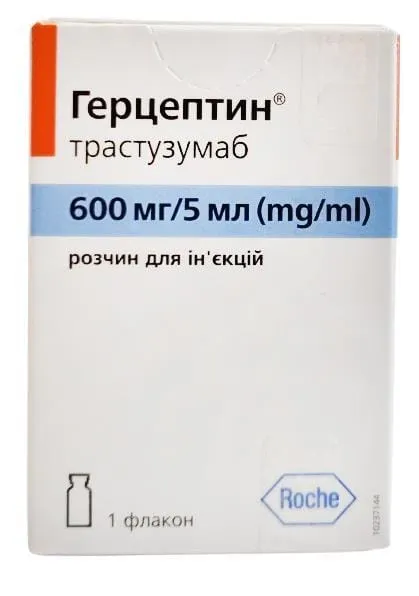
Table of Contents
INSTRUCTIONS FOR MEDICAL USE OF THE MEDICINAL PRODUCT HERCEPTIN®
Composition:
Active substance: trastuzumab;
1 vial (5 ml) contains trastuzumab 600 mg;
Excipients: recombinant human hyaluronidase (rHuPH20), L-histidine, L-histidine hydrochloride monohydrate, α,α-trehalose dihydrate, L-methionine, polysorbate 20, water for injections.
Pharmaceutical form. Solution for injection.
Main physicochemical characteristics: liquid, from clear to opalescent, colorless to slightly yellow.
Pharmacotherapeutic group.
Antineoplastic agents. Monoclonal antibodies and antibody-drug conjugates. HER2 (human epidermal growth factor receptor 2) inhibitors.
ATC code L01F D01.
Pharmacological properties.
Pharmacodynamics.
The Herceptin**®** subcutaneous preparation contains recombinant human hyaluronidase (rHuPH20), an enzyme used to enhance diffusion and absorption when co-administered with subcutaneously administered drugs.
Trastuzumab is a recombinant humanized monoclonal antibody of the IgG1 class directed against the human epidermal growth factor receptor 2 (HER2). HER2 protein overexpression occurs in 20–30% of primary breast cancer cases. Studies in patients with breast cancer have shown that disease-free survival is shorter in patients whose tumors overexpress HER2 compared to those without tumor HER2 overexpression. The extracellular domain (ECD, p105) of the receptor can be shed into the bloodstream and detected in serum.
Mechanism of action
Trastuzumab binds with high affinity and specificity to subdomain IV of the extracellular domain of HER2 in the juxtamembrane region. Binding of trastuzumab to HER2 inhibits ligand-dependent HER2 signal transduction and prevents proteolytic cleavage of its extracellular domain and the mechanism of HER2 activation. Studies in animals and in vitro experiments have demonstrated that trastuzumab inhibits proliferation of human tumor cells overexpressing HER2. Trastuzumab is a potent mediator of antibody-dependent cell-mediated cytotoxicity. In vitro, trastuzumab-mediated antibody-dependent cell-mediated cytotoxicity is predominantly directed toward tumor cells overexpressing HER2.
Detection of HER2 overexpression or HER2 gene amplification
Detection of HER2 overexpression or HER2 gene amplification in breast cancer
Herceptin**®** should be administered only to patients whose tumors demonstrate HER2 overexpression or HER2 gene amplification, as determined by a validated and accurate test method. HER2 overexpression should be detected by immunohistochemical analysis of fixed tumor tissue sections (see section "Special precautions and warnings"). HER2 gene amplification should be detected by fluorescence in situ hybridization (FISH) or chromogenic in situ hybridization (CISH) of fixed tumor tissue sections. Herceptin**®** should be administered only to patients with strong HER2 overexpression (immunohistochemical staining scored as 3+) or positive FISH or CISH results.
To obtain accurate and reproducible results, testing should be performed in a specialized laboratory using validated methods.
The recommended scoring system for immunohistochemical staining is shown in Table 1.
Table 1
| Score |
Staining patterns |
HER2 overexpression assessment |
| 0 |
No staining or membrane staining in less than 10 % of tumor cells |
Negative result |
| 1+ |
Weak membrane staining in more than 10 % of tumor cells. Cell membranes are stained only partially |
Negative result |
| 2+ |
Complete (weak or moderate) membrane staining in more than 10 % of tumor cells |
Indeterminate result |
| 3+ |
Strong complete membrane staining in more than 10 % of tumor cells |
Positive result |
Overall, FISH results are considered positive if the ratio of the number of HER2 gene copies per tumor cell to the number of chromosome 17 copies is greater than or equal to 2, or if more than 4 HER2 gene copies per tumor cell are observed when chromosome 17 is not used as a control.
Overall, CISH results are considered positive if more than 5 HER2 gene copies per nucleus are observed in more than 50% of tumor cells.
For detailed information on test performance and interpretation of results, refer to the instructions for validated FISH and CISH methods. Official guidelines on HER2 testing may also apply.
Regarding other methods that may be used to assess HER2 protein or gene expression, assays should only be performed in laboratories with properly validated methods. Such methods must be sensitive and sufficiently precise to demonstrate HER2 overexpression and must clearly differentiate moderate (2+) from strong (3+) HER2 overexpression.
Pharmacokinetics.
The pharmacokinetics of trastuzumab administered subcutaneously at a dose of 600 mg every 3 weeks was compared to that of intravenous trastuzumab (loading dose 8 mg/kg, maintenance dose 6 mg/kg every 3 weeks) in a Phase III study. Pharmacokinetic results for the primary endpoint, trough concentration at pre-dose of cycle 8 (Cmin), demonstrated equivalence between Herceptin® for subcutaneous administration and Herceptin® for intravenous administration, adjusted for body weight.
The mean trough concentration during the neoadjuvant phase at pre-dose of cycle 8 was higher in the subcutaneous Herceptin® group (78.7 µg/mL) compared to the intravenous Herceptin® group (57.8 µg/mL). During the adjuvant phase at pre-dose of cycle 13, mean trough concentrations were 90.4 µg/mL and 62.1 µg/mL, respectively. As indicated by data from study BO22227, steady state with intravenous administration was reached by the 8th treatment cycle. With subcutaneous administration of Herceptin®, concentrations approached steady state after the dose administered in cycle 7 (prior to the next dose in cycle 8), with only a small increase in concentration (<15%) observed by cycle 13. The mean trough concentration at pre-dose of cycle 18 for subcutaneous administration was 90.7 µg/mL, similar to that at cycle 13, indicating no further accumulation beyond cycle 13.
The median Tmax after subcutaneous administration was approximately 3 days, with high inter-individual variability observed (range 1–14 days). The mean maximum concentration (Cmax) was predictably lower in the subcutaneous Herceptin® group (149 µg/mL) compared to the intravenous trastuzumab group (221 µg/mL at the end of infusion).
The mean AUC0–21 days after the dose in cycle 7 was approximately 10% higher in the subcutaneous Herceptin® group than in the intravenous Herceptin® group, with mean AUC values of 2268 µg•day/L and 2056 µg•day/L, respectively. AUC0–21 days after the dose in cycle 12 was approximately 20% higher in the subcutaneous Herceptin® group than in the intravenous Herceptin® group, with mean AUC values of 2610 µg•day/L and 2179 µg•day/L, respectively. Due to the significant influence of body weight on trastuzumab clearance and the use of a fixed dose for subcutaneous administration, the difference in exposure between subcutaneous and intravenous administration depended on body weight: in patients with body weight <51 kg, steady-state AUC of trastuzumab was approximately 80% higher in the subcutaneous group compared to the intravenous group, whereas in patients with the highest body weight (>90 kg), AUC was 20% lower in the subcutaneous group compared to the intravenous group.
A population pharmacokinetic model with parallel linear and nonlinear elimination from the central compartment was developed using pooled pharmacokinetic data from the Phase III study BO22227 following both subcutaneous and intravenous administration of Herceptin®, to describe the observed pharmacokinetic concentrations in patients with early breast cancer after intravenous and subcutaneous administration of Herceptin®. The bioavailability of trastuzumab administered subcutaneously was 77.1%; the first-order absorption rate constant was 0.4 day−1. Linear clearance was 0.111 L/day; central compartment volume of distribution (Vc) was 2.91 L. The Michaelis–Menten equation parameters were 11.9 mg/day and 33.9 µg/mL for Vmax and Km, respectively. Body weight and serum alanine aminotransferase (ALT) activity were statistically significant covariates affecting pharmacokinetics; however, modeling analyses indicated that no dose adjustment is required for patients with early breast cancer. Predicted pharmacokinetic parameter values (median and 5–95th percentiles) in the population of patients with early breast cancer under the Herceptin® dosing regimen for subcutaneous administration are presented in Table 2.
Table 2.
| Type of primary tumor and dosing regimen |
Cycle |
N |
Cmin (μg/mL) |
Cmax (μg/mL) |
AUC0–21 day (μg·day/mL) |
| Early-stage breast cancer; Herceptin®, subcutaneous formulation, 600 mg once every 3 weeks |
Cycle 1 |
297 |
28.2 (14.8–40.9) |
79.3 (56.1–109) |
1065 (718–1504) |
| Cycle 7 (steady state) |
297 |
75.0 (35.1–123) |
149 (86.1–214) |
2337 (1258–3478) |
Elimination of trastuzumab from the body
The elimination of trastuzumab from the body was assessed after subcutaneous administration using a population pharmacokinetic model. Results from these simulations indicate that in at least 95% of patients, concentrations < 1 mcg/mL will be reached within 7 months (it is predicted that approximately 3% of the population will have minimum concentrations [Cmin,ss] of the drug or elimination from the body will be approximately 97%).
Clinical characteristics.
Indications.
Breast cancer
Metastatic breast cancer
Treatment of adult patients with metastatic breast cancer with HER2 tumor overexpression:
- as monotherapy in patients who have received at least two chemotherapy regimens for metastatic disease (prior chemotherapy must have included at least an anthracycline and a taxane, unless administration of these agents was inappropriate); and in patients with positive hormone receptor status in whom hormonal therapy has been ineffective, unless administration of these agents is inappropriate;
- in combination with paclitaxel in patients who have not yet received chemotherapy for metastatic disease and for whom anthracyclines are not indicated;
- in combination with docetaxel in patients who have not yet received chemotherapy for metastatic disease;
- in combination with an aromatase inhibitor in postmenopausal patients with metastatic breast cancer with hormone receptor-positive status who have not yet received trastuzumab treatment.
Early breast cancer
Treatment of adult patients with early breast cancer with HER2 tumor overexpression:
- following surgical intervention; completion of chemotherapy (neoadjuvant or adjuvant) and, if applicable, radiotherapy (see section "Pharmacodynamics");
- in combination with paclitaxel or docetaxel following adjuvant chemotherapy with doxorubicin and cyclophosphamide;
- in combination with adjuvant chemotherapy containing docetaxel and carboplatin;
- in combination with neoadjuvant chemotherapy followed by administration of Herceptin**®** for adjuvant therapy of locally advanced (including inflammatory) breast cancer or tumors >2 cm in diameter (see sections "Special precautions" and "Pharmacodynamics").
The medicinal product should be administered only to patients with metastatic or early breast cancer with HER2 tumor overexpression or HER2 gene amplification confirmed by an accurate and validated test.
Contraindications.
- Hypersensitivity to trastuzumab, mouse proteins, hyaluronidase, or to any excipients listed in the "Composition" section.
- Severe dyspnea at rest due to complications from progressive malignancy, or dyspnea requiring supplemental oxygen therapy.
Special safety precautions.
Unused medicinal product or waste material must be disposed of in accordance with local requirements.
Interaction with other medicinal products and other types of interactions.
No specific studies on interactions between Herceptin® and other medicinal products have been conducted. No clinically significant interactions were observed during clinical trials with concomitant use of Herceptin® and other medicinal products.
Effect of trastuzumab on the pharmacokinetics of other antineoplastic agents
Pharmacokinetic data from studies BO15935 and M77004 in women with HER2-positive metastatic breast cancer indicated that exposure to paclitaxel and doxorubicin (and their major metabolites—6-α-hydroxypaclitaxel, POH, and doxorubicinol, DOL) was not altered in the presence of trastuzumab (loading dose 8 mg/kg or 4 mg/kg followed by 6 mg/kg every 3 weeks or 2 mg/kg weekly intravenously, respectively). However, trastuzumab may increase the total exposure of the doxorubicin metabolite (7-deoxy-13-dihydro-doxorubicinone, D7D). The bioavailability of D7D and the clinical significance of this metabolite increase were unclear.
Data from a single-group study JP16003 of Herceptin**®** (loading dose 4 mg/kg and 2 mg/kg intravenously weekly) and docetaxel (60 mg/m² intravenously) in Japanese women with HER2-positive metastatic breast cancer indicated that concomitant administration of Herceptin**®** did not affect the pharmacokinetics of a single dose of docetaxel. In the sub-study JP19959 of the BO18255 (ToGA) trial involving Japanese men and women with advanced gastric cancer, the pharmacokinetics of capecitabine and cisplatin were evaluated with or without Herceptin**®. Results from this sub-study indicated that exposure to biologically active metabolites (e.g., 5-FU) of capecitabine was not altered with concomitant administration of cisplatin or with concomitant administration of cisplatin and Herceptin®. However, capecitabine showed higher concentrations and a longer elimination half-life when co-administered with Herceptin®. Data also indicated that the pharmacokinetics of cisplatin were not affected by concomitant administration of capecitabine or by concomitant administration of capecitabine and Herceptin®**.
Analysis of pharmacokinetic data obtained from the H4613g/GO01305 study in patients with metastatic or locally advanced inoperable HER2-positive cancer suggested that trastuzumab had no effect on the pharmacokinetics of carboplatin.
Effect of antineoplastic agents on the pharmacokinetics of trastuzumab
Comparison of modeled serum concentrations of Herceptin**®** after trastuzumab monotherapy (4 mg/kg loading dose; 2 mg/kg weekly intravenously) and observed serum concentrations in Japanese women with HER2-positive metastatic breast cancer in study JP16003 revealed no pharmacokinetic interaction of docetaxel on trastuzumab pharmacokinetics.
Comparison of pharmacokinetic data from Phase II studies (BO15935 and M77004) and one Phase III study (H0648g), in which patients received concomitant treatment with Herceptin**®** and paclitaxel, with two Phase II studies in which Herceptin**®** was administered as monotherapy (W016229 and MO16982) in women with HER2-positive metastatic breast cancer, indicated variability in individual and mean trough serum concentrations of trastuzumab across studies, but no clear impact of concomitant paclitaxel administration on trastuzumab pharmacokinetics.
A comparative pharmacokinetic analysis of trastuzumab from study M77004, in which women with HER2-positive metastatic breast cancer received concomitant treatment with Herceptin**®, paclitaxel, and doxorubicin, compared with data from studies where Herceptin®** was administered as monotherapy (H0649g) or in combination with an anthracycline and cyclophosphamide or paclitaxel (study H0648g), showed no effect of doxorubicin and paclitaxel on trastuzumab pharmacokinetics.
Analysis of pharmacokinetic data obtained from study H4613g/GO01305 suggested that carboplatin had no effect on the pharmacokinetics of trastuzumab.
Concomitant administration of anastrozole did not affect the pharmacokinetics of trastuzumab.
Special precautions for use.
To ensure improved traceability of biological medicinal products, the trade name and batch number of the administered medicinal product should be clearly documented.
HER2 testing should be performed in a specialized laboratory that can ensure appropriate validation of testing methods (see section "Pharmacodynamics").
Currently, there are no clinical trial data available on re-treatment with Herceptin® in patients who have previously received Herceptin® as part of adjuvant therapy.
Cardiac dysfunction
Patients receiving treatment with Herceptin® are at increased risk of developing congestive heart failure (NYHA functional class II–IV) as well as asymptomatic cardiac dysfunction. These events have been observed in patients treated with Herceptin® as monotherapy or in combination with paclitaxel or docetaxel, particularly following chemotherapy regimens that included an anthracycline (doxorubicin or epirubicin). These events may be of moderate or severe degree and have been associated with fatal outcomes (see section "Adverse reactions"). In addition, caution should be exercised when treating patients with increased cardiac risk, i.e., patients with hypertension, documented ischemic heart disease, congestive heart failure, left ventricular ejection fraction (LVEF) < 55%, or elderly patients.
All patients planned to receive Herceptin® therapy, especially those previously treated with anthracyclines and cyclophosphamide, should undergo a thorough cardiac evaluation prior to treatment initiation, including medical history, physical examination, ECG, echocardiography and/or radionuclide ventriculography (MUGA), or magnetic resonance imaging. Monitoring will help identify patients who develop cardiac dysfunction. Assessment of cardiac function performed prior to treatment should be repeated every 3 months during treatment and every 6 months after completion of treatment for up to 24 months from the date of the last dose of Herceptin®. A careful benefit-risk assessment should be conducted before initiating Herceptin® therapy.
According to population pharmacokinetic analysis of all available data, trastuzumab may persist in the systemic circulation for up to 7 months after discontinuation of Herceptin® therapy (see section "Pharmacological properties").
Patients receiving anthracyclines after completion of Herceptin® therapy may be at increased risk of cardiotoxicity. Anthracyclines should be avoided, if possible, for at least 7 months after discontinuation of Herceptin® therapy. If anthracyclines are used, cardiac function should be closely monitored.
Formal cardiac function assessment should be considered in patients identified with cardiovascular risk factors after initial evaluation. All patients should have cardiac function monitored during treatment (e.g., every 12 weeks). Monitoring of cardiac function may help in early identification of patients with cardiac dysfunction. In cases of asymptomatic cardiac dysfunction, monitoring should be performed more frequently (e.g., every 6–8 weeks). Persistent reduction in left ventricular ejection fraction, even in the absence of clinical symptoms, should prompt consideration of discontinuing Herceptin® therapy, unless clear clinical benefit is observed in the individual patient.
The safety of continuing or resuming Herceptin® therapy in patients who have developed cardiac dysfunction has not been prospectively studied. If the decrease in left ventricular ejection fraction is ≥10 percentage points from baseline and the absolute LVEF is <50%, Herceptin® therapy should be interrupted and LVEF reassessed after 3 weeks. If LVEF does not improve or worsens, or if symptomatic congestive heart failure develops, Herceptin® should be discontinued unless the benefit to the individual patient outweighs the risk. Such patients should be referred for evaluation and monitoring to a cardiologist.
In the event of symptoms of heart failure during Herceptin® therapy, standard treatment for congestive heart failure should be initiated. The condition of most patients who developed congestive heart failure or asymptomatic cardiac dysfunction in clinical trials improved with standard medical therapy for congestive heart failure, including angiotensin-converting enzyme inhibitors or angiotensin receptor blockers and beta-blockers. Most patients with cardiac symptoms who also demonstrated clinical benefit from Herceptin® continued therapy without additional cardiac events.
Metastatic breast cancer
The combination of Herceptin® and anthracyclines should not be used in patients with metastatic breast cancer.
In patients with metastatic breast cancer previously treated with anthracyclines, there remains a risk of cardiac dysfunction during Herceptin® therapy, although this risk is lower than with concomitant administration of Herceptin® and anthracyclines.
Early breast cancer
In patients with early breast cancer, cardiac function assessment performed prior to treatment should be repeated every 3 months during treatment and every 6 months after completion of treatment for up to 24 months from the date of the last dose of Herceptin®. Patients receiving chemotherapy containing anthracyclines are recommended to continue monitoring annually for five years from the date of the last dose of Herceptin® or longer if further decline in left ventricular ejection fraction occurs.
Patients with a history of myocardial infarction, angina requiring medication, history of congestive heart failure (NYHA functional class II–IV), left ventricular ejection fraction <55%, other cardiomyopathies, arrhythmias requiring medication, clinically significant valvular heart disease, poorly controlled hypertension (patients with hypertension controlled by standard medical therapy were allowed in studies), or hemodynamically significant pericardial effusion were excluded from the main clinical trials of Herceptin® for adjuvant and neoadjuvant treatment of early breast cancer. Therefore, Herceptin® is not recommended for use in such patients.
Adjuvant therapy
The combination of Herceptin® and anthracyclines should not be used in the adjuvant setting.
In patients with early breast cancer, increased frequency of symptomatic and asymptomatic cardiac events was observed when Herceptin® (intravenous formulation) was administered after anthracycline-containing chemotherapy compared to regimens with docetaxel and carboplatin that did not include anthracyclines. This effect was more pronounced when Herceptin® (intravenous formulation) was administered concomitantly with taxanes than when administered sequentially. Regardless of the regimen used, most symptomatic cardiac events occurred within the first 18 months. In one of the three main trials (BCIRG006), with a median follow-up of 5.5 years, persistent increase in cumulative incidence of symptomatic cardiac events or changes in left ventricular ejection fraction (LVEF) was observed in 2.37% of patients who received Herceptin® concomitantly with a taxane after anthracycline therapy, and in approximately 1% of patients in the two comparison regimen groups (anthracycline + cyclophosphamide followed by taxane alone, and taxane + carboplatin followed by Herceptin®).
Risk factors for cardiac events identified in four large adjuvant therapy trials included older age (>50 years), low baseline left ventricular ejection fraction (<55%) before or after adjuvant paclitaxel, decrease in LVEF by 10–15 percentage points, and prior or concomitant use of antihypertensive medications. In patients who received Herceptin® after completion of adjuvant chemotherapy, the risk of cardiac dysfunction was associated with higher cumulative anthracycline dose administered prior to initiation of Herceptin® therapy and higher body mass index (>25 kg/m²).
Neoadjuvant/adjuvant therapy
For patients with early breast cancer meeting criteria for neoadjuvant-adjuvant therapy, Herceptin® may be used concomitantly with anthracyclines only if the patient has not previously received chemotherapy; anthracyclines should be used only at low doses, i.e., maximum cumulative dose of doxorubicin 180 mg/m² or epirubicin 360 mg/m².
If patients receive a full course of low-dose anthracyclines and Herceptin® concomitantly in the neoadjuvant setting, cytotoxic chemotherapy should not be administered after surgical treatment. In other situations, decisions regarding the need for additional cytotoxic chemotherapy should be based on individual factors.
Experience with concomitant use of trastuzumab with regimens containing low-dose anthracyclines is currently limited to two studies (MO16432 and BO22227).
In the main study MO16432, Herceptin® was administered concomitantly with neoadjuvant chemotherapy including 3 cycles of doxorubicin (cumulative dose 180 mg/m²). The incidence of symptomatic cardiac dysfunction was 1.7% in the Herceptin® treatment group.
In the pivotal study BO22227, Herceptin® was administered concomitantly with neoadjuvant chemotherapy including 4 cycles of epirubicin (cumulative dose 300 mg/m²); with a median follow-up exceeding 70 months, the incidence of heart failure/congestive heart failure was 0.3% with intravenous Herceptin® and 0.7% with subcutaneous Herceptin®. In patients with lower body weight (<59 kg, lowest quartile of body weight), administration of fixed-dose subcutaneous Herceptin® was not associated with increased risk of cardiac events or significant decrease in left ventricular ejection fraction.
Clinical experience with use in patients over 65 years of age is limited.
Infusion-related reactions
Infusion-related reactions may occur with subcutaneous administration of Herceptin®. Premedication may be used to reduce the risk of infusion-related reactions.
Although serious infusion-related reactions, including dyspnea, hypotension, labored or wheezing respiration, bronchospasm, tachycardia, decreased oxygen saturation, and respiratory failure, were not reported in the clinical trial of subcutaneous Herceptin®, caution should be exercised, as such reactions have been observed with intravenous Herceptin®. Patients should be monitored for infusion-related reactions for 30 minutes after the first injection and for 15 minutes after subsequent injections. For mild infusion-related reactions, analgesics/antipyretics such as meperidine or paracetamol, or antihistamines such as diphenhydramine, may be administered. Serious reactions observed with intravenous Herceptin® have been successfully managed with oxygen, beta-agonists, and corticosteroids. These reactions have rarely been associated with fatal outcomes. Patients with dyspnea at rest due to lung metastases or comorbid conditions may be at increased risk of fatal infusion-related reactions. Therefore, such patients should not receive Herceptin® (see section "Contraindications").
Pulmonary reactions
Caution should be exercised when administering subcutaneous Herceptin®, as severe pulmonary adverse reactions have been reported with intravenous Herceptin® during post-marketing use (see section "Adverse reactions"). These events have sometimes been fatal and may occur as part of infusion reactions or have delayed onset. In addition, cases of interstitial lung disease have been reported, including pulmonary infiltrates, acute respiratory distress syndrome, pneumonia, pneumonitis, pleural effusion, respiratory distress, acute pulmonary edema, and respiratory failure. Risk factors for interstitial lung disease include prior or concomitant use of other antineoplastic agents capable of inducing interstitial lung disease, such as taxanes, gemcitabine, vinorelbine, and radiation therapy. Patients with dyspnea at rest due to lung metastases or comorbid conditions are at risk of pulmonary reactions and should not be treated with Herceptin® (see section "Contraindications"). Caution is advised regarding pneumonitis, especially in patients receiving concomitant taxane therapy.
Sodium
Herceptin® contains less than 1 mmol (less than 23 mg) of sodium per dose, i.e., essentially sodium-free.
Use during pregnancy or breastfeeding.
Women of reproductive potential/contraception
Women of reproductive potential should be advised to use effective contraception during treatment with Herceptin® and for 7 months after completion of treatment (see section "Pharmacological properties").
Pregnancy
Effects on reproductive function were studied in animals using doses up to 25 times the weekly human maintenance dose of 2 mg/kg body weight of intravenous trastuzumab. However, no evidence of fetal harm or impairment of fertility was observed in these studies. Transfer of trastuzumab across the placenta was observed in early (days 20–50 of gestation) and late (days 120–150 of gestation) stages of development. It is unknown whether Herceptin® may affect reproductive function. Since animal studies on reproductive effects do not always predict human response, Herceptin® should be avoided during pregnancy unless the potential benefits to the mother outweigh the possible risks to the fetus.
During post-marketing use of Herceptin®, cases of impaired fetal kidney development and/or function associated with oligohydramnios have been reported, some of which were associated with fatal pulmonary hypoplasia in the fetus when the mother received Herceptin® during pregnancy. Pregnant women should be informed of the potential risk to the fetus. If a pregnant woman receives Herceptin® therapy or if a patient becomes pregnant during Herceptin® therapy or within 7 months after the last dose of Herceptin®, careful monitoring by a multidisciplinary team of specialists is recommended.
Breastfeeding
In studies in Cynomolgus monkeys administered Herceptin® intravenously at doses 25 times the weekly human maintenance dose of 2 mg/kg body weight from days 120 to 150 of gestation, trastuzumab was found to be excreted into breast milk after delivery. The impact of trastuzumab on intrauterine development and the presence of trastuzumab in serum of newborn monkeys did not show any adverse effects on their growth or development from birth to 1 month of life. It is unknown whether trastuzumab is excreted into human breast milk. However, since human IgG passes from serum into breast milk and the potential harm to the infant is unknown, women should not breastfeed during Herceptin® therapy and for 7 months after the last dose.
Fertility
There are no data available on fertility.
Ability to drive and use machines.
Herceptin® has minor influence on the ability to drive and use machines (see section "Adverse reactions"). Dizziness and somnolence may occur during Herceptin® therapy (see section "Adverse reactions"). Patients who experience symptoms related to drug administration (see section "Special precautions for use") should be advised to refrain from driving or operating machinery until symptoms resolve.
Administration and Dosage
Testing for HER2 tumor expression prior to starting treatment with Herceptin**®** is mandatory (see sections "Special Warnings and Precautions for Use" and "Pharmacokinetics"). Treatment with Herceptin**®** should only be administered under the supervision of a physician experienced in the use of cytotoxic chemotherapy (see section "Special Warnings and Precautions for Use"), and the drug must be administered only by a healthcare professional.
It is important to check the vial labels to ensure that the patient is receiving the correct formulation of the drug (for intravenous administration or fixed-dose subcutaneous formulation) as prescribed. The subcutaneous formulation is not intended for intravenous administration and must be administered only subcutaneously.
Switching between intravenous and subcutaneous formulations of Herceptin**®** using a 3-weekly dosing schedule (once every 3 weeks) has been studied in trial MO22982 (see section "Undesirable Effects"). To avoid medication errors, it is essential to verify vial labels to ensure that the medicinal product being prepared and administered is Herceptin**®** (trastuzumab), and not another product containing trastuzumab (e.g., trastuzumab emtansine or trastuzumab deruxtecan).
Administration and Dosage
The recommended dose of Herceptin**®** for subcutaneous administration is 600 mg/5 mL, regardless of patient body weight. A loading dose is not required. The recommended dose should be administered subcutaneously over 2–5 minutes every 3 weeks.
In the main study (BO22227), the subcutaneous formulation of Herceptin**®** was used in the neoadjuvant/adjuvant setting in patients with early breast cancer. Preoperative chemotherapy included docetaxel (75 mg/m²), followed by the FEC regimen (5-fluorouracil, epirubicin, and cyclophosphamide) at standard doses.
Duration of Treatment
In patients with metastatic breast cancer, treatment with Herceptin**®** should continue until disease progression. In patients with early breast cancer, treatment duration should be 1 year or until disease recurrence, whichever occurs first. Continuing treatment beyond 1 year in early breast cancer is not recommended.
Dose Reduction
Dose reductions were not performed during clinical trials. Patients may continue treatment during periods of reversible myelosuppression induced by chemotherapy, but they should be closely monitored for complications related to neutropenia (see the prescribing information for paclitaxel, docetaxel, and aromatase inhibitors for information on dose reduction or delayed administration).
If there is a decline in left ventricular ejection fraction (LVEF) of 10 percentage points or more from baseline and the LVEF is less than 50%, treatment with Herceptin**®** should be withheld, and LVEF should be reassessed after 3 weeks. If LVEF does not improve or worsens during this time, or if symptomatic congestive heart failure develops, Herceptin**®** should be discontinued unless the benefit of continued treatment outweighs the risk for the individual patient. Such patients should be referred for evaluation and monitoring by a cardiologist.
Missed Doses
If a patient misses a dose of subcutaneous Herceptin**®, the next dose (600 mg) should be administered as soon as possible. Subsequent doses of subcutaneous Herceptin®** should be administered at intervals of no less than 3 weeks.
Special Populations
Specific pharmacokinetic studies in elderly patients or in patients with renal or hepatic impairment have not been conducted. Population pharmacokinetic analysis has shown that age and renal function do not affect the disposition of trastuzumab.
Route of Administration
Herceptin**®** should be administered as a 600 mg subcutaneous injection over 2–5 minutes into the left or right thigh alternately every 3 weeks. New injections should be administered at least 2.5 cm away from the previous injection site. The drug must not be administered into areas of skin that are red, bruised, painful, or hardened. During treatment with subcutaneous Herceptin**®**, other subcutaneously administered medicinal products should preferably be administered into different sites. Patients should be monitored for 30 minutes after the first injection and for 15 minutes after subsequent injections for symptoms of infusion-related reactions (see sections "Special Warnings and Precautions for Use" and "Undesirable Effects").
Prior to administration, Herceptin**®** should be inspected visually to ensure there are no mechanical particulates or discoloration.
The Herceptin**®** vial is intended for single use only.
Since Herceptin**®** does not contain antimicrobial preservatives, from a microbiological standpoint, the product should be used immediately. If not used immediately, withdrawal of the solution from the vial into a syringe should be performed under controlled and validated aseptic conditions. After withdrawing the solution from the vial into the syringe, it is recommended to replace the needle with a cap to prevent drying of the solution in the needle and to maintain drug quality. The needle for subcutaneous injection should be attached to the syringe immediately before administration, and the volume should be adjusted to 5 mL.
Any unused medicinal product or waste material should be disposed of in accordance with local requirements.
After removal from the refrigerator, Herceptin**®** for subcutaneous administration should be used within 6 hours, with storage temperature not exceeding 30 °C.
After withdrawal of the drug from the vial into a syringe, the product is physically and chemically stable for 48 hours at 2–8 °C, followed by 6 hours at room temperature (up to 30 °C) under ambient light. However, since Herceptin**®** does not contain antimicrobial preservatives, from a microbiological standpoint, the product should be used immediately.
Children
Herceptin**®** has not been used in children.
Overdose
Single doses up to 960 mg of subcutaneous Herceptin**®** have been administered without adverse effects.
Adverse Reactions
The most serious and/or most frequent adverse reactions during treatment with Herceptin® (intravenous and subcutaneous formulations) to date are cardiotoxicity, infusion-related reactions, hematotoxicity (particularly neutropenia), infections, and pulmonary adverse reactions.
The safety profile of Herceptin® for subcutaneous administration (evaluated in 298 and 297 patients receiving Herceptin® intravenously and subcutaneously, respectively) in the main study in patients with early breast cancer was generally similar to the known safety profile of Herceptin® for intravenous administration.
Serious adverse reactions (according to NCI-CTCAE criteria ≥3, version 3.0) occurred at comparable rates with both formulations of Herceptin® (52.3% with intravenous vs. 53.5% with subcutaneous administration).
The following adverse reactions were reported more frequently with subcutaneous administration of Herceptin®:
- Serious adverse reactions (most of which were identified in relation to hospitalization or prolonged hospital stay): 14.1% with intravenous administration vs. 21.5% with subcutaneous administration. The difference in serious adverse reaction rates between the two administration forms was mainly due to infections with or without neutropenia (4.4% vs. 8.1%) and cardiac disorders (0.7% vs. 1.7%);
- Postoperative wound infections (severe and/or serious): 1.7% vs. 3% with intravenous and subcutaneous administration, respectively;
- Infusion-related reactions: 37.2% vs. 47.8% with intravenous and subcutaneous administration, respectively, during the treatment phase;
- Arterial hypertension: 4.7% vs. 9.8% with intravenous and subcutaneous administration, respectively.
Adverse reactions with intravenous administration of trastuzumab (in the corresponding medicinal formulation)
The following frequency categories are used in this section: very common (≥1/10); common (≥1/100 to <1/10); uncommon (≥1/1,000 to <1/100); rare (≥1/10,000 to <1/1,000); very rare (<1/10,000); frequency not known (cannot be estimated from available data). Within each category, adverse reactions are listed in order of decreasing severity.
Below are adverse reactions reported during clinical trials and post-marketing use of Herceptin® for intravenous administration as monotherapy or in combination with chemotherapy. All terms are based on the highest percentage of adverse reactions recorded during clinical trials. Additionally, terms reported during the post-marketing period are included.
Infections and infestations: very common – infections, nasopharyngitis; common – neutropenic sepsis, cystitis, influenza, sinusitis, skin infections, rhinitis, upper respiratory tract infections, urinary tract infections, pharyngitis.
Benign and malignant neoplasms (including cysts and polyps): frequency not known – progressive malignant neoplasia, progressive neoplasia.
Blood and lymphatic system disorders: very common – febrile neutropenia, anemia, neutropenia, decreased white blood cell count/leukopenia, thrombocytopenia; frequency not known – hypoprothrombinemia, immune thrombocytopenia.
Immune system disorders: common – hypersensitivity; rare – anaphylactic reaction+, anaphylactic shock+.
Metabolism and nutrition disorders: very common – weight loss, anorexia; frequency not known – hyperkalemia, tumor lysis syndrome.
Psychiatric disorders: very common – insomnia; common – anxiety, depression.
Nervous system disorders: very common – tremor1, dizziness, headache, paresthesia, taste disturbances; common – peripheral neuropathy, arterial hypertension, somnolence.
Eye disorders: very common – conjunctivitis, increased lacrimation; common – dry eyes; frequency not known – optic disc edema, retinal hemorrhage.
Ear and labyrinth disorders: uncommon – deafness.
Cardiac disorders: very common – arterial hypotension1, arterial hypertension1, irregular heartbeat1, palpitations1, decreased ejection fraction*; common – congestive heart failure+, supraventricular tachyarrhythmia+1, cardiomyopathy, atrial flutter1; uncommon – pericardial effusion; frequency not known – cardiogenic shock, gallop rhythm.
Vascular disorders: very common – flushing; common – arterial hypotension+1, vasodilation.
Respiratory, thoracic and mediastinal disorders: very common – dyspnea+, cough, epistaxis, rhinorrhea; common – pneumonia+, asthma, lung disorders, pleural effusion+; uncommon – wheezing+1, pneumonitis; frequency not known – pulmonary fibrosis+, respiratory distress+, respiratory failure+, lung infiltration+, acute pulmonary edema+, acute respiratory distress syndrome+, bronchospasm+, hypoxia+, decreased oxygen saturation+, laryngeal edema, orthopnea, pulmonary edema, interstitial lung disease.
Gastrointestinal disorders: very common – diarrhea, vomiting, nausea, lip swelling1, abdominal pain, dyspepsia, constipation, stomatitis; common – hemorrhoids, dry mouth.
Hepatobiliary disorders: common – hepatocellular disorders, hepatitis, hepatic tenderness on palpation; rare – jaundice.
Skin and subcutaneous tissue disorders: very common – erythema, rash, facial swelling1, alopecia, nail disorders, hand-foot syndrome; common – acne, dry skin, subcutaneous hemorrhage, hyperhidrosis, maculopapular rash, pruritus, dermatitis, brittle nails; uncommon – urticaria; frequency not known – angioneurotic edema.
Musculoskeletal and connective tissue disorders: very common – joint pain, muscle stiffness1, muscle pain; common – arthritis, back pain, bone pain, muscle spasms, neck pain, limb pain.
Renal and urinary disorders: common – renal disorders; frequency not known – membranous glomerulonephritis, glomerulonephropathy, renal failure.
Pregnancy, puerperium and perinatal disorders: frequency not known – oligohydramnios, renal hypoplasia, pulmonary hypoplasia.
Reproductive system and breast disorders: common – breast inflammation/mastitis.
General disorders and administration site conditions: very common – asthenia, chest pain, chills, fatigue, influenza-like symptoms, infusion-related reactions, pain, pyrexia, mucosal inflammation, peripheral edema; common – malaise, edema.
Injury, poisoning and procedural complications: common – contusion.
- Adverse reactions associated with fatal outcome.
1 Adverse reactions mainly associated with infusion-related reactions.
The exact percentage of the listed adverse reactions was not reported.
*Observed with combination therapy after anthracycline therapy and in combination with taxanes.
Specific adverse reactions
Cardiac dysfunction
Congestive heart failure (NYHA functional class II–IV) is a common adverse reaction during treatment with Herceptin®. Congestive heart failure has been associated with fatal outcomes. Symptoms of cardiac dysfunction observed in patients treated with Herceptin® include dyspnea, orthopnea, increased cough, pulmonary edema, S3 gallop, and decreased left ventricular ejection fraction (see section "Special precautions").
In three main adjuvant trials in early breast cancer using intravenous Herceptin® in combination with chemotherapy, the incidence of grade 3/4 cardiac dysfunction (including symptomatic congestive heart failure) was similar in patients receiving chemotherapy alone (without Herceptin®) and in those receiving Herceptin® after taxanes (0.3–0.4%). The incidence was highest in patients receiving Herceptin® concurrently with taxanes (2%). Experience with concurrent use of Herceptin® and low-dose anthracycline regimens in the neoadjuvant setting is limited (see section "Special precautions").
When Herceptin® was administered after completion of adjuvant chemotherapy, NYHA class III–IV heart failure occurred in 0.6% of patients in the treatment group over one year with a median follow-up of 12 months. In study BO16348 with a median follow-up of 8 years, the incidence of severe congestive heart failure (NYHA classes III and IV) in the Herceptin® group after one year of treatment was 0.8%, and the incidence of mild symptomatic left ventricular dysfunction and asymptomatic left ventricular dysfunction was 4.6%.
Reversibility of severe congestive heart failure (defined as achieving at least two consecutive left ventricular ejection fraction values ≥50% after onset) was observed in 71.4% of patients treated with Herceptin®. Reversibility of mild symptomatic and asymptomatic left ventricular dysfunction was demonstrated in 79.5% of patients. Approximately 17% of cardiac dysfunction events occurred after completion of Herceptin® therapy.
In the main trial in patients with metastatic breast cancer using intravenous Herceptin®, the incidence of cardiac dysfunction ranged from 9% to 12% when combined with paclitaxel compared to 1–4% in the paclitaxel monotherapy group. With monotherapy, the incidence was 6–9%. The highest incidence of cardiac dysfunction was observed in patients receiving Herceptin® concurrently with anthracycline/cyclophosphamide (27%), significantly higher than with anthracycline/cyclophosphamide alone (7–10%). In a subsequent trial with prospective cardiac monitoring, the incidence of symptomatic congestive heart failure was 2.2% in patients receiving Herceptin® and docetaxel compared to 0% in those receiving docetaxel alone. In most patients (79%) who developed cardiac dysfunction in these trials, the condition improved after standard treatment for congestive heart failure.
Infusion-related reactions/hypersensitivity
During clinical trials with Herceptin®, infusion-related reactions/hypersensitivity reactions such as chills and/or fever, dyspnea, arterial hypotension, wheezing, bronchospasm, tachycardia, decreased oxygen saturation, respiratory distress, rash, nausea, vomiting, and headache were observed (see section "Special precautions"). The frequency of infusion-related reactions of all grades varied across studies depending on the indication, data collection methods, and whether trastuzumab was used as monotherapy or concurrently with chemotherapy.
Anaphylactic reactions occurred in isolated cases.
Hematological toxicity
Febrile neutropenia, leukopenia, anemia, thrombocytopenia, and neutropenia were very common. The frequency of hypoprothrombinemia is unknown. The risk of neutropenia may be slightly increased when trastuzumab is used with docetaxel following anthracycline therapy.
Pulmonary events
Severe pulmonary adverse reactions occurred with Herceptin® and were associated with fatal outcomes. These included, but were not limited to, lung infiltration, acute respiratory distress syndrome, pneumonia, pneumonitis, pleural effusion, respiratory distress, acute pulmonary edema, respiratory failure (see section "Special precautions").
Specific adverse reactions occurring with subcutaneous formulation
Infusion-related reactions
In the main trial, the incidence of infusion-related reactions of all grades was 37.2% with intravenous Herceptin® and 47.8% with subcutaneous Herceptin® during the treatment phase; severe grade 3 reactions were reported in 2% and 1.7% of patients, respectively. Grade 4 and 5 severe reactions were not observed. All severe infusion-related reactions occurred during concurrent administration of subcutaneous Herceptin® and chemotherapy. The most common severe reaction was drug intolerance.
Systemic reactions included hypersensitivity, arterial hypotension, tachycardia, cough, and dyspnea. Local reactions included erythema, pruritus, swelling, rash, and pain at the injection site.
Infections
The incidence of severe infections (NCI-CTCAE ≥ grade 3) was 5% vs. 7.1% in the intravenous and subcutaneous Herceptin® groups, respectively.
The incidence of serious infections (most identified in relation to hospitalization or prolonged hospitalization) was 4.4% in the intravenous Herceptin® group and 8.1% in the subcutaneous Herceptin® group. The difference between the two formulations was mainly observed during the adjuvant phase (monotherapy) and was primarily due to postoperative wound infections, as well as other infections such as respiratory tract infections, acute pyelonephritis, and sepsis. Recovery from these infections took on average 13 days in the intravenous group and 17 days in the subcutaneous group.
Arterial hypertension
In the main trial, more than twice as many patients experienced arterial hypertension of all grades in the subcutaneous Herceptin® group (4.7% vs. 9.8% in intravenous and subcutaneous groups, respectively). There was also a higher number of patients with severe arterial hypertension (NCI-CTCAE ≥ grade 3): <1% vs. 2% in intravenous and subcutaneous groups, respectively. All but one patient who experienced severe arterial hypertension had a history of hypertension before the study began. Some severe cases of arterial hypertension occurred on the day of injection.
Immunogenicity
In the neoadjuvant/adjuvant trial in patients with early breast cancer (BO22227), with a median follow-up exceeding 70 months, anti-trastuzumab antibodies developed in 10.1% (30/296) of patients receiving intravenous Herceptin® and in 15.9% (47/295) of patients receiving subcutaneous Herceptin®. Neutralizing anti-trastuzumab antibodies were detected post-baseline in 2 of 30 patients receiving intravenous Herceptin® and in 3 of 47 patients receiving subcutaneous Herceptin®. Anti-rHuPH20 (hyaluronidase) antibodies developed in 21% of patients receiving subcutaneous Herceptin®.
The clinical significance of these antibodies is unknown. The presence of anti-trastuzumab antibodies had no negative impact on pharmacokinetics, efficacy (assessed by pathological complete response and event-free survival), or safety outcomes based on the frequency of infusion-related reactions associated with intravenous and subcutaneous administration of Herceptin®.
Switching between intravenous and subcutaneous Herceptin® formulations
The MO22982 trial evaluated switching from intravenous to subcutaneous Herceptin® and vice versa. The primary objective was to assess patient preference between intravenous and subcutaneous trastuzumab administration. This two-group crossover trial included two cohorts (patients in one cohort received subcutaneous formulation in vials, the other in an injection system); 488 patients were randomized into one of two Herceptin® administration sequences over 3 weeks: intravenous (i.v.) [cycles 1–4] → subcutaneous (s.c.) [cycles 5–8] or s.c. [cycles 1–4] → i.v. [cycles 5–8]. Participants included both those previously untreated with i.v. Herceptin® (20.3%) and those previously treated (79.7%). The frequency of adverse reactions (any grade) in the i.v.→s.c. treatment group (including both vial and injection system cohorts) was 53.8% before switching (cycles 1–4) and 56.4% after switching (cycles 5–8). In the s.c.→i.v. group (including both cohorts), the frequency of adverse reactions (any grade) was 65.4% before switching and 48.7% after switching to i.v. administration. The frequency of serious adverse reactions, grade 3 adverse reactions, and treatment discontinuations due to adverse reactions before switching (cycles 1–4) was low (<5%) and similar to that after switching (cycles 5–8). No grade 4 or 5 adverse reactions were reported.
Shelf life.
1 year and 9 months.
Storage conditions.
Store at 2 to 8°C in the original packaging to protect from light. Keep out of reach of children. Do not freeze.
Incompatibilities.
Herceptin® subcutaneous formulation is a ready-to-use solution and should not be mixed or diluted with other medicinal products.
No incompatibility was observed between the components of Herceptin® for subcutaneous administration and the syringe material (polypropylene or polycarbonate), stainless steel transfer and injection needles, or polyethylene Luer cone stoppers.
Packaging.
6 ml vial (containing 5 ml of injection solution), 1 vial per cardboard box.
Prescription category.
Prescription only.
Manufacturer.
F. Hoffmann-La Roche Ltd
Manufacturer's location and address of place of business.
Wurmisweg, 4303 Kaiseraugst, Switzerland