Hepadiff®
Ukraine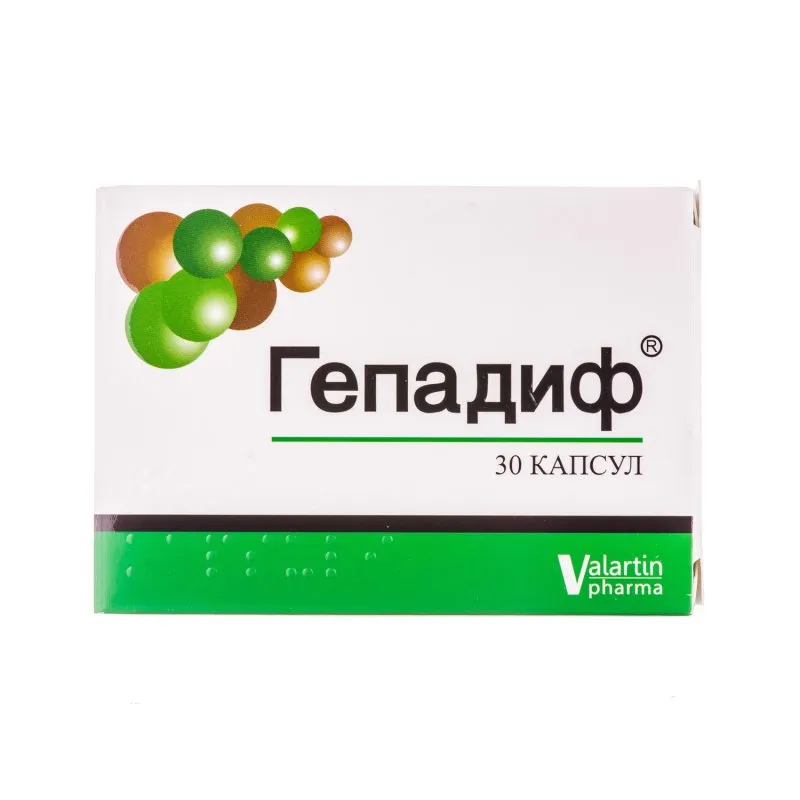
Table of Contents
INSTRUCTION for medical use of the medicinal product HEPADIF® (HEPADIF)
Composition:
Active substances: 1 capsule contains carnitine orotate 150 mg (equivalent to 73.8 mg orotic acid and 76.2 mg carnitine); 12.5 mg of detoxifying liver extract fraction (containing not less than 0.000125 mg cyanocobalamin); pyridoxine hydrochloride 25.0 mg; cyanocobalamin 0.125 mg; adenine hydrochloride 2.5 mg; riboflavin 0.5 mg.
Excipients: microcrystalline cellulose, anhydrous lactose, colloidal anhydrous silicon dioxide, magnesium stearate, gelatin, titanium dioxide (E 171), black iron oxide (E 172), red iron oxide (E 172), yellow iron oxide (E 172).
Pharmaceutical form. Capsules.
Main physicochemical properties: hard gelatin capsules with a light brown body and a dark brown cap, containing a light yellow powder with a brownish tint.
Pharmacotherapeutic group. Medicinal products affecting the digestive system and metabolic processes. Combinations with amino acids. ATC code A16AA.
Pharmacological Properties
Pharmacodynamics
Hepadif® is a combination drug whose effects are due to the combined action of its constituent components. It stimulates fat metabolism—specifically the β-oxidation of free fatty acids in hepatocyte mitochondria—and biosynthetic processes; prevents hepatocyte necrosis, normalizes hepatocyte proliferation, regulates hepatic enzyme systems, and restores normal liver function. The presence of adenine, a component of coenzymes and nucleic acids, ensures regulation of hematopoietic processes. B-complex vitamins (cyanocobalamin, riboflavin, pyridoxine) regulate redox processes and participate in protein, lipid, and carbohydrate metabolism, as well as in the metabolism of tryptophan, methionine, cysteine, glutamic acid, and other amino acids.
Pyridoxine promotes normalization of lipid metabolism and supports the function of the peripheral and central nervous systems. Cyanocobalamin participates in transmethylation processes, hydrogen transport, and the formation of methionine, nucleic acids, choline, and creatine. It helps normalize impaired functions of the liver, nervous system, and hematopoiesis, and enhances tissue regenerative capacity. Cyanocobalamin and pyridoxine reduce fatty infiltration of the liver and lower hyperhomocysteinemia. Riboflavin is a component of enzymes involved in oxygen transport and ATP production in mitochondria.
Carnitine regulates lipid metabolism, promotes the breakdown of long-chain fatty acids, and facilitates the replacement of fatty acid metabolic pathways with carbohydrates. It reduces indicators of hepatic fatty dystrophy and improves food assimilation.
The detoxifying fraction of liver extract contains essential and non-essential amino acids that participate in protein synthesis, act as donors of sulfhydryl and methyl groups, and exert detoxifying and antioxidant effects.
The drug stimulates bile secretion, supports digestion, facilitates carbohydrate absorption in the small intestine, and is necessary for maintaining normal intestinal microflora. It enhances glycogen storage, synthetic and detoxifying functions of the liver, increases cellular sensitivity to insulin, and promotes insulin secretion.
Pharmacokinetics
After oral administration, the complex of active substances is released in the duodenum. Water-soluble B-complex vitamins (cyanocobalamin, riboflavin, pyridoxine), carnitine orotate, the detoxifying liver extract fraction, and adenine hydrochloride are absorbed along the entire length of the small intestine.
Cyanocobalamin is stored primarily in the liver, as well as in the intestinal wall and kidneys. It is excreted from the liver into the intestine via bile and then reabsorbed. Riboflavin distribution in the body is uneven, with the highest concentrations found in the myocardium, liver, and kidneys. Pyridoxine is metabolized in the liver to form pharmacologically active metabolites (pyridoxal phosphate, pyridoxamine phosphate) and is distributed to muscles, liver, and the central nervous system. Elimination occurs predominantly via the kidneys.
Clinical characteristics.
Indications.
As part of complex therapy:
- Acute and chronic hepatitis, liver cirrhosis;
- Fatty liver disease (hepatic steatosis);
- Alcohol-induced liver damage;
- Intoxication due to prolonged use of antineoplastic and antituberculosis agents.
Contraindications.
Individual hypersensitivity to the components of the drug. Nephrolithiasis, erythremia, erythrocytosis, thromboembolism, peptic ulcer of the stomach and duodenum in the stage of exacerbation.
Interaction with other medicinal products and other types of interactions.
Vitamin B6 reduces the effect of levodopa and prevents or reduces toxic manifestations observed during the use of isoniazid and other antituberculosis drugs.
PAS, cimetidine, calcium preparations, ethanol reduce the absorption of vitamin B12.
Interactions due to the presence of cyanocobalamin
- Aminoglycosides, salicylates, antiepileptic drugs, colchicine, potassium preparations* reduce the absorption of the drug and affect its kinetics.
When used simultaneously with kanamycin, neomycin, polymyxins, tetracyclines, absorption of cyanocobalamin is reduced.
Pharmaceutically incompatible with ascorbic acid, heavy metal salts (inactivation of cyanocobalamin); thiamine bromide, pyridoxine, riboflavin (the cobalt ion contained in the cyanocobalamin molecule destroys other vitamins).
Thiamine – increased risk of allergic reactions caused by thiamine.
Chloramphenicol – reduces the hematopoietic response to the drug.
Cyteman – when used simultaneously, the effect of Cyteman is reduced.
Oral contraceptives – reduce the concentration of cyanocobalamin in blood.
Interactions due to the presence of pyridoxine hydrochloride
Diuretics – when used in combination with pyridoxine, the effect of diuretics is enhanced.
Hormonal contraceptives, cycloserine, penicillamine, isoniazid, hydralazine sulfate, ethionamide, immunosuppressants – when used in combination with pyridoxine, the effect of the latter is reduced.
Sedatives and hypnotics – when used in combination with pyridoxine, the hypnotic effect is reduced.
Antiparkinsonian agents – when used in combination with pyridoxine, the efficacy of drugs for the treatment of Parkinson's disease is reduced.
Phenytoin – when used in combination with pyridoxine, the effect of phenytoin is reduced.
Corticosteroids – when used in combination with pyridoxine, the amount of vitamin B6 in the body is reduced.
Glutamic acid, asparkam – when used in combination with pyridoxine, resistance to hypoxia is increased.
Cardiac glycosides – when used in combination with pyridoxine, synthesis of contractile proteins in myocardium is increased.
Tricyclic antidepressants – when used in combination with pyridoxine, the latter eliminates side effects of tricyclic antidepressants associated with their anticholinergic activity (dry mouth, urinary retention).
Resorbable chloramphenicol preparations – when used in combination with pyridoxine, the latter prevents ophthalmological complications arising from prolonged use of resorbable chloramphenicol preparations (synthomycin, chloramphenicol).
Interactions due to the presence of riboflavin
Streptomycin – riboflavin is incompatible with streptomycin.
Antibacterial agents – riboflavin reduces the effectiveness of antibacterial agents (oxytetracycline, doxycycline, erythromycin, tetracycline, and lincomycin).
Tricyclic antidepressants, imipramine, and amitriptyline – inhibit the metabolism of riboflavin, especially in cardiac tissues.
Special precautions for use.
Use with caution in patients with a history of peptic ulcer disease of the stomach and duodenum (due to possible increase in gastric juice acidity), in severe heart and kidney diseases, and in patients with tumors.
The use of the drug may lead to false-positive urobilinogen tests when using Ehrlich's reagent.
Since the drug contains lactose as an excipient, it should not be used in patients with lactase deficiency, galactosemia, or glucose-galactose malabsorption syndrome.
Cyanocobalamin must not be used concomitantly with drugs that enhance blood coagulation.
Caution and monitoring of blood coagulation are required in patients with a tendency to thrombosis and in patients with angina pectoris during treatment.
Alcoholic beverages should not be consumed during treatment.
Use during pregnancy or breastfeeding.
Negative effects of the drug during pregnancy or breastfeeding have not been reported. However, when prescribing Hepadif**®** to pregnant women or nursing mothers, the benefit of using the drug should be carefully weighed against the potential risk to the fetus/infant.
Ability to influence reaction speed when driving vehicles or operating machinery.
No adverse effects on the ability to drive vehicles or operate machinery have been reported.
Method of Administration and Dosage
Hepadif**®** is taken orally.
For adults, the recommended dose is 2 capsules 2–3 times daily, independent of food intake. Capsules should usually be swallowed whole with water. In case of swallowing difficulties, the capsule contents may be dissolved in 50 ml of juice or water. Do not dissolve in milk!
The physician may individually adjust the dosage depending on the patient's condition and disease course.
Dosage adjustment is not required for elderly patients.
The duration of treatment is determined individually by the physician and depends on the course of the underlying disease.
Children
There is no experience with the use of this medication in children.
Overdose
Symptoms: nausea, vomiting, diarrhea, and intensification of adverse reactions. Prolonged use at high doses may lead to peripheral neuropathy.
Pyridoxine hydrochloride . Prolonged use of vitamin B6 (more than 6–12 months) at doses exceeding 50 mg daily, or doses exceeding 1000 mg daily (for more than 2 months), may result in reversible peripheral sensory neuropathy. If symptoms of peripheral sensory neuropathy (paresthesia) occur, the dosage should be adjusted and, if necessary, treatment discontinued.
Neuropathies with ataxia and sensory disturbances, cerebral convulsions with EEG changes, and, in isolated cases, hypochromic anemia and seborrheic dermatitis have been reported after administration of more than 2 g daily.
Cyanocobalamin . Rarely, after oral administration of doses higher than recommended, allergic reactions, eczematous skin disorders, and benign forms of acne have been observed.
Prolonged use at high doses may lead to impaired liver enzyme activity, chest pain, and hypercoagulation.
Treatment: gastric lavage, administration of activated charcoal, and hyperosmotic laxatives.
Adverse reactions.
The drug is usually well tolerated.
Central nervous system: headache.
Skin and subcutaneous tissue: skin rash, pruritus, urticaria, angioneurotic edema.
Gastrointestinal tract: dyspepsia, abdominal pain and discomfort, nausea, vomiting, diarrhea, constipation.
Occasionally, hypersensitivity reactions may occur in individuals with increased sensitivity to any component of the drug.
Possible yellow discoloration of urine.
Shelf life.
5 years.
Do not use the drug after the expiry date stated on the package.
Storage conditions.
Store in the original packaging at a temperature not exceeding 25 °C.
Keep out of the reach of children.
Packaging.
10 capsules in a blister.
10 capsules in a blister; 3, 5 or 10 blisters in a cardboard box.
Prescription status.
Prescription only.
Manufacturer.
LLC "VALARTIN PHARMA".
Manufacturer's address.
60 Hrushevskoho St., village Chayky, Kyiv-Sviatoshyn district, Kyiv region, 08135, Ukraine.