Hemoferron
Ukraine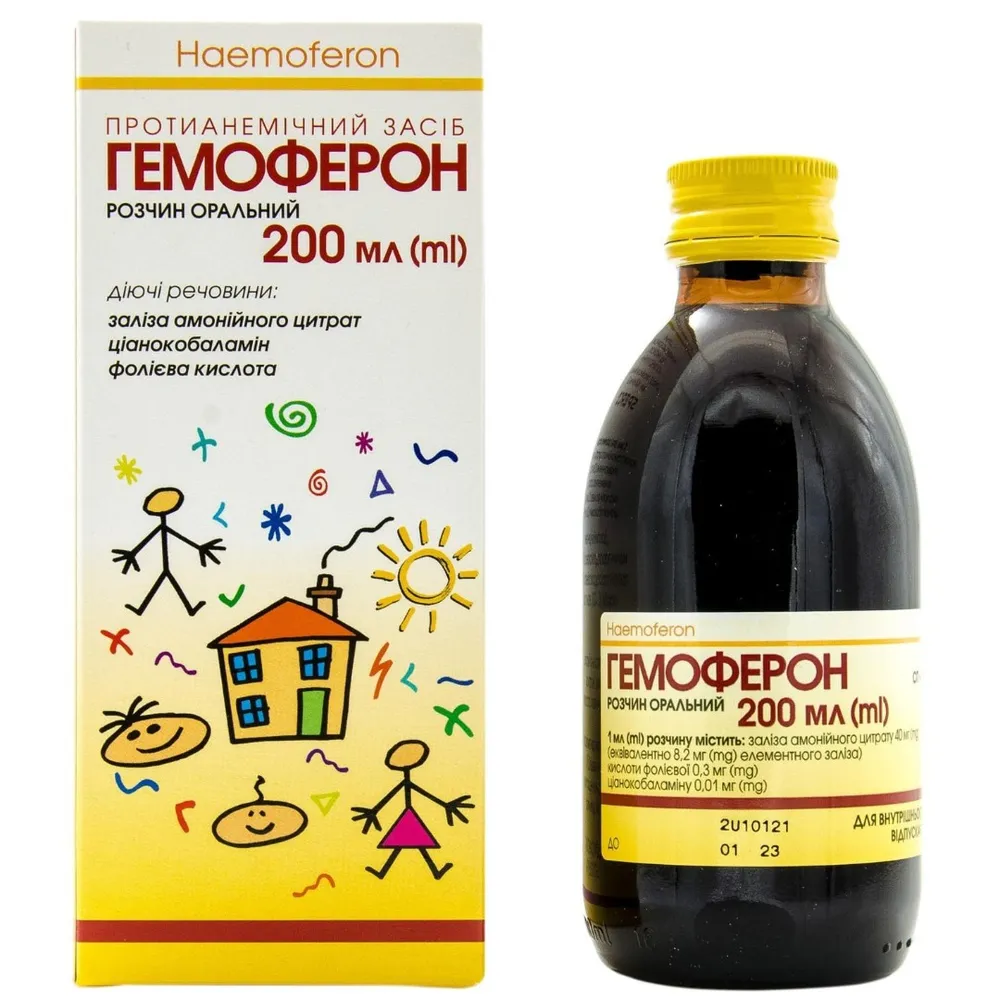
Table of Contents
INSTRUCTION FOR MEDICAL USE OF THE MEDICINAL PRODUCT HEMOFERON (HAEMOFERON)
Composition:
Active substances: 1 ml of solution contains 40 mg of ammonium iron citrate (equivalent to 8.2 mg of elemental iron), 0.3 mg of folic acid, 0.01 mg of cyanocobalamin;
Excipients: ethanol, methyl p-hydroxybenzoate (E 218), propyl p-hydroxybenzoate (E 216), sorbitol (E 420), sodium saccharin, sodium chloride, disodium edetate (EDTA), raspberry flavor, purified water.
Pharmaceutical form. Oral solution.
Main physicochemical properties: clear red-brown liquid, sweet to taste, with a characteristic raspberry odor.
Pharmacotherapeutic group. Antianaemic agents. Iron preparations in combination with other substances.
ATC code B03AE01.
Pharmacological Properties
Pharmacodynamics
Hemoferron is a balanced complex of bivalent iron, vitamin B12, and folic acid, which are essential for normal hematopoiesis in the bone marrow. Iron is a component of hemoglobin, myoglobin, and various enzymes; it reversibly binds oxygen and ensures its transport to tissues. It participates in redox reactions and stimulates erythropoiesis. The demand for iron increases significantly during periods of rapid growth, pregnancy, lactation, menstruation, and other types of bleeding.
Folic acid, together with cyanocobalamin, stimulates erythropoiesis and participates in the synthesis of amino acids, nucleotides, nucleic acids, and choline metabolism. During pregnancy, folic acid is essential for the normal development of fetal nerve fibers, protects the fetus from teratogenic factors, and plays an important role in cellular immune responses. Cyanocobalamin participates in nucleotide synthesis and is a vital factor for normal growth and development of epithelial cells, normal hematopoiesis, and maturation of erythrocytes. It is also necessary for the metabolism of folic acid and synthesis of myelin. Cyanocobalamin and folic acid together help prevent the development of megaloblastic anemia and neurological disorders.
Pharmacokinetics
When administered orally, the bivalent iron ion contained in the drug is almost completely absorbed from the gastrointestinal tract into systemic circulation. Maximum serum iron concentration is reached within 2–4 hours after administration. Iron is almost entirely bound to plasma transferrins and incorporated into the formation of hemoglobin, myoglobin, cytochrome oxidase, catalase, and peroxidase, or stored in cells of the reticuloendothelial system. The elimination half-life is approximately 12 hours. Iron is excreted in feces, urine, and sweat. Plasma protein binding of folic acid is 60–65%. Folic acid is metabolized in the liver. It is primarily excreted by the kidneys, and partially through the intestines.
Clinical characteristics.
Indications.
Treatment of iron-deficiency and folic acid-deficiency anemias of various etiologies; conditions associated with increased body requirements for iron and other components of the drug (pregnancy, breastfeeding, periods of rapid growth and sexual maturation, hypochlorhydria, acute and chronic blood loss, burns, post-gastrectomy state, celiac disease, significant weight loss).
Contraindications.
Hypersensitivity to the components of the drug.
Excessive iron accumulation in the body (hemidosiderosis, hemochromatosis) or predisposition to it.
All other types of anemias, as well as conditions not caused by iron deficiency (hypo-, aplastic and hemolytic anemias, sideroblastic anemia, iron-refractory anemia, anemia due to lead poisoning, thalassemia, hemoglobinopathies, pernicious anemia); blood transfusions, erythremia, erythrocytosis, acute thromboembolism, neoplasms, except for conditions accompanied by megaloblastic anemia, liver cirrhosis, uricoporphyria, esophageal stricture and/or other obstructive gastrointestinal disorders, acute inflammatory bowel diseases, peptic ulcer of the stomach and duodenum in the exacerbation phase, intestinal diverticulosis, intestinal obstruction, regular hemotransfusions, concomitant use of parenteral iron preparations. Abdominal pain, nausea, and vomiting of unknown etiology.
Interaction with other medicinal products and other types of interactions.
When Hemoferron is used concomitantly with antacids containing bismuth, aluminum, magnesium, calcium, or with cholestyramine, cimetidine, absorption of the drug from the gastrointestinal tract is reduced.
Solid food, black tea, coffee, dairy products, eggs, bread, raw cereals reduce iron absorption.
Antibiotics of the tetracycline group, as well as penicillamine, form complex compounds with Hemoferron, thereby decreasing iron absorption and drug efficacy.
Glucocorticoids may enhance the erythropoiesis-stimulating effect of Hemoferron.
Ascorbic acid increases iron bioavailability upon oral administration. Concurrent intake of vitamin E may reduce the pharmacological effect of iron in the body.
Iron salts reduce the bioavailability of levodopa, methyldopa, carbidopa and impair the absorption of zinc, thyroxine, sulfasalazine, DNA-gyrase inhibitors (ciprofloxacin, levofloxacin, norfloxacin, ofloxacin).
Concomitant use of iron preparations with nonsteroidal anti-inflammatory drugs (NSAIDs) may enhance the irritant effect of iron on the gastrointestinal mucosa. Iron salts reduce absorption when used simultaneously with bisphosphonates.
Folic acid absorption is reduced when taken concurrently with analgesics, anticonvulsants, sulfonamides, cytostatics (methotrexate), triamterene, trimethoprim, neomycin, polymyxins, tetracyclines.
When used concomitantly, folic acid reduces the effects of primidone, para-aminosalicylic acid (PAS), sulfasalazine, oral hormonal contraceptives, chloramphenicol, phenytoin, increasing their metabolism.
Concurrent intravenous administration of chloramphenicol may slow down iron absorption and reduce the hematopoietic effect of cyanocobalamin.
Absorption of cyanocobalamin is reduced when used concomitantly with anticonvulsants, aminosalicylic acid, oral hormonal contraceptives, kanamycin, neomycin, polymyxins, colchicine, ranitidine, potassium preparations, tetracyclines. It should also be noted that vitamin B12 may enhance allergic reactions caused by vitamin B1.
The drug is not recommended to be combined with methotrexate, disulfiram, pyrimethamine, allopurinol.
Special precautions for use.
Do not exceed the recommended doses of the drug. It is preferable to take the drug 30–40 minutes before meals, with juice or plain water. Before initiating treatment, pernicious anemia must be ruled out and the etiology of anemia established, as anemias associated with inflammatory syndromes do not respond to iron therapy. Iron-deficiency anemia may be a consequence of occult blood loss, the cause of which must be identified prior to starting treatment.
To avoid reduced iron absorption, it is not recommended to take the drug within 1–2 hours after consuming the following products: black tea, coffee, dairy products, eggs, bread, raw cereals, or mineral waters.
Hemoferron should be administered with caution in patients with chronic liver diseases (hepatitis, impaired liver function), gastrointestinal disorders (history of peptic ulcer of the stomach or duodenum, enteritis, ulcerative colitis, Crohn's disease), kidney diseases, including acute kidney infections, and in patients with rheumatoid arthritis, leukemia, or angina pectoris.
To prevent constipation, the drug should be taken with a large amount of fluid.
During treatment, darkening of the stool to black may occur, which can interfere with the diagnosis of chronic gastrointestinal bleeding. The test for occult blood (benzidine test) may occasionally yield false-positive results.
Oral iron preparations should not be combined with parenteral iron administration or repeated blood transfusions.
Serum iron and hemoglobin levels should be monitored systematically. In cases of prolonged iron therapy, the following parameters should be assessed every 4 weeks: hemoglobin, erythrocyte count, mean corpuscular volume (MCV), mean corpuscular hemoglobin (MCH), reticulocyte count, serum iron, and transferrin levels. Serum ferritin measurement allows assessment of iron accumulation: a serum ferritin level < 15 μg/L indicates absence of iron stores. During prolonged treatment, vitamin B12 levels should also be monitored.
Lack of response to treatment may be due to impaired intestinal absorption, suppressed hematopoiesis, concomitant use of certain drugs (antimetabolites), or deficiency of other vitamins.
The drug should not be used for longer than 6 months, except in cases of chronic blood loss or menorrhagia.
Use during pregnancy or breastfeeding.
The drug may be used during pregnancy and breastfeeding only under medical supervision and when iron deficiency has been confirmed by laboratory tests, without exceeding the recommended doses.
Ability to influence reaction speed when driving or operating machinery.
Caution is advised when driving or operating machinery, as dizziness may occasionally occur during treatment with this drug.
Dosage and Administration.
The medication is taken orally, preferably 30–40 minutes before meals.
The dosage should be measured using the provided measuring cup or dosing syringe.
For the treatment of iron-deficiency and folic acid-deficiency anemias, adults and children aged 12 years and older are prescribed 15–20 ml of Hemoferon solution per day.
For the treatment of iron-deficiency and folic acid-deficiency anemias in children under 12 years of age, the medication is prescribed in the following doses (see table):
| Age |
Therapeutic daily dose |
| 6–9 months |
5 ml |
| 10–12 months |
7.5 ml |
| 1–3 years |
10 ml |
| 4–6 years |
12.5 ml |
| 7–12 years |
15 ml |
The drug contains ethanol. The acceptable concentration of ethanol in medications for children is 0.5%. Therefore, the daily dose of the drug for children should be divided into two doses and mixed with one tablespoon of water.
The duration of treatment is determined individually, depending on the course and severity of the disease. The average duration of treatment is 1–3 months.
Children.
The drug can be used in children from 6 months of age.
Overdose.
Overdose symptoms may occur if the recommended doses are exceeded. A lethal dose of elemental iron is considered to be 180–300 mg/kg of body weight. However, in some patients, a dose of elemental iron of 30 mg/kg may be toxic. In younger children, the risk of acute intoxication is especially high: life-threatening intoxication may occur after ingestion of 1 g of iron sulfate.
In case of overdose, adverse reactions may intensify. Symptoms of acute iron poisoning may appear within 10–60 minutes or several hours after drug intake.
Symptoms: abdominal and epigastric pain, nausea, vomiting (sometimes with blood in the vomitus), diarrhea with green stools, followed by tarry stools, melena. These manifestations may be accompanied by pallor of the skin, acrocyanosis, cyanosis, drowsiness, weakness, cold clammy sweat, decreased arterial pressure, weak pulse, tachycardia, confusion, hyperthermia, paresthesia, necrosis of the gastrointestinal mucosa, and seizures. If no therapeutic measures are taken, shock and coma may develop within 12–48 hours, accompanied by oliguria, toxic liver failure, coagulopathy, and Cheyne-Stokes respiration pattern.
Therapeutic measures. In case of significant overdose, due to possible toxic effects, immediate assistance is required: gastric lavage with water or sodium bicarbonate solution, or phosphate-buffered solution. The patient may consume raw eggs and milk, which promote the formation of insoluble iron compounds in the gastrointestinal tract and facilitate iron elimination from the body.
If necessary, treatment of shock and acidosis should be performed. Patients with oliguria/anuria should undergo peritoneal dialysis or hemodialysis.
The best method for assessing the severity of the condition is determining serum iron concentration and serum iron-binding capacity (IBC). If serum iron levels exceed IBC, systemic poisoning is possible.
Specific therapy. Patients with symptoms of acute iron poisoning should be administered an iron antidote—deferoxamine (desferal). Chelation therapy with deferoxamine is indicated in the following cases:
- if a potentially lethal dose has been ingested—180–300 mg/kg of body weight or more;
- if serum iron concentration exceeds 400–500 µg/dL;
- if serum iron concentration exceeds IBC and/or the patient has severe symptoms of iron intoxication, such as coma or shock.
In acute poisonings, to bind unabsorbed iron, 5–10 g of deferoxamine (the contents of 10–20 vials dissolved in drinking water) should be administered orally. To remove absorbed iron, deferoxamine should be administered intramuscularly at 1–2 g every 3–12 hours. In severe cases accompanied by shock, patients should receive intravenous infusion of 1 g of the drug along with symptomatic therapy.
Adverse reactions.
Gastrointestinal disorders: epigastric pain, nausea, vomiting, diarrhea or constipation, black discoloration of feces, flatulence, discomfort (feeling of fullness) in the abdominal area, metallic taste in the mouth, tooth discoloration, loss of appetite.
Skin and subcutaneous tissue disorders: skin redness, itching and skin rashes, urticaria, acne, bullous eruptions.
Immune system disorders: hypersensitivity reactions (anaphylaxis, anaphylactic shock, bronchospasm).
Nervous system disorders: headache, dizziness, nervous excitement.
Cardiac disorders: chest pain, tachycardia.
Other: hot flushes, general weakness, sweating, hyperthermia. Prolonged unjustified use of the drug may lead to hemosiderosis.
Shelf life.
2 years.
Storage conditions.
Store at a temperature not exceeding 25 °C. Keep out of reach of children.
Packaging.
200 ml of solution in brown glass bottles, sealed with an aluminum cap, with a measuring cup and/or dosing syringe, in a cardboard box.
Prescription status.
Over-the-counter.
Manufacturer.
Ukrainian-Spanish joint venture "Sperco Ukraine".
Manufacturer's address and place of business.
21027, Vinnytsia, 600-richchia St., 25, Ukraine.
Tel.: + 38 (0432) 52-30-36. E-mail: [email protected]
www.sperco.com.ua