Gefitinib-vista
Ukraine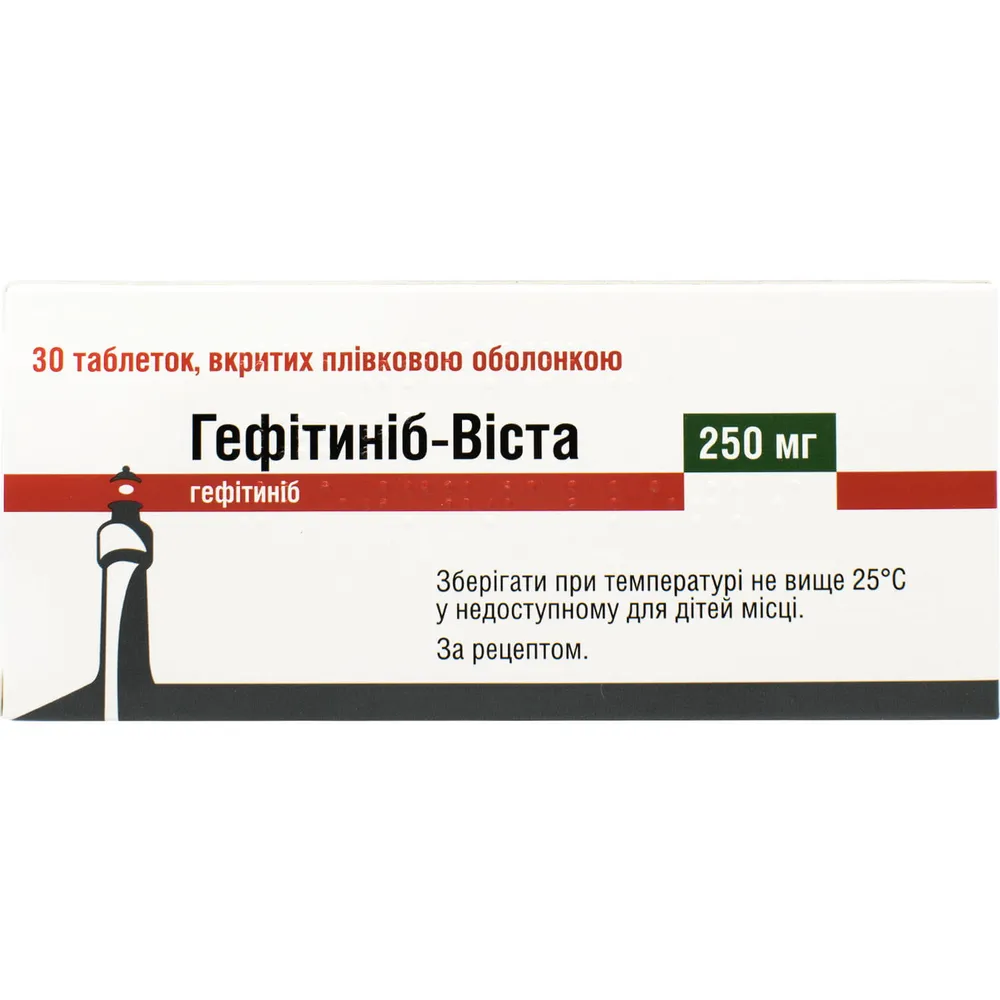
Table of Contents
INSTRUCTIONS FOR MEDICAL USE OF THE MEDICINAL PRODUCT Gefitinib-Vista (Gefitinib-Vista)
Composition:
Active substance: gefitinib;
1 tablet contains 250 mg of gefitinib;
Excipients: sodium lauryl sulfate; lactose monohydrate; microcrystalline cellulose; povidone; sodium croscarmellose; magnesium stearate; film coating: polyvinyl alcohol, polyethylene glycol 4000, talc, iron oxide red (E 172), iron oxide yellow (E 172), iron oxide black (E 172).
Pharmaceutical form. Film-coated tablets.
Main physicochemical characteristics: brown, round, biconvex, film-coated tablets with the imprint «G9FB 250» on one side.
Pharmacotherapeutic group. Protein kinase inhibitors. ATC code L01XE02.
Pharmacological properties.
Pharmacodynamics.
Mechanism of action and pharmacodynamic effects.
Epidermal growth factor (EGF) and its receptor (EGFR [HER I; ErbB I]) are key factors in the process of growth and proliferation of both healthy and cancer cells. Activating mutations in EGFR in cancer cells are an important factor promoting tumor cell growth, blocking apoptosis, increasing production of angiogenic factors, and accelerating metastasis. Gefitinib is a selective low-molecular-weight inhibitor of tyrosine kinase of epidermal growth factor receptors and an effective treatment for patients with tumors harboring activating mutations in the tyrosine kinase domains of EGFR, regardless of the line of therapy. Clinically significant activity in patients with tumors confirmed to lack EGFR mutations has not been observed.
Sensitivity to gefitinib in the presence of common activating EGFR mutations (exon 19 deletions; L858R) has been convincingly confirmed by clinical trial results; for example, the hazard ratio (HR) for progression-free survival (95% CI) was 0.489 (0.036; 0.0710) with gefitinib compared to doublet chemotherapy [WJTOG3405]. Data on sensitivity to gefitinib in patients with tumors harboring less common mutations are more variable; available evidence indicates that G719X, L861Q, and S768I mutations are sensitizing; while the T790M mutation alone or insertions in exon 20 alone are mechanisms of resistance.
Circulating tumor DNA (ctDNA).
In the IFUM clinical study, the mutation status in tumor tissue and ctDNA samples obtained from blood plasma was evaluated using the Therascreen EGFR RGQ PCR kit (Qiagen). Both ctDNA and tumor samples were analyzed in 652 out of 1060 patients. The objective response rate (ORR) in patients with mutations detected in both tumor and ctDNA was 77% (95% CI: 66–86%), and in patients with mutations detected only in tumor tissue, it was 60% (95% CI: 44–74%). In this study, sensitivity was 65.7%, specificity was 99.8%.
These data are consistent with those from a planned exploratory analysis in the Japanese subgroup of the IPASS study (Goto 2012). In that study, ctDNA obtained from blood serum, not plasma, was used to analyze EGFR mutations using the EGFR Mutation Test Kit (DxS) (N = 86). In this study, sensitivity was 43.1%, specificity was 100%.
Clinical efficacy and safety.
First-line treatment.
A randomized phase III clinical trial, IPASS, was conducted in Asia (China, Hong Kong, Indonesia, Japan, Malaysia, Philippines, Singapore, Taiwan, and Thailand) involving patients with advanced (stage IIIb or IV) non-small cell lung cancer (NSCLC) histologically confirmed as adenocarcinoma, who were either never-smokers or had a smoking history of ≤10 pack-years and had quit smoking ≥15 years prior. The study demonstrated a statistically significant improvement in progression-free survival (PFS) in favor of gefitinib compared to carboplatin/paclitaxel, with a hazard ratio (HR) of 0.74 (95% CI 0.65; 0.85), 5.7 months vs. 5.8 months, p < 0.0001. In patients with positive EGFR mutation status, there was a significant advantage in objective response rate (ORR) of 71.2% vs. 47.3% (95% CI 12.0; 34.9%) and in PFS with HR of 0.48 (95% CI 0.36; 0.64), 9.5 months vs. 6.3 months, p < 0.0001. Quality of life outcomes varied according to EGFR mutation status. In patients with EGFR mutations, significantly more patients treated with gefitinib reported improved quality of life and symptom relief from lung cancer compared to those receiving carboplatin/paclitaxel.
In the IPASS study, gefitinib demonstrated superior PFS, ORR, quality of life, and symptom relief without a significant difference in overall survival compared to carboplatin/paclitaxel in previously untreated patients with locally advanced or metastatic NSCLC whose tumors harbored activating tyrosine kinase mutations of EGFR.
Previously treated patients.
A randomized phase III clinical trial, INTEREST, was conducted in patients with locally advanced or metastatic NSCLC who had previously received platinum-based chemotherapy. In the overall population, there was no statistically significant difference between gefitinib and docetaxel (75 mg/m²) in terms of overall survival, progression-free survival, or objective response rate.
In the subgroup of non-Asian patients, no significant difference in overall survival was observed between the gefitinib and docetaxel (75 mg/m²) groups.
However, in the subgroup of patients with EGFR mutations, gefitinib showed a significant advantage in objective response rate.
A randomized phase III trial, ISEL, was conducted in patients with advanced NSCLC who had previously received 1 or 2 chemotherapy regimens and were refractory or intolerant to the most recent treatment. Gefitinib plus best supportive care was compared to placebo plus best supportive care. Gefitinib did not prolong survival in the overall population. Survival outcomes varied depending on smoking status and ethnicity.
An uncontrolled multicenter study, IFUM, was conducted in Caucasian patients (n=106) with NSCLC harboring activating, sensitizing EGFR mutations to confirm similar efficacy of gefitinib in Caucasian and Asian populations. Investigator-assessed ORR was 70%, and median PFS was 9.7 months. These data are comparable to those reported in the IPASS study.
EGFR mutation status and clinical characteristics.
In a multivariate analysis of 786 Caucasian patients enrolled in gefitinib studies, clinical characteristics such as never-smoking status, histologically confirmed adenocarcinoma, and female sex were identified as independent prognostic factors for positive EGFR mutation status. Patients of Asian ethnicity also have a higher frequency of tumors with EGFR mutations.
Pharmacokinetics.
Absorption.
After oral administration, gefitinib is absorbed relatively slowly, with peak plasma concentrations typically reached within 3–7 hours after dosing. The mean absolute bioavailability in cancer patients is 59%. Food intake does not significantly affect gefitinib exposure. In a study involving healthy volunteers with gastric pH maintained above 5, gefitinib exposure decreased by 47%, likely due to reduced gastric solubility of gefitinib (see sections "Special precautions for use" and "Interaction with other medicinal products and other forms of interaction").
Distribution.
The mean volume of distribution at steady state for gefitinib is 1400 L, indicating extensive tissue distribution. Plasma protein binding is approximately 90%. Gefitinib binds to serum albumin and alpha-1 acid glycoprotein. In vitro studies indicate that gefitinib is a substrate for the membrane transport protein P-gp.
Biotransformation.
In vitro data indicate that CYP3A4 and CYP2D6 are the main cytochrome P450 isoenzymes responsible for the oxidative metabolism of gefitinib.
In vitro studies have shown that gefitinib has limited potential to inhibit CYP2D6. Gefitinib did not demonstrate the ability to induce enzymes in animal experiments and did not significantly inhibit (in vitro) any other cytochrome P450 enzymes.
In humans, gefitinib undergoes extensive metabolism. Five metabolites were fully characterized in excreta, and eight metabolites were identified in plasma. The main identified metabolite was O-desmethyl gefitinib, which is 14 times less potent than gefitinib in inhibiting EGFR-stimulated cell growth and does not inhibit tumor growth in mice. Therefore, its contribution to the clinical activity of gefitinib is considered unlikely. In vitro studies have shown that formation of O-desmethyl gefitinib involves CYP2D6. The role of CYP2D6 in the metabolic clearance of gefitinib was evaluated in a clinical study involving healthy volunteers genotyped for CYP2D6 status. In poor metabolizers, O-desmethyl gefitinib was not detected at measurable concentrations. Exposure levels of gefitinib in both groups (poor and extensive metabolizers) were broad and partially overlapping, but mean gefitinib exposure was twice as high in poor metabolizers. Increased average exposure in individual patients lacking active CYP2D6 may be clinically relevant, as adverse effects are dose- and exposure-dependent.
Elimination.
Gefitinib is primarily eliminated as metabolites in feces; less than 4% of the administered dose is excreted in urine as gefitinib and its metabolites.
The total plasma clearance of gefitinib in cancer patients is approximately 500 ml/min, and the mean terminal half-life is 41 hours. Once-daily administration of gefitinib results in accumulation by 2–8 times, with steady-state exposure achieved after 7–10 doses. At steady state, plasma concentrations of gefitinib are typically 2–3 times higher than after a single 24-hour dose.
Special patient groups.
Population pharmacokinetic analysis in cancer patients showed no dependence of predicted minimum steady-state concentration on patient age, body weight, sex, ethnicity, or creatinine clearance (above 20 ml/min).
Hepatic impairment.
In an open-label phase I study, a single 250 mg dose of gefitinib was administered to patients with mild, moderate, or severe hepatic impairment due to cirrhosis (Child–Pugh classification). Increased gefitinib exposure was observed in all groups compared to healthy volunteers. In patients with moderate and severe hepatic impairment, gefitinib exposure increased on average by 3.1 times. None of the patients had cancer, but all had cirrhosis and some had hepatitis. This increase in exposure may be clinically relevant, as adverse reactions are dependent on gefitinib dose and exposure.
Gefitinib was evaluated in a clinical study involving 41 patients with solid tumors and normal or moderate to severe hepatic impairment (classified according to baseline AST, alkaline phosphatase, and bilirubin levels) due to liver metastases. It was found that after daily administration of 250 mg gefitinib, time to steady state, total plasma clearance (CmaxSS), and steady-state exposure (AUC24SS) were similar in patients with normal and moderate hepatic impairment. Data from 4 patients with severe hepatic impairment due to liver metastases suggest that steady-state exposures in these patients are also similar to those in patients with normal hepatic function.
Clinical characteristics.
Indications.
Treatment of adult patients with locally advanced or metastatic non-small cell lung cancer (NSCLC) harboring activating EGFR-TK (epidermal growth factor receptor tyrosine kinase) mutations.
Contraindications.
Hypersensitivity to the active substance or to any of the excipients.
Breastfeeding (see section "Use during pregnancy or breastfeeding").
Interaction with other medicinal products and other forms of interaction.
Metabolism of gefitinib is mediated primarily by the cytochrome P450 isoenzyme CYP3A4, and to a lesser extent by CYP2D6.
Medicinal substances that may increase plasma concentrations of gefitinib.
In vitro studies have shown that gefitinib is a substrate of P-glycoprotein (P-gp). Available data do not indicate any clinical consequences of these in vitro findings. Substances that inhibit CYP3A4 may reduce the clearance of gefitinib. Concomitant administration of potent CYP3A4 inhibitors (e.g., ketoconazole, posaconazole, voriconazole, protease inhibitors, clarithromycin, telithromycin) may increase plasma concentrations of gefitinib. This increase may be clinically significant, as adverse reactions are dose- and exposure-dependent. The increase in concentration may be greater in certain patients with the CYP2D6 poor metabolizer genotype. Prior treatment with itraconazole (a potent CYP3A4 inhibitor) resulted in an 80% increase in the mean AUC of gefitinib in healthy volunteers. Patients receiving concomitant potent CYP3A4 inhibitors should be closely monitored for the development of adverse reactions to gefitinib. Data on concomitant use of CYP2D6 inhibitors are lacking, but potent inhibitors of this enzyme may increase plasma concentrations of gefitinib approximately two-fold in CYP2D6 extensive metabolizers (see section "Pharmacological properties. Pharmacokinetics"). If concomitant treatment with a potent CYP2D6 inhibitor is initiated, patients should be closely monitored for the development of adverse reactions.
Medicinal substances that may reduce plasma concentrations of gefitinib.
Substances that induce CYP3A4 activity may enhance the metabolism and reduce the plasma concentration of gefitinib, thereby decreasing its efficacy. Concomitant use of medicinal products that induce CYP3A4 (e.g., phenytoin, carbamazepine, rifampicin, barbiturates, or St. John’s wort) should be avoided. Prior treatment with rifampicin (a potent CYP3A4 inducer) resulted in an 83% reduction in the mean AUC of gefitinib in healthy volunteers (see section "Special precautions for use"). Substances that cause a pronounced and sustained increase in gastric pH may reduce the plasma concentration of gefitinib and thus reduce its efficacy. Such an effect may occur with high-dose, short-acting antacids when administered regularly at approximately the same time as gefitinib. Concomitant administration of gefitinib and ranitidine at doses that cause a sustained increase in gastric pH ≥ 5 resulted in a 47% reduction in the mean AUC of gefitinib in healthy volunteers (see sections "Special precautions for use" and "Pharmacological properties. Pharmacokinetics").
Medicinal substances whose plasma concentrations may be altered by gefitinib.
In vitro studies have shown that gefitinib may moderately inhibit CYP2D6. In a clinical study involving patients, gefitinib was administered concomitantly with metoprolol (a CYP2D6 substrate), resulting in a 35% increase in metoprolol exposure. For CYP2D6 substrates with a narrow therapeutic index, such an increase may be clinically significant. When CYP2D6 substrates are used in combination with gefitinib, the dose of the CYP2D6 substrate should be adjusted, particularly for medicinal products with a narrow therapeutic window.
Gefitinib inhibits the BCRP transporter protein in vitro, but the clinical significance of this effect is unknown.
Other possible interactions.
Increased INR and/or bleeding events have been reported in some patients receiving concomitant warfarin (see section "Special precautions for use").
Special precautions for use.
When considering the use of gefitinib for the treatment of locally advanced or metastatic NSCLC, it is essential to evaluate the presence of EGFR mutations in tumour tissue in all patients. If tumour tissue is not available for analysis, circulating tumour DNA (ctDNA) obtained from blood (plasma) may be used. Only reliable, well-validated, and sensitive method(s) should be used to detect EGFR mutations in tumour tissue or ctDNA to avoid false-negative or false-positive results (see section "Pharmacological properties. Pharmacodynamics").
Interstitial lung disease (ILD).
ILD occurred in 1.3% of patients receiving gefitinib, sometimes with acute onset and, in some cases, resulting in fatal outcomes (see section "Adverse reactions"). If respiratory symptoms such as dyspnoea, cough, or fever worsen, the drug should be discontinued immediately and the patient should be promptly investigated. If ILD is confirmed, gefitinib should be discontinued and appropriate treatment initiated.
In a case-control pharmacoepidemiological study conducted in Japan involving 3159 NSCLC patients treated with gefitinib or chemotherapy and followed for up to 12 weeks, the following risk factors for ILD development were identified (regardless of whether patients received Gefitinib-Vista or chemotherapy): smoking, poor performance status (PS ≥ 2), reduced normal lung volume on computed tomography (≤ 50%), recent NSCLC diagnosis (< 6 months), prior ILD, advanced age (≥ 55 years), and concomitant heart disease. The increased risk of ILD with gefitinib compared to chemotherapy was primarily observed during the first 4 weeks of treatment (adjusted OR 3.8; 95% CI 1.9–7.7); thereafter, the relative risk decreased (adjusted OR 2.5; 95% CI 1.1–5.8). The risk of mortality among patients with ILD was higher in those receiving Gefitinib-Vista or chemotherapy if they had the following risk factors: smoking, reduced normal lung volume on CT (≤ 50%), prior ILD, advanced age (≥ 65 years), and extensive pleural contact areas (≥ 50%).
Hepatotoxicity and liver function impairment.
Although abnormalities in liver function tests (including elevated levels of alanine aminotransferase (ALT), aspartate aminotransferase (AST), and bilirubin) have been observed, they rarely indicated hepatitis (see section "Adverse reactions"). In isolated cases, liver failure was reported, sometimes leading to fatal outcomes. Therefore, periodic monitoring of liver function is recommended. Gefitinib should be used with caution in patients with mild or moderate liver function impairment. If liver function abnormalities are severe, discontinuation of gefitinib therapy should be considered.
It has been established that liver dysfunction due to cirrhosis leads to increased plasma concentrations of gefitinib (see section "Pharmacological properties. Pharmacokinetics").
Interaction with other medicinal products.
Inducers of CYP3A4 may enhance the metabolism of gefitinib and reduce its plasma concentration. Therefore, concomitant administration of CYP3A4 inducers (e.g., phenytoin, carbamazepine, rifampicin, barbiturates, or herbal preparations containing St. John’s wort) may reduce the efficacy of treatment, and such combinations should be avoided (see section "Interaction with other medicinal products and other forms of interaction").
In some patients who are CYP2D6 poor metabolizers, treatment with strong CYP3A4 inhibitors may lead to increased plasma levels of gefitinib. Close monitoring for adverse reactions to gefitinib is recommended when initiating therapy with CYP3A4 inhibitors (see section "Interaction with other medicinal products and other forms of interaction").
In some patients receiving warfarin concomitantly with gefitinib, increases in international normalized ratio (INR) and/or bleeding events have been reported (see section "Interaction with other medicinal products and other forms of interaction"). Patients receiving warfarin and gefitinib concomitantly should have their prothrombin time (PT) or INR monitored regularly.
Medicinal products that cause marked and sustained increases in gastric pH, such as proton pump inhibitors and H2-receptor antagonists, may reduce the bioavailability and plasma concentration of gefitinib, thereby potentially reducing its efficacy. A similar effect may occur with antacids if used regularly at approximately the same time as gefitinib (see sections "Interaction with other medicinal products and other forms of interaction" and "Pharmacological properties. Pharmacokinetics").
Data from phase II clinical trials combining gefitinib with vinorelbine suggest that gefitinib may potentiate the neutropenic effects of vinorelbine.
Additional warnings and precautions.
Patients should be advised to seek immediate medical attention if they develop severe or persistent diarrhoea, nausea, vomiting, or anorexia, as these may lead to dehydration. Management should be based on clinical presentation (see section "Adverse reactions").
Patients experiencing acute onset or worsening signs and symptoms of keratitis, such as eye inflammation, lacrimation, photophobia, blurred vision, eye pain, and/or eye redness, should be referred immediately to an ophthalmologist.
If ulcerative keratitis is diagnosed, gefitinib treatment should be discontinued. If symptoms persist or recur after resuming gefitinib therapy, permanent discontinuation of the drug should be considered.
In phase I/II clinical trials evaluating gefitinib in combination with radiotherapy in paediatric patients with newly diagnosed brainstem glioma or incompletely resected supratentorial malignant glioma, intracranial haemorrhage was reported in 4 out of 45 patients (1 fatal). Another case of CNS haemorrhage was reported in a child with ependymoma in a separate gefitinib monotherapy trial. An increased risk of intracranial haemorrhage in adult NSCLC patients receiving gefitinib has not been established.
Gastrointestinal perforation has been reported in patients receiving gefitinib. In most cases, this was associated with other known risk factors, including concomitant use of corticosteroids or NSAIDs, history of gastrointestinal ulcers, advanced age, smoking, or intestinal metastases at the site of perforation.
Any unused medicinal product or waste material should be disposed of in accordance with local requirements.
Important information on excipients.
Lactose. Each tablet contains 163.5 mg of lactose (as monohydrate). This medicinal product is contraindicated in patients with rare hereditary conditions of galactose intolerance, Lapp lactase deficiency, or glucose-galactose malabsorption.
Use during pregnancy or breastfeeding.
Women of childbearing potential.
Women of childbearing potential should avoid pregnancy during treatment.
Pregnancy.
There are no data on the use of gefitinib in pregnant women. Reproductive toxicity has been observed in animal studies. The potential risk to humans is unknown. The medicinal product should not be used during pregnancy except in cases of clear necessity.
Breastfeeding.
It is unknown whether gefitinib is excreted in human breast milk. Gefitinib and its metabolites have been shown to accumulate in the milk of lactating rats. Gefitinib is contraindicated in women who are breastfeeding, and breastfeeding should be discontinued during treatment with gefitinib (see section "Contraindications").
Effect on ability to drive and use machines.
Fatigue has been reported during treatment with gefitinib. Patients experiencing symptoms of fatigue should exercise caution when driving or operating machinery.
Method of Administration and Dosage
Treatment with Gefitinib-Vista should be initiated and supervised by a physician experienced in the use of anticancer medicinal products.
Dosage.
The recommended dose of the medicinal product is 250 mg once daily. If a dose is missed, it should be taken as soon as the patient remembers. If less than 12 hours remain before the next scheduled dose, the missed dose should not be taken. A double dose (two doses at the same time) should not be taken to compensate for a missed dose.
Hepatic impairment.
In patients with moderate and severe hepatic impairment (Child–Pugh class B or C) due to cirrhosis, plasma concentrations of gefitinib were increased. Such patients should be closely monitored for the occurrence of adverse reactions. In patients with elevated levels of aspartate aminotransferase (AST), alkaline phosphatase, or bilirubin due to liver metastases, plasma concentrations of gefitinib were not increased (see section "Pharmacological Properties. Pharmacokinetics").
Renal impairment.
Dose adjustment is not required in patients with renal impairment and creatinine clearance > 20 ml/min. Data in patients with creatininе clearance ≤ 20 ml/min are limited; therefore, gefitinib should be used with caution in these patients (see section "Pharmacological Properties. Pharmacokinetics").
Elderly patients.
Dose adjustment of gefitinib based on age is not required (see section "Pharmacological Properties. Pharmacokinetics").
Poor CYP2D6 metabolizers.
Special dose adjustment is not required in patients with a known genotype of poor CYP2D6 metabolizers; however, such patients should be closely monitored for the development of adverse reactions (see section "Pharmacological Properties. Pharmacokinetics").
Dose adjustment due to toxicity.
In patients with severe diarrhea or severe skin-related adverse reactions, temporary interruption of treatment (up to 14 days) may be considered, after which gefitinib administration should be resumed at a dose of 250 mg (see section "Adverse Reactions"). If patients poorly tolerate treatment after temporary discontinuation, gefitinib should be discontinued and alternative treatment options should be considered.
Method of Administration.
Tablets should be taken orally, independent of food intake, approximately at the same time each day. The tablet may be swallowed whole with water, or if it is difficult to swallow the whole tablet, it may be dissolved in water (non-carbonated). Other liquids should not be used. The tablet should be placed in half a glass of drinking water without crushing. The water in the glass should be shaken until the tablet dissolves (this may take up to 20 minutes). The solution should be consumed immediately after the tablet has dissolved (within 60 minutes). Another half-glass of water should be added to rinse the glass, and this water should also be consumed. The solution may also be administered via a nasogastric or gastrostomy tube.
Children.
The safety and efficacy of the medicinal product in children and adolescents (under 18 years of age) have not been established. The use of gefitinib in pediatric patients with NSCLC is not considered appropriate.
Overdose.
Symptoms.
There is no specific antidote for gefitinib overdose. However, in phase I clinical trials, a limited number of patients were treated with daily doses up to 1000 mg. An increase in the frequency and severity of certain adverse reactions, predominantly diarrhea and skin rash, was observed.
Treatment.
In case of adverse reactions due to overdose, symptomatic treatment should be administered; in particular, severe diarrhea should be managed according to clinical guidelines. In one study, a limited number of patients received weekly doses ranging from 1500 mg to 3500 mg. In this study, increasing the dose did not lead to increased gefitinib exposure, and adverse events were mostly mild to moderate in severity and consistent with the known safety profile of gefitinib.
Adverse reactions
Based on data from the combined database of Phase III clinical trials ISEL, INTEREST, and IPASS (involving 2462 patients treated with gefitinib), the most commonly reported adverse reactions (ARs) occurring in more than 20% of patients were diarrhea and skin reactions (including rash, acne, dry skin, and pruritus). ARs usually developed within the first month of treatment and were generally reversible. Severe ARs (Common Toxicity Criteria [CTC] grade 3 or 4) occurred in approximately 8% of patients. Treatment was discontinued due to ARs in approximately 3% of patients.
Interstitial lung disease (ILD) was observed in 1.3% of patients and was often severe (CTC grade 3–4). Cases with fatal outcomes have been reported.
The table below presents the safety profile based on the gefitinib clinical development program and post-marketing surveillance data. The adverse reactions in the table are listed by frequency, based on reports of comparable adverse events from the combined database of Phase III clinical trials ISEL, INTEREST, and IPASS (involving 2462 patients treated with gefitinib).
The frequency of adverse effects is categorized as follows: very common (≥ 1/10); common (≥ 1/100 to < 1/10); uncommon (≥ 1/1000 to < 1/100); rare (≥ 1/10,000 to < 1/1000); very rare (< 1/10,000); frequency not known (cannot be estimated from available data).
Within each frequency category, adverse effects are listed in order of decreasing severity.
Adverse reactions by system organ class and frequency
| Metabolism and nutrition disorders |
Very common |
Mild or moderate anorexia (CTC grade 1 or 2). |
| Eye disorders |
Common |
Conjunctivitis, blepharitis and dry eyes*, predominantly mild (CTC grade 1). |
| Uncommon |
Reversible corneal erosion, sometimes associated with abnormal eyelash growth. |
|
| Keratitis (0.12%). |
||
| Vascular disorders |
Common |
Bleeding, such as epistaxis and haematuria. |
| Respiratory, thoracic and mediastinal disorders |
Common |
Interstitial lung disease (1.3%), often severe (CTC grade 3–4). Fatal cases have been reported. |
| Gastrointestinal disorders |
Very common |
Diarrhoea, predominantly mild or moderate (CTC grade 1 or 2). |
| Vomiting, predominantly mild or moderate (CTC grade 1 or 2). |
||
| Nausea, predominantly mild (CTC grade 1). |
||
| Stomatitis, predominantly mild (CTC grade 1). |
||
| Common |
Dehydration due to diarrhoea, nausea, vomiting or anorexia. |
|
| Dry mouth*, predominantly mild (CTC grade 1). |
||
| Uncommon |
Pancreatitis; gastrointestinal perforation. |
|
| Hepatobiliary disorders |
Very common |
Increased alanine aminotransferase levels, predominantly mild to moderate. |
| Common |
Increased aspartate aminotransferase levels, predominantly mild to moderate. |
|
| Increased bilirubin levels, predominantly mild to moderate. |
||
| Uncommon |
Hepatitis***. |
|
| Skin and subcutaneous tissue disorders |
Very common |
Skin reactions, predominantly mild or moderate (CTC grade 1 or 2), pustular rash, sometimes pruritus with dry skin, including skin fissures on a background of erythema. |
| Common |
Nail changes. |
|
| Alopecia. |
||
| Allergic reactions**, including angioedema and urticaria. |
||
| Uncommon |
Palmar-plantar erythrodysesthesia syndrome. |
|
| Rare |
Bullous disorders, including toxic epidermal necrolysis, Stevens-Johnson syndrome and erythema multiforme. |
|
| Skin vasculitis. |
||
| Renal and urinary disorders |
Common |
Asymptomatic increase in blood creatinine in laboratory tests. |
| Proteinuria. |
||
| Cystitis. |
||
| Rare |
Haemorrhagic cystitis. |
|
| General disorders and administration site conditions |
Very common |
Asthenia, predominantly mild (CTC grade 1). |
| Common |
Fever. |
The frequency of adverse reactions related to changes in laboratory parameters is based on data from patients in whom changes in the relevant laboratory parameters from baseline were of grade 2 or higher according to CTC.
*This adverse reaction may occur in combination with other dryness-related conditions (predominantly skin reactions) observed during gefitinib treatment.
**The overall frequency of such adverse reactions as allergic reactions, according to pooled data from clinical trials ISEL, INTEREST, and IPASS, was 1.5% (36 patients). Data from 14 out of 36 patients were excluded when determining the frequency, as there were signs of non-allergic etiology of the reactions or the allergy was caused by treatment with other medicinal products.
***Includes individual reports of hepatic failure, which sometimes led to fatal outcomes.
Interstitial lung disease (ILD)
In the INTEREST clinical trial, the incidence of ILD-like events was 1.4% (10) in the group of patients receiving gefitinib, compared to 1.1% (8) in the group receiving docetaxel. One case of ILD in a patient receiving gefitinib was fatal.
In the ISEL clinical trial, the incidence of ILD-like events in most patients was approximately 1% in both treatment groups. Most cases of ILD-like events occurred in patients of Asian origin. The incidence of ILD among patients of Asian origin receiving gefitinib and placebo was approximately 3% and 4%, respectively. One case of ILD in a patient receiving placebo was fatal.
In a post-marketing surveillance study in Japan (involving 3,350 patients), the incidence of ILD-like events in patients receiving gefitinib was 5.8%. The proportion of ILD-like events with fatal outcomes was 38.6%.
In the Phase III open-label clinical trial (IPASS) involving 1,217 patients, comparing gefitinib with dual carboplatin/paclitaxel chemotherapy as first-line treatment in selected patients with advanced NSCLC in Asia, the incidence of ILD-like events was 2.6% in the gefitinib treatment group compared to 1.4% in the carboplatin/paclitaxel chemotherapy group.
Reporting suspected adverse reactions
Reporting suspected adverse reactions after marketing authorization is important. It allows continuous monitoring of the benefit-risk balance of the medicinal product. Healthcare professionals, as well as patients or their legal representatives, should report all cases of suspected adverse reactions and lack of efficacy through the Automated Pharmacovigilance Information System at the following link: https://aisf.dec.gov.ua
Shelf life. 3 years.
Storage conditions.
Store at temperatures not exceeding 25°C, in a place inaccessible to children.
Packaging.
10 tablets per blister pack, 3 blisters per cardboard box.
Prescription status.
Prescription only.
Manufacturer.
Sicor Hispania, S.L.
Manufacturer's address and location of operations.
C/Castello, n°1, Sant Boi de Llobregat, Barcelona, 08830, Spain.