Gaziva
Ukraine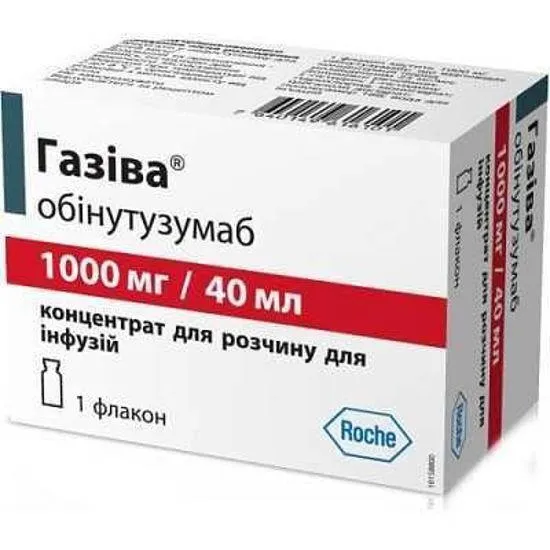
Table of Contents
- INSTRUCTION FOR MEDICAL USE OF THE MEDICINAL PRODUCT Gazyva® (Gazyva®)
- Composition:
- Pharmacological Properties.
- Clinical characteristics.
- Special precautions for use.
- Method of Administration and Dosage
- Adverse Reactions
- Only reactions with the highest frequency observed in the studies (based on studies BO21004/untreated CLL, BO21223/untreated advanced iNHL, and GAO4753g/rituximab-refractory iNHL) are listed.
INSTRUCTION FOR MEDICAL USE OF THE MEDICINAL PRODUCT Gazyva® (Gazyva®)
Composition:
Active substance: obinutuzumab;
1 vial contains 1000 mg of obinutuzumab, corresponding to a concentration of 25 mg/mL prior to dilution;
Excipients: L-histidine; L-histidine hydrochloride monohydrate; trehalose dihydrate; poloxamer 188; water for injections.
Pharmaceutical form. Concentrate for solution for infusion.
Main physicochemical properties: liquid.
Pharmacotherapeutic group.
Antineoplastic agents. Monoclonal antibodies and antibody-drug conjugates. CD20 (cluster of differentiation 20) inhibitors.
ATC code L01F A03.
Pharmacological Properties.
Pharmacodynamics.
Obinutuzumab is a humanized monoclonal anti-CD20 antibody of type II subclass IgG1, obtained by humanization of the parental murine antibody B-Ly1 and produced using recombinant DNA technology in a Chinese hamster ovary cell line.
Mechanism of action
Obinutuzumab is a recombinant, glycoengineered, humanized monoclonal anti-CD20 antibody of type II isotype IgG1. It specifically targets the extracellular loop of the transmembrane CD20 antigen on the surface of both benign and malignant pre-B and mature B-lymphocytes, but not on hematopoietic stem cells, pro-B-lymphocytes, normal plasma cells, or other normal tissues. Glycoengineering of the Fc region of obinutuzumab results in higher affinity for FcɣRIII receptors on immune effector cells such as natural killer (NK) cells, macrophages, and monocytes, compared to antibodies that have not undergone glycoengineering.
In preclinical studies, obinutuzumab induces direct cell death and mediates antibody-dependent cellular cytotoxicity (ADCC) and antibody-dependent cellular phagocytosis (ADCP) through engagement of FcɣRIII-positive immune effector cells. Additionally, in in vivo settings, obinutuzumab mediates low-level complement-dependent cytotoxicity (CDC). Compared to type I antibodies, obinutuzumab, as a type II antibody, demonstrates enhanced ability to induce direct cell death with concomitant reduction in CDC activity at equivalent doses. As a glycoengineered antibody, obinutuzumab exhibits increased antibody-dependent cellular cytotoxicity (ADCC) and phagocytosis (ADCP, antibody-dependent cellular phagocytosis) compared to non-glycoengineered antibodies at equivalent doses. In animal models, obinutuzumab mediates potent B-cell depletion and antitumor efficacy.
In the pivotal clinical trial involving patients with CLL (BO21004/CLL11), B-cell depletion (defined as reduction in CD19+ B-lymphocytes to < 0.07 × 10⁹/L) was observed in 91% (40 out of 44 evaluable patients) who received Gazyva® at the end of the treatment period; B-cell depletion persisted during the first 6 months of follow-up. B-cell recovery was observed in 35% (14 out of 40) of patients without disease progression and in 13% (5 out of 40) of patients with disease progression during the 12–18 month follow-up period.
In the pivotal clinical trial involving patients with indolent NHL (GAO4753/GADOLIN), B-cell depletion was observed in 97% (171 out of 176 evaluable patients) who received Gazyva® at the end of the treatment period, and B-cell depletion persisted in 97% (61 out of 63 evaluable patients) for more than 6 months after the last dose. B-cell recovery was observed during the 12–18 month follow-up period in 11% (5 out of 46 evaluable patients).
Pharmacokinetics.
A population pharmacokinetic model was developed based on pharmacokinetic (PK) data from 469 patients with indolent non-Hodgkin’s lymphoma (iNHL), 342 patients with chronic lymphocytic leukemia (CLL), and 130 patients with diffuse large B-cell lymphoma, who participated in Phase I, II, and III studies receiving either obinutuzumab alone or obinutuzumab in combination with chemotherapy.
Absorption
Obinutuzumab is administered intravenously; therefore, the concept of absorption does not apply. Studies investigating other routes of administration have not been conducted. According to the population PK model, after infusion on Day 1 of Cycle 6, the calculated median Cmax was 465.7 µg/mL and AUC(τ) was 8961 µg•day/mL in patients with CLL. In patients with iNHL, the calculated median Cmax was 539.3 µg/mL and AUC(τ) was 10956 µg•day/mL.
Distribution
Following intravenous administration, the volume of distribution of the central compartment (2.98 L in patients with CLL and 2.97 L in patients with iNHL) is approximately equivalent to plasma volume, indicating that distribution is largely confined to plasma and interstitial fluid.
Biotransformation
The metabolism of obinutuzumab has not been directly studied. Antibodies are primarily eliminated via catabolism.
Elimination
The clearance of obinutuzumab was approximately 0.11 L/day in patients with CLL and 0.08 L/day in patients with iNHL, with a median elimination t½ of 26.4 days in patients with CLL and 36.8 days in patients with iNHL. Obinutuzumab elimination occurs via two parallel pathways: a linear clearance pathway and a time-dependent nonlinear clearance pathway. At the beginning of treatment, the time-dependent nonlinear clearance pathway predominates and accounts for the majority of clearance. As treatment continues, the linear clearance pathway becomes dominant. This suggests target-mediated drug disposition (TMDD), where an initial excess of CD20 cells causes rapid removal of obinutuzumab from circulation. However, once most CD20 cells are bound by obinutuzumab, the impact of TMDD on pharmacokinetics is minimized.
Pharmacokinetic-pharmacodynamic relationship
In the population pharmacokinetic analysis, sex was identified as a covariate explaining some inter-patient variability, with males showing a 22% higher steady-state clearance (CLss) and a 19% higher volume of distribution (V). However, results from the population analysis demonstrated that differences in exposure are not clinically significant (during Cycle 6 of treatment, calculated median AUC and Cmax values in patients with CLL were 11282 µg•day/mL and 578.9 µg/mL in females versus 8451 µg•day/mL and 432.5 µg/mL in males, respectively; in patients with iNHL, AUC and Cmax were 13172 µg•day/mL and 635.7 µg/mL in females versus 9769 µg•day/mL and 481.3 µg/mL in males, respectively), indicating no need for dose adjustment based on patient sex.
Elderly patients
Population pharmacokinetic analysis of obinutuzumab showed that patient age does not influence the pharmacokinetics of obinutuzumab. No significant differences were observed in the pharmacokinetics of obinutuzumab between patients aged < 65 years (n = 375), 65–75 years (n = 265), and > 75 years (n = 171).
Children
Pharmacokinetic studies of obinutuzumab in children have not been conducted.
Renal impairment
Population pharmacokinetic analysis of obinutuzumab showed that creatinine clearance does not affect its pharmacokinetics. The pharmacokinetics of obinutuzumab in patients with mild (creatinine clearance (CrCl) 50–89 mL/min, n = 464) and moderate (CrCl 30–49 mL/min, n = 106) renal impairment were similar to those in patients with normal renal function (CrCl ≥ 90 mL/min, n = 383). Data on pharmacokinetic parameters in patients with severe renal impairment (CrCl 15–29 mL/min) are limited (n = 8), and therefore no dose adjustment recommendations can be made.
Hepatic impairment
No formal pharmacokinetic studies have been conducted in patients with hepatic impairment.
Clinical characteristics.
Indications.
Chronic lymphocytic leukemia (CLL)
Gazyva® in combination with chlorambucil is indicated for the treatment of adult patients with chronic lymphocytic leukemia who have not received prior therapy and who have comorbidities that preclude the use of full-dose fludarabine-based therapy.
Follicular lymphoma (FL)
Gazyva® in combination with chemotherapy followed by maintenance therapy with Gazyva® upon achievement of response is indicated for the treatment of patients with previously untreated advanced follicular lymphoma.
Gazyva® in combination with bendamustine followed by maintenance therapy with Gazyva® is indicated for the treatment of patients with follicular lymphoma who did not respond to rituximab or to combination therapy that included rituximab, or whose disease progressed during or within 6 months after treatment with rituximab or combination therapy that included rituximab.
Contraindications.
Hypersensitivity reactions to the active substance or to any of the excipients.
Interaction with other medicinal products and other forms of interactions.
Interaction studies with other medicinal products have not been conducted; however, some sub-studies on interactions have been performed with Gazyva® and bendamustine, CHOP regimen, fludarabine and cyclophosphamide (FC), and chlorambucil. The risk of interaction with other concomitantly administered medicinal products cannot be excluded.
Pharmacokinetic interactions
Obinutuzumab is not a substrate, inhibitor, or inducer of cytochrome P450 (CYP450) enzymes, uridine diphosphate-glucuronosyltransferases (UGT), or transporters such as P-glycoprotein. Therefore, pharmacokinetic interactions with medicinal products metabolized by these enzyme systems are not expected.
Concomitant administration of Gazyva® does not affect the pharmacokinetics of bendamustine, FC, chlorambucil, or individual components of the CHOP regimen. In addition, no apparent effect of bendamustine, FC, chlorambucil, or CHOP on the pharmacokinetics of Gazyva® has been observed.
Pharmacodynamic interactions
Administration of live viral vaccines during treatment and until recovery of B-lymphocyte levels is not recommended due to the immunosuppressive effect of obinutuzumab (see section "Special precautions for use").
Combining obinutuzumab with chlorambucil, bendamustine, CHOP, or CVP may increase the risk of neutropenia (see section "Special precautions for use").
Special precautions for use.
Traceability
To enhance the traceability of biological medicinal products, the trade name and batch number of the administered product should be clearly and unambiguously recorded in the patient's medical records.
Based on analysis of the subgroup of previously untreated patients with follicular lymphoma, efficacy in patients with low-risk status (0–1) according to FLIPI has not been definitively established. When selecting therapy for these patients, the overall safety profile of Gazyva® and chemotherapy, as well as individual patient characteristics, should be carefully considered.
Infusion reactions (IRs)
Infusion reactions (IRs) were the most commonly observed adverse reactions (ARs) in patients receiving Gazyva®, occurring predominantly during the first 1,000 mg infusion. Infusion reactions may be associated with cytokine release syndrome, which has also been reported in patients treated with Gazyva®. In patients with CLL who received combined preventive measures for infusion reactions (appropriate glucocorticoid, oral analgesic/antipyretic, withholding antihypertensive medication on the morning of the first infusion, and administration of the first dose of cycle 1 over 2 days), as described in the section "Dosage and administration", a reduced incidence of IRs of all grades was observed. The frequency of grade 3–4 IRs (based on a relatively small number of patients) was similar before and after implementation of preventive measures. Preventive measures should be taken to reduce the incidence of IRs (see section "Dosage and administration"). The frequency and severity of infusion reaction symptoms markedly decreased after administration of the first 1,000 mg dose, and most patients did not experience IRs during subsequent infusions of Gazyva® (see section "Adverse reactions").
In the vast majority of patients, regardless of indication, IRs were mild or moderate in severity and could be managed by slowing or temporarily interrupting the first infusion. However, severe and life-threatening IRs requiring symptomatic treatment have also been reported. Clinically, IRs may not be distinguishable from immunoglobulin E (IgE)-mediated allergic reactions (e.g., anaphylaxis). Patients with high tumor burden and/or high numbers of circulating lymphocytes in CLL [> 25 × 10⁹/L] are at increased risk of developing severe IRs. Patients with impaired renal function (CrCl < 50 mL/min) and patients with a CIRS (Cumulative Illness Rating Scale) score > 6 and CrCl < 70 mL/min have a higher risk of developing IRs, including severe ones (see section "Adverse reactions").
Additionally, cases of cytokine release syndrome have been reported during treatment with Gazyva®.
For information on prophylaxis of this syndrome and management of infusion reactions, see section "Dosage and administration".
Infusion of Gazyva® must not be continued in patients who experience any of the following:
- life-threatening acute respiratory symptoms;
- grade 4 IR (i.e., life-threatening), or
- recurrence of grade 3 IR (prolongation/recurrence) (after resumption of the first infusion or during a subsequent infusion).
Patients with pre-existing cardiovascular or pulmonary conditions should be closely monitored throughout the infusion and in the post-infusion period. Hypotension may occur during intravenous infusions of Gazyva®. Therefore, consideration should be given to withholding antihypertensive medications for 12 hours before initiation of treatment, during the infusion, and for the first hour after administration of Gazyva®. For patients at high risk of hypertensive crisis, the benefits and risks of temporarily discontinuing antihypertensive medications should be carefully weighed.
Hypersensitivity reactions
Immediate (e.g., anaphylaxis) and delayed-type hypersensitivity reactions (e.g., serum sickness) have been reported in patients receiving Gazyva®. Hypersensitivity reactions may be difficult to clinically distinguish from infusion reactions. Symptoms of hypersensitivity may occur after prior administration and very rarely during the first infusion. If a hypersensitivity reaction is suspected during or after infusion, the infusion should be discontinued and treatment with the medicinal product permanently discontinued. Gazyva® should not be administered to patients with known hypersensitivity to obinutuzumab (see section "Contraindications").
Tumor lysis syndrome (TLS)
Cases of tumor lysis syndrome (TLS) have been reported during treatment with Gazyva®. Patients at risk of TLS (e.g., patients with high tumor burden and/or high levels of circulating lymphocytes [> 25 × 10⁹/L], and/or impaired renal function [CrCl < 70 mL/min]) should receive prophylaxis. Prophylaxis should include adequate hydration and administration of uricostatics (e.g., allopurinol) or appropriate alternative treatments such as urate oxidase (e.g., rasburicase), initiated 12–24 hours before the first infusion of Gazyva® according to standard practice (see section "Dosage and administration"). Close monitoring of all at-risk patients should be performed during the initial days of treatment, with particular attention to renal function, potassium, and uric acid levels. Additional guidelines according to standard practice should be followed. Management of TLS requires correction of electrolyte imbalances, monitoring of renal function and fluid balance, and supportive therapy, including dialysis if indicated.
Neutropenia
Severe and life-threatening neutropenia, including febrile neutropenia, has been reported during treatment with Gazyva®. Patients who develop neutropenia should be closely monitored and undergo regular blood testing until neutropenia resolves. Appropriate treatment should be administered as needed, and consideration should be given to administration of granulocyte colony-stimulating factors. Any signs of concomitant infections should be treated appropriately. In cases of severe or life-threatening neutropenia, the decision to delay the next dose should be considered.
Patients with severe neutropenia lasting more than 1 week are strongly recommended to receive antimicrobial prophylaxis throughout the treatment period until neutropenia improves to grade 1 or 2. Antiviral and antifungal prophylaxis should also be considered (see section "Dosage and administration"). Additionally, cases of late-onset neutropenia (occurring more than 28 days after completion of treatment) or prolonged neutropenia (lasting more than 28 days after completion/discontinuation of treatment) are possible. Patients with impaired renal function (CrCl < 50 mL/min) have a higher risk of neutropenia (see section "Adverse reactions").
Thrombocytopenia
Severe and life-threatening thrombocytopenia, including acute thrombocytopenia (occurring within 24 hours after infusion), has been observed during treatment with Gazyva®. Patients with impaired renal function (CrCl < 50 mL/min) have a higher risk of thrombocytopenia (see section "Adverse reactions"). Fatal hemorrhages have also been reported in patients receiving Gazyva® during cycle 1. A clear association between thrombocytopenia and hemorrhagic events has not been established.
Patients should be closely monitored for thrombocytopenia, especially during the first treatment cycle; regular blood testing should be performed until all events resolve, and in cases of severe or life-threatening thrombocytopenia, the decision to delay the next dose should be considered. Blood product transfusions (e.g., platelet transfusions) may be administered at the physician’s discretion according to institutional guidelines. Concomitant medications that may exacerbate thrombocytopenia-related events, such as platelet inhibitors and anticoagulants, should also be taken into account, particularly during the first treatment course.
Coagulation disorders, including disseminated intravascular coagulation (DIC)
In clinical studies and post-marketing surveillance, cases of DIC syndrome, including fatal cases, have been reported in patients receiving Gazyva®. Most cases involved occult DIC with subclinical (asymptomatic) changes in platelet counts and coagulation laboratory parameters occurring within 1–2 days after the first infusion, resolving spontaneously within one to two weeks without requiring discontinuation of the drug or specific intervention. In some cases, events were associated with infusion reactions (IRs) and/or tumor lysis syndrome (TLS). No specific underlying risk factors for DIC have been identified. Patients suspected of occult DIC require close monitoring of coagulation parameters, including platelet count, and clinical observation for signs or symptoms of overt DIC. Administration of Gazyva® should be discontinued at the first suspicion of overt DIC, and appropriate treatment initiated.
Worsening of pre-existing cardiovascular conditions
In patients with cardiovascular diseases, arrhythmias (such as atrial fibrillation and tachyarrhythmia), angina, acute coronary syndrome, myocardial infarction, and heart failure have occurred during treatment with Gazyva® (see section "Adverse reactions"). These events may occur as part of IRs and may be fatal. Therefore, careful monitoring of patients with a history of cardiac disease is required. In addition, hydration in these patients should be administered cautiously to prevent potential fluid overload.
Infections
Gazyva® should not be administered during active infection. Caution should also be exercised when administering Gazyva® to patients with a history of recurrent or chronic infections. Serious bacterial, fungal, and new or reactivated viral infections may occur during and after completion of Gazyva® therapy. Fatal infections have been reported. Patients with a CIRS score > 6 and CrCl < 70 mL/min have a higher risk of infections, including severe ones (see section "Adverse reactions").
In follicular lymphoma studies, a high incidence of infections was observed at all stages of the trials, including during follow-up, with the highest frequency during the maintenance phase. During the follow-up phase, grade 3–5 infections occurred more frequently in patients who received Gazyva® and bendamustine during induction therapy.
Hepatitis B reactivation
In patients receiving anti-CD20 antibodies, including Gazyva®, reactivation of hepatitis B virus (HBV) is possible, which in some cases may lead to fulminant hepatitis, liver failure, and death (see section "Adverse reactions"). Before initiating Gazyva® treatment, all patients should be screened for HBV. Screening should minimally include testing for hepatitis B surface antigen (HBsAg) and hepatitis B core antibody (HBcAb). Screening may be supplemented with other appropriate markers. Gazyva® should not be administered to patients with active hepatitis B. Patients with positive serological tests for hepatitis B should consult a hepatologist before starting treatment and require close monitoring and management according to medical standards to prevent hepatitis reactivation.
Progressive multifocal leukoencephalopathy (PML)
Progressive multifocal leukoencephalopathy (PML) has been reported in patients treated with Gazyva® (see section "Adverse reactions"). PML should be considered in any patient presenting with new-onset or worsening neurological symptoms. PML symptoms are nonspecific and may vary depending on the area of brain involvement. Common manifestations include motor symptoms with signs of corticospinal tract involvement (e.g., muscle weakness, paralysis, and sensory disturbances), sensory deficits, cerebellar symptoms, and visual field defects. Some "cortical" symptoms (e.g., aphasia or visuospatial disorientation) may also occur. Diagnosis of PML includes (but is not limited to) neurological consultation, brain magnetic resonance imaging (MRI), and lumbar puncture (analysis of cerebrospinal fluid for John Cunningham virus DNA). During diagnostic evaluation for possible PML, Gazyva® therapy should be suspended, and permanently discontinued if PML is confirmed. In such cases, discontinuation or dose reduction of any concomitant chemotherapy or immunosuppressive therapy may also be appropriate. The patient should be referred to a neurologist for evaluation and management of PML.
Immunization
The safety of live or attenuated antiviral vaccines after Gazyva® therapy has not been studied. Vaccination with live antiviral vaccines during treatment and until recovery of B-lymphocyte levels is not recommended.
In utero exposure to obinutuzumab and neonatal vaccination with live antiviral vaccines
Due to potential reduction in B-lymphocyte counts in neonates exposed to Gazyva® in utero, B-lymphocyte levels in neonates should be monitored, and vaccination with live viral vaccines should be delayed until B-lymphocyte levels have recovered. The safety and timing of vaccination should be discussed with the infant’s physician (see section "Use during pregnancy or breastfeeding").
Use during pregnancy or breastfeeding.
Women of childbearing potential
Women of childbearing potential should use effective contraception during treatment with Gazyva® and for 18 months after completion of therapy.
Pregnancy
Reproductive toxicity studies in animals did not demonstrate signs of embryotoxicity or teratogenic effects but resulted in complete depletion of B-lymphocytes in offspring. B-lymphocyte counts and immune function in offspring recovered within the first 6 months of life. Obinutuzumab concentrations in offspring serum were similar to those in mothers on day 28 postpartum. Concentrations in milk on the same day were very low, indicating that obinutuzumab crosses the placenta. Data on use of obinutuzumab in pregnant women are lacking. Gazyva® should not be administered to pregnant women except when the potential benefit outweighs the potential risk.
If used during pregnancy, depletion of B-lymphocytes in infants may be expected due to the pharmacological properties of the drug. Delaying live vaccine administration in infants whose mothers received Gazyva® during pregnancy should be considered until B-lymphocyte counts return to normal levels (see section "Special precautions for use").
Breastfeeding
Animal studies have demonstrated that obinutuzumab is excreted into breast milk.
Since human immunoglobulin G (IgG) is excreted into human breast milk, while the potential for absorption and risk to the newborn remain unknown, women should be advised to discontinue breastfeeding during treatment with Gazyva® and for 18 months after the last dose of Gazyva®.
Fertility
Specific animal studies to evaluate the effect of obinutuzumab on fertility have not been conducted. During repeat-dose toxicity studies, no adverse effects on fertility in males or females were observed.
Ability to affect driving and use of machinery.
Gazyva® has no or negligible influence on the ability to drive or operate machinery. However, infusion reactions are very common during the first infusion of Gazyva®; therefore, patients experiencing infusion-related symptoms are advised not to drive or operate machinery until symptoms resolve.
Method of Administration and Dosage
Gazyva® should be administered under the close supervision of an experienced physician and in settings where immediate management of emergency interventions is available.
Dosage
Prevention and Premedication to Prevent Tumor Lysis Syndrome (TLS)
Patients with high tumor burden and/or high levels of circulating lymphocytes (> 25 × 10⁹/L), and/or impaired renal function (CrCl < 70 mL/min) are considered to be at risk of developing TLS, and preventive measures should be implemented for these patients. Prevention should consist of adequate hydration and administration of uric acid-lowering agents (e.g., allopurinol) or appropriate alternative treatments such as urate oxidase (e.g., rasburicase), initiated 12–24 hours before the first infusion of Gazyva® according to standard clinical practice (see section "Special Instructions"). Patients should continue to receive prophylactic measures prior to each subsequent infusion, as deemed appropriate.
Prevention and Premedication to Prevent Infusion Reactions (IRs)
Premedication is required to reduce the risk of infusion reactions (see Table 1 and section "Special Instructions"). Corticosteroid premedication is recommended for patients with FL and is mandatory for patients with CLL during the first cycle (see Table 1). Premedication for subsequent infusions and other premedications should be administered as outlined below.
Hypotension may occur during intravenous infusions of Gazyva® as a symptom of infusion reactions. Therefore, withholding antihypertensive medications for 12 hours before the start of treatment, throughout the entire infusion period, and for the first hour after drug administration may be advisable (see section "Special Instructions").
Table 1
Premedication required prior to Gazyva® infusion to reduce the risk of IRs in patients with CLL and FL (see also section "Special Instructions")
| Treatment cycle day |
Patients requiring premedication |
Pre-medication |
Time of administration |
| Cycle 1: Day 1 for patients with CLL and FL |
All patients |
Intravenous corticosteroid1,4 (mandatory for patients with CLL and recommended for patients with FL) |
Must be completed at least 1 hour prior to the start of Gazyva® infusion |
| Oral analgesic/antipyretic2 |
At least 30 minutes prior to the start of Gazyva® infusion |
||
| Antihistamine3 |
|||
| Cycle 1: Day 2 only for patients with CLL |
All patients |
Intravenous corticosteroid1 (mandatory) |
Must be completed at least 1 hour prior to the start of Gazyva® infusion |
| Oral analgesic/antipyretic2 |
At least 30 minutes prior to the start of Gazyva® infusion |
||
| Antihistamine3 |
|||
| All subsequent infusions in patients with CLL and FL |
Patients who did not experience infusion reactions during the previous infusion |
Oral analgesic/antipyretic2 |
At least 30 minutes prior to the start of Gazyva® infusion |
| Patients who experienced an infusion reaction (Grade 1 or 2) after the previous infusion |
Oral analgesic/antipyretic2 Antihistamine3 |
||
| Patients who experienced a Grade 3 infusion reaction after the previous infusion or patients with lymphocyte count >25 × 109/L prior to the next treatment cycle |
Intravenous corticosteroid1, 4 |
Must be completed at least 1 hour prior to the start of Gazyva® infusion |
|
| Oral analgesic/antipyretic2 Antihistamine3 |
At least 30 minutes prior to the start of Gazyva® infusion |
1 100 mg of prednisone/prednisolone or 20 mg of dexamethasone, or 80 mg of methylprednisolone. Hydrocortisone should not be used, as it has not been effective in reducing the frequency of infusion reactions.
2 For example, 1000 mg of acetaminophen/paracetamol.
3 For example, 50 mg of diphenhydramine.
4 If a chemotherapy regimen containing corticosteroids is administered on the same day as Gazyva®, the corticosteroid may be given orally provided it is taken at least 60 minutes prior to Gazyva®. In this case, an additional intravenous corticosteroid as premedication is not required.
Dose
Chronic lymphocytic leukemia (in combination with chlorambucil)
The recommended dose of Gazyva® in combination with chlorambucil for patients with CLL is shown in Table 2.
Cycle 1
The recommended dose of Gazyva® in combination with chlorambucil is 1000 mg administered on Day 1 and Day 2 (or Day 1 only), Day 8, and Day 15 of the first 28-day treatment cycle.
Two infusion bags must be prepared for infusions on Day 1 and Day 2 (100 mg for Day 1 and 900 mg for Day 2). If no need arose to adjust the infusion rate or interrupt the infusion during administration of the first bag, the second bag may be administered on the same day (no interval between doses is required, and repeat premedication is not required), provided sufficient time, appropriate conditions, and medical supervision are ensured throughout the entire infusion. If adjustment of the infusion rate or interruption of the infusion was required during administration of the first 100 mg dose, the second bag should be administered the following day.
Cycles 2–6
The recommended dose of Gazyva® in combination with chlorambucil is 1000 mg administered on Day 1 of each cycle.
Table 2
Dose of Gazyva® to be administered during 6 treatment cycles of 28 days each for patients with CLL
| Cycle |
Treatment day |
Dose of Gazyva® |
| Cycle 1 |
Day 1 |
100 mg |
| Day 2 (or continuation of Day 1) |
900 mg |
|
| Day 8 |
1 000 mg |
|
| Day 15 |
1 000 mg |
|
| Cycles 2–6 |
Day 1 |
1 000 mg |
Treatment Duration
Six treatment cycles, each lasting 28 days.
Delayed or Missed Administration
If a scheduled dose of Gazyva® has not been administered, it should be given as soon as possible without waiting for the next scheduled dose. The planned interval between doses of Gazyva® must be maintained.
Follicular Lymphoma
The recommended dose of Gazyva® in combination with chemotherapy for patients with FL is shown in Table 3.
Patients who have not previously received treatment for follicular lymphoma
Induction Therapy (in combination with chemotherapy)
Gazyva® should be administered with chemotherapy as follows:
- six 28-day cycles in combination with bendamustine, or
- six 21-day cycles in combination with cyclophosphamide, doxorubicin, vincristine, and prednisone (CHOP), followed by 2 additional cycles of Gazyva® monotherapy, or
- eight 21-day cycles in combination with cyclophosphamide, vincristine, and prednisone/prednisolone/methylprednisolone (CVP).
Maintenance Therapy
Patients who have achieved a complete or partial response to induction therapy with Gazyva® in combination with chemotherapy (CHOP, CVP, or bendamustine) should continue to receive Gazyva® at a dose of 1000 mg as maintenance monotherapy once every 2 months for 2 years or until disease progression, whichever occurs first.
Patients with follicular lymphoma who did not respond to treatment, or who experienced disease progression during treatment or within 6 months after treatment with rituximab or a rituximab-containing regimen
Induction Therapy (in combination with bendamustine)
Gazyva® should be administered over six 28-day cycles in combination with bendamustine.
Maintenance Therapy
Patients who have achieved a complete or partial response (i.e., after the initial 6 cycles of treatment) to induction therapy with Gazyva® in combination with bendamustine, or who have stable disease, should continue to receive Gazyva® at a dose of 1000 mg as maintenance monotherapy once every 2 months for 2 years or until disease progression, whichever occurs first.
Table 3
Follicular Lymphoma: Dose of Gazyva® administered during induction therapy followed by maintenance therapy
| Cycle |
Treatment day |
Dose of Gazyva® |
| Cycle 1 |
Day 1 |
1000 mg |
| Day 8 |
1000 mg |
|
| Day 15 |
1000 mg |
|
| Cycles 2–6 or 2–8 |
Day 1 |
1000 mg |
| Extended therapy |
Every 2 months for 2 years or until disease progression (whichever occurs first) |
1000 mg |
Duration of treatment
Induction therapy – approximately 6 months (six 28-day cycles of Gazyva® in combination with bendamustine or eight 21-day cycles in combination with CHOP, CVP), followed by maintenance therapy administered every 2 months for 2 years or until disease progression (whichever occurs first).
Delayed or missed administration
If a scheduled dose of Gazyva® has not been administered, it should be given as soon as possible. Do not skip the dose or wait until the time of the next scheduled dose.
If toxicity occurs prior to day 8 of cycle 1 or prior to day 15 of cycle 1, requiring treatment delay, doses should be administered after resolution of toxicity. In such cases, all subsequent visits and the start of cycle 2 will be shifted according to the delay in cycle 1.
During maintenance therapy, the original dosing schedule should be maintained for subsequent doses.
Dose modifications during treatment (all indications)
Dose reductions of Gazyva® are not recommended.
For management of symptomatic adverse reactions (including infusion reactions), refer to the information provided below and section "Special instructions for use".
Special patient populations
Elderly patients
Dose adjustment is not required in elderly patients (see section "Pharmacokinetics").
Renal impairment
Dose adjustment is not required in patients with mild to moderate renal impairment (creatinine clearance [CrCl] 30–89 mL/min) (see section "Pharmacokinetics"). The safety and efficacy of Gazyva® in patients with severe renal impairment (CrCl < 30 mL/min) have not been established (see section "Adverse reactions" and "Pharmacokinetics").
Hepatic impairment
The safety and efficacy of Gazyva® in patients with hepatic impairment have not been studied. No specific dosage recommendations can be provided.
Method of administration
Gazyva® is intended for intravenous administration. After dilution, the drug should be administered as an intravenous infusion via an infusion set. Gazyva® must not be administered as an intravenous push or bolus injection.
Instructions for dilution
The Gazyva® solution must be prepared by a healthcare professional following aseptic techniques. Do not shake the vial. Sterile needles and syringes should be used for preparation of Gazyva® prior to administration.
Cycles 2–6 in CLL and all cycles in FL
Withdraw 40 mL of concentrate from the vial and dilute in a polyvinyl chloride (PVC) or polyolefin (non-PVC) infusion bag containing 0.9% sodium chloride injection solution (9 mg/mL).
Cycle 1 in CLL
To differentiate the two infusion bags for the initial 1,000 mg dose, it is recommended to use infusion bags of different sizes to distinguish the 100 mg dose on day 1 of cycle 1 from the 900 mg dose on day 1 (continued) or day 2 of cycle 1. To prepare two infusion bags, withdraw 40 mL of concentrate from the vial and dilute 4 mL in 100 mL of 0.9% sodium chloride injection solution (9 mg/mL) in a polyvinyl chloride (PVC) or polyolefin (non-PVC) infusion bag, and the remaining 36 mL in 250 mL of 0.9% sodium chloride injection solution (9 mg/mL) in a polyvinyl chloride (PVC) or polyolefin (non-PVC) infusion bag. Clearly label each infusion bag. For storage conditions of the infusion bags, see section "Special instructions for use".
Table 4
| Dose of Gazyva® to be administered |
Required amount of Gazyva® concentrate |
Infusion bag size made of PVC or polyolefin (non-PVC) |
| 100 mg |
4 mL |
100 mL |
| 900 mg |
36 mL |
250 mL |
| 1,000 mg |
40 mL |
250 mL |
Do not use other solvents such as 5% glucose solution (see section "Incompatibilities").
The bag should be gently inverted several times to mix the solution, avoiding excessive foaming. The diluted solution must not be shaken or frozen.
Parenteral medicinal products should be inspected visually for particulate matter and discoloration prior to administration.
No incompatibilities have been established between Gazyva® at concentrations from 0.4 mg/mL to 20.0 mg/mL after dilution in 9 mg/mL (0.9%) sodium chloride injection solution and:
- bags made of PVC, polyethylene (PE), polypropylene, or polyolefin;
- infusion systems made of PVC, polyurethane (PUR), or PE;
- additional built-in filters with contact surfaces made of polyethersulfone (PES), 3-way infusion valves made of polycarbonate (PC), and catheters made of polyetherurethane (PEU).
Storage conditions for the prepared solution
Chemical and physical stability of the product after dilution in 9 mg/mL (0.9%) sodium chloride injection solution to a concentration of 0.4 mg/mL to 20 mg/mL has been demonstrated for 24 hours at 2–8 °C, and for the subsequent 48 hours (including infusion time) at ≤ 30 °C.
From a microbiological standpoint, the prepared infusion solution should be used immediately. If not used immediately, the duration and conditions of storage are the responsibility of the user. Generally, the storage period should not exceed 24 hours at 2–8 °C, provided that the dilution procedure was carried out under controlled and validated aseptic conditions.
Any unused medicinal product or waste material should be disposed of in accordance with local requirements.
Instructions for infusion rates are provided in Tables 5 and 6.
Chronic lymphocytic leukemia (CLL)
Table 5
CLL: Standard infusion rate in the absence of IRR/hypersensitivity reactions and recommendations in case of IRR development during a previous infusion
| Cycle |
Day of treatment |
Infusion rate The infusion rate may be increased if the patient tolerates it. For management of infusion reactions during infusion, see "Management of infusion reactions". |
| Cycle 1 |
Day 1 (100 mg) |
Administer at a rate of 25 mg/hour over 4 hours. Do not increase the infusion rate. |
| Day 2 (or continuation of Day 1) (900 mg) |
If no infusion reactions occurred during the previous infusion, administer the drug at a starting rate of 50 mg/hour. The infusion rate may be increased in 50 mg/hour increments every 30 minutes, up to a maximum rate of 400 mg/hour. If infusion reactions occurred during the previous infusion, the starting infusion rate should be 25 mg/hour. The infusion rate may be increased in increments up to 50 mg/hour every 30 minutes, up to a maximum rate of 400 mg/hour. |
|
| Day 8 (1000 mg) |
If no infusion reactions occurred during the previous infusion and the final infusion rate was 100 mg/hour or higher, infusions may start at 100 mg/hour and increase in 100 mg/hour increments every 30 minutes, up to a maximum rate of 400 mg/hour. If infusion reactions occurred during the previous infusion, the infusion rate should start at 50 mg/hour. The infusion rate may be increased in 50 mg/hour increments every 30 minutes, up to a maximum rate of 400 mg/hour. |
|
| Day 15 (1000 mg) |
||
| Cycles 2–6 |
Day 1 (1000 mg) |
Follicular lymphoma (FL)
Gazyva® should be administered by infusion at the standard rate in cycle 1 (see Table 6). For patients who did not experience infusion reactions ≥ grade 3 during cycle 1, Gazyva® may be administered as a 90-minute infusion starting in cycle 2 (see Table 7).
Table 6
FL: Standard infusion rate and recommendations in case of IR occurrence during prior infusion
| Cycle |
Day of treatment |
Infusion rate The infusion rate may be increased if the patient tolerates it. For management of infusion reactions during infusion, see "Management of infusion reactions". |
| Cycle 1 |
Day 1 (1000 mg) |
Administer at a rate of 50 mg/hour. The infusion rate may be increased in 50 mg/hour increments every 30 minutes, up to a maximum rate of 400 mg/hour. |
| Day 8 (1000 mg) |
If no infusion reactions occurred during the previous infusion, or if only Grade 1 infusion reactions occurred, and the final infusion rate was 100 mg/hour or higher, subsequent infusions may start at 100 mg/hour and be increased in increments of 100 mg/hour every 30 minutes, up to a maximum rate of 400 mg/hour. If Grade 2 or higher infusion reactions occurred during the previous infusion, the starting infusion rate should be 50 mg/hour. The infusion rate may then be increased in 50 mg/hour increments every 30 minutes, up to a maximum rate of 400 mg/hour. |
|
| Day 15 (1000 mg) |
||
| Cycles 2–6 or 2–8 |
Day 1 (1000 mg) |
|
| Continuation therapy |
Every 2 months for 2 years or until disease progression (whichever occurs first) |
Table 7
FL: short-duration infusion and recommendations in case of infusion reactions during a previous infusion
| Cycle |
Day of treatment |
Infusion rate For information on managing infusion reactions occurring during infusion, see section "Management of infusion reactions". |
| Cycles 2–6 or 2–8 |
Day 1 (1000 mg) |
If grade ≥3 infusion reactions did not occur during cycle 1: 100 mg/hour for 30 minutes, then 900 mg/hour for approximately 60 minutes. If grade 1–2 infusion reactions with persistent symptoms or grade 3 infusion reactions occurred during the previous short infusion, the next obinutuzumab infusion should be administered at the standard rate (see Table 6). |
| Maintenance therapy |
Every 2 months for 2 years or until disease progression (whichever occurs first) |
Management of Infusion Reactions (all indications)
To manage IRs, it may be necessary to temporarily interrupt the infusion, reduce the infusion rate, or permanently discontinue treatment with Gazyva®, as outlined below (see also section "Special Warnings").
- Grade 4 reactions (life-threatening): the infusion must be stopped and treatment with the drug permanently discontinued.
- Grade 3 reactions (severe): the infusion should be temporarily interrupted and symptomatic treatment initiated. After resolution of symptoms, the infusion may be resumed at a rate not exceeding half of the previous rate (i.e., the rate at which IRs occurred), and if no further IR symptoms develop, the infusion rate may be gradually increased at intervals permitted for the respective therapeutic dose (see Tables 5–7). For patients with CLL receiving the Day 1 (Cycle 1) dose split over 2 days, the infusion rate on Day 1 may be resumed at 25 mg/hour after 1 hour, but should not be further increased. The infusion must be stopped and treatment permanently discontinued if a Grade 3 IR recurs.
- Grade 1–2 reactions (mild or moderate): the infusion rate must be reduced and symptomatic treatment initiated. After resolution of symptoms, the infusion may be resumed and, if no further IR symptoms occur, the infusion rate may be gradually increased at intervals permitted for the respective therapeutic dose (see Tables 5–7). For patients with CLL receiving the Day 1 (Cycle 1) dose split over 2 days, the infusion rate on Day 1 may be resumed at 25 mg/hour after 1 hour, but should not be further increased.
Management of Infusion Reactions Occurring During Short-Duration Infusion
- Grade 4 (life-threatening): the infusion must be stopped and therapy permanently discontinued.
- Grade 3 (severe): the infusion must be temporarily stopped and symptoms treated. After resolution of symptoms, the infusion may be resumed at a rate not exceeding half of the previous rate (the rate at which infusion reactions occurred) and not exceeding 400 mg/hour.
If a second Grade 3 infusion reaction occurs after resuming the infusion, the infusion must be stopped and therapy permanently discontinued. If the patient is able to complete the infusion without further Grade 3 infusion reactions, the next infusion should be administered at a rate not exceeding the standard rate.
- Grade 1–2 (mild to moderate severity): the infusion rate must be reduced and symptoms treated. The infusion may be continued after resolution of symptoms, and if no further infusion reaction symptoms occur, the infusion rate may be increased in steps and at intervals according to the treatment dose (see Tables 6, 7).
Paediatric population
The safety and efficacy of Gazyva® in children (under 18 years of age) have not been established. Data are lacking.
Overdose
There is no clinical experience with overdose of the drug in humans. In clinical studies of Gazyva®, doses ranging from 50 mg to 2,000 mg per infusion have been administered. The frequency and intensity of adverse reactions reported in these studies did not appear to be dose-dependent.
If an overdose occurs, the infusion should be immediately interrupted or reduced, and the patient should be closely monitored. Regular monitoring of blood counts should be performed, and the increased risk of infections should be considered in patients with reduced B-lymphocyte counts.
Adverse Reactions
Adverse reactions (ARs) observed in clinical trials were identified during induction, maintenance therapy, and subsequent follow-up of patients with indolent non-Hodgkin's lymphoma (iNHL), including FL, as well as during treatment and follow-up of patients with CLL in three pivotal clinical studies:
- BO21004/CLL11 (N = 781): patients with previously untreated CLL;
- BO21223/GALLIUM (N = 1390): patients with previously untreated iNHL (86% of patients had FL);
- GAO4753g/GADOLIN (N = 409): patients with iNHL (81% of patients had FL) who had no response or whose disease progressed during treatment or within 6 months after completion of rituximab or rituximab-containing therapy.
In these studies, the use of Gazyva® in combination with chlorambucil was evaluated in CLL and in combination with bendamustine, CHOP, or CVP followed by maintenance therapy with Gazyva® in iNHL. Patients with iNHL, including FL, were enrolled in studies BO21223/GALLIUM and GAO4753g/GADOLIN. Therefore, to provide the most comprehensive safety information, the analysis of reported ARs was performed for the entire studied population (i.e., iNHL).
The frequency of ARs was defined as follows: very common (≥ 1/10), common (≥ 1/100 to < 1/10), uncommon (≥ 1/1,000 to < 1/100), rare (≥ 1/10,000 to < 1/1,000), very rare (< 1/10,000), and frequency not known (cannot be estimated from available data). Within each frequency group, adverse reactions are listed in descending order of severity.
Below is a summary of all ARs, including those observed in the pivotal studies (BO21004/CLL11, BO21223/GALLIUM, GAO4753g/GADOLIN) and occurring at a higher frequency (difference ≥ 2%) than in the corresponding control group in at least one pivotal study in:
- Patients with CLL receiving Gazyva® and chlorambucil compared to patients receiving chlorambucil alone or rituximab with chlorambucil (study BO21004/CLL11);
- Patients with previously untreated iNHL receiving Gazyva® and chemotherapy (bendamustine, CHOP, CVP) followed by maintenance therapy with Gazyva® in responding patients, compared to patients receiving rituximab and chemotherapy followed by maintenance therapy with rituximab in responding patients (study BO21223/GALLIUM);
- Patients with iNHL with no response or progressive disease during or within 6 months after rituximab or rituximab-containing therapy, receiving Gazyva® and bendamustine followed by maintenance therapy with Gazyva® in some patients, compared to patients receiving bendamustine alone (study GAO4753g/GADOLIN).
The frequency of the listed ARs (all grades and grades 3–5) represents the highest frequency reported in any of the three studies.
Below is an overview of ARs in patients# receiving Gazyva® and chemotherapy*.
Infections and infestations: very common – upper respiratory tract infections, sinusitis§, urinary tract infections, pneumonia§, herpes zoster§, nasopharyngitis; common – oral herpes, rhinitis, pharyngitis, pulmonary infections, influenza; urinary tract infections, pneumonia, pulmonary infections, upper respiratory tract infections, sinusitis, herpes zoster (grades 3–5 severity†); uncommon – reactivation of hepatitis B; nasopharyngitis, rhinitis, influenza, oral herpes (grades 3–5 severity†).
Benign, malignant and unspecified neoplasms (including cysts and polyps): common – squamous cell carcinoma of the skin (including grades 3–5 severity†), basal cell carcinoma (including grades 3–5 severity†).
Blood and lymphatic system disorders: very common – neutropenia§ (including grades 3–5 severity†), thrombocytopenia (including grades 3–5 severity†), anemia, leukopenia; common – febrile neutropenia (including grades 3–5 severity†), anemia (grades 3–5 severity†), leukopenia (grades 3–5 severity†); uncommon – disseminated intravascular coagulation (DIC) (cases of DIC, including fatal cases, have been reported in clinical trials and post-marketing experience in patients receiving Gazyva® (see section "Special warnings and precautions for use").
Metabolism and nutrition disorders: common – tumor lysis syndrome (including grades 3–5 severity†), hyperuricemia, hypokalemia (including grades 3–5 severity†); uncommon – hyperuricemia (grades 3–5 severity†).
Nervous system disorders: very common – headache (all grades); uncommon – headache (grades 3–5 severity†); frequency not known – progressive multifocal leukoencephalopathy.
Psychiatric disorders: very common – insomnia; common – depression, anxiety (all grades); uncommon – insomnia, depression, anxiety (grades 3–5 severity†).
Cardiac disorders: common – atrial fibrillation (including grades 3–5 severity†).
Vascular disorders: common – hypertension (including grades 3–5 severity†).
Respiratory, thoracic and mediastinal disorders: very common – cough§; common – nasal congestion, rhinorrhea, oropharyngeal pain; uncommon – cough, oropharyngeal pain (grades 3–5 severity†).
Gastrointestinal disorders: very common – diarrhea, constipation§ (all grades); common – dyspepsia, hemorrhoids, gastrointestinal perforation (all grades), diarrhea (grades 3–5 severity†); uncommon – constipation (grades 3–5 severity†), hemorrhoids (grades 3–5 severity†).
Skin and subcutaneous tissue disorders: very common – alopecia, pruritus (all grades); common – eczema (all grades); uncommon – pruritus (grades 3–5 severity†).
Musculoskeletal and connective tissue disorders: very common – arthralgia§, back pain, limb pain; common – chest musculoskeletal pain, bone pain, limb pain (grades 3–5 severity†); uncommon (grades 3–5 severity†) – arthralgia, back pain, chest musculoskeletal pain, bone pain.
Renal and urinary disorders: common – dysuria, urinary incontinence; uncommon (grades 3–5 severity†) – dysuria, urinary incontinence.
General disorders and administration site conditions: very common – pyrexia, asthenia, fatigue; common – chest pain; pyrexia (grades 3–5 severity†), asthenia (grades 3–5 severity†), fatigue (grades 3–5 severity†); uncommon – chest pain (grades 3–5 severity†).
Immune system disorders: rare – cytokine release syndrome**
Investigations: common – decreased white blood cell count, decreased neutrophil count (including grades 3–5 severity†), weight increased; uncommon – hypogammaglobulinemia.
Injury, poisoning and procedural complications: very common – infusion reactions (IRs) (including grades 3–5 severity†).
Only reactions with the highest frequency observed in the studies (based on studies BO21004/untreated CLL, BO21223/untreated advanced iNHL, and GAO4753g/rituximab-refractory iNHL) are listed.
† Grade 5 adverse reactions were observed with a difference ≥ 2% between treatment groups.
Chemotherapy: chlorambucil for CLL; bendamustine, CHOP, CVP for iNHL, including FL.
§ Also observed during maintenance therapy at a frequency at least 2% higher in the Gazyva® group (BO21223).
** Based on data from clinical trials in patients with FL and CLL.
The adverse reaction profile in patients with FL was comparable to that in the overall iNHL population in both studies.
Infusion Reactions
The most common (≥ 5%) symptoms associated with infusion reactions were: nausea, vomiting, diarrhea, headache, dizziness, fatigue, chills, pyrexia, hypotension, flushing, hypertension, tachycardia, dyspnea, and chest discomfort. Respiratory symptoms such as bronchospasm, laryngeal irritation and throat irritation, wheezing, laryngeal edema, and cardiac symptoms such as atrial fibrillation were also reported (see section "Special warnings and precautions for use").
Chronic Lymphocytic Leukemia
The incidence of IRs was higher in the Gazyva® plus chlorambucil group compared to the rituximab plus chlorambucil group. The incidence of IRs was 66% during the first 1,000 mg infusion of Gazyva® (3–4 grade IRs occurred in 20% of patients). Overall, IRs leading to discontinuation of Gazyva® occurred in 7% of patients. The incidence of IRs during subsequent infusions was 3% for the second 1,000 mg dose and 1% thereafter. Except for the first 1,000 mg infusions in cycle 1, no grade 3–5 IRs occurred after subsequent doses.
In patients who received recommended premedication for prevention of infusion reactions as described in the section "Dosage and administration", a reduced incidence of all-grade infusion reactions was observed. The incidence of grade 3–4 infusion reactions (observed in a relatively small number of patients) was similar before and after implementation of preventive measures.
Indolent Non-Hodgkin's Lymphoma, including Follicular Lymphoma
Grade 3–4 IRs occurred in 12% of patients. During cycle 1, the overall incidence of infusion reactions was higher in patients receiving Gazyva® and chemotherapy than in the control group. In patients receiving Gazyva® and chemotherapy, the incidence of infusion reactions was highest on day 1 and gradually decreased with subsequent infusions. This decreasing trend continued during maintenance therapy with Gazyva® alone. After cycle 1, the incidence of infusion reactions during subsequent infusions was comparable between the Gazyva® treatment group and the control group. Overall, 4% of patients experienced infusion reactions leading to discontinuation of Gazyva®.
Short-duration infusion in patients with follicular lymphoma
In study MO40597, which evaluated the safety of short-duration infusion, a higher proportion of patients experienced infusion reactions of any grade during cycle 2 compared to those who experienced infusion reactions after standard infusion during cycle 2 in study BO21223 (10/99 [10.1%] vs. 23/529 [4.3%], respectively; infusion reactions considered by the investigator as related to any component of study therapy). No patient developed grade ≥ 3 infusion reactions after short-duration infusion during cycle 2 in study MO40597; grade ≥ 3 infusion reactions occurred in 3/529 (0.6%) patients during cycle 2 in study BO21223. Symptoms and signs of infusion reactions were similar in both studies.
Infusion reactions observed in study MO40597/GAZELLE are presented in Table 8.
Table 8
Study MO40597/GAZELLE, short-duration infusion: infusion reactionsa by treatment cycle (safety-evaluable population)
| CTCAE Severity Grade |
C1 total (standard infusion) |
C1b by day |
C2C |
C3 |
C4 |
C5 |
C6 |
C7 |
Total during induction cycles |
|||
| Day 1 |
Day 2d |
Day 8 |
Day 15 |
|||||||||
| All grades |
65/113 (57.5%) |
57/113 (50.4%) |
4/51 (7.8%) |
6/112 (5.4%) |
5/111 (4.5%) |
13/110 (11.8%) |
9/108 (8.3%) |
7/108 (6.5%) |
6/107 (5.6%) |
5/105 (4.8%) |
2/55 (3.6%) |
71/113 |
| ≥ Grade 3 |
6/113 (5.3%) |
5/113 (4.4%) |
1/51 (2.0%) |
0 |
0 |
0 |
0 |
0 |
1/107 (0.9%) |
0 |
0 |
7/113 |
C – cycle; CTCAE – Common Terminology Criteria for Adverse Events; IR – infusion reaction.
a Infusion reactions were defined as any event occurring during or within 24 hours after completion of the investigational treatment infusion and considered by the investigator to be related to any component of the therapy.
b Cycle 1 (C1) consisted of three infusions administered at standard rate with a one-week interval.
c Patients received a short-duration infusion starting from Cycle 2. The denominator for Cycle 2 and subsequent cycles represents the number of patients who received a short-duration infusion during that cycle.
d Patients who received bendamustine during Cycle 1, Day 2.
Neutropenia and infections
Chronic lymphocytic leukemia
The incidence of neutropenia was higher in the Gazyva® plus chlorambucil treatment group (41%) compared to the rituximab plus chlorambucil group. Neutropenia resolved spontaneously or with the use of granulocyte colony-stimulating factors. The frequency of infections was 38% in the Gazyva® plus chlorambucil group and 37% in the rituximab plus chlorambucil group (Grade 3–5 events occurred in 12% and 14%, respectively; fatal outcomes were reported in <1% of cases in both treatment groups). Cases of prolonged neutropenia (2% in the Gazyva® plus chlorambucil group versus 4% in the rituximab plus chlorambucil group) and late-onset neutropenia (16% versus 12%, respectively) were also reported (see section "Special precautions").
Indolent non-Hodgkin’s lymphoma, including follicular lymphoma
The incidence of Grade 1–4 neutropenia was higher in the Gazyva® plus chemotherapy treatment group compared to the comparator group, with increased risk during the induction period (50%). The incidence of prolonged neutropenia and late-onset neutropenia was 3% and 8%, respectively. The frequency of infections was 81% in the Gazyva® plus chemotherapy group (Grade 3–5 events occurred in 22% of patients, fatal events in 3%). Patients who received prophylactic granulocyte colony-stimulating factor had a lower incidence of Grade 3–5 events (see section "Special precautions").
Short-duration infusion in patients with follicular lymphoma
In the MO40597 study evaluating the safety of short-duration infusion, neutropenia was reported as an adverse event in a higher proportion of patients compared to the BO21223 study, in which patients received standard-duration infusion (61.1% [69/113] vs. 41.5% [247/595], respectively, during the induction treatment period). Mean values and ranges of neutrophil counts were similar between both studies at each time point. Febrile neutropenia was reported in a similar proportion of patients in studies MO40597 and BO21223 (5.3% [6/113] vs. 5.2% [31/595], respectively). Infections were reported less frequently in study MO40597 than in study BO21223 (39.8% [45/113] vs. 47.7% [284/595], respectively).
Thrombocytopenia and hemorrhagic events
Chronic lymphocytic leukemia
The incidence of thrombocytopenia was higher in the Gazyva® plus chlorambucil group (16%) compared to the rituximab plus chlorambucil group (7%), particularly during the first cycle. Acute thrombocytopenia (occurring within the first 24 hours after Gazyva® infusion) developed in 4% of patients receiving the Gazyva® plus chlorambucil combination (see section "Special precautions"). The overall incidence of hemorrhagic events was similar between the Gazyva® and rituximab treatment groups. The number of fatal hemorrhagic events was balanced between treatment groups; however, in patients receiving Gazyva®, all such events occurred only in Cycle 1. No Grade 5 thrombocytopenia was reported. A clear correlation between thrombocytopenia and hemorrhagic events was not established.
Indolent non-Hodgkin’s lymphoma, including follicular lymphoma
The incidence of thrombocytopenia was 15%. Thrombocytopenia occurred more frequently in Cycle 1 in the Gazyva® plus chemotherapy group. Acute thrombocytopenia (occurring during or within 24 hours after the end of infusion) was more frequently observed in patients in the Gazyva® plus chemotherapy group than in the comparator group. The incidence of hemorrhagic events was similar across all treatment groups. Grade 3–5 hemorrhagic events were observed in 12% and 4% of patients, respectively. Although fatal hemorrhagic events occurred in less than 1% of patients, no such adverse reaction with fatal outcome occurred in Cycle 1.
Short-duration infusion in patients with follicular lymphoma
In the MO40597 study evaluating the safety of short-duration infusion, thrombocytopenia was reported as an adverse event in a higher proportion of patients compared to the BO21223 study, in which patients received standard-duration infusion (28.6% [21/113] vs. 10.6% [63/595], respectively, during the induction treatment period). Mean values and ranges of platelet counts were similar between both studies at each time point. None of the thrombocytopenia events reported in study MO40597 were associated with bleeding.
Special patient populations
Elderly patients
Chronic lymphocytic leukemia
In the pivotal study BO21004/CLL11, 46% (156 out of 336) of CLL patients receiving the Gazyva® plus chlorambucil combination were aged over 75 years (median age 74 years). These patients experienced more severe adverse events and higher rates of fatal events compared to patients under 75 years of age.
Indolent non-Hodgkin’s lymphoma, including follicular lymphoma
In the pivotal studies in iNHL (BO21223/GALLIUM, GAO4753g/GADOLIN), patients aged 65 years and older experienced more severe adverse reactions leading to study discontinuation or death compared to patients under 65 years of age.
Renal impairment
Chronic lymphocytic leukemia
In the pivotal study BO21004/CLL11, moderate renal impairment (creatinine clearance <50 mL/min) was observed in 27% (90 out of 336) of patients treated with Gazyva® plus chlorambucil. These patients experienced more severe adverse events and higher rates of fatal events compared to patients with creatinine clearance ≥50 mL/min (see sections "Dosage and administration", "Special precautions", "Pharmacokinetics"). Patients with creatinine clearance <30 mL/min were excluded from the study.
Indolent non-Hodgkin’s lymphoma, including follicular lymphoma
In the pivotal iNHL studies (BO21223/GALLIUM, GAO4753g/GADOLIN), 5% (35 out of 698) and 7% (14 out of 204) of patients, respectively, who received Gazyva® treatment had moderate renal impairment (creatinine clearance <50 mL/min). These patients experienced more severe Grade 3–5 adverse reactions and higher rates of adverse reactions leading to study discontinuation (in BO21223 study only) compared to patients with creatinine clearance ≥50 mL/min (see sections "Dosage and administration", "Pharmacokinetics"). Patients with creatinine clearance <40 mL/min were excluded from the studies.
Additional safety information from clinical trial experience
Worsening of pre-existing cardiac conditions
In patients receiving Gazyva® treatment, cases of arrhythmia (such as atrial fibrillation and tachyarrhythmia), angina pectoris, acute coronary syndrome, myocardial infarction, and heart failure have been observed (see section "Adverse reactions"). These events may develop as part of an IR and may be fatal.
Laboratory abnormalities
Transient elevations in liver enzymes (aspartate aminotransferase [AST], alanine aminotransferase [ALT], alkaline phosphatase) were observed shortly after completion of the first Gazyva® infusion.
Reporting of suspected adverse reactions after drug authorization is important. It allows continuous monitoring of the benefit-risk balance of the medicinal product. Healthcare professionals and patients, as well as their legal representatives, should report all suspected adverse reactions and lack of efficacy via the Automated Pharmacovigilance Information System at: https://aisf.dec.gov.ua.
Shelf life.
3 years.
Storage conditions.
Keep out of reach and sight of children. Store at 2 to 8°C in the original packaging to protect from light. Do not freeze.
Incompatibilities.
This medicinal product must not be mixed with other medicinal products except as specified in the section "Dosage and administration".
Packaging.
40 mL in a vial; 1 vial in a cardboard box.
Prescription status.
Prescription only.
Manufacturer.
F. Hoffmann-La Roche Ltd
Manufacturer’s address and location of its place of business.
Wurmisweg, 4303 Kaiseraugst, Switzerland