Hanfort
Ukraine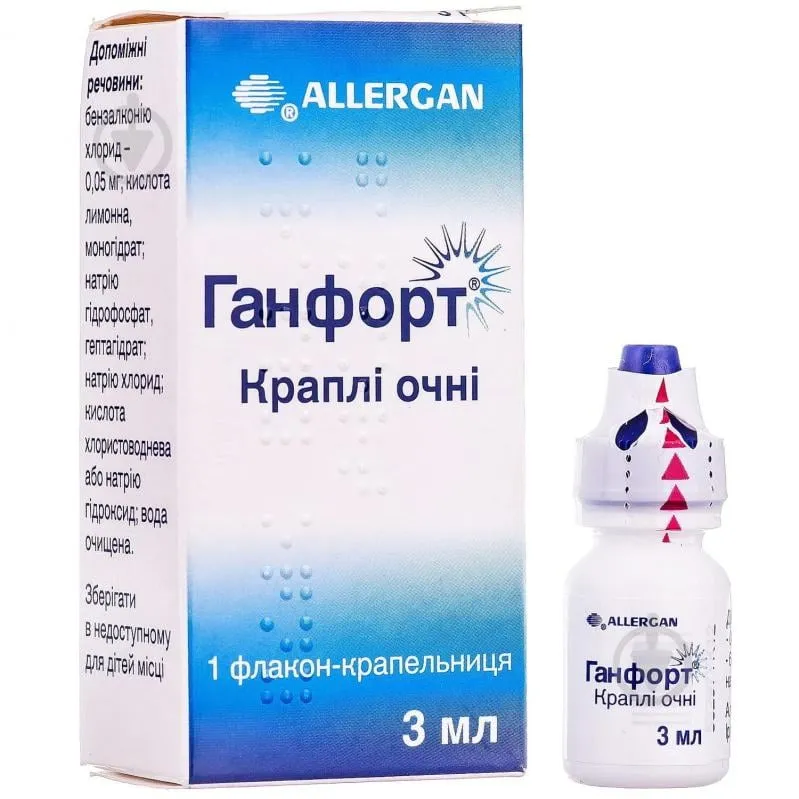
Table of Contents
INSTRUCTIONS FOR MEDICAL USE OF THE MEDICINAL PRODUCT GANFORT® (GANFORT®)
Composition:
Active substances: bimatoprost, timolol maleate;
1 ml of solution contains bimatoprost 0.3 mg, timolol maleate 6.8 mg (calculated as timolol – 5 mg);
Excipients: benzalkonium chloride – 0.05 mg; citric acid monohydrate; sodium hydrogen phosphate heptahydrate; sodium chloride; hydrochloric acid or sodium hydroxide; purified water.
Pharmaceutical form. Eye drops.
Main physicochemical properties: clear, colorless or slightly yellow solution.
Pharmacotherapeutic group. Medicinal products used in ophthalmology. Anti-glaucoma and miotic agents. Timolol, combinations. Beta-adrenergic blockers.
ATC code S01ED51.
Pharmacological Properties
Pharmacodynamics
Ganfort® is a combination medicinal product containing bimatoprost and timolol maleate, which reduce elevated intraocular pressure (IOP) through a combined effect, providing a more pronounced effect compared to each component used alone. Ganfort® is a fast-acting medication.
Bimatoprost is an ophthalmic agent that reduces IOP and belongs to the synthetic prostamide class, chemically structurally related to prostaglandin F2α (PGF2α). Bimatoprost does not act on any of the known prostaglandin receptor types.
Bimatoprost selectively mimics the effects of newly discovered biosynthesized substances—prostamides. However, prostamide receptors have not yet been structurally identified.
The mechanism of IOP reduction by bimatoprost involves enhanced outflow of aqueous humor through the trabecular meshwork and uveoscleral pathways of the eye.
Timolol is a nonselective beta1- and beta2-adrenergic blocker without intrinsic sympathomimetic or membrane-stabilizing activity.
Timolol reduces IOP by decreasing the production of aqueous humor. The precise mechanism of timolol’s action is not fully established but may be related to inhibition of cyclic adenosine monophosphate (c-AMP) synthesis caused by endogenous stimulation of beta-adrenergic receptors.
Clinical Effects
The ability of Ganfort® to reduce IOP is non-inferior to the results achieved with adjunctive therapy using bimatoprost (once daily) and timolol (twice daily).
According to published data, evening administration of Ganfort® may be more effective in reducing IOP than morning administration. However, practical adherence to the dosing regimen should be considered when choosing between morning or evening instillation.
Pharmacokinetics
Ganfort® Medicinal Product
Plasma concentrations of bimatoprost and timolol were measured in a crossover study comparing monotherapy with Ganfort® combination therapy in healthy volunteers.
Systemic absorption of the drug is minimal and does not differ between combination therapy and administration of each component separately.
In two 12-month studies assessing systemic absorption, no accumulation of either component was observed.
Bimatoprost
In vitro studies demonstrated that bimatoprost penetrates well into the cornea and sclera. After topical administration of bimatoprost eye drops, systemic exposure is very low, and no accumulation occurs. Following instillation of one drop of 0.03% bimatoprost solution in both eyes once daily for two weeks in healthy volunteers, maximum plasma concentration was reached within 10 minutes after administration, and the plasma concentration declined below the limit of quantification (0.025 ng/mL) within 1.5 hours. Mean Cmax and area under the concentration–time curve (AUC0–24 h) values for bimatoprost were similar on day 7 and day 14, at 0.08 ng/mL and 0.09 ng•h/mL, respectively, indicating that steady-state concentrations of bimatoprost are achieved within the first week of topical administration.
Bimatoprost is moderately distributed in tissues, with a steady-state volume of distribution in humans of 0.67 L/kg. Bimatoprost is primarily located in plasma. Plasma protein binding of bimatoprost is approximately 88%.
Bimatoprost undergoes minimal metabolism in the human eye and remains one of the main circulating substances in blood after entering systemic circulation following topical application. Subsequently, bimatoprost undergoes glucuronidation, oxidation, N-deethylation, and deamidation, forming various metabolites.
Bimatoprost is primarily excreted in urine: approximately 67% of an intravenously administered dose is excreted in urine, and 25% via the gastrointestinal tract. The elimination half-life after intravenous administration is approximately 45 minutes; total plasma clearance is 1.5 L/h/kg.
Elderly Patients
After twice-daily dosing, the mean area under the concentration–time curve (AUC0–24 h) was 0.0634 ng•h/mL in elderly patients (aged 65 years and older), which was statistically significantly higher than in younger subjects (0.0218 ng•h/mL). However, this difference is not considered clinically significant, as systemic exposure was minimal in both younger and elderly patients following topical administration. No accumulation of bimatoprost in blood was observed over time, and efficacy and safety profiles were comparable in both younger and elderly patients.
Timolol
In patients undergoing cataract surgery, peak timolol concentration in aqueous humor was reached 1 hour after instillation of a 0.5% ophthalmic solution, reaching 898 ng/mL.
A portion of the drug enters systemic circulation and is metabolized by the liver. The elimination half-life of timolol in plasma is approximately 4–6 hours. Timolol is partially metabolized in the liver, and its metabolites are excreted by the kidneys. Timolol binds only slightly to plasma proteins.
Clinical characteristics.
Indications.
Reduction of intraocular pressure (IOP) in patients with open-angle glaucoma and ocular hypertension when monotherapy with beta-blockers or prostaglandin analogues for topical use is insufficiently effective.
Contraindications.
Hypersensitivity to timolol, bimatoprost, and/or any of the excipients of the medicinal product.
Increased airway reactivity syndrome, including bronchial asthma in the stage of exacerbation and history of previous episodes, severe chronic obstructive pulmonary (COPD) diseases.
Sinus bradycardia, sick sinus syndrome, sinoatrial block, second- and third-degree atrioventricular block not controlled by a pacemaker, clinically manifest heart failure, cardiogenic shock.
Interaction with other medicinal products and other forms of interaction.
Studies on the interaction of the fixed combination of bimatoprost/timolol in Ganfort® eye drops have not been conducted.
Antihypertensive/cardiac glycosides. There is a possibility of additive effects that may lead to arterial hypotension and/or marked bradycardia when eye drops containing beta-blockers are used concomitantly with calcium channel blockers, guanethidine, beta-blockers, parasympathomimetics, antiarrhythmic agents (including amiodarone), and digitalis glycosides.
Mydriatic agents. Pupil dilation due to concomitant use of ophthalmic beta-blockers and adrenaline (epinephrine) has been reported rarely.
CYP2D6 inhibitors. Cases of enhanced systemic beta-blockade (e.g., reduced heart rate, depression) have been reported during combined treatment with CYP2D6 inhibitors (e.g., quinidine, fluoxetine, paroxetine) and timolol.
If Ganfort® is used with other ophthalmic medicinal products, a 5-minute interval should be maintained between instillations of each medicinal product.
Special precautions for use.
Ganfort® should be prescribed with caution:
- to patients with acute eye inflammation (e.g., uveitis) due to the possibility of exacerbating inflammation;
- to patients at risk of macular edema, including cystoid macular edema. Ganfort® should be used cautiously in patients with aphakia, pseudophakia with posterior lens capsule rupture, and in patients with known risk of macular edema (e.g., after intraocular surgery, retinal vein occlusion, inflammatory eye diseases, and diabetic retinopathy).
Ocular adverse effects. Prior to initiating treatment, patients should be informed about possible eyelash growth, darkening of the eyelids or periorbital area, and increased pigmentation of the iris (brown color), as such reactions have been observed during treatment with bimatoprost and Ganfort®. Increased iris pigmentation may be permanent and may result in a difference in eye appearance if only one eye has been treated.
The preservative benzalkonium chloride contained in Ganfort® may cause ocular irritation.
Patients wearing soft contact lenses should be advised to remove them prior to instillation of the medication and may reinsert them 15 minutes after administration of the eye drops.
Benzalkonium chloride may discolor soft contact lenses. Contact between the medication and soft contact lenses should be avoided.
Benzalkonium chloride has been reported to cause punctate keratopathy and/or toxic ulcerative keratopathy. Therefore, patients with dry eye syndrome or corneal damage should be monitored if Ganfort® is administered frequently or for prolonged periods.
To avoid eye injury and contamination of the eye drops, contact between the tip of the dropper bottle and the eye or surrounding tissues should be avoided.
After 12 months of treatment with Ganfort®, iris pigmentation was observed in 0.2% of patients. After 12 months of treatment with bimatoprost eye drops alone, iris pigmentation occurred in 1.5%. No further increase in the frequency of this effect was observed during 3 years of therapy. Increased iris pigmentation is due to enhanced melanocyte production, not merely an increase in melanocyte number. Long-term effects of increased iris pigmentation have not been reported. Changes in iris color during treatment with bimatoprost eye drops may not become apparent for several months to several years. Treatment does not affect iris nevi or freckles. In some patients, periorbital skin pigmentation disappeared.
Hair growth may occur in areas where Ganfort® repeatedly comes into contact with the skin surface. Therefore, it is important to administer Ganfort® according to instructions to avoid runoff down the cheek or onto other skin areas.
Clinical studies of 0.03% bimatoprost ophthalmic solution have demonstrated that frequent administration of more than one dose per day may reduce the hypotensive effect in patients with glaucoma and ocular hypertension. Patients using Ganfort® together with other prostaglandin analogs should be monitored for changes in IOP.
The use of the medication has not been studied in patients with inflammatory eye diseases, neovascular, inflammatory, or angle-closure glaucoma, congenital glaucoma, or narrow-angle glau游戏副本.
As with topical administration of other ophthalmic medications, systemic absorption of the active ingredients of Ganfort® (bimatoprost and timolol) is possible, although enhanced systemic absorption of individual active ingredients has not been observed. Due to the beta-adrenergic component—timolol—the same types of cardiovascular, pulmonary, and other adverse reactions as with systemic beta-blockers are possible.
Cardiac disorders. Patients with cardiovascular diseases (e.g., coronary heart disease, Prinzmetal’s angina, and heart failure) and those receiving beta-blocker antihypertensive therapy should undergo thorough evaluation. Alternative therapies with different active substances should be considered.
Patients with cardiovascular diseases should be monitored for signs of worsening conditions and adverse reactions.
Due to the negative effect on impulse conduction time, beta-blockers should be used with extreme caution in patients with first-degree heart block.
Vascular disorders. The medication should be used cautiously in patients with severe peripheral circulatory disorders (e.g., severe forms of Raynaud’s disease or Raynaud’s syndrome).
Respiratory disorders. Respiratory adverse events, including fatal bronchospasm, have been reported in asthmatic patients after administration of certain ophthalmic beta-blockers.
Ganfort® should be prescribed cautiously to patients with mild or moderate chronic obstructive pulmonary disease (COPD), and only if the expected benefit outweighs the potential risk to the patient.
Anaphylactic reactions. In patients with atopic disorders or severe anaphylactic reactions to a wide range of allergens, standard doses used to treat anaphylactic reactions may be ineffective when beta-adrenergic blockers are administered.
Endocrine disorders. Beta-adrenergic receptor blockers should be used cautiously in patients with spontaneous hypoglycemia or unstable diabetes mellitus, as beta-blockers may mask symptoms of acute hypoglycemia.
Beta-adrenergic blockers may also mask symptoms of hyperthyroidism.
Corneal disorders. Beta-adrenergic receptor blockers for ophthalmic use may cause dry eyes; therefore, they should be prescribed cautiously to patients with corneal disorders.
Retinal detachment. Cases of retinal detachment have been reported with aqueous suppressant therapy (e.g., timolol, acetazolamide) after filtration procedures.
Other beta-blockers. The effect on IOP or known systemic beta-blocking effects may be enhanced when timolol is administered to patients already receiving systemic beta-blocking agents. Such patients should be closely monitored. Concomitant use of two locally acting beta-adrenergic blocking agents is not recommended.
Surgical anesthesia. Ophthalmic beta-blocking medications may block the effects of systemic beta-agonists, such as epinephrine. Patients taking timolol should inform their anesthesiologist.
Liver and kidney function. The use of Ganfort® in patients with impaired liver or kidney function has not been studied; therefore, caution is required when treating patients in these groups.
In patients with mild liver disease or initial elevation of liver enzymes—alanine aminotransferase (ALT), aspartate aminotransferase (AST), and/or total bilirubin—bimatoprost did not affect liver function during a study period exceeding 24 months.
Hepatic adverse reactions associated with ocular timolol use are unknown.
Use during pregnancy or breastfeeding.
Pregnancy
There are insufficient data on the use of the fixed combination of bimatoprost/timolol in pregnant women. Ganfort® should be used during pregnancy only if clearly needed. For measures to reduce systemic absorption, see the section "Dosage and administration."
Bimatoprost
There are insufficient clinical data on use in pregnant women. Animal studies have shown reproductive toxicity at high doses.
Timolol
Epidemiological studies have not shown teratogenic effects but have indicated a risk of intrauterine growth retardation with oral administration of beta-blockers. Additionally, newborns exposed to beta-blockers before delivery have shown signs of beta-blockade (e.g., bradycardia, hypotension, respiratory depression, and hypoglycemia). Therefore, newborns should be closely monitored during the first days of life. Animal studies with timolol have shown reproductive toxicity at doses significantly higher than those used in clinical practice.
Breastfeeding
Timolol
Beta-blockers pass into breast milk. However, with therapeutic doses of timolol administered as eye drops, the presence of a significant amount of the drug in breast milk causing clinical signs of beta-blockade in newborns is unlikely.
Bimatoprost
It is unknown whether bimatoprost passes into human breast milk, but studies in rats have shown bimatoprost in the milk of lactating rats. Ganfort® should not be used in women who are breastfeeding.
Fertility
There are no data on the effect of the medication on human fertility.
Ability to affect reaction speed when driving or operating machinery.
Ganfort® has a minor influence on the ability to drive or operate machinery. As with other ophthalmic medications, if transient blurred vision occurs after instillation, patients should wait until vision clears before driving or operating machinery.
Method of Administration and Dosage
Ganfort® is for topical ophthalmic use.
The recommended dose is 1 drop into the conjunctival sac of the affected eye once daily, in the morning or evening. The medication should be administered at the same time each day.
If a dose is missed, the next dose should be administered as scheduled. Dose escalation is not recommended — do not administer more than 1 drop once daily.
Performing nasolacrimal occlusion or keeping the eyes closed for 2 minutes may reduce systemic absorption. This, in turn, may decrease systemic adverse effects and increase local drug activity.
Use in elderly patients
Safety and efficacy data in elderly patients are similar to those in adult patients.
Children
The safety and efficacy of Ganfort® in children have not been established.
The medication is not recommended for patients under 18 years of age.
Overdose
There have been no reports of overdose with Ganfort®. In case of overdose, symptomatic and supportive therapy should be administered.
Following accidental oral ingestion of Ganfort®, no signs of toxic effects of bimatoprost were observed at doses up to 100 mg/kg/day. This dose is at least 36 times higher than the dose (a 7.5 mL bottle of 0.03% bimatoprost solution) that a child weighing 10 kg might accidentally ingest.
Overdose of timolol may result in the following symptoms: bradycardia, arterial hypotension, bronchospasm, headache, dizziness, dyspnea, and cardiac arrest. In cases of renal insufficiency, timolol is not completely removed by hemodialysis.
Adverse reactions.
Results of the safety study of the drug.
The adverse reactions observed during clinical studies with Ganfort® were limited to those previously identified with the individual active substances, bimatoprost and timolol. No new adverse reactions specific exclusively to Ganfort® were observed during clinical studies.
Most of the adverse reactions observed during clinical studies with Ganfort® were ocular and mild in severity. None of the adverse reactions were severe. According to 12-month clinical data, the most common adverse reaction was conjunctival hyperemia (mostly very mild or moderate and likely non-inflammatory), which occurred in approximately 26% of patients and led to discontinuation of the drug in 1.5% of patients.
Table 1 lists the adverse reactions reported during clinical studies with Ganfort® or in the post-marketing period (for each frequency, adverse reactions are listed in order of severity from severe to mild).
The frequency of adverse reactions was defined according to the following criteria:
| Very common |
> 1/10 |
| Common |
≥ 1/100 to < 1/10 |
| Uncommon |
≥ 1/1 000 to < 1/100 |
| Rare |
≥ 1/10 000 to < 1/1 000 |
| Very rare |
< 1/10 000 |
| Not known |
Frequency cannot be estimated from the available data. |
Table 1
| System organ class |
Frequency |
Adverse reaction |
|
| Immune system disorders |
Unknown |
Hypersensitivity reactions, including allergic dermatitis symptoms, angioedema, ocular allergy |
|
| Psychiatric disorders |
Unknown |
Insomnia, nightmares |
|
| Nervous system disorders |
Common |
Headache, dizziness |
|
| Unknown |
Dysgeusia |
||
| Eye disorders |
Very common |
Conjunctival hyperemia |
|
| Common |
Superficial keratitis, corneal erosion, burning sensation, itching, burning eye pain, foreign body sensation, dryness of ocular mucosa, eyelid redness, eye pain, photophobia, eye discharge, visual disturbances, eyelid itching, visual acuity disturbances, blepharitis, eyelid edema, eye irritation, lacrimation, eyelash growth |
||
| Uncommon |
Irritation of ocular mucosa, conjunctival swelling, eyelid pain, asthenopia, trichiasis, iris hyperpigmentation, deepening of eyelid groove, eyelid refraction |
||
| Unknown |
Cystoid macular edema, eye swelling, visual disturbances, eye discomfort |
||
| Cardiac disorders |
Unknown |
Bradycardia |
|
| Vascular disorders Unknown hypertension |
Unknown |
Hypertension |
|
| Respiratory system disorders |
Common |
Rhinitis |
|
| < |
|||
| Uncommon |
Dyspnea |
||
| Unknown |
Bronchospasm (mainly in patients with pre-existing bronchospastic syndrome), asthma |
||
| Skin and subcutaneous tissue disorders |
Common |
Periorbital pigmentation, skin pigmentation around the eye |
|
| Unknown |
Alopecia, depigmentation of the skin around the eye |
||
| General disorders |
Unknown |
Increased fatigue |
Additional adverse reactions observed during the use of active substances (bimatoprost or timolol) and which may potentially occur during the use of Ganfort® are listed in Table 2 (bimatoprost) and Table 3 (timolol):
Table 2.
Additional adverse reactions observed during the use of bimatoprost
| System organ class |
Adverse reaction |
| Eye disorders |
Darkening of eyelashes, blepharospasm, retinal hemorrhage, uveitis, periorbital erythema |
| General disorders and administration site conditions |
Asthenia |
| Gastrointestinal disorders |
Nausea |
| Investigations |
Changes in liver enzyme parameters |
As with other topically applied ophthalmic agents, GANFORT® (bimatoprost/timolol) enters the systemic circulation. Absorption of timolol may produce the same types of systemic adverse reactions as seen with systemic beta-blockers. The frequency of systemic adverse reactions to the medicinal product after topical ocular administration is lower than with systemic administration. For measures to reduce systemic absorption, see section "Dosage and administration".
Table 3.
Additional adverse reactions observed during the use of timolol
| System organ class |
Adverse reaction |
| Immune system disorders: |
Systemic allergic reactions, including anaphylaxis |
| Metabolism and nutrition disorders |
Hypoglycemia |
| Psychiatric disorders |
Depression, memory loss, hallucinations |
| Nervous system disorders |
Loss of consciousness, cerebral circulation disorders, worsening of myasthenia symptoms, paresthesia, cerebral ischemia |
| Eye disorders |
Decreased corneal sensitivity, diplopia, ptosis, retinal detachment after surgical treatment (see section "Special precautions for use"), keratitis |
| Cardiac disorders |
Atrioventricular block, cardiac arrest, arrhythmia, cardiac disorders, congestive heart failure, chest pain, increased heart rate, edema |
| Vascular disorders |
Hypotension, Raynaud's syndrome, cold extremities |
| Respiratory system disorders |
Cough |
| Gastrointestinal disorders |
Nausea, diarrhea, dyspepsia, dry mouth, abdominal pain, vomiting |
| Skin and subcutaneous tissue disorders |
Psoriasiform rashes, exacerbation of psoriasis, skin rashes |
| Musculoskeletal and connective tissue disorders |
Muscle pain |
| Reproductive system and breast disorders |
Sexual dysfunction, decreased libido |
| Other |
Asthenia |
Adverse reactions to ophthalmic solutions containing phosphates.
Rare cases of corneal calcification associated with the use of ophthalmic solutions containing phosphates have been reported in patients with significantly damaged corneas.
Shelf life.
2 years.
Storage period after first opening of the dropper bottle – 28 days at a temperature not exceeding 25 °C.
Storage conditions.
No special storage conditions required.
Keep out of reach of children.
Packaging.
3 mL of the preparation in a low-density white polyethylene dropper bottle with a tamper-resistant polypropylene screw cap. 1 or 3 dropper bottles per cardboard carton.
Prescription category.
Prescription only.
Manufacturer.
Allergan Pharmaceuticals Ireland.
Manufacturer’s name and address of the place of business.
Castlebar Road, Westport, Co. Mayo, F28 AW83, Ireland.