Halopril
Ukraine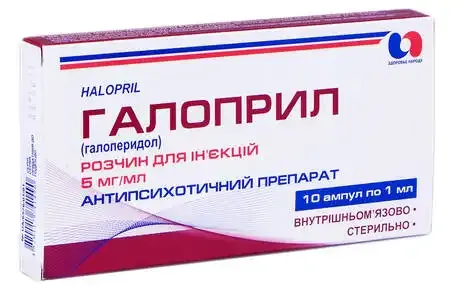
Instructions for Use
INSTRUCTIONS FOR MEDICAL USE OF THE MEDICINAL PRODUCT HALOPRIL (HALOPRIL)
Composition:
Active substance: haloperidol;
1 ml of solution contains 5 mg of haloperidol;
Excipients: lactic acid, water for injections.
Pharmaceutical form. Injection solution.
Main physicochemical properties: clear, colorless or slightly yellow liquid.
Pharmacotherapeutic group.
Antipsychotic agents. Butyrophenone derivatives. ATC code N05AD01.
Pharmacological properties.
Pharmacodynamics. The drug exerts neuroleptic, antipsychotic, sedative, analgesic, anticonvulsant, antihistaminic, and antiemetic effects. It blocks postsynaptic dopaminergic receptors in the mesolimbic system, hypothalamus, the vomiting center's trigger zone, and the extrapyramidal system; it also suppresses central alpha-adrenergic receptors.
Haloperidol eliminates delusions, hallucinations, and mania, and affects vegetative functions (reduces tone of hollow organs, gastrointestinal motility and secretion, relieves vascular spasms) in diseases accompanied by excitement, anxiety, and fear of death. It is effective in patients resistant to other neuroleptics.
Pharmacokinetics. After intramuscular administration, maximum plasma concentration is reached within 10–15 minutes. Protein binding is 92%. It is actively metabolized in the liver. The elimination half-life after intramuscular administration is 21 hours. It is excreted from the body via the kidneys (40%) and with bile through the intestine (15%).
Clinical Characteristics.
Indications.
Schizophrenia: treatment of symptoms and prevention of relapses.
Other psychoses, particularly paranoid types.
Mania and hypomania.
Mental and behavioral disorders such as aggression, hyperactivity, and self-mutilation in mentally retarded patients and in patients with organic brain lesions.
Adjunctive therapy in short-term treatment of mild to severe psychomotor agitation, anxiety, violent or dangerously impulsive behavior.
Nausea and vomiting.
Contraindications.
Hypersensitivity to any component of the drug. Comatose states, patients with severe depression due to alcohol or other central nervous system depressants, endogenous depression without agitation, Parkinson's disease. Asthenia, neuroses, and spastic conditions due to basal ganglia damage (hemiplegia, multiple sclerosis).
Severe cardiovascular diseases (e.g., recent acute myocardial infarction, uncompensated heart failure, antiarrhythmic treatment with Class Ia or III antiarrhythmics). QTc interval prolongation. Individuals with a family history of arrhythmias or torsades de pointes-type arrhythmias. Refractory hypokalemia. Concomitant use of drugs that prolong the QT interval; depression; renal and hepatic diseases with marked functional impairment.
Known or suspected pregnancy, breastfeeding.
Parenteral administration in children.
Interaction with other medicinal products and other forms of interaction.
As with other antipsychotics, caution should be exercised when prescribing haloperidol together with other drugs that may cause QT interval prolongation.
Haloperidol is metabolized via various metabolic pathways, including glucuronidation and the cytochrome P450 system (particularly CYP3A4 or CYP2D6). Inhibition of these metabolic pathways by another drug or reduced enzymatic activity of CYP2D6 may lead to increased haloperidol concentrations and an increased risk of adverse effects, including QT interval prolongation.
Pharmacokinetic studies have shown mild to moderate increases in haloperidol concentration when co-administered with substrates or inhibitors of CYP3A4 or CYP2D6 isoenzymes, such as itraconazole, nefazodone, buspirone, venlafaxine, alprazolam, fluvoxamine, quinidine, fluoxetine, sertraline, chlorpromazine, and promethazine. Reduced CYP2D6 enzyme activity may lead to increased haloperidol concentration. Prolongation of the QT interval has been observed when haloperidol was used concomitantly with a combination of metabolic inhibitors ketoconazole (400 mg/day) and paroxetine (20 mg/day). In such cases, a reduction in haloperidol dose may be necessary.
Caution is required when using haloperidol in combination with drugs that may cause electrolyte imbalances.
Effect of other drugs on haloperidol.
If enzyme inducers such as carbamazepine, phenobarbital, or rifampicin are added during long-term treatment with Halopryl, this may lead to a significant decrease in plasma haloperidol levels. Therefore, during combination therapy, the Halopryl dose should be adjusted as necessary. After discontinuation of these drugs, it may be necessary to reduce the Halopryl dose.
Sodium valproate, a known inhibitor of glucuronidation, does not affect haloperidol plasma levels.
Effect of haloperidol on other drugs.
Like all neuroleptics, Halopryl may enhance the central nervous system depressant effects of other drugs, including alcohol, hypnotics, sedatives, or strong analgesics.
Halopryl may antagonize the effects of adrenaline and other sympathomimetics and alter the antihypertensive effects of adrenergic blocking agents such as guanethidine.
Halopryl may reduce the antiparkinsonian effects of levodopa.
Haloperidol is an inhibitor of CYP2D6.
Do not administer concurrently with drugs that prolong the QT interval: Class Ia antiarrhythmics (e.g., quinidine, ajmaline, disopyramide, and procainamide) and Class III (e.g., amiodarone, sotalol), certain antihistamines, other neuroleptics, and some antimalarials (e.g., quinine and mefloquine), as well as moxifloxacin.
This list should be considered only as a guide and is not exhaustive.
Do not administer concurrently with drugs that cause electrolyte imbalance.
Concomitant use of diuretics, particularly those that may lead to hypokalemia, should be avoided.
Halopryl inhibits the metabolism of tricyclic antidepressants, leading to increased plasma levels.
Other forms of interaction.
Rare cases of the following adverse reactions have been reported with concomitant use of lithium and Halopryl: encephalopathy, extrapyramidal symptoms, tardive dyskinesia, neuroleptic malignant syndrome, encephalitic brain disorders, coma. Most of these symptoms were reversible. The available data remain controversial as to whether these symptoms are related to the combined use or represent manifestations of a separate clinical episode. However, it is recommended that therapy be immediately discontinued in patients receiving lithium and Halopryl concurrently if these symptoms occur.
Antagonistic effects on the anticoagulant effect of phenindione have also been reported.
Special precautions for use
An ECG should be performed prior to initiating treatment (see section "Contraindications").
ECG monitoring during therapy should be conducted depending on the patient's clinical condition.
Dosages should be reduced during therapy if QT interval prolongation is observed, and treatment should be discontinued if QT > 500 ms.
Periodic monitoring of blood electrolyte levels is recommended.
Concomitant therapy with other neuroleptics should be avoided.
Rare cases of sudden death have been reported in patients receiving antipsychotic drugs, including Haloperidol.
Cases of venous thromboembolism (VTE) have also been reported during antipsychotic treatment. Frequently, patients treated with antipsychotic drugs have had acquired risk factors for VTE; therefore, all possible VTE risk factors should be identified before and during Haloperidol therapy, and preventive measures should be taken.
Study data indicate that elderly patients with dementia treated with antipsychotics have a significantly increased risk of death compared to those not receiving therapy. There are insufficient data to precisely quantify this risk, and the reason for the increased risk is unknown. Like other antipsychotic drugs, Haloperidol is also associated with neuroleptic malignant syndrome: a rare and idiosyncratic condition.
Haloperidol is not recommended for the treatment of dementia-related disorders.
Elderly patients with psychosis associated with dementia who receive antipsychotic drugs have an increased risk of death. Analyses of seventeen placebo-controlled clinical trials (modal duration 10 weeks), primarily involving atypical antipsychotics, showed a 1.6 to 1.7 times higher risk of death in patients receiving the drug compared to placebo. In a 10-week placebo-controlled clinical trial with typical antipsychotics, the mortality rate was approximately 4.5% in patients receiving the drug compared to 2.6% in the placebo group. Although the causes of death varied, most fatal cases were either cardiovascular in nature (e.g., heart failure, sudden death) or infectious (e.g., pneumonia). Studies suggest that, as with atypical antipsychotics, treatment with conventional antipsychotics may increase mortality. Therefore, it remains unclear whether the increased mortality observed in these studies is due to the neuroleptics themselves or to certain patient characteristics.
Cardiovascular effects.
Very rare cases of QT interval prolongation and/or ventricular arrhythmia have been reported with haloperidol use, in addition to rare cases of sudden death. These may occur more frequently with high-dose therapy in susceptible patients.
If QT interval prolongation is observed during Haloperidol therapy, particular caution should be exercised in patients predisposed to QT prolongation (long QT syndrome, hypokalemia, electrolyte imbalance; drugs causing QT prolongation, cardiovascular disease, familial QT prolongation).
The risk of QT interval prolongation and/or ventricular arrhythmia may increase with high-dose therapy (see sections "Adverse reactions", "Contraindications"). Haloperidol should not be administered intravenously, as intravenous administration of haloperidol is associated with an increased risk of QT interval prolongation.
Cases of tachycardia and hypotension have also been reported in some patients.
Neuroleptic malignant syndrome.
Like other antipsychotic drugs, Haloperidol is associated with neuroleptic malignant syndrome: a rare and idiosyncratic condition characterized by hyperthermia, generalized muscle rigidity, autonomic instability, and altered mental status. Hyperthermia is often an early sign of this syndrome. Antipsychotic treatment should be discontinued immediately, and appropriate supportive therapy and careful monitoring should be initiated.
Late dyskinesia.
As with all antipsychotic drugs, tardive dyskinesia may develop in some patients receiving long-term therapy or after discontinuation of therapy. This syndrome is characterized by rhythmic involuntary movements of the tongue, face, mouth, or jaw. Symptoms may be persistent in some patients. The syndrome may be masked by resuming treatment, increasing the dose, or switching to another antipsychotic agent. Treatment should be discontinued as soon as possible.
Extrapyramidal symptoms.
As with all neuroleptics, extrapyramidal symptoms may occur, such as tremor, rigidity, salivation, bradykinesia, akathisia, and acute dystonia.
Antiparkinsonian anticholinergic drugs may be prescribed if necessary, but should not be routinely used as a preventive measure. If needed, concomitant antiparkinsonian treatment should be resumed after discontinuation of Haloperidol if their elimination is faster than that of Haloperidol, to avoid the development or worsening of extrapyramidal symptoms. The physician should consider the potential increase in intraocular pressure due to anticholinergic drugs, including antiparkinsonian agents, when used concomitantly with Haloperidol.
Safety data in elderly patients indicate a risk of developing extrapyramidal symptoms, including tardive dyskinesia and sedation. Long-term safety data are lacking.
Seizures/convulsions.
Seizure onset has been reported with Haloperidol. Caution should be exercised in patients with epilepsy and conditions predisposing to seizures (e.g., alcohol withdrawal, brain injury).
Hepatobiliary effects.
Since Haloperidol is metabolized in the liver, caution should be exercised in patients with liver disease. Isolated reports of liver function abnormalities or hepatitis, most commonly cholestatic, have been documented.
Effects on the endocrine system.
Thyroxine may increase the toxicity of Haloperidol. Antipsychotic therapy in patients with hyperthyroidism should be conducted with great caution and should always be accompanied by treatment aimed at achieving an euthyroid state.
Hormonal effects of antipsychotic neuroleptics include hyperprolactinemia, which may cause galactorrhea, gynecomastia, and oligo- or amenorrhea. Very rare cases of hypoglycemia and syndrome of inappropriate antidiuretic hormone secretion (SIADH) have been reported.
Additional warnings.
In schizophrenia, response to antipsychotic drug therapy may be delayed. Even after discontinuation of treatment, symptom relapse may not occur for several weeks or months. Acute withdrawal symptoms, including nausea, vomiting, and insomnia, have been very rarely reported following abrupt discontinuation of high-dose antipsychotic drugs.
Psychotic relapse may also occur, in which case gradual tapering is recommended. As with all antipsychotic drugs, Haloperidol should not be used as monotherapy when depression is predominant. Haloperidol may be used concomitantly with antidepressants when depression and psychosis coexist.
Use during pregnancy or breastfeeding.
Animal studies have shown teratogenic effects of haloperidol.
Newborns exposed to conventional or atypical antipsychotics, including Haloperidol, during the third trimester of pregnancy are at risk of adverse effects, including extrapyramidal symptoms or withdrawal syndrome, which may vary in severity and duration after birth. Excitability, hypertension, hypotonia, tremor, somnolence, respiratory distress, and feeding disorders have also been reported. Therefore, newborns should be closely monitored. The drug is contraindicated in confirmed or suspected pregnancy and during breastfeeding.
Ability to affect reaction speed when driving or operating machinery.
Haloperidol may cause sedative effects and reduced attention, particularly at higher doses and during initiation of therapy; this effect may be enhanced by alcohol. Patients should be warned against driving vehicles or operating machinery during treatment until their individual response to the drug is known.
Administration and Dosage
Halopril, injection solution, is intended for intramuscular use only.
The dosage of the drug for all indications should be individually determined under strict medical supervision. The initial dose should take into account the patient's age, severity of symptoms, and prior response to neuroleptics.
Elderly or debilitated patients, as well as those who have previously experienced adverse reactions to neuroleptics, may require a lower dose of haloperidol. The initial dose should be half the usual adult dose, which may then be gradually adjusted to achieve the optimal therapeutic response.
Haloperidol should be administered at the lowest clinically effective dose.
Adults.
As an antipsychotic agent for the treatment of schizophrenia, psychoses, mania and hypomania, organic brain disorders (depending on symptoms), and for the control of psychomotor agitation associated with psychiatric or behavioral disorders such as aggression, hyperactivity, self-mutilation in mentally retarded patients, and in patients with organic brain disorders (depending on symptoms), as well as for violent or dangerously impulsive behavior.
Dosage.
Administration of 5 mg intramuscularly may be repeated hourly until adequate symptom control is achieved or until the maximum daily dose of 20 mg is reached.
Intramuscular administration should be replaced as soon as possible with oral administration of the drug in an appropriate dosage form.
Nausea, vomiting: 1–2 mg intramuscularly.
Halopril, injection solution, is compatible with:
− 0.9% sodium chloride solution (the mixture is suitable for use within 2 hours);
− Ringer's solution (the mixture is suitable for use within 4 hours);
− 5% glucose solution (the mixture is suitable for use within 8 hours).
Children.
The drug is contraindicated in children.
Overdose.
Symptoms:
In overdose, the main symptoms are severe extrapyramidal reactions, hypotension, and sedative effects. Extrapyramidal reactions manifest as muscle rigidity and generalized or localized tremor.
In severe cases, patients may experience coma with respiratory depression and severe arterial hypotension, potentially leading to shock-like conditions. Ventricular arrhythmias should also be anticipated, possibly associated with QT interval prolongation on electrocardiogram.
Treatment:
There is no specific antidote. Treatment is primarily supportive.
Patients in a comatose state require airway maintenance via tracheotomy or intubation. Artificial ventilation may be necessary in cases of respiratory insufficiency. ECG and vital signs should be monitored until normal ECG parameters are restored. Serious cardiac rhythm disturbances should be treated with appropriate antiarrhythmic measures.
Hypotension and circulatory collapse may be treated with intravenous infusion of fluids, plasma, or concentrated albumin, or with vasopressor agents such as dopamine or norepinephrine. Epinephrine (adrenaline) should not be used, as it may cause severe hypotension in the presence of Halopril.
In cases of severe extrapyramidal reactions, parenteral antiparkinsonian agents should be administered.
Adverse reactions.
Haloperidol may cause adverse reactions; the list of undesirable effects is provided below.
Preferred WHO MedDRA terms for system organ classes: very common (>1/10); common (>1/100, <1/10); uncommon (>1/1000, <1/100); rare (>1/10,000, <1/1000); very rare (<1/10,000).
| System organ classes by MedDRA |
Frequency |
Adverse reactions |
| Blood and lymphatic system disorders |
Uncommon, including isolated cases |
Agranulocytosis, pancytopenia, thrombocytopenia, leukopenia, neutropenia |
| Immune system disorders |
Uncommon, including isolated cases |
Anaphylactic reaction, hypersensitivity |
| Endocrine disorders |
Uncommon, including isolated cases |
Inappropriate antidiuretic hormone secretion |
| Metabolism and nutrition disorders |
Uncommon, including isolated cases |
Hypoglycemia |
| Psychiatric disorders |
Uncommon, including isolated cases |
Psychiatric disorders, excitation, confusion, depression, insomnia |
| Nervous system disorders |
Uncommon, including isolated cases |
Seizures, headache |
| Cardiac disorders |
Uncommon, including isolated cases |
Torsades de pointes, ventricular fibrillation, ventricular tachycardia, extrasystoles |
| Respiratory, thoracic and mediastinal disorders |
Uncommon, including isolated cases |
Bronchospasm, laryngospasm, laryngeal edema, dyspnea |
| Gastrointestinal disorders |
Uncommon, including isolated cases |
Vomiting, nausea |
| Hepatobiliary disorders |
Uncommon, including isolated cases |
Acute liver failure, hepatitis, cholestasis, jaundice, abnormal liver function tests |
| Skin and subcutaneous tissue disorders |
Uncommon, including isolated cases |
Leukocytoclastic vasculitis, exfoliative dermatitis, urticaria, photosensitivity reaction, rash, pruritus, hyperhidrosis |
| Renal and urinary disorders |
Uncommon, including isolated cases |
Urinary retention |
| Perinatal conditions, pregnancy and delivery |
Uncommon, including isolated cases |
Neonatal withdrawal syndrome Extrapyramidal symptoms |
| Reproductive system and breast disorders |
Uncommon, including isolated cases |
Priapism, gynecomastia |
| General disorders and administration site conditions |
Uncommon, including isolated cases |
Sudden death, facial swelling, hyponatremia, hyperthermia |
| Investigations |
Uncommon, including isolated cases |
Electrocardiogram with prolonged QT interval, decreased body weight |
Rare cases of QT interval prolongation, ventricular arrhythmias such as torsade de pointes, ventricular tachycardia, ventricular fibrillation, and cardiac arrest have been observed when Halopryl is used concomitantly with other medicinal products of the same class.
Very rare cases of sudden death have been reported. Venous thromboembolism, including cases of pulmonary embolism and deep vein thrombosis, have been reported during treatment with antipsychotic medicinal products—frequency unknown.
Reporting of suspected adverse reactions.
Reporting of suspected adverse reactions after authorization of the medicinal product is important, as it allows continuous monitoring of the benefit-risk balance of the product. Healthcare professionals are requested to report any suspected adverse reactions.
Shelf life. 5 years.
Storage conditions.
Store in the original packaging at a temperature not exceeding 25 °C.
Packaging.
1 ml in an ampoule; 10 ampoules in a cardboard box.
1 ml in an ampoule; 5 ampoules in a blister pack; 2 blisters in a cardboard box.
1 ml in an ampoule; 10 ampoules in a blister pack; 1 blister pack in a cardboard box.
Prescription status. Prescription only.
Manufacturer.
Limited Liability Company "Kharkiv Pharmaceutical Enterprise "Zdorov'ya Narodu".
LIMITED LIABILITY COMPANY "CORPORATION "ZDOROV'YA".
Address of the manufacturer and location of its business activities.
41, Kulikivska Street, Kharkiv, Kharkiv Oblast, 61002, Ukraine.
(Limited Liability Company "Kharkiv Pharmaceutical Enterprise "Zdorov'ya Narodu")
22, Shevchenka Street, Kharkiv, Kharkiv Oblast, 61013, Ukraine.
(LIMITED LIABILITY COMPANY "CORPORATION "ZDOROV'YA")
Frequently Asked Questions
What is Halopril prescribed for?
The drug is used to treat schizophrenia, mania, hypomania, and other psychoses. It is prescribed for aggression, hyperactivity, and behavioral disorders, as well as an adjunct for severe agitation, excitement, or to alleviate nausea and vomiting.
How should Halopril be taken correctly?
The drug is intended for intramuscular administration only. The dosage should be established by a physician depending on age, severity of symptoms, and individual response. Once the condition has stabilized, intramuscular injections are usually replaced by oral tablet administration.
What side effects can Halopril cause?
Possible side effects include tremor, muscle stiffness (rigidity), drowsiness, headache, nausea, cardiac rhythm disturbances, weight changes, or hormonal changes (e.g., milk secretion in women). In rare cases, serious reactions may occur, including seizures or liver dysfunction.
Who should not use this drug?
It is contraindicated in individuals with hypersensitivity to the components of the product, patients with Parkinson's disease, those with severe heart disease (including arrhythmias), in comatose states, in cases of severe depression, or kidney or liver disease. The drug is prohibited for use in children, pregnant women, and breastfeeding women.
Can the drug be combined with other medicines?
Special caution is required. Halopril must not be taken simultaneously with drugs that prolong the QT interval on ECG, or with other neuroleptics. Caution should also be exercised when combining it with alcohol, hypnotics, antidepressants, and diuretics.
Does the drug affect the ability to drive a vehicle?
Yes, Halopril may cause drowsiness and reduce attention; therefore, it is not recommended to drive vehicles or operate machinery during treatment.
Similar Medications
-
Haloperidol decanoate
Form: solution for injection
Active substance Dosage haloperidol 50 mg/ml Manufacturer: PJSC "Gedeon Richter"
-
Haloperidol-richter
Form: solution for injection
Active substance Dosage haloperidol 5 mg/ml Manufacturer: PJSC "Gedeon Richter"
This page has been machine-translated and may contain inaccuracies. The original data is available in the manufacturing country's language.
Last data check: July 21, 2026 · Data source: Державний реєстр лікарських засобів України