Furosemide
Ukraine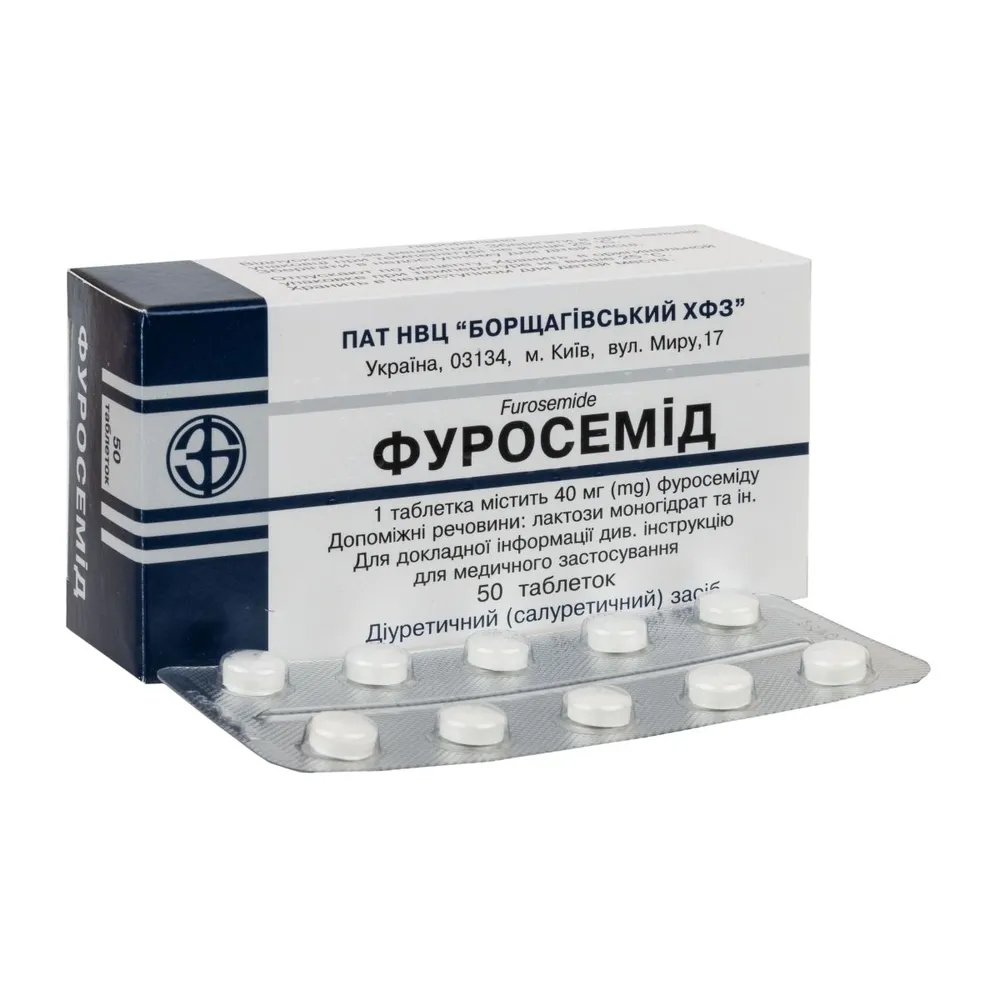
Table of Contents
INSTRUCTIONS FOR MEDICAL USE OF THE MEDICINAL PRODUCT FUROSEMIDE (FUROSEMIDE)
Composition:
Active substance: furosemide;
1 tablet contains furosemide calculated as 100% dry substance − 40 mg;
Excipients: maize starch, microcrystalline cellulose, magnesium stearate, povidone, polyethylene glycol (macrogols), lactose monohydrate.
Pharmaceutical form. Tablets.
Main physico-chemical characteristics: round-shaped tablets, white with a yellowish tint, with a biconvex surface.
Pharmacotherapeutic group.
High-ceiling diuretics. ATC code C03CA01.
Pharmacological properties.
Pharmacodynamics.
Furosemide is a loop diuretic that inhibits the reabsorption of sodium and chloride ions in the ascending limb of the loop of Henle, as well as in the proximal and distal tubules of the nephron. The effect in the distal tubules is independent of carbonic anhydrase inhibition or aldosterone activity. The pharmacological action of furosemide is confined solely to the kidneys.
Pharmacokinetics.
The onset of diuretic effect occurs approximately within 1 hour after oral administration. The duration of diuretic action is 3–6 hours.
After oral administration, the drug is rapidly absorbed from the gastrointestinal tract; bioavailability averages 50–70%.
Distribution. Furosemide is highly bound to plasma proteins, primarily albumin. In healthy subjects, plasma concentrations range from 1 to 400 mcg/mL, with 91–99% of furosemide bound to plasma proteins. Furosemide crosses the placental barrier and slowly enters the fetal circulation.
Metabolism. Glucuronide conjugates are one, or at least the main, metabolite of furosemide biotransformation in humans. A small portion undergoes metabolism via side chain cleavage.
Elimination. Excretion in urine (via glomerular filtration and proximal tubular secretion) accounts for approximately 66% of the administered dose; the remainder is excreted in feces. Significantly more furosemide is excreted after intravenous administration compared to oral administration (tablets or solution). Furosemide passes into breast milk.
Elimination half-life. Furosemide exhibits a biphasic elimination half-life of approximately 2 hours. In patients with renal or hepatic impairment, the elimination half-life is prolonged.
Clinical Characteristics.
Indications.
- Edema in chronic congestive heart failure (if treatment with diuretics is required).
- Edema in chronic renal failure.
- Acute renal failure, including in pregnant women or during childbirth.
- Edema in nephrotic syndrome (if treatment with diuretics is required).
- Edema in liver diseases (if necessary, as adjunctive therapy with aldosterone antagonists).
- Arterial hypertension.
Contraindications.
- Hypersensitivity to furosemide or to any of the excipients of the medicinal product.
- Hypersensitivity to sulfonamides (e.g., sulfonamide antibiotics or sulfonylureas) due to possible cross-sensitivity to furosemide.
- Anuria or renal failure with anuria unresponsive to furosemide.
- Renal failure due to nephrotoxic or hepatotoxic agents.
- Hypovolemia, dehydration.
- Severe hypokalemia.
- Severe hyponatremia.
- Pre-comatose and comatose states associated with hepatic encephalopathy.
- Addison’s disease.
- Digitalis intoxication.
Interaction with other medicinal products and other forms of interactions.
Not recommended combinations.
Chloral hydrate. In individual cases, administration of furosemide within 24 hours after chloral hydrate may cause flushing, excessive sweating, agitation, nausea, increased blood pressure, and tachycardia. Concomitant use of furosemide and chloral hydrate is not recommended.
Medicinal products with increased risk of ototoxicity: aminoglycosides (e.g., kanamycin, gentamicin, tobramycin), vancomycin, teicoplanin. Furosemide may potentiate the ototoxicity of these agents. Since irreversible hearing impairment may occur, these medicinal products should not be used simultaneously with furosemide. Furosemide may reduce serum levels of vancomycin.
Combinations requiring precautions.
Cisplatin. There is a risk of ototoxic effects when used with furosemide. If forced diuresis with furosemide is required during cisplatin therapy, it should be administered only at a low dose (e.g., 40 mg with normal renal function) and only with a positive fluid balance. Otherwise, the nephrotoxicity of cisplatin will increase.
Risperidone. Caution and careful assessment of risks and benefits are required before initiating combination therapy with furosemide or other potent diuretics. See section "Special warnings and precautions for use" regarding increased mortality in elderly patients with dementia receiving risperidone.
Lithium. Furosemide, like other diuretics, may increase serum lithium levels (due to reduced excretion) and enhance its toxicity, with symptoms of overdose, including increased risk of cardiotoxicity and neurotoxicity. If such combination cannot be avoided, serum lithium levels should be closely monitored and the dose adjusted as necessary.
Sucralfate, cholestyramine, colestipol. Gastrointestinal absorption of furosemide is reduced, resulting in lower plasma concentrations and reduced diuretic effect. Therefore, these agents and furosemide should be administered at least 2–3 hours apart.
ACE inhibitors/angiotensin-II receptor antagonists. Patients receiving diuretics may experience sudden severe hypotension and worsening renal function, including cases of renal failure, particularly upon initial administration or dose escalation of ACE inhibitors/angiotensin-II receptor antagonists. It is necessary to either temporarily discontinue furosemide or at least reduce its dose 3 days prior to initiating or increasing the dose of ACE inhibitors/angiotensin-II receptor antagonists.
For patients with congestive heart failure previously treated with diuretics, initial doses of ACE inhibitors/angiotensin-II receptor antagonists should be very low, and treatment may need to be initiated after reducing the dose of the concomitant diuretic.
In all cases, renal function (serum creatinine levels) must be monitored during the first weeks of treatment with an ACE inhibitor or angiotensin-II receptor blocker.
Levothyroxine: High doses of furosemide may inhibit the binding of thyroid hormones to transport proteins. This may initially lead to a transient increase in free fractions of thyroid hormones, followed by a decrease in total thyroid hormone levels. Thyroid hormone levels should be monitored and levothyroxine dosage adjusted as necessary.
Combinations requiring special attention.
When antihypertensive agents, diuretics, or other medicinal products with blood pressure-lowering properties are used concomitantly with furosemide, an additional reduction in blood pressure should be expected. Dosing of these agents may require adjustment when used with furosemide.
Alpha-blockers (e.g., prazosin, doxazosin, terazosin, tamsulosin). Increased hypotensive effect and risk of first-dose hypotension when used with furosemide. Increased risk of orthostatic hypotension.
Renin inhibitors. Aliskiren reduces plasma concentrations of orally administered furosemide. Reduced diuretic effect may occur in patients taking both aliskiren and oral furosemide. Therefore, monitoring for reduced diuretic effect is recommended, and the dose of furosemide should be adjusted accordingly.
Vasodilators. Hypotensive effect is enhanced, including with moxisylyte (thymoxamine), hydralazine, nitrates.
Other diuretics. Marked increase in diuresis may occur when used with metolazone; increased risk of hypokalemia when combined with thiazides, acetazolamide; increased risk of hyperkalemia with potassium-sparing diuretics (e.g., amiloride, spironolactone).
Potassium salts. Increased risk of hyperkalemia when taken with potassium salts.
Medicinal products that prolong the QT interval (including antiarrhythmics such as amiodarone, disopyramide, flecainide, and sotalol; antihistamines), cardiac glycosides, antipsychotics (e.g., pimozide, amisulpride, sertindole, phenothiazines). Diuretic-induced electrolyte disturbances, such as hypokalemia and hypomagnesemia, increase the risk of toxic, particularly cardiotoxic, effects of these agents, and the risk of cardiac arrhythmias, including torsades de pointes. Effects of lidocaine, tocainide, mexiletine may counteract those of furosemide. Combination with pimozide should be avoided. Hypotensive effect is increased when combined with phenothiazines. Use medicinal products that do not provoke arrhythmias such as torsades de pointes in the setting of hypokalemia.
Non-steroidal anti-inflammatory drugs (NSAIDs), including acetylsalicylic acid. The effect of furosemide is reduced, and the risk of nephrotoxicity is increased (especially in hypovolemic patients). In dehydrated/hypovolemic patients, NSAIDs may lead to acute renal failure. Furosemide may increase the toxicity of salicylates. Indomethacin and ketorolac may counteract the effects of furosemide (such combination should be avoided if possible).
Nephrotoxic agents (e.g., aminoglycosides, high-dose cephalosporins, polymyxins). The toxicity of these agents may be increased by concomitant use of potent diuretics such as furosemide. Increased risk of hypokalemia and nephrotoxicity may occur when combined with amphotericin.
Antidepressants. Hypotensive effect is enhanced when used with monoamine oxidase inhibitors (MAO inhibitors). Increased risk of orthostatic hypotension with tricyclic antidepressants. Increased risk of hypokalemia with reboxetine.
Antidiabetic agents (including insulin), pressor amines (e.g., epinephrine, norepinephrine), allopurinol. Furosemide may reduce the effects of these agents. Insulin requirements may increase.
Antiepileptic agents. Increased risk of hyponatremia when used with carbamazepine. Diuretic effect of furosemide is reduced by up to 50% when combined with phenytoin (higher diuretic doses may be required).
Aminoglutethimide. Increased risk of hyponatremia.
Carbenoxolone, high-dose licorice root preparations, high doses of beta2-sympathomimetics (such as bambuterol, fenoterol, salbutamol, salmeterol, terbutaline), prolonged use of stimulant laxatives. Increased risk of hypokalemia (additive effect), requiring monitoring. Stimulant laxatives should not be used.
Corticosteroids, tetracosactide (systemic action). Possible sodium and fluid retention and reduced antihypertensive effect. Risk of hypokalemia.
Probenecid, methotrexate, and other agents, like furosemide, undergoing extensive tubular secretion in the kidneys. Possible reduction in furosemide efficacy. Conversely, furosemide may reduce renal excretion of these agents. Concurrent use of high doses (of both furosemide and these agents) may lead to increased serum levels and increased risk of adverse effects of both furosemide and the concomitant agent.
Immunomodulators. Cyclosporine, tacrolimus increase the risk of hyperkalemia. Concomitant use of cyclosporine is associated with increased risk of gouty arthritis secondary to hyperuricemia induced by furosemide and impaired renal excretion of urates caused by cyclosporine. Enhanced hypotensive effect of furosemide with aldesleukin.
Antiviral agents. Plasma concentrations of diuretics may be increased when combined with nelfinavir, saquinavir, ritonavir.
Myorelaxants (e.g., baclofen, tizanidine), general anesthetics, theophylline, levodopa, amifostine, anxiolytics and hypnotics, prostaglandins (e.g., alprostadil), alcohol. Hypotensive effect of furosemide is enhanced. Effects of curare-like myorelaxants, theophylline are increased.
Estrogens. Possible reduction in diuretic effect of furosemide due to fluid retention.
Progestogens (drospirenone). Increased risk of hyperkalemia.
Warfarin, clofibrate. Compete with furosemide for binding to serum albumins. This may be significant in hypoalbuminemia (e.g., nephrotic syndrome). Furosemide does not significantly alter the pharmacokinetics of warfarin, but excessive diuresis with concomitant dehydration may reduce the antithrombotic effect of warfarin.
Metformin. Risk of lactic acidosis due to possible functional renal impairment associated with diuretics, particularly loop diuretics. Metformin should not be used when serum creatinine exceeds 15 mg/L (135 µmol/L) in men and 12 mg/L (110 µmol/L) in women.
Radiocontrast agents. In high-risk patients for radiocontrast-induced nephropathy, administration of radiocontrast agents without prior intravenous hydration in patients receiving furosemide therapy increased the frequency of worsening renal function compared to patients in this risk group who received intravenous hydration prior to radiocontrast agent administration.
Special precautions for use.
During treatment with the drug, continuous urine flow must be ensured. Patients with partial obstruction of urinary outflow pathways (e.g., due to prostate hyperplasia) or impaired urination require close monitoring, especially during the initial stages of treatment, as the risk of developing acute urinary retention increases.
Symptomatic hypotension, which may lead to dizziness, fainting, or loss of consciousness, may occur in patients receiving furosemide. This particularly applies to elderly patients, patients taking other medications that may cause arterial hypotension, and patients with other conditions associated with hypotension risk.
Furosemide therapy requires regular medical and laboratory monitoring.
Particular care should be taken in monitoring and/or dose adjustment in the following patient groups:
- Elderly patients, who are especially susceptible to adverse effects. Treatment should be initiated with low doses;
- Patients with arterial hypotension;
- Patients in whom a drop in arterial blood pressure is particularly undesirable, e.g., patients with cerebrovascular disorders or ischemic heart disease, including those with significant coronary artery stenosis or stenosis of vessels supplying blood to the brain;
- Patients with latent or manifest diabetes mellitus. Furosemide may impair glycemic control; latent diabetes may progress to overt diabetes, and insulin dosage may need to be increased. Blood glucose levels should be monitored regularly. Furosemide should be discontinued prior to performing a glucose tolerance test;
- Patients with gout (serum uric acid levels should be monitored regularly). Furosemide slows the excretion of uric acid and may provoke gout attacks; some diuretics are considered hazardous in acute porphyria;
- Patients with impaired liver function. Liver insufficiency, particularly cirrhosis, may predispose to hypokalemia and hypomagnesemia;
- Patients with impaired kidney function/hepatorenal syndrome (rapidly progressive renal failure associated with severe liver disease);
- Patients with hypoproteinemia due to nephrotic syndrome or liver cirrhosis (reduced furosemide efficacy with concomitant potentiation of its ototoxicity). Careful dose titration is required;
- Premature infants. Risk of nephrocalcinosis/nephrolithiasis; renal function should be monitored and renal ultrasound performed. In premature infants with respiratory distress syndrome, furosemide treatment during the first weeks of life increases the risk of patent ductus arteriosus.
Regular monitoring of serum sodium, potassium, and creatinine levels is recommended during furosemide therapy; especially careful monitoring is required in patients at high risk of electrolyte imbalance or in cases of significant additional fluid loss (e.g., due to vomiting, diarrhea, or excessive sweating). Hypovolemia or dehydration, as well as any significant disturbances in electrolyte and acid-base balance, should be corrected. This may require temporary discontinuation of furosemide. Measures should also be taken to correct hypotension or hypovolemia prior to initiating therapy.
Factors influencing the development of electrolyte imbalances include underlying diseases (e.g., liver cirrhosis, heart failure), concomitant medication use, and dietary habits. For example, potassium deficiency may occur as a result of vomiting or diarrhea.
During furosemide therapy, patients should be advised to consume potassium-rich foods (e.g., baked potatoes, bananas, tomatoes, spinach, dried fruits). It should be remembered that pharmacological potassium supplementation may be required during furosemide treatment.
In placebo-controlled studies of risperidone involving elderly patients with dementia, a higher mortality rate was observed in patients receiving furosemide concomitantly with risperidone compared to those receiving risperidone or furosemide alone. Concurrent use of risperidone with other diuretics (mostly thiazide diuretics used in low doses) was not associated with similar outcomes.
No pathophysiological mechanism explaining this effect has been identified, and no consistent pattern of cause of death has been established. No increased mortality rate was observed among patients taking other diuretics concomitantly with risperidone. However, caution should be exercised, and the risks and benefits of combined treatment with furosemide or other potent diuretics and risperidone should be carefully weighed. Regardless of treatment, dehydration was a common risk factor for mortality; therefore, dehydration should be avoided in this patient group.
Systemic lupus erythematosus may be exacerbated or activated during treatment with this drug.
Cases of photosensitivity reactions have been reported with furosemide use. If such reactions occur, discontinuation of the drug is recommended. If re-administration of furosemide is necessary, exposed skin areas should be protected from sunlight or artificial UV radiation.
Athletes should be aware that furosemide use may result in a positive doping test.
The drug contains lactose and therefore should not be administered to patients with rare hereditary disorders of galactose intolerance, lactase deficiency, or glucose-galactose malabsorption.
Use during pregnancy or breastfeeding.
Furosemide crosses the placental barrier and therefore should not be prescribed during pregnancy except in life-threatening situations. Treatment with furosemide during pregnancy requires monitoring of fetal growth and development.
Furosemide is excreted in breast milk and may suppress lactation. Breastfeeding should be discontinued during treatment with this drug.
Ability to influence reaction speed when driving or operating machinery.
Some adverse effects (e.g., unexpected significant drop in arterial blood pressure) may impair a patient's ability to concentrate and reaction speed; therefore, patients should refrain from driving vehicles or operating machinery during treatment.
Method of Administration and Dosage
Furosemide is taken orally, usually on an empty stomach. The dosage regimen is individually determined by the physician according to the severity of water-electrolyte imbalance, glomerular filtration rate, and the patient's clinical condition. During treatment, water-electrolyte balance parameters should be adjusted based on diuresis and the dynamics of the patient’s overall condition.
The lowest effective doses should be used. Furosemide has a wide therapeutic range, and its effects are dose-proportional.
Adults. The maximum daily dose of furosemide is 1500 mg.
Children. The drug in this pharmaceutical form is indicated for children with body weight over 10 kg. The recommended oral dose of furosemide for children is 2 mg/kg body weight; however, the maximum daily dose should not exceed 40 mg.
Special Dosage Recommendations for Adults.
Edema in Chronic Congestive Heart Failure. The recommended initial dose is 20–40 mg per day. The dose may be adjusted as needed according to the patient’s therapeutic response. It is recommended to divide the daily dose into 2–3 administrations.
Edema in Chronic Renal Failure. The natriuretic effect of furosemide depends on several factors, including the severity of renal failure and sodium balance. Therefore, the effectiveness of a given dose cannot be precisely predicted. The dose should be carefully titrated to ensure gradual initial fluid loss. For adult patients, this means using a dose that results in a daily body weight reduction of approximately 2 kg (approximately 280 mmol Na+).
The recommended initial oral dose is 40–80 mg per day. The dose may be adjusted as needed according to the patient’s therapeutic response. The total daily dose may be taken once or divided into 2 doses.
For patients undergoing hemodialysis, the total daily oral dose ranges from 250 to 1500 mg.
Acute Renal Failure. Before initiating furosemide therapy, hypovolemia, arterial hypotension, and significant electrolyte and acid-base imbalances should be corrected. Transition from intravenous to oral administration should be made as soon as possible.
Edema in Nephrotic Syndrome. The recommended initial oral dose is 40–80 mg per day. The dose may be adjusted as needed according to the patient’s therapeutic response. The total daily dose may be taken once or divided into several doses.
Edema in Liver Diseases. Furosemide should be prescribed as an adjunct to aldosterone antagonist therapy when treatment with aldosterone antagonists alone is insufficient. To prevent complications such as orthostatic hypotension or disturbances in electrolyte and acid-base balance, the dose should be carefully titrated to ensure gradual initial fluid loss. For adult patients, this means using a dose that results in a daily body weight reduction of approximately 0.5 kg. The recommended initial oral dose is 20–40–80 mg per day. The dose may be adjusted as needed according to the patient’s therapeutic response. The total daily dose may be administered once or divided into several doses.
If intravenous administration is absolutely necessary, the initial single dose is 20–40 mg.
Elderly Patients. Furosemide should be used with caution due to delayed elimination of the drug in this patient population. Treatment should be initiated at a dose of 20 mg, with dose increases as needed.
If a 20 mg dose is required, furosemide formulations allowing such dosing should be used.
Children.
The drug should not be administered to children with body weight below 10 kg. The recommended oral dose of furosemide for children is 2 mg/kg body weight; the maximum daily dose should not exceed 40 mg.
For children unable to take the tablet form (e.g., preterm infants, newborns), consideration should be given to using a parenteral formulation.
Overdose.
The clinical picture of acute or chronic overdose primarily depends on the degree and consequences of fluid and electrolyte loss.
Symptoms: hypovolemia, dehydration, hemoconcentration, electrolyte imbalance (including hypokalemia and hypochloremic alkalosis) due to diuretic effect, cardiac arrhythmias (including AV block and ventricular fibrillation), severe arterial hypotension (which may progress to shock), orthostatic collapse, acute renal failure, thrombosis, delirium, peripheral paralysis, apathy, and confusion.
Treatment: discontinue the drug; if ingestion was recent, induce vomiting, perform gastric lavage, and administer activated charcoal to limit further absorption. Correct water-electrolyte imbalances, restore circulating blood volume, and provide symptomatic therapy. There is no specific antidote.
Adverse reactions.
Metabolic disorders.
- Electrolyte imbalances (including symptomatic), especially in patients receiving high doses of furosemide for a prolonged period: hyponatremia, hypochloremia (particularly with restricted sodium chloride intake), hypokalemia (especially with concomitant reduced potassium intake and/or increased potassium loss), hypocalcemia, hypomagnesemia, metabolic alkalosis. Symptomatic electrolyte imbalances and metabolic alkalosis may lead to progressively increasing electrolyte deficiency or, when higher doses are administered to patients with normal renal function, to acute significant electrolyte loss and rapid deterioration of condition*.
- Excessive diuresis may lead to dehydration and hypovolemia, particularly in elderly patients and children. Significant reduction in body fluid volume may enhance blood coagulation processes, predisposing to thrombosis. Additionally, with excessive diuresis, especially in elderly patients and children, circulatory disturbances (up to circulatory insufficiency) may occur, manifesting primarily as headache, dizziness, blurred vision, dry mouth and thirst, hypotension, and orthostatic regulatory disturbances.
- Increased blood levels of creatinine, urea, and triglycerides; hypercholesterolemia.
- Elevated serum uric acid levels and risk of gout exacerbation.
- Hyperglycemia, impaired glucose tolerance, potentially leading to worsened glycemic control in patients with diabetes mellitus; possible manifestation of latent diabetes mellitus. Prolonged diuretic use may lead to hyperosmolar coma.
- Pseudo-Bartter syndrome with prolonged use of excessively high doses.
Blood and lymphatic system.
- Hemoconcentration (due to excessive diuresis).
- Thrombocytopenia with potentially increased bleeding tendency.
- Leukopenia, eosinophilia.
- Bone marrow depression (furosemide should be discontinued immediately), aplastic anemia, hemolytic anemia, agranulocytosis with increased susceptibility to infection.
Immune system.
- Skin and mucous membrane reactions.
- Severe anaphylactic or anaphylactoid reactions, including anaphylactic shock.
- Exacerbation or activation of systemic lupus erythematosus.
Skin and subcutaneous tissue.
- Pruritus, urticaria, rash, bullous dermatitis, including bullous pemphigoid, erythema multiforme, exfoliative dermatitis, purpura, photosensitization reactions.
- Toxic epidermal necrolysis and Stevens-Johnson syndrome, AGEP syndrome (acute generalized exanthematous pustulosis), DRESS syndrome (drug reaction with eosinophilia and systemic symptoms), lichenoid reactions.
Vascular disorders.
- Arterial hypotension, including orthostatic syndrome (especially with intravenous administration). In severe cases, it may present with symptoms of reduced concentration and slowed reactions, dizziness, head pressure, headache, vertigo, somnolence, weakness, visual disturbances, and dry mouth.
- Vasculitis, including necrotizing angiitis.
- Thrombosis.
Cardiac disorders.
- Arrhythmias.
Urinary system.
- Increased urine volume, urinary incontinence, symptoms of urinary obstruction ranging from impaired urine outflow to acute urinary retention in patients with partial urinary tract obstruction (e.g., due to benign prostatic hyperplasia, urethral stenosis, or bladder pathology). Decreased diuresis may occur.
- Tubulointerstitial nephritis, renal failure.
- Nephrocalcinosis/nephrolithiasis in premature infants.
- Increased urinary levels of sodium and chloride.
Gastrointestinal system.
- Dry mouth, thirst, irritation of oral and gastric mucosa, nausea, intestinal motility disturbances, vomiting, diarrhea/constipation.
- Acute pancreatitis.
Hepatobiliary system.
- Intrahepatic cholestasis (jaundice), elevated blood levels of liver transaminases.
Nervous system.
- Headache, paresthesia, dizziness, confusion, loss of consciousness (due to symptomatic hypotension).
- Hepatic encephalopathy in patients with hepatocellular insufficiency.
- Psychiatric disorders.
Sensory organs.
- Transient short-term hearing impairment, tinnitus, particularly in patients with renal insufficiency, hypoproteinemia (e.g., nephrotic syndrome), and/or with too rapid intravenous administration of furosemide (for parenteral form). Cases of deafness, sometimes irreversible, have been reported.
- Visual disturbances, including blurred vision, reduced visual acuity, xanthopsia.
Musculoskeletal system.
- Muscle weakness, muscle spasms/cramps.
- Cases of rhabdomyolysis have been reported, often associated with severe hypokalemia.
General disorders.
- Fatigue, malaise, fever.
Congenital, hereditary and genetic disorders.
- Increased risk of failure of ductus arteriosus closure in premature infants with respiratory distress syndrome when furosemide is administered during the first weeks of life.
*Common symptoms of hyponatremia include apathy, calf muscle cramps, loss of appetite, weakness, somnolence, vomiting, and confusion.
Potassium deficiency manifests with neuromuscular symptoms (muscle weakness, paralysis), gastrointestinal symptoms (vomiting, constipation, flatulence), renal symptoms (polyuria, polydipsia), or cardiac symptoms. Severe hypokalemia may lead to paralytic ileus or impaired consciousness up to coma.
Hypocalcemia rarely may cause tetany. Hypomagnesemia rarely may lead to tetany or cardiac arrhythmias.
Reporting suspected adverse reactions.
Reporting suspected adverse reactions after drug registration is important. It allows continuous monitoring of the benefit-risk balance of the medicinal product. Healthcare professionals and patients or their legal representatives should report all suspected adverse reactions and lack of efficacy via the Automated Pharmacovigilance Information System at: https://aisf.dec.gov.ua.
Shelf life. 4 years.
Do not use the medicinal product after the expiry date stated on the packaging!
Storage conditions. In the original packaging at a temperature not exceeding 25 °C.
Keep out of reach and sight of children.
Packaging. 10 tablets in a blister, 5 blisters in a pack.
Prescription status. Prescription only.
Manufacturers. Public Joint-Stock Company "Scientific and Production Center "Boryspil Chemical-Pharmaceutical Plant".
Limited Liability Company "Agrofarm".
Addresses of manufacturers and locations of their business activities.
Ukraine, 03134, Kyiv, Miru St., 17.
Ukraine, 08200, Kyiv region, Irpin, Centralna St., 113-A.