Furosemide-darnitsa
Ukraine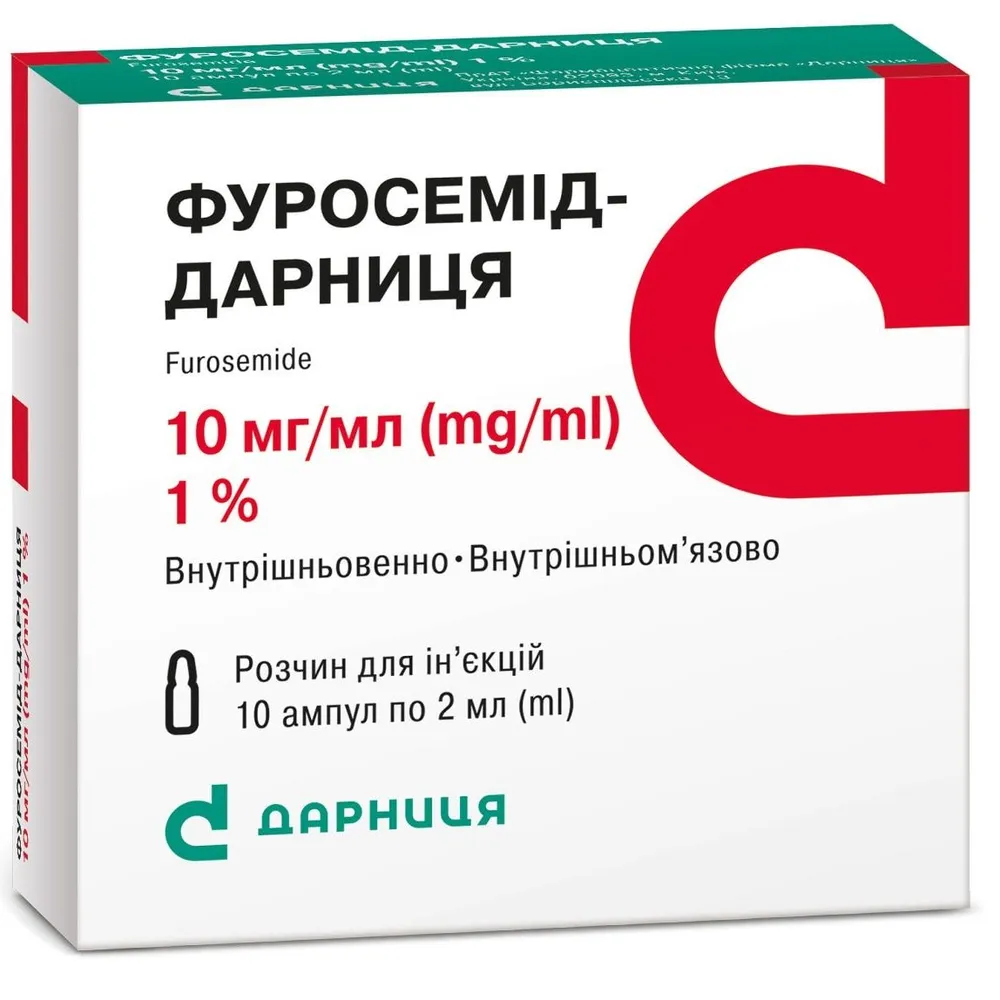
Table of Contents
INSTRUCTIONS FOR MEDICAL USE OF THE MEDICINAL PRODUCT FUROSEMIDE-DARNITSA (FUROSEMIDE-DARNITSA)
Composition:
Active substance: furosemide;
1 ml of solution contains furosemide 10 mg;
Excipients: sodium chloride, sodium hydroxide, water for injections.
Pharmaceutical form. Injection solution.
Main physicochemical properties: clear, colorless or slightly yellowish liquid.
Pharmacotherapeutic group. High-ceiling diuretics. Sulfonamide agents.
ATC code C03CA01.
Pharmacological Properties
Pharmacodynamics
Furosemide is a rapidly acting loop diuretic that produces a relatively strong and short-lived diuretic effect. Furosemide blocks the Na⁺K⁺2Cl⁻ cotransporter located in the basolateral membranes of cells in the thick ascending limb of the loop of Henle. Thus, the saluretic efficacy of furosemide depends on whether the drug reaches the tubular lumen via an anion-transport mechanism. The diuretic effect results from inhibition of sodium chloride reabsorption in this segment of the loop of Henle. As a result, fractional excretion of sodium may reach up to 35% of the glomerular filtration of sodium. Secondary effects of increased sodium excretion include enhanced water excretion (due to osmotically bound water) and increased distal tubular secretion of potassium. Excretion of calcium and magnesium ions is also increased. Furosemide induces dose-dependent stimulation of the renin-angiotensin-aldosterone system. In heart failure, furosemide causes an acute reduction in cardiac preload (by constricting capacitance veins). This early vascular effect is prostaglandin-mediated and requires adequate renal function with activation of the renin-angiotensin system and intact prostaglandin synthesis. In addition, due to its inherent natriuretic effect, furosemide reduces vascular smooth muscle responsiveness to stimulation by catecholamines, which is heightened in patients with arterial hypertension.
The antihypertensive efficacy of furosemide is explained by increased sodium excretion, reduced blood volume, and decreased responsiveness of vascular smooth muscle to vasoconstrictor stimuli or vasoconstricting agents.
The onset of diuretic effect occurs within 15 minutes after intravenous administration of the drug.
Dose-dependent increases in diuresis and natriuresis have been observed in healthy volunteers receiving furosemide at doses of 10–100 mg. The duration of action in healthy volunteers is approximately 3 hours after intravenous administration of 20 mg furosemide.
In patients, the relationship between unbound (free) furosemide concentrations within the tubular lumen (determined based on the rate of furosemide excretion in urine) and the natriuretic effect follows a sigmoidal curve, with a minimal effective rate of furosemide excretion of approximately 10 micrograms per minute. Therefore, continuous infusion of furosemide is more effective than repeated bolus injections. Moreover, beyond a certain bolus dose, no significant increase in effect is observed. The effect of furosemide is reduced if there is impaired tubular secretion or binding of the drug to albumin within the tubules.
Pharmacokinetics
The volume of distribution of furosemide ranges from 0.1 to 0.2 liters per kg of body weight. The volume of distribution may be higher depending on the disease state.
Furosemide (over 98%) forms strong complexes with plasma proteins, particularly albumin.
Furosemide is primarily excreted unchanged via secretion into the proximal tubule. After intravenous administration, 60–70% of the administered dose is excreted in this manner. The metabolite of furosemide—glucuronide—accounts for 10–20% of substances found in urine. The remainder is excreted in feces, likely via biliary secretion.
The terminal half-life of furosemide after intravenous administration is approximately 1 to 1.5 hours.
Furosemide crosses into breast milk, passes through the placental barrier, and slowly enters the fetus. Furosemide is detectable in the fetus or newborn at the same concentrations as in the mother.
Kidney disease. In renal impairment, elimination of furosemide is delayed and the half-life is prolonged; the terminal half-life may extend up to 24 hours in patients with severe renal insufficiency.
In nephrotic syndrome, reduced plasma protein concentrations lead to increased levels of unbound (free) furosemide. On the other hand, the efficacy of furosemide in these patients is reduced due to binding with intratubular albumin and decreased tubular secretion.
Furosemide is poorly dialyzable in patients undergoing hemodialysis, peritoneal dialysis, or chronic ambulatory peritoneal dialysis.
Hepatic insufficiency. In hepatic impairment, the half-life of furosemide increases by 30–90%, primarily due to an increased volume of distribution. It should also be noted that there is wide variability in all pharmacokinetic parameters in this patient group.
Congestive heart failure, severe arterial hypertension, elderly patients. Elimination of furosemide is delayed due to reduced renal function in patients with congestive heart failure, severe arterial hypertension, and in elderly patients.
Preterm and term infants. Depending on the degree of renal maturity, elimination of furosemide may be delayed. Drug metabolism is also reduced if infants have impaired glucuronidation capacity. The terminal half-life is less than 12 hours in fetuses from 33 weeks of gestation. In infants aged 2 months, the terminal clearance is similar to that in adult patients.
Clinical characteristics.
Indications.
Edema in chronic congestive heart failure (when treatment with diuretics is required).
Edema in acute congestive heart failure.
Edema in chronic renal failure.
Acute renal failure, including in pregnant women or during childbirth.
Edema in liver diseases (when necessary, as adjunctive therapy with aldosterone antagonists).
Hypertensive crisis (as supportive therapy).
Support of forced diuresis.
Contraindications.
Hypersensitivity to furosemide or to any of the excipients of the medicinal product. Cross-sensitivity may occur in patients with allergy to sulfonamides (e.g. sulfonamide antibiotics or sulfonylureas).
Hypovolemia or dehydration.
Renal failure with anuria, if no therapeutic response to furosemide is observed.
Renal failure due to nephrotoxic or hepatotoxic drugs.
Severe hypokalemia.
Severe hyponatremia.
Pre-comatose or comatose states associated with hepatic encephalopathy.
Interaction with other medicinal products and other forms of interaction.
Not recommended combinations.
In some cases, administration of furosemide within 24 hours after chloral hydrate may cause flushing, excessive sweating, agitation, nausea, increased blood pressure, and tachycardia. Therefore, concomitant use of furosemide and chloral hydrate is not recommended.
Furosemide may potentiate the ototoxicity of aminoglycosides and other ototoxic medicinal products. Since this may lead to irreversible damage, these medicinal products should not be used concomitantly with furosemide.
Combinations requiring precautions.
Concomitant use of cisplatin and furosemide increases the risk of ototoxic effects. In addition, nephrotoxicity of cisplatin may be enhanced if furosemide is not administered in low doses (e.g. 40 mg in patients with normal renal function) and with positive fluid balance, when the drug is used to achieve forced diuresis during cisplatin therapy.
Furosemide reduces the excretion of lithium salts and may lead to increased serum lithium levels, resulting in an increased risk of lithium toxicity, including a higher risk of cardiotoxic and neurotoxic effects of lithium. Therefore, careful monitoring of serum lithium levels is recommended in patients receiving this combination therapy.
Patients receiving diuretics may experience severe arterial hypotension and worsening of renal function, including renal failure, particularly upon initial administration of an angiotensin-converting enzyme inhibitor (ACE inhibitor) or angiotensin II receptor antagonist, or upon initiation of increased doses of these medicinal products. It is necessary to decide whether to temporarily discontinue furosemide or at least reduce the furosemide dose three days before starting treatment, or increasing the dose of ACE inhibitor or angiotensin II receptor antagonist.
Risperidone: caution should be exercised and the risk-benefit ratio carefully evaluated before deciding on combination therapy or concomitant use with furosemide or other potent diuretics.
Combinations to be used with caution.
Concomitant use of nonsteroidal anti-inflammatory drugs (NSAIDs), including acetylsalicylic acid, may reduce the effect of furosemide. In patients with dehydration or hypovolemia, NSAIDs may lead to acute heart failure. Under the influence of furosemide, salicylate toxicity may increase.
Reduced efficacy of furosemide may occur when used concomitantly with phenytoin.
The use of corticosteroids, carbenoxolone, licorice root in high doses, and prolonged use of laxatives may increase the risk of developing hypokalemia.
Certain electrolyte imbalances (such as hypokalemia, hypomagnesemia) may increase the toxicity of certain other medicinal products (e.g. digitalis preparations and medicinal products causing QT prolongation syndrome).
When antihypertensive agents, diuretics, or other medicinal products with blood pressure-lowering properties are used concomitantly with furosemide, an additional reduction in blood pressure should be expected.
Probenecid, methotrexate, and other medicinal products that, like furosemide, undergo significant tubular secretion in the kidneys, may reduce the efficacy of furosemide. Conversely, furosemide may reduce renal excretion of these medicinal products. Treatment with high doses (both furosemide and other medicinal products) may lead to increased serum levels and an increased risk of adverse effects caused by furosemide or concomitant therapy.
The efficacy of antidiabetic agents and sympathomimetics with blood pressure-raising properties (e.g. epinephrine, norepinephrine) may be reduced. The action of curare-like muscle relaxants or theophylline may be enhanced.
The harmful effect of nephrotoxic medicinal products on the kidneys may be intensified.
Renal function impairment may develop in patients receiving concomitant therapy with furosemide and high doses of certain cephalosporins.
Concomitant use of cyclosporine A and furosemide is associated with an increased risk of gouty arthritis secondary to hyperuricemia caused by furosemide and impaired renal excretion of urates caused by cyclosporine.
In patients at high risk of contrast-induced nephropathy, treatment with furosemide has been associated with a higher frequency of worsening renal function after administration of contrast agents compared to patients at high risk who received only intravenous hydration prior to contrast agent administration.
Special precautions for use
During treatment with the medicinal product Furosemide-Darnitsia, continuous urine flow must be ensured. Patients with partial obstruction of urine flow require close monitoring, especially during the initial stages of treatment.
Treatment with the medicinal product Furosemide-Darnitsia requires regular medical supervision of the patient. Particularly careful monitoring is necessary for:
- patients with arterial hypotension;
- patients who belong to a high-risk group due to significant reduction in arterial pressure, for example patients with severe coronary artery stenosis or stenosis of blood vessels supplying the brain;
- patients with latent or overt diabetes mellitus;
- patients with gout;
- patients with hepatorenal syndrome, i.e. functional renal failure associated with severe liver disease;
- patients with hypoproteinaemia, for example associated with nephrotic syndrome (the effect of furosemide may be reduced while ototoxicity may be potentiated); careful dose titration is required;
- premature infants (risk of developing nephrocalcinosis/nephrolithiasis); monitoring of renal function and renal ultrasound should be performed.
Regular monitoring of serum sodium, potassium and creatinine levels is generally recommended during furosemide therapy. Patients at high risk of developing electrolyte imbalances or those with significant additional fluid loss (e.g. due to vomiting, diarrhoea or excessive sweating) require particularly careful monitoring. Hypovolemia or dehydration, as well as any significant disturbances in electrolyte and acid-base balance, should be corrected. This may require temporary discontinuation of furosemide therapy.
Factors influencing the development of electrolyte imbalances include underlying diseases (e.g. liver cirrhosis, heart failure), concomitant use of medicinal products, and diet. For example, potassium deficiency may occur as a result of vomiting or diarrhoea.
When using the medicinal product Furosemide-Darnitsia, it is advisable to recommend to the patient a diet rich in potassium (baked potatoes, bananas, tomatoes, spinach, dried fruits). It should be remembered that during treatment with Furosemide-Darnitsia, pharmacological correction of potassium deficiency may become necessary.
In placebo-controlled trials of risperidone among elderly patients with dementia, a higher mortality rate was observed in patients receiving furosemide concomitantly with risperidone, compared to patients receiving risperidone alone or furosemide alone.
Caution should be exercised and risks and benefits carefully weighed before deciding to use this combination or concurrent treatment with other potent diuretics. Dehydration should be avoided.
Concomitant use of alcohol and the medicinal product Furosemide-Darnitsia should be avoided.
Use during pregnancy or breastfeeding
Pregnancy. Furosemide crosses the placental barrier. It should not be administered during pregnancy except in cases where treatment is indicated for life-threatening conditions. Treatment with the medicinal product during pregnancy requires monitoring of fetal growth and development.
Breastfeeding period. Furosemide passes into breast milk and may suppress lactation. Women should discontinue breastfeeding during treatment with furosemide.
Ability to affect reaction speed while driving or operating machinery
When using the medicinal product Furosemide-Darnitsia, certain adverse effects (e.g. unexpected marked decrease in blood pressure) may impair the patient's ability to concentrate and reaction speed.
Therefore, patients should refrain from driving vehicles or operating machinery during treatment.
Method of Administration and Dosage.
The dosing regimen should be individually determined by a physician depending on the severity of water-electrolyte imbalances, glomerular filtration rate, and the patient's overall condition. During treatment, water-electrolyte balance parameters should be monitored and adjusted according to diuresis and the patient's clinical status.
Furosemide should be administered intravenously only when oral administration is inappropriate or ineffective (e.g., due to impaired intestinal absorption) or when a rapid effect is required. When intravenous therapy is used, a prompt transition to oral administration should be initiated as soon as possible.
For optimal efficacy and to prevent counter-regulatory mechanisms, continuous intravenous infusion of furosemide is generally preferred over repeated bolus injections.
When continuous infusion of furosemide is not feasible for further treatment after one or several bolus doses, a regimen involving lower doses administered at short intervals (approximately every 4 hours) is preferred over larger bolus doses given at longer intervals.
The recommended maximum daily dose of furosemide for adults is 1500 mg.
The recommended dose of furosemide for parenteral administration in children is 1 mg/kg body weight, with a maximum daily dose not exceeding 20 mg.
Special Dosing Recommendations.
Dosing for adults is generally based on the following recommendations.
Edema in chronic congestive heart failure. The recommended initial dose is 20–50 mg per day. The dose may be adjusted according to the patient's therapeutic response. The daily dose should be divided into 2 or 3 doses.
Edema in acute congestive heart failure. The recommended initial dose is 20–40 mg administered as a bolus injection. The dose may be adjusted according to the patient's therapeutic response.
Edema in chronic renal failure. The natriuretic effect of furosemide depends on several factors, including the severity of renal impairment and sodium balance. Therefore, the effectiveness of a given dose cannot be precisely predicted. Patients with chronic renal failure should be carefully titrated to ensure gradual initial fluid loss. In adult patients, this corresponds to a dose resulting in a daily body weight reduction of approximately 2 kg (about 280 mmol Na+).
When administered intravenously, the dose of furosemide can be determined as follows: treatment begins with a continuous intravenous infusion of 0.1 mg/min, and the infusion rate is increased every 30 minutes depending on the patient's response.
In acute renal failure, hypovolemia, arterial hypotension, and significant electrolyte and acid-base imbalances should be corrected before initiating furosemide therapy.
A prompt transition from intravenous to oral administration is recommended.
The recommended initial dose is 40 mg administered as an intravenous injection. If this dose does not produce the desired increase in fluid excretion, furosemide may be administered as a continuous intravenous infusion, starting at 50–100 mg per hour.
Edema in liver disease. Furosemide is prescribed as an adjunct to aldosterone antagonists when monotherapy with aldosterone antagonists is insufficient. To prevent complications such as orthostatic hypotension or disturbances in electrolyte and acid-base balance, the dose should be carefully titrated to ensure gradual initial fluid loss. In adult patients, this corresponds to a dose resulting in a daily body weight reduction of approximately 0.5 kg. If intravenous administration is absolutely necessary, the initial single dose is 20–40 mg.
Hypertensive crisis. The recommended initial dose of 20–40 mg is administered as an intravenous bolus injection. The dose may be adjusted according to the patient's therapeutic response.
Forced diuresis in poisoning. Furosemide is administered intravenously in addition to electrolyte solution infusions. The dose depends on the therapeutic response to furosemide. Fluid and electrolyte losses should be monitored and replaced before and during treatment. In cases of poisoning with acidic or alkaline substances, fluid excretion can be enhanced by alkalinizing or acidifying the urine, respectively.
The recommended initial dose is 20–40 mg administered intravenously.
Special Administration Instructions.
Intravenous injection/infusion: When administered intravenously, furosemide should be given as a slow injection or infusion at a rate not exceeding 4 mg per minute. In patients with severe hepatic dysfunction (serum creatinine > 5 mg/dL), the infusion rate should not exceed 2.5 mg per minute.
Intramuscular injection: Administration of the drug via intramuscular injection should be limited to exceptional cases when oral and intravenous administration are not feasible. It should be noted that intramuscular injection is not suitable for the treatment of acute conditions such as pulmonary edema.
Do not administer Furosemide-Darnitsia infusion together with other medicinal products!
Furosemide-Darnitsia is a solution with a pH of 8.8 to 9.8 and has no buffering capacity. Therefore, the active ingredient may precipitate at pH values below 7. When diluting this solution, ensure that the pH of the diluted solution remains within the weakly alkaline to neutral range.
0.9% sodium chloride solution may be used as a diluent. Diluted solutions should be used as soon as possible.
Children.
Dosage in children should be adjusted according to body weight (see section "Method of Administration and Dosage").
Overdose.
Symptoms: The clinical picture of acute or chronic overdose primarily depends on the degree and consequences of fluid and electrolyte loss and includes signs such as hypovolemia, dehydration, hemoconcentration, cardiac arrhythmias (including AV block and ventricular fibrillation). Symptoms of these disturbances include severe arterial hypotension (progressing to shock), acute renal failure, thrombosis, delirium, peripheral paralysis, apathy, and confusion.
Treatment: There are no specific antidotes for furosemide. Treatment is symptomatic.
Adverse Reactions.
Auditory and vestibular system disorders: hearing disturbances, usually transient, particularly in patients with renal insufficiency, hypoproteinaemia (e.g., in nephrotic syndrome), and/or in cases of too rapid intravenous administration of furosemide. Cases of deafness, sometimes irreversible, have been reported after oral or intravenous administration of furosemide. Tinnitus.
Gastrointestinal disorders: nausea, vomiting, diarrhoea, acute pancreatitis.
Hepatobiliary disorders: cholestasis, increased transaminase levels.
Renal and urinary disorders: tubulointerstitial nephritis, increased urine volume, increased urinary sodium levels, increased urinary chloride levels, urinary retention (in patients with partial obstruction of urinary outflow), nephrocalcinosis/nephrolithiasis in premature infants, renal failure.
Metabolic and nutritional disorders: electrolyte imbalance (including with clinical manifestations), dehydration and hypovolaemia, particularly in elderly patients, hyponatraemia, hypochloraemia, hypokalaemia, hypocalcaemia, hypomagnesaemia, metabolic alkalosis, increased blood triglyceride levels, increased blood cholesterol levels, increased blood creatinine levels, increased blood uric acid levels, gout attacks, increased blood urea levels, decreased glucose tolerance, latent diabetes mellitus may become overt, pseudobarter syndrome due to incorrect and/or prolonged use of furosemide.
Nervous system disorders: paraesthesia, hepatic encephalopathy in patients with hepatocellular insufficiency.
Cardiovascular disorders: hypotension, including orthostatic hypotension, vasculitis, thrombosis.
Blood and lymphatic system disorders: haemoconcentration, thrombocytopenia, leucopenia, eosinophilia, agranulocytosis, aplastic anaemia or haemolytic anaemia.
Immune system disorders: severe anaphylactic and anaphylactoid reactions (including those accompanied by shock).
Skin and subcutaneous tissue disorders: pruritus, urticaria, rash, bullous dermatitis, erythema multiforme, pemphigoid, exfoliative dermatitis, purpura, photosensitivity reaction, Stevens–Johnson syndrome, toxic epidermal necrolysis, acute generalized exanthematous pustulosis, and DRESS syndrome (drug reaction with eosinophilia and systemic symptoms).
General disorders and administration site conditions: increased body temperature, local reactions, e.g., pain after intramuscular injection.
Congenital and hereditary/genetic disorders: increased risk of failure of arterial duct closure if furosemide is administered to premature infants during the first days of life.
Shelf life. 3 years.
Storage conditions.
Store in the original packaging, protected from light, at a temperature not exceeding 25 °C. Do not freeze. Keep out of the reach of children.
Packaging.
2 ml in an ampoule; 10 ampoules in a blister pack; 1 blister pack in a carton; 2 ml in an ampoule; 5 ampoules in a blister pack; 2 blister packs in a carton.
Prescription status. Prescription only.
Manufacturer. JSC "Pharmaceutical company "Darnytsia".
Manufacturer's address.
13, Borispilska Street, Kyiv, 02093, Ukraine.