Freeway® combi
Ukraine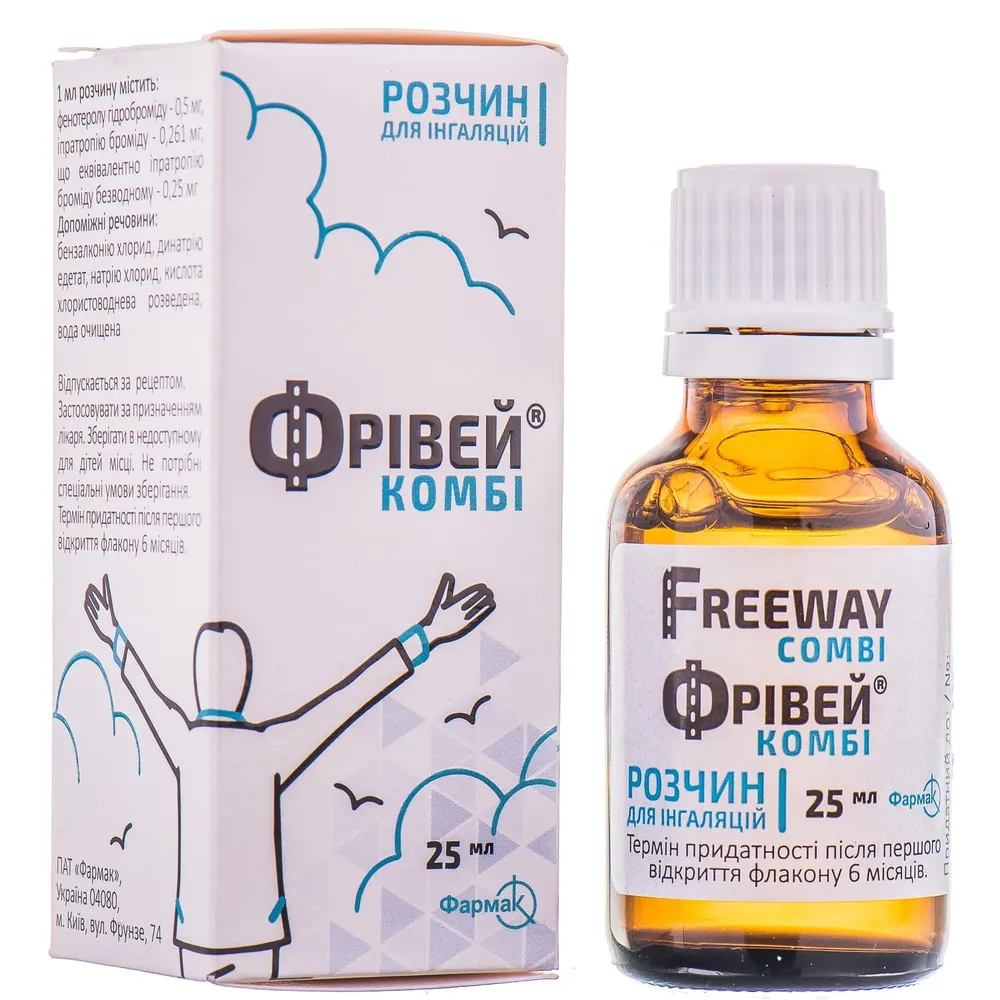
Table of Contents
INSTRUCTIONS FOR MEDICAL USE OF THE MEDICINAL PRODUCT FRIVEY® COMBI (FREEWAY COMBI)
Composition:
Active substances: fenoterol hydrobromide, ipratropium bromide;
1 ml of solution contains: fenoterol hydrobromide – 0.5 mg; ipratropium bromide – 0.261 mg, equivalent to anhydrous ipratropium bromide – 0.25 mg;
Excipients: benzalkonium chloride, disodium edetate, sodium chloride, hydrochloric acid diluted, purified water.
Pharmaceutical form. Solution for inhalation.
Main physicochemical properties: clear, colorless liquid.
Pharmacotherapeutic group. Drugs for the treatment of obstructive respiratory diseases. Adrenergic agents in combination with anticholinergic agents.
ATC code R03AL01.
Pharmacological Properties.
Pharmacodynamics.
Fryway® Combi contains two active bronchodilator ingredients: ipratropium bromide, which exhibits an anticholinergic effect, and fenoterol hydrobromide, a beta-adrenomimetic agent.
Ipratropium bromide is a quaternary ammonium compound with anticholinergic (parasympatholytic) properties. It inhibits vagal reflexes through antagonistic interaction with acetylcholine, the neurotransmitter responsible for vagus nerve impulse transmission. Anticholinergic agents prevent the increase in intracellular Ca++ concentration resulting from acetylcholine interaction with muscarinic receptors on smooth muscle. The release of Ca++ is facilitated by another mediator system composed of IP3 (inositol triphosphate) and DAG (diacylglycerol).
Bronchodilation following inhaled ipratropium bromide is primarily due to the local, specific action of the drug, which is not systemic.
Fenoterol hydrobromide is a direct sympathomimetic agent that selectively stimulates beta2-adrenergic receptors within the therapeutic range. At higher doses, stimulation of beta1-adrenergic receptors also occurs. Binding to beta2-adrenergic receptors via the activating Gs-protein leads to activation of adenylate cyclase. Increased levels of cyclic AMP result in activation of protein kinase A and phosphorylation of relevant proteins in smooth muscle cells. This, in turn, leads to phosphorylation of myosin light chain kinase, inhibition of phosphoinositide hydrolysis, and opening of large calcium-activated potassium channels.
Fenoterol hydrobromide induces relaxation of bronchial and vascular smooth muscles and protects against bronchoconstrictor stimuli such as histamine, methacholine, cold air, and allergens (immediate-type reactions). After single administration, fenoterol inhibits the release of bronchoconstrictor and pro-inflammatory mediators from mast cells. Following fenoterol administration at a dose of 0.6 mg, improvement in mucociliary clearance has been observed.
At higher plasma concentrations of fenoterol, more commonly achieved with oral or even intravenous administration, a reduction in uterine contractility has been noted. Additionally, metabolic effects may occur at high doses: lipolysis, glycogenolysis, hyperglycemia, and hypokalemia, the latter resulting from increased K+ uptake, particularly in skeletal muscle. Beta-adrenergic effects of fenoterol on the heart, including increased heart rate and cardiac contractions, are related to vascular effects of fenoterol, stimulation of cardiac beta2-adrenergic receptors, and, at supratherapeutic doses, stimulation of beta1-adrenergic receptors. As with other beta-adrenergic agents, QTc prolongation has been observed. For fenoterol in the form of metered aerosol, these effects are discrete and occur only at doses exceeding recommended levels. However, systemic effects of fenoterol (solution for inhalation) following administration via nebulizer may be higher than with recommended doses of metered aerosol. The clinical significance of this is not established. The most commonly observed adverse effect with beta-mimetics is tremor. In contrast to its effect on bronchial smooth muscle, systemic effects of beta-mimetics on skeletal muscle may lead to the development of tolerance.
When two active bronchodilators are used concomitantly, bronchodilation occurs via two distinct pharmacological mechanisms. Thus, the two active substances exert a combined spasmolytic effect on bronchial muscles, allowing broad application in respiratory diseases associated with impaired airway patency. For effective combined action, only a very small amount of beta-mimetic is required, enabling individual dose titration and reduction in the number of adverse effects.
Pharmacokinetics.
The therapeutic effect of the combination of ipratropium bromide and fenoterol hydrobromide is achieved through local action on the respiratory tract. Therefore, the pharmacokinetics of bronchodilation are not directly related to the pharmacokinetics of the active ingredients.
After inhalation, approximately 10–39% of the administered dose deposits in the lungs, depending on the formulation, inhalation technique, and delivery device; the remainder remains in the inhaler mouthpiece, mouth, and upper respiratory tract (oropharynx).
There is no evidence that the pharmacokinetics of the combination differ from those of the individual components.
Fenoterol hydrobromide. The portion of the drug that is swallowed is primarily metabolized to sulfate conjugates. Absolute bioavailability after oral administration is low (approximately 1.5%).
After intravenous administration, the fractions of free and conjugated fenoterol excreted in urine over 24 hours amount to 15% and 27% of the administered dose, respectively. After inhalation via metered-dose aerosol, approximately 1% of the inhaled dose is excreted in urine as free fenoterol. Based on this, the total systemic bioavailability of inhaled fenoterol hydrobromide is estimated to be 7%.
Kinetic parameters characterizing fenoterol disposition were calculated based on plasma concentrations after intravenous administration. After intravenous dosing, the plasma concentration–time profile can be described by a three-compartment model, with a terminal elimination half-life of approximately 3 hours. According to this three-compartment model, the expected steady-state volume of distribution (Vdss) of fenoterol is approximately 189 L (≈ 2.7 L/kg).
Approximately 40% of the drug is protein-bound in plasma. Preclinical animal studies have shown that fenoterol and its metabolites cross the blood-brain barrier. Total fenoterol clearance is 1.8 L/min, with renal clearance at 0.27 L/min.
In mass balance studies, total renal excretion (over 2 days) of radioactivity (including parent compound and all metabolites) accounted for 65% of the dose after intravenous administration, while total fecal excretion of radioactivity was 14.8% of the dose. After oral administration, total urinary excretion of radioactivity was approximately 39% of the dose, and total fecal excretion was 40.2% of the dose over 48 hours.
Ipratropium bromide. Cumulative renal excretion (0–24 hours) of ipratropium (parent compound) was approximately 46% of the dose after intravenous administration, less than 1% after oral administration, and approximately 3–13% after inhalation via metered-dose inhaler. Based on these data, total systemic bioavailability of ipratropium bromide after oral and inhaled administration is estimated at 2% and 7–28%, respectively. Therefore, the swallowed portion of ipratropium bromide has minimal impact on systemic exposure.
Kinetic parameters characterizing ipratropium disposition were calculated based on plasma concentrations after intravenous administration. A rapid biphasic decline in plasma concentration is observed. The expected steady-state volume of distribution (Vdss) is approximately 176 L (≈ 2.4 L/kg). The drug binds minimally (<20%) to plasma proteins. Preclinical animal studies indicate that the quaternary amine ipratropium does not cross the blood-brain barrier.
The terminal elimination half-life is approximately 1.6 hours. Total clearance of ipratropium is 2.3 L/min, with renal clearance at 0.9 L/min. After intravenous administration, approximately 60% of the dose is metabolized, likely primarily in the liver via oxidation.
In mass balance studies, total renal excretion (over 6 days) of radioactivity (including parent compound and all metabolites) accounted for 72.1% of the dose after intravenous administration, 9.3% after oral administration, and 3.2% after inhalation. Total fecal excretion of radioactivity was 6.3% of the dose after intravenous administration, 88.5% after oral administration, and 69.4% after inhalation. The primary route of elimination of radioactivity after intravenous administration is renal. The elimination half-life of radioactivity (parent compound and all metabolites) is 3.6 hours. Binding of major metabolites in urine to muscarinic receptors is negligible, and metabolites are considered pharmacologically inactive.
Clinical characteristics.
Indications.
Prophylaxis and symptomatic treatment of chronic obstructive airway disorders: allergic and non-allergic (endogenous) bronchial asthma; exercise-induced asthma; chronic obstructive bronchitis with and without emphysema.
During long-term therapy, concomitant anti-inflammatory treatment should be prescribed.
Contraindications.
Hypersensitivity to fenoterol hydrobromide, anticholinergic substances, or any other component of the drug; hypertrophic obstructive cardiomyopathy; tachyarrhythmia.
Interaction with other medicinal products and other forms of interactions.
Chronic concomitant use of Frevay® Combi with other anticholinergic agents has not been studied and is therefore not recommended.
Concomitant administration of the following medicinal products/classes of medicinal products may affect the efficacy of Frevay® Combi.
Enhancement of effect and/or increased risk of adverse reactions:
- other beta-adrenergic agents (all routes of administration);
- other anticholinergic agents (all routes of administration);
- xanthine derivatives (e.g., theophylline);
- anti-inflammatory agents (corticosteroids);
- monoamine oxidase inhibitors;
- tricyclic antidepressants;
- halogenated hydrocarbon anesthetics (e.g., halothane, trichloroethylene, and enflurane). These may particularly enhance cardiovascular effects.
Reduction of effect:
- concomitant administration of beta-blockers.
Other possible interactions
Hypokalemia associated with the use of beta-mimetics may be potentiated by concomitant administration of xanthine derivatives, corticosteroids, and diuretics. This should be given particular attention in patients with severe airway obstruction.
Hypokalemia may increase the risk of arrhythmias in patients receiving digoxin. In addition, hypoxia may exacerbate the negative effects of hypokalemia on cardiac rhythm. In such cases, monitoring of serum potassium levels is recommended.
The risk of acute glaucoma attack (see section "Special precautions") is increased both by inadvertent ocular exposure to nebulized ipratropium and by its use in combination with beta2-agonists.
Treatment with Frevay® Combi may also reduce the hypoglycemic effect of antidiabetic medicinal products. However, this is expected only at high doses, typically used for systemic administration (in tablet form or by injection/infusion).
If inhalational anesthetics are planned, it should be noted that fenoterol administration should be discontinued at least 6 hours prior to anesthesia induction.
Special precautions for use.
In case of acute dyspnea (difficulty breathing) that rapidly progresses, immediate medical attention should be sought.
Like other inhaled medicinal products, Frevay® Combi may cause paradoxical bronchospasm, which can be life-threatening. If paradoxical bronchospasm occurs, administration of Frevay® Combi must be discontinued immediately and alternative therapy initiated.
Conditions in which Frevay® Combi should be used only after careful risk-benefit assessment, especially if the dose exceeds the recommended one:
- poorly controlled diabetes mellitus;
- recent myocardial infarction;
- myocarditis;
- severe organic heart or vascular disease (particularly in the presence of tachycardia);
- hyperthyroidism;
- pheochromocytoma;
- use of cardiac glycosides;
- severe untreated arterial hypertension;
- aneurysm.
Cardiovascular effects may occur with the use of sympathomimetic medicinal agents, including Frevay® Combi. Post-marketing data and publications report isolated cases of myocardial ischemia associated with beta-agonists. Patients with underlying severe cardiac disease (e.g., ischemic heart disease, arrhythmia, or severe heart failure) receiving Frevay® Combi should be advised to seek medical help if they experience chest pain or other symptoms of worsening cardiac function. Careful evaluation of symptoms such as dyspnea and chest pain is necessary, as they may be of respiratory or cardiac origin.
Frevay® Combi, like other anticholinergic agents, should be used with caution in:
- patients predisposed to angle-closure glaucoma;
- patients with existing urinary tract obstruction (e.g., benign prostatic hyperplasia or intravesical obstruction);
- patients with renal impairment;
- patients with hepatic impairment.
There have been reports of isolated cases of ocular complications (such as mydriasis, increased intraocular pressure, angle-closure glaucoma, eye pain) resulting from aerosolized ipratropium bromide or its combination with beta2-agonists entering the eye.
Caution! Patients must be thoroughly instructed on the proper use of Frevay® Combi, solution for inhalation. Care should be taken to avoid spraying the medication into the eyes.
Symptoms of acute angle-closure glaucoma include:
- eye pain or discomfort;
- blurred vision;
- perception of halos;
- perception of colored spots before the eyes;
- eye redness due to conjunctival or corneal hyperemia.
If any of the above symptoms occur in any combination, treatment with miotic eye drops should be initiated immediately and specialized medical help sought without delay.
Patients with cystic fibrosis may be more susceptible to gastrointestinal motility disorders when using the drug.
Long-term use.
- In patients with bronchial asthma, Frevay® Combi should be used only as needed. In patients with mild forms of COPD, on-demand (symptomatic) treatment may be more appropriate than regular use.
- It is important to remember the need for initiating or intensifying anti-inflammatory therapy to control airway inflammation and prevent worsening disease control in patients with bronchial asthma or steroid-dependent forms of COPD.
Regular use of increased doses of drugs containing beta2-agonists, such as Frevay® Combi, to relieve bronchial obstruction symptoms may lead to worsening disease control.
If bronchial obstruction worsens, simply increasing the dose of beta2-agonists, including Frevay® Combi, beyond the recommended dose over a prolonged period is not only unjustified but also dangerous. To prevent life-threatening deterioration, the patient's treatment plan should be reassessed and adequate anti-inflammatory therapy with inhaled corticosteroids considered.
There have been reports of several cases of increased risk of serious complications of the underlying disease, as well as fatal outcomes, with long-term treatment of bronchial asthma using excessively high doses of inhaled beta2-sympathomimetics without sufficient anti-inflammatory therapy. The causal relationship has not been fully elucidated. However, adequate anti-inflammatory therapy is critically important.
Other sympathomimetic bronchodilators should be administered concurrently with Frevay® Combi only under medical supervision (see section "Interaction with other medicinal products and other forms of interaction").
High-dose beta2-agonist therapy may lead to potentially severe hypokalemia (see section "Overdose"). Monitoring of serum potassium levels is recommended in patients with low baseline potassium levels. Increased blood glucose levels may also occur; therefore, blood glucose levels should be monitored in patients with diabetes mellitus.
In rare cases, immediate hypersensitivity reactions such as urticaria, angioedema, rash, bronchospasm, oropharyngeal edema, and allergic reactions may occur after administration of Frevay® Combi.
The product contains the preservative benzalkonium chloride and the stabilizer disodium edetate. These components may cause bronchospasm in patients with hyperreactive airways.
Use of Frevay® Combi may result in positive doping test results.
Use during pregnancy or breastfeeding.
Preclinical data have not shown any adverse effects of fenoterol and ipratropium on pregnancy. However, usual precautions regarding drug use during pregnancy should be observed. The inhibitory effect of fenoterol on uterine contractility should be considered. Use of beta2-sympathomimetics at the end of pregnancy or in high doses may adversely affect the neonate (tremor, tachycardia, blood glucose fluctuations, hypokalemia).
Fenoterol hydrobromide passes into breast milk. Data on the passage of ipratropium into breast milk are lacking. It is unlikely that ipratropium would reach the infant in significant amounts, especially when administered by inhalation. Frevay® Combi should be prescribed with caution to breastfeeding women.
Data on the effects of ipratropium bromide and fenoterol hydrobromide, both in combination and individually, on fertility are lacking. Preclinical studies with the individual components—ipratropium bromide and fenoterol hydrobromide—showed no adverse effects on fertility.
Ability to influence reaction speed when driving or operating machinery.
No studies have been conducted. Patients should be warned about the possible occurrence of adverse reactions such as dizziness, tremor, accommodation disorders, mydriasis, and blurred vision during treatment with Frevay® Combi. Caution should be exercised when driving or operating machinery. If any adverse reactions occur, patients should avoid potentially hazardous activities.
Method of Administration and Dosage
For inhalation only using a nebulizer.
Treatment should be initiated and conducted under medical supervision, for example, in a hospital setting.
Home treatment, following consultation with an experienced physician, may be recommended for patients in whom the use of low-dose short-acting beta-agonists has been insufficient to relieve symptoms. Home treatment may also be recommended for patients requiring the use of a nebulizer for other reasons (e.g., due to difficulties with aerosol use), or due to the need for higher doses in patients familiar with nebulizer use. Therapy should always begin with the lowest recommended dose.
The dose should be individually adjusted depending on the severity of the acute episode.
Administration of the drug should be discontinued once symptom relief is achieved.
The inhalation solution is intended solely for inhalation via a suitable nebulizer and must not be taken orally.
For administration, the recommended dose should be diluted with physiological saline (0.9%) to a final volume of 3–4 mL. 1 mL of Freeway® Combi inhalation solution contains 20 drops. The diluted, ready-to-use solution should be inhaled until adequate symptom relief is achieved.
The diluted, ready-to-use solution must be freshly prepared each time before use. The prepared solution should be used immediately after preparation; any remaining diluted solution must be discarded. Patients must follow the manufacturer's instructions for the nebulizer.
The solution intended for use with a nebulizer is recommended to be inhaled via a mouthpiece. In the absence of a mouthpiece, a face mask that fits tightly to the face should be used. Patients with a predisposition to glaucoma should take special care to protect their eyes.
Freeway® Combi inhalation solution can be used with various nebulizer models. The total dose and the dose reaching the lungs depend on the nebulizer used and may be higher than with the aerosol formulation of ipratropium bromide and fenoterol hydrobromide, depending on the device's efficiency.
Recommended Dosage Regimens
Adults and children aged 12 years and older
Emergency treatment of sudden bronchospasm attacks.
Depending on the severity of the acute attack, 1.0–2.5 mL of Freeway® Combi should be used, diluted with physiological saline to a volume of 3–4 mL.
In exceptionally severe cases, up to 4 mL of Freeway® Combi may be used, diluted with physiological saline to a volume of 3–4 mL.
For prevention of exercise-induced asthma or anticipated allergic exposure, 0.1–0.2 mL of Freeway® Combi diluted with 2–3 mL of physiological saline should be administered, if possible, 10–15 minutes before the event.
Children aged 6–12 years
Emergency treatment of acute asthma attacks.
Depending on the severity of the acute attack and the patient's age, 0.5–2.0 mL of Freeway® Combi should be used, diluted with physiological saline to a volume of 3–4 mL.
For prevention of exercise-induced asthma or anticipated allergic exposure, 0.1–0.2 mL of Freeway® Combi diluted with 2–3 mL of physiological saline should be administered, if possible, 10–15 minutes before the event.
Children under 6 years of age (with body weight less than 22 kg)
Due to limited information on the use of the drug in this age group, it is recommended to administer the drug in the dose specified below only under medical supervision:
0.1 mL per 1 kg body weight (maximum up to 0.5 mL) per dose, diluted with physiological saline to a volume of 3–4 mL.
Freeway® Combi inhalation solution must not be diluted with distilled water.
Freeway® Combi is compatible for co-administration via inhalation with ambroxol in both inhalation and oral dosage forms.
Children
Freeway® Combi is used in pediatric practice. In children under 6 years of age, the drug should be prescribed only under medical supervision.
Overdose
Symptoms
Depending on the duration of overdose, the following adverse reactions typical of beta2-adrenergic agents may occur: flushing, mild dizziness, headache, tachycardia, rapid heartbeat, arrhythmia, arterial hypotension or even shock, arterial hypertension, restlessness, chest pain, excitement, possible extrasystoles, and pronounced tremor in fingers and throughout the body. Hyperglycemia may develop.
Gastrointestinal complaints, including nausea and vomiting, may occur, especially after oral overdose.
When fenoterol is administered at doses higher than recommended for the indications of Freeway® Combi, metabolic acidosis and hypokalemia have been observed.
Symptoms of ipratropium bromide overdose (dry mouth, visual accommodation disturbances) are mild due to the very low systemic bioavailability of inhaled ipratropium.
Treatment
Treatment with Freeway® Combi should be discontinued. Acid-base balance and electrolyte monitoring should be considered.
Administration of sedatives and tranquilizers; in severe cases, intensive therapy including hospitalization is required. Beta-adrenoreceptor blockers (preferably beta1-selective) may be used as specific antidotes for fenoterol; however, the potential for increased bronchial obstruction due to beta-blockers must be taken into account, and doses should be carefully selected in patients with bronchial asthma or COPD due to the risk of acute bronchospasm, which may be fatal.
Cardiac monitoring, particularly ECG, is recommended.
Adverse Reactions
Most of the adverse effects listed below can be explained by the anticholinergic and beta-adrenergic properties of FREEWAY® COMBI.
Adverse reactions to the medicinal product were identified based on data obtained during clinical trials and post-marketing pharmacovigilance.
Frequency according to the MedDRA Convention: very common (≥ 1/10); common (≥ 1/100, < 1/10);
uncommon (≥ 1/1000, < 1/100); rare (≥ 1/10,000, < 1/1000); very rare (< 1/10,000); not known (cannot be estimated from the available data).
Immune system disorders:
Rare – anaphylactic reactions*, hypersensitivity*; not known – purpura.
Metabolism and nutrition disorders:
Rare – hypokalaemia; very rare – increased blood glucose levels.
Psychiatric disorders:
Uncommon – nervousness; rare – agitation, psychiatric changes.
Psychiatric disturbances manifest as increased excitability, hyperactive behaviour, sleep disorders, and hallucinations. These were observed mainly in children under 12 years of age.
Nervous system disorders:
Uncommon – headache, tremor, dizziness; not known – hyperactivity.
Eye disorders:
Rare – glaucoma*, increased intraocular pressure*, accommodation disorders*, mydriasis*, blurred vision*, eye pain*, corneal oedema*, conjunctival hyperaemia*, visual halos*.
Cardiac disorders:
Uncommon – tachycardia, palpitations; rare – arrhythmias, atrial fibrillation, supraventricular tachycardia*, myocardial ischaemia*; not known – angina pectoris, ventricular extrasystoles.
Respiratory, thoracic and mediastinal disorders:
Common – cough; uncommon – pharyngitis, dysphonia; rare – bronchospasm, throat irritation, pharyngeal oedema, laryngospasm*, paradoxical bronchospasm (induced by inhalation)*, dry throat*; not known – local irritation.
Gastrointestinal disorders:
Uncommon – nausea, vomiting, dry mouth; rare – stomatitis, glossitis, gastrointestinal motility disorders**, diarrhoea, constipation*, oedema of the oral mucosa*, heartburn.
Skin and subcutaneous tissue disorders:
Rare – urticaria, rash, pruritus, angioedema*, petechiae, hyperhidrosis*.
Musculoskeletal and connective tissue disorders:
Rare – muscle weakness, muscle spasm, myalgia.
Renal and urinary disorders:
Rare – urinary retention.
Investigations:
Uncommon – increased systolic blood pressure; rare – decreased diastolic blood pressure, thrombocytopenia.
* Adverse reactions not observed in any clinical trial of the medicinal product. Frequency is based on the upper limit of the 95% confidence interval calculated from the total number of patients treated, according to the EU Guideline on the Summary of Product Characteristics (3/4968 = 0.00060, corresponding to "rare" reactions).
** Patients with cystic fibrosis may be particularly susceptible to gastrointestinal motility disorders when using inhaled anticholinergic agents (contained in FREEWAY® COMBI).
Like other inhaled medicinal products, FREEWAY® COMBI may cause symptoms of local irritation. The most commonly reported adverse effects observed during clinical trials were cough, dry mouth, headache, tremor, pharyngitis, nausea, dizziness, dysphonia, tachycardia, palpitations, vomiting, increased systolic blood pressure, and nervousness.
Shelf life. 2 years.
Shelf life after first opening of the bottle: 6 months.
Do not use the medicinal product after the expiry date stated on the packaging.
Storage conditions.
No special storage conditions required.
Keep out of the reach of children.
Packaging.
20 ml or 25 ml in a bottle. 1 bottle per pack.
Prescription status.
Prescription only.
Manufacturer.
JSC "Farmak".
Manufacturer's address and place of business.
74, Kyrylivska Street, Kyiv, 04080, Ukraine.