Foster
Ukraine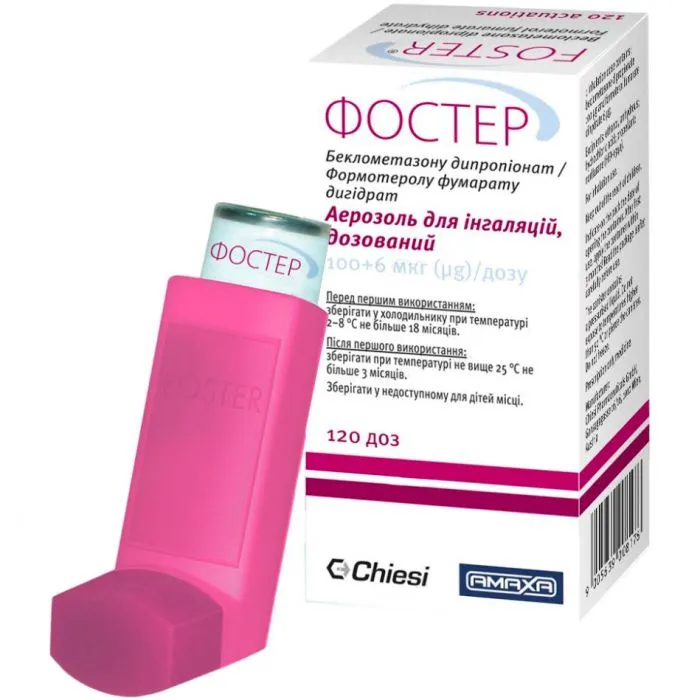
Table of Contents
INSTRUCTIONS FOR MEDICAL USE OF THE MEDICINAL PRODUCT FOSTER (FOSTER®)
Composition:
Active substances: beclometasone dipropionate and formoterol fumarate dihydrate;
One inhalation dose contains: 100 mcg beclometasone dipropionate and 6 mcg formoter0l fumarate dihydrate;
Excipients: ethanol anhydrous; hydrochloric acid; propellant: norflurane (HFA-134a).
Pharmaceutical form. Pressurized metered-dose inhalation aerosol.
Main physicochemical characteristics: solution ranging from colorless to yellowish.
Pharmacotherapeutic group. Medicinal products for treatment of obstructive airway diseases. Adrenergic agents for inhalation use.
ATC Code R03AK08.
Pharmacological properties.
Pharmacodynamics.
Foster contains beclometasone dipropionate and formoterol, which have different mechanisms of action and exhibit an additive effect in reducing the frequency of exacerbations of bronchial asthma, similar to other combination products containing inhaled corticosteroids and beta2-agonists.
Beclometasone dipropionate
Beclometasone dipropionate is an inhaled glucocorticosteroid (GCS) that exerts an anti-inflammatory effect at recommended doses, leading to symptom relief and reduced frequency of bronchial asthma exacerbations, with a lower incidence of adverse effects compared to systemic GCS.
Formoterol
Formoterol is a selective beta2-adrenergic receptor agonist that induces relaxation of bronchial smooth muscle in patients with reversible airway obstruction. The bronchodilator effect occurs rapidly, within 1–3 minutes after inhalation, and lasts for 12 hours after a single dose.
Bronchial asthma
Clinical efficacy of maintenance therapy with Foster
Clinical trials involving adult patients have shown that adding formoterol to beclometasone dipropionate improves asthma symptoms, enhances lung function parameters, and reduces the frequency of disease exacerbations.
In a 24-week study, the effect of Foster on lung function was at least equivalent to that of a separate combination of beclometasone dipropionate and formoterol and superior to that of beclometasone dipropionate administered alone.
Clinical efficacy of maintenance therapy and use of Foster for symptom relief
In a 48-week study involving 1701 patients with asthma, the efficacy of Foster used as maintenance therapy (1 inhalation BID) and for symptom relief (up to 8 actuations of the inhaler per day) was compared to Foster used as maintenance therapy (1 inhalation BID) with the addition of salbutamol as needed in adult patients with uncontrolled moderate to severe bronchial asthma. The results showed that using Foster as maintenance therapy and for symptom relief significantly prolonged the time to first severe exacerbation* compared to its use as maintenance therapy with salbutamol as needed (p < 0.001 for both ITT and PP populations). The number of severe bronchial asthma exacerbations (patients/year) was significantly reduced in the group receiving maintenance and symptom-relief therapy compared to the salbutamol group: 0.1476 vs. 0.2239, respectively (statistically significant reduction: p < 0.001). Patients receiving maintenance and symptom-relief therapy achieved clinically meaningful improvement in bronchial asthma control. The average number of daily symptom-relieving inhalations and the percentage of patients using symptom-relieving medication decreased proportionally in both groups.
Note*: Severe exacerbations were defined as worsening of bronchial asthma symptoms leading to hospitalization or emergency medical care, or requiring systemic steroids for more than 3 days.
In another clinical study, a single dose of Foster (100+6 µg) provided a rapid bronchodilator effect and immediate relief of dyspnea symptoms similar to that of 200 µg salbutamol in patients with bronchial asthma undergoing methacholine-induced bronchospasm.
Children
In a 12-week study involving adolescent patients with asthma, Foster (100+6 µg) did not demonstrate superiority over monotherapy with beclometasone dipropionate in terms of lung function parameters (primary endpoint: change in pre-dose morning peak expiratory flow), secondary efficacy variables, or clinical outcome measures.
The bronchodilator effect of a single dose of Foster, an experimental pediatric formulation of beclometasone dipropionate and formoterol fumarate 50+6 µg/dose administered via Aerochamber Plus® spacer to asthmatic children aged 5–11 years, was evaluated in comparison with an open combination of marketed beclometasone dipropionate and formoterol fumarate. Non-inferiority of Foster (50+6 µg) compared to the open combination was demonstrated in terms of mean FEV1 assessed over 12 hours after morning dosing, as the lower limit of the 95% CI for the adjusted mean difference was 0.047 L, exceeding the pre-specified efficacy margin of 0.1 L.
Foster in the pediatric formulation 50+6 µg/dose, administered via Aerochamber Plus® spacer to asthmatic children aged 5–11 years over 12 weeks of treatment, did not show superiority compared to beclometasone dipropionate monotherapy and did not show inferiority compared to an open combination of beclometasone dipropionate and formoterol fumarate regarding lung function parameters (primary endpoint: change from baseline in pre-dose morning FEV1).
Chronic obstructive pulmonary disease (COPD)
In two 48-week studies, the effect on lung function and frequency of exacerbations (defined by prescription of oral steroids and/or antibiotics, and/or hospitalization) was evaluated in patients with severe COPD (30% < FEV1 % < 50%).
One pivotal study demonstrated significant improvement in lung function (primary endpoint: change from baseline in pre-dose FEV1) compared to formoterol alone after 12 weeks of treatment (adjusted mean difference between Foster and formoterol: 69 mL), and this improvement was maintained at each clinic visit throughout the 48-week treatment period. The study showed that the mean number of exacerbations (patients/year) (exacerbation rate, combined primary endpoint) was statistically significantly reduced with Foster compared to formoterol (adjusted mean rate: 0.80 vs. 1.12 in the formoterol group, rate ratio 0.72, p < 0.001) over the 48-week treatment period in 1199 patients with severe COPD. Additionally, Foster significantly prolonged the time to first exacerbation compared to formoterol. The advantage of this medicinal product over formoterol was also confirmed in subgroups of patients who were either receiving (approximately 50% in each treatment group) or not receiving tiotropium bromide as concomitant therapy.
Another pivotal randomized study with three parallel groups, conducted in 718 patients, confirmed the superiority of Foster over formoterol in terms of change from baseline in FEV1 at the end of treatment (48 weeks) and demonstrated non-inferiority of Foster compared to the fixed combination of budesonide/formoterol for the same parameter.
Pharmacokinetics.
The systemic exposure of beclometasone dipropionate and formoterol as active substances in the fixed combination of Foster was compared to that of the individual components.
In a pharmacokinetic study in healthy volunteers who received a single dose of the fixed combination of Foster (4 actuations of 100+6 µg) or a single dose of CFC beclometasone dipropionate (4 actuations of 250 µg) and HFA formoterol (4 actuations of 6 µg), the AUC of the main active metabolite of beclometasone dipropionate (beclometasone-17-monopropionate) and its maximum plasma concentration were 35% and 19% lower, respectively, with the fixed combination compared to the non-micronized CFC beclometasone dipropionate formulation. However, the rate of absorption was faster (0.5 hours vs. 2 hours) with the fixed combination compared to the non-micronized CFC formulation.
The maximum plasma concentration of formoterol was similar after administration of the fixed or open combination, but its systemic exposure was slightly higher after administration of Foster compared to the open combination.
There is no evidence of pharmacokinetic or pharmacodynamic (systemic) interaction between beclometasone dipropionate and formoterol.
In a study conducted in healthy volunteers, the use of the Aerochamber Plus® spacer increased lung delivery of the active metabolite of beclometasone dipropionate – beclometasone-17-monopropionate – and formoterol by 41% and 45%, respectively, compared to the standard device. Total systemic exposure was unchanged for formoterol, reduced by 10% for beclometasone-17-monopropionate, and increased for unchanged beclometasone dipropionate.
Lung deposition studies conducted in patients with stable COPD, healthy volunteers, and patients with bronchial asthma showed that on average 33% of the nominal dose was deposited in the lungs of COPD patients compared to 34% in healthy volunteers and 31% in patients with bronchial asthma. Plasma concentrations of beclometasone-17-monopropionate and formoterol were comparable across all three groups over 24 hours after inhalation. Total exposure to beclometasone dipropionate was higher in COPD patients compared to patients with bronchial asthma and healthy volunteers.
Children
Foster was not bioequivalent to the open combination of ultrafine beclometasone dipropionate and formoterol when administered to asthmatic adolescents aged 12–17 years in a single-dose pharmacokinetic study (4 actuations of 100+6 µg). This result was independent of whether a spacer (Aerochamber Plus®) was used.
When no spacer was used, available data indicate a lower peak concentration of the inhaled corticosteroid component of Foster compared to the open combination (point estimate of ratio of adjusted geometric mean Cmax of beclometasone-17-monopropionate [B17MP]: 84.38%, 90% CI: 70.22; 101.38).
When Foster was used with a spacer, the peak plasma concentration of formoterol increased by approximately 68% compared to the open combination (point estimate of ratio of adjusted geometric mean Cmax: 168.41, 90% CI: 138.2; 205.2). The clinical significance of these differences with long-term use is unknown.
Total systemic exposure to formoterol (AUC0-t) was equivalent to that of the open combination, regardless of spacer use. For beclometasone-17-monopropionate, equivalence was demonstrated only when no spacer was used, while the 90% CI for AUC0-t was slightly outside the equivalence range when spacers were used (point estimate of ratio of adjusted geometric mean: 89.63%, CI: 79.93; 100.50).
Foster administered without a spacer in adolescents resulted in lower systemic exposure to beclometasone-17-monopropionate or equivalent total systemic exposure (AUC0-t) to formoterol compared to adults. Additionally, mean peak plasma concentrations (Cmax) for both substances were lower in adolescents than in adults.
In a pharmacokinetic study, a single dose of the pediatric formulation of Foster (50+6 µg/dose) administered via Aerochamber Plus® spacer was not bioequivalent to the open combination of beclometasone dipropionate and formoterol in asthmatic children aged 5–11 years. Study results indicate lower AUC0-t and peak concentration of the inhaled corticosteroid component of Foster (50+6 µg) compared to the open combination (point estimate of ratio of adjusted geometric mean AUC0-t for beclometasone-17-monopropionate: 81%, 90% CI: 69.7; 94.8; Cmax: 82%, 90% CI: 70.1; 94.7). Total systemic exposure to formoterol (AUC0-t) was equivalent to that of the open combination, while Cmax was slightly lower for Foster (50+6 µg) compared to the open combination (point estimate of ratio of adjusted geometric mean: 92%, 90% CI: 78; 108).
Beclometasone dipropionate
Beclometasone dipropionate is a prodrug with weak affinity for glucocorticoid receptors, which is hydrolyzed by esterases into the active metabolite beclometasone-17-monopropionate, which has stronger local anti-inflammatory activity compared to its precursor, beclometasone dipropionate.
Absorption, distribution, and biotransformation
Inhaled beclometasone dipropionate is rapidly absorbed through the lungs; prior to this, extensive conversion by esterases occurs into the active metabolite beclometasone-17-monopropionate, which is detectable in most tissues. Systemic bioavailability of the active metabolite arises from the dose absorbed through the lungs (36%) and the dose absorbed from the gastrointestinal tract. Oral bioavailability of beclometasone dipropionate is negligible; however, conversion to beclometasone-17-monopropionate results in 41% of the dose being absorbed in the form of the active metabolite.
With increasing inhaled dose, systemic exposure increases approximately linearly.
Absolute bioavailability after inhalation is approximately 2% and 62% of the nominal dose for unchanged beclometasone dipropionate and beclometasone-17-monopropionate, respectively.
After intravenous administration, the distribution of beclometasone dipropionate and its active metabolite is characterized by high plasma clearance (150 L/h and 120 L/h, respectively) and a small volume of distribution at steady state for beclometasone dipropionate (20 L), while its active metabolite shows more extensive tissue distribution (424 L).
Plasma protein binding is moderately high.
Elimination
Fecal excretion is the main route of elimination of beclometasone dipropionate, primarily in the form of polar metabolites. Renal excretion of beclometasone dipropionate and its metabolites is negligible. Terminal half-life is 0.5 hours and 2.7 hours for beclometasone dipropionate and beclometasone-17-monopropionate, respectively.
Pharmacokinetics in specific patient populations
Pharmacokinetics of beclometasone dipropionate in patients with renal or hepatic impairment has not been studied. However, since beclometasone dipropionate is very rapidly metabolized by esterases present in intestinal juice, plasma, lungs, and liver into more polar compounds (beclometasone-21-monopropionate, beclometasone-17-monopropionate, and beclometasone), hepatic impairment is not expected to affect the pharmacokinetics or safety profile of beclometasone dipropionate.
Since beclometasone dipropionate or its metabolites were not detected in urine, increased systemic exposure in patients with renal impairment has not been studied.
Formoterol
Absorption and distribution
After inhalation, formoterol is absorbed from the lungs and gastrointestinal tract. The fraction of the inhaled dose reaching the gastrointestinal tract after use of a metered-dose inhaler (MDI) may vary between 60% and 90%. At least 65% of the orally administered fraction is absorbed from the gastrointestinal tract. Maximum plasma concentration of unchanged drug is reached within 0.5–1 hour after oral administration. Plasma protein binding of formoterol is 61–64%, with 34% bound to albumin. No saturation of binding was observed within the concentration range achieved with therapeutic doses. Half-life after oral administration is 2–3 hours. Absorption of formoterol is linear after inhalation of 12–96 µg formoterol fumarate.
Biotransformation
Formoterol is extensively metabolized; the main metabolic pathway involves direct conjugation at the phenolic hydroxyl group. The glucuronide conjugate is inactive. A second major pathway involves O-demethylation after conjugation at the phenolic 2’-hydroxyl group. CYP2D6, CYP2C19, and CYP2C9 isoenzymes of cytochrome P450 are involved in O-demethylation of formoterol. The liver appears to be the primary site of metabolism. Formoterol does not inhibit CYP450 enzymes at therapeutically relevant concentrations.
Elimination
Total urinary excretion of formoterol after a single inhalation from a dry powder inhaler increased linearly over the dose range 12–96 µg. On average, 8% and 25% of the dose were excreted as unchanged and total formoterol, respectively. Based on plasma concentration measurements after a single 120 µg dose in twelve healthy volunteers, the mean terminal half-life was 10 hours. (R,R)- and (S,S)-enantiomers accounted for approximately 40% and 60% of unchanged drug excreted in urine, respectively. The relative proportion of the two enantiomers remained constant across the studied dose range, with no evidence of relative accumulation of one enantiomer over the other in multiple-dose regimens.
After oral administration (40–80 µg) to healthy volunteers, 6–10% of the dose was recovered unchanged in urine and up to 8% as glucuronide.
Overall, 67% of an oral dose of formoterol is excreted in urine (mainly as metabolites), with the remainder excreted in feces. Renal clearance of formoterol is 150 mL/min.
Pharmacokinetics in specific patient populations
Renal/hepatic impairment: Pharmacokinetics of formoterol in patients with renal or hepatic impairment has not been studied. However, since formoterol is primarily eliminated via hepatic metabolism, enhanced drug effects may be expected in patients with severe hepatic cirrhosis.
Clinical characteristics.
Indications.
Bronchial asthma
Foster is used for regular treatment of bronchial asthma when a combination therapy (inhaled glucocorticosteroid and long-acting beta2-agonist) is appropriate:
- in patients whose symptoms are not adequately controlled by inhaled glucocorticosteroids and short-acting beta2-agonists used as needed, or
- in patients who are adequately controlled with inhaled glucocorticosteroids and long-acting beta2-agonists.
Chronic obstructive pulmonary disease (COPD)
Symptomatic treatment of patients with severe COPD (FEV1 < 50% of predicted) and a history of repeated exacerbations of the disease who have clinically significant symptoms despite regular treatment with long-acting bronchodilators.
Contraindications.
Hypersensitivity to beclometasone dipropionate, formoterol fumarate dihydrate, or to any excipient of the medicinal product.
Interaction with other medicinal products and other forms of interaction.
Pharmacokinetic interactions
Beclometasone dipropionate undergoes rapid metabolism by esterase enzymes.
Beclometasone is less dependent on CYP3A metabolism than some other corticosteroids, and interactions are generally unlikely; however, the possibility of systemic effects cannot be excluded when used concomitantly with strong CYP3A inhibitors (e.g., ritonavir, cobicistat). Therefore, caution is recommended and appropriate monitoring should be performed when such agents are used.
Pharmacodynamic interactions
Patients with bronchial asthma should avoid the use of beta-blockers (including in the form of eye drops). If administration of a beta-blocker cannot be avoided, the effect of formoterol may be weakened or neutralized.
Conversely, concomitant use with other bronchodilators may potentiate effects; therefore, theophylline or other beta-adrenergic agents should be used with caution together with formoterol.
Concomitant use with quinidine, disopyramide, procainamide, phenothiazines, antihistamines, monoamine oxidase inhibitors, and tricyclic antidepressants may increase the QTc interval duration and the risk of ventricular arrhythmia.
In addition, L-dopa, L-thyroxine, oxytocin, and alcohol may impair cardiac tolerance to beta2-sympathomimetics.
Concomitant use of monoamine oxidase inhibitors, including drugs with similar properties such as furazolidone and procarbazine, may cause hypertensive reactions.
An increased risk of arrhythmia exists in patients receiving anesthesia with halogenated hydrocarbons.
Concomitant use of xanthine derivatives, steroids, or diuretics may enhance the potential hypokalemic effect of beta2-sympathomimetics (see section "Special precautions for use"). Hypokalemia may increase susceptibility to arrhythmia in patients taking cardiac glycosides.
Foster contains a small amount of ethanol. There is a theoretical possibility of interaction in particularly sensitive patients taking disulfiram or metronidazole.
Special precautions for use.
Foster should be used with caution (recommended monitoring) in patients with arrhythmias, including third-degree atrioventricular block and tachyarrhythmias (accelerated and/or irregular heartbeat), idiopathic subvalvular aortic stenosis, hypertrophic obstructive cardiomyopathy, severe heart diseases such as acute myocardial infarction, ischemic heart disease, chronic heart failure, and also in patients with occlusive vascular diseases, including atherosclerosis, arterial hypertension, and aneurysm.
The drug should be prescribed with caution to patients with confirmed or suspected QTc interval prolongation (congenital or drug-induced) (QTc > 0.44 sec), since formoterol may prolong the QTc interval.
Foster should be administered with caution in patients with thyrotoxicosis, diabetes mellitus, pheochromocytoma, and untreated hypokalemia.
Treatment with beta2-agonists may cause potentially serious hypokalemia. The drug should be used cautiously in patients with severe bronchial asthma, as this effect may be intensified by hypoxia. Hypokalemia may also be exacerbated by concomitant use of other agents capable of causing hypokalemia, such as xanthine derivatives, steroids, and diuretics (see section "Interaction with other medicinal products and other types of interactions"). Foster should be used with caution in patients with unstable bronchial asthma who may be using several so-called rescue bronchodilators. In such cases, monitoring of serum potassium levels is recommended.
Inhalation of formoterol may lead to an increase in blood glucose levels. Therefore, patients with diabetes mellitus require careful monitoring of blood glucose levels.
When planning anesthesia with halogenated anesthetics, it is essential to ensure that Foster has not been administered for at least 12 hours prior to the start of anesthesia, due to the risk of developing cardiac arrhythmias.
Similar to other inhaled corticosteroid-containing drugs, Foster should be used with caution in patients with active or latent pulmonary tuberculosis, as well as in patients with fungal and viral respiratory tract infections.
Abrupt discontinuation of Foster therapy is not recommended.
If a patient considers the treatment ineffective, medical advice should be sought. Increased use of rescue bronchodilators indicates worsening of the condition and necessitates a reassessment of bronchial asthma management. Sudden and progressive deterioration in the control of bronchial asthma or COPD is potentially life-threatening, and the patient should undergo urgent medical evaluation. In case of suspected infection, the need for intensifying treatment with inhaled corticosteroids, initiating oral corticosteroids, or antibiotic therapy should be assessed.
Foster therapy should not be initiated during an acute exacerbation of bronchial asthma, acute manifestation, or significant worsening of its course. During treatment with Foster, development or exacerbation of serious asthma-related adverse reactions may occur. Patients should continue treatment and consult a physician if symptoms of bronchial asthma remain uncontrolled or worsen after starting the drug.
As with any other inhaled therapy, paradoxical bronchospasm with immediate increase in wheezing and respiratory rate may occur after drug administration. In such cases, a rapid-acting inhaled bronchodilator should be used immediately. Administration of Foster must be discontinued immediately, the patient should undergo medical evaluation, and alternative treatment should be initiated if necessary.
Foster should not be used as initial treatment for bronchial asthma.
For the treatment of acute bronchial asthma attacks, patients are advised to always carry a rapid-acting bronchodilator, both when using Foster as maintenance and reliever therapy and when using the drug exclusively as maintenance therapy.
Patients should be instructed to use Foster daily as prescribed, even in the absence of symptoms. Inhalations of Foster for symptom relief should be used during manifestations of bronchial asthma, but the drug is not intended for regular prophylactic use, e.g., before exercise. In such cases, the use of a separate rapid-acting bronchodilator should be considered.
After achieving control of bronchial asthma symptoms, gradual dose reduction should be considered, while ensuring regular patient follow-up. The lowest effective dose of Foster should be used (see section "Method of administration and dosage").
Systemic effects may occur with the use of any inhaled corticosteroid, especially at high doses and over prolonged periods. The likelihood of such effects is significantly lower with inhaled corticosteroids compared to oral administration. Possible systemic effects include Cushing's syndrome, Cushingoid features, adrenal suppression, decreased bone mineral density, growth retardation in children and adolescents, cataract, and glaucoma, and less frequently, psychological or behavioral effects, including psychomotor hyperactivity, sleep disturbances, anxiety, depression, or aggression (especially in children).
For this reason, regular monitoring of the patient's condition and reduction of inhaled corticosteroid doses to the lowest possible level that maintains effective control of bronchial asthma are essential.
Pharmacokinetic data obtained after a single dose (see section "Pharmacokinetics") showed that using Foster with the Aerochamber Plus® spacer compared to the standard device does not increase the overall systemic exposure to formoterol and reduces systemic exposure to beclomethasone-17-monopropionate. Additionally, the level of unchanged beclomethasone dipropionate entering systemic circulation from the lungs increases, but the overall systemic exposure to beclomethasone dipropionate and its active metabolites remains unchanged; therefore, the risk of systemic effects when using a spacer does not increase.
Long-term treatment of patients with high doses of inhaled corticosteroids may cause adrenal suppression and acute adrenal insufficiency. Children under 16 years of age receiving doses of beclomethasone dipropionate exceeding the recommended levels are at particular risk. Situations potentially causing acute adrenal insufficiency include trauma, surgical procedures, infections, or any rapid dose reduction. Symptoms are typically nonspecific and may include anorexia, abdominal pain, weight loss, fatigue, headache, nausea, vomiting, hypotension, decreased level of consciousness, hypoglycemia, and seizures. Consideration should be given to additional systemic corticosteroid therapy during periods of stress or planned surgical procedures.
Patients with impaired adrenal function, possibly due to previous systemic steroid therapy, should be switched to Foster treatment with caution.
When switching from oral to inhaled corticosteroids, the risk of impaired adrenal reserve persists for a significant period. This risk also applies to patients who have previously received high-dose corticosteroids as emergency treatment or long-term high-dose inhaled corticosteroids. The possibility of residual impairment should always be considered in emergency and other stressful situations; appropriate corticosteroid therapy should be considered. Depending on the degree of adrenal impairment, physician consultation may be required before certain procedures.
Pneumonia in patients with COPD
An increased incidence of pneumonia, including pneumonia requiring hospitalization, has been observed in patients with COPD receiving inhaled corticosteroids. There is some evidence of increased pneumonia risk with higher steroid doses, although this has not been consistently demonstrated in all studies. There is no convincing clinical evidence of differences in pneumonia risk among classes of inhaled corticosteroids. Physicians should remain vigilant for possible development of pneumonia in patients with COPD, as clinical signs of such infections overlap with symptoms of COPD exacerbations. Risk factors for pneumonia in COPD patients include smoking, advanced age, low body mass index (BMI), and severe COPD.
Patients should be advised to rinse or wash the mouth with water or brush teeth after inhalation of the prescribed dose to reduce the risk of oropharyngeal candidiasis.
Vision disturbances
Vision disturbances may occur with systemic and local use of corticosteroids. If a patient experiences symptoms such as blurred vision or other visual disturbances, an ophthalmologist should be consulted to evaluate possible causes, which may include cataract, glaucoma, or rare conditions such as central serous chorioretinopathy (CSCR), reported after systemic and local corticosteroid use.
Content of excipients
This medicinal product contains a small amount of ethanol, less than 100 mg/dose. In usual doses, the amount of ethanol is negligible and does not pose a risk to patients.
After first opening, use within 3 months!
Use during pregnancy or breastfeeding.
There is no experience with the use of propellant HFA-134a in pregnant or breastfeeding women, nor information on its safety in these patient groups. However, animal studies on the effects of propellant HFA-134a on reproductive function and embryonic development did not reveal clinically significant adverse effects.
Pregnancy
Clinical data on the use of Foster in pregnant women are lacking. Animal studies of the combination of beclomethasone dipropionate and formoterol demonstrated reproductive toxicity at high systemic doses. Due to the tocolytic effect of beta2-sympathomimetics during labor, special assistance may be required. Formoterol is not recommended during pregnancy, including late pregnancy or labor, except when no alternative approved treatment options are available.
Foster may be used during pregnancy if the expected benefit to the woman outweighs the potential risks to the fetus.
Lactation
There are no clinical data on the use of this drug during breastfeeding.
Although animal study data are lacking, it is reasonable to assume that beclomethasone dipropionate, like other corticosteroids, passes into breast milk.
It is not definitively known whether formoterol passes into human breast milk, but it has been detected in the milk of lactating animals.
Use of Foster in breastfeeding women is recommended only if the expected benefit to the mother outweighs the potential risks to the infant.
Ability to influence reaction speed when driving vehicles or operating machinery.
Foster has practically no effect on the ability to drive vehicles or operate machinery.
Method of Administration and Dosage
Foster is administered by inhalation.
Dosage
Bronchial Asthma
Foster is not intended for initial treatment of bronchial asthma. The dose of the components of Foster is individual and should be adjusted according to the severity of the disease. This should be taken into account not only after initiation of therapy with combined medicinal products but also after dose adjustment. If a patient requires a combination of doses different from those available in the combined inhalation product, appropriate doses of beta2-agonists and/or corticosteroids should be prescribed separately.
Beclometasone dipropionate in Foster is characterized by a micronized particle size distribution, resulting in a stronger effect compared to medicinal forms of beclometasone dipropionate with non-micronized particle size distribution (100 mcg micronized beclometasone dipropionate in Foster is equivalent to 250 mcg beclometasone dipropionate in a medicinal form with non-micronized particles). Therefore, the total daily dose of beclometasone dipropionate administered in Foster should be lower than the total daily dose of beclometasone dipropionate administered in a medicinal form with non-micronized particles.
This should be taken into account when switching a patient from a medicinal form of beclometasone dipropionate with non-micronized particles to Foster; the dose of beclometasone dipropionate should be lower and adjusted according to individual patient needs.
There are two treatment options:
A. Maintenance therapy: Foster is used as regular maintenance treatment in combination with a fast-acting bronchodilator as needed.
B. Maintenance therapy and symptom relief: Foster is used as regular maintenance treatment and, as needed, for relief of symptoms of bronchial asthma.
A. Maintenance Therapy
Patients should be advised to always carry a fast-acting bronchodilator for use as a rescue medication.
Recommended doses for adults:
One or two inhalations twice daily.
Maximum daily dose – 4 inhalations.
B. Maintenance Therapy and Symptom Relief
Patients take their daily maintenance dose of Foster and additionally, as needed, for relief of symptoms of bronchial asthma. Patients should be advised to always carry Foster for use as a rescue medication.
The need for maintenance therapy with Foster and its use for symptom relief should be considered in patients with:
- bronchial asthma that is not fully controlled and requires symptom relief;
- previous exacerbations of bronchial asthma requiring medical intervention.
If necessary, dose-dependent adverse effects should be carefully monitored in patients who frequently and in large quantities use inhalations of Foster.
Recommended doses for adults:
The recommended maintenance dose is 1 inhalation twice daily (one inhalation in the morning and one in the evening).
Patients may use one additional inhalation as needed in response to worsening symptoms. If symptoms persist after a few minutes, an additional inhalation should be taken.
Maximum daily dose – 8 inhalations.
Patients who frequently use rescue inhalations on a daily basis are strongly advised to consult a physician. Treatment of bronchial asthma and maintenance therapy should be reviewed.
Patients should regularly consult a physician to maintain the optimal dose of Foster, which should be changed only upon physician's recommendation. The dose should be reduced to the lowest level at which effective control of bronchial asthma symptoms is maintained. After achieving symptom control at the lowest recommended dose, the next step may be switching exclusively to an inhaled corticosteroid.
Patients should be advised to carry Foster every day, even in the absence of symptoms.
Chronic Obstructive Pulmonary Disease (COPD)
Recommended doses for adults:
Two inhalations twice daily.
Special patient groups
Dose adjustment in elderly patients is not required. Data on the use of Foster in patients with impaired renal or hepatic function are lacking (see section "Pharmacokinetics").
Method of Administration
To ensure proper use of the medicinal product, the physician or other healthcare professional should demonstrate the correct use of the inhaler to the patient. Correct use of the pressurized metered-dose inhaler is an essential condition for successful treatment. The patient must be informed of the necessity to carefully read the instructions and follow the recommendations for use.
Checking the Inhaler
Before first use or after a break in use of 14 days or longer, one dose of the inhalation solution should be released into the air to ensure proper functioning of the inhaler.
For use, the patient should be in an upright position, standing or sitting, if possible.
Using the Inhaler:
- Patients should remove the protective cap from the mouthpiece and check the mouthpiece for contamination: dust, dirt, or other foreign objects.
- Patients should exhale as slowly and completely as possible.
- Patients should hold the inhaler vertically with the canister upright, place the mouthpiece in the mouth, and close lips around it without biting the mouthpiece.
- At the same time, patients should inhale slowly and deeply through the mouth. After starting inhalation, press down on the top of the inhaler to release the dose.
- Patients should hold their breath for as long as possible, then remove the inhaler from the mouth and exhale slowly. Patients should not exhale into the inhaler.
If an additional dose is required, patients should hold the inhaler in a vertical position for about half a minute and repeat steps 2–5.
IMPORTANT: Patients should not perform steps 2–5 too quickly.
After use, the patient should cover the inhaler with the protective cap.
If an aerosol mist appears from the inhaler or from the corners of the mouth after inhalation, the procedure should be repeated, starting from step 2.
Patients with weak hands may find it easier to hold the inhaler with both hands. For this, index fingers should be placed on the top of the inhaler body, and both thumbs on the base of the inhaler.
After inhalation, patients should rinse or wash the mouth cavity or clean teeth with a toothbrush (see section "Special Instructions").
Cleaning the Inhaler
Patients should be informed about the necessity to carefully read the cleaning instructions. For regular cleaning of the inhaler, remove the cap from the mouthpiece and wipe the mouthpiece inside and outside with a dry cloth. Do not use water or other liquids to clean the mouthpiece.
Patients who have difficulty synchronizing aerosol use with inhalation may use the AeroChamber Plus® spacer. The physician, pharmacist, or nurse should instruct the patient on the correct use and storage of the inhaler and spacer and verify the technique of use to ensure optimal delivery of the inhaled medication to the lungs. In patients using the AeroChamber Plus® spacer, optimal delivery of the medication is ensured by steady, slow, and deep breathing through the spacer without interval between actuation and inhalation.
Children
The safety and efficacy of Foster in children and adolescents (under 18 years of age) have not been established. Data on the use of Foster in children aged 5–11 years and adolescents aged 12–17 years are described in the sections "Pharmacological Properties" and "Adverse Reactions," but dosage recommendations cannot be made.
Overdose
Inhalation doses of Foster, up to twelve actuations (total 1200 mcg beclometasone dipropionate and 72 mcg formoterol), have been studied in clinical trials involving patients with bronchial asthma. Accumulation of substances did not lead to abnormal effects on vital functions in patients; no serious or severe adverse reactions were observed.
Administration of excessive doses of formoterol may lead to effects typical of beta2-adrenergic agonists: nausea, vomiting, headache, tremor, drowsiness, palpitations, tachycardia, ventricular arrhythmia, QTc interval prolongation, metabolic acidosis, hypokalemia, hyperglycemia.
In case of formoterol overdose, supportive and symptomatic treatment is recommended. In severe cases, hospitalization is required. The use of cardioselective beta-blockers should also be considered, but only with extreme caution, as beta-blockers may induce bronchospasm. Plasma potassium levels should be monitored.
Emergency inhalation of beclometasone dipropionate in doses exceeding the recommended may lead to suppression of adrenal gland function. Emergency measures are not required, as adrenal function recovers within several days, confirmed by measurement of plasma cortisol levels. Such patients should continue treatment with a dose sufficient to control bronchial asthma.
With chronic overdose of inhaled beclometasone dipropionate, there is a risk of adrenal gland function suppression. Monitoring of adrenal reserve and review of the treatment regimen may be necessary.
Adverse reactions
Foster contains beclometasone dipropionate and formoterol fumarate dihydrate, therefore adverse reactions associated with the use of each of these compounds separately may occur. There is no information on additional adverse reactions following concomitant administration of the two components.
Adverse reactions caused by beclometasone dipropionate and formoterol when administered in fixed combination (Foster) or as individual components are listed below by system organ class. Frequency is defined as follows: very common (≥ 1/10), common (≥ 1/100 to < 1/10), uncommon (≥ 1/1000 to < 1/100), rare (≥ 1/10,000 to < 1/1000), very rare (≤ 1/10,000), not known (cannot be estimated from the available data).
Common and uncommon adverse reactions were identified in clinical trials involving patients with bronchial asthma and COPD.
| System organ classes |
Adverse reactions |
Frequency |
| Infections and infestations |
Pharyngitis, oral candidiasis, pneumonia* (in patients with COPD) |
Common |
| Influenza, fungal infections of the oral cavity, oropharyngeal candidiasis, esophageal candidiasis, vulvovaginal candidiasis, gastroenteritis, sinusitis, rhinitis |
Uncommon |
|
| Blood and lymphatic system disorders |
Granulocytopenia |
Uncommon |
| Thrombocytopenia |
Very rare |
|
| Immune system disorders |
Allergic dermatitis |
Uncommon |
| Hypersensitivity reactions, including erythema, swelling of lips, face, eyes and throat |
Very rare |
|
| Endocrine system disorders |
Adrenal suppression |
Very rare |
| Metabolism and nutrition disorders |
Hypokalemia, hyperglycemia |
Uncommon |
| Psychiatric disorders |
Agitation |
Uncommon |
| Psychomotor hyperactivity, sleep disorders, anxiety, depression, aggression, behavioral changes (mainly in children) |
Not known |
|
| Nervous system disorders |
Headache |
Common |
| Tremor, dizziness |
Uncommon |
|
| Eye disorders |
Glaucoma, cataract |
Very rare |
| Blurred vision (see section "Special precautions") |
Not known |
|
| Ear and labyrinth disorders |
Otospongylitis |
Uncommon |
| Cardiac disorders |
Palpitations; electrocardiogram (ECG) QT interval prolongation; ECG changes, tachycardia, tachyarrhythmia, atrial fibrillation* |
Uncommon |
| Ventricular extrasystoles, angina pectoris |
Rare |
|
| Vascular disorders |
Hyperemia, skin flushing |
Uncommon |
| Respiratory, thoracic and mediastinal disorders |
Dysphonia |
Common |
| Cough, productive cough, throat irritation, asthmatic crisis |
Uncommon |
|
| Paradoxical bronchospasm |
Rare |
|
| Dyspnea, exacerbation of bronchial asthma |
Very rare |
|
| Gastrointestinal disorders |
Diarrhea, dry mouth, dyspepsia, dysphagia, burning sensation on lips, nausea, dysgeusia |
Uncommon |
| Skin and subcutaneous tissue disorders |
Pruritus, rash, hyperhidrosis, urticaria |
Uncommon |
| Angioneurotic edema |
Rare |
|
| Musculoskeletal and connective tissue disorders |
Muscle spasm, myalgia |
Uncommon |
| Slowed growth in children and adolescents |
Very rare |
|
| Renal and urinary disorders |
Nephritis |
Rare |
| General disorders and administration site conditions |
Peripheral edema |
Very rare |
| Investigations |
Elevated C-reactive protein, increased platelet count, increased levels of free fatty acids, increased blood insulin levels, increased blood ketone bodies, decreased blood cortisol levels* |
Uncommon |
| Increased blood pressure, decreased blood pressure |
Rare |
|
| Decreased bone mineral density |
Very rare |
*One non-serious adverse reaction (pneumonia) was reported by a patient using Foster in a baseline clinical trial involving COPD patients. Other adverse reactions observed during clinical trials of Foster in COPD patients include: decreased blood cortisol levels and atrial fibrillation.
As with any other inhaled therapy, paradoxical bronchospasm may occur (see section "Special precautions").
Adverse reactions associated with formoterol include: hypokalaemia, headache, tremor, palpitations, cough, muscle cramps, and QTc interval prolongation.
Adverse reactions commonly associated with beclometasone dipropionate: fungal infections of the oral cavity, oral candidiasis, dysphonia, throat irritation.
Dysphonia and candidiasis can be minimized by rinsing or washing the mouth with water or brushing teeth after using the product. Symptomatic candidiasis can be treated with topical antifungal agents while continuing therapy with Foster.
Systemic effects of inhaled corticosteroids (e.g. beclometasone dipropionate) may occur when high doses are used over prolonged periods and may include adrenal suppression, decreased bone mineral density, growth retardation in children and adolescents, cataract, and glaucoma.
Hypersensitivity reactions may also occur, including rash, urticaria, pruritus, erythema, and swelling of the eyes, face, lips, and throat.
Pediatric population
In a 12-week study in adolescent patients with asthma, the safety profile of Foster was similar to that of beclometasone dipropionate used as monotherapy.
Foster, an experimental pediatric formulation of beclometasone dipropionate and formoterol fumarate 50+6 mcg/dose administered to asthmatic children aged 5–11 years over a 12-week treatment period, showed a safety profile similar to that of approved single-component formoterol and beclometasone dipropionate products.
However, the same pediatric formulation of Foster (50+6 mcg) administered to asthmatic children aged 5–11 years over a 2-week period did not demonstrate any advantage compared to a free combination of single-component formoterol and beclometasone dipropionate in terms of lower leg growth velocity.
Reporting of suspected adverse reactions
It is important to report suspected adverse reactions after marketing authorization. This allows continued monitoring of the benefit-risk balance of the medicinal product. Healthcare professionals are requested to report any suspected adverse reactions via the national reporting system.
Shelf life.
21 months.
Do not use the inhaler after the expiry date.
Storage conditions.
Before first use: store in a refrigerator at 2–8 °C for up to 18 months.
After first use: store at temperatures not exceeding 25 °C for up to 3 months.
Keep out of the reach of children.
The container contains pressurized liquid. Do not expose to temperatures above 50 °C and do not pierce the container. Do not freeze.
Packaging.
120 doses per container; 1 or 2 containers with metering valve, spray nozzle, and protective cap in a cardboard box.
180 doses per container; 1 container with metering valve, spray nozzle, and protective cap in a cardboard box.
Prescription category.
Prescription only.
Manufacturer.
Chiesi Farmaceutici S.p.A. / Chiesi Pharmaceuticals GmbH.
Manufacturer's address and place of business.
Gonzagagasse 16/16, 1010 Vienna, Austria / Gonzagagasse 16/16, 1010 Wien, Austria.