Phospho-soda
UkraineTable of Contents
INSTRUCTIONS FOR MEDICAL USE OF THE MEDICINAL PRODUCT PHOSPHO-SODA (PHOSPHO-SODA)
Composition:
Active substances: disodium phosphate dodecahydrate; sodium dihydrogen phosphate dihydrate;
1 ml of solution contains: disodium phosphate dodecahydrate – 240 mg; sodium dihydrogen phosphate dihydrate – 542 mg;
Excipients: glycerol 99%, sodium saccharin, sodium benzoate (E 211), ginger-lemon flavoring (ginger resin oil, ethanol 96%, lemon oil, partially deterepenated lemon oil, citric acid, purified water), purified water.
Pharmaceutical form. Oral solution.
Main physicochemical properties: clear, colorless solution with a slightly ginger-lemon odor, free from sediment and turbidity.
Pharmacotherapeutic group.
Osmotic laxatives. ATC code A06A D17.
Pharmacological Properties.
Pharmacodynamics.
Fosfo-soda is a mineral laxative that increases fluid retention in the lumen of the small intestine via an osmotic mechanism. Accumulation of fluid in the ileum causes abdominal distension, which in turn stimulates peristalsis and promotes bowel evacuation.
Pharmacokinetics.
Oral administration of sodium phosphate solution caused transient changes in serum electrolyte levels in healthy volunteers. An open-label study was conducted in 24 healthy adult volunteers to evaluate the time course and extent of serum electrolyte changes in two age and two gender groups. The study was designed to simulate the bowel preparation regimen typically used prior to colonoscopy, including a clear liquid diet, timing of sodium phosphate doses, and adequate fluid intake. The dosing regimen of 2 × 45 mL of oral sodium phosphate solution and additional clear liquids corresponded to the approved dosing schedule of the drug. The study population was balanced by sex and age. Half of the study participants were aged 65 years and older.
Results showed increased serum concentrations of sodium and phosphate, but decreased levels of potassium and calcium after each dose.
The mean serum phosphate concentration across all participants was 3.33 mg/dL at baseline, peaked at 6.26 mg/dL at 3 hours, decreased to 4.70 mg/dL immediately before the second dose (at 12 hours), and then rose again to 6.86 mg/dL at 14 hours. By 36 hours, serum phosphate concentrations had returned to baseline.
The figure below shows mean serum phosphate concentration over time in each age and gender subgroup.
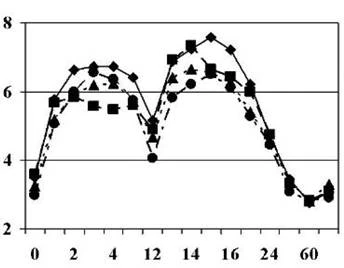
LW – older women, LM – older men, YW – younger women, YM – younger men
Mean serum sodium concentration remained within the normal range (134–147 mmol/L), although 4 participants had values above the upper limit of normal.
Decreases in serum potassium and calcium concentrations remained within the normal individual range and returned to baseline levels within 12 hours after administration of the second dose. 29% of participants reported serum calcium levels below the lower limit of normal (8.5 mg/dL) within 36 hours after the first dose. However, no clinical cases of hypocalcemia were observed.
Changes in serum electrolyte concentrations in healthy adult volunteers following administration of 2 × 45 mL of NaP were clinically insignificant and transient. Electrolyte levels returned to normal within 12–24 hours after completion of the bowel preparation regimen.
The pharmacokinetic characteristics of Fosfo-soda in patients with impaired renal function have not been studied. Extrapolation of data obtained from healthy volunteers to high-risk patient groups (e.g., patients with impaired renal function) is not possible (see sections "Contraindications", "Special Warnings and Precautions").
Clinical characteristics.
Indications.
For bowel cleansing during patient preparation for surgical procedures on the colon or for preparation prior to radiological and endoscopic examinations.
The bowel cleansing agent should not be considered a treatment for constipation.
Phospho-soda is intended for use in adults.
Contraindications.
Hypersensitivity to the active or excipient ingredients of the drug.
Nausea, vomiting, or abdominal pain.
Symptomatic heart failure (NYHA class III or IV).
Renal insufficiency.
Ascites.
Diagnosed or suspected gastrointestinal tract obstruction.
Megacolon (congenital or acquired).
Gastrointestinal perforation, intestinal obstruction (ileus).
Active-stage inflammatory bowel diseases.
Primary hyperparathyroidism associated with hypercalcemia.
Pediatric age (under 18 years).
Phospho-soda should not be used concomitantly with other laxatives containing sodium phosphate.
Interaction with other medicinal products and other forms of interaction.
The drug should be used with caution in individuals taking antihypertensive agents (e.g., calcium channel blockers, angiotensin-converting enzyme inhibitors (ACE inhibitors), angiotensin receptor blockers (ARBs)), diuretics, lithium preparations, or other agents that may affect electrolyte levels, as hyperphosphatemia, hypocalcemia, hypokalemia, hypernatremic hypohydration, and acidosis may occur.
During Phospho-soda administration, absorption of drugs from the gastrointestinal tract may be slowed or completely halted. The efficacy of regularly taken oral medications (e.g., oral contraceptives, antiepileptic agents, antidiabetic agents, antibiotics) may be reduced or completely lost. Caution should also be exercised when taking medications that may prolong the QT interval.
Concomitant use of any sodium phosphate-containing preparations is not recommended.
Use with caution in patients taking parathyroid hormones.
Special precautions for use.
| Phospho-soda rarely causes serious and potentially fatal disturbances of fluid and electrolyte balance in elderly patients. Before initiating treatment in patients in this risk group, the risk/benefit ratio of using Phospho-soda should be carefully evaluated. Particular attention should be paid when prescribing Phospho-soda to each patient considering known contraindications and the importance of adequate fluid intake; also, patients in risk groups should have their electrolyte levels determined before and after treatment. |
This medicine must be diluted with water before use.
Patients at Risk
Use with caution in patients at increased risk of renal failure, existing electrolyte disturbances, or at increased risk of electrolyte imbalances (e.g., dehydration, gastric retention, colitis, inability to take sufficient fluids orally, hypertension or other conditions in which patients are taking medications that may lead to dehydration—see below), arterial hypotension with clinical symptoms or associated with hypovolemia; patients with heart disease, acute myocardial infarction, unstable angina, as well as debilitated and elderly patients. In such high-risk patients, serum levels of sodium, potassium, calcium, chloride, bicarbonates, phosphates, blood urea nitrogen, and creatinine should be assessed before and after treatment.
Dehydration
The effect of the medicine occurs within a time period of ½ to 6 hours. If no bowel movement occurs within 6 hours after taking Phospho-soda, the patient must discontinue use of the medicine and immediately contact a physician, as dehydration may occur.
Patients should be warned about the occurrence of frequent loose stools. Patients are advised to drink as much fluid as possible to prevent dehydration. Inadequate fluid intake during use of any effective laxative may lead to excessive fluid loss, causing dehydration and hypovolemia. Dehydration and hypovolemia induced by laxatives may be exacerbated by inadequate fluid intake, nausea, vomiting, loss of appetite, or use of antihypertensive agents (e.g., angiotensin-converting enzyme inhibitors [ACE inhibitors], angiotensin receptor blockers [ARBs], calcium channel blockers), diuretics, and nonsteroidal anti-inflammatory drugs (NSAIDs), and may lead to acute renal failure. Acute renal failure due to laxatives, including sodium phosphates and PEG-3350, has been reported rarely.
In patients with conditions that may predispose to dehydration or in patients taking medications that may reduce glomerular filtration rate, fluid and electrolyte status should be evaluated before using laxatives, and continuous monitoring should be performed during treatment.
Nephrocalcinosis secondary to acute phosphate nephropathy
Nephrocalcinosis associated with acute renal failure and deposition of calcium phosphate crystals in renal tubules has been reported rarely in patients using sodium phosphates for bowel cleansing. Nephrocalcinosis is a serious adverse event that may lead to irreversible kidney dysfunction and long-term dialysis. Most such cases occurred in elderly women taking antihypertensive medications or other drugs such as diuretics or NSAIDs that may lead to dehydration.
Phospho-soda should be prescribed with caution, paying special attention to known contraindications and appropriate hydration.
Phospho-soda should be used strictly according to recommendations, with special attention to known contraindications, adequate hydration before, during, and after the procedure, and adherence to the recommended dosing interval (see section "Dosage and Administration").
Electrolyte Imbalance
There is a risk of increased serum levels of sodium and phosphates, as well as decreased levels of calcium and potassium, which may lead to hypernatremia, hyperphosphatemia, hypocalcemia, hypokalemia, and acidosis.
Hyponatremia may occur, which may be complicated by neurological disorders such as confusion, coma, or seizures.
QT interval prolongation has been observed rarely as a result of electrolyte imbalances such as hypocalcemia or hypokalemia. These changes are not considered clinically significant.
Hypokinesia
Use with caution in patients with impaired gastrointestinal motility (hypokinesia) and in patients who have undergone gastrointestinal surgery or have other conditions leading to impaired motility. The medicine should be used cautiously in patients who have undergone colostomy or ileostomy or who must follow a low-salt diet, due to the potential risk of electrolyte imbalance, dehydration, or acid-base disturbances.
Ulcers
Very rarely, endoscopic examination has revealed single or multiple ulcer-like small lesions in the rectosigmoid region. These were either lymphoid follicles, isolated inflammatory infiltrates, or epithelial stasis/changes observed during bowel examination. These findings were not clinically significant and resolved spontaneously without treatment.
This medicinal product contains 5000 mg of sodium in a 45 mL dose, equivalent to 250% of the WHO recommended maximum daily intake of 2 g sodium for adults. Therefore, potential harm should be considered in patients requiring a low-sodium diet.
The medicine contains 15 mg of sodium benzoate (E 211) in each 45 mL dose.
The medicine contains small amounts of ethanol (alcohol), less than 100 mg per 45 mL.
Use during pregnancy or breastfeeding
There are no data on the effects of Phospho-soda on pregnancy or animal studies on its effects on pregnancy, embryonic/fetal development, parturition, or postnatal development. The potential risk to humans is unknown. Phospho-soda should be used during pregnancy only if clearly necessary.
It is unknown whether Phospho-soda passes into breast milk. Since sodium phosphate may pass into breast milk, it is recommended that breastfeeding women express and discard breast milk from the time of the first dose until 24 hours after the second dose of the bowel cleansing solution. Women should not breastfeed infants for 24 hours after the second dose of Phospho-soda.
Fertility
There are no data on the effects of Phospho-soda on fertility in men or women.
Ability to affect reaction speed when driving or operating machinery
Phospho-soda may cause dizziness, possibly as a result of dehydration, which may impair the ability to drive or operate machinery.
Method of Administration and Dosage
The recommended dose of Phospho-soda for adults is two separate doses.
Elderly Patients
Phospho-soda should be used with caution in elderly patients. Dose adjustment is not required in this patient group (see section "Special Warnings and Precautions for Use").
Patients with Renal Impairment
Phospho-soda is contraindicated in patients with impaired renal function (see section "Contraindications").
Patients with Hepatic Impairment
The safety and efficacy of Phospho-soda in patients with hepatic impairment have not been established. Phospho-soda is contraindicated in patients with ascites (see section "Contraindications").
Use in Children
Phospho-soda is contraindicated in children (under 18 years of age) (see section "Contraindications").
Phospho-soda administration should begin one day prior to the scheduled medical procedure.
If the procedure is scheduled for the morning, follow the morning dosing instructions; if scheduled after 12:00 noon, follow the evening dosing instructions.
Do not exceed the recommended dose.
Morning Dosing Schedule
Day Before the Procedure
7:00 AM – Instead of breakfast, drink at least one full glass of clear liquid or water. Additional clear liquids may be consumed if desired.
Clear liquids include: water, clear broth, strained fruit juice without pulp, black tea or coffee, and clear carbonated or non-carbonated non-alcoholic beverages.
1st Dose – Immediately mix 45 mL of the solution in half a glass (120 mL) of cold water. Drink the solution and follow it with one full glass (240 mL) of cold water. Additional water may be consumed if desired.
Drink as much fluid as possible to replace fluid lost due to bowel evacuation.
1:00 PM – Lunch: Instead of lunch, drink at least three full glasses (720 mL) of clear liquid or water. Additional clear liquids may be consumed if desired.
7:00 PM – Dinner: Instead of dinner, drink at least one full glass of clear liquid or water. Additional clear liquids may be consumed if desired.
2nd Dose – Immediately mix 45 mL in half a glass (120 mL) of cold water. Drink the solution and follow it with one full glass (240 mL) of cold water. Additional water may be consumed if desired.
Additional water or clear liquids may be consumed as needed before midnight.
Drinking a large amount of clear liquids also helps ensure adequate bowel cleansing prior to the procedure.
Evening Dosing Schedule
Day Before the Procedure
1:00 PM – Lunch: A light meal is allowed. After this meal, solid food is not permitted until after completion of the medical procedure.
7:00 PM – Dinner: Instead of dinner, drink at least one full glass of clear liquid or water. Additional clear liquids may be consumed if desired.
1st Dose – Immediately mix 45 mL in half a glass (120 mL) of cold water. Drink the solution and follow it with one full glass (240 mL) of cold water. More than one glass may be consumed if desired.
Drink as much fluid as possible to replace fluid lost due to bowel evacuation.
Throughout the evening, drink at least three full glasses of water or clear liquids before bedtime.
Day of the Procedure
7:00 AM – Breakfast: Instead of breakfast, drink at least one full glass of clear liquid or water. A larger amount may be consumed if desired.
2nd Dose – Immediately mix 45 mL in half a glass (120 mL) of cold water. Drink the solution and follow it with one full glass (240 mL) of cold water. More than one glass may be consumed if desired.
Drink as much fluid as possible to replace fluid lost due to bowel evacuation. Consuming a large amount of clear liquids also helps ensure adequate bowel cleansing prior to the procedure.
Additional water or clear liquids may be consumed until 8:00 PM.
This medication typically induces bowel evacuation within ½ to 6 hours.
After the Procedure
To replace fluids lost during bowel preparation, patients are advised to drink large amounts of fluids afterward.
One bottle (45 mL of solution) contains: disodium phosphate dodecahydrate – 10.8 g and sodium dihydrogen phosphate dihydrate – 24.4 g.
Children
Do not use in children (under 18 years of age).
Overdose
Fatal cases of hyperphosphatemia associated with hypocalcemia, hypernatremia, and acidosis have been reported when Phospho-soda was administered in excessive doses to children or patients with bowel obstructions.
Symptoms observed in cases of overdose include: dehydration, arterial hypotension, tachycardia, bradycardia, tachypnea, cardiac arrest, shock, respiratory failure, dyspnea, seizures, paralytic ileus, restlessness, and pain. Overdose may lead to elevated serum levels of sodium and phosphate and decreased levels of calcium and potassium. Such cases may result in hypernatremia, hyperphosphatemia, hypocalcemia, hypokalemia, and acidosis.
There have also been documented cases of complete recovery following overdose, both in children who accidentally ingested Phospho-soda and in patients with obstructions, one of whom received a dose six times higher than recommended.
Recovery from toxic effects of excessive intake is usually achieved by rehydration, although intravenous administration of 10% calcium gluconate may be required.
Adverse Reactions
Adverse reactions have been reported with the following frequencies: very common (≥ 1/10); common (≥ 1/100, < 1/10); uncommon (≥ 1/1,000, < 1/100); rare (≥ 1/10,000, < 1/1,000); very rare (≥ 1/10,000); unknown (cannot be estimated from available data). Within each frequency grouping, adverse reactions are listed in order of decreasing seriousness.
Immune system disorders
Very rare: hypersensitivity
Metabolism and nutrition disorders
Uncommon: dehydration
Very rare: hyperphosphatemia, hypocalcemia, hypokalemia, hypernatremia, metabolic acidosis, tetany
Unknown: hyponatremia complicated by neurological disorders such as confusion, coma, or seizures
Nervous system disorders
Very common: dizziness
Common: headache
Very rare: loss of consciousness, paresthesia
Cardiac disorders
Very rare: myocardial infarction, arrhythmia
Vascular disorders
Very rare: arterial hypotension
Gastrointestinal disorders
Very common: diarrhea, abdominal pain, bloating, nausea
Common: vomiting, abnormal colonoscopy findings (single or multiple pinpoint lesions located in the rectosigmoid region, not clinically significant and resolving without any treatment)
Skin and subcutaneous tissue disorders
Very rare: allergic dermatitis
Musculoskeletal and connective tissue disorders
Very rare: tonic muscle spasms
Renal and urinary disorders
Rare: nephrocalcinosis secondary to acute phosphate nephropathy
Very rare: acute renal failure, chronic renal failure
General disorders
Very common: chills, asthenia
Common: chest pain
Reporting of suspected adverse reactions
Reporting suspected adverse reactions after marketing authorization is important. It allows continued monitoring of the benefit-risk balance of the medicinal product. Medical and pharmaceutical professionals, as well as patients or their legal representatives, should report all suspected adverse reactions and lack of efficacy via the Automated Pharmacovigilance Information System at the following link: https://aisf.dec.gov.ua.
Shelf life. 3 years.
Do not use after the expiry date stated on the packaging.
Use immediately after opening. Dispose of any unused dose.
Storage conditions.
Keep out of reach and sight of children. Store at a temperature not exceeding 25 °C.
Incompatibilities.
No data available.
Packaging.
Polyethylene bottle of 45 mL with a screw polypropylene cap and aluminum foil seal; 2 bottles per cardboard box.
Prescription category. Prescription only.
Manufacturer.
Casen Recordati, S.L. /
Casen Recordati, S.L.
Manufacturer's address and place of business.
Autovia de Logrono, km. 13,300, Utebo, Zaragoza, 50180, Spain /
Autovia de Logrono, km. 13,300, Utebo, Zaragoza, 50180, Spain.