Fluorouracil medak
Ukraine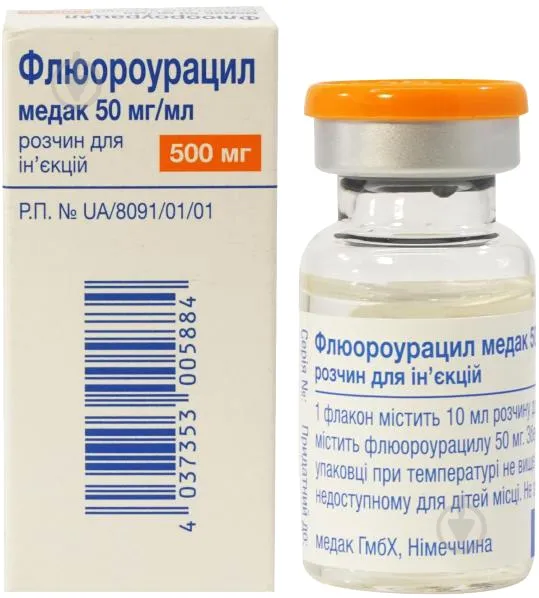
Table of Contents
INSTRUCTIONS FOR MEDICAL USE OF THE MEDICINAL PRODUCT FLUOROURACIL MEDAC (Fluorouracil MEDAC)
Composition:
Active substance: fluorouracil;
1 ml of solution contains 50 mg of fluorouracil;
Excipients: sodium hydroxide, water for injections.
Pharmaceutical form. Solution for injection.
Main physicochemical properties: clear, colorless or almost colorless liquid.
Pharmacotherapeutic group
Antineoplastic agents. Antimetabolites. Pyrimidine analogues.
ATC code L01BC02.
Pharmacological Properties
Pharmacodynamics.
Fluorouracil is a uracil analogue, a component of ribonucleic acid. The drug is considered to act as an antimetabolite. After intracellular conversion into the active deoxynucleotide, it interferes with DNA synthesis by inhibiting the conversion of deoxyuridylic acid to thymidylic acid via the cellular enzyme thymidylate synthase. Fluorouracil may also interfere with RNA synthesis.
Pharmacokinetics.
Absorption Following oral administration, fluorouracil is absorbed from the gastrointestinal tract with very high variability due to first-pass metabolism caused by varying levels of dihydropyrimidine dehydrogenase (DPD) — the first enzyme involved in the catabolic transformation of fluorouracil.
Distribution After intravenous administration, fluorouracil is distributed throughout all body fluids and is cleared from the blood within 3 hours. It is preferentially taken up by actively proliferating tissues and tumors following its conversion to nucleotide form. Fluorouracil readily crosses the blood-brain barrier and into brain tissues.
Biological transformation Dihydropyrimidine dehydrogenase is the initial enzyme in fluorouracil catabolism, responsible for the breakdown of more than 85% of the administered dose into dihydrofluorouracil. Dihydrofluorouracil is then converted into fluoro-β-ureidopropionic acid, and further into fluoro-β-alanine. Deficiency of enzymes in this pathway may lead to severe, even life-threatening, fluorouracil toxicity. In cases of hepatic insufficiency, fluorouracil metabolism is slowed, which may necessitate dose adjustment.
Intracellularly, fluorouracil is converted by a series of enzymes into active metabolites: fluorodeoxyuridine monophosphate, fluorodeoxyuridine triphosphate, and fluorouridine triphosphate.
Elimination After intravenous administration, the plasma half-life of fluorouracil is approximately 10–20 minutes and depends on the administered dose. Following a single intravenous dose, about 15% of the dose is excreted unchanged in urine within 6 hours; more than 90% of the dose is eliminated from the body within the first hour. The remainder is metabolized primarily in the liver via the body's normal pathways for uracil.
Clinical characteristics.
Indications.
- Treatment of metastatic colorectal cancer;
- Adjuvant therapy of colon and rectal cancer;
- Treatment of advanced gastric cancer;
- Treatment of advanced pancreatic cancer;
- Treatment of advanced esophageal cancer;
- Treatment of advanced or metastatic breast cancer;
- Adjuvant therapy of operable primary invasive breast cancer;
- Treatment of untreated locally advanced squamous cell carcinoma of the head and neck;
- Treatment of locally recurrent or metastatic squamous cell carcinoma of the head and neck.
Contraindications.
Fluorouracil is contraindicated in the following cases:
- Hypersensitivity to fluorouracil or to any of the excipients;
- Bone marrow suppression following radiotherapy or treatment with other antineoplastic agents;
- Should not be used for treatment of benign tumors;
- Severe hepatic dysfunction;
- Severe infections (e.g., herpes zoster, varicella);
- Severe debilitation;
- Fluorouracil is absolutely contraindicated during breastfeeding;
- Complete deficiency of dihydropyrimidine dehydrogenase (DPD) (see section "Special precautions");
- Recent or concomitant treatment with brivudine (see sections "Special precautions" and "Interaction with other medicinal products and other forms of interaction").
Interaction with other medicinal products and other forms of interaction.
Brivudine
A clinically significant interaction between brivudine and fluoropyrimidines (e.g., capecitabine, fluorouracil, tegafur) has been reported, due to inhibition of dihydropyrimidine dehydrogenase by brivudine. This interaction leads to increased fluoropyrimidine toxicity and may be potentially fatal. Therefore, a minimum interval of 4 weeks must be maintained between administration of fluorouracil and brivudine, sorivudine, and their analogs. Brivudine treatment may be initiated 24 hours after the last dose of fluorouracil.
Biochemical effects of various drugs on the antitumor efficacy or toxicity of fluorouracil have been noted. Known agents such as methotrexate, metronidazole, folic acid, alpha-interferon, and allopurinol may influence the efficacy of fluorouracil.
Cytotoxic medicinal products
Fluorouracil enhances the effects of other cytostatics and radiotherapy. When used in combination with other myelosuppressive agents, dose adjustment is necessary.
Cardiotoxicity of anthracyclines may be increased.
Radiotherapy
Dosage reduction of fluorouracil is required when administered concurrently with or following radiotherapy.
Folinic acid
The efficacy and toxicity of fluorouracil may increase when used in combination with folinic acid. Adverse effects may be more pronounced, and severe diarrhea may occur. Life-threatening diarrhea has been observed when 600 mg/m² of fluorouracil (intravenous bolus once weekly) was administered together with folinic acid.
Phenytoin
Concomitant use of phenytoin and fluorouracil has been associated with increased plasma levels of phenytoin, leading to symptoms of phenytoin intoxication.
Cimetidine, metronidazole, interferon
Cimetidine, metronidazole, or interferon may increase plasma concentrations of fluorouracil and enhance its toxic effects.
Thiazide diuretics, cyclophosphamide, methotrexate
In patients receiving cyclophosphamide, methotrexate, and 5-fluorouracil, addition of thiazide diuretics resulted in a more pronounced decrease in granulocyte count compared to patients not taking thiazides. In patients with breast cancer, combination therapy with cyclophosphamide, methotrexate, 5-fluorouracil, and tamoxifen has been reported to increase the risk of thromboembolic events.
Warfarin
Marked increases in prothrombin time and international normalized ratio (INR) have been observed in several patients stabilized on warfarin therapy after initiation of fluorouracil treatment.
Levamisole
Hepatotoxicity (elevated alkaline phosphatase, transaminases, or bilirubin) is commonly observed in patients receiving fluorouracil in combination with levamisole.
Clozapine
Concomitant use of fluorouracil and clozapine should be avoided due to increased risk of agranulocytosis.
Anthracyclines
Cardiotoxicity of anthracyclines may be increased.
Tamoxifen
In patients with breast cancer, combination therapy with cyclophosphamide, methotrexate, fluorouracil, and tamoxifen increases the risk of thromboembolic complications.
Vinorelbine
Combination of vinorelbine with fluorouracil may cause mucosal inflammation.
Live vaccines
Live vaccines should be avoided in immunocompromised patients.
Cisplatin
Increased incidence of cerebral infarction has been reported in patients with oropharyngeal cancer treated with fluorouracil and cisplatin.
Special precautions for use.
Treatment with fluorouracil should be administered under the supervision of a qualified oncologist experienced in the use of antimetabolites, in an inpatient setting, with access to facilities for regular monitoring of clinical, biochemical, and hematological effects during and after administration.
All patients must be hospitalized for initiation of therapy. The difference between therapeutic and toxic doses is narrow. It is unlikely that a therapeutic effect can be achieved without some degree of toxicity; therefore, careful patient selection and dose adjustment are essential. In case of severe toxicity, treatment should be discontinued.
Hematotoxicity
Leukopenia typically develops during fluorouracil therapy. The nadir in leukocyte count usually occurs between days 7 and 14 of the first treatment cycle, although it may sometimes occur up to 20 days after administration. Leukocyte counts usually return to normal by day 30.
Daily monitoring of platelet and leukocyte counts is recommended. Treatment should be discontinued if platelet counts fall below 100,000/mm³ or leukocyte counts fall below 3,500/mm³. If leukocyte counts decrease to 2,000/mm³, especially in the presence of granulocytopenia, hospitalization in an isolation unit is recommended, along with measures to prevent systemic infections.
Gastrointestinal toxicity
Treatment should also be discontinued at the first signs of stomatitis or oral mucosal ulceration, severe diarrhea, gastrointestinal ulceration, or gastrointestinal bleeding, as well as any bleeding or hemorrhage of any localization.
Cardiotoxicity
Cardiotoxicity associated with fluoropyrimidine therapy includes myocardial infarction, angina pectoris, arrhythmias, myocarditis, cardiogenic shock, sudden cardiac death, stress-induced cardiomyopathy (Takotsubo syndrome), and electrocardiographic changes (including very rare cases of QT prolongation). These adverse effects occur more frequently in patients receiving continuous infusion fluorouracil compared to bolus injections. A history of ischemic heart disease is a risk factor for cardiovascular adverse reactions. Therefore, attention should be paid to patients who report chest pain during treatment and to those with a history of cardiac disease. Cardiac function should be monitored regularly during fluorouracil therapy. In case of severe cardiotoxicity, treatment should be discontinued.
Encephalopathy
Post-marketing experience has reported cases of encephalopathy (including hyperammonemic encephalopathy, leukoencephalopathy, posterior reversible encephalopathy syndrome, and Wernicke's encephalopathy) associated with fluorouracil therapy. Signs and symptoms of encephalopathy include altered mental status, confusion, disorientation, coma, or ataxia. If any of these symptoms develop, treatment should be immediately suspended, and serum ammonia and vitamin B1 levels should be evaluated. Appropriate therapy should be initiated if elevated serum ammonia or vitamin B1 deficiency is detected. Caution is required when administering fluorouracil to patients with impaired renal and/or hepatic function, as they are at increased risk of hyperammonemia and hyperammonemic encephalopathy.
Hyperammonemic encephalopathy often occurs concurrently with lactic acidosis.
Tumor lysis syndrome
Post-marketing reports have documented cases of tumor lysis syndrome associated with fluorouracil use. Patients at increased risk of tumor lysis syndrome (e.g., those with renal impairment, hyperuricemia, high tumor burden, or rapidly progressing disease) should be closely monitored. Preventive measures (e.g., hydration, correction of elevated uric acid levels) may be advisable.
Deficiency of dihydropyrimidine dehydrogenase (DPD)
DPD activity is the rate-limiting factor in the catabolism of fluorouracil; therefore, patients with DPD deficiency are at increased risk of fluoropyrimidine-related toxicity, including stomatitis, diarrhea, mucositis, neutropenia, and neurotoxicity.
Toxicity associated with DPD deficiency typically occurs during the first treatment cycle or after dose escalation.
Complete DPD deficiency
Complete DPD deficiency is rare (0.01–0.5% of individuals of Caucasian descent). Patients with complete DPD deficiency are at increased risk of life-threatening or fatal toxicity and should not receive Fluorouracil Medac.
Partial DPD deficiency
Partial DPD deficiency occurs in 3–9% of individuals of Caucasian descent. Patients with partial DPD deficiency are at increased risk of severe and potentially life-threatening toxicity. To reduce this risk, consideration should be given to reducing the initial dose. DPD deficiency should be considered alongside other routine dose-reduction measures. Reducing the initial dose may affect treatment efficacy. If no severe toxicity occurs, subsequent doses may be increased, provided close monitoring is maintained.
Testing for DPD deficiency
Phenotypic and/or genotypic testing is recommended prior to initiating treatment with Fluorouracil Medac, despite uncertainties regarding optimal testing methodologies. Relevant clinical guidelines should be considered.
Impaired renal function may lead to elevated blood uracil levels, increasing the risk of misdiagnosis in patients with moderate to severe renal impairment.
Genotypic characterization of DPD deficiency
Pre-treatment testing for rare DPYD gene mutations can identify patients with DPD deficiency. Four DPYD variants—c.1905+1G>A (also known as DPYD*2A), c.1679T>G (DPYD*13), c.2846A>T, and c.1236G>A/HapB3—may cause complete absence or reduced enzymatic activity of DPD. Other rare variants may also be associated with increased risk of severe or life-threatening toxicity.
Homozygous and compound heterozygous mutations in the DPYD gene locus (e.g., combinations of the four variants with at least one c.1905+1G>A or c.1679T>G allele) are known to cause complete or near-complete absence of DPD enzymatic activity.
Patients with certain heterozygous DPYD variants (including c.1905+1G>A, c.1679T>G, c.2846A>T, and c.1236G>A/HapB3) are at increased risk of severe toxicity during fluoropyrimidine therapy.
The frequency of the heterozygous c.1905+1G>A genotype in the DPYD gene among Caucasians is approximately 1%, c.2846A>T – 1.1%, c.1236G>A/HapB3 – 2.6–6.3%, and c.1679T>G – 0.07–0.1%.
Data on the frequency of these four DPYD variants in non-Caucasian populations are limited. Currently, these four DPYD variants (c.1905+1G>A, c.1679T>G, c.2846A>T, and c.1236G>A/HapB3) are considered virtually absent in individuals of African or Asian descent.
Phenotypic characterization of DPD deficiency
For phenotypic assessment of DPD deficiency, measurement of endogenous DPD substrate—uracil (U)—in blood plasma is recommended.
Elevated uracil concentrations prior to treatment initiation are associated with increased risk of toxicity. Despite uncertainty regarding threshold values defining complete or partial DPD deficiency, a plasma DPD level ≥16 ng/mL and <150 ng/mL should be considered indicative of partial DPD deficiency and associated with increased risk of fluoropyrimidine toxicity. A blood uracil level ≥150 ng/mL should be considered indicative of complete absence of DPD and associated with life-threatening or fatal fluoropyrimidine toxicity. Blood uracil levels should be interpreted cautiously in patients with impaired renal function (see "Testing for DPD deficiency" above).
Therapeutic drug monitoring of fluorouracil
Therapeutic drug monitoring of fluorouracil may improve clinical outcomes in patients receiving regular fluorouracil infusions, reduce toxicity, and enhance efficacy. An AUC between 20 and 30 mg×h/L is expected.
Brivudine
Fluorouracil Medac should not be used concomitantly with brivudine. Fatal outcomes have been reported due to this drug interaction. Therefore, a minimum interval of four weeks must be maintained between administration of fluorouracil and brivudine. Brivudine treatment may be initiated 24 hours after the last dose of fluorouracil. If brivudine is administered to patients receiving fluorouracil, effective measures must be taken to reduce fluorouracil toxicity. Immediate hospitalization is recommended. All measures should focus on preventing systemic infections and dehydration.
Phenytoin
Patients receiving phenytoin concomitantly with fluorouracil should be closely monitored, as there is a potential for increased plasma phenytoin concentrations. Patients should avoid prolonged sun exposure due to the risk of photosensitization.
Fluorouracil Medac should be used with caution in patients who have received high-dose radiotherapy to the pelvic area.
Renal or hepatic impairment
Fluorouracil should be used with caution in patients with impaired renal or hepatic function or jaundice.
Photosensitivity
Patients should avoid prolonged sun exposure due to the risk of photosensitization.
Radiation therapy to the pelvic area
The drug should be used with caution in patients who have received high-dose radiotherapy to the pelvic area.
Vaccination with live vaccines
Live vaccines should be avoided in patients receiving fluorouracil due to the risk of severe or fatal infections. Patients should also avoid contact with individuals recently vaccinated with oral poliovirus vaccine.
Combination of fluorouracil and folinic acid
The toxicity profile of fluorouracil may be enhanced or altered when used concomitantly with folinic acid. The most common manifestations are leukopenia, mucositis, stomatitis, and/or diarrhea, which may be dose-limiting. When fluorouracil is used in combination with folinic acid, the fluorouracil dose should be reduced more than when used alone in case of toxicity. The toxic effects observed in patients receiving this combination are qualitatively similar to those seen with fluorouracil monotherapy.
Gastrointestinal toxicity occurs more frequently and may be more severe or even life-threatening (especially stomatitis and diarrhea). In severe cases, fluorouracil and folinic acid should be discontinued and supportive intravenous therapy initiated. Patients should be instructed to immediately report symptoms such as stomatitis (ulcers from mild to moderate severity) and/or diarrhea (watery stools).
Sodium content
Fluorouracil Medac contains the following amounts of sodium depending on the packaging:
- 5 mL solution contains 1.79 mmol (41.19 mg)/dose sodium, less than 1 mmol (23 mg)/dose sodium, i.e., practically sodium-free.
- 10 mL solution contains 3.58 mmol (82.37 mg)/dose sodium. Caution is advised when administering to patients on a sodium-restricted diet.
- 20 mL solution contains 7.16 mmol (164.75 mg)/dose sodium. Caution is advised when administering to patients on a sodium-restricted diet.
- 100 mL solution contains 35.82 mmol (823.75 mg)/dose sodium. Caution is advised when administering to patients on a sodium-restricted diet.
Use during pregnancy or breastfeeding
Pregnancy Adequate and well-controlled studies in pregnant women have not been conducted; however, fetal malformations and miscarriages have been reported in women who received fluorouracil during pregnancy. Women of reproductive potential should be advised to avoid pregnancy and use effective contraception during fluorouracil therapy and for at least 6 months after completion of treatment. If Fluorouracil Medac is used during pregnancy or if a patient becomes pregnant while taking the drug, she should be informed of the potential risk to the fetus and the need for genetic counseling.
Fluorouracil should be used during pregnancy only if the potential benefit justifies the potential risk to the fetus.
Breastfeeding
It is unknown whether fluorouracil is excreted in human milk; therefore, breastfeeding must be discontinued if women are receiving fluorouracil.
Fertility
Men receiving fluorouracil are advised to use reliable contraception during therapy and for 3 months after its completion. Sperm cryopreservation should be considered prior to starting treatment due to the potential for irreversible infertility caused by fluorouracil therapy.
Ability to drive and operate machinery
No studies on the effect on the ability to drive or operate machinery have been conducted. Fluorouracil may cause adverse effects such as nausea and vomiting. It may also have adverse effects on the nervous system and vision, which could impair the ability to drive or operate heavy machinery.
Method of Administration and Dosage
Fluorouracil Medac should be administered only under the supervision of a qualified physician experienced in the use of anticancer chemotherapy. The patient's condition must be closely and frequently monitored during treatment. The risk and benefit should be carefully evaluated for each individual patient prior to initiating therapy.
Adults
The appropriate dose and treatment regimen depend on the patient's condition, the type of cancer to be treated, and whether fluorouracil is used as monotherapy or in combination with other therapies. The number of treatment cycles should be determined by the physician according to local treatment protocols and guidelines, taking into account treatment efficacy and tolerability.
Treatment should be initiated in a hospital setting.
Dose reduction is recommended in patients with:
- Cachexia;
- Major surgical intervention within the previous 30 days;
- Impaired bone marrow function;
- Impaired liver or kidney function.
In adult and elderly patients receiving fluorouracil, hematological (platelet, leukocyte, and granulocyte counts), gastrointestinal (stomatitis, diarrhea, gastrointestinal bleeding), and neurological toxicities should be monitored before each dose administration, and the dose of fluorouracil should be reduced or treatment discontinued as necessary.
Dose adjustment or discontinuation depends on the occurrence of adverse reactions. In cases of hematological toxicity, such as decreased leukocyte count (≤ 3500/mm³) and/or thrombocyte count (≤ 100,000/mm³), treatment may need to be discontinued. The decision to resume treatment should be made by the physician based on the clinical situation.
Colorectal Cancer
Fluorouracil is used in the treatment of colon and rectal cancer within various treatment regimens. Fluorouracil is primarily administered in combination with folinic acid. Treatment regimens often combine fluorouracil and folinic acid with other chemotherapeutic agents such as irinotecan, oxaliplatin, or both.
Fluorouracil is typically administered at doses ranging from 200 to 2600 mg/m² body surface area. The dose also varies depending on the route of administration—either intravenous bolus or continuous intravenous infusion.
The dosing schedule also depends on the chemotherapy regimen. The fluorouracil dose may be administered once weekly, once every two weeks, or once monthly. The number of cycles depends on the treatment regimen used and the clinical decision based on treatment efficacy and tolerability.
Gastric Cancer and Gastroesophageal Junction Cancer
For patients with potentially curable gastric cancer, intraoperative chemotherapy with the following regimen is recommended: epirubicin, cisplatin, fluorouracil. The recommended dose of fluorouracil in this regimen is 200 mg/m² body surface area per day administered as a continuous intravenous infusion over 3 weeks. Six cycles are recommended, although this may vary depending on treatment efficacy and patient tolerability.
For patients with unresectable locally advanced or metastatic disease, fluorouracil is usually administered in combination with cisplatin and either epirubicin or docetaxel, or without epirubicin or docetaxel.
Esophageal Cancer
Fluorouracil is usually administered in combination with cisplatin, or with cisplatin and epirubicin, or with epirubicin and oxaliplatin. The drug dose varies between 200–1000 mg/m² body surface area per day and is administered as a continuous infusion; the treatment course lasts several days and is repeated cyclically depending on the treatment regimen.
For the treatment of lower esophageal cancer, intraoperative chemotherapy with the following regimen is recommended: epirubicin, cisplatin, fluorouracil. The recommended dose of fluorouracil in this regimen is 200 mg/m² body surface area per day administered as a continuous intravenous infusion over 3 weeks, repeated cyclically.
Pancreatic Cancer
Fluorouracil is primarily used in combination with folinic acid or gemcitabine. The dose varies between 200–500 mg/m² body surface area per day and is administered, depending on the treatment regimen, as an intravenous bolus injection or intravenous infusion, repeated cyclically.
Breast Cancer
Fluorouracil is frequently used in chemotherapy regimens in combination with cyclophosphamide and methotrexate, or with epirubicin and cyclophosphamide, or with methotrexate and leucovorin (MFL). The recommended dose is 500–600 mg/m² body surface area administered as an intravenous bolus, repeated every 3–4 weeks as needed.
The duration of adjuvant therapy for primary invasive breast cancer is 6 cycles.
Head and Neck Cancer
Fluorouracil is primarily used in combination with cisplatin or carboplatin. The dose varies between 600–1200 mg/m² body surface area per day and is administered as a continuous intravenous infusion over several days, repeated cyclically depending on the treatment regimen.
Renal or Hepatic Impairment
Fluorouracil Medac should be used with caution in patients with renal or hepatic impairment, and the dose should be reduced if necessary.
Elderly Patients
Dose adjustment is not required.
Method of Administration
Fluorouracil is usually administered intravenously as a bolus injection, short-term infusion, or continuous infusion lasting from several days to several weeks. It is extremely important to strictly adhere to the duration of injection/infusion and the selected treatment regimen.
Elderly Patients
Dose adjustment is not required.
Children
There are no recommendations for the use of fluorouracil in pediatric patients; therefore, the drug should not be used in pediatric practice.
Overdose.
Symptoms The symptoms and signs of fluorouracil overdose are qualitatively similar to adverse reactions but are usually more severe. In particular, the following adverse reactions may occur: nausea, vomiting, diarrhea, gastrointestinal ulceration, mucositis, hemorrhage, and bone marrow suppression (including thrombocytopenia, leukopenia, and agranulocytosis).
Treatment Treatment consists of discontinuing the drug and providing supportive care. There is no known specific antidote. Blood tests should be performed for at least 4 weeks after overdose. Appropriate therapy should be administered if pathological changes occur.
Adverse Reactions
The most common adverse effects are gastrointestinal disorders: diarrhea, nausea, and mucositis. Leukopenia is also very frequently observed. The undesirable effects listed below are described.
Assessment of frequency: very common (≥ 1/10), common (≥ 1/100, < 1/10), uncommon (≥ 1/1,000, < 1/100), rare (≥ 1/10,000, < 1/1,000), very rare (< 1/10,000), frequency not known (cannot be estimated from available data).
Infections and infestations: very common – infections; uncommon – sepsis.
Blood and lymphatic system: very common – myelosuppression (onset: 7–10 days, nadir: 9–14 days, recovery: 21–28 days), neutropenia, leukopenia, granulocytopenia, thrombocytopenia, agranulocytosis, anemia, pancytopenia; common – febrile neutropenia.
Immune system: very common – immunosuppression; rare – generalized allergic reactions, anaphylactic reactions, anaphylactic shock.
Endocrine disorders: rare – increased total thyroxine (T4) levels, increased total triiodothyronine (T3) levels.
Metabolism and nutritional disorders: very common – hyperuricemia; uncommon – dehydration; frequency not known – lactic acidosis, tumor lysis syndrome, hypertriglyceridemia, vitamin B1 deficiency.
Psychiatric disorders: common – euphoria; uncommon – confusion; very rare – disorientation.
Nervous system disorders: uncommon – nystagmus, headache, dizziness, Parkinson-like symptoms, pyramidal signs, somnolence, optic neuritis; rare – extrapyramidal disorders, cerebral disorders, cortical disorders, peripheral neuropathy; very rare – leukoencephalopathies, including ataxia, acute cerebellar disorders, dysarthria, confusion, disorientation, myasthenia, aphasia, seizures or coma in patients; frequency not known – hyperammonemic encephalopathy, posterior reversible encephalopathy syndrome, Wernicke's encephalopathy.
Eye disorders: common – conjunctivitis; uncommon – excessive lacrimation, blurred vision, eye movement disorders, diplopia, decreased visual acuity, photophobia, blepharitis, ectropion, dacryostenosis.
Cardiac disorders: very common – ischemic changes on ECG; common – chest pain resembling angina; uncommon – arrhythmia, myocardial infarction, myocarditis, heart failure, dilated cardiomyopathy, acute heart failure; very rare – cardiac arrest, sudden cardiac death; frequency not known – pericarditis.
Vascular disorders: uncommon – hypotension; rare – vasculitis, cerebral ischemia, ventricular ischemia, peripheral ischemia, Raynaud's syndrome, thrombophlebitis, thromboembolism.
Respiratory system disorders: very common – bronchospasm, epistaxis; uncommon – dyspnea.
Gastrointestinal disorders: very common – gastrointestinal adverse effects, which may be life-threatening: mucosal inflammation (stomatitis, esophagitis, pharyngitis, proctitis), anorexia, watery diarrhea, nausea, vomiting; uncommon – gastric ulcer, gastrointestinal hemorrhage; frequency not known – intestinal pneumatosis, enterocolitis, colitis (including necrotizing colitis).
Hepatobiliary disorders: uncommon – hepatocellular disorders; very rare – liver necrosis (with fatal outcomes), bile duct sclerosis, cholecystitis.
Skin and subcutaneous tissue disorders: very common – alopecia, palmar-plantar erythrodysesthesia syndrome observed during prolonged continuous infusion at high doses. The syndrome begins with dysesthesia of palms and soles, progressing to pain and tenderness. Concurrently, swelling and erythema of hands and feet develop.
Uncommon – dermatitis, skin changes (dry skin, fissures, erythema, pruritic maculopapular rash, hyperpigmentation, hypopigmentation), exanthema, urticaria, striped hyperpigmentation or depigmentation near veins (e.g., diffuse superficial blue pigmentation, hyperpigmentation), nail dystrophy, pain and thickening of nail beds, paronychia, onycholysis, phenomenon of recurrence of adverse reaction. Frequency not known – cutaneous lupus erythematosus.
Renal and urinary system disorders: uncommon – renal failure.
Reproductive system disorders: uncommon – impaired spermatogenesis and ovulation.
General disorders and administration site conditions: very common – slow wound healing, fever, general weakness, fatigue, asthenia; frequency not known – local reaction due to extravasation (pain, swelling, erythema).
Reporting of suspected adverse reactions.
Reporting suspected adverse reactions after drug approval is important. It allows continuous monitoring of the benefit-risk balance of the drug. Healthcare professionals and patients or their legal representatives should report any suspected adverse reactions and lack of drug efficacy via the Automated Pharmacovigilance Information System at: https://aisf.dec.gov.ua.
Shelf life.
2 years.
Storage conditions.
Store in the original packaging at a temperature not exceeding 25 °C. Keep out of reach of children.
Do not freeze.
Incompatibilities.
Incompatible with folic acid, calcium folinate, carboplatin, cisplatin, cytarabine, diazepam, doxorubicin, droperidol, filgrastim, gallium nitrate, methotrexate, metoclopramide, morphine, ondansetron, parenteral nutrition products, vinorelbine, and other anthracyclines.
Prepared solutions are alkaline; therefore, mixing with acidic drugs is not recommended.
Due to lack of compatibility studies, this medicinal product should not be mixed with other medicinal products.
Special precautions for disposal.
The pH of fluorouracil solution is 8.9. The drug has maximum stability at pH 8.6–9.4.
Fluorouracil is an irritant; therefore, contact with skin and mucous membranes should be avoided.
Packaging.
5 ml, 10 ml, 20 ml, 100 ml of the drug in a vial. One vial is placed in a cardboard box.
Prescription status.
Prescription only.
Manufacturer.
Medac Gesellschaft für klinische Spezialpräparate mbH.
Address.
Theaterstrasse, 6, 22880 Wedel, Germany.