Flutapharm
Ukraine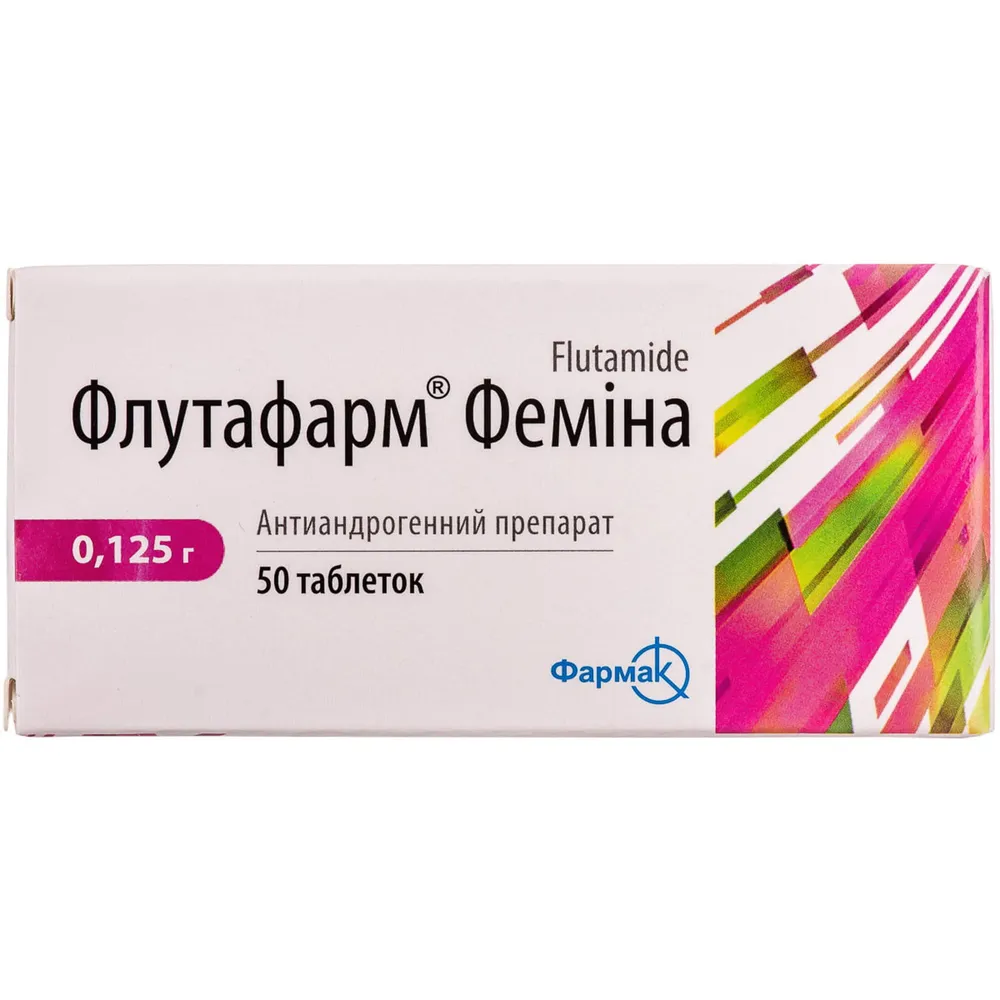
Table of Contents
INSTRUCTIONS FOR MEDICAL USE OF THE MEDICINAL PRODUCT FLUTAFARM® (FLUTAFARM®)
Composition:
Active substance: flutamide;
One tablet contains flutamide calculated as 100% substance – 250 mg (0.25 g);
Excipients: potato starch, lactose monohydrate, colloidal anhydrous silicon dioxide, calcium stearate.
Pharmaceutical form. Tablets.
Main physicochemical properties: tablets are light-yellow, with a flat surface, a score line and beveled edges.
Pharmacotherapeutic group.
Hormone antagonists and related agents. Antiandrogens. ATC code L02BB01.
Pharmacological Properties
Pharmacodynamics
Flutafarm® is an antiandrogenic agent with a non-steroidal structure. Flutamide and its metabolites have no agonistic or antagonistic activity towards glucocorticoid, estrogen, progesterone, or mineralocorticoid receptors.
Flutamide blocks androgen receptors in target cells of the prostate gland, hypothalamus, and pituitary gland, thereby inhibiting the biological effects of endogenous androgens. However, flutamide does not suppress the androgen-mediated secretion of gonadotropin-releasing hormone (GnRH) by the hypothalamus, nor does it affect the pituitary's sensitivity to GnRH. This results in increased levels of gonadotropins (luteinizing hormone and follicle-stimulating hormone), leading to stimulation of testosterone hyperproduction.
Flutamide and its metabolites inhibit the interaction of dihydrotestosterone with nuclear androgen receptors. Receptor blockade may also occur at the level of the cell membrane and cytoplasm. The primary metabolite is 2-hydroxyflutamide, which has an affinity for androgen receptors 25 times greater than that of flutamide, making it the active form of the drug.
Combining flutamide with chemical or surgical castration leads to the suppression of testicular and adrenal androgen effects.
In women with hyperandrogenic conditions associated with infertility and disturbances in the ovarian-menstrual cycle (e.g., polycystic ovary syndrome), Flutafarm**®** blocks the pathogenic effects of endogenous androgens on the ovaries and other reproductive organs, as well as on the hypothalamic-pituitary system. As a result, symptoms of hyperandrogenism (hirsutism) are reduced, menstruation is restored, folliculogenesis and the menstrual cycle improve, which may lead to the restoration of fertility in some patients.
Pharmacokinetics
After oral administration, Flutafarm® is well absorbed from the gastrointestinal tract. Maximum plasma concentration is reached within 2 hours. Studies using tritium-labeled flutamide indicate its rapid metabolism into the biologically active form—2-hydroxyflutamide—and other metabolites. The elimination half-life of the drug is 5–6 hours. Approximately 10 metabolites of flutamide have been identified. More than 90% of flutamide and 2-hydroxyflutamide is bound to plasma proteins. Elimination occurs primarily via the kidneys. Approximately 4% of the administered dose is excreted in feces.
Clinical Characteristics.
Indications.
Treatment of locally advanced or metastatic prostate cancer as monotherapy
(with or without orchidectomy) or in combination with luteinizing hormone-releasing hormone (LHRH) agonists in patients who have not previously received any treatment, or treatment of patients who do not respond or have developed resistance to hormonal therapy or have intolerance to it, with the aim of achieving maximal androgen blockade.
In combined therapy – as one of the agents for the treatment of locally confined prostate cancer B2–C2 (T2b–T4), to reduce tumor volume, enhance tumor control, and prolong the time to disease progression.
Treatment of women with functional hyperandrogenism associated with ovarian-menstrual cycle disorders, hirsutism, polycystic ovary syndrome, and infertility.
Contraindications.
Hypersensitivity to flutamide or to any of the other components of the drug. Additional contraindications for women taking Flutafarm® include organic hyperandrogenism (tumors of the ovaries or adrenal cortex). Severe hepatic impairment (baseline liver enzyme levels should be assessed prior to initiating treatment).
Pediatric age.
Interaction with other medicinal products and other forms of interaction.
No interaction between flutamide and leuprolide has been observed. When flutamide is used concomitantly with LHRH agonists, the potential adverse effects of both agents should be considered.
In patients receiving long-term warfarin therapy, an increase in prothrombin time has been reported after administration of flutamide. Therefore, careful dose adjustment of the anticoagulant is required.
Concomitant use of flutamide and theophylline may lead to increased plasma concentrations of theophylline.
Concomitant use of flutamide and potentially hepatotoxic drugs should be avoided.
There is a possibility of interaction when used concomitantly with paracetamol and opioid analgesics.
Flutamide may slow the metabolism of corticosteroids.
Alcohol consumption should be avoided during treatment.
Since androgen deprivation therapy may prolong the QT interval, concomitant use of Flutafarm® with medicinal products that prolong the QT interval or with drugs capable of inducing ventricular fibrillation/torsades de pointes, such as Class IA (e.g., quinidine, disopyramide) or Class III (e.g., amiodarone, sotalol, dofetilide, ibutilide) antiarrhythmic agents, methadone, moxifloxacin, neuroleptics, etc., should be carefully evaluated.
Special precautions for use.
When used as part of combination therapy with LHRH agonists, Flutafarm**®** should be initiated at least 3 days prior to the administration of LHRH agonists, which helps to reduce the severity of inflammatory hyperemia compared to simultaneous initiation of both therapies.
Treatment must be carried out under medical supervision.
In patients with liver function disorders, long-term flutamide therapy may be considered only after careful assessment of the potential benefits and risks.
Liver function should be evaluated prior to starting treatment. The drug should not be initiated in patients whose serum transaminase levels are 2–3 times above the upper limit of normal.
Liver function should be monitored throughout the entire treatment period, particularly in patients who have not undergone orchiectomy, as adverse reactions such as cholestatic jaundice, liver necrosis, changes in transaminase levels, and hepatic encephalopathy have been reported. Appropriate laboratory testing should be performed monthly during the first 4 months of treatment and periodically thereafter, as well as at the first signs or symptoms of liver dysfunction (e.g., pruritus, dark urine, persistent anorexia, jaundice, mild pain in the right upper quadrant of the abdomen, or general fatigue).
If liver function abnormalities or jaundice are confirmed by laboratory tests and hepatic metastases have been ruled out by biopsy, treatment with the drug should be discontinued if jaundice continues to progress or if serum transaminase levels exceed 2–3 times the upper limit of normal, even in the absence of clinical symptoms. Liver function abnormalities are usually reversible after discontinuation of Flutafarm**®**. However, there have been reports of fatal cases due to severe liver injury associated with flutamide use.
Androgen deprivation therapy may prolong the QT interval.
Physicians should assess the benefit-risk ratio, including the potential for ventricular tachycardia/fibrillation, before initiating Flutafarm**®** treatment in patients with a history of or risk factors for QT interval prolongation, as well as in patients receiving concomitant medications that may prolong the QT interval.
Patients with renal function disorders should be closely monitored during flutamide therapy.
In cases of cyanosis, patients should be evaluated for methemoglobinemia, which may occur in cases of overdose.
In patients who have not undergone orchiectomy, sperm counts should be periodically assessed during long-term treatment. Since flutamide therapy increases plasma levels of testosterone and estradiol, fluid retention in body tissues may occur; therefore, the drug should be prescribed with caution in patients with cardiac disease. Furthermore, increased estradiol levels may elevate the risk of thromboembolism.
Oligospermia may occur during prolonged use of Flutafarm**®**. In such cases, quantitative sperm analysis is advisable.
Flutafarm**®** contains lactose; therefore, patients with rare hereditary forms of galactose intolerance, lactase deficiency, or glucose-galactose malabsorption should not take this medication.
When using combination therapy with Flutafarm**®** and an LHRH agonist, the potential adverse effects of each drug should be taken into account.
Patients should be informed that flutamide and drugs used for medical castration must be used in combination and that treatment should not be discontinued or doses altered without prior consultation with a physician.
Before initiating Flutafarm**®**, women must be evaluated to exclude organic hyperandrogenism (e.g., ovarian or adrenal tumors).
Alcohol consumption should be avoided during treatment.
Use during pregnancy or breastfeeding.
When administering the drug to women, special attention should be paid to preventing pregnancy using non-hormonal, particularly barrier, contraceptive methods. If a pregnancy test yields a positive result, the drug should be discontinued immediately. Sexual intercourse with the intention of achieving pregnancy may be resumed no sooner than 48 hours after the last dose of Flutafarm**®**.
Ability to affect reaction speed when driving or operating machinery.
The drug generally does not affect reaction speed when driving or operating machinery. However, fatigue, dizziness, and partial impairment of consciousness may occur in isolated cases. In such cases, patients should refrain from driving or operating machinery.
Administration and Dosage
The drug is taken orally.
Flutafarm® is indicated for patients with prostate cancer as monotherapy (with or without orchidectomy) or in combination with LHRH agonists, at a dose of 1 tablet (250 mg) three times daily every 8 hours. The daily dose is 750 mg.
In combined therapy with LHRH agonists, both drugs may be administered simultaneously, or Flutafarm® administration may be initiated 3 days prior to the start of LHRH agonist therapy.
When radiation therapy is used, Flutafarm® should be started 8 weeks before the initiation of radiation therapy and continued throughout the entire course of radiation treatment.
For women with hyperandrogenic conditions, Flutafarm® is prescribed orally at a dose of 1/2 tablet (125 mg) three times daily for 3–6 months. The drug should be taken during or after meals. The use of non-hormonal contraceptive methods, particularly barrier methods, is mandatory.
Children. The drug is not intended for use in pediatric patients.
Overdose
In animal experiments, flutamide caused hypoactivity, piloerection, respiratory depression, ataxia and/or lacrimation, anorexia, sedation, vomiting, and methemoglobinemia.
Clinical data indicate that administration of flutamide at a daily dose up to 1500 mg for 36 weeks does not cause serious adverse effects. Occasionally, gynecomastia, breast tenderness, and transient changes in liver transaminase levels may occur. A single dose of flutamide (up to 5 g) does not cause symptoms of overdose and is not life-threatening.
Life-threatening symptoms of flutamide overdose in humans are unknown.
Due to the high degree of plasma protein binding of flutamide, it cannot be effectively removed by dialysis. As with overdose management of any medicinal product, the possibility of concomitant intake of multiple drugs by the patient should be considered. General supportive measures for monitoring and maintaining vital functions are indicated. Gastric lavage may be necessary.
Side effects
The most common adverse reactions during monotherapy with Flutafarm® are gynecomastia and/or breast tenderness, sometimes accompanied by galactorrhea. These reactions resolve after discontinuation of treatment or dose reduction.
Flutamide may cause transient elevations in liver transaminases due to hepatitis.
During combination therapy, the most common adverse effects associated with the use of flutamide and GnRH agonists include hot flushes, decreased libido, impotence, diarrhea, nausea, and vomiting. These adverse effects, except for diarrhea, occur with comparable frequency during monotherapy with GnRH agonists.
The incidence of gynecomastia during combination therapy with flutamide and a GnRH agonist is significantly lower than with flutamide monotherapy and does not differ significantly from the incidence observed with placebo.
Monotherapy
Infections and infestations
Rare: Herpes zoster
Blood and lymphatic system disorders
Rare: Lymphedema
Anemia, leukopenia, thrombocytopenia, methemoglobinemia, ecchymoses
Nutritional and metabolism disorders
Frequent: Increased appetite
Rare: Anorexia
Psychiatric disorders
Frequent: Insomnia
Rare: Depression, anxiety
Nervous system disorders
Rare: Dizziness, headache
Somnolence
Immune system disorders
Rare: Lupus-like syndrome
Eye disorders
Rare: Blurred vision
Cardiovascular disorders
Rare: Flushing
Frequency unknown: QT interval prolongation
Cardiovascular disorders
Respiratory, thoracic and mediastinal disorders
Rare: Dyspnea
Very rare: Cough
Gastrointestinal disorders
Frequent: Diarrhea, nausea, vomiting, increased appetite
Rare: Non-specific gastrointestinal complaints, heartburn, constipation
Gastrointestinal disorders, stomach discomfort, gastric disorders, ulcer-like pain, stomatitis
Hepatobiliary disorders
Frequent: Hepatitis
Jaundice, increased liver function test parameters
Liver disorders usually resolve after discontinuation of flutamide; severe toxic hepatitis, liver necrosis, and hepatic encephalopathy (these adverse reactions are usually reversible and resolve after therapy discontinuation). Isolated fatal cases associated with liver damage due to the drug have been reported.
Renal and urinary disorders
Increased blood urea and creatinine levels (the severity of this adverse effect usually does not require dose reduction or discontinuation of the drug), green discoloration of urine
Skin and subcutaneous tissue disorders
Rare: Itching, subcutaneous hemorrhages
Very rare: Photosensitivity
Rash, alopecia; at the beginning of flutamide therapy, reversible changes in hair structure may occur
Reproductive system and breast disorders
Very common: Gynecomastia and/or breast pain, galactorrhea
Rare: Decreased libido, reduced spermatogenesis
Breast changes; at the beginning of flutamide monotherapy, a reversible increase in plasma testosterone levels may occur, breast pain
Benign and malignant neoplasms
Very rare: Breast neoplasms in males
General disorders
Frequent: Increased fatigue
Rare: Edema, weakness, anxiety, thirst, retrosternal pain
Fever
Investigations
Frequent: Transient liver function abnormalities
Combination therapy
Blood and lymphatic system disorders
Rare: Anemia, leukopenia, thrombocytopenia
Very rare: Hemolytic anemia, macrocytic anemia, methemoglobinemia, sulfhemoglobinemia
Metabolism and nutrition disorders
Rare: Anorexia
Very rare: Hyperglycemia, exacerbation of diabetes mellitus
Psychiatric disorders
Rare: Depression, anxiety
Restlessness, neurosis, somnolence, insomnia, irritability
Nervous system disorders
Rare: Numbness, confusion, nervousness
Signs of neuromuscular disorders
Cardiovascular disorders
Very common: Flushing
Rare: Arterial hypertension
Frequency unknown: Thromboembolism, QT interval prolongation
Cases of thrombophlebitis, pulmonary embolism, and myocardial infarction have been reported
Respiratory, thoracic and mediastinal disorders
Very rare: Pulmonary symptoms (e.g., dyspnea), interstitial lung disease
Dyspnea
Gastrointestinal disorders
Very common: Diarrhea, nausea, vomiting
Rare: Non-specific gastrointestinal complaints
Hepatobiliary disorders
Uncommon: Hepatitis
Rare: Liver function abnormalities, jaundice
Very rare: Cholestatic jaundice, hepatic encephalopathy, liver necrosis, fatal outcomes due to severe liver damage associated with flutamide use
Elevated liver enzymes, bilirubin, residual nitrogen
Skin and subcutaneous tissue disorders
Rare: Rash
Very rare: Photosensitivity, erythema, ulcers, epidermal necrolysis
Itching, blistering
Renal and urinary disorders
Rare: Urinary tract symptoms
Very rare: Amber to yellow-green discoloration of urine
Dysuria, changes in frequency of urination
Reproductive system and breast disorders
Very common: Decreased libido, impotence
Uncommon: Gynecomastia
Musculoskeletal and connective tissue disorders
Rare: Neuromuscular symptoms (including muscle weakness, paresthesia, cramps)
Arthralgia, myalgia
Investigations
Rare: Increased urea and elevated serum creatinine concentration
General disorders
Rare: Edema
Hot flushes, abdominal pain
Shelf life
3 years.
Do not use the medicinal product after the expiry date stated on the packaging.
Storage conditions
Store in a place protected from light at a temperature not exceeding 25 °C.
Keep out of reach of children.
Packaging 10 tablets per blister, 5 blisters per carton.
Prescription status Prescription only.
Manufacturer
JSC "Farmak"
Manufacturer's address
74 Kyrylivska St., Kyiv, 04080, Ukraine