Fludarabine-vista
Ukraine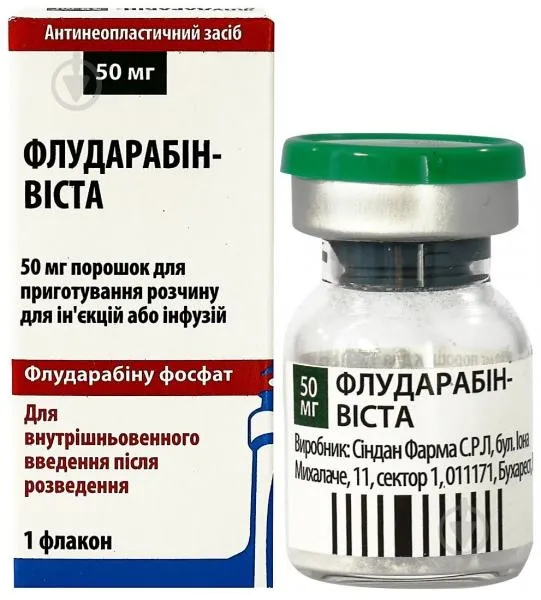
Table of Contents
INSTRUCTIONS FOR MEDICAL USE OF THE MEDICINAL PRODUCT FLUDARABINE-VISTA (FLUDARABINE-VISTA)
Composition:
Active substance: fludarabine phosphate;
1 vial contains 50 mg of fludarabine phosphate;
Excipient: mannite (E 421).
Pharmaceutical form. Powder for solution for injection or infusion.
Main physicochemical properties: lyophilized powder of white or almost white color.
Pharmacotherapeutic group. Antineoplastic agents. Purine analogues. Fludarabine. ATC code L01BB05.
Pharmacological properties.
Pharmacodynamics.
The medicinal product Fludarabine-Vista contains fludarabine phosphate, a water-soluble fluorinated nucleotide analogue of the antiviral agent vidarabine, 9-β-D-arabinofuranosyladenine (ara-A), which is relatively resistant to deamination by adenosine deaminase.
Fludarabine phosphate is rapidly dephosphorylated to 2F-ara-A, which is taken up by cells and subsequently phosphorylated intracellularly by deoxycytidine kinase to the active triphosphate, 2F-ara-ATP. This metabolite has been shown to inhibit ribonucleotide reductase, DNA polymerase, α-, δ-, and ε-DNA primase, and DNA ligase, thereby inhibiting DNA synthesis. In addition, partial inhibition of RNA polymerase II occurs, resulting in reduced protein synthesis.
Although some aspects of the mechanism of action of 2F-ara-ATP remain unclear, it is believed that effects on DNA, RNA, and protein synthesis contribute to inhibition of cell growth, with inhibition of DNA synthesis being the dominant factor in this process. Furthermore, in vitro studies have demonstrated that the action of 2F-ara-A on CLL lymphocytes causes extensive DNA fragmentation and increases the proportion of cells dying by apoptosis.
Clinical efficacy and safety
In a phase 3 study involving patients with previously untreated B-cell chronic lymphocytic leukemia, comparing fludarabine treatment with chlorambucil treatment (40 mg/m² every 4 weeks) in 195 and 199 patients, respectively, the following results were obtained: statistically significantly higher overall response rate (therapeutic efficacy) and complete response rate after first-line therapy with fludarabine compared to chlorambucil (61.1% vs. 37.6% and 14.9% vs. 3.4%, respectively); statistically significantly longer duration of response (19 vs. 12.2 months) and time to disease progression (17 vs. 13.2 months) in patients treated with fludarabine. Median survival was 56.1 months in the fludarabine group and 55.1 months in the chlorambucil group. The percentage of patients experiencing toxic reactions was comparable between those treated with fludarabine (89.7%) and those treated with chlorambucil (89.9%). While the overall rate of hematological toxicity did not differ significantly between the two groups, a significantly higher proportion of patients receiving fludarabine experienced leukocyte (p=0.0054) and lymphocyte (p=0.0240) toxicity compared to the chlorambucil group. The incidence of adverse reactions such as nausea, vomiting, and diarrhea was significantly lower in the fludarabine group (p<0.0001, p<0.0001, and p=0.0489, respectively) than in the chlorambucil group. A significantly lower incidence of hepatic toxicity (p=0.0487) was also reported in the fludarabine group compared to the chlorambucil group.
Patients who initially responded well to fludarabine therapy are likely to maintain a favorable response to fludarabine monotherapy over time.
In a randomized study comparing fludarabine with cyclophosphamide, doxorubicin, and prednisone (CAP) in 208 patients with CLL (chronic lymphocytic leukemia) at Binet stage B or C, in a subgroup of 103 previously treated patients, the following results were obtained: overall response rate (therapeutic efficacy) and complete response rate were higher with fludarabine compared to CAP (45% vs 26% and 13% vs 6%, respectively); duration of response and overall survival were similar between fludarabine and CAP. During the planned 6-month treatment period, the number of deaths was 9 (fludarabine) vs 4 (CAP).
According to a post-hoc analysis using only data up to 6 months after treatment initiation, a difference in survival curves was observed between the fludarabine and CAP groups, favoring the CAP group in the subgroup of previously treated patients with Binet stage C disease.
Pharmacokinetics.
Pharmacokinetic parameters of fludarabine (2F-ara-A) in plasma and urine
The pharmacokinetics of fludarabine (2F-ara-A) were studied after intravenous administration via rapid bolus injection, short-term infusion, continuous infusion, and after oral administration of fludarabine phosphate (fludarabine, 2F-ara-AMF).
No clear correlation between the pharmacokinetics of 2F-ara-A and treatment efficacy in cancer patients has been established.
However, the development of neutropenia and changes in hematocrit indicate dose-dependent suppression of hematopoiesis due to the cytotoxicity of fludarabine phosphate.
Distribution and metabolism
2F-ara-AMF are water-soluble prodrugs of fludarabine (2F-ara-A), which are rapidly and quantitatively dephosphorylated in the human body to the nucleoside fludarabine (2F-ara-A).
Another metabolite, 2F-ara-hypoxanthine, which is the major metabolite in dogs, was observed in humans only in negligible amounts.
After a single 30-minute infusion of 2F-ara-AMF at a dose of 25 mg/m² in patients with CLL, the mean maximum plasma concentration of 2F-ara-A was 3.5–3.7 µM at the end of the infusion. Corresponding levels after the fifth dose showed moderate accumulation, with mean maximum levels of 4.4–4.8 µM at the end of the infusion. During five-day treatment regimens, the trough levels of 2F-ara-A in plasma approximately double. Accumulation of 2F-ara-A does not occur over multiple treatment cycles. Post-peak levels decline in three pharmacokinetic phases, with an initial half-life of approximately 5 minutes, an intermediate half-life of 1–2 hours, and a terminal half-life of approximately 20 hours.
Comparison of pharmacokinetic data of 2F-ara-A from various studies allowed determination of the mean total plasma clearance of 79±40 ml/min/m² (2.2±1.2 ml/min/kg) and mean volume of distribution of 83±55 L/m² (2.4±1.6 L/kg).
The data show high individual variability. After both intravenous and oral administration of fludarabine phosphate, plasma levels of 2F-ara-A and the area under the plasma concentration-time curve (AUC) increase linearly with dose, while the elimination half-life, plasma clearance, and volume of distribution remain constant regardless of dose, indicating linear dose-dependence.
Elimination
Elimination of 2F-ara-A occurs predominantly via renal excretion.
40–60% of the intravenously administered dose is excreted in urine. Studies using radiolabeled 3H-2F-ara-AMF in laboratory animals indicate complete urinary excretion of radioactivity.
Special patient populations
In individuals with impaired renal function, total body clearance is reduced, indicating the need for dose reduction. In vitro studies on human plasma proteins did not reveal a significant tendency for 2F-ara-A to bind to proteins.
Intracellular pharmacokinetic parameters of fludarabine triphosphate
2F-ara-A is actively transported into leukemic cells, where it is rephosphorylated to monophosphate, then to di- and triphosphate. The triphosphate 2F-ara-ATP is the major intracellular metabolite and the only known metabolite with cytotoxic activity. Maximum levels of 2F-ara-ATP in leukemic lymphocytes of CLL patients were observed on average 4 hours after administration and varied significantly, with a mean peak concentration of approximately 20 µM. Intracellular levels of 2F-ara-ATP were consistently much higher than the maximum plasma levels of 2F-ara-A, indicating accumulation at target sites. In vitro incubation of leukemic lymphocytes showed a linear relationship between extracellular exposure to 2F-ara-A (due to 2F-ara-A concentration and incubation duration) and intracellular enrichment of 2F-ara-ATP. Elimination of 2F-ara-ATF from target cells occurs with a mean half-life of 15 and 23 hours.
Preclinical safety data
Systemic toxicity
In acute toxicity studies, single doses of fludarabine phosphate twice the therapeutic dose caused severe intoxication symptoms or lethal outcomes. As expected with a cytotoxic compound, the drug negatively affects bone marrow, lymphoid organs, gastrointestinal mucosa, kidneys, and male reproductive glands. Severe adverse reactions in patients occurred at doses approaching the recommended therapeutic dose (factor 3–4), including severe neurotoxicity, sometimes fatal (see section "Overdose").
Repeated-dose systemic toxicity studies with fludarabine phosphate also demonstrated expected effects on rapidly proliferating tissues at doses exceeding the threshold. Severity of morphological changes increased with higher doses and longer duration of administration; observed changes were generally considered reversible. Therapeutic experience with fludarabine indicates a similar toxicological profile in humans, although additional adverse reactions such as neurotoxicity were observed (see section "Adverse reactions").
Embryotoxicity
Embryotoxicity studies following intravenous administration in animals (rats and rabbits) showed embryolethal and teratogenic effects of fludarabine phosphate, manifested as skeletal malformations, reduced fetal weight, and post-implantation embryonic death (miscarriage). Given the narrow safety margin between teratogenic doses in animals and therapeutic doses in humans, and by analogy with other antimetabolites believed to interfere with differentiation processes, therapeutic use of fludarabine phosphate is associated with a relevant risk of teratogenic effects in humans (see section "Use during pregnancy or breastfeeding").
Genotoxicity, carcinogenicity
Fludarabine phosphate was found to cause DNA damage in sister chromatid exchange assays, induce chromosomal aberrations in in vitro cytogenetic studies, and increase the number of micronuclei in the in vivo micronucleus test in mice. Mutagenic activity of fludarabine phosphate was not observed in gene mutation assays or in the dominant lethal test in male mice. Thus, mutagenic activity was demonstrated in somatic cells but not in germ cells.
The known activity of fludarabine phosphate at the DNA level and mutagenicity test results form the basis for suspicion of carcinogenicity. No animal studies directly aimed at determining carcinogenicity have been conducted, as the suspicion of increased risk of secondary malignancies following fludarabine phosphate therapy can only be verified through epidemiological data.
Local tolerance
Based on results from animal studies with intravenous administration of fludarabine phosphate, significant irritation at the injection site is not expected. Even in cases of improper administration, no relevant local irritation was observed after paravenous, intra-arterial, or intramuscular injection of an aqueous solution containing 7.5 mg fludarabine phosphate/ml.
The similarity of lesions observed in the gastrointestinal tract after intravenous or intragastric administration in animal studies suggests that fludarabine phosphate-induced enteritis is a systemic effect.
Clinical characteristics.
Indications.
Treatment of B-cell chronic lymphocytic leukemia (CLL) in patients with adequate bone marrow reserve.
First-line therapy with fludarabine should be administered only to patients with progressive disease, stage III/IV according to Rai (stage C according to Binet) or stage I/II according to Rai (stage A/B according to Binet), in whom the patient has symptoms related to the disease or signs of progressive disease.
Contraindications.
Hypersensitivity to the active substance or to any of the components of the medicinal product.
Renal insufficiency with creatinine clearance < 30 mL/min.
Decompensated hemolytic anemia.
Breastfeeding period.
Special safety precautions.
Pregnant healthcare workers should not handle fludarabine.
Handling this potentially toxic substance requires healthcare personnel to follow all precautionary measures to ensure protection of the worker and his or her surroundings.
Personnel should be provided with appropriate protective equipment, such as sterile disposable gloves and goggles, to prevent exposure in case of breakage of the vial or other accidental spillage.
If the prepared fludarabine infusion or injection solution comes into contact with the skin or mucous membranes, the affected area should be immediately and thoroughly washed with soap and water. In case of eye contact, eyes should be thoroughly rinsed with copious amounts of water. Inhalation exposure to fludarabine should be avoided.
Disposal
The medicinal product is intended for single use only.
Any unused portions of the medicinal product and all materials used for reconstitution and administration of fludarabine must be destroyed according to standard procedures for disposal of potentially toxic waste, in compliance with current regulations regarding the destruction of toxic waste.
Interaction with other medicinal products and other types of interactions.
During clinical studies, when fludarabine was used in combination with pentostatin (deoxycoformycin) for the treatment of chronic lymphocytic leukemia (CLL), an unacceptably high incidence of fatal pulmonary toxicity was observed. Therefore, the use of fludarabine in combination with pentostatin is not recommended.
The therapeutic efficacy of fludarabine may be reduced when used concomitantly with dipyridamole and other adenosine uptake inhibitors.
Results from clinical studies and in vitro experiments have demonstrated that the use of fludarabine in combination with cytarabine may increase the intracellular concentration and intracellular exposure of Ara-CTP (the active metabolite of cytarabine) in leukemic cells. No effect was observed on plasma concentrations of Ara-C or on the elimination rate of Ara-CTP.
Special precautions for use.
Myelosuppression
Severe myelosuppression, particularly anemia, thrombocytopenia, and neutropenia, has been reported in patients treated with fludarabine. In phase I studies of intravenous administration of the drug to adult patients with solid tumors, the median time to the lowest granulocyte count was 13 days (range: 3 to 25 days), and to the lowest platelet count was 16 days (range: 2 to 32 days). Most patients had pre-existing hematological abnormalities at the start of treatment due to their disease or as a result of prior therapy causing myelosuppression.
Cumulative myelosuppression may occur. Although chemotherapy-induced myelosuppression is often reversible, the use of fludarabine phosphate requires careful monitoring of hematological parameters.
Fludarabine phosphate is a potent antineoplastic agent with potentially severe toxic side effects. Patients receiving fludarabine therapy must be closely monitored for signs of hematological and non-hematological toxicity.
Periodic complete blood counts are recommended to detect the development of anemia, neutropenia, and thrombocytopenia.
Several cases of bone marrow hypoplasia or aplasia have been reported in adult patients, leading to pancytopenia, which in some instances resulted in fatal outcomes. The duration of clinically significant cytopenic episodes reported ranged from 2 months to 1 year. Such episodes have been observed both in previously treated and untreated patients.
As with other cytotoxic agents, careful consideration should be given to the collection of hematopoietic stem cell samples.
Autoimmune phenomena
Life-threatening, and sometimes fatal, autoimmune phenomena have been reported during or after fludarabine therapy, regardless of any history of autoimmune disorders or a positive Coombs test. In most patients who developed hemolytic anemia, re-exposure to fludarabine resulted in a recurrence of hemolysis. Patients receiving fludarabine should be closely monitored for signs of hemolysis.
If hemolysis is detected, discontinuation of fludarabine therapy is recommended. The most common treatment for autoimmune hemolytic anemia includes transfusion of irradiated blood (see below) and administration of adrenocorticosteroids.
Neurotoxicity
The long-term effects of fludarabine on the central nervous system are unknown. However, in some studies, patients tolerated the recommended dose over relatively prolonged treatment periods (up to 26 treatment cycles).
Patients should be carefully evaluated for signs of neurological effects.
When administered at high doses in dose-ranging studies in patients with acute leukemia, intravenous fludarabine was associated with severe neurological effects, including blindness, coma, and death. Symptoms appeared 21 to 60 days after the last dose. Severe toxic central nervous system effects occurred in 36% of patients who received intravenous doses approximately four times higher than the recommended dose (96 mg/m²/day for 5–7 days) for CLL. In patients receiving doses recommended for CLL treatment, severe CNS toxicity was rare (coma, seizures, and agitated delirium) or infrequent (confusion).
Post-marketing experience with fludarabine indicates cases of neurotoxicity occurring earlier or later than those observed in clinical trials.
Fludarabine administration may be associated with leukoencephalopathy, acute toxic leukoencephalopathy, or reversible posterior leukoencephalopathy syndrome.
This may occur:
- at the recommended dose:
- when fludarabine is administered after or in combination with agents known to be associated with leukoencephalopathy, acute toxic leukoencephalopathy, or reversible posterior leukoencephalopathy syndrome;
- when fludarabine is administered to patients with other risk factors such as cranial or total body irradiation, hematopoietic cell transplantation, graft-versus-host disease, renal failure, or hepatic encephalopathy;
- at doses higher than the recommended dose.
Symptoms of leukoencephalopathy, acute toxic leukoencephalopathy, or reversible posterior leukoencephalopathy syndrome may include headache, nausea and vomiting, seizures, visual disturbances (loss of vision, altered light perception, neurological disorders). Additional effects include optic neuritis, papillitis, confusion, somnolence, agitation, paraparesis/quadriparesis, muscle spasticity, and urinary incontinence.
Leukoencephalopathy, acute toxic leukoencephalopathy, or reversible posterior leukoencephalopathy syndrome may be irreversible, life-threatening, or fatal. Fludarabine therapy should be discontinued if these conditions are suspected.
Patients should be monitored and undergo brain imaging, preferably using MRI. If diagnosis is confirmed, fludarabine therapy should be discontinued.
Tumor lysis syndrome
Tumor lysis syndrome has been reported in CLL patients with a large tumor burden. Since fludarabine therapy may induce this reaction as early as the first week of treatment, preventive measures are necessary in patients at risk of developing this complication, and hospitalization during the first treatment cycle may be recommended for such patients.
Graft-versus-host reaction
Graft-versus-host reaction (reaction of transfused immunocompetent lymphocytes against the host organism) has been observed after transfusion of non-irradiated blood to patients treated with fludarabine. This reaction has frequently resulted in fatal outcomes. Therefore, to minimize the risk of graft-versus-host reaction, patients requiring blood transfusions who are undergoing or have undergone fludarabine therapy should receive only irradiated blood products.
Skin cancer
Exacerbation or sudden worsening of pre-existing skin malignancies, as well as new-onset skin cancer, has been reported in some patients during or after treatment with fludarabine.
Poor general health status
Fludarabine should be administered with caution and only after careful risk-benefit assessment in patients with poor general health status. This particularly applies to patients with severe bone marrow dysfunction (thrombocytopenia, anemia, and/or granulocytopenia), immunodeficiency, or a history of opportunistic infections.
Renal function impairment
The total systemic clearance of the main plasma metabolite, 2-F-ara-A, correlates with creatinine clearance, indicating the importance of renal excretion for elimination of this compound. Patients with impaired renal function have shown increased systemic exposure (AUC of 2-F-ara-A). Clinical data in patients with renal impairment (creatinine clearance < 70 mL/min) are limited.
Fludarabine should be used with caution in patients with renal insufficiency. In patients with moderate renal impairment (creatinine clearance 30–70 mL/min), the dose should be reduced by 50%, and close monitoring of the patient is required. Fludarabine therapy is contraindicated if creatinine clearance is < 30 mL/min.
Elderly patients
Due to limited data on fludarabine use in elderly patients (>75 years of age), the drug should be used cautiously in this population.
In patients aged 65 years and older, creatinine clearance should be measured before initiating treatment (see section "Dosage and administration", subsection "Patients with renal impairment").
Pregnancy
Fludarabine phosphate has been shown to be genotoxic. It has also been demonstrated to be both embryotoxic and fetotoxic in rabbits and rats. Fludarabine may cause fetal harm when administered to pregnant women.
Fludarabine should be used during pregnancy only if the potential benefit to the mother outweighs the potential risk to the fetus.
Women of reproductive potential should be informed of the potential adverse effects of the drug on the fetus.
Contraception
Due to the genotoxic risk of fludarabine phosphate, women of reproductive potential must use effective contraceptive measures during therapy and for at least 6 months after discontinuation of treatment.
Men of reproductive potential must use effective contraception and should be advised not to plan a pregnancy during treatment and for at least 3 months after its completion (see section "Use during pregnancy or breastfeeding").
Vaccination
Live vaccines should be avoided during and after fludarabine therapy.
Re-treatment following initial fludarabine therapy
Switching from initial fludarabine therapy to chlorambucil treatment in case of non-response to fludarabine should be avoided, as most patients resistant to fludarabine have also shown resistance to chlorambucil.
Excipients
The drug vial contains less than 5 mg (i.e., less than 1 mmol) of sodium ions; therefore, fludarabine is considered a sodium-free medicinal product.
Use during pregnancy or breastfeeding.
Reproductive function
Patients of reproductive potential should be informed about the potential adverse effects of the drug on the fetus.
Due to the genotoxic risk of fludarabine phosphate, women of reproductive potential must use effective contraception during therapy and for at least 6 months after its completion (see section "Special precautions for use").
Male patients should use effective contraception and should be advised not to plan a pregnancy during fludarabine therapy and for at least 3 months after treatment ends.
Pregnancy
Data on the use of fludarabine phosphate in pregnant women are limited. Fludarabine phosphate has been shown to be genotoxic. Animal studies have demonstrated reproductive toxicity.
Fludarabine has potential adverse effects on the fetus. Fludarabine may be used during pregnancy only if the expected benefit to the mother outweighs the potential risk to the fetus. Women of childbearing potential receiving fludarabine should be advised to avoid pregnancy and to inform their physician immediately if pregnancy occurs.
Breastfeeding
It is unknown whether the drug or its metabolites are excreted in human milk.
However, preclinical data indicate that fludarabine phosphate and/or its metabolites can pass from maternal blood into breast milk.
Due to the potential for serious adverse reactions in breastfed infants, fludarabine is contraindicated in women who are breastfeeding.
Fertility
Fludarabine affects fertility in both men and women. Women planning pregnancy should be advised to seek genetic counseling prior to starting fludarabine therapy. Male patients should consult regarding fertility preservation options before initiating fludarabine treatment.
Ability to drive and use machines.
Fludarabine may impair the ability to drive or operate machinery, as side effects such as fatigue, weakness, visual disturbances, confusion, agitation, and seizures have been observed during its use.
Method of Administration and Dosage
The recommended dose is 25 mg of fludarabine phosphate per 1 m² of body surface area, administered intravenously daily for 5 consecutive days every 28 days. The contents of one vial are dissolved in 2 mL of water for injections. One mL of the resulting solution contains 25 mg of fludarabine phosphate.
The required dose (calculated according to the patient's body surface area) is drawn into a syringe. For intravenous bolus injection, this dose is then diluted in 10 mL of 0.9% sodium chloride solution.
Alternatively, the required dose drawn into a syringe for infusion may be diluted in 100 mL of 0.9% sodium chloride solution and administered over approximately 30 minutes.
The duration of treatment depends on drug tolerability and treatment efficacy.
Patients with CLL should be treated with Fludarabine-Vista until maximum response is achieved (complete or partial remission, which is usually achieved after 6 cycles), after which the drug should be discontinued.
Special Patient Groups
Patients with Renal Impairment
Dosage adjustment is required when administering fludarabine to patients with renal insufficiency. If creatinine clearance is between 30–70 mL/min, the dose should be reduced by 50%, and careful monitoring of hematological parameters is necessary to assess toxicity (see section "Special Warnings and Precautions for Use").
Fludarabine treatment is contraindicated if creatinine clearance is < 30 mL/min (see section "Contraindications").
Patients with Hepatic Impairment
There are no data regarding the use of fludarabine in patients with hepatic impairment; therefore, caution should be exercised when administering the drug to this patient group.
Geriatric Patients
Since data on fludarabine use in elderly patients (> 75 years) are limited, caution should be exercised when administering the drug to this patient group.
In patients aged 65 years and older, creatinine clearance should be determined (see section "Special Warnings and Precautions for Use", subsection "Patients with Renal Impairment").
Method of Administration
Fludarabine should be prescribed by a qualified physician experienced in anticancer therapy.
It is strongly recommended that Fludarabine-Vista be administered only intravenously.
There have been no reports of severe local adverse reactions following paravenous administration of fludarabine. However, accidental paravenous injection must be avoided.
Reconstitution
To prepare the solution for parenteral administration, 2 mL of sterile water for injections are added under aseptic conditions to the vial containing Fludarabine-Vista. The vial contents should dissolve completely within 15 seconds or less. One mL of the resulting solution contains 25 mg of fludarabine phosphate, 25 mg of mannitol, and sodium hydroxide (to adjust pH to 7.7). The pH of the final solution ranges from 7.2 to 8.2.
Dilution
The required dose (calculated according to the patient’s body surface area) is drawn into a syringe.
For intravenous bolus injection, this dose is then diluted in 10 mL of 0.9% sodium chloride solution. Alternatively, for infusion, the required dose may be diluted in 100 mL of 0.9% sodium chloride solution and administered over approximately 30 minutes.
In clinical trials, the drug was diluted in 100 mL or 125 mL of 5% dextrose solution or 0.9% sodium chloride solution.
Visual Inspection Prior to Administration
As with all parenteral products, the reconstituted solution should be visually inspected before administration. The solution must be clear, colorless, and free of visible particulate matter.
The drug should not be used if stored in a damaged container.
Children
The safety and efficacy of fludarabine in pediatric patients under 18 years of age have not been established; therefore, the drug should not be administered to this patient group.
Overdose
Administration of high doses of the drug has been associated with leukoencephalopathy, acute toxic leukoencephalopathy, or reversible posterior leukoencephalopathy syndrome. Symptoms may include headache, nausea and vomiting, seizures, visual disturbances such as vision loss, altered sensorium, and focal neurological deficits. Additional effects may include optic neuritis, papillitis, confusion, somnolence, agitation, paraparesis/quadriparesis, muscle spasticity, and urinary incontinence.
High-dose fludarabine administration has led to irreversible central nervous system toxicity, resulting in delayed blindness, coma, and fatal outcomes.
High doses of the drug may also cause severe thrombocytopenia and neutropenia due to bone marrow suppression.
There is currently no specific antidote for fludarabine.
Treatment consists of discontinuation of the drug and provision of supportive care.
Adverse reactions.
Based on the experience with fludarabine, the most commonly reported adverse reactions are myelosuppression (neutropenia, thrombocytopenia, and anemia), infectious diseases including pneumonia, cough, fever, fatigue, weakness, nausea, vomiting, and diarrhea. Other frequently reported adverse reactions include cold-like symptoms, edema, malaise, peripheral neuropathy, visual disturbances, anorexia, mucositis, stomatitis, and skin rash. Serious opportunistic infections have occurred in patients treated with fludarabine. Fatal outcomes have been reported following the development of severe adverse reactions.
The adverse reactions listed below in the table are classified by organ systems and frequency of occurrence. Frequencies are based on data from clinical studies, regardless of causal relationship to fludarabine. Rare adverse reactions have been primarily identified from post-marketing experience.
| System and organs |
Very common (≥ 1/10) |
Common (≥ 1/100 – <1/10) |
Uncommon (≥ 1/1000 – <1/100) |
Rare (≥ 1/10000 – <1/1000) |
Frequency not known |
| Infections and infestations |
Infectious diseases/opportunistic infections (such as reactivation of latent viruses, e.g. progressive multifocal leukoencephalopathy, herpes zoster (Herpes zoster), Epstein-Barr virus, pneumonia |
Lymphoproliferative disorders (associated with Epstein-Barr virus) |
|||
| Benign, malignant and unspecified neoplasms (including cysts and polyps) |
Myelodysplastic syndrome and acute myeloid leukemia (mainly associated with prior, concomitant or subsequent therapy with alkylating agents, topoisomerase inhibitors or radiotherapy) |
||||
| Blood and lymphatic system disorders |
Neutropenia, anemia, thrombocytopenia |
Myelosuppression |
|||
| Immune system disorders |
Autoimmune disorders (including autoimmune hemolytic anemia, Evans syndrome, thrombocytopenic purpura, acquired hemophilia, pemphigus) |
||||
| Metabolism and nutrition disorders |
Anorexia |
Tumor lysis syndrome (including renal failure, metabolic acidosis, hyperkalemia, hyperuricemia, hypocalcemia, hematuria, uric acid crystalluria, hyperphosphatemia) |
|||
| Nervous system disorders |
Peripheral neuropathy |
Confusion |
Coma, seizures, agitation |
Intracranial hemorrhage. Leukoencephalopathy, acute toxic leukoencephalopathy, reversible posterior leukoencephalopathy syndrome |
|
| Eye disorders |
Visual disturbances |
Blindness, optic neuritis, optic neuropathy |
|||
| Cardiac disorders |
Heart failure, arrhythmia |
||||
| Respiratory, thoracic and mediastinal disorders |
Cough |
Lung toxicity (including pulmonary fibrosis, pneumonitis, dyspnea) |
Pulmonary hemorrhage |
||
| Gastrointestinal disorders |
Vomiting, diarrhea, nausea |
Stomatitis |
Gastrointestinal hemorrhage, changes in pancreatic enzyme levels |
||
| Hepatobiliary disorders |
Changes in liver enzyme levels |
||||
| Skin and subcutaneous tissue disorders |
Rash |
Skin cancer, Stevens-Johnson syndrome, toxic epidermal necrolysis (Lyell type) |
|||
| Renal and urinary disorders |
Hemorrhagic cystitis |
||||
| General disorders and administration site conditions |
Fever, fatigue, asthenia |
Edema, mucositis, malaise, cold |
Shelf life. 4 years.
Reconstituted solution
Chemical and physical stability after reconstitution (in water for injection, in 0.9% sodium chloride solution, in 5% glucose solution) has been demonstrated for 7 days at 5+3 °C and for 8 hours at 25 °C.
From a microbiological standpoint, the product should be used immediately after reconstitution. If the product is not used immediately after reconstitution, the responsibility for storage conditions and duration lies with the user. The storage time of the reconstituted product should not exceed 24 hours at a temperature of 2 to 8 °C or 8 hours at 25 °C.
Storage conditions.
Store in the original packaging at a temperature not exceeding 25 °C.
Keep out of the reach of children.
Incompatibilities.
Due to lack of compatibility data, this medicinal product should not be mixed with other medicinal products.
Packaging.
50 mg per vial; 1 vial of powder in a cardboard box.
Prescription status.
By prescription only.
Manufacturer. Sindan Pharma S.R.L.
Manufacturer's address and location of business operations.
Bd. Ion Mihalache, No. 11, Sector 1, 011171, Bucharest, Romania.