Fingolimod-vista
Ukraine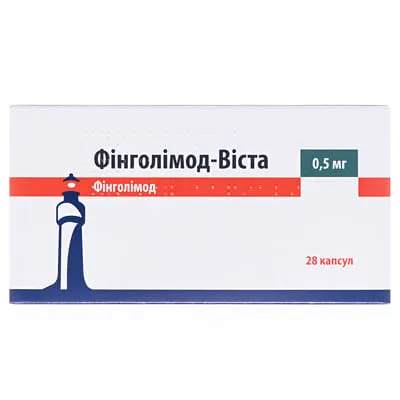
Table of Contents
INSTRUCTIONS FOR MEDICAL USE OF THE MEDICINAL PRODUCT FINGOLIMOD-VISTA (FINGOLIMOD-VISTA)
Composition:
Active substance: fingolimod;
1 capsule contains 0.56 mg of fingolimod as hydrochloride, equivalent to 0.5 mg of fingolimod;
Excipients: potassium citrate monohydrate, colloidal anhydrous silicon dioxide, magnesium stearate, hard gelatin capsule (gelatin, titanium dioxide (E 171), yellow iron oxide (E 172)).
Pharmaceutical form. Capsules.
Main physicochemical properties: hard gelatin capsule 16 mm (size 3) with white body and yellow cap.
Pharmacotherapeutic group. Antineoplastic and immunomodulating agents. Immunosuppressants. Selective immunosuppressants. ATC code L04A A27.
Pharmacological Properties
Pharmacodynamics
Mechanism of Action
Fingolimod is a sphingosine-1-phosphate (S1P) receptor modulator. Fingolimod is metabolized by sphingosine kinase to its active metabolite, fingolimod phosphate. Fingolimod phosphate binds with high affinity to S1P type 1 receptors (S1P1) on lymphocytes at low nanomolar concentrations. It readily crosses the blood-brain barrier to bind to S1P1 receptors located on neural cells in the central nervous system (CNS). By acting as a functional antagonist of S1P receptors on lymphocytes, fingolimod phosphate inhibits the ability of lymphocytes to exit lymph nodes, resulting in redistribution rather than depletion of lymphocytes. Animal studies have shown that this redistribution reduces the infiltration of pathogenic lymphocytes, including pro-inflammatory Th17 cells, into the CNS, where they may contribute to nerve inflammation and neural tissue damage. Animal studies and in vitro experiments indicate that fingolimod may also exert effects through interaction with S1P receptors on neural cells.
Pharmacodynamic Effects
Within 4–6 hours after administration of the first 0.5 mg dose of fingolimod, the number of lymphocytes in peripheral blood decreases to approximately 75% of baseline. With continuous daily dosing, lymphocyte counts continue to decline over a 2-week period, reaching a nadir of approximately 500 cells/µL or about 30% of baseline. 18% of patients reached a minimum lymphocyte count below 200 cells/µL at least once. The low lymphocyte count is maintained during continuous daily treatment. Most T- and B-lymphocytes regularly recirculate through lymphoid organs and are primarily affected by fingolimod. Approximately 15–20% of T-lymphocytes have an effector memory phenotype—cells important for peripheral immune surveillance. Since this lymphocyte subset typically does not recirculate through lymphoid organs, it is not significantly affected by fingolimod. Lymphocyte counts begin to increase within days after discontinuation of fingolimod, and normal levels are typically restored within 1–2 months. Continuous fingolimod treatment results in a modest reduction in neutrophil counts to approximately 80% of baseline. Monocytes are not affected by fingolimod.
Fingolimod causes a transient decrease in heart rate and atrioventricular conduction delay at the initiation of treatment. The maximum reduction in heart rate occurs within the first 6 hours after dose administration, with about 70% of the negative chronotropic effect observed on the first day. With continued fingolimod treatment, heart rate returns to baseline within 1 month. The fingolimod-induced reduction in heart rate can be reversed with atropine or isoprenaline. A moderate positive chronotropic effect of inhaled salmeterol has also been demonstrated. An increased frequency of atrial extrasystoles is observed at the start of fingolimod treatment, but no increase in atrial fibrillation/flutter, ventricular arrhythmias, or ectopy has been reported. Fingolimod treatment is not associated with a reduction in cardiac output. Autonomic cardiac responses, including diurnal heart rate variability and response to exercise, remain unaffected during fingolimod treatment.
S1P4 may partially contribute to the effect but is not the primary receptor responsible for lymphocyte sequestration. The mechanism of bradycardia and vasoconstriction has also been studied in vitro in guinea pigs, isolated rabbit aorta, and coronary artery. It has been concluded that bradycardia is primarily mediated via activation of the inward rectifying potassium channel or G-protein-activated inwardly rectifying K+ channel (IKACh/GIRK), and vasoconstriction is likely mediated by a mechanism dependent on Rho-kinase (Rho-associated kinase) and calcium.
Treatment with one or multiple doses of fingolimod at 0.5 mg and 1.25 mg over two weeks is not associated with a significant increase in airway resistance, as measured by forced expiratory volume (FEV1) and forced expiratory flow (FEF) at 27–75%. However, a single dose of fingolimod at ≥5 mg (10 times the recommended dose) is associated with dose-dependent increases in airway resistance. Repeated administration of fingolimod at doses of 0.5 mg, 1.25 mg, or 5 mg is not associated with impaired oxygenation or exercise-induced hypoxia, nor with increased airway sensitivity to methacholine. Patients receiving fingolimod exhibit a normal bronchodilator response to inhaled beta-agonists.
Pharmacokinetics
Pharmacokinetic data were obtained in healthy volunteers, renal transplant patients, and patients with multiple sclerosis. The pharmacologically active metabolite is fingolimod phosphate.
Absorption
Fingolimod is absorbed slowly (time to maximum concentration [Tmax] – 12–16 hours) and extensively (>85%). The predicted absolute oral bioavailability is 93% (95% confidence interval [CI]: 79–111%). Steady-state blood concentrations are achieved within 1–2 months after once-daily dosing, with steady-state levels approximately 10-fold higher than after the first dose.
Food intake does not affect the maximum plasma concentration (Cmax) or exposure (AUC) of fingolimod. The Cmax of fingolimod phosphate was slightly increased (by 34%), while AUC remained unchanged. Therefore, Fingolimod-Vista may be administered independently of food intake.
Distribution
Fingolimod is extensively distributed into erythrocytes, with a blood cell fraction of 86%. Fingolimod phosphate has a lower blood cell uptake ratio – <17%. Both fingolimod and fingolimod phosphate are highly bound to plasma proteins (>99%). Fingolimod is extensively distributed into body tissues, with a volume of distribution of approximately 1200 ± 260 liters. A study in 4 healthy volunteers who received a single intravenous dose of radiolabeled iodinated fingolimod analog demonstrated that fingolimod reaches the brain. In 13 male patients with multiple sclerosis receiving Fingolimod-Vista 0.5 mg daily orally, the average amount of fingolimod (and fingolimod phosphate) in semen at steady state was approximately 10,000 times lower than the administered dose (0.5 mg).
Biotransformation
In humans, biotransformation of fingolimod occurs via stereoselective phosphorylation to the pharmacologically active (S)-enantiomer of fingolimod phosphate. Fingolimod is eliminated through oxidative biotransformation, primarily catalyzed by CYP4F2 and possibly other isoenzymes, followed by degradation (similar to fatty acids) into inactive metabolites. Formation of pharmacologically inactive, nonpolar ceramide analogs of fingolimod has also been observed. The main enzyme involved in fingolimod metabolism has not been fully identified but may be either CYP4F2 or CYP3A4.
After a single oral dose of [14C]fingolimod, the major circulating components related to fingolimod in blood, based on their contribution to the AUC of total radioactivity over 34 days post-dose, were fingolimod (23%), fingolimod phosphate (10%), and inactive metabolites (carboxylic acid metabolite M3 (8%), ceramide metabolite M29 (9%), and ceramide metabolite M30 (7%)).
Elimination
The blood clearance of fingolimod is 6.3 ± 2.3 L/hour, and the mean apparent terminal half-life (T1/2) is 6–9 days. Fingolimod and fingolimod phosphate decline similarly during the terminal phase, resulting in comparable half-lives.
After oral administration, approximately 81% of the dose is slowly eliminated in urine as inactive metabolites. Fingolimod and fingolimod phosphate are not excreted unchanged in urine but are the main components in feces, with each accounting for less than 2.5% of the dose. By day 34, 89% of the administered dose has been eliminated.
Linearity
The concentrations of fingolimod and fingolimod phosphate increase nearly proportionally with dose after multiple doses of 0.5 mg and 1.25 mg once daily.
Characteristics in Specific Patient Populations
The pharmacokinetics of fingolimod and fingolimod phosphate are not different between men and women, among patients of different ethnic backgrounds, or in patients with mild to severe renal impairment.
Hepatic Impairment
In patients with mild, moderate, or severe hepatic impairment (Child-Pugh classes A, B, and C), no changes in Cmax of fingolimod were observed, but AUC increased by 12%, 44%, and 103%, respectively. In patients with severe hepatic impairment (Child-Pugh class C), Cmax of fingolimod phosphate was reduced by 22%, while AUC was not significantly altered. The pharmacokinetics of fingolimod phosphate have not been evaluated in patients with mild or moderate hepatic impairment. The T1/2 of fingolimod remained unchanged in patients with mild hepatic impairment but was prolonged by approximately 50% in patients with moderate or severe hepatic impairment.
Fingolimod should not be used in patients with severe hepatic impairment (Child-Pugh class C). Fingolimod should be used with caution in patients with mild or moderate hepatic impairment.
Elderly Patients
Clinical experience and pharmacokinetic data in patients aged 65 years and older are limited; therefore, Fingolimod-Vista should be used with caution in this age group.
Children
In pediatric patients (aged 10 years and older), the concentration of fingolimod phosphate appears to increase proportionally between 0.25 mg and 0.5 mg.
Steady-state concentrations of fingolimod phosphate are approximately 25% lower in children (aged ≥10 years) receiving daily doses of 0.25 mg or 0.5 mg compared to adult patients receiving 0.5 mg once daily. There are no data on the use of the medicinal product in children under 10 years of age.
Clinical characteristics.
Indications.
Fingolimod-Vista is indicated as monotherapy for the treatment of highly active relapsing-remitting multiple sclerosis in the following groups of adult patients and children aged 10 years and older.
Patients with high disease activity
This group includes patients who have shown no therapeutic response after a full and adequate (at least one year) course of treatment with at least one disease-modifying therapy (exceptions and washout period information are provided in sections "Pharmacological properties" and "Special instructions").
Patients with rapidly evolving severe relapsing-remitting multiple sclerosis
Presence of two or more disabling relapses within one year or detection on brain MRI of one or more gadolinium-enhancing lesions or an increase in the number of T2-hyperintense lesions compared to the previous MRI scan.
Contraindications.
Immunodeficiency syndrome.
Patients at increased risk of opportunistic infections, including those with impaired immunity who are receiving immunosuppressive therapy, or those with pre-existing immunodeficiency.
Severe acute infections, active chronic infections (hepatitis, tuberculosis).
Contraindicated in patients with malignancies.
Contraindicated in patients with severe hepatic impairment (Child-Pugh class C).
Myocardial infarction occurred within the last 6 months.
Unstable angina.
Stroke. Transient ischemic attack.
Decompensated heart failure requiring hospitalization.
New York Heart Association (NYHA) Class III/IV heart failure.
Marked cardiac arrhythmia requiring concomitant use of antiarrhythmic agents of Class Ia or Class III.
Existing or history of second-degree Mobitz type II atrioventricular block (AV block) or third-degree AV block.
Sick sinus syndrome (if the patient does not have a functioning pacemaker).
Baseline QTc interval ≥ 500 ms.
Pregnant women and women of childbearing potential who are not using highly effective contraceptive methods.
Hypersensitivity to the active substance or to any of the excipients of the medicinal product.
Interaction with other medicinal products and other types of interactions.
Antineoplastic, immunosuppressive, or immunomodulating therapy
Concomitant use of antineoplastic, immunosuppressive, or immunomodulating agents should be administered with caution due to the risk of additive effects on the immune system. Caution is also required when switching from therapies with prolonged action affecting the immune system, such as natalizumab or mitoxantrone. In clinical trials of multiple sclerosis, concomitant short-term treatment of relapses with corticosteroids was not associated with an increased frequency of infections.
Vaccination
Vaccination may be less effective during treatment with Fingolimod-Vista and for up to 2 months after discontinuation of treatment. Administration of live attenuated vaccines may pose a risk of infection and is therefore not recommended (see sections "Special instructions" and "Adverse reactions").
Medicinal products inducing bradycardia
Treatment with fingolimod has been studied concomitantly with medicinal products that reduce heart rate, such as atenolol and diltiazem. When fingolimod was administered with atenolol in interaction studies in healthy volunteers, an additional 15% reduction in heart rate was observed at the initiation of fingolimod treatment; this effect was not observed with diltiazem. Treatment is contraindicated in patients receiving beta-blockers or other medicinal products that may reduce heart rate, such as Class Ia and III antiarrhythmics, calcium channel blockers (e.g., verapamil or diltiazem), digoxin, anticholinesterase agents, or pilocarpine, due to additive effects on heart rate.
Administration of a single dose of fingolimod together with isoprenaline or atropine did not alter the effect of fingolimod. Furthermore, co-administration of atenolol, diltiazem, and fingolimod did not alter the pharmacokinetics of the latter.
If such combination therapy with Fingolimod-Vista is planned, consultation with a cardiologist is recommended regarding switching the patient to agents that do not reduce heart rate or appropriate monitoring at treatment initiation. Monitoring for at least one night is recommended if treatment with heart rate-lowering agents cannot be discontinued.
Pharmacokinetic effect of other medicinal products on fingolimod
Fingolimod is metabolized primarily by CYP4F2. Other enzymes, such as CYP3A4, may also be involved in its metabolism, particularly in cases of strong CYP3A4 induction. Significant effects of potent transporter protein inhibitors on the distribution of fingolimod are not expected. Concomitant administration of fingolimod with ketoconazole resulted in a 1.7-fold increase in AUC of fingolimod and fingolimod phosphate due to CYP4F2 inhibition. Caution should be exercised when prescribing fingolimod concomitantly with medicinal products that may inhibit CYP3A4 activity (protease inhibitors, azole antifungals, certain macrolides such as clarithromycin or telithromycin).
Concomitant administration of carbamazepine at a dose of 600 mg twice daily at steady state and a single 2 mg dose of fingolimod reduced the AUC of fingolimod and its metabolite by approximately 40%. Other strong inducers of CYP3A4 enzyme, such as rifampicin, phenobarbital, phenytoin, efavirenz, and St. John’s wort, may similarly reduce the AUC of fingolimod and its metabolite. Since this may potentially affect efficacy, concomitant use of these medicinal products should be prescribed with caution. Concomitant use of St. John’s wort is not recommended (see section "Special instructions"). Pharmacokinetic data on potential interactions show no significant effect of fluoxetine, paroxetine (potent inhibitors of CYP2D6), or carbamazepine (potent enzyme inhibitor) on fingolimod and fingolimod phosphate. In addition, the following medicinal products also had no clinically significant effect on fingolimod and fingolimod phosphate: baclofen, gabapentin, oxybutynin, amantadine, modafinil, amitriptyline, pregabalin, corticosteroids, and oral contraceptives.
Effect on laboratory tests
Since fingolimod reduces blood lymphocyte count by redistributing lymphocytes to secondary lymphoid organs, peripheral blood lymphocyte count cannot be used to assess overall lymphocyte status.
Laboratory testing of circulating mononuclear cells may require larger blood volumes due to reduced numbers of circulating lymphocytes.
Pharmacokinetic interaction of fingolimod with other substances
It is unlikely that fingolimod interacts with medicinal products metabolized primarily by CYP450 enzymes or substrates of major transporter proteins. When fingolimod was co-administered with cyclosporine, no changes in exposure to cyclosporine or fingolimod were observed. Therefore, fingolimod is not expected to affect the pharmacokinetics of medicinal products that are substrates of CYP3A4 isoenzyme. No changes in exposure to oral contraceptives (ethinylestradiol and levonorgestrel) were observed with concomitant administration of fingolimod. Drug interaction studies with oral contraceptives containing other progestogens have not been conducted; however, no effect of fingolimod on their exposure is expected.
Special precautions for use.
Bradycardia
Initiation of treatment with Fingolimod-Vista is associated with a transient decrease in heart rate and may also be associated with atrioventricular conduction delay, including isolated reports of transient complete AV block that resolves spontaneously (see sections "Pharmacodynamics" and "Side effects"). Following the first dose of fingolimod, reduction in heart rate begins within 1 hour and reaches its maximum at approximately 6 hours. This effect persists for several subsequent days after administration, although symptoms are usually milder and resolve within several weeks. With continued fingolimod treatment, heart rate on average returns to baseline within one month, although in some patients it may not return to baseline levels by the end of the first month. Pathological conduction changes were generally transient and asymptomatic. These changes usually did not require treatment and resolved within the first 24 hours with continued therapy. If needed, fingolimod-induced bradycardia can be reversed by parenteral administration of atropine or isoprenaline.
An electrocardiogram (ECG) and blood pressure measurement should be performed before fingolimod administration and at the end of the 6-hour observation period after the first dose in all patients. It is recommended to monitor all patients with hourly measurement of pulse rate and blood pressure for 6 hours to detect symptoms of bradycardia. Continuous (real-time) ECG monitoring during this 6-hour period is recommended.
The same precautions as for the first dose are recommended when patients switch from a daily dose of 0.25 mg to a daily dose of 0.5 mg.
In case of development of post-dose bradyarrhythmia symptoms, appropriate treatment should be administered if needed, and monitoring of the patient should continue until symptoms resolve. If pharmacological intervention is required during the observation period after the first dose of fingolimod, monitoring should be continued overnight in a medical facility and observation should be conducted after the second dose of Fingolimod-Vista.
Initiation of fingolimod treatment is associated with delayed atrioventricular conduction, usually first-degree AV block (prolonged PR intervals on ECG) after treatment initiation in adults and children. In adult patients during clinical trials, atrioventricular conduction delay was observed in 4.7% of patients receiving 0.5 mg fingolimod, in 2.8% of patients receiving intramuscular interferon beta-1a, and in 1.6% of patients receiving placebo. Second-degree AV block, usually Mobitz type I (Wenckebach), was observed in less than 0.2% of cases in adult patients receiving 0.5 mg fingolimod in clinical trials. Conduction abnormalities were mostly transient, asymptomatic, and usually did not require treatment or intervention within the first 24 hours of treatment. Isolated cases of transient complete AV block resolving spontaneously were reported during post-marketing use of fingolimod. Although most patients did not require medical intervention, one patient receiving 0.5 mg fingolimod received isoprenaline for asymptomatic second-degree AV block, Mobitz type I.
If the heart rate at the 6th hour is the lowest since the first dose (maximum pharmacodynamic effect on the heart may not yet have occurred), monitoring should be continued for at least 2 more hours and until the heart rate increases again. Additionally, if after 6 hours the heart rate is < 45 beats per minute in adults, < 55 beats per minute in children aged 12 years or older, or < 60 beats per minute in children aged 10 to 12 years, or if the ECG shows development of second-degree or higher AV block or QTc interval ≥ 500 ms, extended monitoring (at least overnight) should be performed until symptoms resolve. The occurrence of third-degree AV block at any time also requires extended monitoring (at least overnight). Very rare reports of T-wave inversion have been reported in adult patients receiving fingolimod. In case of T-wave inversion, the physician should ensure the absence of associated signs or symptoms of myocardial ischemia. If myocardial ischemia is suspected, consultation with a cardiologist is recommended. Due to the risk of developing serious cardiac rhythm disturbances, Fingolimod-Vista is contraindicated in patients with sinoatrial block, symptomatic bradycardia, or history of recurrent syncope, or in patients with significant QT interval prolongation (QTc > 470 ms (adult women), QTc > 460 ms (female children) or > 450 ms (adults and male children)). Since patients with a history of cardiac arrest, uncontrolled hypertension, or severe untreated sleep apnea may poorly tolerate pronounced bradycardia, fingolimod is contraindicated in these patients. Fingolimod should be prescribed to these patients only if the expected benefit outweighs the potential risk.
It is recommended to obtain cardiology consultation regarding appropriate monitoring before initiating treatment and to perform extended monitoring, at least overnight (see also section "Interaction with other medicinal products and other forms of interaction").
The use of Fingolimod-Vista in patients with arrhythmia requiring treatment with class Ia antiarrhythmic agents (such as quinidine, disopyramide) or class III antiarrhythmics (such as amiodarone, sotalol) has not been studied. Class Ia and class III antiarrhythmics are associated with cases of torsades de pointes in patients with bradycardia (see section "Contraindications"). Since initiation of Fingolimod-Vista is accompanied by a decrease in heart rate, it is contraindicated to administer it concomitantly with these medicinal products. Experience with fingolimod use in patients receiving concomitant therapy with beta-blockers, calcium channel blockers that reduce heart rate (e.g., verapamil or diltiazem), or other medicinal products that reduce heart rate (e.g., ivabradine, digoxin, anticholinesterase agents or pilocarpine) is limited. Since a decrease in heart rate was also observed at the beginning of fingolimod treatment, concomitant use of these medicinal products at the beginning of fingolimod treatment may be associated with the development of severe bradycardia and heart block. Due to the possible additive effect on heart rate, fingolimod treatment should generally not be prescribed to patients receiving concomitant therapy with these medicinal products. Prescribing Fingolimod-Vista to these patients is possible only if the expected benefit outweighs the possible risk. If prescribing Fingolimod-Vista, it is recommended to obtain cardiology consultation regarding switching the patient to treatment with agents that do not reduce heart rate. If use of heart rate-lowering agents cannot be discontinued, it is recommended to obtain cardiology consultation regarding appropriate monitoring of the first dose and to perform extended monitoring, at least overnight (see also section "Interaction with other medicinal products and other forms of interaction"). Isolated events of delayed onset within 24 hours after the first dose of fingolimod, including transient asystole and a fatal case of unknown cause, have been observed. Interpretation of these cases was complicated by patients' use of concomitant therapy and/or pre-existing conditions. The relationship of these events to fingolimod use remains uncertain. Therefore, all patients should be under physician observation for 6 hours to detect signs and symptoms of bradycardia. If bradyarrhythmia symptoms occur after taking fingolimod, appropriate treatment should be provided and monitoring of the patient should continue until symptoms resolve.
The effect of the medicinal product on heart rate and atrioventricular conduction may reoccur upon resumption of Fingolimod-Vista treatment and depends on the duration of interruption and time since initiation of treatment. After the first dose, patient supervision overnight in a hospital setting is required, and the first-dose monitoring should be repeated after administration of the second dose of fingolimod. First-dose monitoring, as at the beginning of treatment, is recommended in case of treatment interruption for:
- 1 day or more during the first 2 weeks of treatment;
- more than 7 days during weeks 3 and 4 of treatment;
- more than 2 weeks after one month of treatment.
If the treatment interruption is shorter than specified above, treatment should be continued with the next dose.
QT interval prolongation
In a thorough study of the effect of fingolimod at doses of 1.25 mg or 2.5 mg on the QT interval at steady state, when the negative chronotropic effect of fingolimod was still observed, administration of this medicinal product led to QTc prolongation with an upper limit of 90% CI ≤ 13.0 msec. There is no dose or exposure/response relationship between fingolimod and QTc prolongation. There is no signal indicating an increased frequency of QTc interval deviations, whether absolute change or change compared to baseline, associated with fingolimod use.
The clinical significance of these findings is unknown. In studies involving patients with multiple sclerosis, clinically significant effect of the medicinal product on QTc prolongation was not observed, but patients with increased risk of QT interval prolongation were not included in clinical trials. It is preferable to avoid prescribing medicinal products that may lead to QTc prolongation to patients with relevant risk factors, e.g., hypokalemia or congenital QT prolongation.
Immunosuppression
Fingolimod has an immunosuppressive effect, increasing the risk of infections, including opportunistic infections, which may be fatal, and increasing the risk of lymphomas and other malignancies, including skin cancer. Physicians should carefully monitor patients, especially patients with comorbidities or known risk factors, such as previous immunosuppressive therapy. If there is suspicion of such risk, the physician should consider the possibility of discontinuing treatment in each individual case (see also sections "Special precautions for use" ("Infections and skin malignancies") and "Side effects" ("Lymphoma")).
Infections
The primary pharmacodynamic effect of Fingolimod-Vista is dose-dependent reduction in the number of lymphocytes in peripheral blood to 20–30% of baseline values. This occurs due to reverse sequestration of lymphocytes in lymphoid tissue.
Before initiating treatment with Fingolimod-Vista, recent complete blood count results (i.e., performed within the last 6 months or after discontinuation of the previous treatment course) should be available. Complete blood count is also recommended periodically during treatment, at month 3 of therapy and at least annually thereafter, and in case of occurrence of signs of infectious disease. If confirmed absolute lymphocyte count is < 0.2x10⁹/L, treatment should be temporarily discontinued until normalization of the parameter, as in clinical trials fingolimod use was temporarily discontinued in patients with absolute lymphocyte count < 0.2x10⁹/L.
Initiation of Fingolimod-Vista treatment should be delayed in patients with acute infectious disease in active stage until its resolution.
Herpes viral infection
Severe, life-threatening, and sometimes fatal cases of encephalitis, meningitis, or meningoencephalitis caused by herpes simplex virus and varicella-zoster virus have been observed at any time during Fingolimod-Vista treatment. In case of development of herpes encephalitis, meningitis, or meningoencephalitis, fingolimod intake should be discontinued and appropriate treatment for the corresponding infection should be administered.
Before initiating Fingolimod-Vista therapy, the patient's immunity status to varicella (chickenpox) should be assessed. Before administering the medicinal product, patients without documented history of medically confirmed chickenpox or without documented complete vaccination course against varicella-zoster virus (VZV) are recommended to undergo testing for VZV antibodies. It is recommended that patients with negative antibody test results receive a complete course of chickenpox vaccination prior to initiating Fingolimod-Vista treatment, after which initiation of Fingolimod-Vista treatment should be delayed for one month to allow full vaccine effect.
The effect of Fingolimod-Vista on the immune system may increase the risk of infections, including opportunistic infections. Therefore, effective diagnostic and treatment methods should be used for patients with symptoms of infectious disease occurring during treatment. When evaluating a patient suspected of infection that may be serious, consideration should be given to consulting a physician experienced in treating such infections. During use of the medicinal product, patients should be informed about the need to report symptoms of infectious diseases to the physician. Consideration should be given to temporary discontinuation of Fingolimod-Vista in case of development of serious infectious disease in the patient, and benefit-risk assessment should be performed before resuming therapy.
Cryptococcal meningitis
Cases of cryptococcal meningitis (fungal infection), sometimes fatal, have been reported during the post-marketing period, after approximately 2–3 years of treatment, although the exact relationship with treatment duration is unknown. Patients with symptoms and signs consistent with cryptococcal meningitis (e.g., headache accompanied by changes in mental status, such as confusion, hallucinations, and/or personality changes) should undergo immediate thorough diagnostic evaluation. In case of diagnosis of cryptococcal meningitis, fingolimod treatment should be discontinued and appropriate therapy should be initiated. Consultations with other physicians (e.g., infectious disease specialist) should be conducted if resumption of fingolimod treatment is necessary.
Progressive multifocal leukoencephalopathy (PML)
Cases of progressive multifocal leukoencephalopathy (PML) have been reported during fingolimod use. PML is an opportunistic infection caused by the John Cunningham virus (JC virus) that may lead to severe disability or fatal outcome. Cases of PML were reported after 2–3 years of monotherapy without prior use of natalizumab, although the exact relationship with treatment duration is unknown. Additional cases of PML were observed in patients who previously received natalizumab, use of which is known to be associated with PML. PML may develop exclusively in the presence of JC viral infection. When testing for JC virus, it should be remembered that the impact of lymphopenia on the reliability of JC virus antibody testing in patients receiving fingolimod has not been studied. It should also be considered that a negative JC virus antibody test result does not exclude the possibility of subsequent development of JC viral infection. Before initiating fingolimod treatment, baseline MRI results should be available (usually MRI is performed no earlier than 3 months before treatment initiation). During standard MRI (according to national and local recommendations), physicians should pay special attention to lesions that may indicate PML. MRI can be considered as one of the elements of comprehensive measures for monitoring patients at risk of developing PML. Cases of asymptomatic PML based on MRI results and positive JC virus DNA test in cerebrospinal fluid have been reported in patients receiving fingolimod. In case of suspicion of PML, diagnostic MRI should be performed immediately and fingolimod therapy should be suspended until suspected PML is ruled out.
Human papillomavirus (HPV)
Cases of infection caused by human papillomavirus (HPV), including papilloma, dysplasia, warts, and HPV-related cancer, have been reported during post-marketing use of fingolimod. Due to the immunosuppressive properties of fingolimod, HPV vaccination should be considered before initiating fingolimod treatment, taking into account vaccination recommendations. Cancer screening, including Pap test, is recommended according to standard care.
After discontinuation of treatment, elimination of fingolimod from the body may take up to two months, so monitoring for infection should continue during this period. Patients should be informed about the need to report symptoms of infectious disease to the physician for two months after discontinuation of the medicinal product.
Macular edema
Macular edema with or without ocular symptoms developed in 0.5% of patients receiving fingolimod at a dose of 0.5 mg. Macular edema was mostly observed within the first 3–4 months of treatment. Therefore, ophthalmological examination is recommended 3–4 months after initiation of treatment. If visual disturbances occur during use of the medicinal product, fundus examination including macula should be performed. Patients with history of uveitis and patients with diabetes mellitus have an increased risk of macular edema. Fingolimod-Vista has not been studied in patients with multiple sclerosis and concomitant diabetes mellitus. Therefore, ophthalmological examination before initiation of treatment and periodically during treatment is recommended for patients with multiple sclerosis and diabetes mellitus or history of uveitis. Continuing use of Fingolimod-Vista in patients with macular edema has not been evaluated. In case of development of macular edema, discontinuation of treatment is recommended. When deciding on resumption of therapy after resolution of macular edema, potential benefits and risks should be considered for each individual patient.
Liver function
Elevated levels of liver enzymes, particularly alanine aminotransferase (ALT), as well as gamma-glutamyl transferase (GGT) and aspartate aminotransferase (AST), have been reported in patients with multiple sclerosis receiving Fingolimod-Vista. During clinical trials, elevated ALT levels more than 3 times above the upper limit of normal (ULN) were observed in 8% of patients receiving 0.5 mg fingolimod compared to 1.9% of patients receiving placebo. 5-fold ULN exceedance was observed in 1.8% of patients receiving fingolimod and in 0.9% of patients receiving placebo. In clinical trials, fingolimod treatment was discontinued if liver transaminase levels exceeded 5 times the ULN. Recurrent elevation of liver transaminase levels was observed upon resumption of fingolimod treatment in some patients, confirming the association of this adverse event with fingolimod use. In clinical trials, transaminase elevation occurred at any time during treatment, although most cases occurred within the first 12 months. Elevated serum transaminase levels returned to normal approximately within two months after discontinuation of fingolimod treatment. The use of the medicinal product has not been studied in patients with severe pre-existing liver function disorders (Child-Pugh class C), so it should not be prescribed to these patients.
Due to the immunosuppressive properties of fingolimod, initiation of treatment should be delayed for patients with active viral hepatitis until its resolution.
Recent (i.e., obtained within the last 6 months) test results for transaminase and bilirubin levels should be available before initiation of Fingolimod-Vista treatment. In the absence of clinical symptoms, monitoring of liver transaminase activity should be performed at months 1, 3, 6, 9, and 12 of treatment and then periodically. If liver transaminase levels exceed 5 times the ULN, more frequent monitoring should be introduced, including measurement of bilirubin and alkaline phosphatase levels in serum. If elevated liver transaminase levels exceeding 5 times the ULN are confirmed repeatedly, use of Fingolimod-Vista should be discontinued and resumed only upon normalization of transaminase levels.
In patients with symptoms indicating liver function impairment, such as nausea, vomiting, abdominal pain, fatigue, anorexia, or jaundice and/or dark urine of unknown etiology, liver enzyme activity should be checked, and Fingolimod-Vista should be discontinued if significant liver damage is confirmed (e.g., if liver transaminase activity exceeds 5 times the ULN and/or elevated serum bilirubin levels). The decision on resumption of therapy will depend on whether another cause of liver damage is identified and on the benefit of resuming therapy for the patient compared to the risks of relapse of liver dysfunction. Although there are no data allowing to establish an increased risk of elevated liver test results with use of Fingolimod-Vista in patients with pre-existing liver disease, caution should be exercised when prescribing Fingolimod-Vista to patients with significant liver disease in history.
Thrombocytopenia
Thrombocytopenia may develop; therefore, blood tests should be performed before and periodically during use of this medicinal product.
Cases of severe exacerbation of the disease compared to the state before initiation of treatment have been reported after discontinuation of treatment, usually observed within 24 weeks after discontinuation of the medicinal product.
Interference with serological tests
Since fingolimod reduces the number of lymphocytes in blood by redistributing them to secondary lymphoid organs, the peripheral blood lymphocyte count cannot be used to assess lymphocyte subset status in patients who have used Fingolimod-Vista. For laboratory tests using circulating mononuclear cells, a larger blood volume should be collected due to reduced number of circulating lymphocytes.
Effect on blood pressure
Special precautions should be taken when administering Fingolimod-Vista to patients with uncontrolled hypertension, who were not allowed to participate in pre-marketing clinical trials.
In clinical trials of multiple sclerosis, patients receiving 0.5 mg fingolimod showed an increase in mean systolic pressure by approximately 3 mm Hg and diastolic pressure by approximately 1 mm Hg, first observed about 1 month after initiation of treatment. This increase persisted with continued treatment. In a two-year placebo-controlled study, arterial hypertension was reported as an adverse event in 6.5% of patients receiving 0.5 mg fingolimod and in 3.3% of patients receiving placebo. Therefore, regular monitoring of blood pressure should be performed during treatment with Fingolimod-Vista.
Respiratory effects
A slight dose-dependent decrease in forced expiratory volume (FEV1) and diffusing capacity of the lungs for carbon monoxide (DLCO) was observed with fingolimod use from the first month of treatment and remained stable. The medicinal product should be prescribed with caution to patients with severe respiratory disease, pulmonary fibrosis, and chronic obstructive pulmonary disease.
Posterior reversible encephalopathy syndrome
Rare cases of posterior reversible encephalopathy syndrome (PRES) were reported during clinical trials and post-marketing period with use of fingolimod at a dose of 0.5 mg (see section "Side effects"). Symptoms included sudden onset of severe headache, nausea, vomiting, changes in mental status, visual disturbances, and seizures. PRES symptoms are usually reversible but may progress to ischemic stroke or intracerebral hemorrhage. Delay in diagnosis and treatment may lead to irreversible neurological consequences. If PRES is suspected, Fingolimod-Vista should be discontinued.
Prior treatment with immunosuppressants or immunomodulators
No studies have been conducted to evaluate the efficacy and safety of fingolimod when switching patients from teriflunomide, dimethyl fumarate, or alemtuzumab to Fingolimod-Vista. When switching patients from another disease-modifying therapy to Fingolimod-Vista, its elimination half-life and mechanism of action should be considered to avoid additive immune effects and at the same time minimize the risk of disease reactivation. It is recommended to perform a complete blood count before initiating Fingolimod-Vista to ensure that the effect of previous therapy on the immune system (i.e., cytopenia) has already been eliminated.
Interferon beta, glatiramer acetate, or dimethyl fumarate
Fingolimod-Vista can usually be started immediately after discontinuation of interferon beta, glatiramer acetate, or dimethyl fumarate. For dimethyl fumarate, the washout period should be sufficient for blood parameters to return to normal before initiating Fingolimod-Vista treatment.
Natalizumab or teriflunomide
Caution should be exercised regarding potential concomitant effects on the immune system when switching patients from natalizumab or teriflunomide to Fingolimod-Vista. Careful assessment of the timing of treatment initiation is recommended in each individual case.
The elimination period usually lasts up to 2–3 months after discontinuation of use. Teriflunomide is also slowly eliminated from plasma. Without accelerated elimination procedure, teriflunomide clearance from plasma may take from several months to 2 years. As indicated in the teriflunomide product characteristics, an accelerated elimination procedure is recommended or alternatively a washout period of at least 3.5 months.
Caution should be exercised regarding potential concomitant effects on the immune system when switching patients from natalizumab or teriflunomide to Fingolimod-Vista. Careful assessment of treatment initiation timing is recommended in each individual case.
Alemtuzumab
Alemtuzumab has a profound and prolonged immunosuppressive effect. Since the actual duration of this effect is unknown, initiating Fingolimod-Vista therapy after alemtuzumab use is not recommended except in cases where the expected benefit clearly outweighs the possible risk for a specific patient. The decision on concomitant use of prolonged corticosteroid therapy should be carefully considered.
Concomitant use of potent CYP450 inducers
Fingolimod should be used with caution concomitantly with potent CYP450 inducers. Concomitant use with St. John's wort is not recommended (see section "Interaction with other medicinal products and other forms of interaction").
Neoplasms
Skin neoplasms
Cases of basal cell carcinoma (BCC) and other skin neoplasms, including malignant melanoma, squamous cell carcinoma, Kaposi's sarcoma, and Merkel cell carcinoma, have been reported in patients receiving Fingolimod-Vista. Enhanced monitoring for skin lesions is recommended, as well as skin evaluation at the beginning of treatment and every 6–12 months, taking into account clinical assessment. In case of detection of suspicious lesions, the patient should be referred to a dermatologist.
Due to the potential risk of growth of malignant tumors, patients taking fingolimod should be warned about the risk of unprotected sun exposure. Concomitant UV-B phototherapy or PUVA therapy (photochemotherapy) is contraindicated in these patients.
Lymphomas
Cases of lymphomas of various types have been reported in clinical trials and post-marketing use. Reported cases were heterogeneous in nature, mainly non-Hodgkin's lymphoma, including B-cell and T-cell lymphomas. Cases of cutaneous T-cell lymphoma (mycosis fungoides) were observed. A fatal case of Epstein-Barr virus (EBV)-positive B-cell lymphoma was also reported. If lymphoma is suspected, use of Fingolimod-Vista should be discontinued.
Tumefactive lesions
Rare cases of tumefactive lesions associated with multiple sclerosis relapse were reported in post-marketing settings. In case of severe relapses, MRI should be performed to rule out tumefactive lesions. Discontinuation of therapy should be considered by the physician in each individual case taking into account individual benefits and risks.
Women of childbearing potential
Due to the risk to the fetus, fingolimod is contraindicated in pregnant women and women of childbearing potential who do not use effective contraception. Before initiating treatment, women with reproductive potential should be informed about this risk to the fetus, should have a negative pregnancy test, and should use effective contraception during treatment and for two months after discontinuation of treatment.
Disease activity rebound after discontinuation of fingolimod treatment
In post-marketing observations, severe exacerbation of the disease was rarely observed in some patients after discontinuation of fingolimod treatment. This usually occurred within 12 weeks after discontinuation of fingolimod treatment, but may also occur within 24 weeks after discontinuation. Therefore, caution should be exercised when discontinuing fingolimod therapy. If discontinuation of fingolimod treatment is considered necessary, the possibility of relapse of exceptionally high disease activity should be considered, and patients should be monitored for corresponding signs and symptoms, and appropriate treatment should be initiated if necessary (see "Discontinuation of therapy" below).
Discontinuation of therapy
If a decision is made to discontinue Fingolimod-Vista treatment, a 6-week interval without medication is required due to the elimination half-life of the medicinal product to eliminate fingolimod from the bloodstream. In most patients, lymphocyte count gradually returns to normal levels within 1–2 months after discontinuation of therapy, although some patients may require significantly more time for full recovery. Use of other treatment methods during this interval will lead to concomitant effect with fingolimod. Resumption of treatment during this period will lead to concomitant exposure to fingolimod. Use of immunosuppressants shortly after discontinuation of Fingolimod-Vista may lead to additive effects on the immune system, so caution is required.
Caution should also be exercised when discontinuing fingolimod therapy due to the risk of rebound (see "Disease activity rebound after discontinuation of fingolimod" above). If discontinuation of Fingolimod-Vista is considered necessary, patients should be monitored during this time for corresponding signs of possible rebound.
Children
The safety profile in pediatric patients is similar to that in adults; therefore, special precautions for adults also apply to children.
Specifically, the following should be considered when prescribing fingolimod to children:
- Caution should be exercised when administering the first dose. The same precautions as for the first dose are recommended when patients switch from a daily dose of 0.25 mg to a daily dose of 0.5 mg.
- In the controlled pediatric study D2311, cases of seizures, anxiety, depressed mood, and depression were reported with higher frequency in patients receiving fingolimod compared to patients receiving interferon beta-1a. Caution is required for this subgroup.
- Mild isolated elevation of bilirubin was observed in children receiving the medicinal product.
- Pediatric patients are recommended to be vaccinated according to current vaccination recommendations before initiating Fingolimod-Vista therapy.
- There is very limited data on use of the medicinal product in children aged 10 to 12 years, with body weight less than 40 kg or Tanner stage < 2. Caution is required in these subgroups due to very limited data from clinical trial experience.
- Data on safety with long-term use in children are lacking.
Use during pregnancy or breastfeeding.
Women of reproductive age/contraception in women
Due to the risk to the fetus, fingolimod is contraindicated in pregnant women and women of reproductive age who do not use effective contraception.
Before initiating Fingolimod-Vista treatment, women of reproductive age should be informed about the serious risk to the fetus and the need for effective contraception during treatment and should have a negative pregnancy test result. Women of reproductive age should use effective contraception during treatment and for two months after discontinuation of the medicinal product, as elimination of fingolimod from the body after discontinuation of treatment takes approximately two months, and the potential risk to the fetus may persist; therefore, contraception should be continued during this period.
When discontinuing fingolimod therapy for pregnancy planning, possible return of disease activity should be considered.
Pregnancy
Fingolimod is contraindicated during pregnancy. Fingolimod intake should be discontinued two months before planning pregnancy.
If a woman becomes pregnant during Fingolimod-Vista treatment, it is recommended to discontinue its use. Medical consultation regarding the risk of harmful effects on the fetus associated with treatment should be provided, and ultrasound examination should be performed.
Post-marketing data suggest that in humans, use of fingolimod during pregnancy is associated with a twofold increased risk of major congenital malformations compared to the general population (2–3%; EUROCAT).
The most frequently reported major defects were:
- congenital heart diseases, such as atrial and ventricular septal defects, tetralogy of Fallot;
- kidney function disorders;
- musculoskeletal disorders.
There are no data on the effect of fingolimod on labor and delivery.
In animal studies, reproductive toxicity has been demonstrated, including fetal death and organ malformations, particularly common arterial trunk and ventricular septal defect. In addition, the receptor affected by fingolimod (sphingosine-1-phosphate receptor) is involved in vascular formation during embryogenesis.
Lactation period
Fingolimod penetrated into the milk of animals administered the drug during lactation at concentrations 2–3 times higher than plasma concentrations in maternal animals. Due to the possibility of serious adverse reactions to fingolimod in infants, women should discontinue breastfeeding during use of the medicinal product.
Fertility
Preclinical study data do not indicate that fingolimod may be associated with an increased risk of reduced fertility.
There are no data on the effect on delivery period and fertility in men.
Ability to affect reaction speed when driving vehicles or operating machinery.
Fingolimod-Vista does not affect or has a negligible effect on the ability to drive vehicles and operate machinery.
At the beginning of use of Fingolimod-Vista, dizziness or somnolence may occasionally occur; therefore, patients are recommended to be under supervision during the first 6 hours of fingolimod use.
Method of Administration and Dosage
Treatment should be initiated and conducted under the supervision of a physician experienced in the management of multiple sclerosis.
Dosage
For adults, the recommended dose of Fingolimod-Vista is 1 capsule of 0.5 mg taken orally once daily.
For children (aged 10 years and older), the recommended dose depends on body weight:
- For children with body weight ≤ 40 kg: 0.25 mg (0.25 mg of fingolimod) taken orally once daily.
- For children with body weight ≥ 40 kg: 0.5 mg (1 capsule of 0.5 mg) taken orally once daily.
Children who start treatment with 0.25 mg capsules and subsequently achieve a stable body weight above 40 kg should be switched to 0.5 mg capsules.
When increasing the daily dose from 0.25 mg to 0.5 mg, the same dose-monitoring procedure as at initiation of treatment is recommended.
Fingolimod-Vista may be administered regardless of food intake. Capsules must always be swallowed whole and should not be opened. If a dose is missed, treatment should be continued as planned.
Dose monitoring upon re-initiation, similar to the initial dose, is recommended in case of treatment interruption:
- For 1 day or more during the first 2 weeks of treatment;
- For more than 7 days during weeks 3 and 4 of treatment;
- For more than 2 weeks after one month of treatment.
If the treatment interruption is shorter than specified above, treatment should be resumed with the next scheduled dose.
Dosage for Specific Patient Populations
Renal Impairment
The use of Fingolimod-Vista in patients with multiple sclerosis and renal impairment has not been studied in clinical trials. Results from clinical pharmacology studies indicate that dose adjustment is not required in patients with mild to severe renal impairment.
Hepatic Impairment
Fingolimod-Vista should not be used in patients with severe hepatic impairment (Child-Pugh class C). Although dose adjustment is not required in patients with mild to moderate hepatic impairment, therapy should be initiated with caution in these patients.
Elderly Patients
Fingolimod-Vista should be used with caution in patients aged 65 years and older due to limited safety and efficacy data.
Children
The safety and efficacy of Fingolimod-Vista in children under 10 years of age have not been established. There are no available data. Limited data are available for children aged 10 to 12 years.
Overdose
Symptoms. Single doses up to 80 times higher than the recommended dose (0.5 mg) were well tolerated by healthy volunteers. At a dose of 40 mg, mild sensations of chest tightness or discomfort were observed in 5 out of 6 individuals, clinically consistent with mild airway reactivity.
Fingolimod may induce bradycardia at treatment initiation. Heart rate typically begins to decrease within one hour after the first dose, with maximum reduction observed within 6 hours. The negative chronotropic effect of fingolimod persists beyond 6 hours and gradually diminishes over subsequent days of treatment. Reports of slowed atrioventricular conduction have been received, along with isolated cases of transient complete atrioventricular (AV) block that resolved spontaneously (see sections "Special Warnings and Precautions for Use" and "Adverse Reactions").
Treatment. If overdose occurs at the first administration of Fingolimod-Vista, continuous ECG monitoring, hourly measurement of pulse rate and blood pressure should be performed for at least the first 6 hours (see section "Special Warnings and Precautions for Use").
Additionally, if the heart rate is < 45 beats per minute in adults, < 55 beats per minute in children aged 12 years and older, or < 60 beats per minute in children aged 10–12 years, or if second-degree or higher AV block or QTc interval ≥ 500 ms is observed on ECG 6 hours after the first dose, monitoring should be extended and continued at least overnight and until the observed abnormalities resolve. The occurrence of third-degree AV block at any time also requires extended monitoring, including overnight monitoring.
Hemodialysis or plasma exchange does not result in significant elimination of fingolimod from the body.
Adverse reactions.
Short summary of safety profile
The most common adverse reactions (frequency ≥ 10%) observed with fingolimod at a dose of 0.5 mg were headache (24.5%), increased liver enzyme activity (15.2%), diarrhea (12.6%), cough (12.3%), influenza (11.4%), sinusitis (10.9%), and back pain (10.0%).
Adverse reactions reported in clinical studies and those known from post-marketing experience via spontaneous case reports or published literature are listed below. Adverse reactions are listed by frequency: very common (> 1/10); common (> 1/100 to < 1/10); uncommon (> 1/1,000 to < 1/100); rare (> 1/10,000 to < 1/1,000); very rare (< 1/10,000); not known (cannot be estimated from the available data). Within each frequency grouping, adverse reactions are presented in order of decreasing severity.
| Infections and infestations |
|
| Very common |
influenza virus infections, sinusitis |
| Common |
herpes virus infections, bronchitis, pityriasis versicolor |
| Uncommon |
pneumonia |
| Unknown |
progressive multifocal leukoencephalopathy (PML)**, cryptococcal infections** |
| Benign, malignant and unspecified neoplasms (including additional cysts and polyps) |
|
| Common |
basal cell carcinoma |
| Uncommon |
malignant melanoma**** |
| Rare |
lymphoma***, squamous cell carcinoma**** |
| Very rare |
Kaposi's sarcoma**** |
| Unknown |
Merkel cell carcinoma***, mycosis fungoides |
| Blood and lymphatic system disorders |
|
| Common |
lymphopenia, leukopenia |
| Uncommon |
thrombocytopenia |
| Unknown |
autoimmune hemolytic anemia***, peripheral edema*** |
| Immune system disorders |
|
| Unknown |
hypersensitivity reactions, including rash, urticaria, and angioedema following initiation of treatment*** |
| Psychiatric disorders |
|
| Common |
depression |
| Uncommon |
dysphoria |
| Nervous system disorders |
|
| Very common |
headache |
| Common |
dizziness, migraine |
| Uncommon |
seizures |
| Rare |
reversible posterior leukoencephalopathy syndrome (PRES)* |
| Unknown |
severe exacerbation of disease after fingolimod discontinuation*** |
| Eye disorders |
|
| Common |
blurred vision |
| Uncommon |
macular edema |
| Cardiac disorders |
|
| Common |
bradycardia, AV block |
| Very rare |
T-wave inversion*** |
| Vascular disorders |
|
| Common |
arterial hypertension |
| Respiratory, thoracic and mediastinal disorders |
|
| Very common |
cough |
| Common |
dyspnea |
| Gastrointestinal disorders |
|
| Very common |
diarrhea |
| Uncommon |
nausea*** |
| Hepatobiliary disorders |
|
| Unknown |
acute hepatic failure*** |
| Skin and subcutaneous tissue disorders |
|
| Common |
eczema, alopecia, pruritus |
| Musculoskeletal and connective tissue disorders |
|
| Very common |
back pain |
| Common |
myalgia, arthralgia |
| General disorders and administration site conditions |
|
| Common |
asthenia |
| Investigation findings |
|
| Very common |
increased liver enzyme activity (elevated levels of alanine aminotransferase, gamma-glutamyl transferase, aspartate aminotransferase) |
| Common |
decreased body weight***, increased blood triglyceride levels |
| Uncommon |
decreased neutrophil count |
| *Frequency category based on estimated exposure of approximately 10,000 patients treated with fingolimod in all clinical trials. **PML and cryptococcal infections, including cases of cryptococcal meningitis, observed in post-marketing experience. ***Adverse reactions from spontaneous reports and literature. ****Frequency category and risk estimate based on estimated exposure to 0.5 mg fingolimod in over 24,000 patients during clinical trials. |
|
Description of individual adverse reactions
Infections
In clinical trials of multiple sclerosis, the overall incidence of infections (65.1%) with the 0.5 mg dose was similar to that with placebo. However, lower respiratory tract infections, mainly bronchitis, and to a lesser extent herpes virus infections and pneumonia, occurred more frequently in patients treated with fingolimod.
Several cases of disseminated herpes infection, including fatal cases, have been observed even with the 0.5 mg dose.
During the post-marketing period, cases of infections caused by opportunistic microorganisms have been reported, including viral (including varicella zoster virus [VZV], John Cunningham virus [JC virus], which causes progressive multifocal leukoencephalopathy, herpes simplex virus [HSV]), fungal (including yeast-like fungi, such as cryptococcal meningitis), or bacterial (including atypical mycobacteria), some of which were fatal (see section "Special precautions for use").
Cases of human papillomavirus (HPV) infection, including papilloma, dysplasia, warts, and HPV-related cancer, have been reported during fingolimod treatment in post-marketing settings (see section "Special precautions for use"). Due to the immunosuppressive properties of fingolimod, HPV vaccination should be considered before initiating fingolimod treatment, in accordance with vaccination guidelines. Screening for cancer, including Pap testing, is recommended according to standard of care.
Macular edema
In clinical trials of multiple sclerosis, macular edema occurred in 0.5% of patients receiving the recommended dose of 0.5 mg and in 1.1% of patients receiving the maximum dose of 1.25 mg. Most cases occurred within the first 3–4 months of treatment. Some patients developed blurred vision or decreased visual acuity, while in others the condition was asymptomatic and diagnosed during routine ophthalmological examination. Macular edema usually decreased or resolved spontaneously after discontinuation of therapy. The risk of recurrence upon re-administration of the drug has not been evaluated.
The incidence of macular edema is increased in patients with multiple sclerosis and a history of uveitis (17% with a history of uveitis compared to 0.6% without). The use of fingolimod in patients with multiple sclerosis and diabetes, a condition associated with an increased risk of macular edema, has not been studied. In kidney transplant studies involving patients with diabetes, treatment with fingolimod at doses of 2.5 mg and 5 mg was associated with a two-fold increase in the incidence of macular edema.
Bradycardia
Initiation of fingolimod treatment is associated with a transient decrease in heart rate and may also be associated with atrioventricular conduction delay. In clinical trials of multiple sclerosis, the maximum decrease in heart rate occurred 6 hours after treatment initiation, with a mean decrease of 12–13 beats per minute during treatment with 0.5 mg fingolimod. Heart rates below 40 beats per minute in adults and below 50 beats per minute in children were rarely observed in patients receiving fingolimod 0.5 mg. On average, heart rate returned to baseline within 1 month of continuous treatment. Bradycardia was usually asymptomatic, but some patients experienced mild to moderate symptoms, including hypotension, dizziness, weakness, and/or palpitations, which resolved within the first 24 hours after treatment initiation (see sections "Pharmacodynamics" and "Special precautions for use").
In clinical trials of multiple sclerosis, first-degree atrioventricular (AV) block (prolonged PR interval on ECG) occurred after treatment initiation in 4.7% of patients treated with fingolimod 0.5 mg, in 2.8% of patients treated with intramuscular interferon beta-1a, and in 1.6% of placebo-treated patients. Second-degree AV block occurred in less than 0.2% of patients receiving fingolimod 0.5 mg. According to post-marketing surveillance data, isolated cases of transient complete AV block, which resolved spontaneously, were observed 6 hours after the first dose of fingolimod. Patients recovered without symptomatic treatment. Conduction disturbances observed in clinical trials and post-marketing surveillance were mostly transient, asymptomatic, and resolved within the first 24 hours after treatment initiation. Although most patients did not require medical intervention, one patient receiving fingolimod 0.5 mg was administered isoprenaline for asymptomatic second-degree Mobitz type I AV block.
During post-marketing surveillance, rare delayed events occurred within 24 hours after the first dose, including transient asystole and a fatal case of unknown cause. In these cases, concomitant medications were used and/or patients had other underlying diseases. The relationship of these events to fingolimod administration is not established.
Blood pressure
In clinical trials of multiple sclerosis, treatment with fingolimod 0.5 mg was associated with a slight increase of approximately 3 mm Hg in mean systolic blood pressure and approximately 1 mm Hg in diastolic blood pressure, observed about 1 month after treatment initiation. This increase persisted during continued treatment. Arterial hypertension was observed in 6.5% of patients receiving fingolimod 0.5 mg and in 3.3% of patients receiving placebo. During post-marketing surveillance, cases of arterial hypertension were reported within the first month after treatment initiation and on the first day of treatment, which may have required antihypertensive treatment or discontinuation of fingolimod (see also section "Special precautions for use").
Liver function
Elevations in liver enzymes have been reported in patients with multiple sclerosis treated with fingolimod. In clinical trials of multiple sclerosis, asymptomatic increases in serum ALT levels greater than 3 times the upper limit of normal (ULN) occurred in 8.0% of patients and greater than 5 times ULN in 1.8% of patients receiving fingolimod 0.5 mg. Recurrent elevations in liver transaminases were observed in some cases upon re-initiation of treatment, confirming the association of this event with drug use. In clinical trials, transaminase elevations occurred at any time during treatment, although most cases occurred within the first 12 months. ALT levels returned to normal within approximately two months after discontinuation of therapy. In a small number of patients (N = 10 for 1.25 mg, N = 2 for 0.5 mg) with ALT levels elevated more than 5 times ULN who continued fingolimod treatment, ALT levels normalized within approximately 5 months (see also section "Special precautions for use" ("Hepatic injury")).
Disorders of the nervous system
Rare cases of nervous system disorders were observed in clinical trials in patients treated with high doses of fingolimod (1.25 mg or 5.0 mg), including ischemic and hemorrhagic stroke and atypical neurological disorders such as acute disseminated encephalomyelitis (ADEM)-like symptoms. Cases of seizures, including status epilepticus, have been reported with fingolimod use in clinical trials and post-marketing settings.
Vascular reactions
Peripheral arterial occlusive disease was rarely observed in patients treated with higher doses of fingolimod (1.25 mg).
Respiratory system
Minor dose-dependent decreases in forced expiratory volume (FEV1) and diffusing capacity of the lungs for carbon monoxide (DLCO) were observed during the first month of fingolimod treatment and remained stable thereafter. At 24 months of treatment, the percentage reduction from predicted baseline FEV1 values was 2.7% in patients receiving fingolimod 0.5 mg and 1.2% in placebo-treated patients; the difference was that this effect resolved after discontinuation of treatment. For DLCO, the reduction at 24 months was 3.3% in patients receiving fingolimod 0.5 mg and 2.7% in placebo-treated patients.
Lymphomas
Cases of various types of lymphoma have been reported in clinical trials and post-marketing use, including a fatal case of Epstein-Barr virus (EBV)-positive B-cell lymphoma. In clinical trials, the incidence of lymphoma (B-cell and T-cell) was higher than expected in the general population.
Post-marketing studies also reported cases of T-cell lymphoma (mycosis fungoides) (see also section "Special precautions for use" ("Lymphomas")).
Hemophagocytic syndrome
Very rare cases of hemophagocytic syndrome (HPS) with fatal outcome have been reported in patients treated with fingolimod who developed infections. HPS is a rare condition described in association with infections, immunosuppression, and various autoimmune diseases.
Children
In the controlled pediatric study D2311, the safety profile in children aged 10 to 18 years receiving 0.25 mg or 0.5 mg of fingolimod daily was generally similar to that in adult patients. However, a higher incidence of neurological and psychiatric disorders was observed. Caution is required in this subgroup due to the very limited data available from clinical trials.
In the pediatric study, seizures occurred in 5.6% of patients receiving fingolimod and in 0.9% of patients receiving interferon beta-1a. Depression and anxiety are known to occur more frequently in patients with multiple sclerosis. Cases of depression and anxiety have also been reported in children receiving fingolimod.
Mild isolated elevation of bilirubin has been observed in children taking fingolimod.
Reporting of suspected adverse reactions
Reporting suspected adverse reactions after drug authorization is important. It allows continuous monitoring of the benefit-risk balance of the drug. Medical and pharmaceutical professionals, as well as patients or their legal representatives, should report all suspected adverse reactions and lack of drug efficacy through the Automated Pharmacovigilance Information System at: https://aisf.dec.gov.ua.
Shelf life. 3 years.
Storage conditions.
No special storage conditions required. Keep out of reach of children.
Packaging.
7 capsules per blister. 4 blisters per cardboard box.
Prescription status.
Prescription only.
Manufacturer.
Sicton España, S.L.
Manufacturer's location and address of business operations.
C/Castello, n° 1, Sant Boi de Llobregat, Barcelona, 08830, Spain.