Feringect®
Ukraine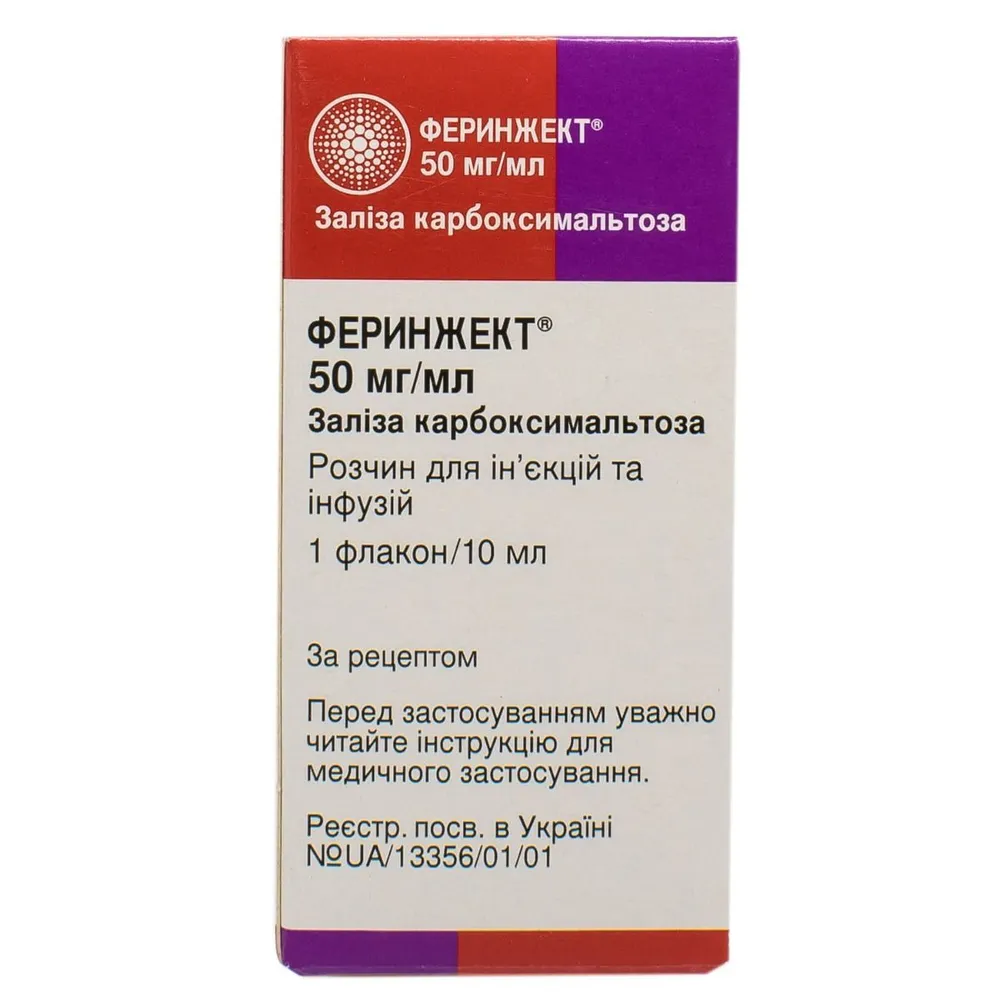
Table of Contents
APPROVED |
INSTRUCTION FOR MEDICAL USE OF THE MEDICINAL PRODUCT FERINJECT® (FERINJECT®)
Composition:
Active substance: iron in the form of iron carboxymaltose;
1 ml of solution contains 180 mg of iron carboxymaltose, equivalent to 50 mg of iron;
Excipients: sodium hydroxide and hydrochloric acid (for pH adjustment), water for injections.
Pharmaceutical form. Solution for injection and infusion.
Main physicochemical properties: opaque aqueous solution of dark brown color.
Pharmacotherapeutic group. Antianemic agents. Iron preparations. Parenteral iron preparations. ATC code B03AC.
Pharmacological Properties
Mechanism of Action
After intravenous administration, iron carboxymaltose complex is predominantly taken up by the reticuloendothelial system of the liver, bone marrow, and spleen. Iron is used primarily for hemoglobin synthesis, as well as for myoglobin and iron-containing enzymes, and is also stored in the liver as depot iron.
Pharmacodynamics
The solution of Ferinject® contains iron in a stable form – an iron (III) complex consisting of a polynuclear core of iron (III) hydroxide and a carbohydrate polymer, which provides iron suitable for utilization and transport in the body, and proteins that store iron (transferrin and ferritin). In a study with 59Fe- and 52Fe-labeled Ferinject® involving 6 patients with iron deficiency anemia or renal anemia, 61–99% of iron was absorbed by erythrocytes within 24 days after administration. In patients with iron deficiency anemia, absorption was 91–99%, while in patients with renal anemia, it was 61–84%.
Children aged 1–17 years
In a prospective phase 2 pharmacokinetic/pharmacodynamic study (1VIT13036), 35 children in sequential dose cohorts received treatment via intravenous administration of single doses of Ferinject® at 7.5 mg iron/kg (n = 16) and Ferinject® at 15 mg iron/kg (n = 19) (maximum dose: 750 mg iron). On day 35 after injection, the mean increase (standard deviation [SD]) in hemoglobin was 1.9 (1.38) g/dL with 7.5 mg iron/kg and 2.8 (1.15) g/dL with 15 mg iron/kg. Ferritin and transferrin saturation also increased in a dose-dependent manner.
The efficacy and safety of intravenous Ferinject® were compared with oral iron therapy in a prospective, open-label, parallel-group phase 3 study (1VIT17044). Forty children with iron deficiency anemia of various etiologies received two doses of Ferinject® at 15 mg iron/kg each, administered 7 days apart (maximum single dose: 750 mg), while 39 children received oral ferrous sulfate for 28 days. Seven children who did not adequately respond to oral iron therapy also received two doses of Ferinject® in an extension study with a single group (1VIT18045).
In the main study, clinically significant increases in hemoglobin levels were observed in both treatment groups. The mean increase in hemoglobin (least squares method) was 2.22 g/dL (95% CI: 1.69–2.75) after Ferinject® administration and 1.92 g/dL (95% CI: 1.43–2.41) after oral iron therapy, with no statistically significant difference between treatment groups. Thus, the primary endpoint of the study was not achieved. Increases in secondary endpoints (ferritin levels and transferrin saturation) were greater with Ferinject® than with oral iron therapy. In the extension study, the mean increase [SD] in hemoglobin level after completion of the main study was 0.7 (1.19) g/dL.
Pharmacokinetics
Distribution
After administration of a single dose of Ferinject® containing 100 to 1000 mg iron to patients with iron deficiency anemia, maximum serum total iron levels of 37 to 333 µg/mL were reached within 15 minutes to 1.21 hours, respectively. The volume of distribution of the central compartment corresponded to plasma volume (approximately 3 L).
Positron emission tomography showed that radiolabeled iron from Ferinject® is cleared from the blood and distributed to the bone marrow and the reticuloendothelial systems of the liver and spleen.
Metabolism
Iron carboxymaltose is primarily absorbed by the reticuloendothelial system of the liver and bone marrow, and to a lesser extent by the spleen, and is broken down into iron hydroxide and carbohydrates. Iron is then bound to form ferritin. Iron becomes available for erythropoiesis via transferrin when needed. The carbohydrate degradation products are maltotetraose, maltotriose, maltose, and glucose.
Elimination
Plasma clearance of administered iron is rapid, with an elimination half-life of 7 to 12 hours and a mean residence time of 11 to 18 hours. Renal excretion of iron is negligible.
Pharmacokinetics in Special Patient Populations
Children aged 1–17 years
The pharmacokinetics of intravenously administered iron carboxymaltose were investigated in children aged 1 year and older with iron deficiency anemia in a phase 2 pharmacokinetic/pharmacodynamic study (1VIT13036) using single doses, supplemented by a population pharmacokinetic analysis that included additional selected pharmacokinetic samples from the phase 3 clinical study 1VIT17044. Pharmacokinetic properties at a dose level of 15 mg iron/kg (maximum single dose: 750 mg) were similar to those in adult patients with iron deficiency receiving the recommended adult dose. Serum iron levels increased proportionally with dose after single doses of 7.5 mg iron/kg and 15 mg iron/kg. After administration of a single dose of Ferinject® at 15 mg iron/kg body weight (maximum dose: 750 mg), the mean peak serum total iron level of 310 µg/mL was observed at 1.12 hours. The terminal elimination half-life was 9.8 hours, and the volume of distribution, calculated from population pharmacokinetic analysis data, ranged from 0.42 to 3.14 L.
Hepatic Impairment
Studies in patients with hepatic impairment have not been conducted.
Clinical characteristics.
Indications.
The use of the drug is indicated for patients in cases of insufficient efficacy, lack of efficacy, or inability to take oral iron-containing medications, for example, due to intolerance to oral iron preparations or presence of gastrointestinal tract disorders (such as ulcerative colitis), when oral iron preparations may provoke disease exacerbation, or in cases of therapy-resistant iron deficiency, when there is suspicion that iron preparations are not being properly utilized.
Contraindications.
- Hypersensitivity to the active substance or other components of the drug;
- Anemia without confirmed iron deficiency;
- Presence of signs of iron overload;
- First trimester of pregnancy.
Interaction with other medicinal products and other types of interactions.
The drug should not be used simultaneously with oral iron-containing preparations, since the absorption of orally administered iron is reduced (see section "Special precautions").
Special precautions for use.
Ferinject® should only be used when iron deficiency has been diagnosed and confirmed by appropriate laboratory tests (e.g., measurement of parameters such as plasma ferritin levels, transferrin saturation (TSAT), hemoglobin (Hb), hematocrit, red blood cell count, mean corpuscular volume (MCV), and mean corpuscular hemoglobin (MCH)).
Hypersensitivity reactions
Intravenous administration of iron-containing drugs may lead to immediate-type hypersensitivity reactions (anaphylactic reactions), which can be fatal.
Cases of such reactions have been reported even when previous parenteral iron administration was uneventful. Reports of hypersensitivity reactions progressing to Koebner’s phenomenon (acute allergic spasm of coronary arteries potentially leading to myocardial infarction) have been received (see section "Adverse reactions").
Ferinject® therapy should only be initiated by a physician after precise determination of the indication.
Ferinject® must only be administered if medical personnel trained in recognizing and managing anaphylactic reactions are present and if the facility is adequately equipped with resuscitation equipment. Prior to each administration of Ferinject®, patients should be questioned about previous adverse reactions associated with intravenous iron products.
Typical symptoms of acute hypersensitivity reactions include hypotension, tachycardia (including anaphylactic shock), respiratory symptoms (including bronchospasm, laryngeal edema, and pharyngeal edema), gastrointestinal symptoms (including abdominal cramps, vomiting), or skin reactions (including urticaria, erythema, pruritus).
Each patient should be closely monitored for any signs of hypersensitivity reactions during and for at least 30 minutes after each parenteral administration of iron-containing drugs. If any allergic reactions or signs of intolerance occur during infusion, treatment must be immediately discontinued.
For emergency treatment of acute anaphylactic reactions, epinephrine (adrenaline) is recommended as first-line therapy according to current emergency guidelines and the drug manufacturer’s instructions, followed by antihistamines and/or corticosteroids (which have a delayed onset of action).
Rarely, fever or delayed allergic reactions (occurring several hours or even days later) have been observed.
The risk of hypersensitivity reactions is higher in patients with existing allergies, including drug intolerance, severe bronchial asthma, eczema, or other allergic conditions, as well as in patients with immunological and inflammatory disorders (e.g., systemic lupus erythematosus, rheumatoid arthritis).
Hypophosphatemia/hypophosphatemic osteomalacia
Parenteral iron therapy may cause hypophosphatemia, which is usually transient and asymptomatic. Isolated cases of clinically significant hypophosphatemia requiring medical intervention have been reported, primarily in patients with risk factors and after prolonged use of higher doses.
In the post-marketing period, cases of symptomatic hypophosphatemia leading to hypophosphatemic osteomalacia and fractures requiring clinical intervention, including surgical treatment, have been reported. Patients should be informed about the need to consult a physician if they experience arthralgia or bone pain.
Patients receiving repeated high doses over prolonged treatment periods and who have risk factors (e.g., vitamin D deficiency, impaired calcium and phosphate absorption, secondary hyperparathyroidism, hereditary hemorrhagic telangiectasia, inflammatory bowel disease, osteoporosis) should be monitored for the development of hypophosphatemic osteomalacia, including monitoring of serum phosphate levels. If persistent hypophosphatemia occurs, treatment with Ferinject® should be re-evaluated.
Hepatic or renal impairment
Parenteral iron preparations should be used in patients with liver dysfunction only after careful assessment of benefit-risk balance.
Parenteral iron administration should be avoided in patients with liver dysfunction due to iron overload, particularly in cases of late cutaneous porphyria, and in any acute liver disease.
Serum iron levels should be carefully monitored to prevent iron overload.
Infections
Parenteral iron should be used cautiously in patients with acute or chronic infections, bronchial asthma, eczema, or atopic allergy. Treatment with Ferinject® should be discontinued in patients with ongoing bacteremia.
Extravasation
Paravenous leakage should be avoided, as it may cause skin irritation and prolonged brown discoloration at the injection/infusion site. If extravasation of Ferinject® occurs, administration must be immediately stopped.
Other components
1 ml of Ferinject® may contain up to 5.5 mg (0.24 mmol) of sodium. This should be considered in patients on a sodium-restricted diet.
Use during pregnancy or breastfeeding.
Pregnancy. Currently, there is limited data from controlled clinical studies on the use of Ferinject® in pregnant women. Animal studies indicate reproductive toxicity. The benefit-risk ratio should be carefully evaluated before administering the drug during pregnancy, as hypersensitivity reactions may pose particular risks to both mother and fetus (see section "Special precautions for use").
Ferinject® is contraindicated during the first trimester of pregnancy (see section "Contraindications"). Use during the second and third trimesters is possible only strictly according to medical indications. When used during the second and third trimesters, pre-pregnancy body weight should be considered when calculating the required iron dose to avoid overdose. Particular attention should be paid to detecting signs of hypersensitivity reactions when administering the drug during pregnancy.
Fetal bradycardia may occur after administration of parenteral iron preparations, usually transient and secondary to maternal hypersensitivity reaction. Fetal monitoring is required during intravenous administration of parenteral iron to pregnant women.
Breastfeeding. Clinical experience with the use of the drug during breastfeeding is limited. A clinical study showed that transfer of iron from Ferinject® into breast milk is very low (≤ 1%). Therefore, it is unlikely that Ferinject® poses a risk to the breastfed infant.
Fertility. There are no clinical data on the effect of Ferinject® on fertility. Animal studies showed no effect of Ferinject® on fertility.
Ability to affect reaction speed when driving or operating machinery.
No specific studies have been conducted. The effect on reaction speed when driving or operating machinery is unlikely.
Dosage and administration.
Patients should be monitored for signs and symptoms of hypersensitivity reactions during and after each administration of Ferinject®.
Ferinject® must be administered only if medical personnel experienced in the assessment and treatment of anaphylactic reactions are immediately available, and if the facility is adequately equipped with equipment necessary for cardiopulmonary resuscitation. Patients should be monitored for adverse reactions for at least 30 minutes after each administration of Ferinject® (see section "Special precautions").
Adults
Dosage
Ferinject® dosage is determined in several steps: [1] determination of individual iron requirements, [2] calculation and administration of iron doses, and [3] assessment of iron stores after repletion.
Step 1. Calculation of required iron amount
The individual amount of iron required to replenish iron stores using Ferinject® can be determined based on the patient's body weight and hemoglobin (Hb) level. Iron requirements should be calculated using the Ganzoni formula (see Table 1) or a simplified dosing regimen (see Table 2).
The Ganzoni formula is recommended for patients who require a dose adjusted to their individual needs, such as patients with anorexia nervosa, cachexia, obesity, or pregnant women. Iron deficiency should be confirmed by laboratory tests (see section "Special precautions").
Table 1
Determination of iron requirements according to the Ganzoni formula
| Body weight |
Hb (g/dL) |
|||
| [kg] |
6 |
7.5 |
9 |
10.5 |
| 30 |
18 mL (900 mg) |
16 mL (800 mg) |
14 mL (700 mg) |
12 mL (600 mg) |
| 35 |
24 mL (1200 mg) |
22 mL (1100 mg) |
20 mL (1000 mg) |
16 mL (800 mg) |
| 40 |
26 mL (1300 mg) |
24 mL (1200 mg) |
20 mL (1000 mg) |
18 mL (900 mg) |
| 45 |
28 mL (1400 mg) |
26 mL (1300 mg) |
22 mL (1100 mg) |
18 mL (900 mg) |
| 50 |
30 mL (1500 mg) |
28 mL (1400 mg) |
24 mL (1200 mg) |
20 mL (1000 mg) |
| 55 |
32 mL (1600 mg) |
28 mL (1400 mg) |
24 mL (1200 mg) |
20 mL (1000 mg) |
| 60 |
34 mL (1700 mg) |
30 mL (1500 mg) |
26 mL (1300 mg) |
22 mL (1100 mg) |
| 65 |
38 mL (1900 mg) |
32 mL (1600 mg) |
28 mL (1400 mg) |
24 mL (1200 mg) |
| 70 |
42 mL (2100 mg) |
36 mL (1800 mg) |
32 mL (1600 mg) |
26 mL (1300 mg) |
| 75 |
44 mL (2200 mg) |
38 mL (1900 mg) |
32 mL (1600 mg) |
28 mL (1400 mg) |
| 80 |
46 mL (2300 mg) |
40 mL (2000 mg) |
34 mL (1700 mg) |
28 mL (1400 mg) |
| 85 |
48 mL (2400 mg) |
42 mL (2100 mg) |
36 mL (1800 mg) |
30 mL (1500 mg) |
| 90 |
50 mL (2500 mg) |
44 mL (2200 mg) |
36 mL (1800 mg) |
30 mL (1500 mg) |
Hb – hemoglobin
For body weight ≤ 66 kg, the calculated total cumulative dose should be rounded down to the nearest 100 mg of iron.
For body weight > 66 kg, the calculated total cumulative dose should be rounded up to the nearest 100 mg of iron.
Ganzoni formula:
| Total iron deficit [mg] = total cumulative dose [mg] = Body weight(A) [kg] × (target Hb level(B) – actual Hb level(C)) [g/dL] × 2.4(D) + stored iron(E) [mg]. |
(A) For patients with excess body weight, ideal body weight is recommended; for pregnant women, pre-pregnancy body weight should be used. There are various methods for determining ideal body weight, for example, calculating the weight corresponding to a body mass index (BMI) of 25: ideal body weight = 25 * (height in meters)2.
- The standard target hemoglobin level for the Ganzoni formula is 15 g/dL. In special cases, such as for pregnant women, a lower target hemoglobin level should be set.
The effectiveness of treatment should be monitored based on blood test results. Adjustment of the cumulative iron dose may be necessary to achieve the target hemoglobin level.
- To convert hemoglobin from mmol/L to g/dL, multiply the hemoglobin value in mmol/L by the factor 1.61145.
- Factor 2.4 = 0.0034 × 0.07 × 10,000.
0.0034: iron content in hemoglobin is 0.34%.
0.07: blood volume is 70 mL/kg body weight ≈ 7% of body weight.
10,000: conversion factor from "g/dL" to "mg/L" (1 g/dL = 10,000 mg/L).
- For patients with body weight > 35 kg, the amount of stored iron is 500 mg or more. A stored iron value of 500 mg corresponds to the lower limit of normal for women with low anthropometric characteristics ("miniature women"). Some guidelines recommend calculating stored iron at 10–15 mg iron/kg body weight.
Table 2
Determination of iron requirement according to the simplified dosing scheme
| Hb |
Body weight of the patient |
|||
| g/dL |
mmol/L |
< 35 kg |
35 kg – < 70 kg |
≥ 70 kg |
| < 10 |
< 6.2 |
500 mg |
1500 mg |
2000 mg |
| 10 – < 14 |
6.2 – < 8.7 |
500 mg |
1000 mg |
1500 mg |
| ≥ 14 |
≥ 8.7 |
500 mg |
500 mg |
500 mg |
Step 2. Calculation and administration of the maximum iron dose
Ferinject® should be administered in appropriate doses according to the determined iron requirement. Administer as described below.
The single dose of Ferinject® must not exceed the following amounts:
- 15 mg iron/kg body weight (when administered as an intravenous bolus injection), or
- 20 mg iron/kg body weight (when administered as an intravenous infusion), or
- 1000 mg iron (20 mL of Ferinject® solution).
The maximum recommended cumulative dose of Ferinject® is 1000 mg iron (20 mL of Ferinject® solution) per week. If the cumulative iron dose exceeds 20 mg iron/kg body weight or 1000 mg iron in Ferinject®, the dose should be divided into two administrations with an interval of at least 1 week.
Step 3. Monitoring iron stores after repletion
Depending on the individual patient's condition, the physician should perform repeated evaluations (including blood tests). Hemoglobin levels should be re-assessed no earlier than 4 weeks after the last administration of Ferinject® to allow sufficient time for erythropoiesis and iron utilization. If further iron repletion is required, the iron need should be recalculated using the Ganzoni formula or a simplified dosing regimen.
Method of administration
Ferinject® must be administered exclusively by intravenous route:
- as a bolus injection, or
- as an infusion, or
- undiluted, as a bolus injection directly into the venous limb of the dialyzer during hemodialysis.
Ferinject® must not be administered intramuscularly or subcutaneously.
Patients should be monitored during and after administration of Ferinject® for signs and symptoms of hypersensitivity. Appropriate emergency treatment must be available (see section "Special precautions for use").
Intravenous bolus injection
Ferinject® may be administered as an undiluted solution by intravenous bolus injection. The maximum allowable single dose is 15 mg iron/kg body weight and must not exceed 1000 mg iron. Injection rate is specified in Table 3.
Table 3
Injection rate for intravenous bolus administration of Ferinject®
| Required volume of Ferinject® medicinal product |
Equivalent iron dose |
Rate of administration / minimum administration time |
||||
| 2 |
to |
4 mL |
100 |
to |
200 mg |
No requirement for minimum administration time |
| > 4 |
to |
10 mL |
> 200 |
to |
500 mg |
100 mg iron/minute |
| > 10 |
to |
20 mL |
> 500 |
to |
1000 mg |
15 minutes |
Intravenous infusion
Ferinject® may be administered by intravenous infusion, and in this case it must be diluted. The maximum allowable single dose is 20 mg iron/kg body weight and should not exceed 1000 mg iron. For infusions, Ferinject® should be diluted only with sterile 0.9% (w/v) sodium chloride solution, as shown in Table 4. Note: To ensure stability, dilution of Ferinject® to a concentration below 2 mg iron/mL is not permitted (excluding the volume of iron carboxymaltose solution in the vial). For additional information on dilution of this medicinal product prior to administration, see below "Handling instructions".
Table 4
Dilution scheme for Ferinject® for intravenous infusion
| Required volume of Ferinject® medicinal product |
Equivalent iron dose |
Maximum volume of sterile 0.9% (w/v) sodium chloride solution |
Minimum infusion time |
||||
| 2 |
up to |
4 ml |
100 |
up to |
200 mg |
50 ml |
No requirement for minimum infusion time |
| > 4 |
up to |
10 ml |
> 200 |
up to |
500 mg |
100 ml |
6 minutes |
| > 10 |
up to |
20 ml |
> 500 |
up to |
1000 mg |
250 ml |
15 minutes |
Instructions for Handling
Vials are intended for single use only.
Before administration, vials should be inspected visually for the presence of visible particles and container defects.
Only vials containing a homogeneous solution free of visible particles should be used.
Ferinject® may only be mixed with sterile 0.9% (w/v) sodium chloride solution. Other intravenous diluents and medicinal products must not be used due to the risk of precipitate formation and/or interactions.
Special patient groups
Children under 1 year of age
The efficacy and safety of Ferinject® in children under 1 year of age have not been studied; therefore, the use of this medicinal product is not recommended in this age group.
Children aged ≥ 1 year
Ferinject® is not approved for use in children aged 1 to 18 years due to limited data.
Dosing recommendations cannot be provided. Current data on use in children are described in the sections "Pharmacological properties" and "Side effects".
Patients with chronic kidney disease requiring hemodialysis
For patients with chronic kidney disease requiring hemodialysis, the maximum administered dose should not exceed 200 mg of iron once daily.
The efficacy and safety of Ferinject® in children with chronic kidney disease requiring hemodialysis have not been studied. Therefore, the use of Ferinject® is not recommended in these pediatric patients.
Patients with hepatic impairment
There is no experience with the use of Ferinject® in patients with impaired liver function.
Children
The efficacy and safety of Ferinject® in children have not been studied; therefore, the use of this medicinal product is not recommended in this age group. Current data on use in children are described in the sections "Pharmacological properties" and "Side effects".
Overdose
Accidental exceeding of the total cumulative dose required to correct iron deficiency in a patient may lead to iron accumulation in body stores and ultimately to hemosiderosis in such patients. This can be prevented by preventive monitoring of iron parameters—serum ferritin and transferrin saturation. Unwanted iron accumulation should be treated according to standard medical practice.
Adverse Reactions
The adverse reactions listed below have been reported in clinical trials involving 9,456 adult patients and 82 children aged ≥1 year who received the medicinal product Ferinject®, as well as during post-marketing use.
Adverse effects are classified by frequency of occurrence into the following categories: common (< 1/10 — ≥ 1/100), uncommon (< 1/100 — ≥ 1/1,000), rare (< 1/1,000 — ≥ 1/10,000), and not known (cannot be estimated from available data). The most common adverse reactions include nausea, injection/infusion site reaction, hypophosphatemia, headache, facial flushing, dizziness, and arterial hypertension.
Among the most important serious adverse reactions associated with the use of Ferinject® are hypersensitivity reactions, which are uncommon (see Immune system disorders below).
The most serious adverse reactions were anaphylactic reactions (rare): fatal cases have been reported.
In clinical studies, in patients with documented decreased serum phosphate levels, the lowest values were observed approximately 2 weeks after administration. In most cases, levels returned to baseline within 12 weeks after treatment with Ferinject®.
The safety profile in children aged 1–17 years was evaluated in the studies described below.
In a prospective Phase 2 pharmacokinetic/pharmacodynamic study (1VIT13036), 35 children in sequential dose cohorts received treatment with single intravenous doses of Ferinject® at 7.5 mg iron/kg (n = 16) and Ferinject® at 15 mg iron/kg (n = 19) (maximum dose: 750 mg iron). No unexpected adverse reactions were observed compared to adults. The most common adverse reactions were two cases each of pyrexia and rash with Ferinject® 7.5 mg iron/kg, and three cases each of rhinorrhea and urticaria, and two cases each of pyrexia and upper respiratory tract infection with Ferinject® 15 mg iron/kg.
In a prospective, open-label, parallel-group Phase 3 study (1VIT17044), 40 children received two doses of Ferinject® at 15 mg iron/kg each, administered 7 days apart (maximum single dose: 750 mg). No unexpected adverse reactions were observed compared to adults. The most common adverse reactions following intravenous administration of Ferinject® were hypophosphatemia/serum phosphate decrease (n = 5), vomiting (n = 2), headache (n = 2), and urticaria (n = 2).
Laboratory biochemical testing revealed potentially clinically significant hypophosphatemia in 8 patients treated with Ferinject® (including 4 reported as adverse reactions). The lowest phosphate levels were typically observed 2 weeks after initiation of therapy and mostly normalized by Day 35 of treatment. All cases of hypophosphatemia were asymptomatic.
See also section "Special Warnings and Precautions for Use".
Immune system disorders
Uncommon: immediate-type hypersensitivity reactions (anaphylactic reaction) may lead to fatal outcome (see section "Special Warnings and Precautions for Use"). Symptoms of anaphylactic reactions include circulatory collapse, arterial hypotension, tachycardia, respiratory symptoms (bronchospasm, laryngeal edema, pharyngeal edema), gastrointestinal symptoms (abdominal cramps, vomiting), and skin reactions (urticaria, erythema, pruritus).
Metabolism and nutrition disorders
Common: hypophosphatemia (based on laboratory data).
Psychiatric disorders
Rare: anxiety.
Nervous system disorders
Common: headache, dizziness.
Uncommon: taste disturbance (dysgeusia), paresthesia.
Not known: loss of consciousness.
Cardiac disorders
Uncommon: tachycardia.
Vascular disorders
Common: arterial hypertension, hot flushes.
Uncommon: arterial hypotension.
Rare: dizziness, loss of consciousness, phlebitis.
Respiratory, thoracic and mediastinal disorders
Uncommon: dyspnea.
Rare: bronchospasm.
Gastrointestinal disorders
Common: nausea.
Uncommon: abdominal pain, vomiting, constipation, diarrhea, dyspepsia.
Rare: flatulence.
Hepatobiliary disorders
Uncommon: increased alanine aminotransferase (ALT), increased aspartate aminotransferase (AST), increased gamma-glutamyl transferase (γ-GT), increased alkaline phosphatase (ALP), increased lactate dehydrogenase (LDH).
Skin and subcutaneous tissue disorders
Uncommon: rash (including erythematous, generalized, macular, maculopapular, pruritic rash), pruritus, urticaria, erythema.
Rare: angioedema, distant skin discoloration, pallor.
Not known: dermatitis, facial swelling.
Musculoskeletal and connective tissue disorders
Uncommon: arthralgia, myalgia, limb pain, back pain, muscle spasms.
Not known: hypophosphatemic osteomalacia.
General disorders and administration site conditions
Common: injection/infusion site reactions (including pain, hematoma, discoloration (potentially prolonged), extravasation, irritation, phlebitis, and paresthesia at the injection/infusion site).
Uncommon: pyrexia, fatigue, chills, chest pain, peripheral edema, pain, malaise.
Rare: influenza-like illness (onset within several hours to several days).
Reporting suspected adverse reactions
Reporting of suspected adverse reactions after medicinal product authorization is important. It allows continued monitoring of the benefit-risk balance of the medicinal product. Healthcare professionals and patients, as well as patients’ legal representatives, should report any suspected adverse reactions and lack of efficacy via the automated pharmacovigilance information system at: https://aisf.dec.gov.ua.
Shelf life. 3 years.
Storage conditions. Store in the original packaging at a temperature not exceeding 30 °C. Do not freeze. Keep out of the reach of children!
Incompatibilities.
Ferinject® may be mixed only with sterile 0.9% sodium chloride solution. Compatibility with containers made of materials other than polyethylene and glass has not been studied.
Packaging. 2 mL or 10 mL in a vial. 1 or 5 vials in a cardboard box.
Prescription status. Prescription only.
Manufacturer.
Vifor (International) Inc., Switzerland.
Manufacturer's address and location of operations.
Rechenstrasse 37, 9014 St. Gallen, Switzerland.
Date of last review.