Ferrolek-zdorovya
Ukraine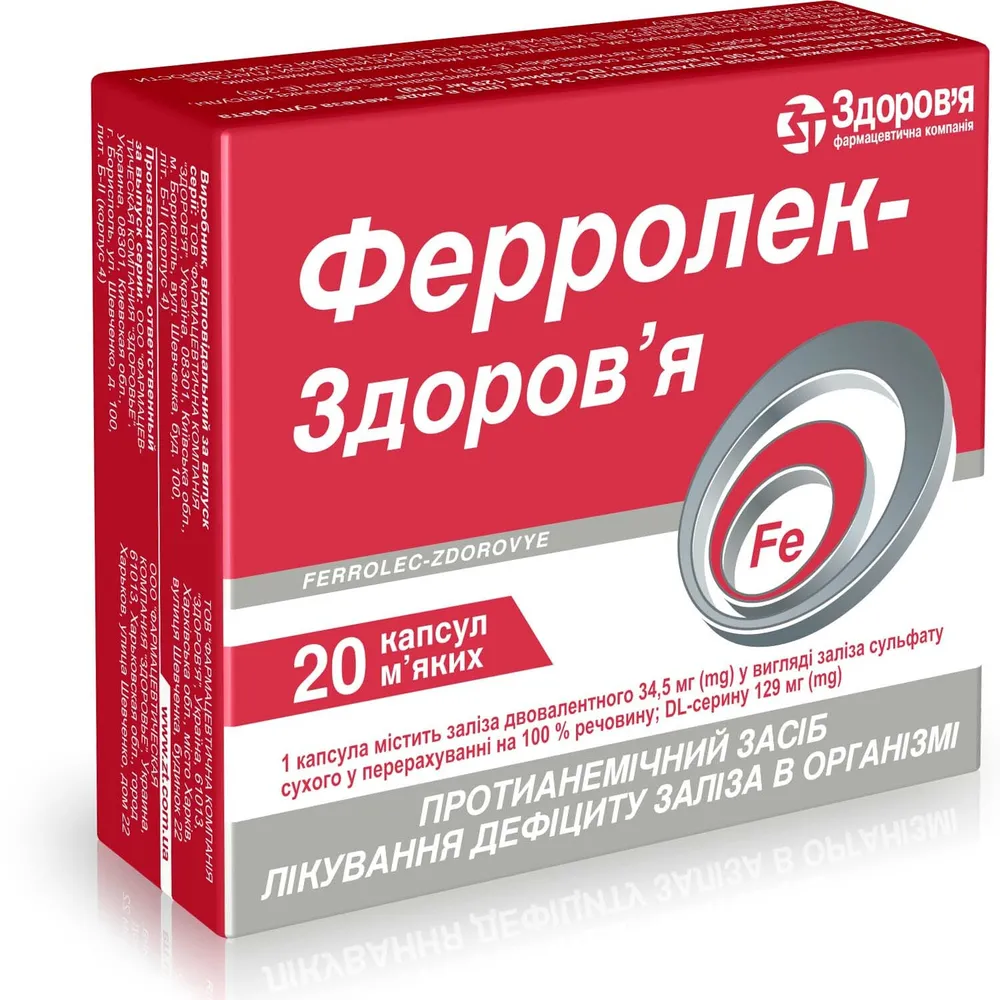
Table of Contents
INSTRUCTIONS FOR MEDICAL USE OF THE MEDICINAL PRODUCT FERROLEC-ZDOROVYE (FERROLEC-ZDOROVYE)
Composition:
Active substances: 1 capsule contains 34.5 mg of ferrous iron in the form of dried ferrous sulfate calculated to 100 % substance; D-serine 129 mg;
Excipients: medium-chain triglycerides, ascorbic acid, lecithin, hydrogenated soybean oil, white wax, refined rapeseed oil; capsule shell containing: gelatin, glycerin, sorbitol (E 420), methylparaben (E 218), propylparaben (E 216), black iron oxide (E 172), red iron oxide (E 172).
Pharmaceutical form. Soft capsules.
Main physicochemical properties: soft gelatin capsules of oval shape, dark brown in color, filled with oily mass ranging from white to white with yellowish or grayish tint.
Pharmacotherapeutic group. Antianaemic agents. Iron preparations in combination with other substances. ATC code B03AE10.
Pharmacological properties.
Pharmacodynamics.
Iron is essential for the maintenance of vital functions of the body: it is a component of hemoglobin, myoglobin, and various enzymes; reversibly binds oxygen and participates in redox reactions; stimulates erythropoiesis. Iron is also present in storage tissues (bone marrow, liver, spleen).
Daily iron requirements are 0.5–1 mg for men, postmenopausal women, and children; 1–2 mg for premenopausal women and adolescents; and 2–5 mg for pregnant women. The average absorption rate is approximately 10%; therefore, when administered orally, the iron dose should be 10 times higher than the daily requirement to meet the body's needs.
The amino acid serine, included in the medicinal product, promotes more efficient absorption of iron and its entry into systemic circulation, thereby facilitating rapid restoration of iron levels in the body to required values. This ensures better tolerability of the drug and allows for a reduction in the required iron dose.
Pharmacokinetics.
Absorption. When administered orally, approximately 10–15% of divalent iron is usually absorbed in the duodenum and upper part of the small intestine. Additionally, under conditions of increased iron supply, passive transport of iron occurs in the body.
Iron absorption significantly increases in the presence of iron deficiency and during periods of enhanced erythropoiesis. The highest absorption rate (50–60%) is observed when hemoglobin levels and serum iron concentrations are low, and absorption intensity decreases again as these parameters normalize.
Maximum serum iron concentration is reached within 2–4 hours after administration of the drug.
Distribution. In the blood, iron in the trivalent form binds to transferrin and is transported to sites of hematopoiesis or storage. When fully saturated, total plasma transferrin can bind a maximum of 12 mg of iron. This capacity is relatively limited, and in cases of iron intoxication due to oral or parenteral administration, the iron-binding capacity of transferrin may become overwhelmed, leading to the release of free, unbound iron into plasma, which is toxic.
Iron is stored following binding to apoferritin in the form of ferritin, primarily in the liver, spleen, and bone marrow.
Iron crosses the placental barrier and is excreted in small amounts into breast milk.
Elimination. Only about 1 mg of iron is eliminated daily via desquamated skin and mucosal cells, bile, and urine. During menstruation, iron losses amount to approximately 1 mg per day.
The majority of iron derived from hemoglobin breakdown (20–30 mg per day) is reused by the body for the resynthesis of hemoglobin.
Clinical characteristics.
Indications.
Treatment of iron deficiency in the body.
Contraindications.
- Hypersensitivity to the active ingredients or to other components of the medicinal product.
- Hemosiderosis, hemochromatosis.
- Anemias due to impaired iron metabolism (iron-refractory anemia, lead-induced anemia, thalassemia, sideroblastic anemia).
- All other types of anemias not caused by iron deficiency (hemolytic anemia, megaloblastic anemia, and anemia due to vitamin B12 deficiency).
- Concurrent use of parenteral iron formulations.
- Esophageal stricture and/or other obstructive gastrointestinal disorders.
- Intestinal diverticula, intestinal obstruction.
- Active peptic ulcer.
- Regional enteritis and ulcerative colitis.
- Regular blood transfusions.
Interaction with other medicinal products and other forms of interaction.
Iron salts reduce the absorption of concurrently administered drugs such as tetracycline, DNA-gyrase inhibitors (e.g., ciprofloxacin, levofloxacin, norfloxacin, ofloxacin), bisphosphonates, penicillamine, levodopa, carbidopa, and methyldopa.
Iron salts reduce the absorption of thyroxine in patients receiving thyroxine replacement therapy. Iron salts reduce the absorption of zinc.
The absorption of iron is reduced when taken concurrently with cholestyramine, antacids (containing aluminum, magnesium, calcium, bismuth), as well as supplements containing calcium and magnesium.
Iron absorption may be delayed by concurrent intravenous administration of chloramphenicol.
Glucocorticoids may enhance the erythropoiesis-stimulating effect of the medicinal product.
Vitamin C or citric acid enhance iron absorption.
Concurrent intake of vitamin E may reduce the pharmacological effect of iron in children.
Administration of dimercaprol may lead to the formation of toxic complexes with iron.
Concurrent use of iron salts and nonsteroidal anti-inflammatory drugs (NSAIDs) may enhance the irritant effect of iron on the gastrointestinal mucosa.
The medicinal product should not be taken within 2–3 hours after administration of any of the above-mentioned drugs. If necessary, the effectiveness of concomitant drug administration should be monitored by medical or laboratory diagnostic methods.
Special precautions for use
To avoid the possibility of overdose, special caution should be exercised when using dietary or other supplements containing iron salts.
In patients with a history of gastrointestinal mucosal inflammation or ulcers, the risk of exacerbation of gastrointestinal disorders should be carefully weighed against the expected benefits of treatment.
When administering the drug on a long-term basis, regular monitoring of serum iron and hemoglobin levels is required.
The duration of treatment usually should not exceed 1–2 months after completion of pregnancy.
Patients after gastrectomy have poor iron absorption.
Monitoring during treatment: if necessary, the following parameters should be assessed approximately every 4 weeks to determine the degree of iron deficiency, response to treatment, and need for continued iron supplementation: hemoglobin level, erythrocyte count, mean corpuscular volume (MCV), mean corpuscular hemoglobin (MCH), reticulocyte count, serum iron level, and transferrin level. Determination of serum ferritin levels allows assessment of iron storage; a serum ferritin level < 15 mcg/L indicates absence of iron stores in the body. Concomitant dietary deficiency of vitamin B12 should be ruled out, as combined deficiency may lead to microcytic anemia.
Due to the risk of developing oral mucosal ulcers and tooth discoloration, capsules should not be sucked, chewed, or held in the mouth. Capsules should be swallowed whole with water.
During treatment with the drug, black discoloration of feces may occur due to excretion of unabsorbed iron. This is not clinically significant.
Benzidine test or similar tests for detecting occult blood in feces may give false-positive results. The intake of the drug capsules should be discontinued at least three days before such testing.
To avoid reduced iron absorption, capsules should not be taken with black tea, coffee, or milk. Reduced absorption may also be caused by bread, raw cereals, dairy products, and eggs, as well as components of vegetarian diets (agents that form iron complexes, such as phosphates, phytates, and oxalates).
Iron-containing drugs should be used with caution in patients with the following conditions: leukemia, chronic liver or kidney disease, inflammatory gastrointestinal disorders, history of peptic ulcer disease of the stomach or duodenum, intestinal diseases (enteritis).
Use with caution in elderly patients due to increased risk of constipation.
This medicinal product contains soybean oil. If the patient has an allergy to peanuts or soy, this medicinal product should not be used.
The product contains sorbitol (E 420). If the patient has been diagnosed with intolerance to certain sugars, consultation with a physician is recommended before taking this medicinal product.
The product contains methylparaben (E 218) and propylparaben (E 216), which may cause allergic reactions (possibly delayed).
Use during pregnancy or breastfeeding
There are reports of fetal developmental abnormalities and miscarriages due to iron intoxication. During pregnancy, this medicinal product should be used only if the expected benefit outweighs the potential risk.
Iron-containing medicinal products have not been sufficiently studied for embryotoxicity in animal models.
During breastfeeding, the drug may be used only if the expected benefit outweighs the potential risk.
Ability to affect reaction rate while driving or operating machinery
Not studied.
Dosage and Administration
The capsules should not be sucked, chewed, or held in the mouth. The capsules must be swallowed whole with water.
Depending on gastrointestinal tolerance, the capsules may be taken before or during meals.
Administration of the medicinal product 30 minutes before food intake, between meals, or with fruit juices containing vitamin C enhances absorption in the small intestine. Administration during meals improves gastrointestinal tolerance of the medicinal product.
The daily dose should be determined according to hemoglobin levels, body weight, and patient age. The recommended daily oral dose is 1.3–4 mg of iron per kilogram of body weight.
For children aged 6 to 12 years: 1 capsule once daily.
For children aged 12 years and older: 1 capsule twice daily.
For adults, depending on the severity of the condition, initial therapy consists of 1 capsule 2–3 times daily. Subsequently, if long-term treatment is required, the dose may be gradually reduced to 1 capsule once daily.
The recommended treatment course to normalize iron levels in the body is 8 weeks. After achieving normal plasma iron concentrations, treatment should be continued for several additional weeks to replenish body iron stores.
In renal function disorders and severe liver diseases, the drug may be administered only under medical supervision.
Children.
The drug in capsule form is indicated for children aged 6 years and older.
Overdose.
Symptoms
Iron overdose is an acute emergency condition requiring immediate medical intervention.
Young children are at particularly high risk of acute iron intoxication; life-threatening poisoning may occur after ingestion of 1 g of iron sulfate. Serum iron levels should be monitored. After accidental ingestion of a large amount of the drug, nausea, severe abdominal pain, diarrhea, and vomiting with blood due to hemorrhagic gastroenteritis may occur initially. In severe cases, cyanosis, impaired consciousness, and hyperventilation due to acidosis, cardiovascular collapse, and impaired peripheral circulation may develop. Approximately 4–6 hours after ingestion, a temporary remission usually occurs. Subsequently, within 12–48 hours, severe shock may develop, which may be accompanied by Cheyne-Stokes respiration, pulmonary edema, hypothermia, oliguria, jaundice associated with toxic hepatitis, hepatic failure, renal failure, metabolic acidosis, coagulopathy, disseminated intravascular congestion, and/or hypoglycemia.
In some cases, central nervous system disorders such as paralysis, seizures, and coma may predominate; coagulation disorders are less common. In this delayed shock phase, the outcome is often fatal.
During the convalescence phase, gastrointestinal strictures and symptoms resembling intestinal obstruction may rarely occur.
Treatment
Absorption of a large amount of iron should be prevented as early as possible. Prior to specific therapy, milk or raw eggs should be administered.
Symptomatic measures: induce vomiting, gastric lavage with water, sodium bicarbonate solution, or phosphate-buffered solution. If necessary, treat shock and acidosis.
Specific therapy: patients with symptoms of acute iron overdose and serum iron levels exceeding 300–350 µg/dL should receive deferoxamine (Desferal) via continuous intravenous infusion (initial infusion rate: 15 mg/kg/hour).
Effective treatment of overdose requires continuous elimination of iron complexes from the body; therefore, patients with oliguria/anuria should undergo peritoneal dialysis or hemodialysis. Recovery may be complicated by long-term consequences such as liver necrosis, toxic encephalitis, central nervous system damage, and pyloric stenosis.
If necessary, supportive mechanical ventilation, circulatory support, radiological monitoring of toxin elimination, and monitoring of serum iron levels and other serum parameters should be implemented during shock treatment.
In cases of severe intoxication: administer calcium disodium edetate parenterally.
Side effects
Immune system disorders: allergic reactions, including anaphylaxis, skin rashes, exanthema, urticaria, pruritus.
Gastrointestinal disorders: cases of tooth enamel discoloration in children, dark stools, anorexia; when high doses are used, mild gastrointestinal complications may occur, such as a feeling of heaviness in the stomach, flatulence, constipation or diarrhea, abdominal pain, nausea, epigastric pain, dyspepsia, vomiting, ulcerative stomatitis (see section "Dosage and administration"*). Taking the medication with food may reduce the frequency of these adverse effects (see section "Directions for use and dosage").
* Observed in cases of improper use, such as chewing, sucking, or holding the capsules in the mouth. Elderly patients and patients with swallowing disorders are also at risk of esophageal injury or development of bronchial necrosis if the medication is used improperly.
Reporting suspected adverse reactions
Reporting suspected adverse reactions after drug registration is important. It allows continuous monitoring of the benefit-risk balance of the drug. Healthcare and pharmacy professionals, as well as patients or their legal representatives, are encouraged to report all suspected adverse reactions and lack of drug efficacy via the automated pharmacovigilance information system at the following link: https://aisf.dec.gov.ua.
Shelf life. 2 years.
Storage conditions. Store in the original packaging at a temperature not exceeding 25 °C.
Keep out of reach of children.
Packaging. 10 capsules per blister; 2, 3, or 6 blisters per cardboard box.
Prescription status. Prescription only.
Manufacturer. Limited liability company "Pharmaceutical Company "Zdorovya".
Manufacturer's address and location of business activities.
Ukraine, 61013, Kharkiv region, city of Kharkiv, Shevchenka Street, building 22.
(quality control, batch release)
Ukraine, 08301, Kyiv region, city of Boryspil, Shevchenka Street, building 100, letter B-II (building 4).
(all manufacturing stages, batch release)