Ferrolek-zdorovya
Ukraine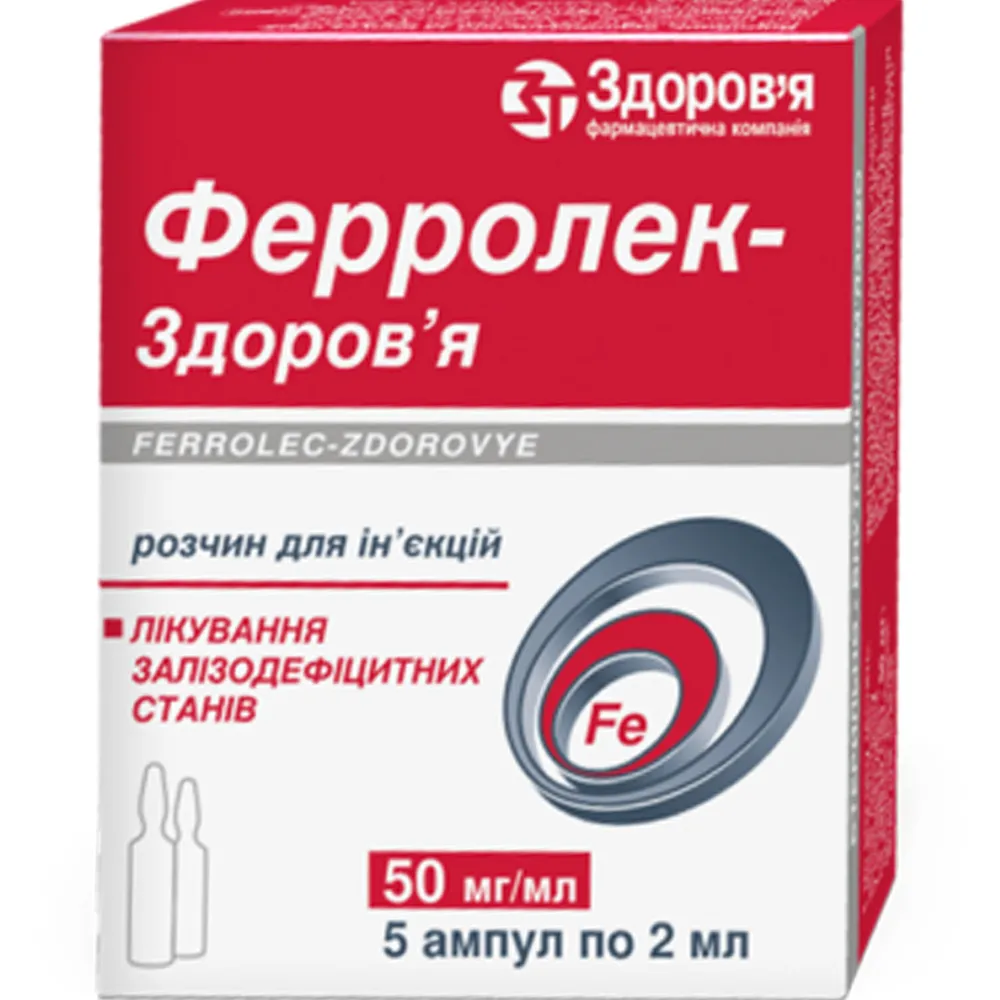
Table of Contents
INSTRUCTION FOR MEDICAL USE OF THE MEDICINAL PRODUCT FERROLEC-ZDOROVYE (FERROLEC-ZDOROVYE)
Composition:
Active substances: ferrous iron in the form of ferrous sulfate heptahydrate; DL-serine;
1 ml (18 drops) of the preparation contains ferrous iron 9.48 mg in the form of ferrous sulfate heptahydrate – 47.2 mg; DL-serine – 35.6 mg;
Excipients: ascorbic acid (E 300); sodium benzoate (E 211); polyethylene glycol; acesulfame potassium; ammonia caramel sulfate (E 150d), containing sulfites calculated as sulfur dioxide (E 220); concentrated hydrochloric acid; purified water; "Raspberry" flavor containing: propylene glycol (E 1520), ethanol 96%, alpha-tocopherol (E 307), ascorbic acid (E 300), purified water.
Pharmaceutical form. Oral drops, solution.
Main physicochemical properties: clear liquid, ranging from light yellow to yellow-brown in color, with a raspberry aroma.
Pharmacotherapeutic group. Antianaemic agents. Iron preparations in combination with other substances. ATC code B03A E10.
Pharmacological properties.
Pharmacodynamics.
Iron is essential for maintaining vital body functions: it is a component of hemoglobin, myoglobin, and various enzymes; reversibly binds oxygen and participates in redox reactions; stimulates erythropoiesis. Iron is also stored in tissue depots (bone marrow, liver, spleen). The amino acid serine contained in Ferrolek-Zdorovya promotes more efficient absorption of iron and its entry into systemic circulation, resulting in rapid restoration of iron levels in the body to required values. This ensures better drug utilization and allows for a reduced iron dose.
Pharmacokinetics.
Absorption
When administered orally, approximately 10–15% of iron in the divalent form is generally absorbed in the duodenum and upper part of the small intestine. Additionally, when iron supply is increased, passive transport of iron into the body occurs.
Iron absorption significantly increases with iron deficiency and during enhanced erythropoiesis. The highest absorption rate (50–60%) is observed when hemoglobin levels and serum iron content are low, while absorption intensity decreases again as these parameters normalize.
Maximum serum iron concentration is reached within 2–4 hours after drug administration.
Distribution
In the blood, iron in the trivalent form binds to transferrin and is transported to sites of hematopoiesis or storage. When fully saturated, total plasma transferrin can bind a maximum of 12 mg of iron. This amount is relatively small, and in cases of iron intoxication due to oral or parenteral administration, iron-binding capacity of transferrin may decrease, leading to release of free, unbound iron into plasma, which is toxic.
Iron is stored following binding to apoferritin in the form of ferritin, primarily in the liver, spleen, and bone marrow.
Iron crosses the placental barrier and is excreted in small amounts into breast milk.
Elimination
Only about 1 mg of iron is excreted daily via desquamated skin and mucosal cells, bile, and urine. During menstruation, iron losses amount to approximately 1 mg per day.
The majority of iron released from hemoglobin breakdown (20–30 mg per day) is reused by the body for de novo hemoglobin synthesis.
Clinical characteristics.
Indications.
Treatment of iron deficiency in the body.
Contraindications.
- Hypersensitivity to the active ingredients or to other components of the medicinal product.
- Hemosiderosis, hemochromatosis.
- Anemias due to impaired iron metabolism (iron-refractory anemia, lead anemia, thalassemia, sideroblastic anemia).
- All other types of anemias not caused by iron deficiency (hemolytic anemia, megaloblastic anemia due to vitamin B12 deficiency).
- Concomitant use of parenteral iron preparations.
- Esophageal stricture and other obstructive gastrointestinal disorders.
- Intestinal diverticula, intestinal obstruction.
- Active peptic ulcer.
- Regional enteritis and ulcerative colitis.
- Regular blood transfusions.
Interaction with other medicinal products and other forms of interaction.
Iron salts reduce the absorption of concurrently administered drugs such as tetracycline, DNA gyrase inhibitors (e.g., ciprofloxacin, levofloxacin, norfloxacin, ofloxacin), bisphosphonates, penicillamine, levodopa, carbidopa, and methyldopa.
Iron salts reduce the absorption of thyroxine and the resorption of zinc.
Iron absorption is reduced when taken simultaneously with cholestyramine, antacids (containing aluminum, magnesium, calcium, bismuth), as well as supplements of calcium and magnesium.
Iron absorption may be delayed with concomitant intravenous administration of chloramphenicol.
Glucocorticoids may enhance the erythropoiesis stimulation effect of Ferrolek-Health.
Vitamin C and citric acid enhance iron absorption.
Concomitant intake of vitamin E may reduce the pharmacological effect of iron in the child's body.
Concomitant use of iron salts and nonsteroidal anti-inflammatory drugs may enhance the irritant effect of iron on the gastrointestinal mucosa.
Ferrolek-Health should not be taken within 2–3 hours after administration of any of the above-mentioned drugs. If necessary, the effectiveness of concomitant drug administration should be monitored by medical or laboratory diagnostic methods.
Use of dimercaprol may lead to the formation of toxic complexes with iron.
Special precautions for use.
To avoid overdose, particular caution is required when using iron-containing drugs simultaneously with dietary or other supplements containing iron salts.
During treatment, approximately every 4 weeks, if necessary, the following parameters should be evaluated to determine the degree of iron deficiency, response to treatment, and the need for continued iron supplementation: hemoglobin level, erythrocyte count and erythrocyte indices [mean corpuscular volume (MCV), mean corpuscular hemoglobin (MCH)], reticulocyte count, serum iron, and transferrin. Determination of serum ferritin levels allows assessment of iron accumulation; a serum ferritin level < 15 mcg/L indicates absence of iron stores in the body. Concomitant dietary deficiency of vitamin B12 should be ruled out, as combined deficiency may result in microcytic anemia.
To avoid reduced iron absorption, it is not recommended to take the drug with black tea, coffee, or milk. Furthermore, absorption may be reduced by solid food, bread, raw cereals, dairy products, and eggs; components of vegetarian diets (compounds forming iron complexes, such as phosphates, phytates, and oxalates).
To prevent development of oral mucosal ulcers and dark dental staining, Ferrolek-Zdorovya drops should not be taken undiluted or held in the mouth. The medication should be taken with sufficient water. Black discoloration of teeth is reversible and can be avoided by taking the drops during meals. After eating, thorough tooth brushing is recommended.
During treatment with Ferrolek-Zdorovya, black discoloration of stool may occur due to excretion of unabsorbed iron. This is harmless and has no clinical significance.
The benzidine test or similar tests for detecting blood in feces may yield false-positive results. The drug should be discontinued three days prior to performing such tests.
Patients who have undergone gastrectomy have poor iron absorption.
The duration of treatment should generally not exceed 1–2 months after the end of pregnancy.
Iron-containing drugs should be used with caution in patients with the following conditions: leukemia, chronic liver or kidney diseases, inflammatory gastrointestinal disorders, history of peptic ulcer disease of the stomach or duodenum, intestinal diseases (enteritis). In patients with a history of gastrointestinal mucosal inflammation or ulcers, the risk of exacerbation of gastrointestinal disorders should be carefully weighed against the expected benefit of treatment.
Use with caution in elderly individuals due to increased risk of constipation.
Use during pregnancy or breastfeeding.
There are reports of fetal developmental abnormalities and miscarriages due to iron intoxication. During pregnancy, Ferrolek-Zdorovya should be used only when the benefit outweighs the potential risk.
Iron-containing medicinal products have not been sufficiently studied for embryotoxicity in animal experiments.
During breastfeeding, Ferrolek-Zdorovya may be used only when the benefit outweighs the potential risk.
Ability to affect reaction speed when driving or operating machinery.
Not studied.
Dosage and Administration.
Ferrolec-Zdorov'ya drops are intended for oral administration. The drops should be taken directly before or during a meal, with a small amount of liquid (water or herbal tea). The daily dose of the medicinal product should be determined based on the patient's hemoglobin level, body weight, and age.
When administered orally, the recommended daily dose is 1.3–4 mg of iron per kilogram of body weight.
The approximate average dose for infants (children up to 1 year of age) is 10–15 drops three times daily.
The dose for children aged 1 to 2 years is 15–25 drops three times daily.
The dose for children aged 2 to 6 years is 25–35 drops three times daily.
For treatment of children aged 6 years and older, as well as adults, Ferrolec-Zdorov'ya in syrup or capsule form is recommended.
To normalize iron levels in the body, the recommended treatment course is 8 weeks. After achieving normal plasma iron concentration levels, treatment with the drug should be continued for several more weeks to replenish body iron stores.
In case of renal impairment and severe liver diseases, the drug may be used only under medical supervision.
Children. May be used in pediatric practice (see section "Dosage and Administration").
Overdose.
| Iron overdose is an acute emergency condition requiring immediate medical assistance. In young children, the risk of acute iron intoxication is particularly high; life-threatening intoxication may occur after ingestion of 1 g of iron sulfate. Serum iron levels should be monitored. |
Symptoms
After accidental ingestion of a large amount of Ferrolek-Zdorovia, nausea, severe abdominal pain, diarrhea, and vomiting with blood initially occur due to the development of hemorrhagic gastroenteritis. In severe cases, cyanosis, impaired consciousness, and hyperpnea may develop as a result of acidosis, cardiovascular collapse, and impaired peripheral circulation. Approximately 4–6 hours later, remission usually occurs. Subsequently, within 12–48 hours, severe shock may develop, which can be accompanied by Cheyne-Stokes respiration, pulmonary edema, hypothermia, oliguria, toxic hepatic insufficiency, renal failure, metabolic acidosis, coagulopathy, diffuse vascular congestion, and/or hypoglycemia.
In some cases, disorders of the central nervous system such as paralysis, seizures, and coma may predominate; coagulation disorders are less common. In this phase of delayed shock, the outcome is usually fatal.
During the convalescence phase, gastrointestinal strictures and symptoms resembling intestinal obstruction are rarely observed.
Treatment
Measures to prevent absorption of a large amount of iron should be initiated as soon as possible. Prior to initiating specific therapy, milk or raw eggs may be administered.
Symptomatic measures: induce vomiting, gastric lavage with water or sodium bicarbonate solution, or phosphate-buffered solution. If necessary, treat shock and acidosis.
Specific therapy: patients with symptoms of acute iron overdose and serum iron levels exceeding 300–350 µg/dL should be administered deferoxamine (desferal) orally and parenterally. In acute poisonings, to bind iron not yet absorbed from the gastrointestinal tract, administer orally 5–10 g of deferoxamine (the contents of 10–20 vials dissolved in drinking water). To remove absorbed iron, deferoxamine should be administered intramuscularly at 1–2 g every 3–12 hours. In severe cases accompanied by shock, administer the drug intravenously by infusion at an initial rate of 15 mg/kg/hour (starting with a dose of 1 g) and apply symptomatic therapy.
A prerequisite for effective treatment of overdose is continuous elimination of the iron complex from the body; therefore, patients with oliguria/anuria should undergo peritoneal dialysis or hemodialysis. Recovery may be complicated by long-term consequences such as liver necrosis, toxic encephalitis, damage to the central nervous system, and pyloric stenosis.
If necessary during shock therapy, supportive mechanical ventilation, circulatory support, radiological monitoring of toxin elimination, and repeated monitoring of serum iron levels and other serum parameters should be applied.
In cases of severe intoxication: administer calcium diethylenetriamine pentaacetate parenterally.
Side effects.
Immune system disorders: allergic reactions, including anaphylaxis, skin rashes, exanthema, urticaria, pruritus.
Gastrointestinal disorders: when high doses are used, mild gastrointestinal complications may occur, such as a feeling of heaviness in the stomach, flatulence, constipation or diarrhea, abdominal pain, nausea, epigastric pain, dyspepsia, anorexia, vomiting. Taking the medication with food may reduce the frequency of these adverse effects (see section "Dosage and administration").
If used incorrectly, i.e. holding drops in the mouth, ulcerative stomatitis may develop. In elderly patients and patients with swallowing disorders, incorrect use may also carry a risk of esophageal injury or development of bronchial necrosis.
During treatment, reversible black discoloration of teeth may occur. This can be avoided by taking the drops during meals. During treatment with the medication, dark-colored stools may appear due to excretion of unabsorbed iron. This is harmless and has no clinical significance.
Reporting of side effects.
Reporting of adverse reactions after drug registration is important. It enables ongoing monitoring of the benefit-risk balance of the medicinal product. Healthcare professionals and pharmacists, as well as patients or their legal representatives, should report all suspected adverse reactions and lack of efficacy via the Automated Pharmacovigilance Information System at: https://aisf.dec.gov.ua.
Shelf life. 2 years.
The shelf life of the medication after opening the bottle is no more than 4 weeks.
Storage conditions. Store in the original packaging at a temperature not exceeding 25 °C.
Keep out of reach of children.
Packaging. 30 ml, 50 ml or 100 ml in a bottle sealed with a dropper stopper and closed with a cap, 1 bottle per cardboard box.
Prescription status. Prescription only.
Manufacturer.
Limited Liability Company "Pharmaceutical Company "Zdorovya".
Manufacturer's address and location of business activity.
22, Shevchenka Street, Kharkiv, Kharkiv Oblast, 61013, Ukraine.